Category: Bedroom

  • 18 Coastal Blue Bedroom Ideas

    18 Coastal Blue Bedroom ideas can help you create a calm, bright retreat without making the room feel cold or overly themed. I’ll walk you through color, furniture, lighting, textiles, and finishing touches so you can build a coastal bedroom that feels personal and practical.

    What are the best ways to design a coastal blue bedroom? Use layered blue and white tones, natural wood, woven textures, soft lighting, breathable fabrics, and simple ocean-inspired accents. Balance cool colors with warm materials so the room feels restful rather than stark.

    You’ll find ideas for large bedrooms, small spaces, rental rooms, and several decorating budgets. I’ll also point out the small details that make the biggest difference.

    Understanding the Coastal Blue Bedroom Style

    A coastal blue bedroom should feel relaxed, airy, and easy to live with. It is not the same as covering every surface with anchors, shells, or bright nautical stripes. Instead, I think of it as a calm mix of ocean colors, sun-washed materials, and comfortable layers.

    Blue is the starting point, but the supporting colors matter just as much. White, cream, sand, pale gray, and light wood help blue feel fresh. Woven baskets, linen bedding, rattan furniture, cotton curtains, and aged metal add texture without making the space busy.

    You can make this style modern, traditional, rustic, or softly bohemian. The key is balance. Choose one main blue, two or three supporting colors, and a few natural textures. That simple formula keeps the room peaceful.

    1. Paint the Walls a Soft Sea Blue

    Story pin image
    Credit: Deevaya

    A soft sea blue wall color gives the room an instant coastal feeling. Look for shades with muted gray or green undertones rather than very bright turquoise. These quieter colors are easier to live with and work well in changing daylight.

    I like using blue on all four walls when the shade is pale and dusty. In a small bedroom, this can create a cozy, wrapped-in feeling. If you prefer more contrast, paint only the wall behind the bed and keep the other walls warm white.

    Test paint samples in the morning and evening before buying a full gallon. Blue can look much stronger beside white trim. This idea works in modern homes with clean furniture, traditional rooms with molding, and cottage spaces with painted wood.

    Once the wall color is settled, the bed becomes the room’s visual anchor.

    2. Choose a White or Light Wood Bed Frame

    Story pin image
    Credit: Your House and Garden

    A white, natural wood, or light oak bed frame keeps the room open and bright. A simple spindle bed adds cottage charm, while a low platform frame feels more modern. For a relaxed coastal look, I usually avoid very dark or highly polished furniture.

    If the walls are blue, a light wood bed can add warmth and prevent the room from feeling flat. White furniture creates a crisp, breezy effect. For a stronger design, choose a woven rattan headboard that brings in texture without adding a heavy color.

    Measure the room before choosing a frame. Leave at least 24 inches of walking space on the main sides when possible. This approach adapts easily to coastal, farmhouse, Scandinavian, and traditional styles.

    With the largest piece chosen, you can build a bedding palette that feels layered instead of plain.

    3. Layer Bedding in Blue, White, and Sand

    Story pin image
    Credit: TIMAGLOW BEDDINGSHEETS

    Coastal bedding looks best when it has several gentle tones rather than one matching set. Start with white or ivory sheets. Add a pale blue duvet, a navy quilt, or a sandy beige coverlet. Finish with two or three pillows in different textures.

    I prefer one patterned layer and several solid layers. For example, use a thin blue stripe on the quilt, then add a cream linen pillow and a small faded coral cushion. This creates interest without turning the bed into a display.

    Choose cotton percale for a crisp feel or linen for a softer, rumpled look. Washable duvet covers are especially useful in guest rooms. This bedding plan suits classic coastal homes, modern apartments, and casual beach cottages.

    After the bedding is layered, a simple palette guide can help you keep every new purchase under control.

    Coastal Blue Color Palette Guide

    Palette nameMain blueSupporting colorsBest use
    Misty ShoreDusty blueWarm white, pale oak, sandSmall or north-facing bedrooms
    Deep HarborNavy blueIvory, camel, brassDramatic accent walls or furniture
    Sea GlassBlue-greenCream, light gray, natural rattanRelaxed cottage rooms
    Classic CoastMedium blueWhite, red coral, dark woodTraditional or nautical spaces
    Stormy BeachSlate blueGreige, charcoal, aged silverModern bedrooms with low contrast

    4. Add a Woven Rug for Warmth

    Story pin image
    Credit: Hetvs Home Decor 

    A woven rug softens hard floors and makes the bed feel more grounded. Jute, sisal, seagrass, cotton, and wool can all work in a coastal blue bedroom. Each material creates a slightly different mood.

    Jute and seagrass bring a sunny, beach-house look. Cotton is lighter and easier to wash. Wool feels softer underfoot and works well in cooler climates. If the room already has strong blue walls, choose a natural rug with a simple border.

    For a queen bed, an 8-by-10-foot rug usually gives enough coverage to extend beyond the bed and nightstands. A 6-by-9-foot rug can work in a smaller room if it sits under the lower two-thirds of the bed. This idea fits coastal, rustic, farmhouse, and modern interiors.

    Next, use window treatments to control both sunlight and the mood of the room.

    5. Hang Breezy Linen or Cotton Curtains

    Story pin image
    Credit: Digital marketing

    Light curtains make a bedroom feel airy while giving you useful privacy. White linen, cotton voile, pale blue chambray, and soft gray curtains all pair well with coastal colors. I like curtains that hang from near the ceiling to just above the floor because they make the room look taller.

    For better sleep, layer sheer curtains with blackout panels. Choose blackout fabric in white, oatmeal, or muted blue rather than a shiny synthetic finish. Hang the rod 6 to 10 inches wider than the window so the curtains do not block natural light when open.

    In a rental, use tension rods or removable hardware where allowed. Linen curtains suit relaxed coastal and farmhouse rooms, while smooth cotton panels work well in modern spaces.

    Once daylight is handled, add lighting that keeps the room cozy after sunset.

    6. Use Soft, Warm Lighting

    Story pin image
    Credit: Nestora Home

    A blue bedroom can look chilly under cool white bulbs. Use warm bulbs in the 2700K to 3000K range for a softer evening glow. Bedside lamps with ceramic, woven, or glass bases add function and style at the same time.

    I recommend three layers of light. Use an overhead fixture for general lighting, bedside lamps for reading, and a small accent light on a dresser or shelf. A rattan pendant can bring in coastal texture, while a simple white fabric shade keeps the room calm.

    Install dimmers if possible. They make a noticeable difference when you want the room to shift from morning brightness to nighttime calm. This lighting plan works with modern, traditional, coastal, and transitional furniture.

    With a warm glow in place, you can add natural surfaces without making the design feel overly beachy.

    7. Bring in Rattan, Cane, and Wicker

    Story pin image
    Credit: Margaret Ash Design

    Natural woven materials give a coastal bedroom its texture. Try a cane nightstand, rattan bench, wicker basket, woven pendant, or seagrass storage box. You only need a few pieces. Too many can make the room feel like a themed showroom.

    I like pairing one larger woven item with two smaller accents. For example, use a rattan headboard with a seagrass basket and a woven lamp shade. Keep the shapes simple so the texture feels intentional.

    Check that baskets have sturdy handles and that furniture is properly finished. Rough edges can catch bedding or scratch floors. These materials fit beach cottages, boho rooms, modern spaces, and warm minimalist homes.

    Now that texture is building up, a practical materials guide can help you choose pieces that will last.

    Material Comparison for Coastal Bedrooms

    MaterialStrengthsWatch-outsGood placement
    RattanLight, textured, visually warmCan snag if poorly finishedHeadboard, chair, pendant
    CaneAiry and refinedLess forgiving of heavy impactBed frame, cabinet doors
    JuteDurable and naturalCan feel rough under bare feetArea rug, basket
    LinenBreathable and relaxedWrinkles easilyCurtains, duvet, pillows
    Light oakWarm and durableCan darken slightly over timeBed, nightstand, dresser
    CottonSoft, washable, affordableMay wear faster than linenSheets, quilts, curtains

    8. Select Nightstands with Simple Storage

    Credit: Lost At E Minor 

    Nightstands should look light but still hold the things you use every day. Choose drawers for glasses, chargers, and books. Open shelves work well for baskets, but they need more tidying.

    A pale wood nightstand adds warmth beside blue bedding. A white painted table creates a cleaner look. For a more collected room, use two different nightstands that share a similar height and color family. Matching is not required.

    Aim for a nightstand that sits close to the top of your mattress. This makes lamps easy to reach and keeps the wall line balanced. This idea works in small apartments, traditional bedrooms, coastal cottages, and modern homes.

    With storage handled, artwork can bring personality without adding visual clutter.

    9. Hang Ocean-Inspired Art Without Making It Themed

    Story pin image
    Credit: Restfuldecor 

    Coastal artwork can be subtle. Consider a soft watercolor, an abstract blue canvas, a black-and-white beach photograph, or a framed map of a favorite shoreline. The goal is to suggest the coast, not repeat obvious symbols everywhere.

    Choose one large piece above the bed or create a small gallery wall with related colors. I like mixing one blue artwork with natural wood frames and one piece in white or brushed metal. Keep the subject matter varied but connected by tone.

    Before hanging anything above the bed, secure the frame with suitable wall hardware. For a rental, use lightweight prints and removable hanging strips. This approach adapts to modern, traditional, nautical, and eclectic bedrooms.

    The artwork sets the mood, and the next step is adding smaller objects with useful purpose.

    10. Style a Dresser with Useful Coastal Accents

    Credit: My Blissful Corner 

    A dresser top should not become a pile of random decorations. Start with one mirror or large artwork. Then add a lamp, a small tray, and one natural object such as a bowl, vase, or woven box.

    Blue glass, ceramic, driftwood, and pale stone can add coastal character. Avoid collecting shells in every container. One small shell-filled dish is enough if you love that look. I also like using a white ceramic vase with leafy branches because it adds height without strong color.

    Leave some empty surface visible. Negative space makes the room feel calmer and helps the useful pieces stand out. This arrangement suits clean modern bedrooms, cottage rooms, and traditional homes.

    Next, let the ceiling and floor contribute to the overall sense of airiness.

    11. Add a Light Ceiling and Pale Floor Tones

    Story pin image
    Credit: Luxury Home Dreams

    A warm white ceiling reflects light and keeps blue walls from feeling too heavy. If your ceiling already has a strong color, repainting it can make the entire room feel fresher. Use a flat ceiling paint to hide small imperfections.

    For floors, pale oak, whitewashed boards, light laminate, and neutral carpet all support a coastal palette. If replacing flooring is not practical, use a large natural rug to soften dark wood or tile.

    Do not choose a blue floor unless you want a bold, highly designed room. Blue is usually more successful on walls, bedding, or accent furniture. This light foundation works in coastal, Scandinavian, farmhouse, and transitional interiors.

    Once the larger surfaces feel balanced, you can choose accent colors with more confidence.

    12. Introduce One Warm Accent Color

    Credit: Too Much Time 

    Blue and white can look beautiful, but they may also feel cold if there is no warm contrast. Add one small accent color such as coral, terracotta, ochre, muted yellow, or sandy tan.

    You do not need much. A coral lumbar pillow, a terracotta vase, or a mustard throw can be enough. Repeat the accent two or three times so it looks planned. Keep the color soft and faded if you want a calm room.

    I suggest starting with removable items. Pillows and throws are easier to replace than painted furniture. Warm accents fit both traditional coastal rooms and more modern blue-and-neutral spaces.

    Use the following guide when deciding how much contrast your room can handle.

    Accent Color Planning Guide

    Accent colorAmount to useCoastal effectEasy item to try
    Coral5% of visible colorCheerful and classicPillow or artwork
    Terracotta5% to 10%Earthy and warmCeramic vase
    Mustard5%Sunny and playfulThrow blanket
    Camel10%Soft and groundedLeather bench
    Sage green5% to 10%Natural and quietPlant pot or cushion
    Charcoal5%Modern and crispLamp base or frame

    13. Create a Small Reading Corner

    Story pin image
    Credit: Adaliza

    If you have extra floor space, a reading corner gives the bedroom more purpose. Choose a compact chair in cream, beige, faded blue, or natural fabric. Add a small side table and a floor lamp with a warm bulb.

    A woven chair makes the coastal theme clear without being too obvious. An upholstered slipper chair feels more traditional. In a small room, use a narrow bench at the foot of the bed instead of a full chair.

    Keep the corner useful. Add a basket for blankets or a small shelf for books. Measure the chair swing and walking paths before buying anything. This idea can work in coastal, cottage, modern, and even industrial bedrooms when the colors stay soft.

    A useful corner deserves comfortable textiles, so the next detail is all about touch.

    14. Mix Linen, Cotton, and Knit Textures

    Story pin image
    Credit: TIMAGLOW 

    A bedroom feels finished when the fabrics do not all have the same surface. Combine crisp cotton sheets with a relaxed linen duvet, a chunky cotton throw, and a velvet or knit accent pillow.

    Texture is especially important when your color palette is simple. A blue linen pillow looks richer beside a white cotton one. A woven throw at the end of the bed adds warmth without introducing another strong shade.

    Wash fabric swatches or pillow covers before committing to a full set. Some linen blends soften after washing, while rougher fabrics may not suit your skin. These combinations fit casual coastal homes, modern bedrooms, and soft boho spaces.

    The more texture you add, the more important it becomes to keep patterns under control.

    15. Keep Patterns Simple and Widely Spaced

    Story pin image
    Credit: Your House and Garden

    Stripes, small checks, faded florals, and subtle wave patterns can all work in a blue bedroom. I recommend using one noticeable pattern and two quieter ones. For example, try a blue stripe duvet, a tiny dot pillow, and solid curtains.

    Avoid placing the same pattern on the bed, curtains, chair, and rug. Repetition can make the room look staged. Instead, repeat a color rather than an exact print.

    When shopping, lay fabric samples together in natural light. This quickly shows whether the blues clash. Simple patterns work across coastal, nautical, farmhouse, and traditional styles.

    After patterns are under control, plants can add life and soften the blue-and-white scheme.

    16. Add Easy-Care Greenery

    Credit: Learn California

    A plant brings a fresh, natural note to a coastal blue bedroom. Snake plants, pothos, spider plants, and peace lilies are common indoor choices, though the best plant depends on your light and care habits.

    Place one taller plant near a window or one smaller plant on a dresser. Use a white ceramic pot, woven basket planter, or pale terracotta container. Do not crowd the room with greenery if the space is small.

    Check the plant’s light needs before buying it. A beautiful plant will struggle in a dark corner. This idea suits tropical coastal, modern, cottage, and bohemian rooms.

    Here is a simple guide for placing common bedroom plants safely and successfully.

    Bedroom Plant Placement Guide

    Plant typeLight preferenceWatering patternGood location
    Snake plantLow to bright indirect lightLet soil dry between wateringDresser or corner
    PothosMedium to bright indirect lightWater when top inch is dryShelf or hanging pot
    Spider plantBright indirect lightKeep lightly moistWindow or nightstand
    Peace lilyMedium indirect lightWater when leaves droop slightlyShaded corner
    ZZ plantLow to bright indirect lightInfrequent wateringDarker corner

    17. Use Mirrors to Reflect Light

    Story pin image
    Credit: Coastal Amazon Finds

    A mirror can make a bedroom feel brighter and more spacious. Choose a simple white, pale wood, rattan, or aged metal frame. Round mirrors soften a room filled with straight furniture, while rectangular mirrors feel more structured.

    Hang a mirror where it can reflect a window or light-colored wall. Avoid placing it directly opposite a messy storage area. Above a dresser, leave enough space between the furniture and mirror so the arrangement does not feel cramped.

    For safety, use anchors rated for the mirror’s weight. In a rental, a lightweight acrylic mirror may be easier to install. This idea works in small modern bedrooms, traditional coastal homes, and relaxed cottage interiors.

    One final layer can make the room feel collected rather than newly assembled.

    18. Finish with Personal, Practical Details

    Story pin image
    Credit: DecorPicksHome

    The best coastal blue bedroom is not a showroom. It should show how you live. Add a favorite book, a framed travel photo, a handmade bowl, a family quilt, or a small object from a meaningful trip.

    Keep the personal items connected to the palette. A bright object can work if it is used once as a focal point. Otherwise, choose pieces in blue, cream, wood, brass, or muted earth tones.

    I also suggest adding practical comforts, such as a charging station, a laundry basket, a full-length mirror, or a storage bench. A beautiful room that is hard to use will not stay beautiful for long. This approach works with every style because personal details make the room yours.

    Tips for Success

    • Test blue paint in several areas of the room before choosing a final shade.
    • Repeat each main color at least twice so the palette feels connected.
    • Mix smooth and rough textures to keep a simple color scheme interesting.
    • Use warm light bulbs instead of cool white bulbs for a softer evening mood.
    • Measure rugs, beds, curtains, and walking paths before shopping.
    • Keep ocean-themed decorations limited to a few meaningful pieces.
    • Choose washable bedding and easy-care plants if the bedroom gets daily use.

    Common Mistakes and How to Avoid Them

    Using too much bright blue

    Choose a softer wall color or limit bright blue to pillows, artwork, or one accent chair. Balance it with cream, sand, and natural wood.

    Making every piece nautical

    Skip the repeated anchors, ropes, shells, and ship artwork. Use texture, color, and light to suggest the coast in a more lasting way.

    Choosing all-white furniture and bedding

    Add pale oak, rattan, tan, or warm metal so the room does not feel flat or overly sterile.

    Buying a rug that is too small

    Measure the bed and surrounding space first. A rug should usually extend beyond the sides of the bed or sit under its lower section.

    Ignoring artificial lighting

    Cool bulbs can make blue walls appear harsh. Use warm bulbs and add bedside or accent lighting for better balance.

    Cluttering the dresser and nightstands

    Keep only useful or meaningful objects on display. Use trays, baskets, and drawers to control small items.

    Similar Variations

    • Classic Nautical Blue: Uses navy, white, brass, and restrained stripe patterns for a crisp maritime look.
    • Coastal Cottage: Mixes faded blue paint, floral bedding, painted wood, and vintage accessories.
    • Modern Coastal: Combines soft blue, warm white, clean furniture, pale oak, and very little decoration.
    • Coastal Boho: Adds rattan, macramé, layered textiles, plants, and relaxed earth-tone accents.
    • Mediterranean Coastal: Pairs blue with sandy beige, terracotta, woven tile patterns, and aged wood.
    • Stormy Coastal: Uses slate blue, charcoal, gray, weathered wood, and soft cream for a moodier room.

    A successful coastal blue bedroom depends on balance more than decoration. Start with a calm blue foundation, then add warm wood, natural fibers, comfortable bedding, and lighting that feels soft at night. Keep the accents simple, useful, and connected to your own life.

    You do not need a complete makeover to get the look. Paint one wall, change the bedding, add a woven rug, or switch the lighting first, then build from there with these 18 Coastal Blue Bedroom ideas.

  • 17 No Headboard Ideas Bedroom

    17 No Headboard Ideas Bedroom

    17 No Headboard Ideas Bedroom can help you create a polished, comfortable space without buying or installing a traditional headboard. I’ve gathered practical options for renters, small rooms, modern homes, and anyone who wants a softer, more personal look.

    A bedroom without a headboard can use paint, wallpaper, fabric, shelves, artwork, mirrors, lighting, plants, or wall paneling to frame the bed. The best choice depends on your room size, bed position, budget, style, and need for storage.

    Some ideas take less than an hour, while others create a full feature wall. Keep reading to find the option that fits your room and your routine.

    What a No-Headboard Bedroom Style Means

    A no-headboard bedroom does not mean the bed has to look unfinished. It simply shifts attention from a bulky bed frame to the wall, bedding, lighting, or furniture around it. I like this approach because it gives you more freedom. You can change the wall color without replacing furniture. You can add storage where a headboard would normally go. You can also make a small bedroom feel less crowded.

    The key is creating a clear visual anchor behind the bed. Without one, the wall may look empty or the bed may seem pushed into the room. A strong color block, balanced artwork, soft fabric, or useful shelf can solve that problem. Start by measuring the bed wall, checking outlet locations, and deciding whether you need comfort, decoration, storage, or all three.

    1. Paint a Wide Color Block Behind the Bed

    Story pin image
    Credit: RentVibe 

    A painted color block is one of the easiest ways to replace a headboard. Paint a rectangle, arch, or broad horizontal band behind the bed. The shape should be wider than the mattress so it frames the sleeping area instead of stopping at the bed edges.

    For a calm bedroom, try warm white, clay, soft olive, dusty blue, or muted beige. In a modern room, a charcoal or deep green block can add drama. Use washable matte paint if the wall may receive fingerprints or pillow marks. Mark the shape with painter’s tape and check it from across the room before painting.

    This idea works in modern, Scandinavian, farmhouse, and eclectic homes. Next, you can add texture to the same simple concept with wallpaper.

    2. Use Wallpaper to Create a Full Feature Wall

    Story pin image
    Credit: emelia interior

    Wallpaper gives the bed wall instant pattern and depth. Choose a full-wall print if your room needs a bold focal point, or use wallpaper only in the width of the bed for a more controlled look. Grasscloth-style paper, small botanical prints, stripes, and soft geometric patterns all work well.

    Keep the bedding fairly quiet when the wallpaper is busy. White, oatmeal, gray, or one color pulled from the pattern will keep the room from feeling crowded. Peel-and-stick wallpaper is useful for renters, but clean the wall first and press the seams firmly.

    For a traditional bedroom, try a floral print. For coastal style, use faded stripes or soft blue patterns. Modern rooms suit large-scale geometric designs. Once the wall has personality, a fabric layer can make it feel even warmer.

    3. Hang a Large Tapestry or Textile

    Story pin image
    Credit: Onlaion trandig

    A tapestry creates a soft, relaxed headboard substitute without hard edges. Look for a textile that is at least as wide as the bed, or wider if you want a generous backdrop. Cotton, linen, woven wool, and printed fabric can all work.

    Hang it from a slim curtain rod, wooden dowel, or row of strong hooks. Keep the lower edge a few inches above the mattress so it does not bunch behind your pillows. If you have pets or young children, secure the top and corners well. Washable fabric is the safest choice in a busy bedroom.

    Choose a geometric textile for boho style, a plain linen panel for a quiet modern room, or a vintage quilt for a cottage look. After adding softness, consider a practical wall feature that also gives you storage.

    4. Install a Slim Picture Ledge

    Story pin image
    Credit: RentVibe 

    A picture ledge adds a clean line behind the bed and gives you a place for small art, books, and decorative objects. Choose a ledge that is narrower than the mattress if you want a light look, or install two long ledges for more impact.

    Mount the ledge high enough to avoid bumping your head while sitting up. Use anchors suited to your wall type, especially if you plan to store books. Keep heavy objects low and secure fragile pieces with museum putty. Leave some empty space so the display does not become visually messy.

    A white ledge suits Scandinavian rooms, natural wood works in rustic spaces, and black metal fits industrial bedrooms. If you are comparing options, this quick guide can help you choose a backdrop based on budget and effort.

    Quick Comparison of Four No-Headboard Options

    OptionTypical material costInstallation timeBest forMaintenance
    Painted color block$20 to $602 to 4 hoursBudget makeoversWipe gently or touch up
    Peel-and-stick wallpaper$40 to $1802 to 5 hoursRenters and pattern loversDust with a dry cloth
    Fabric tapestry$25 to $15030 to 90 minutesSoft, casual roomsWash according to label
    Picture ledge$25 to $1201 to 3 hoursDecor and light storageDust regularly

    The next idea keeps the wall simple but adds a natural, architectural feel.

    5. Build a Slatted Wood Accent Wall

    Story pin image
    Credit: Smart Decor Finds

    A slatted wood wall gives you the visual weight of a headboard without placing a large piece of furniture behind the bed. Use vertical battens for a taller look or horizontal slats to make a narrow room feel wider. You can cover the full wall or create a panel slightly wider than the mattress.

    Choose pale oak for a light Scandinavian mood, walnut stain for a richer modern room, or painted slats for a playful design. Add felt backing between slats if you want some sound-softening effect. Measure carefully before cutting, and locate wall studs before attaching anything heavy.

    This feature suits Japandi, modern farmhouse, mid-century, and contemporary homes. If real wood feels like too much work, the next idea creates a similar framed effect with simpler materials.

    6. Frame the Bed With Molding or Wall Trim

    Credit: susan whitehouse

    Wall molding can make a bed wall look finished without adding fabric or furniture. Create one large rectangle behind the bed, several narrow panels, or a simple box frame. Paint the trim and wall the same color for subtle texture, or use two close shades for more contrast.

    Lightweight molding is easier to handle and can often be cut with a basic hand saw. Use a level and painter’s tape to map the layout first. Keep the outside edges balanced around the bed. A crooked frame will stand out, so take your time during installation.

    Traditional rooms look great with classic panel molding. Flat trim in one bold color works better in modern bedrooms. Once the wall has structure, soft lighting can make the entire arrangement feel more inviting.

    7. Add Two Wall Sconces

    Story pin image
    Credit: Estilo Casa & Moda

    Wall sconces can act as both decoration and bedside lighting. Place one on each side of the bed to create symmetry. Plug-in sconces are a strong choice for renters because they do not require new wiring. Hide the cords inside paintable cord covers or route them neatly along the wall.

    Choose swing-arm lights for reading, globe sconces for mid-century style, or simple black fixtures for a modern room. Mount the lights so the switch is easy to reach from bed. If you share the room, use warm bulbs and shades that direct light downward instead of shining into your eyes.

    Sconces adapt well to modern, industrial, traditional, and coastal spaces. You can make them even more useful by pairing them with the next storage idea.

    8. Use Matching Bedside Cabinets as the Visual Anchor

    Credit: Tina Hodde

    Two matching bedside cabinets can frame the bed so well that a headboard is not necessary. Choose narrow nightstands if the room is small. Look for drawers if you need hidden storage, or open shelves if you want a lighter appearance.

    Keep the cabinet height close to the top of the mattress. This makes the whole bed area feel connected. Add one lamp, a small plant, or a tray to each side, but avoid filling every surface. If matching pieces feel too formal, use two different cabinets with a shared color or material.

    This approach works in traditional, modern, farmhouse, and transitional bedrooms. The following size guide can help you keep the bed wall balanced instead of cramped.

    Bedroom Wall and Furniture Size Guide

    Bed sizeMattress widthSuggested backdrop widthNightstand width per side
    Twin38 inches48 to 60 inches16 to 22 inches
    Full54 inches64 to 76 inches18 to 24 inches
    Queen60 inches72 to 84 inches20 to 28 inches
    King76 inches88 to 102 inches22 to 32 inches
    California king72 inches84 to 98 inches22 to 32 inches

    These are starting points, not strict rules. Leave enough walking space to open drawers and move around the bed. Next, we’ll use art to create a more personal focal point.

    9. Create a Balanced Gallery Wall

    Story pin image
    Credit: HenryDo

    A gallery wall can replace a headboard while showing off your personality. Arrange framed prints, photographs, small paintings, or handmade pieces in a shape that is wider than the bed. A simple grid feels orderly, while an organic arrangement feels more relaxed.

    Use frames that share one detail, such as the same wood tone, black finish, or mat color. Keep the lowest artwork high enough that pillows will not hit it. For safety, use secure picture hooks and avoid placing heavy glass frames directly over the sleeping area if the wall is unstable.

    Black-and-white prints suit modern rooms. Botanical art fits cottage or coastal spaces. Mixed vintage pieces create an eclectic feel. If you want less visual activity, a single oversized work may be a better choice.

    10. Hang One Oversized Mirror

    Story pin image
    Credit: Home Decore

    An oversized mirror can stand in for a headboard and make the room feel brighter. Choose a horizontal mirror wider than the mattress, or use a tall mirror centered behind the bed for a more dramatic effect. Check what the mirror reflects before installing it. A view of clutter will only make the room feel busier.

    A thin black frame works in a contemporary bedroom. Natural wood adds warmth, while an aged brass frame suits traditional decor. Secure large mirrors with proper brackets rather than relying on a single nail. If you live in an earthquake-prone area, use safety hardware and film designed for glass.

    This idea works in modern, glam, vintage, and small-space bedrooms. The next option gives you a softer look and can also improve the room’s sound quality.

    11. Hang Floor-to-Ceiling Curtains Behind the Bed

    Story pin image
    Credit: studio interia by ishe

    Curtains create a soft wall without permanent construction. Mount the rod several inches below the ceiling and extend it wider than the bed. Hang linen, cotton, or velvet panels so they fall behind the mattress and nearly reach the floor.

    Use white or sand-colored curtains for a coastal room, soft gray for a calm modern space, or deep green for a cozy retreat. Keep the rod firmly anchored because full-length fabric can be heavier than it looks. Washable panels are easier to maintain, especially if they sit near the floor.

    This idea suits romantic, bohemian, hotel-style, and relaxed bedrooms. After adding fabric, you can bring in greenery for a fresher, more organic focal point.

    12. Create a Vertical Plant Display

    Credit: current gardening

    Plants can replace a headboard with color, height, and natural texture. Place one tall floor plant beside the bed, then add a few wall-mounted planters or a narrow plant shelf behind it. Do not crowd the sleeping area. A simple group of two or three plants usually looks better than a jungle of pots.

    Choose low-maintenance plants based on your room’s light. Snake plants, pothos, ZZ plants, and spider plants can suit many indoor settings, but always check care needs and pet safety. Use stable pots with saucers to protect the floor and wall from water.

    Natural wood, woven baskets, and terracotta pots fit boho and earthy spaces. Clean white planters look better in minimalist rooms. The next idea uses a similar natural mood with less daily care.

    Material Comparison for No-Headboard Backdrops

    MaterialVisual effectMain benefitMain drawbackBest style match
    Painted drywallClean and simpleLow cost and easy to changeAdds little textureModern, minimalist
    Natural woodWarm and architecturalDurable focal pointMore installation workJapandi, rustic
    FabricSoft and relaxedEasy to replace or washCan collect dustBoho, cottage
    MetalCrisp and structuredStrong visual contrastMay feel coldIndustrial, modern
    Rattan or caneLight and organicAdds texture without bulkCan break if mishandledCoastal, boho
    WallpaperPatterned and personalMany colors and printsRemoval may take effortTraditional, eclectic

    Use the table to match the material to the amount of upkeep you want. Now let’s look at a lightweight natural feature.

    13. Mount a Rattan, Cane, or Woven Wall Panel

    Credit: Akshayaa Avhad

    A woven wall panel brings texture behind the bed without the weight of a solid wood headboard. You can use one large panel, several matching panels, or a row of shallow baskets arranged in a neat pattern. Measure the bed first so the display does not look too narrow.

    Natural tan works well with white bedding, terracotta accents, and olive green. If the room already has many warm materials, choose a pale painted or bleached finish. Dust woven surfaces with a soft brush or vacuum attachment, and check the mounting hardware before placing them above the bed.

    This look fits coastal, tropical, boho, and relaxed farmhouse bedrooms. For a more colorful and personal design, try a useful object that also adds pattern.

    14. Display a Collection of Decorative Plates

    Credit: Light & Layer

    Decorative plates can create a charming wall arrangement without a headboard. Use ceramic, woven, painted, or vintage plates in a shared color palette. Arrange them in a loose cluster or a centered oval shape. Start by tracing each plate on paper and testing the arrangement on the floor.

    Use plate hangers designed for wall display, and check the weight of each piece before mounting. Keep delicate or valuable plates away from areas where they could be bumped. Blue and white plates suit coastal and traditional rooms, while earthy ceramics work in rustic and bohemian spaces.

    The collection gives the bed wall a crafted feel. If you prefer a cleaner design, the next idea brings in one strong horizontal line.

    15. Install a Floating Shelf Across the Bed Wall

    Credit: Rachel Chambers

    A long floating shelf can replace a headboard and provide useful storage. Choose a shelf wider than the mattress, but avoid making it so deep that it feels like it is hanging over your head. A depth of about 6 to 10 inches is often enough for small decor and books, depending on the product and wall structure.

    Paint the shelf to match the wall for a built-in appearance, or choose wood for contrast. Keep heavy items toward the ends or on lower storage furniture. Secure the shelf to studs or use weight-rated anchors. Avoid sharp objects directly above the pillows.

    This solution works in small apartments, modern bedrooms, and minimalist homes. Once storage is covered, a built-in architectural shape can make the room feel more finished.

    16. Paint or Build an Arched Alcove

    Credit: Isolyna

    An arched shape behind the bed adds softness and a custom look. You can paint an arch directly on the wall, use removable decals, or build a shallow wood arch if you want more depth. Center the arch with the bed and make it wide enough to frame the mattress.

    Use warm beige, terracotta, muted pink, or dusty blue for a gentle effect. Add a small picture light, floating shelf, or framed art inside the arch. When painting, make a paper template first and use a pin, string, and pencil to draw an even curve.

    A painted arch fits Mediterranean, modern, boho, and playful bedrooms. If you want the same framing idea with a stronger color statement, consider a painted half-wall.

    Budget Planning Guide

    Project levelApproximate suppliesTime rangeGood choices
    Under $50Paint, hooks, small art1 to 4 hoursColor block, textile, simple plate display
    $50 to $150Wallpaper, sconces, ledge2 to 6 hoursPicture ledge, peel-and-stick wallpaper
    $150 to $350Wood slats, large mirror, curtains4 to 10 hoursSlat wall, curtain backdrop, oversized mirror
    $350 and aboveBuilt-in trim, custom woodwork1 to 3 daysAlcove, full panel wall, fitted shelving

    Prices vary by size, brand, and whether you already own tools. Set a spending limit before shopping so small details do not quietly expand the project.

    17. Paint a Two-Tone Half-Wall

    Credit: Casolia 

    A two-tone half-wall gives the bed a clear visual base while keeping the room bright. Paint the lower section in a deeper shade and the upper section in white, cream, or a lighter version of the same color. A slim molding strip can hide the line, but a clean painted edge also works.

    Try olive below with warm white above, navy with pale gray, or clay with soft cream. Match the lower color to a blanket, rug, or accent chair so the design feels connected. Measure from the floor and use a level before applying painter’s tape.

    This idea adapts to coastal, contemporary, farmhouse, and classic bedrooms. It is especially useful when you want a strong look without covering the whole wall.

    Tips for Success

    • Center the main wall feature with the bed, not necessarily with the entire room.
    • Leave at least a little breathing room around artwork, shelves, or painted shapes.
    • Choose washable paint or removable materials if the bed sits close to the wall.
    • Use wall anchors rated for the actual weight of mirrors, shelves, and framed art.
    • Keep bedside lighting at a comfortable reading height and within easy reach.
    • Repeat one or two colors from the backdrop in pillows, bedding, curtains, or a rug.
    • Test samples during both daylight and evening light before making a final decision.

    Common Mistakes and How to Avoid Them

    Choosing a backdrop that is too narrow
    A feature that stops well inside the bed width can make the bed look oversized. Make most backdrops at least a little wider than the mattress.

    Mounting shelves or mirrors without checking the wall
    Drywall, plaster, and studs need different hardware. Find the wall type first and use anchors that match the load.

    Using too many competing patterns
    Busy wallpaper, patterned bedding, bold curtains, and colorful art can fight for attention. Pick one main pattern and let the other layers stay quieter.

    Ignoring sitting height
    A shelf, ledge, or hard wall feature may be uncomfortable if you sit up in bed. Check the height with pillows in place before drilling.

    Forgetting cord control
    Plug-in sconces and picture lights can look messy when cords hang loosely. Use paintable cord covers, clips, or a neat route beside the furniture.

    Blocking natural light or airflow
    Tall plants, curtains, and large furniture can crowd windows or vents. Keep the bed wall attractive without stopping air movement or making doors difficult to open.

    Similar Variations

    • Minimalist No-Headboard Bedroom: Uses one paint color, simple bedding, and very little wall decor.
    • Coastal No-Headboard Bedroom: Combines white, sand, pale blue, woven textures, and relaxed linen.
    • Desert Boho Bedroom: Adds terracotta, clay tones, natural wood, woven art, and layered textiles.
    • Japandi Bedroom: Mixes warm neutral colors, clean lines, pale wood, and carefully chosen decor.
    • Cottage Bedroom: Uses floral wallpaper, vintage art, soft fabrics, and painted furniture.
    • Industrial Bedroom: Pairs dark paint, metal lighting, exposed textures, and simple wood accents.

    A bedroom without a headboard can still feel complete, cozy, and thoughtfully designed. The best solution gives the bed a clear backdrop while matching your storage needs, budget, and personal style.

    Start with one strong element, then build around it with lighting, bedding, color, and texture. With these 17 No Headboard Ideas Bedroom, your bed wall can become the most comfortable and personal part of the room.

  • 17 Single Woman Bedroom Ideas

    17 Single Woman Bedroom Ideas

    These 17 Single Woman Bedroom Ideas will help you create a bedroom that feels stylish, personal, and easy to live in. I’ll cover color, furniture, storage, lighting, and small details that make a big difference.

    What bedroom ideas suit a single woman? The best options combine comfort, personal taste, smart storage, and practical furniture. Popular directions include soft neutrals, warm woods, layered lighting, cozy textiles, bold accents, and decor that reflects the owner’s interests.

    You do not need a huge budget or a large room to make your bedroom feel special. Keep reading for ideas you can use in a rental, apartment, condo, or house.

    What Makes a Bedroom Feel Personal?

    A bedroom should feel like your space the moment you walk in. It does not need to follow every trend. In fact, the most inviting rooms usually mix useful pieces with items that tell a story.

    I like to start with three questions. What colors make you feel calm? What items do you need close by? Which details make the room feel like you?

    A single woman’s bedroom can be soft and romantic, clean and modern, colorful and creative, or relaxed and earthy. The goal is not to create a room that looks staged. The goal is to build a comfortable retreat that supports your real routine, from getting ready in the morning to winding down at night.

    1. Choose a Soft Neutral Bedroom Palette

    Story pin image
    Credit: BISICME

    Soft neutrals make a bedroom feel calm without making it boring. Try warm white, oatmeal, beige, taupe, pale gray, or light mushroom on the walls and larger furniture pieces. Then add depth through cream bedding, natural wood, woven baskets, and small black or brass accents.

    I suggest choosing three main colors: one wall color, one fabric color, and one accent shade. For example, warm white walls, sand-colored bedding, and muted sage pillows create a peaceful mix.

    Add one practical detail right away: use washable bedding if you have pets or enjoy breakfast in bed. Neutral rooms work in almost any home style, including modern farmhouse, Scandinavian, traditional, and coastal designs. Once your base feels calm, you can add texture without making the room look crowded, which leads naturally to the next idea.

    2. Layer Bedding for a Boutique-Hotel Feel

    Story pin image
    Credit: Brooks 

    A well-made bed can change the entire mood of a bedroom. Start with crisp sheets, a comfortable duvet, and a folded quilt or coverlet at the foot of the bed. Add two sleeping pillows, two decorative pillows, and one smaller lumbar pillow if you like a polished look.

    Do not choose every layer in the same fabric. Combine cotton, linen, velvet, knit, or brushed microfiber for contrast. A linen duvet with cotton sheets feels relaxed, while a velvet accent pillow adds a little glamor.

    My practical tip is to keep one lightweight blanket nearby for temperature changes. Pick bedding colors that connect to your curtains or rug, but do not match every item exactly. This idea suits modern, hotel-inspired, boho, and traditional rooms. After the bed feels inviting, focus on the surface beside it.

    3. Create a Useful and Beautiful Nightstand

    Story pin image
    Credit: cozy corner finds

    A nightstand should support your bedtime routine, not become a pile of cups, cords, and hair ties. Choose a table with at least one drawer if you need hidden storage. A small cabinet works well in a compact room, while a simple wood table keeps a larger room feeling open.

    Keep the top simple. A lamp, water glass, small tray, and one decorative object are usually enough. Use the drawer for hand cream, reading glasses, chargers, or medication.

    Try a charging station with a cable hole or a small cord clip attached beneath the table. This keeps wires from falling behind the furniture. A wood nightstand works in rustic or coastal spaces, while lacquered white or metal suits modern rooms. With this small zone under control, your bedroom will feel much more peaceful.

    4. Add a Small Vanity or Getting-Ready Corner

    Story pin image
    Credit: thecozyhome

    A vanity gives makeup, skincare, and hair tools a clear home. It can also make your morning routine feel more organized. In a small bedroom, use a narrow console, floating shelf, or wall-mounted desk instead of a full vanity table.

    Choose a mirror that is wide enough for your face and upper body. Add a small stool that can slide underneath when it is not being used. Use divided trays for cosmetics and a lidded box for items you do not use daily.

    Place the vanity near natural light when possible. If that is not practical, add a lamp with a daylight-style LED bulb. This idea adapts easily to glamorous, minimalist, vintage, and apartment styles. Before buying more decor, use the guide below to choose pieces that fit your room and budget.

    Bedroom Palette and Material Guide

    Design choiceBest colorsUseful materialsIdeal feeling
    Calm neutralWarm white, beige, taupeCotton, oak, linenRestful and light
    Soft romanticBlush, cream, dusty roseVelvet, brass, boucleFeminine and cozy
    Earthy modernSage, clay, brownRattan, wool, walnutWarm and grounded
    CoastalSand, pale blue, whiteJute, cane, washed woodBreezy and relaxed
    MoodyCharcoal, olive, plumDark wood, leather, velvetDramatic and intimate

    5. Use One Bold Accent Wall

    Story pin image
    Credit: Restfuldecor 

    A bold wall can give your bedroom a strong focal point without requiring a complete makeover. Paint the wall behind the bed in deep green, terracotta, navy, plum, or warm chocolate brown. If you prefer pattern, try removable wallpaper with small flowers, arches, leaves, or geometric shapes.

    Keep the other walls lighter so the room does not feel too heavy. Repeat the accent color in two or three small places, such as a pillow, artwork, or vase.

    Before painting, test a sample on the wall and view it in morning, afternoon, and evening light. Colors can look very different throughout the day. This approach works in modern, vintage, boho, and traditional homes. Once one wall has personality, let your lighting bring out its best qualities.

    6. Install Layers of Bedroom Lighting

    Credit: Kisaf 

    One ceiling light is rarely enough for a comfortable bedroom. Use three types of lighting: general, task, and soft accent lighting. A ceiling fixture provides overall brightness. Bedside lamps help with reading. Wall sconces or small lamps create a gentler evening glow.

    Choose bulbs around 2700K to 3000K for a warm, restful light. Put lamps on separate switches if possible. Dimmers are especially helpful because they let you change the mood without adding more fixtures.

    If you rent, use plug-in sconces or adhesive LED lights instead of hardwired options. Hide visible cords with paintable cord covers. Lighting can suit any design style, from sculptural modern fixtures to woven coastal pendants. Now that the room can shine properly, add softness underfoot.

    7. Layer a Woven Rug for Warmth

    Story pin image
    Credit: Brooks 

    A rug makes a bedroom feel warmer, quieter, and more finished. It also gives your feet a comfortable landing spot in the morning. For a queen bed, an 8-by-10-foot rug usually gives enough coverage to sit beneath the bed and extend on both sides. A 6-by-9-foot rug may work in a smaller layout.

    If a large rug is too expensive, place two runners along the sides of the bed. Look for wool, cotton, jute, or washable synthetic fibers depending on your needs. Avoid thick fringe if you have a robot vacuum or a door that swings close to the floor.

    Center the rug with the bed rather than the room if the layout is unusual. A jute rug suits coastal and earthy rooms, while a soft patterned rug fits boho or vintage decor. Next, bring in curtains to control both light and privacy.

    8. Frame the Windows With Full-Length Curtains

    Credit: Suzie Finlay

    Full-length curtains can make a bedroom look taller and more finished. Hang the rod several inches above the window frame and extend it beyond both sides. This allows the curtains to frame the window instead of blocking natural light when open.

    For sleep, choose lined curtains or pair sheer panels with blackout shades. Linen-look panels soften a modern room, while velvet curtains add drama and warmth. White curtains keep a small room bright, but muted green, blush, or navy can create a stronger design statement.

    Measure carefully before shopping. Curtains that stop just above the floor often look too short. Let them barely touch the floor or break slightly for a relaxed effect. This idea works in apartments, traditional homes, and contemporary spaces alike. With the windows dressed, you can improve the room’s storage without adding visual clutter.

    Common Bedroom Rug Sizes

    Bed sizeRecommended rugPlacement
    Twin5 x 7 feetUnder the lower two-thirds of the bed
    Full6 x 9 feetCentered under the bed with side coverage
    Queen8 x 10 feetUnder the bed and extending 18 to 24 inches on sides
    King9 x 12 feetUnder the bed and extending beyond both sides
    Any bedTwo 2.5 x 8-foot runnersOne runner along each side

    9. Choose a Storage Bed for Hidden Organization

    Story pin image
    Credit: chan

    A storage bed is a smart choice when your bedroom has limited closet space. Look for drawers under the frame or a lift-up platform with a secure gas mechanism. These compartments can hold extra blankets, seasonal clothing, handbags, or luggage.

    Do not store damp clothing, delicate leather, or items you use every day under the bed. Use zippered fabric containers to protect bedding from dust. Label the containers so you do not have to open every box when looking for one sweater.

    Choose a frame with a simple shape so the storage feature does not overwhelm the room. Upholstered beds feel soft and comfortable, while wood platforms suit minimalist and Scandinavian rooms. Once hidden storage is handled, make your visible storage work harder too.

    10. Add a Stylish Dresser and Create a Clear Top

    Story pin image
    Credit: Findora

    A dresser can be both useful furniture and a design feature. Choose one with drawers that open smoothly and enough depth for folded clothing. If the room is narrow, a tall chest saves floor space. If you have a wide wall, a low dresser gives you room for artwork or a mirror above it.

    Keep the top organized with a tray, lamp, vase, and one framed photo or small artwork. Avoid covering the entire surface with products. Use drawer dividers for socks, undergarments, and accessories.

    Anchor the dresser to the wall, especially in homes with children or pets. Pick natural wood for a warm look, painted furniture for cottage charm, or clean-lined laminate for a modern apartment. With the dresser styled, you can turn unused wall space into another storage area.

    11. Use Vertical Wall Storage

    Credit: Nest Of Dreams

    Walls offer valuable storage when the floor is already full. Install floating shelves for books, framed art, candles, and small plants. Use peg rails for hats, robes, necklaces, or lightweight bags. A tall bookcase can hold baskets on the lower shelves and display pieces at eye level.

    Keep heavy items low and secure shelves to wall studs or proper anchors. Do not overload floating shelves, especially above the bed. A narrow picture ledge is a safer option for displaying small frames.

    Paint shelves the same color as the wall for a built-in look, or use wood shelves to add contrast. This idea fits industrial, modern, farmhouse, and boho bedrooms. Now let’s compare a few storage options before adding more items to your room.

    Bedroom Storage Comparison

    Storage optionBest forApproximate capacitySpace needed
    Under-bed drawersShoes, linens, seasonal clothing2 to 4 medium drawersFloor beneath bed
    Tall chestFolded clothing5 to 7 drawersAbout 24 to 36 inches wide
    Floating shelvesBooks and decorLight to medium itemsWall space
    Storage benchBlankets and bags1 large compartmentFoot of bed
    Wardrobe cabinetHanging clothingSmall capsule wardrobeAbout 36 to 48 inches wide

    12. Display Art That Says Something About You

    Story pin image
    Credit: HomiqueHaven

    Bedroom art should feel personal, not random. Choose a large print, gallery wall, textile hanging, photo collection, or original piece that makes you happy. You can display travel photos, botanical prints, abstract shapes, family images, or artwork from a local creator.

    For a simple gallery wall, place the largest frame first and build around it. Keep about 2 to 4 inches between frames so the group feels connected. Use matching frames for a clean look or mix wood, metal, and white frames for a collected feel.

    Hang art so the center sits around eye level, but adjust it to work with the bed and furniture. A gallery wall suits eclectic and traditional rooms, while one oversized canvas feels modern. Once your walls reflect your personality, add a little living color.

    13. Bring in Plants and Natural Texture

    Story pin image
    Credit: Clara Brooks

    Plants make a bedroom feel fresh and lived-in. Choose varieties that match your light and care habits. A snake plant, pothos, ZZ plant, or cast-iron plant can work well in many indoor settings, but always check the specific needs of the plant you choose.

    Use a woven basket cover, ceramic pot, or simple terracotta planter to match the room. A small plant on a dresser adds life, while a taller plant can fill an empty corner. If your room has very little sunlight, choose a realistic faux plant or use a grow light.

    Do not place plants where water could damage wood or electronics. Add natural texture with rattan, cane, linen, wood, or jute even if live plants are not practical. This look blends easily with coastal, boho, earthy, and modern styles. Next, make the bed wall work harder as the room’s main feature.

    14. Make the Bed Wall the Main Focal Point

    Story pin image
    Credit: thehomemuse

    The wall behind the bed is usually the first thing people notice. Make it special with a tall upholstered headboard, wood paneling, wallpaper, painted arches, or a large textile. The feature does not need to cover the entire wall.

    A headboard should be wide enough to feel balanced with the mattress. In a small room, choose a slim design rather than a deep, bulky frame. Wood slats add warmth, while boucle or linen upholstery creates a softer mood.

    Repeat one headboard color in the bedding or curtains so it feels connected to the room. In a rental, use removable wallpaper or a large tapestry instead of permanent changes. This focal point works in glam, Scandinavian, rustic, and contemporary homes. Once the main wall is finished, use mirrors to open up the rest of the room.

    Feature Wall Material Guide

    MaterialLookMaintenanceBest style
    PaintSimple and flexibleEasy touch-upsAny style
    Removable wallpaperPatterned and decorativeWipe gentlyVintage or renter-friendly
    Wood slatsWarm and architecturalDust regularlyModern or rustic
    Upholstered headboardSoft and comfortableVacuum fabricGlamorous or cozy
    Woven tapestryArtistic and relaxedShake or vacuumBoho or eclectic

    15. Add a Mirror for Light and Function

    Credit: Vanshika Home Decor

    A mirror helps with dressing and can make a bedroom appear brighter. A full-length mirror is especially useful if you do not have one near your closet. Lean one against a wall for a relaxed look, or mount it securely for safety.

    Place the mirror across from a window if you want to reflect daylight. You can also position it near a lamp to spread warm light across the room. Round mirrors soften rooms with lots of straight furniture, while rectangular mirrors feel clean and classic.

    Avoid placing a mirror where it reflects clutter or an unattractive view. Check the angle from both the bed and the doorway before securing it. This idea fits modern, vintage, glam, and minimalist spaces. With the basics in place, add a small seating area if your floor plan allows it.

    16. Build a Small Reading or Relaxing Nook

    Credit: AURA & ABODE

    A chair can make your bedroom more than a place to sleep. Choose a compact lounge chair, slipper chair, bench, or cushioned window seat. Add a small side table for a book, tea, or phone. In a tight room, a pouf can provide flexible seating without taking up much space.

    Look for upholstery that is durable and easy to clean. A neutral chair gives you freedom with pillows, while a bold color can become a statement piece. Add a floor lamp if the nook will be used for reading.

    Keep the chair away from doors and walking paths. Leave enough space to pull it out comfortably. This nook works in traditional, cottage, boho, and modern bedrooms. Before you finish decorating, use this checklist to keep the room useful as well as pretty.

    Lighting and Seating Guide

    Bedroom featureRecommended size or settingPractical reason
    Bedside lamp24 to 28 inches tallKeeps light near reading level
    Reading bulb800 to 1100 lumensBright enough for books
    Warm ambient bulb2700K to 3000KComfortable evening glow
    Accent chair26 to 32 inches wideFits most bedroom corners
    Space around chairAt least 24 inchesAllows easy movement

    17. Add Personal Details With a Controlled Color Pop

    Credit: Cynthia Sheldon

    The final idea is to use small personal details and one clear color pop. Choose an accent shade such as coral, cobalt, mustard, lavender, forest green, or rust. Repeat it in three places, such as a pillow, artwork, and vase.

    Add objects that make the room feel like yours: a favorite book, framed ticket, travel souvenir, handmade bowl, or small collection. Keep the number limited so the room still feels calm. A few meaningful pieces are stronger than dozens of unrelated decorations.

    Use removable hooks and renter-safe strips when needed. Change small accessories seasonally instead of replacing large furniture. This approach works with minimalist, eclectic, coastal, and traditional styles, and it gives all 17 ideas a personal finishing touch.

    Tips for Success

    • Measure the room, doorways, and stairways before buying large furniture.
    • Pick the mattress and bed position first, then plan rugs and storage around it.
    • Keep walkways at least 24 inches wide when possible.
    • Use baskets to hide small items that do not have a permanent home.
    • Choose washable fabrics if you have pets, allergies, or a busy schedule.
    • Repeat colors in small groups of three so the room feels connected.
    • Leave some empty space. A bedroom needs room to breathe and move.

    Common Mistakes and How to Avoid Them

    Too much matching
    : Avoid buying an entire bedroom set in one finish. Mix wood, fabric, metal, and painted surfaces for a more natural look.

    Furniture that is too large
    : Measure every piece with painter’s tape on the floor before purchasing. Check that drawers, doors, and closet doors can open fully.

    Poor lighting
    : Add bedside, general, and accent lighting instead of relying only on one overhead fixture.

    Cluttered surfaces
    : Give daily items a tray, drawer, basket, or hook. Keep decorative objects limited to a few pieces per surface.

    Curtains hung too low
    : Mount the rod several inches above the window frame and extend it beyond the window sides to make the room look taller.

    Ignoring outlet locations
    : Plan lamp placement and charging areas before moving the bed or dresser. Use cord clips to keep cables neat and safe.

    Similar Variations

    • Soft Glam Bedroom: Uses velvet, brass, mirrored details, blush, cream, and elegant lighting.
    • Modern Organic Bedroom: Combines warm white walls, wood, linen, curved furniture, and earthy colors.
    • Coastal Bedroom: Uses pale blue, sand, white, woven texture, and light washed wood.
    • Desert Boho Bedroom: Brings together clay, tan, rust, cactus green, pottery, and layered textiles.
    • Moody Feminine Bedroom: Pairs deep green, plum, navy, or charcoal with soft bedding and warm lamps.
    • Scandinavian Bedroom: Focuses on pale wood, simple furniture, soft gray, white, and clutter-free storage.

    A great bedroom does not need expensive furniture or a perfect floor plan. Start with comfort, choose a simple color direction, and add pieces that support your daily habits. When the room works well, the style will follow.

    Use one or two ideas first, then build slowly. The best room usually feels collected over time, not bought in one afternoon. Let your personality guide the final choices in these 17 Single Woman Bedroom Ideas

  • 17 Bedroom Art Above Bed

    17 Bedroom Art Above Bed

    These 17 Bedroom Art Above Bed ideas will help you choose artwork that fits your room, feels balanced, and stays safely placed above the headboard.
    The best art above a bed is scaled to the wall, secured properly, and matched to the bedroom’s colors and style. Choose one large piece, a balanced pair, a gallery arrangement, or a lightweight textile, leaving enough space above the headboard.
    I’ll cover sizes, materials, colors, layouts, and easy styling tricks so your bedroom feels finished instead of crowded.

    A Quick Primer on Bedroom Art Above the Bed

    The wall above your bed is usually the bedroom’s main focal point. It is also a tricky spot because the art needs to look good from across the room while staying secure near where you sleep. I like to treat this wall as a quiet backdrop, not a place to display every favorite item at once. Large art can make a small room feel more complete, while several smaller pieces add personality and movement. The best choice depends on your headboard, ceiling height, wall width, color palette, and decorating style. Before buying anything, measure the wall and decide whether you want the artwork to feel calm, bold, cozy, natural, or collected.

    1. Hang One Oversized Landscape Print

    Story pin image
    Credit: skylah-designs

    A single oversized landscape print creates a calm, finished look with very little effort. Try a misty mountain scene, a soft beach view, a field of wildflowers, or an abstract image that suggests open space. Choose a frame width that is about two-thirds to three-quarters of the bed width. For a queen bed, artwork around 40 to 60 inches wide often looks balanced, depending on the room.

    Keep the colors gentle if you want the bedroom to feel restful. Blue-gray, sand, olive, cream, and warm brown all work well. Use a slim black frame for a modern room or a light wood frame for a rustic or Scandinavian space.

    Install the artwork 6 to 10 inches above the headboard. This layout works in modern, traditional, farmhouse, and coastal homes. Once you have the main scale right, you can explore a softer two-piece arrangement.

    2. Pair Two Prints With a Shared Theme

    Credit: silvana ticoulat

    Two matching or related prints add balance without making the wall feel stiff. I often suggest botanical drawings, black-and-white photographs, simple line art, or two abstract pieces that share one color. Hang them side by side with a 3 to 6 inch gap between frames.

    The pair should work as one visual group. Their combined width should be close to the width of the headboard, though a little narrower is usually safer than too wide. Use identical frames for a polished look. If you prefer a relaxed room, choose different frames in the same finish, such as natural wood and pale oak.

    Place the center of the pair at eye level when standing, while keeping the lower edge about 6 to 10 inches above the headboard. This idea suits traditional, transitional, coastal, and contemporary rooms. Next, let’s make the artwork feel more personal with a small collection.

    3. Build a Three-Panel Art Arrangement

    Credit: Design Morsels 

    A three-panel arrangement can bring rhythm to a wide bedroom wall. The panels might form one continuous image, such as a beach photograph or leafy mural, or they can show three separate images with matching colors. This setup works especially well above a wide upholstered headboard.

    Look for panels with simple visual lines. Busy images can become distracting when divided into sections. Keep the spacing even, usually around 2 to 4 inches between panels. The outside edges should stay inside the headboard’s visual width. If the headboard is 78 inches wide, a three-panel arrangement around 60 to 72 inches wide may feel proportionate.

    Choose a narrow frame so the installation does not look heavy. This style adapts easily to modern, tropical, art deco, and coastal bedrooms. After a structured arrangement, a looser gallery wall offers more room for personality.

    4. Create a Small Gallery Wall With a Clear Shape

    Story pin image
    Credit: CozyNest Bedroom Ideas

    A gallery wall above the bed can display family photos, travel images, sketches, or collected artwork. The key is giving the arrangement a clear outer shape. A rectangle works best over a rectangular headboard. A wider horizontal layout usually feels more natural than a tall one.

    Start by placing the pieces on the floor. Leave 2 to 4 inches between frames and take a photo before hanging anything. Include one larger anchor piece, two medium pieces, and a few smaller accents. Repeat one frame color or one visual theme so the collection feels connected.

    Avoid placing tiny frames too high or spreading the group across the entire wall. Keep the bottom edge roughly 6 to 8 inches above the headboard. This works in eclectic, traditional, maximalist, and cottage spaces. For a quick reference, use the size guide below.

    Bedroom Art Size Guide

    Bed sizeSuggested single artwork widthSuggested gallery widthIdeal art height above headboard
    Twin24 to 36 inches20 to 32 inches6 to 10 inches
    Full30 to 42 inches28 to 38 inches6 to 10 inches
    Queen40 to 60 inches36 to 54 inches6 to 10 inches
    King50 to 72 inches48 to 66 inches6 to 10 inches
    California king50 to 72 inches48 to 66 inches6 to 10 inches

    Now that the overall layouts are covered, let’s look at natural materials that make the wall feel warmer.

    5. Add a Woven Wall Hanging for Soft Texture

    Story pin image
    Credit: serenity haven

    A woven wall hanging brings softness to a bedroom that has many hard surfaces. Look for macramé, woven wool, rattan, jute, or a flat textile with a simple pattern. These materials add texture without the visual weight of a thick framed picture.

    Choose a piece that is slightly narrower than the headboard. Cream, oatmeal, tan, rust, and dusty rose work well with neutral bedding. If the room already has a lot of texture, select a flat weave instead of a heavily fringed design.

    Use a strong wall hook rated for the item’s weight. Check that the dowel or rod is secure and that no loose cords hang near lamps or fans. A woven piece fits boho, desert, rustic, coastal, and Scandinavian bedrooms. From texture, we can move into a classic art choice that brings nature indoors.

    6. Frame Botanical Prints in Natural Wood

    Story pin image
    Credit: Leticia García

    Botanical art is an easy way to add nature without turning the bedroom into a garden theme. Ferns, olive branches, pressed leaves, palms, and simple herb drawings all work well. You can use one large print or arrange four small prints in a tidy grid.

    Natural wood frames support a relaxed look, while white frames feel fresh and light. For a darker bedroom, walnut or stained oak adds contrast. Keep the paper background white, cream, or pale gray so the images remain easy to see.

    Try matching the artwork to a plant, throw pillow, or curtain color already in the room. A small green detail repeated twice is usually enough. This idea suits farmhouse, cottage, modern organic, and traditional spaces. If your room needs stronger contrast, black-and-white photography is the next smart option.

    7. Use Black-and-White Photography for Gentle Contrast

    Credit: Liette Boudreau

    Black-and-white photography gives a bedroom a clean, grown-up feel. Consider architectural photos, quiet landscapes, close-up textures, or candid family images. Because the palette is limited, the style can blend with many bedding colors.

    A large photo above the bed looks bold, while a pair of smaller photographs feels more balanced. Choose matte paper or a low-glare finish, especially if the wall faces a window. Thin black frames look modern. Warm wood frames soften the contrast and work well in rustic or mid-century rooms.

    Keep the surrounding bedding simple if the photo has strong shadows or dramatic lines. Hang the piece where direct sunlight will not fade it quickly. This look adapts to modern, industrial, minimalist, and classic bedrooms. Next, we can add color without relying on a busy picture.

    8. Choose an Abstract Piece That Repeats Bedroom Colors

    Story pin image
    Credit: Spark Your Bedroom 

    Abstract art can connect the whole bedroom when it repeats colors from the bedding, rug, curtains, or accent chair. Look for loose brushstrokes, soft shapes, arches, blocks, or layered neutrals. You do not need to understand the painting. You only need to enjoy the mood it creates.

    For a calm room, choose cream, clay, faded blue, olive, or charcoal. For a more dramatic space, try deep green, navy, terracotta, or burgundy. Let the art be the strongest pattern in the room, and keep nearby textiles quieter.

    Use a canvas for a casual look or a framed print for more structure. Check the wall width before buying, since abstract art often looks best in a large format. It works across contemporary, organic modern, transitional, and boho styles. Here is a simple palette guide to make color matching easier.

    Bedroom Art Color Palette Ideas

    Bedroom base colorsArt colors to tryFrame finishOverall mood
    White, beige, light oakSand, olive, soft blackNatural woodCalm and organic
    Navy, cream, warm woodRust, tan, muted goldWalnut or brassRich and cozy
    Gray, white, blackCharcoal, taupe, dusty blueBlack or silverModern and quiet
    Sage, ivory, rattanTerracotta, clay, ochreLight woodEarthy and relaxed
    Blush, cream, brassMauve, burgundy, warm grayBrass or creamSoft and romantic
    Dark green, brown, linenCream, copper, pale blueDark woodMoody and layered

    Color is only one part of the choice. The frame and material can change the entire feeling of the wall.

    9. Display a Vintage Mirror Above the Headboard

    Story pin image
    Credit: Urban Lokal Fashion

    A mirror can act as bedroom art while making the room feel brighter and more open. Choose a decorative shape, such as an arch, sunburst, oval, or carved rectangle. Avoid using a plain bathroom-style mirror unless you want a very minimal effect.

    For safety, select a mirror with a secure backing and heavy-duty wall hardware. Do not hang a large, heavy mirror directly over a bed without checking the wall and mounting system. A smaller mirror centered above the headboard is often the safest visual choice.

    A brass or gold frame works in traditional and glam rooms. Black metal suits modern spaces, while aged wood works in farmhouse or rustic bedrooms. If the mirror feels too reflective, place it where it catches soft light instead of a bright lamp. From reflective surfaces, let’s move to dimensional wall decor.

    10. Arrange Sculptural Wall Baskets for a Collected Look

    Story pin image
    Credit: Accent for Home 

    Wall baskets add shape, texture, and a handmade feeling. Use three to seven baskets in different sizes, but keep one detail consistent. They might share a natural fiber, a similar color, or a circular shape.

    Lay the baskets on the floor first. Start with the largest basket in the center or slightly off-center, then build outward with smaller pieces. Leave enough space between each basket so the pattern does not look cramped. Warm tan, black, cream, and natural straw can all work, depending on your bedding.

    Use lightweight baskets with secure hooks. Avoid very deep baskets that project far from the wall above the bed. This arrangement fits boho, global, coastal, rustic, and casual homes. If you want a more polished version of the same collected feeling, consider antique plates.

    11. Hang Decorative Plates in a Balanced Cluster

    Credit: Light & Layer

    Decorative plates can create a charming focal point with more character than standard framed art. Choose ceramic, porcelain, wood, or woven plates that share a color family. Blue and white plates feel coastal or traditional, while earthy handmade plates suit modern organic rooms.

    Start with the largest plate near the center. Add smaller plates around it, keeping the cluster wider than it is tall. Use plate hangers designed for wall display, and check each adhesive or wire attachment before hanging. For valuable pieces, use a strong mounting system rather than relying on a weak hook.

    Keep the arrangement at least several inches above the headboard and away from ceiling fans. This idea suits cottage, English country, Mediterranean, and eclectic bedrooms. For another handmade option, a textile tapestry can cover the wall with one sweeping gesture.

    12. Use a Tapestry as a Large, Lightweight Focal Point

    Story pin image
    Credit: Onlaion trandig

    A tapestry is useful when you want a large piece of art without the weight or cost of a framed canvas. Choose a design with a calm pattern, such as abstract lines, faded flowers, geometric shapes, or a soft landscape.

    A tapestry can cover a wide area, so check the scale carefully. It should not extend far beyond the headboard on both sides. Cream, tan, rust, muted blue, and charcoal are easy to blend with bedding. A wooden dowel gives it a casual look, while a slim frame makes it feel more finished.

    Use a wall anchor suited to the tapestry rod’s weight. Steam out wrinkles before hanging, but follow the care label. This works in boho, Scandinavian, rustic, dorm, and rental-friendly spaces. Material and budget can help narrow your choice, so use this comparison before shopping.

    Bedroom Wall Art Material Comparison

    MaterialVisual effectTypical careBest forMain caution
    Framed paper printPolished and flexibleDust with a soft clothMost bedroom stylesGlare and sun fading
    CanvasCasual and substantialLight dustingModern and relaxed roomsCan look too heavy if oversized
    Woven textileSoft and tactileGentle vacuum or shakingBoho and cozy roomsNeeds secure hanging
    MirrorBright and reflectiveGlass cleaner on clothSmall or dark roomsWeight and breakage
    Metal wall artGraphic and durableWipe with dry clothModern and industrial roomsMay feel cold without soft decor
    Wood carvingWarm and dimensionalDry dustingRustic and organic roomsCan project too far from the wall
    Ceramic platesHandmade and collectedGentle dustingCottage and eclectic roomsMust use reliable plate hangers

    The right material helps the wall feel connected to the rest of the room. Next, let’s look at a clean geometric option.

    13. Install a Simple Geometric Wall Sculpture

    Credit: Brandi Stoltenberg

    Geometric wall sculpture adds depth without using a traditional picture. Look for metal lines, layered wood shapes, carved panels, or interlocking circles. Choose a design that has enough open space to let the wall show through.

    This type of decor works best when the bedding and curtains are fairly simple. A black sculpture creates contrast on a pale wall. Brass or bronze adds warmth. Light wood blends nicely with white, beige, and soft green.

    Measure the sculpture’s projection before installing it. Pieces that stick out too far can collect dust or feel unsafe above the bed. Use two mounting points when the item is wide. This style suits mid-century modern, industrial, contemporary, and minimalist bedrooms. If you prefer a quieter effect, a pair of small framed sketches may be better.

    14. Frame Personal Sketches or Meaningful Artwork

    Credit: Recipes Symphony 

    Personal artwork makes the bedroom feel like your own space. Frame a child’s drawing, a travel sketch, a handwritten recipe, a map, or a small painting made by someone you love. The piece does not need to be expensive. It just needs to hold meaning.

    To make casual artwork look intentional, use a mat and a frame that fits the room. A white mat gives a clean presentation. A linen mat feels warmer and more traditional. If you have several pieces, keep their frame colors consistent and arrange them in a simple row.

    Choose archival-quality materials for artwork you want to protect for years. Avoid hanging irreplaceable originals in direct sunlight or humid areas. This approach fits family, cottage, eclectic, and traditional bedrooms. Now, let’s use a strong architectural feature as part of the art itself.

    15. Highlight a Painted Arch or Wall Mural

    Story pin image
    Credit: Home and Fern Co

    A painted arch, half-circle, or simple mural can frame the bed without adding physical objects above it. This is a smart option if you like a clean wall or rent a home where large anchors are not practical. Use painter’s tape, a level, a pencil, and a small roller.

    Paint the shape slightly wider than the bed or headboard. Soft beige, dusty rose, muted green, blue-gray, and terracotta are popular choices, but any color that repeats in the room can work. Keep the edge neat, especially where it meets the ceiling or side walls.

    You can leave the wall empty or add one small piece of art in the center. This idea works in modern, Mediterranean, playful, and minimalist rooms. From paint, we can shift to a classic design that adds both art and function.

    16. Mount a Narrow Picture Ledge Above the Bed

    Credit: The Room Planner 

    A picture ledge lets you change bedroom artwork without drilling new holes every time. Use it to display a few framed prints, a small mirror, a tiny vase, or a shallow sculpture. Keep the display light and low so it does not feel crowded.

    Choose a ledge that is narrower than the headboard. A 36 to 48 inch ledge often works over a queen bed, while a wider bed may need two shorter ledges or one longer shelf. Secure it into studs when possible, and use wall anchors if studs are not available.

    Place heavier items toward the back and keep fragile objects away from the edge. This idea suits Scandinavian, modern farmhouse, transitional, and rental-friendly rooms. The final art idea combines several quiet elements into one calm composition.

    Quick Budget and Installation Guide

    Project typeApproximate item countInstallation difficultyBest shopping approach
    One framed print1Easy to mediumBuy one strong focal piece
    Pair of prints2EasyShop as a coordinated set
    Three-panel artwork3MediumConfirm total width first
    Gallery wall5 to 9MediumUse paper templates
    Woven hanging1EasyCheck rod and hook weight
    Decorative mirror1Medium to hardBuy rated hardware
    Picture ledge1 to 2MediumMeasure stud locations
    Painted arch0 to 1 added pieceEasyUse sample paint first

    17. Layer a Small Piece Over a Calm Headboard Wall

    Credit: Melissa

    Sometimes the best bedroom art above the bed is not a large collection. It is one small, meaningful piece placed over a tall or detailed headboard. This approach keeps the wall from competing with woven fabric, tufting, carved wood, or a bold wall color.

    Choose a simple image, small painting, or narrow framed textile. Leave enough of the headboard visible so the two elements do not merge. If the headboard is patterned, use quiet art. If the headboard is plain, a colorful piece can add a little life.

    Center the artwork with the headboard rather than the entire wall if the bed is not perfectly centered in the room. Use a secure hook and a lightweight frame. This restrained idea works in minimalist, traditional, Japandi, and small bedrooms. With the right placement, even a simple piece can feel complete.

    Tips for Success

    • Measure the bed, headboard, and wall before buying artwork.
    • Use painter’s tape to mark the artwork’s outside edges before drilling.
    • Keep the lowest point of most art about 6 to 10 inches above the headboard.
    • Select hardware based on the item’s actual weight, not just the frame size.
    • Repeat at least one color from the artwork in a pillow, throw, rug, or curtain.
    • Leave breathing room around the artwork so it does not touch lamps, shelves, or ceiling trim.
    • Use museum putty or small safety tabs on lightweight frames if the wall is in an earthquake-prone area.

    Common Mistakes and How to Avoid Them

    Artwork that is too small: Choose a larger piece, combine several smaller works, or use a wider frame with a mat so the wall does not feel empty.

    Hanging art too high: Lower the artwork until it feels connected to the headboard. The 6 to 10 inch gap is a useful starting point, but adjust for the furniture’s height.

    Ignoring the frame: Match the frame to the bedroom’s mood. Black feels crisp, wood feels warm, brass feels polished, and white feels light.

    Using weak hardware: Check the weight rating on hooks, anchors, and picture wire. For heavy mirrors or shelves, mount into studs when possible.

    Mixing too many visual themes: Choose one main idea, such as nature, travel, abstract color, or family memories. A clear theme makes mixed pieces feel intentional.

    Blocking lights or vents: Check nearby sconces, air vents, ceiling fans, and doors before installing. Art should not interfere with the room’s function.

    Similar Variations

    • Desert Boho: Use woven fiber, clay colors, sun shapes, and sandy neutrals for a warm, relaxed bedroom.
    • Coastal Calm: Choose pale blue, driftwood frames, ocean photography, and soft white bedding.
    • Modern Organic: Pair abstract earth tones with natural oak, linen, and simple sculptural pieces.
    • Dark Romantic: Use moody floral prints, antique frames, deep green walls, and soft brass accents.
    • Japandi Minimalism: Select one quiet print, a slim wood frame, and plenty of open wall space.
    • English Cottage: Mix botanical prints, floral colors, vintage frames, and a small cluster of collected plates.

    The best wall art is the piece that fits both your room and your daily habits. Start with scale, choose a secure material, and repeat colors you already enjoy. You do not need a huge budget or a complicated gallery wall to make the space feel finished.

    Take your time, test the arrangement with paper cutouts, and trust what feels restful when you walk into the room. With these 17 Bedroom Art Above Bed ideas, your bedroom wall can become a thoughtful focal point instead of an empty space.

  • 16 Cream And Beige Bedroom Ideas for a Warm, Calm Space

    16 Cream And Beige Bedroom Ideas for a Warm, Calm Space

    16 Cream And Beige Bedroom ideas can help you create a soft, restful room that feels warm without looking dull. I’ve gathered practical ways to mix shades, textures, furniture, lighting, and accents so the finished space feels balanced and personal.

    A cream and beige bedroom uses warm neutral walls, bedding, furniture, and accents to create a calm sleeping space. Cream adds light, while beige adds warmth and depth. Layered textures, natural materials, and a few darker details prevent the room from feeling flat.

    Keep reading to find easy design ideas for small rooms, modern spaces, cozy bedrooms, and more. I’ll also share color guides, size tips, and common mistakes to avoid.

    What Makes a Cream and Beige Bedroom Work?

    Cream and beige are close cousins, but they are not the same color. Cream usually feels lighter and softer, with warm white or yellow undertones. Beige is deeper and earthier. When you use both together, the room can feel peaceful without becoming plain.

    I like this palette because it is easy to live with. It works with wood, brass, black metal, rattan, linen, velvet, and many other materials. The key is contrast. Use different shades and textures instead of choosing one beige color for everything.

    Before you shop, decide whether you want the room to feel modern, rustic, coastal, traditional, or boho. Your style choice will guide the furniture, lighting, patterns, and decorative accents that make the neutral palette feel complete.

    1. Paint the Walls a Soft Cream

    Credit: Akshay

    Soft cream walls create a bright background without the sharp feeling that some pure whites can bring. Choose a shade with warm undertones if your room has wood floors, beige furniture, or warm bulbs. Avoid very yellow paint if the space already receives strong golden sunlight.

    Pair the walls with a beige upholstered bed, ivory curtains, and slightly darker bedding. A cream ceiling can make the room feel taller and more connected. Before painting, test large swatches on two walls because natural light changes how the color looks during the day.

    This idea works beautifully in traditional, farmhouse, and modern bedrooms. Once your wall color is set, the next step is adding depth through layered bedding.

    2. Layer Bedding in Several Neutral Shades

    Credit: SaveNest Studio

    A bed is often the largest feature in the room, so it should show more than one shade. Start with cream sheets, add a beige quilt, and finish with an ivory duvet or textured coverlet. Place two or three pillows in different tones at the front.

    Mix materials to keep the bed from looking like one flat block of color. Try washed cotton, linen, boucle, or a small velvet lumbar pillow. A folded beige throw across the foot of the bed adds both color and function.

    My practical tip is to keep the largest bedding piece in the lightest shade. It will make the bed feel airy and easier to refresh. This layered look suits coastal, contemporary, and classic homes, and it leads naturally to the bed frame itself.

    3. Choose a Bed Frame With Gentle Contrast

    Story pin image
    Credit: ShihabElDinDecor

    A beige or cream bedroom still needs a visual anchor. A light wood bed frame brings warmth and a natural feel, while a cream upholstered headboard adds softness. For stronger contrast, use a walnut frame or a slim black metal design.

    Look for a headboard that is tall enough to balance the wall behind it. In a small bedroom, choose a frame with open legs or a simple platform shape. It will show more floor and help the room feel less crowded.

    Keep the frame finish connected to another item, such as a wood nightstand or picture frame. This small repeat makes the room feel planned. The same idea can look rustic with reclaimed wood or modern with clean-lined upholstery, so now let’s build the surrounding furniture plan.

    4. Balance the Room With Light Wood Furniture

    Story pin image
    Credit: Suite 101

    Light oak, ash, and natural pine furniture fit naturally into a cream and beige bedroom. Use matching nightstands if you prefer a calm, symmetrical look. For a more relaxed room, choose slightly different pieces that share a similar wood tone.

    A six-drawer dresser can add useful storage without introducing a new color. If the furniture feels too pale, select pieces with visible grain or darker handles. Brass pulls add a gentle glow, while matte black hardware gives the room a sharper edge.

    Measure every piece before buying it. Leave at least 24 inches around the main walking paths when possible, especially beside the bed. Light wood furniture works across Scandinavian, farmhouse, Japandi, and coastal styles.

    Cream and Beige Color Pairing Guide

    Main shadeSupporting shadeBest accentOverall mood
    Warm creamSand beigeNatural oakSoft and organic
    Ivory creamGreigeMatte blackModern and balanced
    Pale beigeOatmealAged brassTraditional and cozy
    Vanilla creamTaupe beigeTerracottaEarthy and relaxed
    Linen creamMushroom beigeOlive greenCalm and nature-inspired
    Cool creamStone beigeSoft grayClean and understated

    Furniture sets the structure, but textiles are what make the room feel comfortable. Next, add softness underfoot.

    5. Place a Woven Rug Under the Bed

    Story pin image
    Credit: CozyNest Decor

    A woven rug can make a neutral bedroom feel warmer in seconds. Choose a cream, beige, tan, or ivory rug with a visible pattern or weave. Flatweave rugs feel casual and practical, while wool rugs offer more softness and insulation.

    For a queen bed, an 8-by-10-foot rug usually gives enough coverage to extend beyond the sides and foot of the bed. A 9-by-12-foot rug works well in a larger room. If the budget is tight, use two small runners on each side instead.

    Place the rug so the top two-thirds sits under the bed. Add a rug pad to stop sliding and protect the floor. This approach suits boho, coastal, rustic, and modern rooms, and it prepares the space for window treatments.

    6. Use Linen Curtains for Soft Natural Light

    Story pin image
    Credit: DecorPicksHome

    Cream or oatmeal linen curtains soften the windows while keeping the neutral color scheme light. Select lined panels if you need better privacy or room darkening. Unlined linen works well when you want gentle sunlight to filter through.

    Hang the curtain rod several inches above the window frame and extend it past both sides. This makes the window look larger and allows more light into the room when the curtains are open. Choose panels that reach the floor rather than stopping at the sill.

    If the walls are cream, use beige curtains with a subtle weave. If the walls are beige, cream curtains create a brighter edge. Linen curtains fit coastal, cottage, Scandinavian, and relaxed modern bedrooms, while the next idea adds a stronger focal point.

    7. Add a Textured Accent Wall

    Credit: dives

    An accent wall gives the room shape without requiring a bold color. Try beige grasscloth wallpaper, cream vertical paneling, limewash paint, or a warm taupe shade behind the bed. The texture matters more than a dramatic color change.

    For a budget-friendly version, use peel-and-stick wallpaper on the headboard wall. Order a sample first and check it under both daylight and lamp light. Keep the other walls simple so the accent wall does not compete with the bedding.

    Vertical paneling can make low ceilings look taller, while horizontal boards can make a narrow wall feel wider. This idea works in modern farmhouse, contemporary, cottage, and traditional spaces. With the wall finished, you can now bring in a little shine through lighting.

    8. Mix Warm Lighting With Dimmable Lamps

    Story pin image
    Credit: Moonlit Home

    Lighting changes cream and beige more than most people expect. Warm bulbs around 2700K usually create a cozy evening glow, while cooler bulbs can make beige look gray or washed out. Use a ceiling fixture, bedside lamps, and one soft accent light.

    Choose ceramic cream lamps for a relaxed look, brass lamps for a classic room, or black lamps for modern contrast. Dimmable bulbs are especially useful because you can use brighter light for dressing and lower light for winding down.

    Avoid placing only one bright ceiling light in the room. It creates hard shadows and makes the space feel less inviting. This layered lighting plan adapts to nearly any home style, and the next table can help you choose materials that support it.

    Material Comparison for Neutral Bedrooms

    MaterialVisual effectBest useCare level
    LinenRelaxed and lightly rumpledCurtains, duvet coversMedium
    CottonClean and breathableSheets, quiltsEasy
    BoucleSoft and tactileHeadboards, pillowsMedium
    WoolWarm and durableRugs, throwsMedium
    RattanCasual and airyChairs, baskets, lampsEasy
    VelvetRich and polishedAccent pillows, benchesMedium
    Light woodNatural and warmBeds, dressers, shelvesEasy
    BrassGentle shineLamps, handles, mirrorsLow

    9. Bring in Rattan or Woven Details

    Credit: Cozy Home Inspo

    Natural woven pieces stop a neutral room from feeling too smooth. Add a rattan bench at the foot of the bed, a woven pendant light, seagrass baskets, or a cane-front nightstand. These details bring pattern without using strong colors.

    Limit the number of woven items so the room does not become visually busy. Two or three pieces are often enough. A woven basket can hold extra blankets, while a rattan tray keeps jewelry or books organized.

    Pair rattan with cream linen and light wood for a coastal or relaxed look. For a boho room, add patterned textiles and handmade ceramics. In a modern bedroom, choose one clean-lined woven chair as the main accent. Next, let’s add contrast with carefully chosen metal finishes.

    10. Repeat One Metal Finish

    Story pin image
    Credit: Eman creative co

    Metal accents add definition to a cream and beige bedroom. Aged brass feels warm and traditional. Matte black looks crisp and modern. Brushed nickel offers a cooler, quieter finish.

    Choose one main metal for the room and repeat it at least three times. For example, use brass on the bedside lamps, drawer pulls, and mirror frame. The repetition helps separate the neutral shades without making the room colorful.

    You can mix metals, but keep one finish dominant. If you use black curtain rods, add black in a picture frame or small table. This idea works with modern, industrial, classic, and transitional homes. Once the metal details are in place, artwork can add personality without disturbing the calm palette.

    11. Create a Gallery Wall With Neutral Artwork

    Story pin image
    Credit: CozyNest | Home Decor & Cozy Living

    Neutral artwork does not have to be boring. Look for black-and-cream sketches, beige abstract prints, botanical drawings, woven wall hangings, or photography with soft shadows. Use different frame textures while keeping the colors connected.

    Hang the artwork above the dresser or behind the bed. For a gallery wall, lay the frames on the floor first and keep about two to four inches between each piece. A large single print may work better in a small room than many small frames.

    Add one piece with a quiet accent color, such as dusty blue, olive, or muted terracotta. That tiny change gives the eye somewhere to rest. This gallery approach fits eclectic, traditional, boho, and contemporary rooms, and it pairs well with a practical seating area.

    12. Add a Small Reading Chair or Bench

    Story pin image
    Credit: Mehak | Home Finds

    A bedroom feels more complete when it includes a place to sit. Use a cream boucle chair, beige linen bench, or light wood stool, depending on the available space. Place it near a window, beside a bookshelf, or at the foot of the bed.

    In a small room, choose a backless bench that can slide under a console. In a larger room, a deep chair with a small side table can create a useful reading corner. Keep the upholstery close to the bedding, but choose a different texture for contrast.

    Add one pillow or folded throw to make the seating feel connected to the rest of the room. This idea works in cottage, hotel-inspired, modern, and farmhouse spaces. Next, we’ll use greenery to add life to the soft neutral backdrop.

    Bedroom Size and Furniture Guide

    Bedroom featureSmall roomMedium roomLarge room
    Queen rug size6-by-9 feet minimum8-by-10 feet9-by-12 feet
    Bedside clearance18 to 24 inches24 to 30 inches30 inches or more
    Walking path24 inches minimum30 inches preferred36 inches preferred
    Bench depth14 to 18 inches18 to 22 inches20 to 26 inches
    Nightstand width16 to 22 inches20 to 28 inches24 to 32 inches
    Artwork above bed30 to 50 inches wide50 to 70 inches wide60 to 90 inches wide

    13. Add Greenery in Simple Neutral Planters

    Story pin image
    Credit: Haven Hue 

    Plants add color and shape without taking over the palette. A snake plant, pothos, rubber plant, or small olive tree can work well in a bedroom. Choose cream ceramic pots, woven baskets, or warm gray planters.

    Place a taller plant in an empty corner and a small plant on a dresser or nightstand. Make sure the plant receives the right amount of light. If your bedroom is dark, a realistic faux plant is better than a struggling real one.

    Avoid filling every surface with greenery. One tall plant and one small plant may be enough. This look suits biophilic, boho, coastal, and Scandinavian interiors, and the next idea helps make the room feel more personal.

    14. Display Meaningful Objects With Restraint

    Story pin image
    Credit: Moonlit Home

    A calm bedroom should still show who lives there. Display a favorite ceramic bowl, a framed travel photo, a stack of books, or a small handmade vase. Choose objects in cream, beige, wood, clay, or one muted accent color.

    Use trays to group small items. A tray on the dresser can hold perfume, a candle, and jewelry without looking messy. On a nightstand, keep only the things you use often, such as a lamp, book, and water glass.

    I like using odd-numbered groups because they feel casual and balanced, but do not force the rule. The objects should have meaning. This personal approach works with minimalist, vintage, traditional, and eclectic bedrooms.

    15. Use a Dark Accent for Definition

    Story pin image
    Credit: Zuperior | Home Decor | Interior Design

    Too many pale surfaces can make a bedroom look blurry. Add one or two dark accents to sharpen the design. Try a walnut stool, charcoal pillow, black frame, dark bronze lamp, or deep brown throw.

    Keep the dark color small in relation to the room. The goal is visual punctuation, not a second main palette. Repeat the accent in at least two locations so it feels intentional.

    For a softer effect, use chocolate brown instead of black. It blends more naturally with cream, tan, and beige. This trick suits modern, rustic, masculine, and transitional interiors, and it leads to the final idea: making the room feel restful, not just attractive.

    16. Keep the Room Calm With Hidden Storage

    Story pin image
    Credit: Dream Life Inspiration 

    A beautiful neutral room can quickly look messy when clothing, cords, and extra bedding remain visible. Use under-bed boxes, lidded baskets, a storage bench, or a dresser with deep drawers. Choose storage pieces that match the room’s main materials.

    Hide phone chargers in a bedside box or cable sleeve. Store spare blankets in a woven basket near the bed. If you use open shelving, leave some empty space so the display does not feel crowded.

    Try a five-minute reset before bed. Put away clothing, clear the nightstands, and fold the throw. This habit helps the cream and beige palette stay peaceful in modern, minimalist, family, and guest bedrooms.

    Tips for Success

    • Test paint samples in morning, afternoon, and evening light before committing.
    • Choose warm white bulbs so cream fabrics do not look gray.
    • Use at least three textures, such as linen, wood, and woven fiber.
    • Repeat important colors in several areas instead of placing each shade only once.
    • Keep bedding washable if the room is used every day.
    • Measure rugs, door swings, drawers, and walking paths before buying furniture.
    • Add one darker accent to keep pale colors from blending together.

    Common Mistakes and How to Avoid Them

    Using only one beige shade: Choose several related shades, such as cream, sand, oatmeal, and taupe, so the room has depth.

    Making everything the same texture: Mix smooth cotton with nubby boucle, woven rugs, wood grain, or linen to create visual interest.

    Ignoring undertones: Compare paint, fabric, and furniture samples together. Yellow beige and pink beige may clash when placed side by side.

    Choosing a rug that is too small: Select a rug large enough for the bed to sit partly on it, or use runners along both sides.

    Adding too many decorations: Keep surfaces useful and edited. A few meaningful objects will look better than a crowded collection.

    Relying on one overhead light: Add bedside lamps, a floor lamp, or wall sconces, and use dimmable bulbs for flexible lighting.

    Similar Variations

    • Modern Cream and Beige: Clean furniture, simple artwork, black accents, and smooth fabrics create a sharp but warm room.
    • Coastal Neutral Bedroom: Use sandy beige, soft cream, pale blue, linen, driftwood tones, and woven accessories.
    • Cream and Beige Farmhouse: Add white oak, paneled walls, quilted bedding, vintage hardware, and simple rustic decor.
    • Neutral Japandi Bedroom: Combine warm beige, cream, low furniture, natural wood, uncluttered surfaces, and paper lighting.
    • Desert Boho Bedroom: Mix sand tones with terracotta, woven textiles, clay pottery, plants, and handmade accents.
    • Traditional Neutral Bedroom: Use upholstered furniture, tailored curtains, brass details, classic artwork, and layered bedding.

    The best cream and beige bedroom is not built by matching every item perfectly. It works because the shades have small differences, the textures add warmth, and the furniture supports how you actually use the room. Start with the walls and bed, then add rugs, lighting, storage, and personal details one layer at a time.

    If you want a peaceful bedroom that feels warm, flexible, and easy to update, these 16 Cream And Beige Bedroom ideas are a strong place to begin.

  • 16 One Bedroom Apartment Ideas for a Home That Feels Bigger

    16 One Bedroom Apartment Ideas for a Home That Feels Bigger

    These 16 One Bedroom Apartment Ideas will help you make a small home feel organized, comfortable, and personal without wasting money or floor space. I’ll cover layouts, storage, color, lighting, furniture, and simple decorating moves that work in real apartments.

    The best one bedroom apartment ideas use space-saving furniture, clear zones, light colors, smart storage, layered lighting, and personal decor. A practical layout should support sleeping, relaxing, working, cooking, and dining without making the apartment feel crowded.

    You do not need a huge budget or a perfect floor plan. Keep reading for ideas you can use this weekend, plus simple ways to adjust them to your favorite design style.

    A Quick Primer on One Bedroom Apartment Style

    A one bedroom apartment usually has fewer rooms, so each area needs to work hard. Your living room may also be your office, dining room, reading spot, and guest space. That sounds limiting, but I see it as a design challenge with plenty of room for creativity.

    The best apartment interiors feel open because they have a clear purpose. Furniture is sized correctly. Walkways stay open. Storage is easy to reach. Color and lighting connect the rooms instead of making each space feel separate.

    I also like designs that show some personality. A small home should not look like a blank rental unit. Add art, plants, soft textiles, and objects you enjoy. The trick is choosing fewer pieces and giving each one enough space to stand out.

    1. Create Clear Zones With a Flexible Layout

    Story pin image
    Credit: Cozy Home 

    Start by giving each part of the apartment a job. Place the sofa in the living area, position a small desk near natural light, and keep the bed visually separate from the entry or lounge space. In an open one bedroom layout, a rug or console table can mark the living room without blocking the view.

    Choose furniture that supports more than one activity. A round table can work for meals, work, and games. An ottoman can serve as a footrest, coffee table, and extra seat.

    Use painter’s tape on the floor to test furniture sizes before buying anything. Leave about 30 to 36 inches for main walkways when possible.

    This idea works in modern, traditional, industrial, and Scandinavian homes because every style benefits from a useful floor plan. Once your zones are clear, you can make the living room feel warmer with texture.

    2. Layer a Woven Rug for Warmth and Definition

    Story pin image
    Credit: CozyNest Decor

    A rug can make a small apartment feel finished in minutes. It also helps define the living room when you do not have walls separating it from the kitchen or dining area. Choose a rug large enough for at least the front legs of your sofa and chairs to rest on it.

    For color, try warm beige with rust accents, soft gray with navy, or ivory with muted green. A low-pile rug is easier to clean and less likely to catch on doors. If you rent, use a rug pad to protect the floor and prevent sliding.

    I recommend checking the rug size with paper or an old blanket first. This prevents buying one that looks tiny in the room.

    A woven rug suits coastal, boho, farmhouse, and modern apartments. After grounding the seating area, bring in lighting that makes the room feel even more welcoming.

    3. Use Layered Lighting Instead of One Bright Fixture

    Credit: Kisaf 

    One ceiling light rarely makes an apartment feel comfortable. I prefer three lighting levels: general light, task light, and soft accent light. Use a floor lamp beside the sofa, a small lamp on a desk, and warm bulbs in table lamps or wall sconces.

    Try bulbs between 2,700K and 3,000K for a cozy living room. In the kitchen or work area, a bulb around 3,000K to 4,000K can provide clearer task lighting. Always check your lease before installing hardwired fixtures.

    Place lights at different heights. A floor lamp, table lamp, and under-cabinet strip create more depth than three matching lamps.

    This approach fits glam, minimalist, vintage, and industrial interiors. With your lighting balanced, you can choose a color palette that makes the apartment feel connected.

    4. Connect Rooms With a Simple Color Palette

    Story pin image
    Credit: Marwa El Sayed 

    A small apartment often feels larger when the main rooms share a related color scheme. Pick one base color, one supporting color, and one accent. For example, use warm white walls, light oak furniture, and olive green accessories.

    You do not need every item to match. Repeat a color in small ways through cushions, artwork, dishware, and curtains. This creates a visual thread from the entry to the bedroom.

    If your apartment has dark flooring, add pale textiles and reflective surfaces to balance it. If the room already gets plenty of sun, cooler colors such as blue-gray or sage can keep it calm.

    This strategy adapts easily to coastal, Japandi, maximalist, and classic styles. Once you choose your colors, use the guide below to avoid random combinations.

    Small-Apartment Color Palette Guide

    Base colorSupporting colorAccent colorBest feeling
    Warm whiteLight oakOlive greenNatural and calm
    Pale grayCharcoalMustard yellowModern and energetic
    Soft beigeTerracottaDeep brownWarm and earthy
    Dusty blueIvoryBrassCoastal and polished
    Light greigeBlackRustMinimal but inviting
    CreamWalnutNavyTraditional and grounded

    5. Choose a Sofa With Hidden Storage or a Small Profile

    Story pin image
    Credit: somi

    The sofa usually takes up more space than any other living room item, so choose it carefully. Look for a compact apartment sofa with slim arms, raised legs, and a depth that leaves room for walking. A seat depth around 21 to 24 inches often feels comfortable without being oversized.

    If you host guests, consider a sleeper sofa or a storage chaise. If you rarely have overnight guests, a regular sofa with a nearby folding mattress may give you more daily comfort.

    Neutral upholstery is flexible, but do not assume beige is your only option. Dusty blue, olive, camel, and charcoal can add personality without becoming hard to decorate around.

    This idea works for contemporary, cottage, mid-century, and transitional homes. After selecting the main seat, add a coffee table that does not overpower it.

    6. Swap a Bulky Coffee Table for a Nesting Set

    Story pin image
    Credit: Neutral Home Studio

    Nesting tables give you surface space without permanently filling the room. Keep the smaller table tucked under the larger one when you need open floor space. Pull it out when friends visit or when you need a place for snacks and drinks.

    Choose rounded edges if your walkways are tight. A glass top can keep the room feeling open, while wood adds warmth. Metal works well if you prefer an industrial or modern look.

    Measure from the sofa before buying. A coffee table usually looks comfortable when it sits about 16 to 18 inches from the sofa, though your room and furniture may call for a different distance.

    Nesting tables suit small modern, Scandinavian, boho, and urban apartments. With the center of the room handled, turn unused wall space into practical storage.

    7. Install Tall Storage Instead of Wide Cabinets

    Story pin image
    Credit: RentVibe | Rental Friendly Decor

    Use vertical space whenever the floor is crowded. A tall bookcase, narrow pantry unit, or wardrobe can hold a surprising amount without spreading across the room. Keep heavy items on lower shelves and lighter decor above eye level.

    Choose storage in the same color as the wall if you want it to blend in. Choose wood or black metal if you want it to become a design feature. Add baskets to hide cords, papers, and small household items.

    Before buying, measure ceiling height, baseboards, doors, and sprinkler systems. A cabinet that fits on paper may not fit through the doorway.

    Vertical storage works in farmhouse, industrial, minimalist, and traditional homes. Once your walls are working harder, use the dining area to solve another common apartment problem.

    8. Make a Compact Dining Nook

    Story pin image
    Credit: Olanza Hogar Ideas

    You do not need a full dining room to enjoy meals at a table. Place a small round table against a wall or near a window. A round shape improves movement and removes sharp corners from narrow walkways. Two chairs are enough for daily use, while folding chairs can serve guests.

    Another option is a wall-mounted drop-leaf table. Keep it folded when you need more floor space, then open it for meals or work. Add a small pendant or plug-in wall light above the table to make the nook feel intentional.

    Use a bench along the wall for extra seating. Choose one with lift-up storage for table linens, games, or bags.

    This setup fits Parisian, modern farmhouse, coastal, and minimalist apartments. Review the measurements below before choosing your table and chairs.

    Dining Furniture Size Guide

    Furniture pieceUseful apartment sizeRecommended clearance
    Round dining table30 to 36 inches wide30 inches around open sides
    Drop-leaf table24 to 36 inches deep when open30 inches for chair pull-out
    Two-seat bench36 to 48 inches long6 to 12 inches from table edge
    Dining chair18 to 20 inches wide24 inches per seated person
    Narrow console table10 to 14 inches deepKeep 30 inches of walkway
    Wall-mounted desk18 to 24 inches deep30 inches of knee space

    9. Turn a Closet Into a Mini Office

    Credit: Organized Spaces with Kashf

    A closet office can give you a work zone without sacrificing living room space. Remove the door if your lease allows, or leave it in place and use the closet only during work hours. Install a shallow desk, a small task lamp, and one or two wall shelves.

    Use a light paint color inside the closet to make it feel less cramped. Add a corkboard or pegboard for notes and supplies. A folding chair can slide under the desk after work.

    Keep cables organized with adhesive clips or a cable box. Do not overload the closet with decor. The desk needs to stay clear enough for daily use.

    This idea can look sleek in a modern apartment or cozy in a cottage, boho, or vintage home. After creating a work zone, make the bedroom calmer and more efficient.

    10. Give the Bedroom a Calm, Storage-Friendly Design

    Story pin image
    Credit: Dreamy Home Décor 

    Your bedroom should feel restful, not like a storage overflow area. Choose a bed with drawers underneath or enough clearance for labeled containers. If space is tight, use two slim nightstands instead of one large chest.

    Keep the bedding simple. A white or oatmeal duvet can act as a base, while one patterned blanket or a pair of colored pillows adds interest. Mount reading lights on the wall to free space on the nightstands.

    Place the bed where you can walk around it comfortably. If one side must sit against a wall, use a narrow shelf as a bedside table.

    This layout works with modern, romantic, Scandinavian, and traditional decor. Once the bed area is organized, add a mirror to improve light and make the room feel more open.

    11. Place Mirrors Where They Reflect Light

    Story pin image
    Credit: Dacor Ideas

    A mirror can brighten a dim apartment and make a narrow room seem deeper. Hang one across from a window if possible, but avoid placing it where it reflects clutter or a television. A full-length mirror behind a bedroom door is useful without taking floor space.

    Try a large round mirror above a console for a soft look. Use a tall rectangular mirror in a narrow entry. Mirrored cabinet doors can add function, but use them carefully because too many reflective surfaces may feel busy.

    Check wall anchors before hanging heavy mirrors. In a rental, lean a framed mirror against the wall instead of drilling.

    Mirrors work with glam, farmhouse, art deco, and minimalist styles. With light bouncing around the room, soften hard surfaces with plants and natural materials.

    12. Add Plants Without Losing Floor Space

    Story pin image
    Credit: Fern & Shelf | Indoor Gardening

    Plants bring color and life to an apartment, but large pots can quickly block walkways. Use a tall plant in one empty corner, small plants on shelves, and hanging planters near a window. Choose plants based on the actual light in your home.

    Low-light options include snake plants, pothos, and ZZ plants. Bright-window spaces can support herbs, succulents, and many tropical varieties. Use matching pots in two or three finishes so the collection looks planned.

    Put saucers under every planter to protect floors. For renters, lightweight nursery pots inside decorative covers make watering easier.

    This idea fits biophilic, boho, tropical, Scandinavian, and industrial homes. Use the material guide below to combine plants with apartment-friendly finishes.

    Apartment-Friendly Material Guide

    MaterialBest useStrengthWatch out for
    Light oakShelves and tablesMakes rooms feel warm and brightCan show water marks
    RattanBaskets and chair detailsAdds texture without visual weightMay snag in busy areas
    MetalShelving and lightingSlim, strong, easy to cleanCan feel cold without textiles
    GlassTables and cabinet doorsKeeps sight lines openShows fingerprints
    LinenCurtains and cushionsSoft, breathable, relaxedWrinkles easily
    Wool blendRugs and throwsWarm, durable, comfortableNeeds regular vacuuming

    13. Use Curtains to Make Ceilings Look Taller

    Story pin image
    Credit: Small Space Living

    Hang curtains a few inches below the ceiling rather than directly above the window frame. Let the panels reach the floor. This draws the eye upward and gives the room a more finished look.

    For a small apartment, choose light-filtering linen or cotton in white, cream, or soft gray. If you need stronger privacy, use a double rod with sheer panels and blackout curtains. Make sure the panels can open fully so they do not cover valuable window light.

    Measure the full width of the window and add extra fabric on both sides. Narrow panels can make the window look smaller.

    This treatment suits coastal, traditional, modern, and romantic homes. Once the windows are dressed, make the entryway earn its space.

    14. Build a Useful Entryway in a Tiny Footprint

    Story pin image
    Credit: RentVibe 

    Even a narrow entry can hold shoes, keys, coats, and bags. Install a slim wall shelf with hooks underneath. Add a small tray for keys and a basket for items you need to carry out.

    If you have room, place a narrow bench below the hooks. Choose one with hidden storage for shoes. A washable runner can protect the floor and define the entrance.

    Keep the entry visually simple. Too many objects near the front door make the whole apartment feel messy. Set a daily reset rule: return shoes, bags, and mail before going to bed.

    This approach works in urban, farmhouse, minimalist, and eclectic apartments. Now add one final comfort feature that helps the entire home feel more personal.

    15. Create a Cozy Reading or Rest Corner

    Story pin image
    Credit: Mehak | Home Finds

    A small corner can become your favorite spot with just three pieces: a comfortable chair, a lamp, and a small table. Place the chair near a window or in an unused bedroom corner. A compact swivel chair is especially useful because it can face the window, sofa, or television.

    Add a soft throw and one cushion, but avoid filling the chair with decorative items you need to move before sitting down. A slim floor lamp saves table space. Choose a table with a drawer if you need storage for books or glasses.

    This idea works in English country, modern, coastal, and boho rooms. After creating a personal corner, protect the apartment from visual clutter with a simple editing habit.

    16. Decorate With Fewer, Larger Statements

    Story pin image
    Credit: Curate & Dwell 

    Small apartments can look crowded when every surface holds tiny objects. Instead, choose a few larger pieces, such as one oversized artwork, a sculptural lamp, or a bold vase. Grouping three objects at different heights can also create a stronger display than scattering ten small items.

    Use the rule of leaving some empty space. A clear section of shelf helps the displayed pieces stand out. Rotate seasonal items rather than keeping every decoration out all year.

    Choose artwork that repeats one color already found in your rug or cushions. This creates a thoughtful look without buying a matching set.

    This strategy suits maximalist, modern, vintage, and minimalist homes because even bold rooms need breathing room. Keep that breathing room with the following practical habits.

    Tips for Success

    • Measure every wall, doorway, window, and walkway before buying furniture.
    • Use painter’s tape to mark the footprint of sofas, tables, beds, and cabinets.
    • Choose storage with doors or baskets for items that create visual noise.
    • Keep frequently used objects between waist and eye level.
    • Repeat two or three colors throughout the apartment for a connected look.
    • Mix soft materials with hard surfaces so the room feels comfortable, not flat.
    • Keep a donation box nearby and remove items you no longer use.

    Common Mistakes and How to Avoid Them

    Buying furniture before measuring
    Measure the room and the delivery path first. Include door swings, radiator locations, windows, and baseboards.

    Pushing every piece against the wall
    Leave small breathing spaces when the layout allows. A sofa can sometimes float on a rug and create a clearer living zone.

    Using only one overhead light
    Add floor lamps, table lamps, sconces, or plug-in lighting to create softer layers.

    Choosing rugs that are too small
    Use the rug to connect the seating area. At minimum, place the front legs of major seating on the rug.

    Filling every wall and shelf
    Leave empty areas so the apartment feels calm. Display your best pieces and store the rest.

    Ignoring closed storage
    Open shelves are useful, but cabinets and baskets hide daily clutter. Mix both types for a cleaner room.

    Similar Variations

    • Japandi Apartment: Combines warm wood, simple forms, neutral colors, and very little clutter.
    • Coastal Minimalism: Uses pale blues, natural textures, white walls, and breezy fabrics.
    • Urban Industrial: Pairs metal, exposed-looking finishes, leather, brick tones, and practical furniture.
    • Soft Scandinavian: Adds pale wood, cozy textiles, simple lighting, and gentle colors.
    • Desert Boho: Uses terracotta, sand, woven materials, curved shapes, and drought-tolerant plants.
    • Modern Cottage: Mixes comfortable upholstery, painted wood, vintage accents, and warm lighting.

    A comfortable one bedroom apartment does not depend on expensive furniture or a large floor plan. It depends on thoughtful scale, clear zones, useful storage, and details that reflect your life. Start with the biggest problem in your home, solve it first, then build the rest of the room around that improvement.

    With these ideas, your apartment can feel open, practical, warm, and completely your own. Use these 16One Bedroom Apartment Ideas as your guide.

  • 17 Warm Neutral Bedroom Ideas

    17 Warm Neutral Bedroom Ideas

    These 17 Warm Neutral Bedroom Ideas will help you create a calm, welcoming room with the right colors, textures, furniture, and lighting. I’ll cover simple changes for small bedrooms, rental rooms, modern homes, and classic spaces.

    What are warm neutral bedroom ideas? They are bedroom designs built around soft beige, cream, tan, taupe, warm gray, muted brown, and natural textures. These rooms feel restful, layered, and inviting without relying on bright colors.

    You’ll find practical ways to keep the room from looking plain or too dark. I’ll also share color pairings, material tips, and easy mistakes to avoid.

    What Makes a Warm Neutral Bedroom Feel Cozy?

    A warm neutral bedroom uses soft, earthy colors instead of sharp white, cool gray, or loud shades. Think oatmeal, sand, camel, ivory, mushroom, clay, and light walnut. These colors work well because they are easy on the eyes and simple to mix.

    The secret is layering. One beige wall will not automatically make a room feel warm. You need contrast through bedding, wood, rugs, curtains, artwork, and lighting. I like to combine smooth and rough materials, such as cotton sheets with a chunky knit blanket or a linen headboard with a wood nightstand.

    Warm neutrals also suit many decorating styles. You can make them sleek and modern, rustic and relaxed, or soft and traditional. The color family stays quiet, while the furniture and details set the mood.

    1. Paint the Walls a Soft Mushroom Beige

    Credit: Rebecca how

    Mushroom beige sits between taupe, gray, and brown. It gives a bedroom more depth than plain cream but still feels light and peaceful. I like it for rooms that need warmth without a yellow undertone.

    Use the color on all four walls for a cocoon-like look. If the room is small, choose a lighter mushroom shade and pair it with white or ivory trim. Add a cream upholstered bed, walnut furniture, and bedding in several beige tones.

    Before painting, test a large sample on two walls. Natural light can make beige look pink, gray, or yellow at different times of day. This idea works in modern, farmhouse, traditional, and transitional homes.

    Once the walls feel calm and grounded, you can build a softer bed around them.

    2. Build the Bed With Layered Ivory Bedding

    Credit: SaveNest Studio

    A bed made with one flat duvet can look unfinished. Instead, layer ivory bedding in different weights and textures. Start with cotton or linen sheets, add a quilt or coverlet, and finish with a thicker duvet or comforter.

    Keep the colors close but not identical. Try ivory sheets, a warm white quilt, a cream duvet, and two tan accent pillows. A folded camel blanket at the foot of the bed creates a useful color break.

    I recommend using pillow covers that can be washed often, especially if you have pets. For an easy refresh, switch only the throw and decorative pillows instead of replacing the entire bedding set.

    Layered ivory bedding fits coastal, modern, cottage, and Scandinavian-inspired bedrooms. Now let’s add texture so all those soft colors do not blend together.

    3. Add a Natural Wood Bed Frame

    Story pin image
    Credit: ZEN Brand 

    Natural wood brings instant warmth to a neutral bedroom. Oak, ash, walnut, and reclaimed wood each create a different feeling. Light oak feels casual and airy, while walnut looks richer and more polished.

    Choose a bed frame with a visible grain rather than a glossy painted finish. Keep the rest of the large furniture simple so the wood can stand out. A wood bed pairs well with cream bedding, clay-colored pillows, and a tan wool rug.

    If your room already has wood floors, match the undertone rather than the exact color. Similar warmth matters more than perfect matching. I also suggest placing felt pads under the legs to protect the floor.

    A wood bed works equally well in rustic, Japandi, mid-century modern, and traditional spaces. Next, use a rug to soften the hard surfaces underfoot.

    4. Layer a Woven Rug for Warmth

    Story pin image
    Credit: CozyNest Decor

    A woven rug makes a bedroom feel finished and gives your feet a soft landing in the morning. Choose wool, cotton, jute, or a wool-blend design in tan, ivory, oatmeal, or muted brown.

    For a queen bed, an 8-by-10-foot rug usually gives enough coverage to sit beneath the bed and extend beyond the sides. A 6-by-9-foot rug can work in a smaller room if it begins below the lower two-thirds of the bed.

    Jute adds strong texture but can feel rough. Wool is softer and often better for bare feet. Use a rug pad to prevent sliding and add cushioning.

    This idea suits coastal, farmhouse, boho, rustic, and modern bedrooms. With the floor grounded, you can choose a quiet color palette that keeps the room balanced.

    Bedroom Rug Size Guide

    Bed sizeRecommended rug sizePlacement tip
    Twin5 x 8 feetCenter it under the bed or place it beside the bed
    Full6 x 9 feetLet it extend 18 to 24 inches beyond each side
    Queen8 x 10 feetPlace it under the lower two-thirds of the bed
    King9 x 12 feetAllow about 24 inches of rug on both sides
    California king9 x 12 feetCenter the rug with the bed and nightstands

    5. Use Camel and Caramel as Accent Colors

    Credit: Lost At E Minor 

    Camel and caramel add a gentle glow to a cream or beige bedroom. These shades are warmer than tan and softer than orange, so they bring color without making the room feel busy.

    Try a caramel leather bench, a camel throw, or two small accent pillows. You can also add the color through a woven basket, lampshade, or framed artwork. Keep the accents spread around the room so they feel intentional.

    I like using one larger camel piece and two smaller repeats. For example, place a camel bench at the foot of the bed, then repeat the color in a pillow and picture frame.

    Camel accents work with modern, western, mid-century, and classic decor. After choosing a warm accent, bring in a natural material to make the space feel more organic.

    6. Mix Linen, Bouclé, and Cotton

    Story pin image
    Credit: luxuryaestheticbedroom

    A neutral room needs surface contrast. Linen looks relaxed and slightly rumpled. Bouclé feels soft and nubby. Cotton keeps the room comfortable and practical. Together, they make a quiet palette feel rich.

    Use linen duvet covers, cotton sheets, and a bouclé bench or accent pillow. Avoid covering every item in the same fuzzy fabric. Too much texture can make the room feel cluttered.

    For a simple starting point, choose three main textures: one smooth, one woven, and one plush. I might pair cotton bedding, a linen curtain, and a wool throw.

    This mix works in minimalist, coastal, contemporary, and cottage rooms. Once the textures are in place, use lighting to make those materials look even warmer.

    7. Choose Lamps With Warm Bulbs

    Story pin image
    Credit: Nova Finds 

    Lighting can change the entire feel of a bedroom. Warm bulbs make cream walls look cozy and help tan, wood, and brass details glow. Look for bulbs around 2,700K to 3,000K for a comfortable evening light.

    Use more than one light source. Place matching lamps on the nightstands, add a ceiling fixture, and consider a small floor lamp in a reading corner. Lamps with linen, paper, ceramic, or woven shades spread light gently.

    Avoid placing a bright white bulb next to warm bedding. The contrast can make the room look dull or slightly green. I always test bulbs at night before buying several.

    Warm lighting suits every home style, from sleek modern to old-world traditional. Now we can add a small amount of contrast to keep the room from looking flat.

    Warm Neutral Color Pairings

    Main colorSupporting shadeAccent materialOverall feeling
    IvoryWarm taupeLight oakAiry and natural
    Mushroom beigeCreamWalnutCalm and grounded
    SandCamelAged brassSoft and sunny
    Warm grayOatmealMatte blackModern and balanced
    Clay beigeDusty roseTerracotta ceramicEarthy and relaxed
    MochaLinen whiteDark woodCozy and dramatic

    8. Add Aged Brass or Soft Bronze Details

    Story pin image
    Credit: Moonlit Home

    Metal accents add definition to neutral rooms. Aged brass feels warm and classic, while soft bronze looks earthy and understated. Both are gentler than shiny chrome.

    Use metal in small doses. Try brass drawer pulls, a bronze lamp base, a mirror frame, or curtain hardware. You do not need every metal in the room to match perfectly, but keeping two finishes as your main choices will make the design look more planned.

    Pair aged brass with cream, camel, and walnut. Pair bronze with taupe, clay, and dark brown. Choose brushed or aged finishes if you want a quiet look.

    These accents work in traditional, art deco, modern, and transitional bedrooms. Next, use wall art to bring personality into the soft color scheme.

    9. Hang Earth-Toned Artwork Above the Bed

    Story pin image
    Credit: Girasol

    Artwork keeps a neutral bedroom from feeling like a showroom. Choose prints with sand, brown, cream, rust, muted olive, or charcoal. Abstract shapes, landscape prints, botanical drawings, and simple line art all work well.

    For a calm look, use one large piece instead of many small frames. The artwork should be about two-thirds the width of the headboard. Hang it with the center around eye level, while keeping enough space above the bed for safety.

    If you prefer a gallery wall, use matching frames and repeat one or two colors from the bedding. I like combining a landscape print with a small textile or woven wall hanging.

    This idea adapts to boho, traditional, modern, farmhouse, and eclectic rooms. With the walls decorated, add greenery for a little life and color.

    10. Bring in Olive or Eucalyptus Green

    Story pin image
    Credit: stylishspaceglobe 

    Warm neutral bedrooms can handle muted green very well. Olive, eucalyptus, sage, and dried moss add a natural note without overpowering the calm palette.

    Use green in a plant, lumbar pillow, curtain trim, small vase, or framed botanical print. A real plant such as a snake plant or pothos can work well if the room has suitable light. For a darker bedroom, choose a realistic faux plant instead.

    Keep green dusty rather than bright. Neon or blue-based green can fight with warm beige. Repeat the shade at least twice so it looks connected to the rest of the room.

    Muted greens fit organic modern, farmhouse, cottage, and Mediterranean interiors. Next, let’s use curtains to soften the windows and control the light.

    11. Hang Full-Length Oatmeal Curtains

    Story pin image
    Credit: Home Decor & Furniture

    Oatmeal curtains add softness while keeping the room bright. Linen-look panels are especially useful because they filter sunlight and create a relaxed, natural texture.

    Hang the curtain rod several inches above the window frame and extend it beyond both sides. This makes the window look wider and allows more light into the room when the curtains are open. Let the panels just touch the floor or create a very small break.

    For privacy, layer sheer ivory curtains behind heavier oatmeal panels. Choose blackout lining if morning light affects your sleep.

    This window treatment works in coastal, farmhouse, Scandinavian, traditional, and contemporary bedrooms. Once the windows feel finished, choose furniture that supports the same warm and quiet mood.

    Curtain Fabric Comparison

    FabricLight controlTextureBest use
    Linen blendMediumNatural and slightly rumpledRelaxed neutral bedrooms
    Cotton canvasMedium to highSmooth and sturdyFarmhouse or casual rooms
    VelvetHighPlush and richCozy, dramatic bedrooms
    Sheer polyesterLowLightweight and airyLayering for filtered light
    Blackout microfiberVery highSmoothSleep-focused bedrooms
    Woven bamboo shadeMediumTextured and organicCoastal or earthy rooms

    12. Use Rounded Furniture for a Softer Look

    Story pin image
    Credit: Cozy Home Decor

    Curved furniture can make a bedroom feel less rigid. Look for a rounded headboard, oval mirror, curved nightstand, or bench with soft corners. These shapes work especially well when the room has straight walls and rectangular bedding.

    Choose one or two rounded pieces instead of filling the room with curves. A curved cream headboard paired with simple wood nightstands is enough to create balance. Keep the colors warm and quiet so the shape remains the main detail.

    In a small room, an oval mirror can soften the wall without taking much floor space. Make sure it is securely mounted and placed where it reflects useful light.

    Rounded furniture fits modern, vintage, transitional, and soft contemporary styles. Now let’s make the bed wall more interesting with a subtle tone-on-tone feature.

    13. Create a Tone-on-Tone Accent Wall

    Story pin image
    Credit: Zuperior 

    A tone-on-tone wall adds depth without introducing a strong color. Paint the wall behind the bed a shade slightly darker than the other walls. For example, use warm ivory on three walls and light taupe behind the headboard.

    You can also use grasscloth wallpaper, vertical wood slats, limewash paint, or a textured plaster finish. Choose one feature, not all four. The goal is gentle contrast.

    Before committing, compare samples beside your bedding and flooring. A wall that looks beige in the store may appear much darker at home.

    This design works in modern, rustic, traditional, Japandi, and minimalist spaces. With the feature wall set, bring in practical storage that does not interrupt the peaceful look.

    14. Choose Closed Storage in Warm Wood

    Story pin image
    Credit: Móveis Planejados Atibaia

    Clutter can ruin even the best neutral bedroom. Closed storage helps the room stay calm. Choose a wood dresser, nightstand with drawers, or storage bench in oak, walnut, or medium brown.

    Use baskets inside open shelves for blankets, chargers, and extra pillows. Keep the top of each furniture piece simple. One lamp, one small object, and perhaps a framed photo are usually enough.

    For a small room, select nightstands with drawers rather than open shelves. They hold more while hiding visual mess. Measure carefully before buying, especially around doors and walkways.

    Warm wood storage suits rustic, mid-century, traditional, and modern bedrooms. Once the practical pieces are handled, add a touch of handmade character.

    Warm Neutral Material Guide

    MaterialVisual effectCare levelGood placement
    OakLight, clean, naturalLowBed frame or dresser
    WalnutDeep and refinedLowNightstands or accent chair
    RattanAiry and wovenLow to mediumBench, basket, or headboard
    LinenRelaxed and softMediumBedding or curtains
    WoolCozy and durableMediumRug or throw
    TerracottaEarthy and handmadeLowVase, lamp, or planter
    BoucléPlush and texturedMedium to highChair or accent pillow

    15. Add Handmade Ceramic Accessories

    Story pin image
    Credit: Prime Finds 

    Handmade ceramics add small variations that make a bedroom feel personal. Choose a matte vase, stoneware lamp, shallow bowl, or sculptural object in cream, sand, clay, or soft brown.

    Do not line up many small accessories across every surface. Instead, group two or three pieces by height. A tall vase beside a low bowl creates a more natural arrangement than five objects of the same size.

    Check the base of decorative items before placing them on wood. Felt pads can prevent scratches. If you use a vase with water, set it on a tray to protect the surface.

    Handmade ceramics work in organic modern, Mediterranean, cottage, boho, and rustic interiors. Next, create a comfortable spot for reading, dressing, or simply slowing down.

    16. Make a Small Reading Corner

    Story pin image
    Credit: Mehak | Home Finds

    A bedroom feels more useful when it has a place to sit. Add a compact armchair, a small stool, or a cushioned bench near a window or empty corner. Choose oatmeal upholstery, tan leather, or textured cream fabric.

    Add a floor lamp and a small side table for a book or cup of tea. If space is tight, choose a slipper chair without arms or a bench that can slide under a console.

    Keep the corner connected to the main palette. A camel chair with a cream pillow and walnut side table is enough. Avoid turning it into a second full furniture arrangement.

    This idea suits traditional, modern, cottage, hotel-inspired, and farmhouse rooms. One final layer, a soft scent and a touch of natural fiber, can make the whole bedroom feel more complete.

    17. Finish With Natural Fibers and Gentle Scent

    Credit: Otilia Larkin

    Natural fibers give a warm neutral bedroom its final relaxed layer. Add a jute basket, rattan tray, seagrass box, cotton robe, or woven hamper. These items are useful, not just decorative.

    For scent, choose something subtle such as cedar, vanilla, lavender, sandalwood, or unscented beeswax. Use a reed diffuser, sachet, or candle according to your household’s safety needs. Never leave a burning candle unattended.

    I like placing a woven basket near the bed for extra blankets and a small tray on the nightstand for everyday items. The room feels organized without looking over-styled.

    Natural fibers and quiet scent work with coastal, rustic, boho, minimalist, and traditional homes. With these final details, the room should feel warm, practical, and truly yours.

    Tips for Success

    • Test paint colors in both daylight and evening light before buying a full can.
    • Use at least three shades of neutral to create depth.
    • Repeat wood, brass, or green accents in more than one place.
    • Keep walkways at least about 24 inches wide when arranging furniture.
    • Choose washable bedding if you have pets, children, or allergies.
    • Mix smooth, woven, and plush textures instead of buying matching sets.
    • Leave some empty space on dressers and nightstands so the room can breathe.

    Common Mistakes and How to Avoid Them

    Using only one beige shade
    Add contrast with ivory, taupe, brown, wood, or muted green. A warm neutral room still needs visual variety.

    Choosing cool white lighting
    Replace blue-white bulbs with warm bulbs around 2,700K to 3,000K. Test them at night beside your wall color.

    Making every item soft and fuzzy
    Balance plush fabrics with cotton, wood, ceramic, glass, or woven materials. Too much softness can look heavy.

    Buying a rug that is too small
    Measure the bed and walking areas first. A rug should usually extend beyond the sides of the bed instead of sitting like a small island in the center.

    Ignoring undertones
    Warm beige can look yellow, pink, or gray beside other colors. Compare paint, flooring, and fabric samples in the same light.

    Overdecorating the nightstands
    Keep only useful or meaningful items nearby. A lamp, book, small dish, and one decorative object are often enough.

    Similar Variations

    • Organic Modern: Combines warm neutrals with curved shapes, wood, stone, and simple natural accessories.
    • Desert Boho: Uses sand, clay, camel, woven textiles, and handmade decor for an earthy bedroom.
    • Coastal Neutral: Adds ivory, pale blue-gray, driftwood, linen, and rattan while keeping the palette soft.
    • Warm Minimalism: Uses fewer pieces, clean lines, and carefully chosen textures in cream, taupe, and wood.
    • Modern Rustic: Mixes warm neutral paint with reclaimed wood, wool, leather, and practical furniture.
    • Soft Traditional: Pairs beige walls with classic lamps, upholstered furniture, patterned textiles, and aged brass.

    A warm neutral bedroom does not need to be expensive or perfectly matched. Start with the largest elements, such as wall color, bed, rug, and curtains. Then add layers through wood, fabric, lighting, artwork, and useful accessories. The best room feels peaceful but still shows who lives there.

    If you want a calm space that stays flexible as your taste changes, these 17 Warm Neutral Bedroom Ideas give you a strong place to start.

  • 17 Bedroom Tv Wall Ideas

    17 Bedroom Tv Wall Ideas

    17 Bedroom Tv Wall Ideas can help you turn a plain bedroom wall into a comfortable, stylish focal point without sacrificing sleep, storage, or easy viewing. I’ll cover layouts, materials, colors, wiring, furniture, and budget-friendly details so you can choose with confidence.

    The best bedroom TV wall combines comfortable viewing height, hidden cables, balanced lighting, and storage that fits the room. Popular options include a painted accent wall, wood slats, built-in cabinets, floating shelves, a media console, or a recessed TV niche.

    Keep reading for practical ideas that work in small rooms, large primary suites, rental homes, and many different decorating styles.

    A Quick Primer on Bedroom TV Walls

    A bedroom TV wall is more than a place to hang a screen. It can act as a feature wall, storage zone, art display, or quiet backdrop for the bed. I like to start with three questions: Where will I watch from? How much storage do I need? And how can I hide the wires?

    The answer helps shape the design. A small room may need a slim wall-mounted TV and floating shelf. A larger bedroom can handle built-in cabinetry or a full wood panel. You should also think about glare, viewing height, outlets, and how the wall looks when the TV is turned off. The best design feels useful first and decorative second.

    1. Frame the TV With Warm Wood Slats

    Story pin image
    Credit: Create Beauty 

    Vertical wood slats create texture without making the bedroom feel busy. Install them behind the TV, either across the full wall or within a centered panel. Oak, walnut, ash, and painted pine each give a different mood. Light oak feels airy, while walnut adds a rich, hotel-like touch.

    Choose a low-profile black TV mount so the screen sits neatly against the slats. Add a narrow floating shelf below for a small speaker, remote, or one simple vase. Leave enough space around the TV for ventilation.

    For a practical tip, mark every stud before mounting the slats and television. This prevents weak attachment points.

    This idea suits modern, Scandinavian, Japandi, rustic, and contemporary bedrooms. Next, let’s look at a softer option using paint.

    2. Paint a Deep Accent Wall Behind the Screen

    Credit: We Love Home Blog 

    A dark painted wall can make the TV look less noticeable. Charcoal, navy, olive green, deep brown, and muted black are strong choices. These colors also create a calm bedroom mood, especially when paired with warm white bedding and soft lamps.

    Use eggshell or matte paint to reduce reflections from windows and ceiling lights. Paint the wall behind the TV, then repeat the color on a nearby wall or in small accessories for balance. A slim wood or brass frame around the screen can make the setup feel more finished.

    Before painting, test a large sample at different times of day. Colors often look lighter in sunlight and darker under warm bulbs.

    This TV wall works in traditional, modern farmhouse, moody, industrial, and minimalist homes. Now, we can make the wall do double duty with storage.

    3. Add a Floating Media Console

    Credit: Wayfair 

    A floating media console keeps the floor visible, which helps small bedrooms feel larger. Choose a cabinet with doors so devices, chargers, and extra remotes stay hidden. Look for cable holes in the back and soft-close hinges for quieter nighttime use.

    Mount the cabinet 8 to 12 inches below the television, depending on its height and your seating position. Keep the finish simple. White works with coastal rooms, natural wood suits warm interiors, and matte black fits modern spaces.

    Use a level during installation. Even a small tilt is easy to notice when the cabinet runs directly beneath the screen.

    This idea adapts well to modern, coastal, mid-century, and apartment bedrooms. With storage in place, the next step is choosing the right wall material.

    4. Build a Stone-Look Feature Wall

    Credit: Spesh View

    A stone-look wall adds depth and a grounded feeling behind the TV. You can use thin brick, porcelain panels, lightweight faux stone, or textured wallpaper that imitates stone. Real stone can be heavy and expensive, so check the wall structure before installing it.

    Choose warm beige, soft gray, or taupe instead of a very busy pattern. The TV should remain the main visual focus. Pair the wall with simple bedding, woven baskets, and warm wood furniture.

    A useful shortcut is to install the stone-look material only within a wide rectangle behind the TV. This creates a framed effect while using less material.

    This approach works in rustic, contemporary, industrial, lodge, and Mediterranean bedrooms. The next idea offers a cleaner look with built-in cabinetry.

    Material Comparison for Bedroom TV Feature Walls

    MaterialTypical visual effectMaintenanceBest useInstallation note
    Wood slatsWarm and texturedDust with a soft clothModern and Japandi roomsAttach securely to studs or a strong backing
    Painted drywallSimple and flexibleEasy to touch upAny decorating styleUse matte or eggshell paint to reduce glare
    Faux stone panelsRustic and layeredWipe gentlyLodge and industrial roomsConfirm panel weight and wall support
    Fluted MDFSoft vertical textureLow maintenanceContemporary bedroomsSeal or paint cut edges
    Textured wallpaperDecorative and affordableDepends on finishRental-friendly updatesUse removable adhesive when allowed
    Porcelain slabSleek and luxuriousVery durableHigh-end modern roomsProfessional installation is often best

    5. Use a Full-Width Built-In Media Wall

    Story pin image
    Credit: Decor

    A full built-in wall gives the bedroom a custom, finished appearance. It can include the TV, closed cabinets, open shelves, drawers, and even a small desk. I recommend placing the TV in the center and using closed storage near the floor to keep the room calm.

    Choose cabinet fronts that match your bedroom furniture. Flat panels feel modern. Shaker doors feel classic. Natural wood adds warmth to an otherwise white room.

    Plan every device before construction begins. Measure the game console, soundbar, streaming box, and electrical outlets. Also include ventilation openings so electronics do not overheat.

    This idea suits large primary bedrooms, traditional homes, transitional spaces, and new builds. If a full built-in is too costly, the next idea creates a similar look with simpler pieces.

    6. Combine a Low Cabinet With Open Shelves

    Credit: Libria Interiores 

    A low cabinet and two vertical shelves can mimic a built-in media wall without a large renovation. Center the TV above the cabinet, then install matching shelves on both sides. Keep the shelves shallow so the wall does not feel crowded.

    Decorate with a few books, framed photos, pottery, or a small plant. Leave empty space between objects. Too many accessories can compete with the screen and make dusting harder.

    For a budget-friendly result, use a ready-made console and wall-mounted shelves in the same color. Add trim around the pieces to make them look more connected.

    This setup works in cottage, contemporary, Scandinavian, and mid-century bedrooms. Next, we’ll soften the technology with fabric.

    7. Hang Curtains Around the TV

    Credit: Obsessed4interiors

    Curtains can hide the television when you want the bedroom to feel more restful. Install a ceiling-mounted track or slim rod wider than the TV. Use two panels that open from the center, leaving the screen fully visible during use.

    Linen, cotton, and velvet all work, but they create different moods. Linen feels casual and coastal. Velvet feels dramatic. A thick blackout fabric can also reduce light around the screen.

    Make sure the curtains do not block vents, speakers, or remote sensors. Choose panels that extend slightly past the screen on each side when closed.

    This flexible idea works in boho, traditional, coastal, romantic, and rental bedrooms. Now let’s explore a solution for rooms where wall space is limited.

    8. Mount the TV Inside a Recessed Niche

    Story pin image
    Credit: Natalia Tsvigyn

    A recessed niche gives the television a clean, custom location. The screen sits inside the wall, while the surrounding surface can be painted, tiled, paneled, or wallpapered. This is especially useful when the room has an awkward alcove.

    The niche should be large enough to allow ventilation and future TV upgrades. Do not press the screen tightly against the back wall. Include an outlet and cable path inside the recess before closing the wall.

    If you are not remodeling, create a shallow faux niche with a box frame around the television. It gives a similar visual effect with less mess.

    This idea fits modern, minimalist, luxury, and transitional bedrooms. The following guide can help you choose the right TV position and console size.

    Bedroom TV Placement and Furniture Guide

    Viewing distanceSuggested TV sizeApproximate console widthBest mounting approach
    5 to 6 feet32 to 43 inches42 to 54 inchesWall mount or slim cabinet
    6 to 8 feet43 to 55 inches54 to 66 inchesWall mount with floating shelf
    8 to 10 feet55 to 65 inches66 to 78 inchesMedia console or built-in
    10 to 12 feet65 to 75 inches78 to 90 inchesWide built-in or full panel
    More than 12 feet75 inches or larger90 inches or moreProfessional planning recommended

    9. Create a Soft Upholstered TV Wall

    Credit: We Love Home Blog 

    An upholstered wall panel can make the TV area feel cozy and quiet. Use one large panel behind the screen or several vertical panels arranged with narrow seams. Neutral gray, oatmeal, cream, and taupe are easy to live with.

    Mount the TV on a strong bracket attached through the panel to the wall. The fabric should never carry the television’s weight. Keep the panel clean with a vacuum upholstery attachment.

    This design is helpful in bedrooms where you want a softer look than wood or stone. It may also reduce some echo, although it should not be treated as full soundproofing.

    This idea suits boutique hotel, modern, glamorous, and quiet luxury bedrooms. Next, we’ll use lighting to make the TV wall look better after dark.

    10. Add Backlighting Behind the Television

    Story pin image
    Credit: JMD Collective Studio

    Soft backlighting can reduce the harsh contrast between a bright screen and a dark room. Use warm white LED strips behind the television or around the wall panel. Choose dimmable lights so you can lower the brightness at bedtime.

    Hide the power cord in a cable raceway or behind a decorative panel. Avoid flashing colored lights if your goal is a calm bedroom. Warm white or soft amber usually feels more relaxing.

    Install the strip slightly inward from the TV edge so the light creates a glow rather than a bright outline. Test it at night before securing everything permanently.

    This lighting idea works in modern, gaming, minimalist, and media-focused bedrooms. From light, we can move to art and make the wall feel less like an electronics zone.

    11. Surround the TV With Simple Artwork

    Credit: Jessica Turner

    Artwork can help the TV blend into a bedroom instead of standing alone. Hang two or four pieces around the screen, keeping the arrangement balanced. Use calm subjects such as landscapes, line drawings, botanical prints, or abstract shapes.

    Keep the artwork smaller than the TV so the wall does not look crowded. Match one color from the art to your bedding, curtains, or rug. Black frames create structure, while light wood frames soften the display.

    Do not hang fragile glass pieces directly above the bed if the wall is not secure. Use lightweight frames and strong hardware.

    This idea suits eclectic, traditional, transitional, and contemporary rooms. Next, we’ll use a single large panel for a more organized look.

    12. Install a Wide Decorative Panel

    Story pin image
    Credit: Home Decor

    A wide decorative panel can frame the TV and make a small screen feel properly scaled. Try painted MDF, fluted panels, beadboard, reclaimed wood, or a simple rectangular wall treatment. The panel should be wider than the television by at least several inches on both sides.

    Paint the panel one shade darker than the main wall for subtle contrast. For a stronger effect, use a natural wood finish or a geometric design.

    Measure the TV, soundbar, and future equipment before cutting the panel. Leave access to outlets and use removable sections where possible.

    This design works in farmhouse, coastal, Art Deco, modern, and classic bedrooms. The next table compares useful budget levels for these transformations.

    Bedroom TV Wall Budget Tiers

    Budget levelApproximate project rangeGood choicesMain trade-off
    Basic refresh$50 to $200Paint, cable cover, small shelfLess storage and texture
    Easy upgrade$200 to $600Floating console, wallpaper, LED lightingMay require careful DIY mounting
    Mid-range remodel$600 to $1,500Slat wall, paneling, larger consoleMore tools and installation time
    Custom built-in$1,500 to $5,000 or moreCabinetry, niche, integrated lightingHigher cost and less flexibility
    Luxury finish$5,000 or moreStone slab, custom millwork, professional wiringRequires detailed planning and skilled labor

    13. Use a Mirrored Panel Around the TV

    Story pin image
    Credit: Veloura Home

    A mirrored panel can make a narrow bedroom feel brighter and wider. Use smoked, bronze, or lightly tinted mirror rather than a highly reflective surface if you dislike glare. Place the TV in the center, with the mirror extending evenly around it.

    The mirror should be securely attached and professionally cut around outlets and brackets. Avoid placing it directly opposite a bright window, since reflected light can make viewing uncomfortable.

    Add warm wood furniture or fabric panels nearby to keep the room from feeling cold. A small plant can also soften the reflection.

    This idea fits glamorous, Art Deco, contemporary, and compact apartment bedrooms. If mirrors feel too bold, the next option gives depth without strong reflections.

    14. Try Fluted Panels for Gentle Texture

    Story pin image
    Credit: Create Beauty 

    Fluted panels have narrow vertical grooves that add interest while keeping a clean shape. They can be made from MDF, PVC, wood veneer, or acoustic material. Choose a full wall installation for drama or a centered panel for a smaller project.

    Cream, greige, warm white, and light oak make the texture feel soft. Dark green, navy, and charcoal create a richer statement. Use a slim floating shelf below the TV, but avoid filling every groove with objects.

    Cutting fluted material can create rough edges, so sand and seal the ends carefully. Always confirm the panel is flat before mounting the television bracket.

    This approach suits contemporary, Japandi, organic modern, and modern farmhouse bedrooms. Now let’s look at a design that helps hide the screen completely.

    15. Hide the TV Behind Sliding Doors

    Story pin image
    Credit: We Love Home Blog 

    Sliding doors let you close the television away when you are sleeping or relaxing. Use cabinet doors, barn-style panels, tambour doors, or a custom lift-up cover. The doors should move smoothly and sit clear of the screen when open.

    Choose a finish that matches the rest of the bedroom. Painted doors blend into the wall. Wood doors add warmth. Rattan or cane inserts bring in texture and airflow.

    Allow space for the doors to travel, and check that the remote still works if the equipment sits behind them. Add ventilation for streaming boxes and consoles.

    This idea works in traditional, farmhouse, boho, contemporary, and luxury bedrooms. The next idea is especially useful when the bed is not directly centered on the wall.

    16. Use a Swivel TV Mount for Flexible Viewing

    Credit: Lost At E Minor 

    A swivel mount allows you to angle the television toward the bed, a reading chair, or a nearby desk. This is useful in guest rooms, studio apartments, and bedrooms with off-center layouts.

    Choose a mount rated for your TV’s weight and screen size. Leave enough clearance from nearby cabinets, walls, and doors. A cable sleeve can keep wires tidy while allowing the screen to move.

    Do not mount the TV so high that you must lift your chin while lying down. The center of the screen should generally sit near your natural eye line from the main viewing position.

    This practical solution suits small, modern, rental, and multipurpose rooms. Here is a quick guide to materials and the feeling each one creates.

    TV Wall Finish and Room Mood Guide

    FinishColor examplesMood createdFurniture pairing
    Light oakNatural, honey, pale beigeAiry and relaxedWhite, cream, or black furniture
    WalnutMedium to dark brownWarm and refinedBrass, leather, or ivory accents
    Matte paintNavy, olive, charcoalCalm and dramaticLight bedding and warm lamps
    White panelingSoft white, ivoryFresh and classicNatural wood and woven textures
    Black metalBlack, gunmetalIndustrial and graphicWood, leather, and concrete tones
    Linen panelOatmeal, sand, graySoft and restfulUpholstered bed and ceramic accents

    17. Make a Coastal TV Wall With White Planks

    Credit: Casolia 

    White or pale blue wall planks create a bright coastal bedroom. Use shiplap, beadboard, or slim tongue-and-groove boards behind the screen. Keep the layout simple so it does not look like a beach theme park.

    Pair the wall with rattan baskets, pale oak, blue-gray bedding, and linen curtains. A narrow console below the TV can hold devices without adding visual weight.

    Choose a warm white instead of a sharp blue-white if the room already gets cool daylight. Seal wood properly, especially in humid homes.

    This idea adapts to coastal, cottage, farmhouse, transitional, and Scandinavian styles. Next, we’ll add an earthy finish for a more natural bedroom.

    Tips for Success

    • Mount the TV at a comfortable height from the bed, not automatically near the ceiling.
    • Use a stud finder or proper anchors before attaching a bracket, shelf, or cabinet.
    • Plan cable paths before adding paneling, wallpaper, or built-ins.
    • Choose matte finishes on walls that receive strong daylight.
    • Keep at least one closed storage area for remotes, controllers, and extra cords.
    • Add dimmable, warm lighting instead of relying only on bright overhead fixtures.
    • Check the full door, drawer, and swivel range before final installation.

    Common Mistakes and How to Avoid Them

    Mounting the TV too high
    Measure from your actual pillow and viewing position. The screen should feel natural to watch without neck strain.

    Ignoring window glare
    Watch the wall at different times of day before choosing the final location. Use curtains, adjustable blinds, or a matte finish to reduce reflections.

    Leaving cables visible
    Install a cable raceway, in-wall-rated wiring, or a removable panel before the wall treatment is complete. Never run unsafe cords through a sealed wall.

    Overdecorating around the screen
    Limit accessories to a few pieces with clear spacing. The TV already provides a strong visual shape.

    Choosing furniture that is too deep
    Measure the walking path between the bed and the TV wall. A shallow cabinet often works better than a bulky entertainment center.

    Forgetting ventilation
    Leave airflow around the TV and electronic devices. Closed cabinets need vents or open backs to prevent heat buildup.

    Similar Variations

    • Japandi TV Wall: Combines pale wood, simple shapes, soft beige, and very limited decoration.
    • Coastal Boho TV Wall: Mixes white paneling, rattan, linen, blue accents, and relaxed artwork.
    • Dark Academia TV Wall: Uses deep green, brown, charcoal, leather, books, and brass lighting.
    • Modern Farmhouse TV Wall: Pairs painted shiplap, black hardware, wood cabinets, and neutral textiles.
    • Organic Modern TV Wall: Blends plaster tones, natural wood, rounded furniture, stone, and woven details.
    • Hotel-Style TV Wall: Uses upholstered panels, hidden lighting, symmetrical cabinetry, and luxurious neutral colors.

    A well-planned bedroom TV wall should support comfortable viewing while making the whole room feel more organized. Start with the wall location, viewing height, and cable plan. Then choose a finish that works with your bed, flooring, lighting, and storage needs.

    You do not need a major remodel to get a polished result. Paint, a floating cabinet, soft lighting, or a carefully placed panel can change the room quickly, and these 17 Bedroom Tv Wall Ideas give you a strong place to start.

  • 18 Feng Shui Bedroom Layout Ideas for Better Rest

    18 Feng Shui Bedroom Layout Ideas for Better Rest

    An 18 Feng Shui Bedroom Layout can help you create a bedroom that feels calmer, safer, and easier to rest in. I’ll walk you through the most practical choices, from bed placement to lighting, storage, and color.

    Feng shui bedroom layout asks how furniture, doors, windows, colors, and objects can support calm energy. The best arrangement places the bed in a commanding position, uses a solid headboard, keeps clear paths, balances both sides, and limits clutter, harsh light, and mirrors facing the bed.

    You do not need a large room or a full makeover. Small changes can make the space feel more settled, comfortable, and personal.

    What Makes a Feng Shui Bedroom Feel Right?

    Feng shui is a traditional design practice focused on how energy, movement, and balance work in a room. In a bedroom, the goal is simple: create a space that helps your body relax.

    I think of it as good room sense with a thoughtful twist. You want a clear route to the bed, a strong wall behind your head, soft lighting, and objects that feel peaceful. You also want to avoid turning the bedroom into an office, storage closet, or entertainment center.

    There are no hard rules that fit every home. A tiny apartment needs different solutions than a wide primary bedroom. Use these ideas as a guide, then adjust them to your room, budget, and personal style.

    1. Place the Bed in a Commanding Position

    Story pin image
    Credit: Bambrise

    The bed is the main feature in a feng shui bedroom, so start there. Place it where you can see the bedroom door while lying down, but avoid putting the bed directly in line with the doorway. This position can make the room feel more secure and balanced.

    Ideally, the headboard rests against a solid wall. Leave space on both sides if possible. This creates a grounded look and makes the bed easier to approach.

    As an immediate step, stand at the door and test two or three bed positions before moving furniture. In a modern room, use a low platform bed. In a traditional room, choose a framed bed with a tall upholstered headboard. Next, consider the wall behind your bed.

    2. Choose a Solid, Supportive Headboard

    Story pin image
    Credit: heyClever

    A headboard gives the bed visual weight and creates a sense of support. Solid wood, upholstered panels, bamboo, and tightly woven rattan can all work well. Avoid a headboard that is cracked, loose, or made from thin bars if you want a more restful appearance.

    Choose a shape that matches your room. A rounded upholstered headboard softens a contemporary space. A carved wood headboard suits a classic bedroom. Keep the color gentle, such as warm white, walnut, oatmeal, or muted green.

    Secure the headboard tightly to the bed frame or wall so it does not wobble. If you rent, use a freestanding model that rests firmly behind the mattress. This idea fits modern, farmhouse, coastal, and traditional homes with ease. Now balance that strong center with the furniture on each side.

    3. Balance the Bed With Two Usable Sides

    Credit: j robin

    A bed looks and feels more balanced when both sides have room to breathe. Matching nightstands are not required, but each side should offer a similar level of function. One person should not have a lamp, outlet, and storage while the other has an empty corner.

    Try two nightstands with different shapes but similar height. For example, pair a wood table with a small round cabinet. Keep the tops simple. A lamp, book, and small dish are usually enough.

    If your room is narrow, place the bed slightly off-center only when necessary. Keep at least one clear walking route and avoid squeezing furniture against the mattress. This layout works in eclectic spaces too, where balance can come from color and scale instead of matching pieces. With the bed centered, look at the room’s walking paths.

    4. Keep a Clear Path Around the Bed

    Story pin image
    Credit: Home and Garden Inspiration

    Cluttered walkways can make a bedroom feel cramped before you even notice the mess. Leave enough space to step into bed without bumping into a bench, basket, or nightstand. A clear route also makes cleaning easier.

    For a comfortable layout, aim for about 24 to 30 inches of walking space on the main side of the bed. Smaller rooms may need less, but try not to block the door or closet. Keep drawers from opening into the walking path.

    Use slim nightstands, wall shelves, or under-bed storage when floor space is tight. In a minimalist bedroom, leave the route almost empty. In a rustic or boho room, use one well-placed basket instead of several small objects. Next, use the table below to choose materials that support a calm visual mood.

    Material Guide for a Calmer Bedroom

    ElementGood choicesUse with carePractical reason
    HeadboardSolid wood, linen, cotton, woven caneLoose metal barsAdds visual support behind the bed
    NightstandWood, matte painted finish, stone topShiny glass with sharp cornersFeels stable and is easy to clean
    BeddingCotton, linen, wool blendScratchy synthetic fabricSupports comfort and temperature control
    FlooringWood, cork, wool rugHard tile without a soft layerReduces visual and physical coldness
    StorageBaskets, closed drawers, fabric binsOpen piles and wire clutterHides distractions and keeps paths clear

    5. Select Calm Colors for the Walls and Bedding

    Story pin image
    Credit: Home Décor Folk

    Color strongly affects how a bedroom feels. Soft earth tones, warm whites, dusty blues, muted greens, and gentle gray-beiges often create a restful backdrop. You do not need to remove every bold color, but use strong shades in small doses.

    Try a warm white wall with sage bedding and walnut furniture. Or pair pale blue walls with cream linens and natural oak. Avoid building the entire room around bright red, neon colors, or intense black if your main goal is relaxation.

    Test paint samples in morning and evening light. A color that looks soft at noon may feel dark at night. This approach suits coastal, modern, Scandinavian, and traditional rooms. Once the palette is calm, add texture so the space does not feel flat.

    6. Layer Soft Textures Without Overfilling the Room

    Credit: Myrtis Hilpert

    A peaceful bedroom should feel comfortable, not bare. Add texture through cotton sheets, a linen duvet, a wool throw, a woven rug, or a fabric bench. These layers create warmth without needing lots of decorations.

    Keep the number of patterns under control. One small print can work with two or three solid fabrics. For example, combine a cream quilt, a sage lumbar pillow, and a subtle striped throw.

    As a practical move, remove one decorative pillow or blanket that you never use. The bed should be easy to make and comfortable to sleep in. A coastal room can use linen and jute. A modern room can use boucle and smooth cotton. Next, let natural materials bring another layer of calm.

    7. Add Natural Materials and Living Elements

    Credit: DIY | Home Decor | Home Improvement

    Natural materials can make a bedroom feel warmer and less manufactured. Wood, cork, cotton, linen, wool, stone, clay, and rattan are easy choices. You can add them through furniture, baskets, lamps, picture frames, or small trays.

    Plants may also work well, but choose them carefully. A healthy plant near a window can add freshness. Avoid filling the room with large plants that block light or make the space hard to move through. If you have allergies, use a small plant, dried grass, or a nature photograph instead.

    Place one plant on a dresser or use a woven basket beside the bed. These touches fit nearly every style, including industrial and contemporary rooms. After adding natural elements, make sure the lighting supports the same gentle feeling.

    8. Use Soft, Layered Bedroom Lighting

    Story pin image
    Credit: Tech & Trends AI Hub

    Bright overhead lighting can make a bedroom feel active instead of restful. Use several light sources so you can control the mood. Bedside lamps are helpful for reading, while a dimmable ceiling fixture provides general light.

    Choose warm bulbs in the range of about 2,700K to 3,000K. Use shades that soften the bulb and reduce glare. Wall sconces are useful in small bedrooms because they free up nightstand space.

    Avoid placing a bare bulb directly over the pillow if it feels harsh. Add a small lamp near the closet or dresser so you do not need to turn on the brightest light at night. Paper lanterns suit a soft modern space, while ceramic lamps work in cottage rooms. The table below can help you plan a useful lighting mix.

    Bedroom Lighting Plan

    Lighting typeSuggested quantityBest locationTypical color temperature
    Ceiling fixture1Center of room2,700K to 3,000K
    Bedside lamp1 per sleeperNightstand or wall beside bed2,700K
    Closet or dresser light1Near clothing storage3,000K
    Accent light1 to 2Shelf, corner, or artwork2,200K to 2,700K
    Night-light1 if neededLow near the floor2,200K to 2,700K

    9. Keep Mirrors Away From Direct View of the Bed

    Story pin image
    Credit: Home Decore

    Mirrors can make a small bedroom feel larger, but their placement matters in a feng shui arrangement. Many people prefer not to see their reflection from bed because it can feel distracting, especially at night.

    Place a mirror inside a closet door, on a side wall, or where it reflects a window and natural light instead of the bed. A small decorative mirror above a dresser can work if it is outside your direct line of sight.

    If you enjoy a large floor mirror, angle it toward a wall or window. In a modern room, use a simple frameless mirror. In a vintage bedroom, choose an antique wood frame. Once mirrors are settled, look at what the room is reflecting through windows and artwork.

    10. Use Window Treatments That Control Light

    Story pin image
    Credit: BestHomeBlinds

    Windows bring fresh air and daylight, but uncovered windows may create glare, heat, or a feeling of exposure. Layering window treatments gives you more control. Try sheer curtains with blackout panels, woven shades with linen drapes, or simple roller shades with side curtains.

    Hang curtain rods several inches above the window frame when possible. This makes the room feel taller while keeping the fabric away from the bed. Choose calm colors that connect with your bedding or walls.

    Make sure curtains open fully during the day. Natural light can refresh the room, while complete darkness at bedtime supports a stronger sleep routine. This works in apartment, coastal, and traditional homes. With the windows handled, reduce the visual noise from technology.

    11. Create a Low-Tech Sleep Zone

    Credit: Learn California

    Phones, laptops, televisions, and chargers can make the bedroom feel like a workroom. If you use technology in bed, create a simple boundary. Keep the television out of direct view if possible, or hide it inside a cabinet.

    Place chargers in a cable box or route them behind the nightstand. Use a real alarm clock if checking your phone keeps you awake. Keep work papers, tablets, and office supplies in another room or closed drawer.

    You do not have to remove every device. The goal is to make rest the room’s main purpose. A sleek modern bedroom can hide electronics in built-ins, while a cottage room can use a lidded basket. Next, choose artwork that supports that purpose.

    12. Hang Peaceful, Personal Artwork

    Story pin image
    Credit: Modern Home decor 

    Artwork should make you feel calm when you look at it. Nature scenes, soft abstract shapes, quiet photography, and personal images can all work. Avoid displaying images that create stress, loneliness, or intense movement if the bedroom is meant to feel soothing.

    Hang artwork where you can enjoy it without crowding the bed. One large piece above the headboard is often enough. You can also use two smaller pieces with a balanced layout.

    Choose frames that connect with the room’s materials. Light oak suits Scandinavian decor, while dark wood works in a traditional space. Before hanging anything, lean the art against the wall for a day and notice how it feels. The next table offers simple color combinations for artwork and bedding.

    Calm Bedroom Color Combinations

    Main colorSupporting colorAccent colorBest matching materials
    Warm whiteSage greenAged brassOak, linen, ceramic
    Pale blueSand beigeSoft terracottaRattan, cotton, light wood
    Mushroom taupeCreamOlive greenWalnut, wool, stone
    Dusty roseWarm grayDeep plumUpholstery, matte metal, velvet
    Light clayIvoryCharcoal brownCane, jute, leather accents
    Soft grayMuted blueNatural tanAsh wood, linen, woven wool

    13. Keep Storage Closed and Easy to Use

    Story pin image
    Credit: The Decor Edit

    Open shelves can look attractive, but they also collect visual clutter quickly. Use drawers, baskets with lids, wardrobes, and closed cabinets for clothing, papers, and personal items. A clear room is easier to relax in.

    Do not push storage so close to the bed that doors cannot open fully. Choose furniture that fits the scale of the room. A tall dresser may be better than a wide one in a narrow space.

    As a quick project, remove everything from one nightstand or drawer. Return only the items you use or truly enjoy. Label baskets if you share the room with someone else. Closed storage fits modern and traditional styles alike. After storage, consider what belongs under the bed.

    14. Use Under-Bed Space With Care

    Story pin image
    Credit: DecorWithMaster

    Under-bed storage can be useful, especially in a small home, but it should not become a place for forgotten clutter. Use it for clean bedding, seasonal clothing, or luggage you access occasionally. Avoid storing broken items, old paperwork, or objects linked to stressful memories.

    Choose low containers with lids so dust stays out. Leave some empty space if you can. This makes cleaning easier and keeps the bed from feeling visually heavy.

    If your bed already has built-in drawers, use matching labels and group similar items together. In a minimalist room, skip under-bed storage and keep the space open. In a family home, it can be a practical part of the layout. Now check the ceiling and walls above the sleeping area.

    15. Avoid Heavy Objects Directly Over the Bed

    Credit: Sheila Finney

    Large shelves, sharp-edged cabinets, and heavy artwork above the bed may make the room feel tense. They can also create a real safety concern if they are not secured correctly. Keep the wall above the headboard simple and stable.

    A lightweight fabric panel, a well-secured picture, or a painted accent wall can add interest without visual weight. If you need a shelf, place it on another wall and keep it shallow.

    Always anchor furniture and wall decor into the correct type of stud or wall hardware. In a modern bedroom, use one wide canvas. In a traditional space, use a modest framed piece. With the upper walls safe and calm, review the bed’s position near doors and windows.

    16. Balance Privacy, Airflow, and Door Placement

    Credit: Too Much Time 

    The bed should feel connected to the room without sitting in a vulnerable spot. Avoid placing the head directly under a window if outside noise, drafts, or bright morning light disturb you. If that is the only option, use a strong headboard and layered curtains.
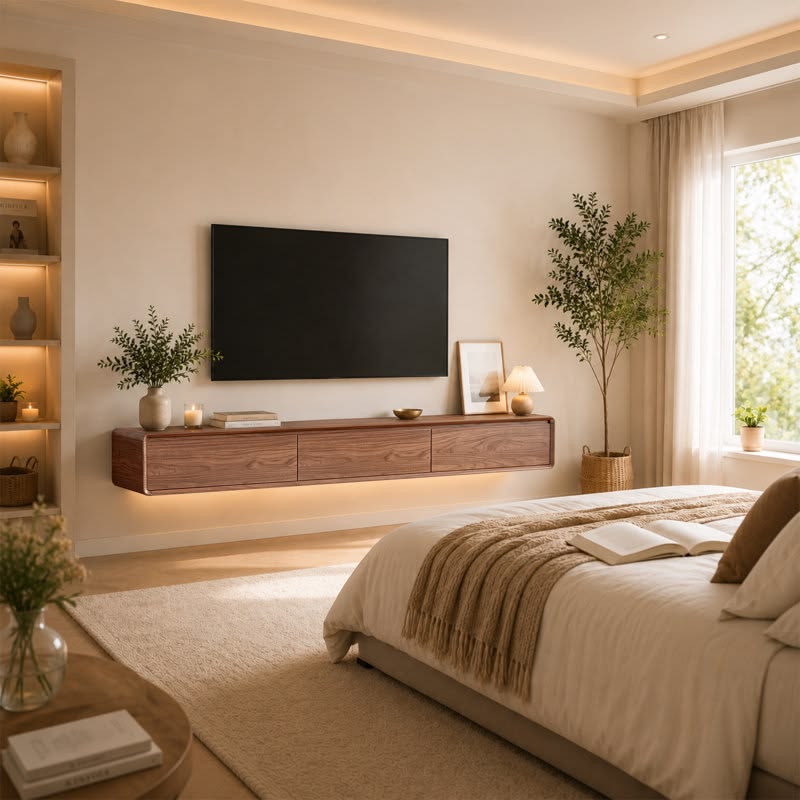
    Keep the door able to open widely. Do not let a dresser, chair, or hamper block it. If the bedroom connects to a bathroom, use a closed door, curtain, or screen when the space looks busy.

    Place a small bench or basket near the entrance only if it does not narrow the walkway. This idea adapts to apartments, guest rooms, and large suites. Next, make the room comfortable for both people and daily routines.

    Layout Measurements Worth Checking

    Bedroom featureComfortable targetSmall-room alternative
    Main walkway24 to 30 inches18 to 22 inches
    Space beside each bed side24 inches or more18 inches on one side
    Space at bed foot30 inches20 to 24 inches
    Dresser opening zone36 inches30 inches
    Curtain clearance from bed3 to 6 inchesUse a shade instead
    Nightstand heightClose to mattress heightWithin 2 to 4 inches

    17. Choose Pairs and Curved Shapes for Balance

    Credit: Interior Design

    Feng shui often values visual balance, and pairs can help create it. Two lamps, two pillows, or two small pieces of artwork can make the bed feel centered. You do not have to make everything identical.

    Curved shapes also soften a room filled with straight lines. Try a round mirror on a side wall, an oval rug, a curved lamp, or a rounded nightstand. Use these details sparingly so the space still feels clean.

    For an immediate update, replace one sharp metal accessory with a rounded wood or ceramic piece. This works in contemporary, Art Deco, boho, and classic rooms. Once the shapes feel balanced, remove objects that no longer support the room.

    18. Edit the Room for Meaning and Comfort

    Credit: Otilia Larkin

    The most personal feng shui step is editing. A bedroom should hold things that support rest, affection, and comfort. Remove items that remind you of unfinished tasks, painful memories, or constant obligations.

    Keep a few meaningful objects, such as a favorite photo, a travel souvenir, or a handmade bowl. Display them with breathing room. One treasured item usually has more impact than a crowded collection.

    Walk around the room slowly and ask, “Does this help me relax, or does it ask me to do something?” Keep the first group and relocate the second. This final idea works with every design style because comfort is always personal.

    Tips for Success

    • Measure the room before buying new furniture.
    • Make the bed the visual center instead of the television.
    • Keep at least one clear route from the door to the bed.
    • Use dimmers or warm bulbs for evening lighting.
    • Wash bedding regularly and repair damaged items.
    • Open curtains during the day when privacy allows.
    • Remove one clutter category at a time, such as clothing, cords, or paperwork.

    Common Mistakes and How to Avoid Them

    Pushing the bed into a corner without a reason
    Use a corner only when the room is very small. If possible, leave access on both sides for better balance and easier bed-making.

    Using too many feng shui symbols
    Choose objects because they feel meaningful to you. A peaceful room does not need a collection of charms, crystals, or signs.

    Blocking the door or closet
    Mark door swings and drawer openings on the floor with painter’s tape before arranging furniture. Keep those zones clear.

    Choosing a color only from a small sample
    Paint a larger test area and view it in daylight, evening light, and lamplight before committing.

    Treating the bedroom like a storage room
    Move seasonal items, boxes, and work supplies to closed storage or another room whenever possible.

    Making the room so minimal that it feels cold
    Add one or two warm textures, such as a woven rug, linen curtains, or a wood accent, without adding piles of decor.

    Similar Variations

    • Modern Feng Shui Bedroom: Uses clean lines, a simple platform bed, hidden storage, and a limited neutral palette.
    • Coastal Feng Shui Bedroom: Combines pale blue, sand, white, linen, light wood, and airy window treatments.
    • Feng Shui Boho Bedroom: Adds woven textures, plants, handmade objects, and relaxed layers while keeping walkways clear.
    • Traditional Feng Shui Bedroom: Uses wood furniture, symmetrical lamps, framed artwork, and rich but muted colors.
    • Scandinavian Feng Shui Bedroom: Focuses on pale wood, soft textiles, simple shapes, and plenty of natural light.
    • Japandi Feng Shui Bedroom: Blends Japanese simplicity with Scandinavian warmth through low furniture, natural materials, and quiet colors.

    A good feng shui bedroom is not about buying a special bed or following every rule perfectly. It is about creating support, balance, clear movement, soft light, and fewer distractions. Start with the bed, then adjust the room one small zone at a time.

    When the space feels peaceful to you, the layout is doing its job, and that is the real purpose of an 18 Feng Shui Bedroom Layout.

  • 16 Green And Neutral Bedroom Ideas for a Calm, Natural Retreat

    16 Green And Neutral Bedroom Ideas for a Calm, Natural Retreat

    16 Green And Neutral Bedroom ideas can help you create a calm, warm, and balanced space with earthy color, natural texture, and comfortable furniture.
    A green and neutral bedroom combines shades such as sage, olive, moss, or forest green with white, beige, tan, gray, or cream. The result is restful, flexible, and easy to personalize.
    I’ll walk you through color choices, furniture, lighting, textiles, and simple finishing touches that make the look work.

    Why Green and Neutral Bedrooms Work So Well

    I love this color pairing because it feels peaceful without looking plain. Green brings a natural touch, while neutral colors keep the room soft and open. Together, they can make a bedroom feel grounded but still fresh.

    The best part is flexibility. You can use pale sage with white for a light modern room, or deep olive with walnut wood for a cozy traditional space. You do not need to replace everything, either. A green accent wall, new bedding, or a few leafy pillows can change the mood quickly.

    Before choosing decor, look at your room’s natural light. Green may look airy in a sunny room but much darker in a north-facing space. Test paint samples during the morning and evening. Small details matter here.

    1. Paint One Wall in Soft Sage Green

    Story pin image
    Credit: Home Décor Folk

    A sage green accent wall is one of the easiest ways to start this bedroom style. It adds color without making the entire room feel dark. I especially like it behind the headboard because it creates a natural focal point and frames the bed.

    Pair sage with warm white walls, cream bedding, light oak furniture, or woven baskets. Avoid using too many cool grays, since they can make sage feel flat. Instead, add tan, sand, or soft brown accents for warmth.

    For a practical update, paint only the wall behind the bed first. It gives you a strong change with less work and less paint.

    This idea suits modern, farmhouse, Scandinavian, and cottage bedrooms. Next, you can bring the green shade into the room with larger furniture.

    2. Choose an Olive Green Upholstered Headboard

    Story pin image
    Credit: doityourself

    An olive green headboard adds depth and comfort without needing bold wall color. Velvet feels rich, linen looks relaxed, and textured cotton creates a casual finish. I would choose a simple shape with clean lines so the room does not feel too heavy.

    Use cream sheets, beige pillows, and a natural wood nightstand to balance the darker shade. A black metal lamp can add contrast, while brass hardware brings a warmer look. If your room is small, select a headboard that reaches only a few inches above the mattress.

    Measure the wall and bed width before ordering. A headboard that is too wide can crowd the room.

    Olive upholstery works in traditional, mid-century modern, transitional, and moody bedroom designs. Once the headboard is in place, bedding can soften the whole arrangement.

    3. Layer Cream Bedding With Green Throws

    Story pin image
    Credit: stylishspaceglobe 

    Bedding is the easiest place to test a green and neutral palette. Start with white or cream sheets, then add a beige quilt, sage duvet, and olive or eucalyptus throw. The layers create depth without requiring many patterns.

    I like mixing three fabric weights. Try crisp cotton sheets, a quilted coverlet, and a chunky knitted blanket. Keep most pieces solid if the room already has strong furniture or wall color. One small patterned pillow can add personality without creating visual noise.

    Use pillow covers instead of buying new inserts. They are easier to wash and store between seasons. For a balanced bed, place darker green near the foot and lighter colors closer to your face.

    This bedding plan works for coastal, modern farmhouse, boho, and classic bedrooms. From here, a rug can connect the bed to the floor.

    4. Ground the Room With a Natural Fiber Rug

    Story pin image
    Credit: kleinbradford

    A jute, sisal, wool, or seagrass rug adds texture beneath a green and neutral bedroom. Natural fibers help the space feel warm and relaxed. They also keep the palette connected to nature, especially when paired with wood furniture and leafy plants.

    For a queen bed, an 8-by-10-foot rug usually gives enough room for the rug to extend beyond the sides and foot of the bed. In a small room, place a 5-by-8-foot rug sideways under the lower two-thirds of the bed. Leave some floor visible so the room does not feel crowded.

    Choose wool if softness is important. Jute is often more casual and textured but may feel rough under bare feet.

    This approach fits coastal, rustic, bohemian, and Scandinavian homes. With the floor grounded, you can make smarter color choices throughout the rest of the room.

    Rug Size Guide for Green and Neutral Bedrooms

    Bed sizeRecommended rug sizeBest placement
    Twin5 x 8 feetCenter under the bed or place at the foot
    Full6 x 9 feetExtend beyond both sides of the bed
    Queen8 x 10 feetPlace under the lower two-thirds of the bed
    King9 x 12 feetCenter under the bed with wide side coverage
    Small bedroom2 x 6-foot runner pairPlace one runner along each side

    5. Add Light Oak or Walnut Furniture

    🌿 Cozy bedroom vibes with earthy tones. Wooden furniture + white & green bedding. Leafy prints on the wall, big windows with light curtains, and a fancy chandelier. 🍃 Lots of plants & a soft rug underfoot! 🏡✨ #BedroomGoals #HomeDecor #PlantLove
#odastudioAI #odaAIstudio #odastudio
#bedroomdecor
#bedroomideas
#bedroomdesign
#bedroomstyle
#cozybedroom
#modernbedroom
#bedroominspiration
#masterbedroom
#bedroomfurniture
#bedroominterior
    Credit: Oda AI Studio

    Wood furniture gives green and neutral rooms a natural anchor. Light oak keeps the space bright and works well with sage, cream, and white. Walnut feels richer and pairs beautifully with olive, moss, or deep forest green.

    You do not need a matching bedroom set. In fact, mixing pieces often looks more relaxed. Try a walnut bed with light oak nightstands, or a painted cream dresser with a wood bench. Keep the shapes similar so the different finishes still feel intentional.

    Before buying, measure walking paths around the bed. Leave about 24 inches of clearance where possible. This makes drawers easier to open and keeps the room comfortable.

    Wood furniture works in mid-century, farmhouse, traditional, Japandi, and rustic rooms. After choosing your main pieces, lighting can make the colors look even better.

    6. Use Warm Lighting Against Green Walls

    Story pin image
    Credit: InspetheticDecor

    Lighting changes how green paint and textiles appear. Cool white bulbs can make the room feel gray or harsh. Warm bulbs, usually around 2700K, create a softer glow that works well with beige, tan, and wood.

    Use three layers of light. Add an overhead fixture for general brightness, bedside lamps for reading, and a small wall light or floor lamp for atmosphere. A linen shade spreads light gently, while frosted glass reduces glare.

    Place bedside lamps so the bottom of each shade sits near shoulder height when you are sitting in bed. Use dimmable bulbs if possible. This small feature makes the room more useful at night.

    Warm lighting suits every home style, from sleek modern rooms to old-fashioned cottage spaces. Now you can add wall details without competing with the color palette.

    7. Frame Botanical Artwork in Simple Neutrals

    Story pin image
    Credit: BySimpleStor 

    Botanical artwork supports the natural feeling of green decor without adding more paint. Choose fern drawings, pressed leaf prints, landscape paintings, or abstract art with olive and sand tones. Black, oak, white, and natural linen frames all work well.

    For a calm arrangement, hang one large print over the bed instead of several small pieces. If you prefer a gallery wall, repeat one frame color to keep the display organized. Leave about 6 to 8 inches between the artwork and headboard.

    You can also use removable art for a rental bedroom. Look for lightweight frames or canvas prints that need minimal hardware.

    Botanical art blends with English country, cottage, modern farmhouse, and contemporary rooms. Once the walls have character, textiles can add a little pattern.

    8. Mix Small Patterns With Solid Neutrals

    Story pin image
    Credit: Jiya B | Interior Design | Cozy Home Decor

    Patterns can keep a green and neutral bedroom from feeling too serious. The trick is to use them in small doses. Try a striped lumbar pillow, a small floral duvet, a checked bench cushion, or a geometric curtain.

    Keep one color common across the patterns. For example, a sage stripe, cream floral, and tan check will look connected because all three share soft earthy tones. Use solid sheets and a plain coverlet as visual breathing room.

    I follow a simple rule: use one large pattern, one medium pattern, and one small pattern. Avoid placing several busy designs side by side.

    This method suits cottage, traditional, farmhouse, and relaxed boho styles. With the pattern scale under control, you can decide how much green the room really needs.

    Useful Green and Neutral Palette Combinations

    Green shadeNeutral partnersAccent materialOverall feeling
    Pale sageWarm white, oatmeal, pale beigeLight oakAiry and calm
    EucalyptusCream, mushroom, soft taupeLinen and rattanRelaxed and coastal
    OliveCamel, ivory, walnut brownLeather or brassWarm and grounded
    MossSand, putty, charcoalBlack metal and woolEarthy and modern
    Forest greenCream, cognac, warm grayWalnut and bronzeDramatic and cozy
    Mint greenWhite, pale gray, natural tanLight wood and cottonFresh and youthful

    9. Balance Deep Green With Cream Walls

    Credit: Dex Decor

    If you love rich green but worry about making the room too dark, use it on furniture, curtains, or a partial wall. Keep the remaining walls cream or warm white. This gives you the drama of deep color while preserving brightness.

    A forest green bench, curtain panel, or accent chair can become the strongest color in the room. Repeat that shade two or three times so it feels planned. For example, use forest green on the headboard, a throw pillow, and a small ceramic vase.

    Avoid pairing deep green with bright white if the contrast feels too sharp. Ivory and creamy beige create a softer transition.

    This arrangement works in modern, Art Deco, traditional, and lodge-inspired homes. Next, window treatments can shape the room’s light and privacy.

    10. Hang Linen Curtains in Oatmeal or Flax

    Credit: Otilia Larkin

    Neutral curtains help green walls and furniture feel more balanced. Linen or linen-look panels in oatmeal, flax, or soft beige add movement without introducing another strong color. They also filter daylight in a gentle way.

    Hang the curtain rod 4 to 6 inches above the window frame and extend it several inches past each side. This makes the window appear wider and allows more light into the room when the curtains are open. Choose blackout lining if you need better sleep.

    For a polished look, let the panels touch the floor. Avoid curtains that stop several inches above it, since they can make the room look unfinished.

    This treatment works with coastal, Scandinavian, farmhouse, and transitional styles. With the windows softened, you can bring in living greenery.

    11. Add Plants in Simple Ceramic or Woven Pots

    Story pin image
    Credit: Haven Hue 

    Plants are a natural match for green bedroom decor, but you do not need a jungle. One tall plant in a corner can fill an empty area, while a small pothos or snake plant works well on a dresser.

    Choose plants based on light, not just appearance. Snake plants tolerate lower light, pothos handle many indoor conditions, and rubber plants prefer brighter indirect light. Keep plants away from heaters and place a saucer under every pot to protect the furniture.

    Use cream ceramic planters for a clean modern look or woven baskets for a softer boho feel. If your room has limited sunlight, high-quality faux plants can still add shape and color.

    Plants suit nearly every design style. After adding them, small storage choices can keep the room calm instead of cluttered.

    Bedroom Plant and Placement Guide

    PlantLight needGood locationCare note
    Snake plantLow to bright indirectFloor cornerLet soil dry between watering
    PothosLow to medium indirectShelf or dresserTrim vines as they grow
    Rubber plantBright indirectNear a windowRotate for even growth
    ZZ plantLow to mediumNightstand or cornerWater sparingly
    Faux olive treeAny lightEmpty cornerDust leaves monthly

    12. Use Woven Baskets for Warm Storage

    Story pin image
    Credit: Maison-Eyala

    Storage can be attractive in a green and neutral bedroom. Woven baskets made from rattan, seagrass, or water hyacinth hide extra blankets, shoes, books, and laundry while adding natural texture.

    Place a large basket beside the bed for throws, a low basket under a bench for shoes, or matching baskets on open shelving. Use a basket with a lid if you want to hide visual clutter completely. Choose similar natural tones, but do not worry if every piece is not identical.

    Check the basket’s dimensions before buying. A basket that is too deep may block a drawer or make a walkway narrow.

    Woven storage works in coastal, bohemian, farmhouse, rustic, and Japandi rooms. Once clutter is under control, mirrors can help the room feel more open.

    13. Place a Rounded Mirror Near Natural Light

    Credit: Vanshika Home Decor

    A rounded mirror can soften the straight lines of a bed, dresser, and nightstands. Hang one above a dresser or place a tall leaning mirror near a window. The reflection can spread daylight and make a small room seem larger.

    Choose a wood frame for warmth, a thin black frame for modern contrast, or an antique brass frame for a classic look. Avoid placing the mirror where it reflects a messy corner. Aim it toward a window, artwork, or a clean architectural feature.

    Secure large mirrors properly, especially if they lean. Use wall anchors suited to your wall type.

    This idea adapts to modern, vintage, traditional, and minimalist homes. With the main decor in place, a small reading area can make the bedroom more useful.

    14. Create a Quiet Reading Corner

    Story pin image
    Credit: Mehak | Home Finds

    A bedroom feels more complete when it has a comfortable spot beyond the bed. Add a small upholstered chair in cream, tan, or muted green. Place it beside a floor lamp and a compact wood table for books or tea.

    If space is tight, use a slim slipper chair or a small bench at the foot of the bed. Keep the fabric practical and choose a washable cover when possible. A lumbar pillow can repeat the room’s green shade without making the chair look too matchy.

    Leave enough room to pull the chair out comfortably. A reading corner should feel inviting, not squeezed into leftover space.

    This setup works in cottage, traditional, modern, and boho bedrooms. The final layer is scent and texture, which can make the room feel personal.

    Practical Budget Tiers for This Bedroom Style

    Budget levelSuggested updatesTypical priority
    Under $100Pillow covers, plant, thrifted frame, small basketAdd color and texture
    $100 to $300Paint, rug runner, lamps, curtainsChange the room’s mood
    $300 to $800Full rug, bedding set, chair, quality mirrorBuild a finished look
    $800 and aboveHeadboard, dresser, custom curtains, layered lightingCreate a long-term design

    15. Bring in Matte Black or Aged Brass Details

    Credit: Maureen Pelo

    Metal finishes add structure to a soft green and neutral palette. Matte black feels crisp and modern, while aged brass adds warmth and a slightly vintage mood. Use these finishes on lamps, drawer pulls, curtain rods, picture frames, or a small mirror.

    Try to repeat the chosen metal at least three times. For example, use brass on the bedside lamps, dresser pulls, and wall art frame. This creates a visual thread without making the room feel decorated from a catalog.

    Do not mix too many shiny finishes. One main metal and one small secondary finish is usually enough.

    Black metal suits modern, industrial, and Scandinavian bedrooms. Brass works well with traditional, eclectic, and art deco rooms. From here, you can add softness underfoot with smaller textile layers.

    16. Layer a Small Bench or Footstool at the Bed

    Story pin image
    Credit: Lovely Living

    A bench at the foot of the bed adds function and shape. Choose natural wood for a simple room, woven rattan for a coastal space, or soft upholstery for a more comfortable finish. A muted green cushion can connect it to the rest of the room.

    Make sure the bench is slightly narrower than the bed. Leave at least 18 to 24 inches between the bench and nearby furniture so the walkway stays clear. A lift-top bench can also store extra bedding.

    If the room is very small, use a narrow stool instead of a full bench. It can hold folded blankets without taking over the floor.

    This detail works in farmhouse, traditional, coastal, and contemporary bedrooms. With practical furniture selected, you can finish by choosing a few personal objects.

    17. Style the Nightstands With Calm, Useful Objects

    Nightstands should look pleasant but remain easy to use. Start with a lamp, then add one small tray, a book, and a natural object such as a stone bowl or tiny plant. Keep cords tucked behind the table or run them through a cable clip.

    Choose nightstands with drawers if you want a cleaner look. Open shelves are better for baskets and displayed books. Mismatched nightstands can work if they have a similar height and visual weight.

    Keep the top surface about two-thirds full. Empty space is useful. It gives the eye a rest and leaves room for a glass of water or phone.

    This styling fits minimalist, cottage, modern, and traditional rooms. A personal finishing touch will make the whole palette feel less staged.

    18. Add Handmade Ceramics and Natural Accessories

    Handmade accessories bring character to a bedroom without adding loud color. Look for ceramic vases, clay bowls, woven trays, carved wood objects, or small framed sketches. Choose finishes in cream, taupe, olive, tan, and warm gray.

    Use a few meaningful pieces rather than filling every surface. A handmade vase on the dresser, a small ceramic lamp, and a textured tray may be enough. Vary the height of objects to create a relaxed arrangement.

    When shopping, check the scale. A tiny vase can disappear on a large dresser, while an oversized piece may overwhelm a small nightstand.

    Handmade decor works across rustic, bohemian, Japandi, modern, and traditional styles. These small details complete the room without changing its peaceful character.

    Tips for Success

    • Test green paint in several areas of the room before committing.
    • Repeat your main green shade at least two or three times.
    • Mix warm and cool neutrals carefully so the palette does not look disconnected.
    • Use washable covers on pillows, benches, and chairs whenever possible.
    • Keep the largest furniture pieces simple if you plan to use patterned textiles.
    • Choose warm bulbs around 2700K for a softer evening atmosphere.
    • Leave open space around the bed, drawers, and reading chair for easy movement.

    Common Mistakes and How to Avoid Them

    Using too many green shades
    Choose one main green and one supporting shade. Too many similar colors can make the room look busy.

    Pairing green with icy white
    Use cream, ivory, or warm white instead. These neutrals create a smoother and more comfortable contrast.

    Ignoring the room’s natural light
    Test paint in the actual bedroom at different times of day. A color that looks perfect online may look much darker in your space.

    Making every item match
    Mix wood finishes, fabrics, and shapes while keeping the color palette connected. A room should feel collected, not copied from a showroom.

    Overloading the room with plants and accessories
    Start with a few useful pieces. Add more only when you know where each item belongs.

    Choosing a rug that is too small
    Measure the bed and walking paths first. A properly sized rug makes the furniture feel connected.

    Similar Variations

    • Sage Scandinavian: Pale sage, warm white, light wood, and simple shapes create a bright, uncluttered room.
    • Olive Modern Farmhouse: Olive accents, cream walls, black metal, and rustic wood add cozy country character.
    • Forest Green Traditional: Deep green, walnut, brass, and classic patterns create a rich, timeless bedroom.
    • Eucalyptus Coastal: Soft eucalyptus, sand tones, linen, rattan, and pale wood bring a breezy seaside feeling.
    • Moss Japandi: Moss green, putty, charcoal, handmade ceramics, and low-profile furniture create quiet simplicity.
    • Green Boho: Layered textiles, woven baskets, plants, warm beige, and relaxed vintage pieces make the room feel collected.

    A successful green and neutral bedroom does not depend on buying a complete new furniture set. Start with the mood you want, then build around one green shade, two or three warm neutrals, and plenty of natural texture.

    I would begin with bedding or a painted accent wall, then add wood, soft lighting, plants, and useful storage. Small changes can create a room that feels restful every night, and that is the heart of a beautiful 16 Green And Neutral Bedroom.