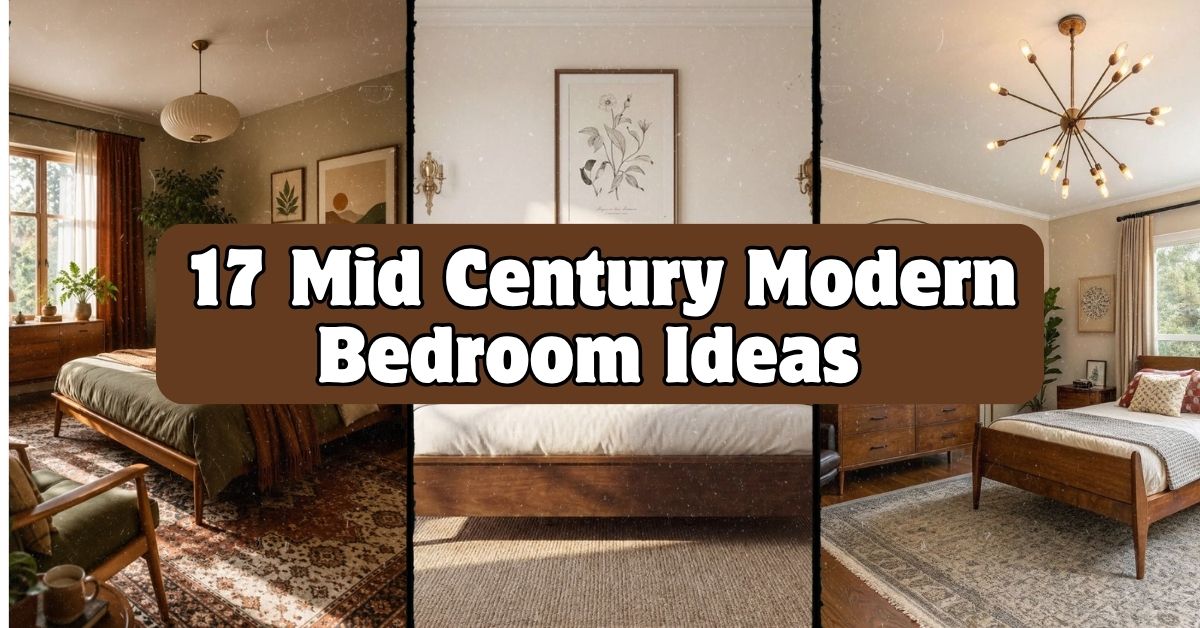
17 Mid Century Modern Bedroom ideas can help you create a room that feels warm, simple, and stylish without looking dated. I’ll walk you through furniture, colors, lighting, storage, and finishing touches so you can build a bedroom that works in real life.
What defines a mid-century modern bedroom, and how can you create one? It uses clean lines, warm wood, simple shapes, practical furniture, natural textures, and restrained color. The room should feel open, comfortable, uncluttered, and easy to live in.
You’ll find 17 practical ways to bring this look home, whether your space is large, small, rented, traditional, or already modern.
What Is a Mid-Century Modern Bedroom?
Mid-century modern design became popular from the 1940s through the 1960s. It values useful furniture, smooth shapes, honest materials, and a close connection to nature. The style is simple, but it is not cold. Warm walnut, teak, oak, leather, wool, and woven fibers keep the room comfortable.
When I plan a mid-century bedroom, I start with the large pieces. A low bed, slim nightstand, and wooden dresser usually create the right foundation. Then I add color through art, bedding, or one statement chair. The key is balance. Too many vintage pieces can make the room feel like a museum. Too many sharp white surfaces can make it feel sterile. A few soft textures and personal objects bring the style to life.
1. Choose a Low-Profile Platform Bed

A low-profile platform bed is one of the fastest ways to establish a mid-century modern mood. Look for a frame with tapered legs, a simple headboard, or a clean wood finish. Walnut and teak are classic choices, but oak works well if you prefer a lighter room.
Keep the bedding relaxed. White, cream, clay, olive, or muted mustard sheets all pair nicely with warm wood. Avoid a tall, ornate headboard because it can overpower the room’s simple lines. Before buying, measure the bed height and check how much clearance you need for cleaning underneath.
This idea also works in modern, Scandinavian, and minimalist homes because the shape is simple and practical. Once the bed is in place, the nightstands help define the room’s rhythm.
2. Add Tapered-Leg Nightstands

Tapered legs are a small detail with a big visual effect. They make furniture look lighter and help the bedroom feel less crowded. Choose nightstands with one drawer and an open shelf if you need storage, or select a simple table if you want a cleaner look.
I like to keep the top useful. Add a small ceramic lamp, a book, and one personal object. That is enough. If both nightstands match, the room feels organized. If they differ slightly, use the same color or material to keep them connected.
For a narrow bedroom, choose nightstands no wider than the mattress area beside them. This prevents the walking path from becoming tight. Tapered-leg tables can also blend into coastal, contemporary, or traditional rooms when paired with the right finish.
Next, bring in a dresser that adds storage without making the wall feel heavy.
3. Use a Long Wooden Dresser as the Focal Point

A long, low dresser captures the practical beauty of mid-century furniture. It provides valuable storage while keeping the room visually calm. Choose a piece with flat drawer fronts, slim pulls, and raised legs. Walnut gives a rich, classic feel. Light oak makes the space brighter.
Place the dresser on the wall opposite the bed if the layout allows. Above it, hang one large print or a small group of framed artwork. Leave some surface space clear. A tray, table lamp, and small plant are usually enough.
Before buying vintage furniture, test every drawer and inspect the back for damage or odor. For a budget version, check secondhand stores and replace old hardware with simple brass or black pulls.
This dresser style adapts easily to farmhouse, transitional, and modern bedrooms. With storage handled, you can focus on the room’s color story.
4. Build a Warm, Muted Color Palette

Mid-century bedrooms often use calm neutrals with one or two earthy accent colors. Start with a base of warm white, beige, soft gray, or sand. Add rust, olive green, ochre, tobacco brown, burnt orange, or muted blue in small amounts.
I suggest using the 60-30-10 rule as a loose guide. Let the main wall and large textile color cover most of the room. Use a second shade on furniture or bedding. Save the boldest color for pillows, art, or a chair.
Paint samples can look different in morning and evening light, so test them on two walls before committing. Avoid using several strong colors at once. Mid-century style feels best when the palette has room to breathe.
This color approach suits boho, desert, coastal, and contemporary interiors. The next step is choosing materials that add depth without clutter.
Mid-Century Bedroom Color Pairings
| Main color | Supporting color | Accent color | Best material match |
|---|---|---|---|
| Warm white | Walnut brown | Olive green | Linen, wool, wood |
| Sand beige | Medium oak | Burnt orange | Cotton, cane, ceramic |
| Soft gray | Teak brown | Mustard yellow | Bouclé, leather, brass |
| Pale blue | Natural oak | Rust red | Linen, jute, rattan |
| Mushroom taupe | Dark walnut | Dusty rose | Velvet, wool, matte metal |
5. Layer a Woven Rug for Warmth

A rug softens the hard lines of a platform bed and makes the room more comfortable underfoot. Wool, jute, flatweave cotton, and low-pile synthetic rugs all work well. Choose a geometric pattern if you want a clear mid-century reference, or select a solid neutral for a quieter room.
For a queen bed, an 8-by-10-foot rug usually lets the rug extend beyond the sides and foot of the bed. In a smaller room, place a 5-by-8-foot rug under the lower two-thirds of the bed. Always use a rug pad. It prevents slipping and helps the rug last longer.
If your room already has bold wallpaper or art, choose a simple rug. In a coastal home, try a pale jute rug. In a traditional room, a faded geometric pattern adds a modern note without looking harsh.
Now that the floor feels grounded, look upward and plan the lighting.
6. Hang a Sculptural Pendant Light

A sculptural pendant can act like jewelry for the bedroom. Look for globe shades, cone shapes, starburst forms, or smooth wood and metal combinations. Opal glass gives soft light, while a perforated metal shade creates interesting shadows.
Hang the fixture where it will not hit your head when you sit up in bed. In many rooms, the bottom of a pendant should sit at least 30 inches above a nightstand, but always follow the fixture instructions and consider your ceiling height.
Use warm bulbs around 2700K for a relaxed bedroom glow. A dimmer switch gives you more control and helps the light work for reading, dressing, and winding down.
This idea fits industrial, Scandinavian, and eclectic spaces too. After the main light is chosen, add smaller sources so the room never depends on one harsh bulb.
7. Mix Table Lamps With Soft Ambient Light

Mid-century bedrooms look better when the lighting comes in layers. Place matching table lamps on both nightstands, or use one lamp and a wall sconce where space is tight. Ceramic, teak, brushed brass, and white glass are reliable choices.
Choose lamps with shades that hide the bulb from normal eye level. This reduces glare. If you read in bed, select a lamp tall enough to shine over your shoulder but not directly into your eyes.
You can also add a dimmable floor lamp in a dark corner. Keep the light warm and spread out. I avoid cool blue bulbs because they can make wood tones look dull and the room feel less restful.
Soft lighting works with nearly every home style. With the glow handled, a large piece of art can give the bedroom its personality.
8. Display One Oversized Piece of Artwork

One large artwork piece often looks stronger than several tiny frames scattered across the wall. Choose an abstract print, botanical drawing, vintage travel poster, or bold geometric design. Look for colors already used in your bedding, rug, or curtains.
Hang the artwork with its center close to eye level. Above a dresser, leave enough space for the dresser lamp and decor without crowding the frame. Above the bed, use secure hardware and avoid heavy glass if you live in an earthquake-prone area.
A simple black, walnut, or brass frame can connect the artwork to other finishes in the room. If you prefer a gallery wall, keep the frame style consistent and repeat one color.
This approach suits modern, eclectic, and traditional bedrooms. Once the walls have a focal point, the surrounding textiles can add softness.
Bedroom Lighting and Artwork Guide
| Room feature | Recommended choice | Practical target |
|---|---|---|
| Bedside lamp | Frosted or fabric shade | 400 to 800 lumens |
| Main ceiling light | Dimmable warm fixture | 2700K to 3000K |
| Reading light | Adjustable wall sconce | Light directed toward book |
| Art above dresser | One large horizontal piece | About two-thirds of dresser width |
| Art above bed | Wide framed print or pair | Keep securely anchored |
9. Use Bedding With Simple Geometric Patterns

Geometric bedding gives the room a clear mid-century connection without requiring vintage furniture. Try small diamonds, arches, stripes, blocks, or repeating lines. Keep the pattern scale moderate so it does not dominate the room.
A good formula is one patterned layer, one solid layer, and one textured layer. For example, use a striped duvet, a plain linen sheet, and a quilted coverlet. Add two or three pillows in related colors rather than filling the bed with too many shapes.
Choose breathable cotton or linen for everyday comfort. Washable coverlets are especially useful if you have pets. Patterned bedding can also hide small marks better than pure white fabric.
This method adapts to farmhouse, coastal, and boho rooms by changing the pattern and materials. Next, add a natural texture that makes the furniture feel less formal.
10. Bring in Cane, Rattan, or Woven Details

Cane and rattan add warmth while keeping the room visually light. You might use a cane-front nightstand, woven bench, basket, mirror, or headboard panel. These materials pair especially well with walnut and oak.
Do not use woven details on every piece. One or two accents are usually enough. A rattan bench at the foot of the bed can provide seating and storage. A woven basket can hold extra blankets while hiding clutter.
Check the weave before buying. Tight, even cane tends to last longer than loose material that bends easily. Keep rattan away from damp areas and strong direct sunlight when possible.
These details work in coastal, tropical, organic modern, and casual traditional bedrooms. With texture added, a small seating area can make the bedroom more useful.
11. Create a Compact Reading Corner

If you have an empty corner, turn it into a quiet reading spot. Choose a molded lounge chair, wooden armchair, or compact slipper chair. Add a small side table and a floor lamp with an adjustable shade.
Keep the chair’s color connected to the room. A rust, olive, cream, or caramel seat can act as a gentle accent. If the room is small, choose a chair with open legs and a narrow profile. Avoid oversized recliners that interrupt the clean lines.
Measure the full area before shopping. Leave a clear walking path from the door to the bed and closet. A small lumbar pillow is often more comfortable than several decorative cushions.
This idea also fits traditional, cottage, and modern rooms. Once you have a place to sit, it becomes easier to decide where extra storage should go.
12. Add Smart Storage That Looks Like Furniture

Mid-century design depends on a tidy appearance, so storage matters. Use a six-drawer dresser, slim wardrobe, under-bed boxes, or a floating shelf. Pick pieces with simple fronts and visible legs whenever possible.
I like to group storage by use. Keep daily clothing in the dresser, seasonal items under the bed, and accessories in small trays or boxes. Do not make every surface a storage zone. Closed doors and drawers help the room stay peaceful.
For a rental, use freestanding furniture instead of built-ins. In a very small bedroom, a tall cabinet can provide more storage than a wide dresser while using less floor space.
This approach can be adjusted for minimalist, industrial, or traditional homes. With clutter controlled, you can safely introduce a little more personality through accessories.
Bedroom Storage Choices
| Storage piece | Best use | Typical footprint | Style benefit |
|---|---|---|---|
| Six-drawer dresser | Folded clothing | 60 to 72 inches wide | Strong focal point |
| Two-drawer nightstand | Small daily items | 20 to 28 inches wide | Keeps bedside clear |
| Under-bed bins | Seasonal clothing | Bed-length storage | Uses hidden space |
| Tall wardrobe | Hanging garments | 30 to 40 inches wide | Helps small rooms |
| Floating shelf | Books and small decor | 24 to 48 inches wide | Saves floor space |
13. Add Plants With Clean, Simple Containers

Plants bring the natural feeling that mid-century rooms often need. Try a rubber plant, snake plant, pothos, fiddle-leaf fig, or ZZ plant. Select based on your light and how often you want to water.
Use planters in matte ceramic, terracotta, wood, or simple metal. A plant stand with angled legs can echo the room’s furniture. Keep larger plants in corners where they soften empty space without blocking drawers or windows.
Do not crowd the nightstand with plants if you have allergies or limited room. One healthy plant is better than several struggling ones. Check whether pets can reach the leaves before choosing a variety.
Greenery also works in Scandinavian, rustic, and urban bedrooms. Next, use window treatments to control light while protecting the room’s calm look.
14. Choose Linen or Woven Window Treatments

Window treatments affect both mood and sleep. Linen curtains, cotton panels, woven shades, and simple roller blinds all suit a mid-century bedroom. Choose warm white, flax, oatmeal, or a muted accent color.
For better sleep, use blackout lining behind decorative curtains. Hang the rod several inches above the window frame and extend it beyond both sides. This makes the window look larger and allows more daylight in when the curtains are open.
Avoid heavy, ornate drapes with large fringe or formal patterns. They can fight against the furniture’s clean shape. In a coastal room, use pale woven shades. In a modern room, choose flat fabric panels with minimal hardware.
Good window treatment sets the room’s light level. The final visual layer is the small decor that makes the bedroom feel personal.
15. Style Surfaces With a Few Meaningful Objects

Decor should support the room, not fill every empty spot. On a dresser, try a low bowl, framed photograph, small lamp, and one sculptural object. On a nightstand, keep only what you use.
Ceramics, wood carvings, smoked glass, brass objects, and vintage clocks all suit the period. Mix heights so the display does not look flat. A stack of two books can raise a small object and create a simple focal point.
I use the three-item rule when a surface starts to feel messy. Remove everything, return the most useful item, then add one or two pieces with different heights. This creates order quickly.
The same trick works in maximalist, traditional, and eclectic rooms. Once the decor is edited, check whether the furniture layout supports easy movement.
16. Keep the Floor Plan Open and Functional

A beautiful bedroom still needs to work. Place the bed where you can see the door without blocking it. Leave enough room to open dresser drawers and walk around the bed. Avoid pushing every piece against the wall if the room allows a little breathing space.
Use a floor plan sketch before moving heavy furniture. Mark doors, windows, outlets, vents, and radiator locations. Then measure the bed, dresser, and chair. Even a few inches can determine whether the room feels relaxed or cramped.
If your bedroom is tiny, choose a platform bed with drawers, a wall-mounted sconce, and a narrow dresser. If it is large, create zones instead of filling the room with random pieces.
This layout-first approach works in every design style. With the floor plan settled, one final material choice can tie the whole room together.
Furniture Clearance Guide
| Area | Comfortable clearance | Minimum to consider |
|---|---|---|
| Main walkway | 30 to 36 inches | 24 inches |
| Space beside bed | 24 to 30 inches | 18 inches |
| Dresser opening space | 36 inches | 30 inches |
| Space at foot of bed | 30 to 36 inches | 24 inches |
| Reading chair clearance | 30 inches around use area | 24 inches |
17. Mix Vintage Pieces With New Comforts
The most believable mid-century bedroom rarely comes from one matching furniture set. Mix a vintage dresser with a new mattress, a modern lamp with an old mirror, or a contemporary rug with a secondhand chair.
Before bringing home a vintage item, check its stability, joints, finish, and smell. Repair loose legs and use furniture wax or a gentle cleaner suited to the material. Avoid sanding old painted furniture unless you know how to handle possible lead paint.
New bedding and lighting can make older pieces feel fresh. You also gain a room with more character than a full showroom set.
This mix works beautifully in eclectic, modern farmhouse, and traditional homes. The last step is editing the room so every piece has a purpose.
Tips for Success
- Start with the bed, dresser, and rug before buying small decor.
- Repeat one wood tone at least twice so the room feels connected.
- Use warm light bulbs instead of cool white bulbs.
- Keep bold colors to one or two accent areas.
- Measure every wall, doorway, and furniture piece before shopping.
- Choose washable bedding and rugs if you have children or pets.
- Leave some empty space on shelves, dressers, and nightstands.
- Buy fewer quality pieces instead of filling the room quickly.
- Secure tall furniture and heavy artwork to the wall.
- Test paint colors in both daylight and evening light.
Common Mistakes and How to Avoid Them
Using too much dark wood
Balance walnut or teak with light walls, pale bedding, woven texture, and open floor space. The room should feel warm, not heavy.
Buying a complete matching set
Mix related pieces instead. Combine similar wood tones, leg shapes, or hardware finishes while allowing each item to have its own character.
Choosing furniture that is too large
Measure the room and mark the furniture footprint with painter’s tape. Keep walking paths clear before making a purchase.
Adding too many retro decorations
Choose a few period-inspired details, such as a starburst clock or geometric print. Too many can make the room feel staged.
Ignoring bedside lighting
Plan for reading and nighttime movement. Use a table lamp, wall sconce, or pendant that provides useful, warm light.
Treating style as more important than comfort
Use a supportive mattress, soft bedding, and a chair you can actually sit in. A bedroom should look good and feel easy to use.
Similar Variations
- Scandinavian Mid-Century: Uses pale wood, soft neutrals, simple textiles, and a lighter overall mood.
- Desert Mid-Century: Adds terracotta, sand, rust, leather, and sculptural ceramics.
- Coastal Mid-Century: Combines teak or oak with linen, woven shades, pale blue, and sandy tones.
- Organic Modern Mid-Century: Focuses on natural wood, rounded shapes, stone, wool, and indoor plants.
- Mid-Century Boho: Mixes classic furniture with patterned rugs, rattan, global textiles, and relaxed decor.
- Modern Retro: Uses stronger colors, playful art, and vintage-inspired shapes with updated materials.
A mid-century modern bedroom feels best when clean lines meet warmth. Begin with useful furniture, then add earthy color, soft textiles, natural materials, and personal objects. You do not need a perfect vintage room or an expensive designer budget. You need a thoughtful layout and a few pieces you truly enjoy.
When every item has a job and the details feel connected, your room becomes calm, comfortable, and full of character. That is the lasting appeal of a 17 Mid Century Modern Bedroom.
Leave a Reply