
17 Mediterranean Bedroom ideas can help you turn an ordinary room into a calm retreat filled with sun-washed color, natural texture, and timeless comfort. I’ll walk you through the key design choices so you can create the look without making the room feel themed or crowded.
A Mediterranean bedroom uses warm white walls, earthy colors, natural wood, wrought iron, woven fabrics, stone or terracotta accents, and relaxed furniture. The style blends Spanish, Italian, Greek, and North African influences.
You’ll see how to balance rustic details with modern comfort, choose the right colors, and make simple updates that work in bedrooms of any size.
What Defines a Mediterranean Bedroom?
When I picture a Mediterranean bedroom, I think of soft sunlight, old plaster walls, handmade pottery, and linens that look better slightly rumpled. The style feels connected to nature. It often uses materials such as wood, stone, rattan, clay, linen, and cotton.
The color palette usually starts with warm white, cream, sand, or pale beige. From there, you can add terracotta, olive green, deep blue, ochre, or muted coral. Furniture tends to be sturdy and relaxed rather than glossy and formal.
The best part is that Mediterranean design does not require a large villa. You can bring it into a small apartment with a woven basket, a linen duvet, and one warm accent wall. The goal is comfort, texture, and a sense of age.
1. Start With Warm Plaster-Look Walls

Walls set the mood before you add a single piece of furniture. For a Mediterranean bedroom, I like warm white, creamy beige, pale sand, or a soft mushroom shade. These colors reflect light without looking cold.
A plaster-look finish adds depth. You can create it with textured paint, limewash, or a faux plaster technique. It does not need to be perfectly even. Small changes in tone are part of the charm.
If you rent, use a warm matte paint and bring in the texture through bedding, curtains, and art instead. Test paint samples in both morning and evening light.
This idea also works in modern homes, traditional houses, coastal spaces, and minimalist apartments. The warm wall color acts as a flexible base.
Next, build on that quiet background with flooring that feels natural underfoot.
2. Choose Terracotta or Natural Stone Flooring

Terracotta tile is one of the easiest ways to give a bedroom Mediterranean character. Its rusty orange, clay, and muted red tones bring instant warmth. Natural stone, limestone-look porcelain, and travertine-style tile create a softer, more neutral effect.
If replacing the floor is not practical, choose wood in a medium honey tone. Avoid very gray flooring because it can make the room feel disconnected from the warm palette.
For comfort, place a large cotton or wool rug beside the bed. Terracotta can feel cool and firm underfoot, especially in the morning.
A practical tip is to use porcelain tile if you want the look with less maintenance. It is usually easier to clean and more resistant to stains than porous natural materials.
In a modern bedroom, pair terracotta with simple furniture. In a traditional room, let the flooring support carved wood and antique accents.
Now that the room has a grounded base, the bed can become the main focal point.
3. Use a Carved Wood or Iron Bed

The bed should feel solid and inviting. A dark carved wood frame works well in Spanish-inspired rooms, while a simple black iron bed gives the space a farmhouse or coastal Mediterranean feel.
Look for details such as turned posts, curved corners, hand-finished wood, or a slightly distressed surface. Avoid choosing too many ornate pieces at once. One strong bed frame is enough to create visual interest.
For a lighter look, choose an oak or pine frame with a natural finish. Add white bedding to keep the room fresh. For more drama, use walnut wood with clay, rust, or olive accents.
Measure the bed and leave at least 24 inches of walking space on the main sides when possible. This keeps the room comfortable instead of cramped.
The same approach adapts easily to modern, rustic, farmhouse, and eclectic homes. The bed’s shape can change while the natural material stays consistent.
Next, soften the bed with bedding that looks comfortable rather than overly styled.
4. Layer Linen Bedding in Relaxed Neutrals

Linen bedding gives a Mediterranean bedroom its easy, lived-in feel. Choose ivory, oatmeal, warm white, pale gray-beige, or muted taupe. These shades look calm and allow other materials to stand out.
I recommend starting with cotton sheets, adding a linen duvet cover, and finishing with a textured throw. You do not need a perfect stack of decorative pillows. Two sleeping pillows and one or two accent pillows can look more natural.
For color, try a cream duvet with rust pillow covers. Another option is white bedding with olive green or faded blue accents.
Wash linen according to the care label and let it air-dry when possible. Its natural wrinkles are part of the look, so you do not need to iron every piece.
Linen also suits Scandinavian, coastal, modern rustic, and boho rooms. Its texture makes the design feel warm without adding visual clutter.
Use the chart below to combine colors with more confidence.
Mediterranean Bedroom Color Combinations
| Base color | Accent color | Supporting material | Overall mood |
|---|---|---|---|
| Warm white | Terracotta | Natural oak | Sunny and rustic |
| Cream | Olive green | Woven jute | Soft and earthy |
| Sand beige | Mediterranean blue | Light linen | Calm and coastal |
| Pale plaster | Mustard ochre | Dark wood | Rich and welcoming |
| Warm gray-beige | Muted coral | Black iron | Balanced and slightly dramatic |
| Ivory | Dusty lavender | Travertine-look stone | Gentle and refined |
A strong palette makes the next choices much easier, especially when you begin adding window treatments.
5. Hang Lightweight Linen Curtains

Mediterranean rooms often feel airy because they let sunlight move through the space. Lightweight linen or cotton curtains help create that effect. Choose ivory, cream, pale sand, or a soft natural flax color.
Hang the curtain rod several inches above the window frame and extend it beyond both sides. This makes the window appear wider and allows more light in when the curtains are open.
For privacy, layer sheer curtains with woven wood shades or simple blackout panels. This is especially useful in bedrooms that face a street or receive strong morning light.
Avoid heavy velvet or shiny polyester if you want a relaxed result. Those fabrics can make the room feel formal and disconnected from the natural palette.
The idea works in coastal, contemporary, and traditional homes. Simply change the hardware. Black rods feel stronger, while aged brass or wood feels softer.
With light moving through the room, the ceiling becomes the next place to add Mediterranean character.
6. Add Exposed Beams or a Beam-Look Detail

Wood ceiling beams bring an old-world feeling to a Mediterranean bedroom. If your home already has structural beams, keep them visible and let their natural texture show.
For rooms without beams, you can install lightweight decorative beams made from wood or faux wood. Another option is to use narrow wood planks on the ceiling, but keep the walls simple so the room does not feel busy.
Dark beams create contrast against cream walls. Pale wood beams feel more coastal and relaxed. If the ceiling is low, use thinner beams or a single central beam to avoid making the room seem shorter.
Check local building requirements before attaching heavy materials overhead. Decorative beams should be securely mounted.
This feature can work with rustic, modern farmhouse, Spanish revival, and even minimalist design when the shape is clean.
Next, bring a handcrafted feel to the room with a few carefully chosen accessories.
7. Display Handmade Ceramic Pieces

Handmade ceramics add color and personality without making the room feel cluttered. Try a small terracotta vase, a blue-and-white bowl, a clay lamp base, or a wall plate with an uneven glaze.
Choose pieces with visible texture. Small marks and changes in color make them feel collected instead of mass-produced.
Place one vase on a nightstand, a larger vessel on a dresser, or a shallow bowl on a shelf. You can fill the vessel with dried grasses, olive branches, or nothing at all.
Keep breakable pieces away from narrow walkways and high shelves above the bed. Bedrooms should feel peaceful and safe.
Ceramics adapt well to modern, coastal, bohemian, and traditional spaces. In a modern room, use one oversized piece. In a more rustic room, group three small pieces in different shapes.
The next idea adds softness and helps connect all those hard surfaces.
8. Layer a Woven Rug for Warmth

A woven rug can make tile or wood flooring feel more comfortable. Jute, sisal, wool, cotton, and flat-weave rugs all suit Mediterranean interiors.
For a queen bed, an 8-by-10-foot rug usually gives enough coverage to extend beyond the sides and foot of the bed. In a smaller room, place two runners beside the bed or use a 5-by-8-foot rug under the lower two-thirds.
Choose natural beige for a quiet look. Try a faded blue, rust stripe, or geometric pattern if the rest of the room is simple.
Use a rug pad to prevent slipping and protect the floor. In humid areas, avoid placing natural fibers where they may stay damp.
This style works in coastal, farmhouse, boho, and contemporary bedrooms. The weave can be rough and rustic or fine and polished.
Bedroom Rug Size Guide
| Bed size | Recommended rug size | Best placement |
|---|---|---|
| Twin | 5 ft x 8 ft | Under the lower two-thirds of the bed |
| Full | 6 ft x 9 ft | Centered under the bed |
| Queen | 8 ft x 10 ft | Extends beyond both sides |
| King | 9 ft x 12 ft | Covers the bed area and nightstands |
| Any size in a narrow room | Two 2 ft x 6 ft runners | One runner on each side |
Once the floor feels comfortable, lighting can add the warm glow that makes the room feel finished.
9. Choose Aged Metal or Ceramic Lighting

Lighting should feel soft, warm, and useful. I like aged brass, antique bronze, black iron, or ceramic lamp bases for this style. These finishes pair naturally with wood and clay.
Use three layers when possible. Add ceiling lighting for general brightness, bedside lamps for reading, and a small accent light for atmosphere.
A ceramic table lamp with a linen shade works well on a wood nightstand. A wrought iron pendant can make a strong statement without taking floor space. If using a chandelier, choose one with a simple, airy frame.
Use bulbs around 2700K for a warm glow. Put bedside lamps on dimmers if your wiring allows it.
In modern homes, choose clean-lined fixtures. In traditional rooms, look for curved arms or hand-finished metal.
Good lighting deserves a natural focal point, so the next step is to add greenery.
10. Bring in Olive Branches and Drought-Tolerant Plants

Plants make a Mediterranean bedroom feel connected to the outdoors. Olive trees are a classic choice, but they need bright light and may not thrive in every room.
If your bedroom is dim, try a snake plant, rubber plant, or dried olive branches in a ceramic vase. Lavender, rosemary, and eucalyptus can also support the theme, though some plants need more light and airflow than a bedroom provides.
Use simple pots in terracotta, cream ceramic, or woven seagrass. Avoid filling every surface with greenery. One tall plant and one small arrangement are often enough.
Check whether pets can safely be around any plant you bring home. Also, do not overwater plants placed on wood furniture.
This idea adapts to tropical, modern, cottage, and coastal interiors. The container and plant size can change while the natural feeling remains.
The room now has texture and life. A focused art display can add the final layer of personality.
11. Hang Earthy Landscape or Coastal Art

Mediterranean art often draws from nature. Look for sandy landscapes, olive groves, blue water, architectural arches, sunlit villages, or abstract shapes in clay and cream tones.
You do not need expensive original artwork. A printed textile, vintage map, handmade sketch, or framed photograph can work just as well.
Choose one large piece above the bed or create a small gallery wall on an open side wall. Keep the frames related. Natural wood, black metal, and aged brass all work well.
Before drilling, lay the artwork on the floor and test the arrangement. The center of the grouping should sit near eye level, not close to the ceiling.
Modern rooms can use abstract art, while traditional rooms may suit landscapes or architectural prints. Art gives the style a personal direction.
Next, make the storage practical while keeping it visually calm.
12. Use Baskets and Open Storage for Texture

Storage does not have to look cold or hidden. Woven baskets, wooden crates, and open shelves can hold extra blankets, books, and clothing while adding useful texture.
Place a large basket near the bed for throws. Use smaller baskets on a shelf for accessories. A low wooden bench with storage underneath can sit at the foot of the bed.
Choose natural fibers such as seagrass, rattan, sisal, or water hyacinth. For a stronger contrast, try dark-stained wood or black metal shelving.
Do not overload open storage. A few visible items look intentional, while a packed shelf quickly becomes messy. Keep daily clutter in closed drawers or a wardrobe.
This solution works in small apartments, farmhouse bedrooms, coastal homes, and modern spaces. The basket shape can be round, square, or tightly woven.
The material chart below can help you choose pieces that fit your budget and maintenance needs.
Mediterranean Bedroom Material Comparison
| Material | Best use | Strengths | Watch-outs |
|---|---|---|---|
| Linen | Bedding and curtains | Breathable, relaxed texture | Wrinkles easily |
| Terracotta | Pots, tile, accessories | Warm color, handmade feel | Can chip or stain |
| Rattan | Baskets and furniture | Lightweight, airy | Avoid excess moisture |
| Solid wood | Beds, benches, dressers | Durable and timeless | May need regular care |
| Wrought iron | Beds and lighting | Strong contrast, classic look | Can feel heavy in small rooms |
| Jute | Rugs and baskets | Natural, affordable texture | Rougher under bare feet |
| Ceramic | Lamps and decor | Colorful, handcrafted appearance | Breakable |
With storage under control, you can add one architectural feature to make the room feel more distinctive.
13. Frame the Bed With an Arched Alcove
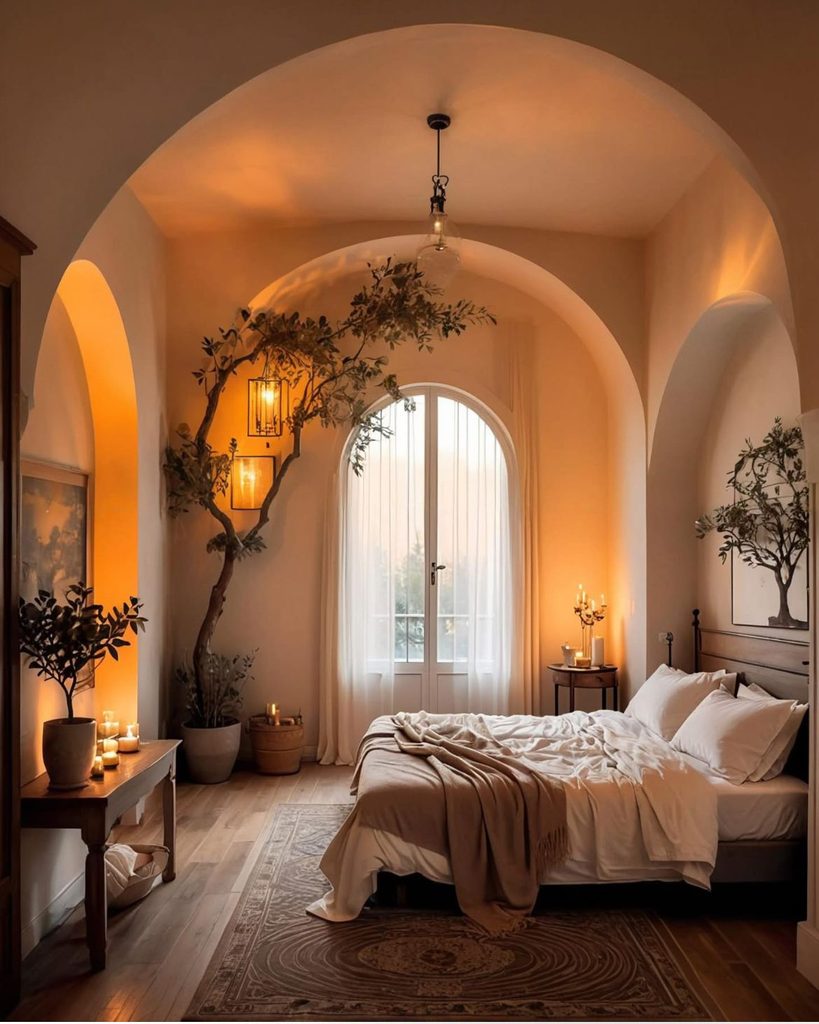
Arches are a familiar Mediterranean detail. You can use one behind the bed, around a doorway, or as a painted shape on the wall.
A real arched niche may require construction, but a painted arch is simple and affordable. Choose a shade slightly darker than the wall, such as clay, muted blue, or warm beige. Place the top of the arch just above the headboard.
You can also create a shallow display niche with an arched frame and add a small lamp, ceramic vase, or artwork. Keep the display simple so the shape remains the star.
Use painter’s tape and a pencil tied to a piece of string to create an even curve. Test the scale with paper before painting.
Arches work with Spanish revival, modern Mediterranean, boho, and contemporary styles. Their shape adds softness without requiring ornate furniture.
Now add a comfortable place to sit and slow down.
14. Place a Relaxed Bench or Woven Chair

A bedroom feels more complete when it has a small seating area. A wood bench at the foot of the bed, a cane chair by the window, or a low stool beside a dresser can serve this purpose.
Choose furniture with rounded edges or visible craftsmanship. A bench with a linen cushion adds comfort. A woven chair brings airiness and takes up less visual space than a padded armchair.
Keep the seating useful. It should be large enough for dressing, reading, or placing a folded blanket. Do not add a chair if it blocks a door, drawer, or walkway.
For a small room, use a slim bench instead of a chair. In a larger room, create a reading corner with a floor lamp and small side table.
This idea suits traditional, coastal, modern rustic, and eclectic bedrooms. The upholstery and wood finish can shift the mood.
One last layer can make the room feel deeply personal without adding much clutter.
15. Add Aged Mirrors and Personal Objects

An aged mirror brings light into the room and adds a slightly historic feeling. Choose a frame in distressed wood, antique brass, plaster, or black iron.
Place a large mirror across from a window to reflect daylight. A smaller round mirror above a dresser creates a relaxed focal point. Avoid placing a heavy mirror where it could fall above the bed unless it is properly secured.
Personal objects matter too. Add a travel photograph, a favorite book, a handmade bowl, or a small family piece. Mediterranean rooms feel collected over time, not purchased as a matching set.
Use only items you enjoy seeing every day. A bedroom should not become a display shelf for random decor.
This approach works with minimalist, vintage, coastal, and maximalist styles. The number of objects controls the level of visual detail.
Use a simple spending plan before buying the final pieces.
Mediterranean Bedroom Budget Tiers
| Budget level | Best updates | Typical material choices | Priority |
|---|---|---|---|
| Under $150 | Paint, pillows, baskets, ceramic accents | Cotton, faux plaster paint, woven fiber | Change color and texture |
| $150 to $500 | Linen bedding, rug, lamps, art | Linen blend, jute, ceramic, wood | Improve comfort and lighting |
| $500 to $1,500 | Bed frame, larger rug, curtains, dresser | Solid wood, wool, linen, iron | Build the main foundation |
| Over $1,500 | Flooring, custom beams, plaster, built-ins | Terracotta, natural stone, limewash | Add lasting architectural detail |
16. Blend Old and New Furniture

A Mediterranean bedroom should not look like every piece came from the same collection. Mix a weathered dresser with a newer upholstered bed, or pair antique-looking nightstands with clean ceramic lamps.
This contrast keeps the room fresh. Too many distressed pieces can make the space look artificial. Too many sleek pieces can remove the warmth.
Look for similar undertones rather than matching finishes. Honey wood and warm brass usually work together. Cool gray wood may clash with orange terracotta unless you balance it with blue or charcoal.
Before buying furniture, measure every doorway and wall. I also mark the furniture footprint on the floor with painter’s tape. It prevents expensive size mistakes.
The mix works in modern, traditional, industrial, and cottage homes. Just keep one or two repeating materials to make the room feel connected.
The final idea focuses on the small details that make the space feel restful.
17. Keep the Room Calm, Useful, and Uncluttered

The Mediterranean look depends on restraint. You want warmth, not a crowded collection of souvenirs. Leave some surfaces open so the eye has a place to rest.
Keep bedside tables useful. A lamp, book, water glass, and small ceramic dish may be all you need. Store chargers, lotions, and extra items in drawers or baskets.
Choose decorative details that support sleep. Soft fabrics, dimmable lamps, and quiet colors are more helpful than bright screens or too many hard objects.
Before finishing, walk through the room at night. Check whether the lighting is comfortable, whether rugs slip, and whether anything blocks drawers or doors.
This idea works with every home style because good function never goes out of date. The more practical the room is, the more relaxed it will feel.
Tips for Success
- Test paint colors on more than one wall before committing.
- Repeat two or three materials, such as wood, linen, and terracotta.
- Use warm light bulbs instead of cool white bulbs.
- Keep the largest furniture pieces in quiet neutral colors.
- Add color through items that are easy to replace, such as pillows and art.
- Measure rugs, walkways, and furniture before shopping.
- Leave open space around the bed so the room feels restful.
Common Mistakes and How to Avoid Them
Using too much orange
: Balance terracotta with warm white, cream, olive, or faded blue. Orange should be an accent, not the entire room.
Matching every piece of furniture
: Mix wood, iron, woven materials, and ceramic details. A collected look feels more natural than a complete matching set.
Choosing cold gray as the main neutral
: Use beige-gray, mushroom, sand, or warm white instead. These colors support the sun-washed Mediterranean mood.
Overloading the room with rustic decor
: Select a few strong pieces, such as a carved bed or woven rug. Too many distressed items can make the room feel staged.
Ignoring bedroom function
: Keep paths clear, use proper bedside lighting, and choose storage that hides daily clutter. Beauty should not make the room harder to use.
Hanging curtains too low
: Mount the rod above the window and extend it beyond the sides when possible. This improves light flow and makes the window look larger.
Similar Variations
- Spanish Mediterranean: Uses dark carved wood, iron details, terracotta, and bold patterned textiles.
- Greek Island Style: Focuses on bright white, simple shapes, pale blue, and breezy fabrics.
- Italian Rustic: Adds aged plaster, warm stone, rich wood, and softly faded earthy colors.
- Coastal Mediterranean: Blends linen, sand tones, natural fibers, and muted blue accents.
- Desert Mediterranean: Uses clay, ochre, cactus green, leather, and sculptural ceramics.
- Modern Mediterranean: Keeps the palette warm but uses clean furniture lines and minimal decoration.
A Mediterranean bedroom works best when it feels comfortable, sunlit, and naturally layered. Start with warm walls and simple bedding, then add wood, woven materials, ceramics, soft lighting, and a few personal pieces. You do not need to remodel the whole room to get the feeling.
Choose the ideas that fit your home, budget, and daily habits, and let the room develop slowly through thoughtful 17 Mediterranean Bedroom choices.
Leave a Reply