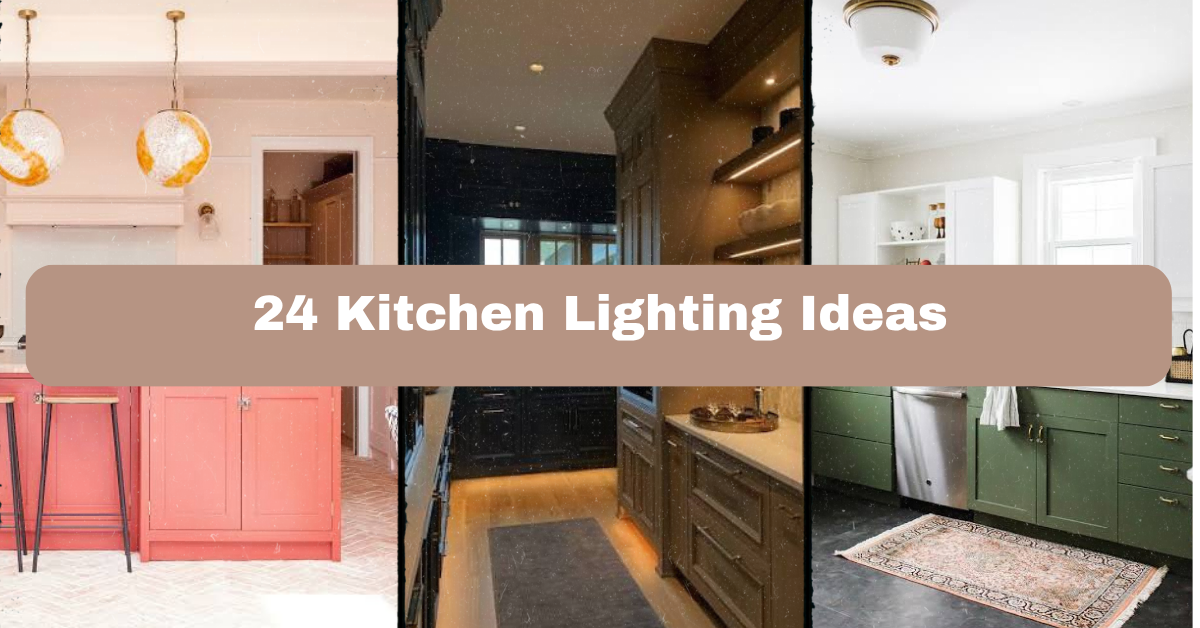
These 24 Kitchen Lighting Ideas will help you plan a kitchen that feels brighter, works better, and looks more finished. I’ll cover fixture types, placement, color temperature, materials, and budget-friendly updates.
Kitchen lighting should combine ambient, task, and accent fixtures. Use ceiling lights for general brightness, pendants or under-cabinet lights for work areas, and decorative fixtures for style. Choose suitable sizes, avoid glare, and use dimmers when possible.
You’ll find ideas for small kitchens, open-plan rooms, rentals, and full renovations. I’ll also share practical sizing tips so your lighting looks planned instead of random.
Topic Primer: How Kitchen Lighting Should Work
I think of kitchen lighting as a layered plan rather than one big fixture in the middle of the ceiling. Ambient lighting fills the room. Task lighting helps you chop, cook, wash dishes, and read recipes. Accent lighting adds mood and draws attention to shelves, artwork, tile, or architectural details.
The best kitchens use all three layers. A bright ceiling fixture alone can leave shadows beneath wall cabinets. Pendant lights may look beautiful but still fail to light a countertop properly. Start by thinking about what you do in each zone. Then choose fixtures that support those tasks while matching your cabinets, flooring, hardware, and overall home style.
1. Hang Oversized Pendants Above the Island
Large pendant lights create a strong focal point above a kitchen island. They work especially well when the island is long, plain, or painted in a contrasting color. Choose one wide pendant for a smaller island, or use two or three matching fixtures for a larger surface.
I like pendants with a simple shape, such as a dome, globe, cone, or cylinder. Black metal adds contrast to white cabinets, while brass or aged bronze brings warmth to gray or blue kitchens. As a practical rule, hang the bottom of the fixture about 30 to 36 inches above the countertop, adjusting for sightlines.
This idea fits modern, farmhouse, transitional, and industrial kitchens. Once your island is glowing, the next step is lighting the work areas around it.
2. Add Slim Under-Cabinet Light Bars
Under-cabinet lighting is one of the most useful kitchen upgrades. It shines directly onto countertops, so your hands do not cast shadows while you prepare food. Slim LED bars provide even coverage and can stay almost invisible beneath wall cabinets.
Choose warm white light around 2700K to 3000K if you want a cozy look. A color temperature near 3500K can feel cleaner and brighter without looking overly blue. Install the light toward the front edge of the cabinet, not all the way at the back. That placement spreads light across the counter.
Use aluminum channels or frosted covers to soften bright LED points. Under-cabinet lighting suits almost every home style because it hides neatly and supports the room rather than competing with it. Now let’s look at a ceiling fixture that can carry the whole room.
3. Choose a Flush-Mount Ceiling Fixture
A flush-mount light is a smart choice when your kitchen has a low ceiling. It sits close to the ceiling and provides broad ambient light without making the room feel crowded. Look for a fixture with a diffuser, which spreads light more gently than an exposed bulb.
A round white fixture blends into the ceiling, while aged brass or matte black can act as a decorative detail. In a small kitchen, select a low-profile design that is wide enough to distribute light but not so large that it overwhelms the cabinets.
Install the fixture near the center of the main walking area. This option works in contemporary, cottage, Scandinavian, and traditional kitchens. If you have higher ceilings, you can make the ceiling itself part of the design.
4. Use a Semi-Flush Fixture for a Decorative Touch
Semi-flush fixtures hang slightly below the ceiling, giving you more style than a standard flush mount without taking up the space of a chandelier. They are useful in kitchens with ceilings around eight feet high, where a long hanging fixture may feel awkward.
Try a linen shade for a soft traditional look, clear glass for a vintage kitchen, or a brass cage for an industrial room. Make sure the fixture does not block cabinet doors or interfere with tall family members. A semi-flush light works nicely over a breakfast table or in the center of a compact kitchen.
Use a dimmable LED bulb so the fixture can feel bright during meal prep and softer during dinner. This adaptable choice leads naturally to a more focused lighting plan.
Kitchen Fixture Size Guide
| Kitchen area | Useful fixture size | Recommended placement |
|---|---|---|
| Small 6-by-8-foot kitchen | 12 to 18 inches wide | Center of open floor area |
| Medium 10-by-12-foot kitchen | 18 to 24 inches wide | Between work zones |
| Island up to 6 feet long | Two pendants, 8 to 12 inches wide | 24 to 30 inches apart |
| Island 7 to 9 feet long | Two or three pendants | Centered over the work surface |
| Breakfast table | Fixture about half to two-thirds of table width | 30 to 36 inches above table |
5. Install Recessed Lights in a Balanced Grid
Recessed lights give a kitchen a clean, uncluttered ceiling. They are especially helpful in open-plan layouts where you want consistent light across the kitchen without adding several hanging fixtures.
Avoid placing every downlight in a perfect line down the middle of the room. Instead, position some closer to counters and cabinets, usually about 24 to 30 inches from the wall. This helps light the work surface rather than the floor. Use adjustable recessed lights if you want to highlight artwork, open shelving, or a textured backsplash.
Choose trim in white, black, or metallic finishes based on your ceiling and hardware. Recessed lighting can suit modern and minimalist rooms, but careful spacing also works in traditional kitchens. Next, we’ll use a linear fixture to bring several bulbs into one strong design.
6. Try a Linear Chandelier Over the Island
A linear chandelier is a long fixture designed for islands, peninsulas, and dining areas. It provides the visual impact of a chandelier while spreading light across a wide surface. This makes it a strong choice when one central pendant would leave the ends of the island dim.
Look for a design with three to six bulbs, depending on the fixture length. Glass shades keep the room feeling open, while solid metal shades create a bolder look. Coordinate the finish with cabinet pulls, faucets, or stools, but do not feel forced to match every metal exactly.
Keep the fixture centered over the island and high enough to preserve conversation across the counter. Linear chandeliers fit modern, transitional, farmhouse, and industrial styles. If you want a lighter visual effect, switch from a solid fixture to glass.
7. Pick Clear Glass Pendants for an Airy Feel
Clear glass pendants add light without creating a heavy visual block. They are ideal for small kitchens, narrow islands, and rooms with busy backsplashes. Since the shades are transparent, they allow more of the cabinet color and tile pattern to remain visible.
Use round glass for a soft vintage feeling, cone-shaped glass for a modern room, or seed-filled glass for a relaxed farmhouse look. Clear glass shows dust and fingerprints, so wipe the shades during regular kitchen cleaning. Pair them with warm bulbs to keep the room from looking cold.
For a useful mix, combine clear pendants above the island with hidden under-cabinet strips below. This look adapts well to coastal, cottage, transitional, and contemporary homes. The next idea keeps the open feeling but adds more color.
8. Add Color with Opal or Tinted Glass
Colored glass can make kitchen lighting feel more personal. Opal glass gives off a soft, even glow, while amber, smoke, green, or blue glass adds a small but memorable color note. This is a good way to bring personality into a neutral kitchen without repainting cabinets.
Choose one color that relates to your backsplash, runner, bar stools, or artwork. Keep the rest of the lighting simple so the glass remains the feature. Opal shades are especially useful when you dislike the glare from clear bulbs.
Use LED bulbs with a warm color temperature and check that the glass does not change the light too dramatically. Tinted glass works in retro, eclectic, coastal, modern, and vintage kitchens. From here, we can make the light itself part of the room’s texture.
Glass Shade Comparison
| Shade type | Light quality | Best use | Style match |
|---|---|---|---|
| Clear glass | Bright and direct | Small kitchens and narrow islands | Modern, coastal, farmhouse |
| Opal glass | Soft and diffused | Rooms needing gentle general light | Scandinavian, transitional |
| Amber glass | Warm and tinted | Dining corners and breakfast areas | Vintage, boho, traditional |
| Smoke glass | Moody and subtle | Large kitchens with strong ambient light | Modern, industrial |
| Seeded glass | Textured sparkle | Decorative pendants and semi-flush fixtures | Cottage, farmhouse |
9. Light the Toe-Kick for a Floating Effect
Toe-kick lighting runs along the recessed space beneath lower cabinets. It creates a soft glow near the floor and makes cabinets appear to float. I find it especially useful at night when you want to move through the kitchen without turning on bright overhead lights.
Use a low-output LED strip inside an aluminum channel. Add a dimmer or motion sensor so the light does not become harsh. Warm white is usually the most comfortable choice for evening use. Keep the strip hidden from direct view, since exposed LED dots can look unfinished.
Toe-kick lighting works with flat-panel cabinets, Shaker doors, and traditional cabinetry. It looks great in modern, coastal, and minimalist spaces, but it can also quietly support a classic kitchen. Next, let’s move upward and give glass-front cabinets their own glow.
10. Illuminate Glass-Front Cabinets
Glass-front cabinets become a decorative feature when lit from inside. Interior lighting can highlight dishes, glassware, cookbooks, or colorful ceramics. It also gives the kitchen a warmer look after dark.
Install slim vertical or horizontal LED strips inside the cabinet frame. Choose fixtures with hidden wiring and a frosted cover. If the cabinet has adjustable shelves, make sure the light reaches every level. Warm white lighting works well with wood, cream, brass, and earthy ceramics.
Avoid filling every shelf with small objects. Leave some open space so the light can create depth. This idea suits traditional, English country, transitional, and modern kitchens, depending on the cabinet style and display pieces. Once your cabinets glow, open shelves can use a similar trick.
11. Add Small Lights Beneath Open Shelves
Open shelves often look beautiful but can make the wall feel dark. A narrow LED strip beneath each shelf solves that problem while adding a soft decorative layer. The light can shine onto the counter or highlight the objects sitting below it.
Choose a shelf with enough depth to hide the light from normal eye level. Run the strip toward the front underside for stronger task lighting, or place it farther back for a gentle wall wash. Keep the shelf display simple with plates, bowls, jars, plants, or a framed print.
Use wood shelves with black brackets for a warm industrial look, or white shelves for a bright Scandinavian effect. This lighting style adapts to rustic, coastal, farmhouse, and modern kitchens. Next, we’ll create a small lighting moment over a less obvious zone.
12. Brighten a Kitchen Nook with a Pendant
A breakfast nook, corner table, or built-in bench deserves its own light. A pendant helps define the area and makes it feel like a separate destination within an open kitchen. It can also add color or shape without changing the rest of the room.
Choose a smaller fixture that relates to the main kitchen lighting but does not match it perfectly. A woven shade warms a white nook, while a brass globe adds polish to a dark banquette. Hang it high enough to avoid blocking views across the table. Use a dimmer for relaxed breakfasts and evening meals.
This approach works in apartments, traditional homes, farmhouse kitchens, and open-plan spaces. The next idea is useful when the kitchen needs both function and a bit of drama.
Suggested Light Levels by Kitchen Zone
| Kitchen zone | Main need | Practical lighting approach |
|---|---|---|
| Food preparation counter | Clear, shadow-free light | Under-cabinet LED, 3000K to 3500K |
| Island seating | Comfortable task and social light | Dimmable pendants, 2700K to 3000K |
| Sink | Direct light without glare | Small pendant or recessed light |
| Pantry | Bright shelf visibility | Vertical LED strips or ceiling light |
| Toe-kick area | Safe nighttime movement | Low-output warm LED, preferably on sensor |
| Dining nook | Relaxed atmosphere | Dimmable pendant with diffuser |
13. Install a Pendant Above the Sink
A pendant above the sink adds charm to a space that is often treated as purely practical. It can frame a window, fill an empty corner, or bring a repeated metal finish into the room.
Select a compact fixture with a shade that directs light downward. Clear glass works well when you want to preserve a view, while metal shades provide stronger visual contrast. Avoid fixtures that hang so low they get splashed or block your face when washing dishes.
As a practical step, center the fixture over the sink rather than over the window unless the wiring requires another location. This idea fits farmhouse, cottage, modern, and traditional kitchens. If a pendant feels too exposed near water, a wall-mounted option may be better.
14. Use Adjustable Track Lighting for Flexible Coverage
Track lighting is helpful when the kitchen layout may change or when one ceiling box needs to serve several zones. Adjustable heads can aim at the sink, counters, shelves, pantry entrance, or artwork.
Choose a slim black track for an industrial or modern room, or a white track that blends into the ceiling. Use several smaller heads instead of a few oversized ones. Aim the lights at surfaces, not directly into people’s eyes. If the kitchen has a long galley layout, run the track parallel to the counters.
Track lighting works in rentals when the fixture can replace an existing ceiling light, though you should check local rules before changing wiring. It suits contemporary, loft, and casual farmhouse interiors. Now let’s bring a softer, more traditional layer to the walls.
15. Add Wall Sconces Beside Open Shelves
Wall sconces provide a decorative glow and can make a backsplash wall feel finished. Place them beside open shelving, a range hood, a coffee station, or a piece of kitchen artwork. They are especially useful when ceiling lighting feels too flat.
Pick swing-arm sconces for adjustable task lighting, or fixed shades for a more decorative effect. Aged brass suits warm white cabinets, while black metal looks sharp against pale tile. Use shades that direct light down and out, and confirm that the fixture will not interfere with cabinet doors.
Sconces work beautifully in traditional, European, modern, and cottage kitchens. In a narrow room, wall lighting can provide style without taking up ceiling space. The next idea uses an architectural feature as the light source.
16. Create a Backlit Backsplash
A backlit backsplash can turn translucent stone, glass tile, or textured panels into a glowing feature. It is a more involved renovation idea, but the result can be striking. The light shines from behind the surface, making patterns and color variations visible.
This works best with materials that allow some light through, such as certain onyx slabs, frosted glass, or translucent resin panels. Use evenly spaced LED panels or strips to prevent bright spots. A dimmer is essential because the backsplash should not overpower the room.
Keep the surrounding cabinets and hardware fairly simple. This idea suits luxury, contemporary, and dramatic transitional kitchens, though smaller panels can work in eclectic spaces. After a bold feature wall, a simple ceiling treatment may be the better balance.
Lighting Budget Tiers
| Project | Typical difficulty | Main materials needed | Best for |
|---|---|---|---|
| Replace bulbs with warm LEDs | Low | LED bulbs | Renters and quick refreshes |
| Add plug-in under-cabinet bars | Low | Light bars, adhesive clips | Apartments and small kitchens |
| Install new pendants | Medium | Fixtures, ceiling boxes, wiring | Islands and sinks |
| Add recessed lights | Medium to high | Downlights, wiring, ceiling access | Full remodels |
| Install toe-kick lighting | Medium | LED strips, channels, controls | Custom cabinets |
| Backlight a backsplash | High | Translucent surface, LED panels, wiring | Feature renovations |
17. Use a Wood-Bead or Woven Light Fixture
Natural materials bring softness to kitchens filled with hard surfaces. A woven rattan, seagrass, bamboo, or wood-bead fixture can warm up white cabinets and stone counters. It also adds texture without requiring a bold color.
Choose a shade that is easy to clean and far enough from the cooktop to avoid grease buildup. A woven pendant works best above a dining table, island seating area, or breakfast nook rather than directly over a heavy cooking zone.
Pair it with wood stools, handmade pottery, linen curtains, or warm flooring. Keep nearby metals simple so the texture remains the star. This approach suits coastal, boho, farmhouse, organic modern, and relaxed traditional homes. If texture is not your style, clean metal can create an equally clear statement.
18. Select a Matte Black Statement Fixture
Matte black lighting gives a kitchen instant definition. It stands out against white, cream, pale wood, and light gray surfaces. A black fixture can also repeat the color of window frames, cabinet pulls, bar stools, or a range hood.
Use a sculptural black chandelier for a dramatic room, a simple dome pendant for a casual kitchen, or a linear bar for a long island. Balance the dark fixture with lighter surroundings so the space does not feel heavy. If your kitchen already has dark cabinets, use a fixture with glass or brass details for contrast.
This look adapts easily to modern, industrial, farmhouse, and transitional interiors. Once you have a strong fixture, the bulbs themselves can add another layer of personality.
19. Choose Decorative Bulbs for Vintage Character
Exposed filament bulbs can give kitchen lighting a warm, vintage feel. They work best in fixtures with open cages, clear glass shades, or simple sockets. The visible bulb becomes part of the decoration.
Choose LED filament bulbs instead of old-style incandescent bulbs when possible. They use less energy and produce less heat while keeping the classic appearance. Select a bulb shape that fits the fixture, such as globe, tubular, or Edison-style. Use a lower brightness in decorative fixtures if under-cabinet and ceiling lights already handle the task work.
This idea suits industrial, vintage, farmhouse, and eclectic kitchens. Avoid using exposed bulbs everywhere, since too many can create glare and visual clutter. Next, we’ll soften a long room with repeated light sources.
20. Run a Multi-Light Bar Along a Galley Kitchen
A multi-light bar can spread light along a narrow galley kitchen without requiring several separate ceiling fixtures. It usually includes two to five adjustable heads attached to one slim base.
Aim each head at a different zone. One can light the sink, another the prep counter, and another the pantry or doorway. Choose a white bar for a low-profile look, or brass and black for more contrast. Make sure the fixture does not hang low enough to interfere with tall cabinet doors.
This design is practical in apartments, narrow homes, and older kitchens with limited wiring. It works with contemporary, Scandinavian, industrial, and simple traditional styles. If your ceiling is high, you can create a similar spread with a more decorative fixture.
Fixture Material Guide
| Material | Visual effect | Cleaning needs | Suitable kitchen styles |
|---|---|---|---|
| Clear glass | Open and bright | Frequent wiping | Coastal, modern, farmhouse |
| Brass | Warm and polished | Occasional polishing | Traditional, transitional |
| Matte black metal | Strong contrast | Easy routine dusting | Industrial, modern |
| Woven fiber | Soft and textured | Dust carefully | Boho, coastal, organic |
| Opal glass | Calm and diffused | Simple glass cleaning | Scandinavian, cottage |
| Aged bronze | Rich and grounded | Low-maintenance finish | Rustic, traditional |
21. Add Motion-Sensor Pantry Lighting
Pantry lighting should turn on when you need it, not after you have already searched in the dark. Motion-sensor LED lights are a practical solution for tall cabinets, walk-in pantries, and deep storage areas.
Use battery-powered bars for a simple update, or hardwired strips for a permanent remodel. Place vertical lights along the front edges of shelves so food labels remain visible. Choose a neutral or warm-neutral color temperature that makes ingredients easy to identify.
Check the sensor range before mounting the light, and keep it away from areas where doors or pets may trigger it constantly. This idea works with modern, farmhouse, utility, and traditional kitchens. Now let’s use lighting to bring attention to something beautiful rather than simply functional.
22. Highlight Artwork or a Decorative Hood
Picture lights and adjustable accent fixtures can draw attention to kitchen artwork, a painted hood, a tile mural, or a collection of pottery. This creates depth and helps the room feel more like a living space.
Use a narrow picture light above a framed print, or aim a small recessed fixture at a decorative range hood. The beam should wash the feature evenly without producing a harsh hotspot. Keep accent lighting softer than task lighting so it supports the room instead of competing with it.
Choose artwork that can handle kitchen conditions, and avoid placing delicate paper directly over a high-steam cooking area. This idea fits traditional, eclectic, European, and modern kitchens. For an even softer effect, indirect ceiling light can create a gentle background glow.
23. Add Cove Lighting Above Cabinets
Cove lighting hides above cabinets and shines upward toward the ceiling. It creates a soft layer of indirect light that makes the kitchen feel taller and calmer. This is especially useful when there is a gap between the cabinet tops and the ceiling.
Install a continuous LED strip in an aluminum channel so the light looks smooth. Clean the cabinet tops first, since dust will become more visible when the area is lit. Keep the brightness modest and connect the strip to a dimmer.
Warm light works well with wood, cream, tan, and brass. Cooler neutral light can suit white or gray modern cabinetry, but avoid an icy blue tone. Cove lighting suits transitional, contemporary, classic, and relaxed farmhouse kitchens. The final idea combines several layers into one easy control system.
24. Control Layers with Smart Dimmers
Smart dimmers let you adjust brightness by time of day, activity, or mood. You might use bright under-cabinet and ceiling lighting while cooking, then lower the pendants and turn on the toe-kick lights for evening gatherings.
Group fixtures by purpose rather than connecting every light to one switch. A useful setup includes one control for ambient lights, one for task lights, and one for decorative or accent lights. Confirm that your bulbs and fixtures are compatible with the dimmer before installation.
Smart controls can be simple wall dimmers, app-based systems, or voice-connected devices. They work in almost every style because the technology stays behind the scenes. With the layers working together, your lighting plan becomes both practical and personal.
Tips for Success
- Measure the island, table, and ceiling before buying any fixture.
- Use dimmable bulbs in every frequently used kitchen light.
- Keep task lighting aimed at counters instead of directly at eye level.
- Choose one main metal finish and one supporting finish for a coordinated look.
- Use warm white light in living and dining areas, but choose a slightly clearer tone for food preparation if needed.
- Test pendant height with a temporary cord or paper template before final installation.
- Plan switch locations near entrances and work zones so you do not cross a dark room to turn on the lights.
Common Mistakes and How to Avoid Them
Using only one ceiling fixture
: One fixture often creates shadows beneath cabinets and over counters. Add under-cabinet lighting and at least one decorative or task layer.
Hanging pendants too low
: Low fixtures can block conversation and views across the island. Start around 30 to 36 inches above the counter, then adjust for your household and sightlines.
Mixing too many bulb colors
: Different color temperatures can make one kitchen look patchy. Select a consistent range, usually warm white for decorative fixtures and a slightly clearer white for work areas.
Ignoring glare
: Exposed bulbs, shiny tile, and polished counters can reflect harsh light. Use frosted diffusers, shaded fixtures, and dimmers to soften the effect.
Choosing style before scale
: A beautiful fixture can still look wrong if it is too small or too large. Measure the room and island first, then compare the fixture dimensions.
Forgetting cabinet doors and clearances
: A pendant or sconce may interfere with doors, windows, or tall users. Mark the fixture footprint with painter’s tape before installation.
Similar Variations
- Coastal Kitchen Lighting: Use clear glass, woven shades, pale brass, and soft blue accents for a breezy look.
- Modern Farmhouse Lighting: Combine black metal, simple pendants, warm bulbs, and classic Shaker cabinetry.
- Organic Modern Lighting: Pair natural wood, linen, rattan, and soft white LEDs with stone and earthy colors.
- Industrial Kitchen Lighting: Choose exposed bulbs, metal shades, track lighting, and dark hardware.
- English Cottage Lighting: Mix aged brass, fabric shades, small sconces, and warm cabinet colors.
- Scandinavian Kitchen Lighting: Use pale finishes, opal glass, clean shapes, and bright but gentle task lighting.
Good kitchen lighting should do more than fill the ceiling. It should help you work safely, make the room feel welcoming, and support the colors and materials you already love. Start with ambient, task, and accent layers, then add fixtures that suit your space and daily routine.
Whether you are replacing one pendant or planning a full lighting renovation, these 24 Kitchen Lighting Ideas can help you create a brighter, more comfortable kitchen.
Leave a Reply