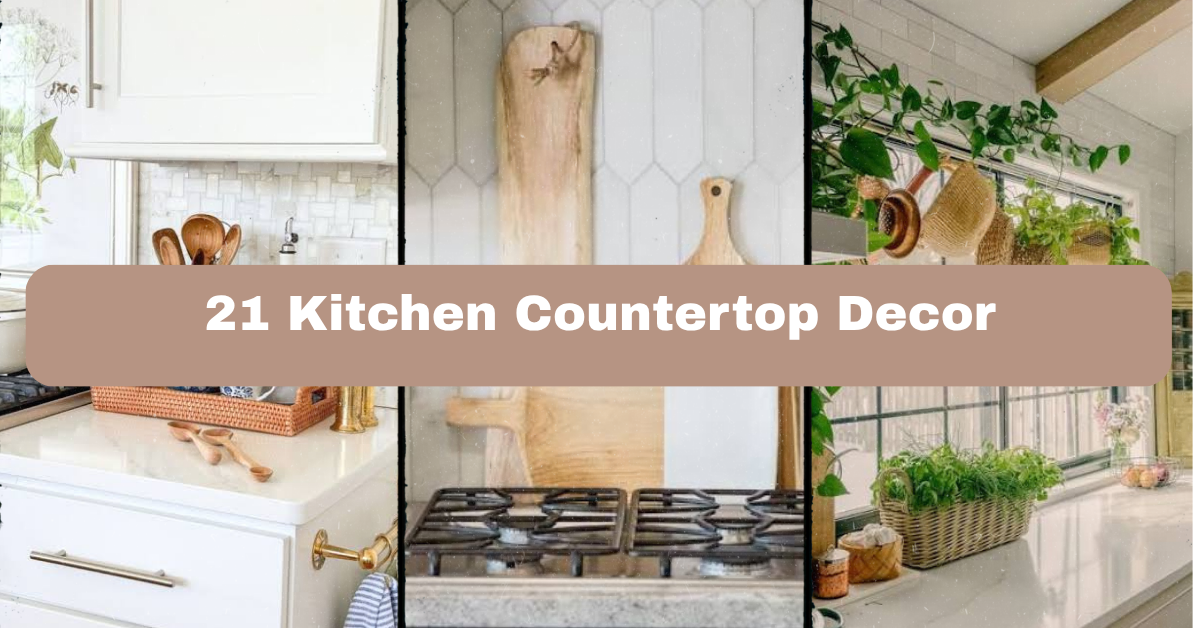
21 Kitchen Countertop Decor ideas can help you create a kitchen that feels useful, tidy, and personal without making the work surface hard to use.
What should you place on a kitchen countertop? Use a small mix of practical and decorative pieces, such as a tray, cutting board, plant, bowl, canister, lamp, or cookbook. Keep daily work zones clear and match colors to the room.
I’ll walk you through 21 easy ideas, plus simple size guides, style tips, and mistakes to avoid. The goal is a counter that looks finished but still works hard.
Understanding Kitchen Countertop Decor
Kitchen countertop decor is the art of styling your worktops with items that add beauty without blocking meal prep. I like to think of the counter as a small display area with a job to do. The best pieces are useful, easy to move, and suited to your kitchen’s size.
Start by noticing what already lives there. Do you have too many appliances? Is one corner empty? Are your colors flat? These answers guide your choices. A small kitchen may need one strong arrangement, while a large island can handle several grouped items. Stick to a simple palette, vary heights, and leave open space around sinks, cooktops, and food preparation areas.
1. Group Everyday Items on a Decorative Tray
A tray is one of the easiest ways to make countertop items look organized. Place olive oil, salt, pepper, and a small spoon rest on one surface. The tray creates a visual boundary, so these useful items look planned instead of scattered.
Choose wood for a warm farmhouse kitchen, marble for a classic room, or black metal for a modern space. Keep the tray near the stove if you cook often, but leave enough room to safely set down hot cookware. I suggest using a tray with raised edges because bottles are less likely to slide.
For an immediate update, remove everything from one counter corner, clean the surface, then return only three or four items. This idea works in modern, traditional, industrial, and cottage kitchens. Once your everyday station is set, you can add warmth with natural materials.
2. Display a Leaning Cutting Board Collection
Large cutting boards can become attractive kitchen wall or countertop decor when you lean them against the backsplash. Layer two or three boards in different sizes. A round board, a rectangular board, and a paddle-shaped board create variety without needing bright colors.
Wood boards bring warmth to white counters and cool gray cabinets. If your kitchen is colorful, choose boards with simple grain so the display does not compete with the room. Keep boards used for food prep clean and dry. Decorative boards should be labeled clearly or kept separate from cooking boards.
Place the largest board in back and angle the others slightly forward. Add a small bowl or plant beside the stack, not in front of it. The arrangement fits farmhouse, Scandinavian, coastal, and rustic kitchens. Next, let’s look at a simple way to bring life into the display.
3. Add a Small Herb Garden by the Window
Fresh herbs can serve as both countertop decor and useful cooking tools. Place basil, rosemary, thyme, or mint in matching pots near a sunny window. The green leaves soften hard surfaces and add a fresh scent.
Use three pots at different heights, or place the herbs in one long planter. Terra-cotta works well with farmhouse and Mediterranean kitchens. White ceramic feels clean in a modern room. Make sure the plants receive the light they need, and use saucers to protect the countertop from water.
Trim herbs often so they stay full rather than tall and thin. If your kitchen lacks sunlight, choose a quality artificial herb display instead of forcing real plants to struggle. This idea suits almost any design style. With greenery in place, the next step is adding a controlled pop of color.
4. Use a Colorful Ceramic Bowl
A ceramic bowl can act as a bright focal point on a plain kitchen island. Fill it with lemons, apples, onions, or nothing at all. A beautiful empty bowl still adds shape and color.
Choose one shade already found in the room. A blue bowl can connect with backsplash tile, while a green bowl may echo nearby plants. In a neutral kitchen, terracotta, mustard, or deep navy can add interest. Pick a bowl with a wide base so it feels stable and does not tip when someone reaches for fruit.
Keep the bowl within easy reach if you use it for produce. Wash it regularly and avoid overfilling it, since a crowded bowl looks messy. This approach works with modern, coastal, vintage, and eclectic decor. Now that we have four ideas, here is a quick guide to help you balance materials and colors.
Quick Material and Color Guide
| Kitchen look | Countertop accent colors | Useful materials | Best decorative pairing |
|---|---|---|---|
| Modern | Black, white, gray, muted green | Glass, metal, smooth ceramic | Bowl with a sculptural vase |
| Farmhouse | Cream, sage, warm wood, soft blue | Wood, stoneware, woven fiber | Cutting boards and a crock |
| Coastal | White, sand, pale blue, sea green | Rattan, light wood, ceramic | Bowl with a glass vase |
| Traditional | Navy, cream, brass, burgundy | Marble, brass, porcelain | Tray with canisters |
| Industrial | Charcoal, rust, tan, black | Metal, reclaimed wood, concrete | Wire basket and dark pottery |
| Scandinavian | White, oak, pale gray, soft beige | Light wood, matte ceramic, linen | Simple bowl and small plant |
5. Style a Stand with a Favorite Cookbook
A cookbook stand gives your counter height and personality. Choose a book with a beautiful cover, open it to a favorite recipe, and place it where it will not get splashed. The display feels personal and can remind you to cook more often.
Wood stands suit warm kitchens, while clear acrylic stands work well with sleek cabinets. If you actually use the book, pick a stand with a wide base and a front ledge. Keep it away from direct heat and wipe it after cooking.
You can place a small measuring cup or herb pot beside the stand to complete the scene. Avoid displaying several books unless you have a large island, because stacked books can look heavy. The idea works in farmhouse, modern, cottage, and traditional homes. A book adds personality, and the next idea adds practical storage.
6. Arrange Matching Countertop Canisters
Canisters keep flour, sugar, coffee, tea, or snacks close at hand while giving the counter a tidy look. Matching containers create a calm visual line, especially in kitchens with open shelves or glass cabinet doors.
Use three containers in different sizes rather than six tiny ones. Labels help everyone find what they need. Glass shows the contents and suits modern or vintage rooms. Ceramic hides clutter and feels softer. Choose airtight lids for dry goods and keep the containers away from steam from the dishwasher or stove.
Before buying, measure your cabinet clearance and counter depth. You want the containers to look substantial without taking over the work surface. This idea adapts easily to farmhouse, minimalist, traditional, and industrial kitchens. Once storage looks intentional, you can bring in texture with woven pieces.
7. Add a Woven Basket for Soft Texture
A small woven basket can hold bread, napkins, towels, or packaged snacks. It breaks up the hard lines of stone, tile, and metal. I especially like this idea in kitchens that feel cold or overly polished.
Choose seagrass, rattan, jute, or wire with a fabric liner. The basket should be easy to lift and clean. Place it at the end of an island or under a raised shelf, where it will not interfere with chopping. A lidded basket hides visual clutter, while an open basket makes daily items easy to grab.
Stick with natural tan for coastal or farmhouse rooms. Try black woven fiber in a modern kitchen. This idea also works in boho, rustic, and transitional homes. After adding texture, use a small lamp to make the counter feel more welcoming.
8. Place a Small Countertop Lamp
A countertop lamp can make a kitchen feel warm at night, especially if the room has harsh ceiling lighting. Place one at the end of an island, on a coffee station, or in a dark corner away from water.
Pick a lamp with a fabric, ceramic, or metal base that matches your hardware. A small rechargeable lamp is useful when outlets are limited. For safety, keep cords away from sinks and burners. Choose a warm white bulb, usually around 2,700K to 3,000K, for a soft evening glow.
The lamp should be tall enough to notice but not so tall that it blocks sight lines across the kitchen. This detail works in modern, vintage, cottage, and Scandinavian spaces. Here is a practical size guide before we continue with more display ideas.
Countertop Decor Size Guide
| Counter area | Suggested number of groupings | Approximate item height | Open space to preserve |
|---|---|---|---|
| Small counter, under 4 feet | 1 grouping | 6 to 12 inches | At least half the surface |
| Standard counter, 4 to 6 feet | 1 to 2 groupings | 8 to 16 inches | 18 to 24 inches for prep |
| Kitchen island, 6 to 8 feet | 2 to 3 groupings | 10 to 20 inches | 30 to 36 inches for serving |
| Large island, over 8 feet | 2 to 4 groupings | 12 to 24 inches | One clear prep zone |
| Coffee station | 1 focused grouping | 8 to 18 inches | Space for mugs and machine |
9. Create a Dedicated Coffee or Tea Station
A coffee station turns a forgotten counter corner into a useful feature. Place the coffee maker, mugs, sugar bowl, and coffee canister together. A tray can keep the setup neat and make it easy to move when you need more work space.
Use a small shelf or mug hooks if you need vertical storage. Keep the color scheme simple. Black and wood feel modern and warm, while white and brass create a classic look. Add one small plant or framed print, but do not crowd the area with too many accessories.
Leave room beside the machine for filling the reservoir and setting down a cup. This idea fits apartment kitchens, family homes, farmhouse spaces, and contemporary rooms. Once your beverage area is working well, a vertical display can add interest without using much counter space.
10. Lean Framed Art Against the Backsplash
Artwork does not have to hang on the wall. A framed print leaning against the backsplash can fill an empty area and make the kitchen feel more lived in. Choose food illustrations, botanical drawings, simple text art, or a small landscape.
Protect the art from splashes by placing it away from the sink and stove. Use a frame with glass or acrylic that can be wiped clean. The colors should repeat something already in the room, such as cabinet paint, tile, or bar stools.
Layer the frame behind a board or vase for a relaxed look. In a small kitchen, use one narrow frame rather than a gallery wall. This idea suits eclectic, traditional, cottage, and modern homes. If your kitchen needs more height, the next idea creates it with a vase.
11. Add a Tall Vase with Simple Branches
A tall vase gives the countertop a strong vertical shape. Fill it with eucalyptus, olive branches, dried stems, or seasonal greenery. You do not need a large bouquet. A few branches can look calm and polished.
Choose a narrow vase for a small kitchen and a wider one for a large island. Matte pottery feels earthy, clear glass feels light, and brass adds a classic touch. Keep branches trimmed so they do not block cabinets, windows, or conversation across the island.
If you use fresh flowers, change the water often and protect wood counters from moisture. Dried stems need little care but should stay away from open flames. This idea works with coastal, rustic, modern, traditional, and organic styles. From tall decor, let’s move to a low display that keeps sight lines clear.
12. Build a Low Bowl and Candle Arrangement
A low arrangement is a good choice when you want decoration without blocking the room. Use a shallow bowl, a small candle, and one natural object such as a stone, pinecone, or piece of driftwood. Keep the colors close so the display feels calm.
Place the pieces on a small tray to make cleaning easier. If you burn the candle, keep it far from towels, paper, cabinets, and food packaging. Battery candles are safer for busy households and still create a warm glow.
Choose ceramic and wood for a rustic kitchen, glass and metal for a modern one, or shell-inspired pieces for a coastal room. The low profile works especially well on islands. The following table can help you choose decor by budget and maintenance level.
Budget and Maintenance Comparison
| Decor choice | Typical cost level | Care needed | Best for |
|---|---|---|---|
| Ceramic bowl | Low to medium | Wash and dry regularly | Color and fruit storage |
| Wooden cutting boards | Medium | Oil occasionally, keep dry | Warmth and layering |
| Small live herbs | Low | Water and trim weekly | Sunny windows |
| Countertop lamp | Medium | Dust and check cord safety | Evening ambiance |
| Woven basket | Low to medium | Shake out and spot clean | Soft storage |
| Framed art | Low to medium | Dust and protect from splashes | Personality |
| Stone or marble tray | Medium to high | Wipe spills quickly | Polished organization |
13. Use a Cake Stand for Height
A cake stand can display fruit, pastries, soap, or a small plant. Its raised shape makes a flat countertop more interesting. It is also a smart way to keep frequently used items easy to reach.
Use a wooden stand in a farmhouse kitchen, glass in a traditional room, or white ceramic in a clean modern space. Avoid placing the stand beside the sink if it holds food, since water can create a mess. A cloche can protect baked goods, but it should be washed often.
Keep the display simple. One cake stand is enough for most counters. If you have a long island, place it at one end and leave the middle open. This idea works across many styles. Next, we’ll make a practical cleaning station look more attractive.
14. Upgrade the Sink Area with a Stone Tray
The sink area often collects soap, brushes, sponges, and hand lotion. A small stone, ceramic, or wood tray can bring order to this busy spot. Place the soap dispenser and hand lotion on it, then keep the scrub brush in a small holder beside the tray.
Choose materials that tolerate water. Marble and ceramic are easy to wipe, while untreated wood needs extra care. Use a tray with small feet or a raised edge so water does not remain trapped under the bottles.
Match the dispenser to your cabinet hardware for a polished look. Black works with modern kitchens, brass suits traditional rooms, and brushed nickel blends easily with transitional styles. This setup fits nearly every home. Once the sink is neat, you can use one small piece to add a personal touch.
15. Display a Handmade Pottery Piece
A handmade pottery bowl, vase, or utensil holder adds character that mass-produced decor cannot always provide. Look for small differences in shape and glaze. Those details make the counter feel collected over time.
Choose a piece that supports the room’s palette. Cream pottery blends into a light kitchen, while a deep blue or rust glaze creates a focal point. Use a pottery crock for wooden spoons if you want decoration with a clear purpose.
Do not place delicate pottery where children or pets can knock it down. Set it on a stable area away from the edge. This idea works beautifully in rustic, wabi-sabi, cottage, Mediterranean, and modern kitchens. A single handmade item can be enough, but the next idea brings in a group of small objects.
16. Create a Mini Seasonal Display
A small seasonal display keeps your kitchen decor fresh without requiring a full makeover. In spring, use tulips and pale ceramics. In autumn, try a wooden bowl with pears, amber glass, or dried leaves. Winter can include evergreen stems and a simple candle.
Keep the display limited to three or four pieces. A tray helps contain the arrangement and makes it easy to remove when the season ends. Avoid fake items that look overly bright or plastic. Choose natural textures and colors for a more relaxed result.
Place seasonal decor at the end of an island or on a rarely used corner. It can suit farmhouse, traditional, coastal, and eclectic spaces by changing the materials and palette. These seasonal choices are easier when you have a simple planning guide.
Seasonal Countertop Palette Guide
| Season | Main colors | Natural accents | Easy centerpiece |
|---|---|---|---|
| Spring | Soft green, blush, cream | Tulips, lemon leaves, light wood | Ceramic vase with flowers |
| Summer | White, aqua, sandy beige | Citrus, shells, rattan | Blue bowl with lemons |
| Autumn | Rust, ochre, brown, olive | Dried leaves, apples, acorns | Wood bowl with pears |
| Winter | Evergreen, white, charcoal, brass | Pine, cedar, wool, glass | Evergreen vase and candle |
17. Hang Mugs Above a Coffee Corner
If your counter has a coffee station, a mug display can make the area feel finished. Install hooks beneath a shelf or use a small freestanding mug tree. Choose mugs in one color family so the display looks intentional.
Measure the space before installing anything. Leave enough room for the mugs to hang without hitting the counter or nearby cabinet doors. Use strong hardware and avoid placing the display where steam or grease will build up.
White mugs look clean and classic. Handmade mugs add warmth and personality. Dark mugs suit industrial or modern kitchens. This idea fits small apartments, farmhouse kitchens, and casual family spaces. With mugs handled, you can bring organization to cooking tools next.
18. Display Wooden Utensils in a Tall Crock
A tall crock filled with wooden spoons, spatulas, and whisks is useful countertop decor. It adds height and keeps cooking tools close to the stove. The key is choosing a crock large enough to hold tools without making them spill outward.
Use one crock for everyday tools and another only if you have a large work surface. Ceramic crocks suit traditional and farmhouse kitchens. Stainless steel works in industrial spaces, while matte black looks sharp in contemporary rooms.
Keep the crock several inches away from the cooktop to protect handles from heat and grease. Wash and dry wooden tools fully before returning them. This idea combines function and style in almost any kitchen. If you prefer a cleaner look, the next idea hides tools instead.
19. Use a Covered Bread Box
A bread box gives the counter a clear purpose and hides bread bags that can make a kitchen look untidy. Choose a box with ventilation holes so bread does not become overly damp. Roll-top wood boxes feel classic, while metal boxes offer a modern profile.
Measure the box before buying. You need enough room to open the lid without hitting cabinets. Keep it away from the sink and stove, where moisture and heat can affect the bread.
A cream bread box blends with cottage decor. Black or stainless steel suits modern kitchens. Bamboo works well with natural and Scandinavian styles. Place one small plant or bowl beside it, but leave the top mostly clear. This practical piece leads naturally to another smart use of empty counter space.
20. Add a Narrow Countertop Shelf
A narrow shelf creates a second level for small decor and useful supplies. Use it for spice jars, small plants, salt cellars, or a framed recipe card. This works especially well when the backsplash is tall and the counter is deep enough.
Choose a shelf that leaves room underneath for cleaning and daily use. Wood warms a white kitchen, while metal adds a sharper industrial feel. Check the shelf’s weight limit before placing heavy jars or stone pieces on it.
Keep the tallest items at the back and small items in front. Avoid using a shelf near the cooktop if grease will be difficult to remove. This idea suits modern, farmhouse, traditional, and small-space kitchens. One final display can add a strong finish without adding clutter.
21. Finish with One Meaningful Personal Object
The best countertop decor often has a story. It might be a ceramic piece from a trip, a family recipe holder, an old coffee grinder, or a small framed photo. One meaningful object makes the kitchen feel like yours.
Choose something that can handle the environment. Avoid delicate paper near the sink or unsealed materials beside cooking heat. Give the piece its own space instead of burying it in a crowded arrangement.
Use color to connect it with the room. A blue bowl can echo tile, while a wood object can soften painted cabinets. This approach works with any style because the meaning matters more than the trend. With all 21 ideas covered, a few simple rules will help you pull everything together.
Tips for Success
- Keep at least one clear work zone on every main counter.
- Repeat two or three colors already found in the kitchen.
- Mix heights, but keep the tallest pieces away from windows and walkways.
- Use trays to group small objects and make cleaning faster.
- Choose washable decor near sinks, stoves, and food preparation areas.
- Limit each grouping to three to five visible items.
- Recheck your arrangement after cooking for a day. If an item gets in the way, move it.
Common Mistakes and How to Avoid Them
Too many small objects
Remove scattered trinkets and group a few stronger pieces on one tray. Small kitchens usually look better with fewer, larger accents.
Decorating every inch of the counter
Leave open space around sinks, cooktops, and cutting areas. Empty space is useful and helps the decor stand out.
Ignoring scale
Avoid tiny objects on a large island or oversized pieces on a narrow counter. Measure the area and choose items that fit the available depth and height.
Using fragile or hard-to-clean materials near water
Move paper art, untreated wood, and delicate pottery away from splash zones. Choose ceramic, sealed wood, glass, or metal when moisture is common.
Choosing colors that fight the room
Pick countertop accents that repeat cabinet, tile, flooring, or hardware colors. One contrast color is usually enough.
Blocking cabinet doors and outlets
Test every item before finalizing its position. Open nearby doors, plug in appliances, and make sure the arrangement does not interfere with daily tasks.
Similar Variations
- Modern Minimalist Kitchen Decor: Uses clean shapes, neutral colors, and only a few carefully chosen accessories.
- Coastal Countertop Styling: Combines pale blue, white, light wood, glass, and woven textures for an airy feel.
- Farmhouse Kitchen Counter Decor: Focuses on wood boards, ceramic crocks, neutral pottery, and practical storage.
- Desert Boho Kitchen: Uses terracotta, clay, dried grasses, warm beige, and handmade accents.
- Traditional Kitchen Styling: Brings in brass, marble, framed art, porcelain, and rich but controlled color.
- Scandinavian Countertop Decor: Keeps the palette light with oak, matte ceramics, simple plants, and open space.
Countertop styling works best when beauty and function share the same plan. Start with one useful area, such as a coffee station or cutting board display, then add texture, color, and personal pieces slowly.
You do not need a full remodel to make the room feel fresh. With the right balance of open space and thoughtful details, these 21 Kitchen Countertop Decor ideas can make your kitchen feel more organized and inviting.
Leave a Reply