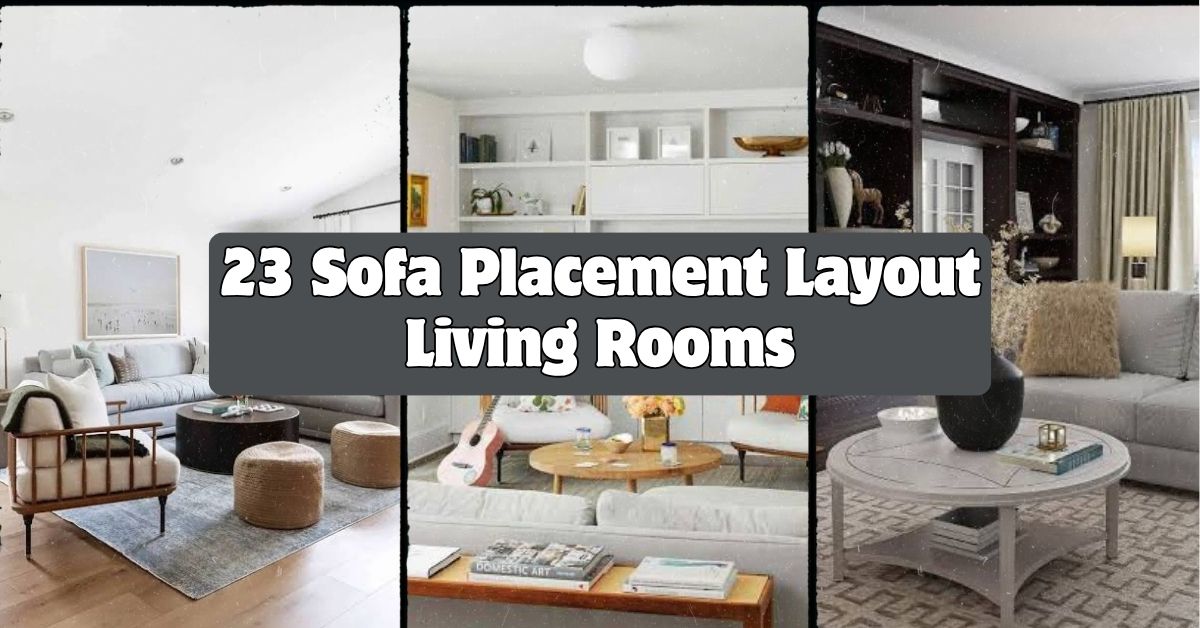
Ever stood in your living room, staring at your couch, wondering why the whole space just feels… off? I’ve been there too, and that’s exactly why I put together this guide on 23 sofa placement layout living rooms ideas. By the time you finish reading, you’ll know exactly how to arrange your sofa so your room actually works.
Sofa placement in a living room depends on room shape, focal points, and traffic flow. The best layouts position the sofa to face a focal point like a TV or fireplace, leave 30 to 36 inches for walkways, and avoid blocking natural pathways or windows.
But there’s so much more to it than just facts. Stick with me, and I’ll walk you through 23 real layouts you can actually use, plus some tips that took me years to figure out.
What Makes a Sofa Layout Actually Work
Okay, so here’s the thing about sofa placement. It’s not just about shoving your couch against a wall and calling it done. A good layout thinks about how people move through the room, what they look at when they sit down, and how the whole space feels when you walk in.
I like to think of it like this: your sofa is the anchor of the room. Everything else kind of orbits around it. Get the anchor placement wrong, and the whole room feels wobbly, even if every other piece is perfect. Get it right, and suddenly your space feels bigger, cozier, and way more functional. That’s what we’re going for here.
1. Face the Sofa Toward the Fireplace
This one’s a classic for a reason. If you’ve got a fireplace, it’s probably already the star of the room. Point your sofa right at it. This setup screams cozy and makes the fireplace the natural focal point every time someone walks in.
Pair this with a low coffee table in front of the sofa so people can rest drinks or feet. Neutral tones like cream or soft gray work great here since the fireplace itself often has texture and color. This layout adapts beautifully to traditional homes but also works in modern farmhouse spaces if you swap in cleaner lines.
Next up, let’s talk about what happens when your room doesn’t have a fireplace at all.
2. Center the Sofa on the TV Wall
No fireplace? No problem. Most of us are watching TV more than staring at flames anyway. Put your sofa directly across from your TV wall, about 8 to 10 feet away for comfortable viewing.
Add a media console below the TV to keep things grounded. This layout works in basically every home style, from mid-century modern to coastal, because it’s all about function first. Just make sure your sofa height and the TV height line up so you’re not craning your neck.
Now let’s flip things around and talk about rooms where the sofa needs to float instead of hug a wall.
3. Float the Sofa in the Middle of the Room
If you’ve got a big, open living room, don’t push everything to the edges. Float your sofa in the center instead. This creates two distinct zones, one behind the sofa and one in front, which is perfect for larger families or open floor plans.
Use a rug underneath to anchor the sofa and define the seating area. This works wonders in modern and contemporary homes where open concepts are common. A console table behind the sofa can hold lamps or décor without blocking the flow.
Speaking of flow, let’s look at an L-shaped option that handles corners really well.
4. Use an L-Shaped Sectional in the Corner
Corners can be tricky, but an L-shaped sectional turns that awkward space into a strength. Tuck the sectional into a corner and it instantly creates a cozy nook while freeing up the rest of the room for other furniture or walking space.
This is great for smaller rooms because it maximizes seating without eating up floor space. Choose a fabric like performance velvet or a durable weave if you’ve got kids or pets. This layout shines in transitional and contemporary homes especially.
Let’s move from corners to something a bit more symmetrical next.
5. Create Symmetry With Two Facing Sofas
If you love a formal, balanced look, try two matching sofas facing each other. This works especially well in bigger living rooms or homes with a more traditional style. It creates a conversation-friendly setup, perfect for entertaining guests.
Place a coffee table between them and use matching throw pillows on each sofa for cohesion. This layout adapts really well to traditional and transitional homes, though you can modernize it with sleek, low-profile sofas and metallic accents.
Now, what if your room isn’t big enough for two full sofas? Let’s talk about a smart alternative.
6. Pair One Sofa With Two Accent Chairs
This is my personal favorite for smaller or medium living rooms. One sofa on one side, two accent chairs facing it, and a coffee table in the middle. It’s flexible, comfortable, and doesn’t require a huge footprint.
Mix textures here. A linen sofa with leather accent chairs adds depth without looking chaotic. This layout is super versatile and works in bohemian, mid-century, and even industrial spaces depending on your chair choice.
Quick Size Guide for Common Living Room Layouts
| Room Size | Sofa Length | Recommended Layout | Walkway Space |
|---|---|---|---|
| Small (under 200 sq ft) | 60-72 inches | Sofa + 2 chairs | 24-30 inches |
| Medium (200-300 sq ft) | 72-84 inches | L-shaped sectional | 30-36 inches |
| Large (over 300 sq ft) | 84-96+ inches | Floating sofa + console | 36-42 inches |
| Open concept | Varies | Two facing sofas | 36-42 inches |
This table gives you a solid starting point, but always measure your actual room before buying anything.
7. Angle the Sofa Diagonally in a Small Room
Small rooms can feel cramped when everything lines up with the walls. Try angling your sofa diagonally across a corner instead. It sounds weird, but it actually opens up the room visually and creates more interesting sightlines.
This works best with smaller sofas or loveseats since bigger pieces can look awkward at an angle. Use a round rug to soften the diagonal look. This trick works great in eclectic or bohemian rooms where unexpected angles feel intentional rather than random.
Let’s shift gears now and talk about layouts built around windows instead of walls.
8. Position the Sofa Beneath a Window
If your room has a gorgeous window with a view, don’t waste it by blocking it with a bookshelf or TV stand. Put the sofa right beneath the window instead. This works especially well in rooms without an obvious focal point elsewhere.
Keep the sofa lower profile so it doesn’t block too much light. Sheer curtains help maintain privacy without cutting off the view completely. This layout feels amazing in coastal and cottage-style homes where natural light is a big part of the vibe.
Now let’s talk about a layout that solves the problem of long, narrow rooms.
9. Split a Long Room Into Two Zones
Long, narrow living rooms are notoriously hard to furnish. Instead of fighting the shape, work with it. Place your sofa in the middle of the room, perpendicular to the longest wall, and create two separate zones, one for lounging and one for dining or work.
A bench or slim console behind the sofa acts as a natural divider. This layout is a lifesaver in row houses, apartments, and older homes with awkward proportions. It works across nearly every style since it’s really about solving a shape problem, not a design one.
Next, let’s talk about a cozy option for rooms with limited furniture.
10. Anchor a Small Room With Just a Loveseat
Sometimes less really is more. In tiny living rooms, a full-size sofa can eat up all your breathing room. A loveseat paired with one accent chair gives you seating without the bulk.
Choose a loveseat with exposed wood legs to keep the look airy. This works incredibly well in Scandinavian and minimalist homes where open floor space matters more than max seating capacity. Add a small side table for lamps or drinks since coffee tables can feel too big in these setups.
Now let’s talk about a layout that plays with height and levels.
11. Use a Sectional to Wrap Around a Coffee Table
A U-shaped or wraparound sectional creates a hugging effect around your coffee table. This is ideal for movie nights or big families since everyone gets a great view of the TV or fireplace without craning their neck.
Go for a sectional with a chaise end for extra lounging space. Choose performance fabric if you’ve got kids or pets tracking through the room often. This layout is a favorite in modern farmhouse and transitional homes where comfort is just as important as looks.
Let’s pivot now to a layout perfect for open-plan kitchens and living rooms combined.
12. Use the Sofa as a Room Divider
In open-concept homes, your sofa can do double duty as a soft room divider. Place it with its back facing the kitchen or entryway, and its front facing the living area. This creates a subtle boundary without walls or doors.
Add a console table behind the sofa to hold decor or serve as a mini bar. This works beautifully in modern and industrial loft-style homes where open floor plans are the norm. Just make sure the sofa back looks finished since it’ll be visible from both sides.
Color Palette Combinations by Room Style
| Style | Sofa Color | Wall Color | Accent Color |
|---|---|---|---|
| Coastal | Soft white or sand | Pale blue | Navy or coral |
| Modern Farmhouse | Warm gray | Off-white | Black and natural wood |
| Mid-Century | Mustard or olive | Warm beige | Walnut brown |
| Minimalist | Charcoal or white | Light gray | One bold accent color |
Picking colors that match your layout style makes the whole room feel intentional instead of thrown together.
13. Create a Reading Nook With a Smaller Sofa
If you love to read, carve out a little nook using a smaller two-seater sofa near a window or bookshelf. Add a floor lamp beside it for good lighting and a small side table for your coffee or tea.
This works great in a corner that’s otherwise wasted space. Keep the color scheme calm and cozy, think warm neutrals or soft greens. This idea fits perfectly into cottage, traditional, and even boho-style homes where comfort and charm matter more than strict symmetry.
Now let’s look at a bold layout choice for those who love a statement piece.
14. Make a Curved Sofa the Star of the Room
Curved sofas have become super popular lately, and for good reason. They soften up a room full of hard angles and create a more organic flow. Place a curved sofa facing your fireplace or TV, and let its shape do the visual work.
Pair it with round or oval side tables to keep the curves consistent throughout the room. This look is perfect for modern and glam-style homes since curved furniture naturally feels more luxe and sculptural.
Let’s transition now to a practical layout for multi-functional rooms.
15. Combine a Sofa and Daybed for Multi-Use Rooms
If your living room doubles as a guest room or home office, consider swapping one chair for a daybed instead. Place it perpendicular to your sofa so it still functions as extra seating during the day but converts to a bed when needed.
Choose a daybed with a trundle for even more flexibility. This works great in small city apartments or homes where every room needs to pull double duty. It fits especially well in eclectic and bohemian spaces where mixing furniture types feels natural.
Now, let’s cover an idea for rooms with vaulted or high ceilings.
16. Use Tall Furniture to Balance a Sofa in High-Ceiling Rooms
Rooms with vaulted ceilings can make a regular sofa look tiny and lost. Balance this out by placing your sofa near taller furniture pieces, like a tall bookshelf or an oversized floor lamp, to help fill the vertical space.
This draws the eye upward and makes the whole room feel more proportioned. Adding a large piece of art above the sofa can also help. This trick works especially well in modern and contemporary homes with open, airy layouts.
Let’s move into a layout that solves the problem of multiple doorways.
17. Arrange the Sofa to Avoid Blocking Doorways
This one’s more practical than pretty, but it’s important. If your living room has multiple entry points, make sure your sofa placement doesn’t block any of them. Leave clear walking paths of at least 30 inches on every side.
Sometimes this means placing your sofa at an angle or against a shorter wall instead of the obvious spot. This principle applies no matter your style since good traffic flow matters in every home, from tiny studios to sprawling ranch houses.
Now let’s talk about how to handle a room with two focal points.
18. Split Attention Between Two Focal Points
Some rooms have both a fireplace and a big window or TV, competing for attention. Instead of picking one, angle your sofa so it can see both, or use a sectional that wraps to face two directions at once.
A swivel chair nearby can also help since it lets people choose which view they want. This layout works in almost any style but shines in transitional homes where flexibility and comfort are the priority.
Let’s shift to a smaller-scale idea perfect for studio apartments.
19. Use a Sofa Bed for Studio Apartment Layouts
In studio apartments, your sofa often needs to be your bed too. Place a sofa bed against the longest wall to maximize floor space during the day. At night, it folds out without blocking major walkways.
Keep a small folding coffee table nearby that can be moved aside easily. This is a lifesaver in urban apartments and works beautifully in minimalist and industrial styles where simplicity is key.
Now, let’s look at layering rugs and furniture for a layered, cozy feel.
20. Layer a Rug Under the Sofa for Definition
No matter which layout you choose, a rug underneath your sofa helps define the seating area. The front two legs of the sofa should sit on the rug, with the back legs either on or just off, depending on rug size.
This trick works in every single home style and instantly makes a room feel more finished. Choose jute or wool for texture in boho and coastal spaces, or a flatweave pattern for modern homes.
Let’s talk next about using mirrors to enhance your sofa placement.
21. Place a Mirror Across From the Sofa
A large mirror placed across from your sofa reflects light and makes the whole room feel bigger. This works especially well in small or dark living rooms where natural light is limited.
Choose a mirror with a frame that matches your other metal accents, like lamp bases or picture frames. This idea works in nearly every style, though it looks especially striking in glam and traditional interiors.
Now, let’s cover an idea for homes with an awkward window placement.
22. Work Around Off-Center Windows With Asymmetry
Not every room has perfectly centered windows. When that’s the case, skip trying to force symmetry. Instead, place your sofa off-center too, and balance the room with an asymmetrical arrangement of chairs and side tables.
This creates visual interest instead of fighting the room’s natural quirks. This approach fits especially well in eclectic and bohemian homes where imperfection is part of the charm.
Finally, let’s wrap up with one more flexible option for renters and small spaces.
23. Choose Modular Furniture for Flexible Layouts
If you move often or just like to switch things up, modular sofa pieces are a game changer. You can rearrange the pieces into an L-shape, a straight line, or even two separate loveseats depending on your mood or room needs.
This is perfect for renters since it adapts to different apartments easily. Modular pieces work in modern, minimalist, and Scandinavian homes especially well since clean lines and flexibility go hand in hand there.
Tips for Success
- Measure your walkways first, before you fall in love with a sofa size that won’t fit.
- Always leave at least 30 inches of clearance for main walking paths.
- Use painter’s tape on the floor to map out furniture placement before buying anything.
- Choose a focal point first, then build your layout around it, not the other way around.
- Mix textures, not just colors, to keep a room from feeling flat.
- Don’t be afraid of asymmetry if your room’s architecture calls for it.
- Test seating distance by actually sitting and talking to someone across the room before finalizing placement.
Common Mistakes and How to Avoid Them
Pushing every piece against the wall
: This makes rooms feel more like waiting rooms. Float furniture slightly for a cozier, more intentional feel.
Ignoring traffic flow
: A beautiful layout means nothing if people constantly bump into furniture. Always map out walking paths first.
Choosing a sofa too big for the room
: Measure twice. A sofa that overwhelms the room kills the whole layout, no matter how nice it looks.
Skipping the rug
: Without a rug, seating areas can feel disconnected and unfinished, even with great furniture.
Forgetting about lighting
: Even the best sofa placement falls flat in a poorly lit room. Add lamps near seating for warmth and function.
Similar Variations
- Coastal Living Room Layouts: Light, airy furniture arrangements built around natural light and ocean-inspired colors.
- Mid-Century Modern Layouts: Clean lines, warm wood tones, and low-profile furniture arranged for conversation.
- Bohemian Living Room Layouts: Mixed patterns, layered rugs, and relaxed, asymmetrical furniture placement.
- Minimalist Living Room Layouts: Fewer pieces, more open space, and a strong focus on function over decoration.
- Traditional Living Room Layouts: Symmetrical, formal arrangements often built around a fireplace or large window.
- Industrial Living Room Layouts: Exposed materials, modular furniture, and layouts that favor open, loft-like flow.
At the end of the day, sofa placement isn’t about following one rigid rule. It’s about understanding your room’s shape, your daily habits, and what you actually want the space to feel like. Some rooms want symmetry. Others want a bold curved sofa breaking up all those straight lines. The trick is testing a few options before committing.
I hope this rundown gave you some real, usable ideas for your own space. Whether you’ve got a cozy studio or a sprawling open floor plan, there’s a layout here that’ll work for you. Go ahead and try a few of these 23 sofa placement layout living rooms ideas in your own home, and watch how much better your space feels.
Leave a Reply