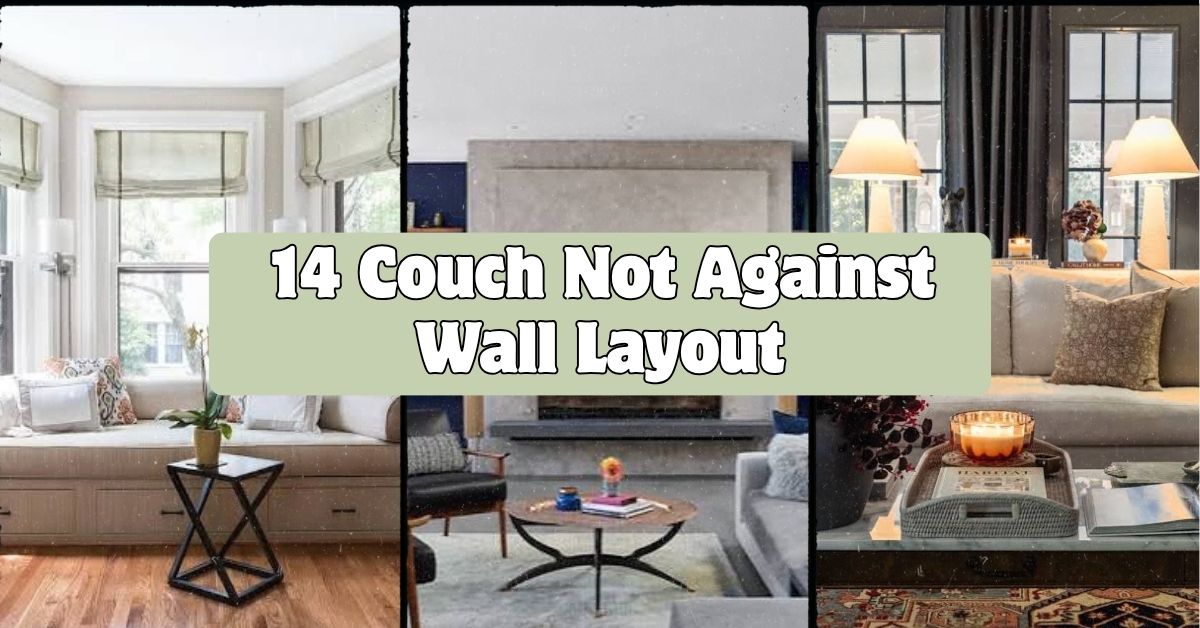
I’ve tried almost every 14 couch not against wall layout in my own living room, and I can tell you exactly what works and what falls flat. Ever stood in your living room, staring at your couch, wondering why it feels so boring pushed up against the wall? You’re not alone, and I’m about to fix that for you.
A couch not against wall layout means placing your sofa away from the perimeter, often floating in the middle of the room or angled to create a defined seating zone. This approach works best in larger rooms, open floor plans, or spaces where you want better traffic flow and a more intentional, curated feel.
Stick around, because I’m going to walk you through 14 specific layouts that actually make your room look bigger, feel cozier, and function way better than that old wall-hugging setup.
What Is a Couch Not Against Wall Layout, Anyway?
So here’s the deal. Most of us grew up thinking furniture belongs against walls. That’s just how it’s always been done, right? But interior designers have known for years that floating your couch away from the wall can totally transform a room.
This layout style is about creating “zones” in your space instead of just lining furniture up like it’s waiting for a bus. It works especially well in open-concept homes, large living rooms, or spaces that need to do double duty, like a living room that also functions as a dining area. Once you try it, you’ll wonder why you didn’t do this sooner.
1. Float the Couch to Define a Conversation Zone
Pull your couch several feet from the wall and let it anchor a cozy conversation area. This creates a sense of intimacy, even in a big room. Add a coffee table in front and maybe two accent chairs facing the couch to close the circle.
Practical tip: leave at least 30 inches behind the couch for walking space. That’s enough room for someone to pass without squeezing.
This works great in modern farmhouse spaces, but it also shines in traditional homes where you want a formal sitting area separate from the rest of the room.
Once your conversation zone is set, you’ll naturally want to think about what goes behind that couch, since that space doesn’t have to be wasted.
2. Use the Couch Back as a Room Divider
If you’ve got an open floor plan, let your couch do double duty as a divider. Place it perpendicular to the wall, splitting the living room from the dining area or entryway. The back of the couch becomes a visual boundary without adding an actual wall.
Add a slim console table behind it for extra storage and a spot for lamps or decor. This trick works wonders in studio apartments too.
Coastal and Scandinavian styles love this look because it keeps things open and airy while still giving each zone its own identity.
Now that your couch is dividing space, let’s talk about what to put on that console table to really make it pop.
3. Angle the Sofa for a Cozy Corner Nook
Instead of a straight line against the wall, try angling your couch diagonally in a corner. This softens the room’s hard edges and creates a relaxed, inviting nook. It’s especially good for smaller rooms because it opens up floor space in unexpected ways.
Pair it with a round rug underneath to echo the diagonal energy. A floor lamp in the empty corner behind the couch fills the gap nicely.
This idea fits bohemian and eclectic homes perfectly, since those styles thrive on unexpected angles and cozy, tucked-away seating.
Once you’ve got that corner nook working, you might want to add a rug that ties the whole angled layout together.
Room Size Guide for Floating Couch Layouts
| Room Size | Recommended Distance from Wall | Best Layout Type |
|---|---|---|
| Small (under 150 sq ft) | 12-18 inches | Angled corner or divider |
| Medium (150-300 sq ft) | 24-36 inches | Conversation zone |
| Large (300+ sq ft) | 36-48 inches | Center-floating with back table |
| Open concept | 30-42 inches | Room divider style |
4. Add a Console Table Behind the Sofa
A slim table behind your floating couch is a total game changer. It gives you a spot for lamps, books, or a vase of flowers, and it visually anchors the couch so it doesn’t feel like it’s just floating aimlessly.
Keep the table narrower than your couch, maybe 12-14 inches deep, so it doesn’t stick out awkwardly. Choose a table with some visual interest, like turned legs or a woven basket underneath for storage.
In modern homes, go for a sleek table with clean lines. In traditional spaces, an antique-style console with carved details feels right at home.
With that table in place, you’re ready to think about layering in a rug that ties the whole floor plan together.
5. Layer a Round Rug Under the Floating Sofa
Rugs are the secret weapon of any couch not against wall layout. A round or oval rug under a floating couch softens the geometry of the room and helps define the seating area without hard lines.
Make sure the rug extends at least 6 inches beyond the front legs of the couch. This little detail makes the whole space feel intentional instead of accidental.
Bohemian and coastal styles love layered rugs, maybe a jute base with a smaller patterned rug on top. Minimalist and modern spaces do better with one simple, solid-colored rug.
Speaking of layering, let’s talk about how pillows and throws can add even more personality to your floating sofa setup.
6. Mix Pillow Textures for a Layered Look
When your couch isn’t tucked against a wall, both sides get seen, so texture matters more than ever. Mix a chunky knit pillow with a smooth linen one, and throw in a small leather or velvet accent for contrast.
Stick to a simple color rule: pick two main colors and one accent color, then repeat those throughout your pillows and throws. This keeps things cohesive instead of chaotic.
Coastal homes do well with blues and creams. Traditional spaces lean into deeper jewel tones like emerald or burgundy.
Once your pillows are sorted, you’ll want to think about lighting, since a floating couch often needs its own light source.
7. Add a Floor Lamp for Ambient Lighting
Since your couch isn’t near a wall outlet or overhead fixture, a floor lamp becomes essential. Place it at one end of the couch to create a reading nook, or behind it for soft ambient light that fills the whole room.
Choose a lamp with a warm-toned bulb, around 2700K, for that cozy glow instead of harsh white light. Arc lamps work great if you want the light to reach over the couch without a cord running across the floor.
Industrial and mid-century modern styles pair beautifully with metal arc lamps, while farmhouse spaces do better with a wood or wicker base.
Now let’s talk about how to handle the back of your couch, since that’s the part people usually forget about.
8. Dress Up the Back of the Sofa
Here’s something most people miss. When a couch floats in the middle of a room, its back becomes visible from other angles. Don’t leave it plain and boring.
Drape a throw blanket over the back corner, or add a slim shelf behind it for small plants and books. Some couches even come with a “backless” design specifically made for floating layouts, which is worth considering if you’re shopping for a new sofa.
Modern and Scandinavian homes favor clean-backed sofas with minimal fuss. Traditional and eclectic spaces can get away with more decoration back there, like framed art leaning against the wall behind the couch.
Speaking of art, let’s dig into how you can use the wall space you just freed up.
9. Use the Freed-Up Wall Space for a Gallery Wall
When you pull your couch away from the wall, you open up prime real estate for art. A gallery wall behind the floating couch adds personality and draws the eye upward, making the room feel taller and more finished.
Mix frame sizes and orientations for visual interest, but keep a consistent color palette in the frames themselves, like all black or all natural wood. This keeps the wall from looking too busy.
Farmhouse and traditional homes love mixing family photos with vintage prints. Modern spaces do better with abstract art in oversized, minimal frames.
Once your gallery wall is up, you’ll want to make sure your traffic paths still make sense around the new layout.
10. Plan Clear Walking Paths Around the Couch
This one’s practical but super important. When you float a couch, you create new pathways through the room. Walk through your space and make sure there’s at least 24-30 inches of clearance on all sides for easy movement.
Practical tip: use painter’s tape on the floor to map out your couch placement before you actually move the furniture. This saves you from a lot of heavy lifting and second-guessing.
This matters in every style of home, but especially in smaller spaces where every inch counts.
Now let’s talk about pairing your floating couch with a sectional or additional seating for bigger rooms.
11. Pair the Floating Sofa with a Sectional for Extra Seating
If you’ve got a big family or love hosting, add an L-shaped sectional instead of a standard couch. Float the whole sectional away from the wall to create a large, open seating area that still feels intimate.
Keep the sectional’s chaise end facing a focal point, like a fireplace or TV, so the layout makes sense functionally. Add a few floor pillows nearby for extra seating when guests come over.
This works incredibly well in modern farmhouse and transitional homes where big families gather often.
Budget Breakdown for Furnishing a Floating Couch Layout
| Item | Budget Option | Mid-Range Option | Higher-End Option |
|---|---|---|---|
| Console table | $80-120 | $200-350 | $450-700 |
| Area rug (8×10) | $100-150 | $300-500 | $700-1200 |
| Floor lamp | $40-70 | $120-200 | $250-400 |
| Throw pillows (set of 4) | $50-80 | $120-180 | $220-350 |
With your sectional sorted, let’s look at how a bench can replace a traditional console table for a fresher take.
12. Swap the Console Table for a Bench
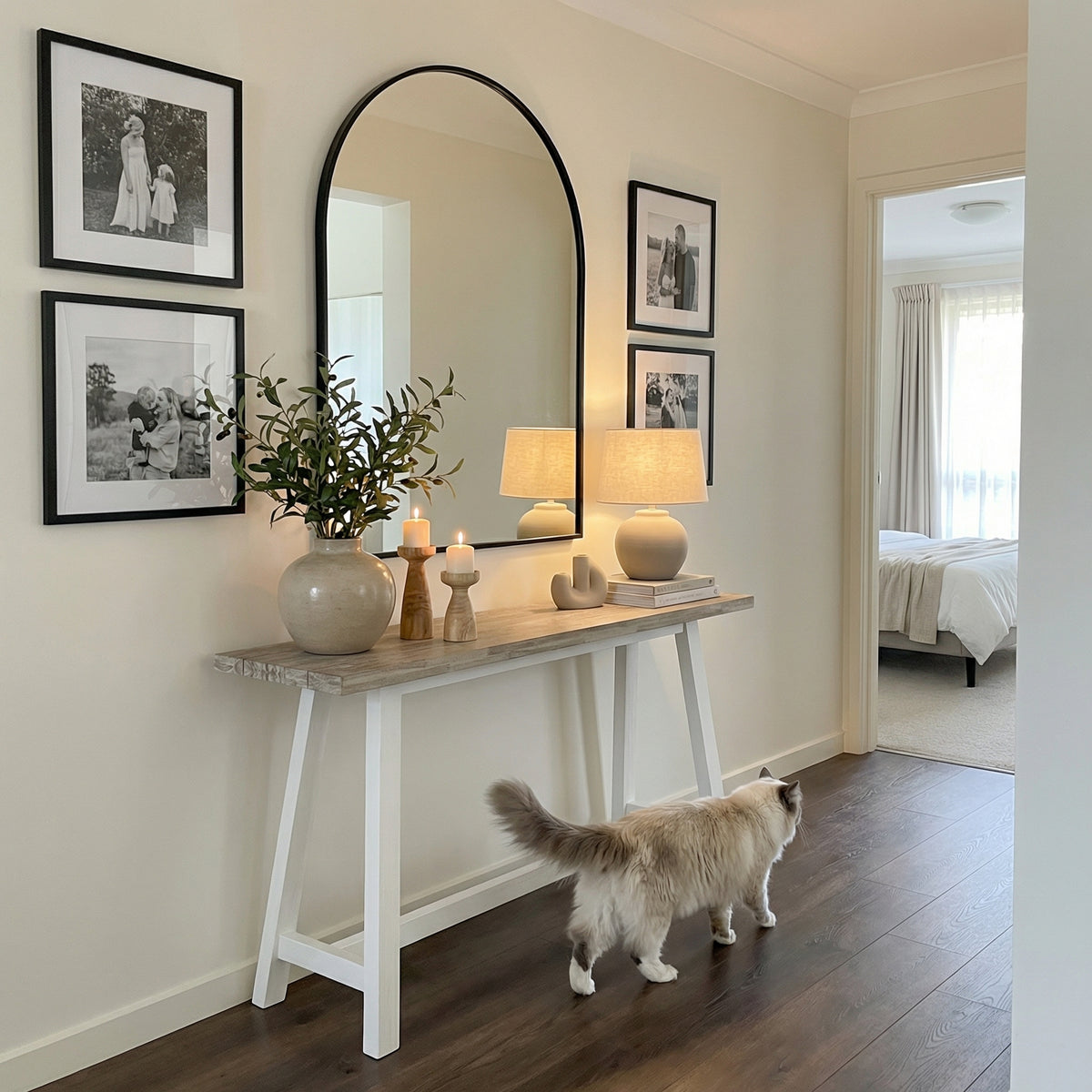
Instead of a console table behind your floating couch, try a low bench. It’s more casual and works great as extra seating when you’re hosting a crowd. It also doubles as a spot to set down drinks or a stack of magazines.
Pick a bench with some texture, like woven rattan or a padded fabric top, to soften the look. Keep it a few inches shorter than the back of your couch so it doesn’t compete visually.
Coastal and bohemian homes love this swap because benches feel relaxed and lived-in, unlike a formal console table.
Next, let’s talk about how a plant or two can finish off your floating couch setup.
13. Anchor the Space with a Tall Plant
A tall plant, like a fiddle leaf fig or snake plant, placed at one end of your floating couch adds height and life to the room. It also softens the transition between the couch and the open floor space behind it.
Choose a plant that reaches at least to shoulder height when you’re sitting on the couch. This creates balance without blocking sightlines across the room.
Modern and bohemian spaces both love this trick, though bohemian homes might go bigger with multiple plants clustered together.
Finally, let’s wrap up with one more layout idea that ties everything together using a media console.
14. Position the Couch to Face a Media Console Across the Room
Sometimes the best floating layout is one that faces a media console or built-in shelving unit across the room instead of the wall behind it. This creates a natural focal point and makes the floating couch feel purposeful rather than random.
Keep about 8-10 feet between the couch and the media console for comfortable TV viewing. Add a coffee table in between to complete the zone.
This layout is a favorite in transitional and modern homes where the TV is still a central gathering point, but it works in any style as long as the proportions feel right.
Tips for Success
- Measure your room first. Grab a tape measure before you buy anything or move a single piece of furniture.
- Keep pathways at least 24 inches wide so people can move through the room without bumping into things.
- Choose a focal point, like a fireplace, window, or TV, and build your layout around it instead of just the walls.
- Don’t skip the rug. It grounds a floating couch and keeps the space from feeling disconnected.
- Test with painter’s tape on the floor before committing to a final furniture arrangement.
- Balance visual weight on both sides of the couch so the room doesn’t feel lopsided.
- Add lighting behind the couch since that area often gets overlooked once the couch is turned away from the wall.
Common Mistakes and How to Avoid Them
Floating the couch without enough clearance
: Leave at least 24-30 inches on all sides for walking space, or the room will feel cramped instead of open.
Ignoring the back of the sofa
: Dress it up with a throw, a shelf, or a console table so it doesn’t look neglected from other angles in the room.
Choosing a rug that’s too small
: Make sure the rug extends past the front legs of the couch by at least 6 inches for a balanced, grounded look.
Forgetting about lighting behind the couch
: Add a floor lamp or wall sconce so that area doesn’t stay dim and forgotten once the couch faces away from the wall.
Overcrowding the floating zone
: Stick to a couch, a coffee table, and one or two accent chairs. Too many pieces make the space feel cluttered.
Skipping the traffic flow test
: Walk through the space multiple times before finalizing your layout to catch any awkward bottlenecks early.
Similar Variations
- Coastal Floating Layout – light woods, woven textures, and a couch floating near a window for natural light.
- Modern Farmhouse Center Layout – a floating sofa paired with a console table and neutral, cozy textiles.
- Minimalist Open Floor Layout – one floating couch, one rug, minimal decor, and lots of breathing room.
- Eclectic Angled Layout – a diagonally placed couch mixed with vintage furniture and bold patterns.
- Transitional Media-Facing Layout – couch floats to face a media console, blending traditional and modern elements.
- Bohemian Layered Layout – floating couch surrounded by layered rugs, plants, and mismatched pillows for a relaxed vibe.
I hope this gave you a clearer picture of how to make your living room work harder and look better without just shoving everything against a wall. The truth is, once you try a floating layout, it’s tough to go back to the old way of doing things.
At the end of the day, the best 14 couch not against wall layout is the one that fits your room’s size, your lifestyle, and the way you actually move through your space every single day.
Leave a Reply