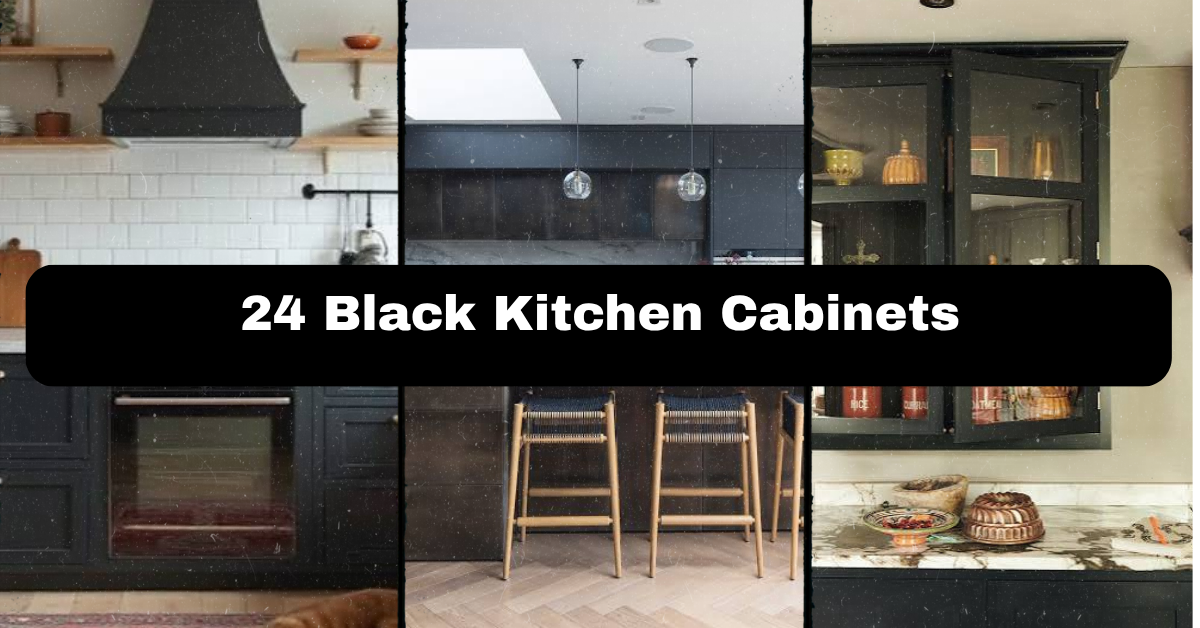
These 24 Black Kitchen Cabinets ideas will help you choose the right finish, layout, hardware, and accents for a kitchen that feels stylish instead of heavy.
The core question is how to use black kitchen cabinets successfully. The answer is to balance their deep color with light surfaces, varied textures, useful lighting, and finishes that match your home’s size and style.
I’ll walk you through practical designs, color pairings, material choices, and small details that make a big difference.
Why Black Kitchen Cabinets Work So Well
I understand why black cabinets can feel risky. A dark kitchen might sound gloomy, especially if the room is small. But black cabinetry can look warm, crisp, classic, or dramatic depending on what surrounds it. The key is balance.
Think about the full room, not just the cabinet color. Pale walls, bright counters, glass doors, warm wood, and layered lighting can keep the space open. Matte black feels soft and modern, while glossy black reflects more light. Natural stone adds movement, and brass hardware brings a little glow.
I also like black because it hides small marks better than very light finishes. It gives a kitchen a strong foundation. From there, you can make the room modern, farmhouse, traditional, coastal, or eclectic.
1. Pair Matte Black Cabinets With White Countertops
Matte black cabinets and white countertops create one of the easiest kitchen combinations to use. The strong contrast looks clean without feeling too busy. White quartz is a practical choice because it offers a smooth, low-maintenance surface and comes in many patterns. White marble can work too, though it needs more care.
For a softer look, choose warm white rather than a blue-white shade. Add a simple white subway tile backsplash or use the countertop material on the wall for a more seamless finish. I recommend testing samples in morning and evening light before ordering.
This idea works especially well in modern, transitional, farmhouse, and Scandinavian homes. Next, let’s warm up the contrast with natural wood.
2. Add a Warm Wood Island
A wood island can keep black cabinets from feeling cold. Oak, walnut, maple, and reclaimed wood each create a different mood. Light oak feels casual and airy, while walnut gives the room a richer, more polished look.
Use the island for more than color. Include deep drawers, seating, a prep sink, or a wide overhang for quick meals. If the island is large, repeat its wood tone on open shelves, cutting boards, or nearby furniture. This creates a visual connection instead of making the island look dropped into the room.
A clear matte finish protects the wood while keeping its natural grain visible. This combination suits modern farmhouse, rustic, Japandi, and traditional kitchens. Now let’s look at a way to make the cabinets feel lighter.
3. Install Glass-Front Upper Cabinets
Glass-front doors break up a long wall of black cabinetry. They let you display dishes, glasses, pottery, or cookbooks while adding depth to the room. Clear glass gives the most open appearance. Fluted or reeded glass hides clutter while still allowing light to pass through.
I suggest using glass on only two or three upper doors. Too much display space can become hard to keep tidy. Place attractive, useful items inside, and use warm LED strip lighting under the shelves if wiring allows.
Choose simple black frames for a modern room, or mullioned doors for a more traditional kitchen. This idea also works in cottage, transitional, and industrial homes. Once the upper cabinets feel lighter, the backsplash becomes the next design decision.
4. Use a Soft, Textured Backsplash
A textured backsplash gives black cabinets more dimension. Handmade tile, zellige tile, honed stone, and lightly veined porcelain are all good options. Their uneven surfaces catch light and stop the kitchen from looking flat.
For a calm design, choose cream, sand, pale gray, or soft taupe. If you want more drama, use a dark stone backsplash with subtle movement. Keep the grout close to the tile color when you want a quiet wall. Contrasting grout creates a more graphic look but shows every line.
I always recommend ordering several tile samples. Look at them beside the cabinets, counter, and flooring. This approach fits traditional, coastal, modern, and Mediterranean kitchens.
Color Palette Guide for Black Cabinets
| Cabinet finish | Countertop color | Backsplash color | Best accent metal |
|---|---|---|---|
| Matte black | Warm white quartz | Cream ceramic | Aged brass |
| Charcoal black | Light gray quartz | Soft gray tile | Brushed nickel |
| Blue-black | White marble-look quartz | Pale blue-gray | Polished chrome |
| Soft black | Beige quartz | Sand or taupe tile | Bronze |
| Glossy black | Bright white solid surface | White glass tile | Chrome |
With the main surfaces balanced, you can start shaping the mood through hardware and lighting.
5. Choose Aged Brass Hardware for Warmth
Aged brass handles and knobs add warmth to black cabinets. They stand out clearly, but they do not look as sharp as polished gold. This makes them easy to use in both classic and modern kitchens.
Try cup pulls on drawers and simple knobs on doors. Long bar pulls create a more contemporary feel. Keep the hardware finish consistent across the cabinet doors, pantry, and nearby built-ins. You can use another metal for the faucet or lights, but repeat it at least once so it feels intentional.
Before drilling, tape paper templates to the doors. Check the scale from across the room and confirm that the pulls feel comfortable in your hand. Aged brass works in farmhouse, traditional, transitional, and eclectic spaces. Next, we’ll compare a cooler metal option.
6. Use Brushed Nickel for a Cooler, Calm Finish
Brushed nickel is a useful choice when brass feels too warm. Its soft gray color blends well with stainless steel appliances, gray floors, and cool stone. The brushed surface also hides fingerprints better than highly polished metal.
For a balanced look, pair black shaker cabinets with slim nickel pulls and a simple stainless range hood. Add pale gray walls or a light concrete-style counter. Avoid using too many different gray tones, since the room can start to feel dull. Include a wood cutting board, woven stool, or warm light bulb to bring back some softness.
This combination fits contemporary, industrial, transitional, and minimalist homes. Once the metal is chosen, let’s bring attention to the ceiling and upper half of the room.
7. Add Pendant Lights Above the Island
Pendant lighting gives a black kitchen a clear focal point. It also adds color and shape at eye level. Clear glass keeps the room open, while linen shades soften the view. Aged metal pendants can echo your cabinet hardware.
The size depends on the island. For a standard island, two medium pendants often work better than one tiny fixture. Hang them so the bottom sits about 30 to 36 inches above the countertop, then adjust for sightlines and ceiling height. Use dimmable bulbs so the room can shift from bright prep space to relaxed dining area.
This idea adapts easily to coastal, modern farmhouse, vintage, and industrial designs. From overhead lighting, we can move to the floor.
8. Layer the Room With a Runner Rug
A runner rug adds comfort, color, and pattern to a kitchen with black cabinets. It also softens hard materials such as tile, stone, and metal. Choose a low-pile or washable rug that can handle crumbs and busy foot traffic.
A faded Persian pattern gives black cabinets a collected, traditional feel. A simple striped runner works well in a coastal or Scandinavian kitchen. Warm terracotta, rust, muted blue, and cream can make the room feel more welcoming.
Place the rug where you stand most, such as between the island and sink. Use a non-slip pad underneath, and make sure cabinet doors can open freely. This small layer fits nearly any style. Now let’s use open shelving without creating visual clutter.
Kitchen Rug Size Guide
| Kitchen area | Useful rug size | Placement advice |
|---|---|---|
| Narrow galley walkway | 2.5 x 6 feet | Leave 3 to 6 inches from cabinet fronts |
| Sink zone | 2 x 3 feet | Center it under or in front of the sink |
| Long island side | 2.5 x 7 feet | Keep it fully outside cabinet swing paths |
| Open kitchen work area | 3 x 5 feet | Place near the main prep zone |
| Large eat-in kitchen | 5 x 7 feet | Use under a small dining table |
The right rug makes the room more comfortable, and the next idea adds display space while keeping the design useful.
9. Style Open Shelves With Restraint
Open shelves can make black cabinets feel less solid. Use them for everyday items that are attractive and easy to reach. Wood shelves add warmth, while black metal shelves create an industrial edge.
I like arranging shelves in groups of three. Try stacking plates, leaning one cutting board, and adding a small plant or ceramic bowl. Leave some open space so the shelves can breathe. Do not fill every inch. Open shelving needs editing.
Install shelves close to the work area, but not directly above a messy cooking surface if you dislike grease buildup. This look works in cottage, industrial, modern farmhouse, and boho kitchens. Next, we’ll use a single wall to make black cabinets feel intentional.
10. Create a Black Cabinet Pantry Wall
A full-height pantry wall makes black cabinets look like a planned architectural feature. It is especially helpful in open kitchens because it provides storage without requiring upper cabinets across every wall.
Use tall doors for dry goods, small appliances, baking tools, and cleaning supplies. Add pull-out shelves inside deep cabinets so items do not disappear at the back. If the wall feels too dark, include one open niche with wood backing or a lit glass door.
Keep the surrounding walls light and use a pale floor to balance the cabinet mass. This design fits modern, transitional, traditional, and apartment kitchens. With storage handled, we can bring in a more dramatic countertop choice.
11. Try Soapstone or Dark Natural Stone
A black cabinet kitchen does not need a light countertop. Soapstone, honed granite, and dark quartz can create a deep, layered room. The trick is choosing materials with different textures or undertones so the space does not become one flat block.
A honed surface feels softer than polished stone and hides small scratches better. Pair dark counters with a light backsplash, warm wood boards, or brass lighting. If you use dark stone on both the counter and backsplash, add open shelves or pale walls to create breaks.
Always check care instructions before choosing natural stone. Some surfaces need regular sealing. This approach suits moody modern, classic, industrial, and European-inspired kitchens. Next, let’s consider a stronger color statement.
12. Add a Muted Green or Blue Accent
Black cabinets provide a steady background for color. Muted sage, olive, dusty blue, and deep teal can add personality without becoming loud. Use color on the island, backsplash, walls, stools, or a small appliance.
A sage island with black perimeter cabinets feels relaxed. Dusty blue tile can create a calm coastal mood. Deep teal walls make the room richer and more dramatic. Keep the rest of the palette simple, using wood, cream, and one metal finish.
Paint a large sample board before committing. Colors change greatly beside black surfaces and under artificial light. This idea works in coastal, cottage, eclectic, and traditional homes.
Accent Color Pairings
| Accent color | Best neutral partner | Suggested wood tone | Overall mood |
|---|---|---|---|
| Sage green | Warm white | Natural oak | Relaxed and fresh |
| Dusty blue | Soft cream | Light maple | Coastal and calm |
| Deep teal | Pale beige | Walnut | Rich and creative |
| Terracotta | Light gray | Medium oak | Earthy and welcoming |
| Olive green | Sand | Reclaimed wood | Rustic and grounded |
Color gives the kitchen character. Next, we’ll see how to make the room brighter without adding more paint.
13. Use Under-Cabinet Lighting
Under-cabinet lighting is one of the most practical upgrades for black cabinets. Dark doors can make the work surface seem shadowy, even in a bright room. LED strips or small puck lights improve visibility and create a gentle evening glow.
Choose a warm white color near 2700K to 3000K for a comfortable home feel. Install lights toward the front underside of the cabinet so they illuminate the counter instead of the wall. Put them on a separate switch or dimmer if possible.
This upgrade works in every kitchen style because the fixtures stay mostly hidden. It is especially helpful in galley kitchens and rooms with limited windows. After lighting the work area, let’s make the appliances part of the design.
14. Blend in Black or Paneled Appliances
Black appliances can create a smooth, continuous look with black cabinets. This works well when you want the kitchen to feel calm and uncluttered. A black range, hood, and dishwasher can look intentional when their finishes are close in tone.
Paneled appliances offer another route. A cabinet-matched refrigerator or dishwasher disappears into the wall, making the cabinetry the star. Stainless steel can still work, but repeat it with the faucet, lighting, or stools.
Check finish samples beside the cabinet paint. One black may have blue undertones, while another may look brown or charcoal. This concept suits modern, industrial, minimalist, and transitional kitchens. From appliances, we can turn to the sink area.
15. Install a Deep Apron-Front Sink
A white fireclay apron-front sink creates a strong focal point against black cabinetry. It brings a farmhouse note while remaining useful for large pots, baking sheets, and daily cleanup. A stainless apron sink gives the same shape a more modern edge.
Choose the sink size based on the cabinet below it. Many large sinks need a wider base cabinet and special support. Confirm this before ordering. Pair the sink with a tall gooseneck faucet, but make sure the faucet reach does not splash onto nearby counters.
A black sink creates a quieter, more blended appearance if you prefer less contrast. This idea fits farmhouse, traditional, industrial, and modern kitchens. Next, we’ll soften the room with living elements.
16. Bring in Plants and Natural Accessories
Plants add life to a black kitchen. Herbs near a sunny window are useful, while a trailing plant on an open shelf adds movement. If your kitchen has little natural light, choose realistic faux greenery or use a small grow light.
Natural accessories also help. Try a wooden fruit bowl, woven baskets, linen towels, stoneware pitchers, and a cutting board with visible grain. These items keep the room from feeling overly sharp or staged.
Use a few meaningful pieces rather than many tiny decorations. Place plants away from heat, steam, and direct splashes. This approach suits boho, farmhouse, coastal, Scandinavian, and contemporary spaces. The next step is choosing a cabinet door profile.
Cabinet Door Style Comparison
| Door style | Visual effect | Best matching styles | Maintenance note |
|---|---|---|---|
| Flat panel | Smooth and simple | Modern, minimalist | Easy to wipe |
| Shaker | Timeless and balanced | Farmhouse, transitional | Clean grooves regularly |
| Beaded inset | Detailed and classic | Cottage, traditional | More dust-catching edges |
| Slab wood | Warm and natural | Japandi, contemporary | Shows grain and marks |
| Raised panel | Formal and decorative | Traditional, heritage | Needs careful corner cleaning |
The door profile sets the basic mood. Now let’s add personality through the ceiling and wall finish.
17. Paint the Ceiling a Warm White
A warm white ceiling can make black cabinets feel less intense. It reflects light without creating the stark contrast of a bright blue-white paint. This is a simple choice, but it matters in rooms with little daylight.
If the kitchen opens into a dining or living area, use a ceiling color that connects with the surrounding spaces. A soft beige-white can make the whole layout feel more unified. For a bold design, consider a pale clay, muted blue, or lightly patterned ceiling in a small kitchen.
Use a flat ceiling paint to hide minor flaws, and test the color beside the cabinet finish. This idea works in traditional, modern, cottage, and eclectic rooms. Next, we’ll use wall art in a kitchen-friendly way.
18. Display Oversized Art Away From Splash Zones
One large piece of art can balance a wall of black cabinets. Look for prints with cream, tan, rust, blue, or green that repeat colors already in the room. A large piece usually looks calmer than several small frames competing for attention.
Keep framed art away from the sink and range unless it has a protected surface. In a dining corner, lean a framed print on a shelf or hang a bold piece above a breakfast bench. Choose a frame in wood, brass, or black depending on the room’s other finishes.
This idea works in eclectic, modern, traditional, and apartment kitchens. With the walls styled, we can focus on seating and comfort.
19. Choose Counter Stools With Texture
Counter stools are a chance to soften black cabinets. Woven seats, upholstered backs, leather, and warm wood all add tactile contrast. Choose a seat height that fits the island, leaving enough legroom below the counter.
For a 36-inch counter, counter-height stools are usually the right category. For a 42-inch bar, look for bar-height stools instead. Measure before shopping. I also recommend choosing stools with footrests and rounded edges for everyday comfort.
Use two or three stools depending on the island length. Keep the fabric practical if children or frequent cooking are part of your life. This idea fits coastal, farmhouse, modern, industrial, and boho kitchens. Now let’s look at flooring.
20. Balance the Cabinets With Light Flooring
Light flooring helps a kitchen with black cabinets stay open. Pale oak, natural maple, light porcelain tile, and warm limestone-look tile are all useful choices. The goal is not always bright white. A soft, natural tone often feels more comfortable.
If you already have dark flooring, use lighter walls, counters, and ceiling details to balance the room. A patterned encaustic-look tile can add interest, but keep the backsplash simple so the surfaces do not compete.
Choose flooring based on water resistance, slip resistance, and cleaning needs. Sample it beside the cabinets in natural light. This strategy works in modern, farmhouse, coastal, and traditional homes. Next, let’s create a purposeful focal point.
Surface and Material Planning Guide
| Surface | Good black cabinet pairing | Main benefit | Watch for |
|---|---|---|---|
| White quartz | Matte black | Easy contrast and care | Visible crumbs on bright colors |
| Honed granite | Soft black | Natural movement | Requires sample viewing |
| Warm oak | Black slab doors | Adds warmth | Needs spill protection |
| Cream ceramic tile | Black shaker doors | Brightens the wall | Grout maintenance |
| Stainless steel | Industrial black | Durable and professional | Can feel cool without wood |
The best kitchens mix materials thoughtfully. One more strong material can make the whole design feel finished.
21. Highlight a Range Hood as a Focal Point
A range hood can become the visual center of a black kitchen. Choose a plaster, wood, stainless steel, or painted hood to contrast with the cabinetry. A plaster hood feels soft and Mediterranean. Wood adds warmth. Stainless steel creates a professional look.
Make sure the hood is sized correctly for the cooktop and installed according to ventilation requirements. A beautiful hood is not useful if it cannot manage smoke and steam. If the hood is large, keep nearby decor simple.
Repeat the hood material somewhere else, such as on shelves, stools, or a ceiling beam. This idea suits Mediterranean, modern farmhouse, traditional, and industrial kitchens. Next, we’ll use the island base itself as a design feature.
22. Paint the Island a Different Dark Tone
A black perimeter with a charcoal, navy, forest green, or stained wood island creates subtle contrast. The room still feels cohesive, but the island gains its own identity.
Keep the difference clear enough to notice. A charcoal island may need a slightly lighter or warmer undertone to separate it from true black cabinets. Use the island countertop as another opportunity for contrast. For example, a wood island top can soften a painted base, while white quartz keeps the design crisp.
This idea works in large kitchens where the island is a major architectural feature. It also adapts to transitional, coastal, traditional, and contemporary homes.
23. Add Decorative Cabinet End Panels
End panels are often overlooked, but they can make black cabinetry look custom. Use a fluted panel, beadboard, reeded wood, or a simple framed detail on the exposed side of an island or cabinet run.
Keep the design proportional to the kitchen. A busy panel may look great on a wide island but too fussy on a narrow cabinet end. Paint it black for a subtle detail, or use wood for contrast.
Before ordering, ask the cabinet maker how thick the finished panel will be and whether it affects aisle space. This detail works in classic, farmhouse, transitional, and contemporary kitchens. Finally, let’s consider how to make a smaller kitchen feel open.
24. Keep a Small Kitchen Visually Simple
Black cabinets can work beautifully in a small kitchen when the design stays controlled. Use flat or slim shaker doors, one main countertop material, and limited open shelving. Light walls and reflective details help bounce light around the room.
Choose cabinet hardware that is easy to grip but not oversized. Use a single runner instead of several small mats. Keep appliances integrated where possible, and avoid filling every shelf with decor.
Good lighting matters even more in a small space. Combine ceiling lights, under-cabinet strips, and natural light from a nearby window. This approach fits apartment, minimalist, Scandinavian, modern, and cottage homes.
Tips for Success
- Test cabinet, countertop, tile, and paint samples together before making final choices.
- Use warm white lighting in living-style kitchens to keep black finishes from looking harsh.
- Check the cabinet sheen in daylight and under your planned light fixtures.
- Select hardware by measuring door and drawer sizes, not by appearance alone.
- Keep at least one major surface light if the kitchen has limited windows.
- Repeat wood, metal, or accent colors in at least two parts of the room.
- Plan outlet locations before installing a backsplash or open shelving.
Common Mistakes and How to Avoid Them
Using only one light source
Add ceiling, task, and accent lighting so dark cabinets do not create work-zone shadows.
Choosing black finishes without checking undertones
Compare samples in your actual kitchen. Some blacks look blue, brown, green, or charcoal beside other materials.
Filling open shelves with too many items
Display only useful or attractive pieces, and leave empty space between groups.
Ignoring cabinet door clearance
Check that rugs, hardware, stools, and nearby walls do not block doors or drawers from opening fully.
Mixing too many metal finishes
Choose one main metal and one supporting finish. Repeat each intentionally.
Using delicate materials in high-use areas
Read care instructions for marble, natural wood, grout, and unsealed stone before choosing them for busy zones.
Similar Variations
- Black and White Modern: Matte black cabinets, white quartz, simple hardware, and clean-lined lighting create a sharp, current look.
- Black Farmhouse: Shaker doors, an apron sink, aged brass, wood accents, and warm white walls add a welcoming country feel.
- Black Coastal: Pair black cabinets with pale blue, sandy beige, woven textures, and light oak for a relaxed seaside mood.
- Black Japandi: Use flat black doors, quiet stone, natural wood, low-profile hardware, and very limited decoration.
- Black Industrial: Combine black cabinetry with steel, concrete-look counters, exposed lighting, and reclaimed wood.
- Black Traditional: Choose raised or inset doors, marble-look surfaces, classic brass, detailed molding, and balanced symmetry.
Black kitchen cabinetry is most successful when it has contrast, warmth, and enough light to show its details. I would start with the cabinet finish, then choose the countertop, backsplash, hardware, and lighting as one connected plan.
The goal is not simply a dark kitchen. It is a kitchen with depth, comfort, and a clear point of view, which is exactly what these 24 Black Kitchen Cabinets ideas can help you create.
Leave a Reply