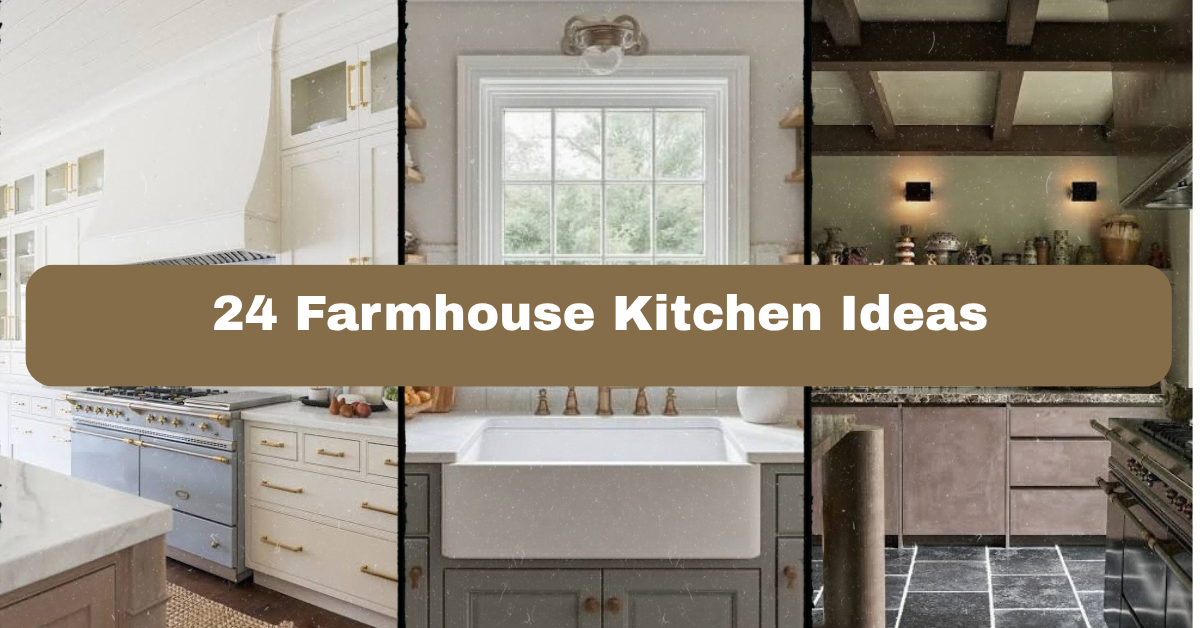
These 24 Farmhouse Kitchen Ideas will help you create a kitchen that feels warm, useful, and personal without looking dated or overly decorated. I’ll cover finishes, storage, lighting, furniture, color, and budget-friendly updates.
What are 24 Farmhouse Kitchen Ideas? They are practical decorating approaches that combine natural materials, simple furniture, soft colors, open storage, vintage details, and modern function to create a comfortable farmhouse-style kitchen.
You’ll also learn how to mix old and new pieces, avoid common farmhouse decorating mistakes, and make the look work in a small kitchen or a modern home.
What Makes a Farmhouse Kitchen Feel Right?
To me, a farmhouse kitchen should feel lived in, not staged. It needs warmth, but it also needs to work hard. Think sturdy wood, painted cabinets, apron-front sinks, open shelves, aged metals, and easy-to-clean surfaces.
The style is flexible. A traditional farmhouse kitchen may use beadboard, antique furniture, and warm cream paint. A modern farmhouse kitchen may use flat-front cabinets, black window frames, and simple lighting. Both can feel welcoming.
The secret is balance. Mix smooth finishes with rough ones. Pair new appliances with an old cutting board. Keep the colors calm, then add personality through pottery, textiles, plants, and artwork. Start with the ideas that fit your home and budget best.
1. Choose Soft White or Cream Cabinets
White cabinets are a classic farmhouse choice because they make the kitchen feel clean and bright. Still, a warm white or creamy shade often feels more comfortable than a sharp, cool white. It works well with wood floors, brass hardware, and natural stone.
I like using one cabinet color throughout a small kitchen. It creates a smooth, open look. In a larger room, you can use cream cabinets on top and a muted green or gray on the island.
For a practical update, test paint samples in morning and evening light before choosing a color. Paint a removable board instead of relying on a tiny store card.
This idea also suits coastal, cottage, Scandinavian, and modern kitchen styles. Once the cabinets are set, the backsplash can add another layer of farmhouse character.
2. Install a Classic Apron-Front Sink
An apron-front sink, often called a farmhouse sink, has a broad front panel that sits slightly beyond the cabinets. Fireclay, porcelain, stainless steel, and composite versions are available.
The sink becomes a strong focal point, so choose one that fits your daily habits. A deep single bowl is helpful for large pans, while a divided sink may suit someone who washes dishes by hand.
Before buying, measure the cabinet opening and check whether the sink needs special support. Farmhouse sinks are often heavier than standard models. Keep a soft cloth nearby for porcelain, since abrasive cleaners can dull the surface.
A white sink works in traditional and cottage kitchens, while stainless steel feels right in industrial or modern farmhouse rooms. Next, use the wall behind the sink to bring in texture.
3. Add a Handmade-Looking Tile Backsplash
A backsplash with slight color variation gives a farmhouse kitchen a handcrafted feel. Try glossy white subway tile, cream square tile, zellige-style tile, or soft green ceramic tile.
The goal is not perfect decoration. It is gentle texture. A handmade-looking surface catches light differently across the wall and keeps white cabinets from feeling flat.
For an easy planning trick, choose the grout before ordering tile. Warm white grout creates a quiet look, while medium gray grout highlights the pattern and hides cooking splashes better.
This idea can shift toward traditional, Mediterranean, coastal, or modern style depending on the tile shape and grout color. With the walls covered, the floor is the next place to ground the room.
4. Warm the Room With Wood Flooring
Wood flooring brings the natural warmth that farmhouse kitchens need. Oak, pine, maple, and reclaimed boards can all work. Wide planks usually look relaxed, while narrow boards feel more traditional.
If real wood is not practical, consider wood-look porcelain tile or waterproof luxury vinyl. These options can handle spills and heavy traffic with less worry.
Choose a floor tone that contrasts gently with the cabinets. Cream cabinets with medium oak floors feel balanced. White cabinets with pale wood create a lighter Scandinavian farmhouse effect.
Order samples and view them beside your cabinet color, countertop, and wall paint. This small step can prevent an expensive mismatch.
Wood flooring also works with rustic, contemporary, and transitional homes. Once the floor sets the mood, a simple table can make the kitchen feel more connected to everyday life.
Farmhouse Kitchen Foundation Guide
| Feature | Good farmhouse choice | Best use |
|---|---|---|
| Cabinet color | Warm white, cream, sage, muted blue | Bright rooms and timeless kitchens |
| Sink material | Fireclay, porcelain, stainless steel | Fireclay for tradition, stainless steel for busy homes |
| Backsplash | Subway, square ceramic, handmade-look tile | Adding texture without visual clutter |
| Flooring | Oak, pine, porcelain wood-look tile | Warmth, durability, and easy maintenance |
| Grout | Warm white, light gray, medium gray | Soft blends or easier cleaning |
5. Build a Two-Tone Cabinet Layout
Two-tone cabinets add depth without needing bold decoration. Use painted cabinets around the room and a wood island in the center. You can also use one color on the lower cabinets and white above.
A common farmhouse combination is cream with muted sage. Navy and white create a stronger contrast. Natural oak with warm white feels calm and modern.
Keep one finish dominant. If the colors, handles, counters, and backsplash all compete, the room may feel busy.
For a quick test, place large color samples on the upper and lower walls. Look at them with the room’s lighting turned on.
Two-tone cabinets can fit modern, coastal, English country, and transitional homes. The next idea adds charm while giving you useful storage.
6. Replace Some Upper Cabinets With Open Shelves
Open shelves make frequently used dishes easy to reach. They also let you display handmade mugs, wooden boards, bowls, and small plants.
I recommend placing shelves only in one area, such as above the coffee station or beside the range. Covering every wall can create visual clutter and extra dusting.
Use thick wood with visible grain for a rustic look. Slim painted shelves feel cleaner and more modern. Install sturdy brackets and anchor them into wall studs when possible.
Keep the display simple. A stack of plates, two bowls, a jar, and one small piece of art may be enough.
This idea works in compact apartments, modern kitchens, and cottage homes. After open shelving, a pantry wall can provide the hidden storage that shelves cannot.
7. Create a Pantry Wall With Glass Doors
A tall pantry cabinet gives farmhouse kitchens a furniture-like appearance. Glass doors can show jars, baskets, and dry goods while keeping the room organized.
If you have a freestanding cupboard, paint it in the same shade as the island or use a contrasting wood finish. Add simple labels to clear containers for flour, rice, pasta, and snacks.
Leave a little breathing room inside the cabinet. A pantry packed to the edge is harder to use and usually becomes messy.
Before installing a tall cabinet, check door swing, baseboard depth, and nearby outlets. A few minutes of measuring can save hours of trouble.
This solution fits traditional, vintage, and modern farmhouse homes. With storage handled, you can make the island a more useful centerpiece.
8. Use a Furniture-Style Kitchen Island
A farmhouse island should look like a piece of furniture, not just another block of cabinets. Try turned legs, a painted base, beadboard panels, or open shelves for baskets.
Choose the size based on walkway space. You need enough room to open drawers, load the dishwasher, and move around safely. A narrow island may be better than an oversized one.
For a budget update, add furniture feet to a stock cabinet or repaint the base. But check that the structure remains stable and that the countertop is properly supported.
Wood countertops feel traditional, while quartz gives a cleaner modern finish. Both can work with farmhouse design.
This island idea adapts easily to French country, rustic, transitional, and contemporary kitchens. Next, we can make the island even more social with seating.
Island Planning Guide
| Island width or feature | Recommended use | Planning note |
|---|---|---|
| 24 to 30 inches wide | Narrow prep surface | Good for compact kitchens |
| 36 to 48 inches wide | Prep, storage, and seating | Allows more counter depth |
| 36 inches of clearance | Basic movement | Works in many layouts |
| 42 to 48 inches of clearance | Comfortable work zone | Better when two people cook |
| 9 to 12 inches of overhang | Low-profile seating | Use proper support brackets |
| 15 inches or more of overhang | More comfortable seating | Check countertop support needs |
9. Add Counter Stools With Natural Texture
Stools help the kitchen feel like a place where people gather. Choose wood, rush, woven seagrass, or painted stools for a farmhouse look.
Backless stools tuck neatly under the island. Stools with backs are more comfortable for long breakfasts. If children use them, pick a stable design with a footrest.
Keep the stool finish connected to another room element. For example, wood stools can repeat the tone of the floor, while black stools can match window frames or cabinet pulls.
Measure the counter height before shopping. Standard counter-height seating usually needs a lower seat than bar-height seating.
These stools can suit coastal, rustic, industrial, and Scandinavian kitchens. Once seating is comfortable, the room needs lighting that supports both work and atmosphere.
10. Hang Oversized Pendant Lights
Large pendant lights create a welcoming focal point above an island or table. Look for aged brass, black metal, painted steel, woven rattan, or milk glass.
Farmhouse lighting should be useful first. Place pendants where they illuminate the counter without blocking conversation or sight lines.
A dimmer switch is one of the easiest upgrades. Bright light helps with chopping and cleaning. Softer light works better during dinner.
Before installation, check the ceiling box and the light’s hanging height. If you are replacing a fixture, turn off the circuit at the breaker and follow the manufacturer’s instructions.
Oversized pendants can also work in modern, industrial, and coastal kitchens. After overhead lighting, add a smaller layer that makes evening tasks easier.
11. Install Under-Cabinet Lighting
Under-cabinet lighting improves visibility on counters and adds a soft glow after dark. LED strips or small puck lights are popular choices because they use little energy and produce limited heat.
Choose a warm white color temperature for a comfortable farmhouse mood. A cooler light may make cream cabinets look gray or blue.
Hide the wires when possible. A clean installation keeps the lighting practical without creating visual mess. Plug-in versions are useful for renters, while hardwired systems offer a more finished look.
Install lights near the front edge of the cabinets so the counter is actually illuminated. A strip placed too far back may shine against the wall instead.
This feature fits nearly every kitchen style. With the lighting layered, wall decor can bring in the personal details that make the room yours.
12. Display a Large Vintage-Inspired Clock
A large clock adds farmhouse charm without taking up counter space. Choose a simple face with black numbers, a wood frame, or a distressed metal finish.
Hang it where it can be seen from the prep area, dining space, or entry. Avoid placing it directly above a hot range, where grease and steam may damage the finish.
You do not need a truly old clock. Reproduction designs can provide the look at a lower price and usually have easier-to-read faces.
Keep nearby artwork minimal. One clock plus one small framed print often looks better than a crowded gallery wall.
The idea can lean vintage, industrial, French country, or modern depending on the frame. Next, we’ll use fabric to soften the harder kitchen surfaces.
Kitchen Lighting and Decor Choices
| Area | Recommended option | Why it works |
|---|---|---|
| Island lighting | Two or three pendants | Even task light and visual balance |
| Small island | One centered pendant | Avoids overcrowding |
| Counter lighting | Warm LED strips | Reduces shadows during food prep |
| General ceiling light | Flush mount or semi-flush fixture | Useful for lower ceilings |
| Wall focal point | Large clock or framed art | Adds personality without using counter space |
| Light control | Dimmer switch | Supports cooking, cleaning, and dining |
13. Layer a Washable Runner Rug
A runner rug adds color, pattern, and softness to a kitchen with hard floors. Look for low-pile cotton, indoor-outdoor fabric, or washable materials.
Place it along the sink or between the island and cabinets. The rug should not block doors or create a trip point. Use a non-slip pad beneath it.
Muted stripes, faded geometrics, small checks, and vintage-inspired patterns suit farmhouse rooms. Avoid a pattern that is so pale it shows every crumb.
Measure the walkway before ordering. A rug that is too short may look accidental, while one that is too wide can interfere with cabinet doors.
Runners also work with boho, coastal, rustic, and Scandinavian styles. A rug softens the floor, and the next idea softens the windows.
14. Dress Windows With Linen or Cotton Curtains
Simple curtains add warmth without making the kitchen feel fussy. Choose linen, cotton canvas, ticking stripes, small checks, or soft neutral solids.
Use cafe curtains when you want privacy but still want daylight. Full-length curtains can work in a kitchen with a nearby dining area, as long as they stay away from the stove and sink splashes.
Mount the rod slightly wider than the window so the fabric does not block too much glass. Washable fabric is the safest choice for a busy kitchen.
Natural fabrics wrinkle. That is part of their relaxed charm, but you can choose a cotton-linen blend for easier care.
This treatment suits cottage, French country, coastal, and traditional homes. Now let’s add a natural element that makes the kitchen feel fresh.
15. Bring In Herbs and Greenery
Potted herbs give the kitchen color and serve a real purpose. Basil, thyme, rosemary, mint, and chives can grow near a bright window.
Use clay pots, galvanized containers, or simple ceramic planters. Place a small tray beneath them to protect the sill and counter from water.
Not every kitchen gets enough sunlight. If yours is dim, use a small grow light or choose low-light plants such as pothos, snake plants, or spider plants.
Keep plants away from direct heat and areas where they may fall into food. Remove dead leaves quickly so the display stays neat.
Greenery also supports biophilic, cottage, coastal, and rustic design. With plants in place, everyday tools can become part of the decor.
16. Hang Wooden Cutting Boards and Baskets
Wooden cutting boards bring useful texture to a farmhouse kitchen. Lean several shapes against the backsplash, or hang them from sturdy hooks.
Add woven baskets on open shelves or above cabinets. They can hold napkins, produce, cookbooks, or small appliances.
Choose boards made from maple, walnut, bamboo, or acacia. Keep decorative boards separate from the ones used for raw meat, and oil food-safe boards as directed by the maker.
Do not lean too many boards in one spot. Two or three different sizes look intentional. A basket can fill the upper space without making it feel crowded.
This display works with rustic, modern farmhouse, coastal, and industrial rooms. Next, we’ll use a durable material that adds even more natural character.
Material Comparison for Farmhouse Details
| Material | Visual effect | Care level | Good location |
|---|---|---|---|
| Oak | Warm and classic | Low to moderate | Flooring, shelves, stools |
| Pine | Casual and rustic | Moderate | Shelves, furniture, ceiling details |
| Acacia | Rich and varied | Moderate | Cutting boards, counters |
| Rattan | Light and relaxed | Low indoors | Baskets, pendant shades |
| Linen | Soft and natural | Moderate | Curtains, napkins, seat cushions |
| Galvanized metal | Practical and aged | Low | Planters, bins, wall storage |
17. Add a Butcher-Block Countertop
A butcher-block countertop brings warmth to painted cabinets. It works especially well on an island, where the wood can act as a large prep surface.
Maple, oak, and walnut are common choices. Each has a different grain and color. A clear finish protects the surface, while food-safe oil gives a more natural appearance.
Wood needs care. Wipe spills quickly, avoid leaving wet cloths on the counter, and follow the finish instructions for cleaning and resealing.
Using butcher block on only the island can lower the cost compared with covering the whole kitchen. It also creates a clear visual center.
This idea fits rustic, traditional, Scandinavian, and modern farmhouse rooms. Once the counter has warmth, hardware can sharpen the overall design.
18. Select Aged Brass or Matte Black Hardware
Cabinet hardware is a small detail with a large effect. Aged brass adds warmth and a slightly vintage feel. Matte black creates contrast and feels more graphic.
Use cup pulls on drawers and knobs or bar pulls on doors. Mixing two types is fine when the finish stays consistent.
Before drilling new holes, make a cardboard template. Hold it against several doors and drawers to confirm the placement feels comfortable.
Replace hardware in stages if your budget is limited. Start with the most visible cabinets, then update the rest later.
Brass can suit traditional, French country, and coastal kitchens. Black works well in industrial, modern, and Scandinavian spaces. Next, we’ll give the walls a little more architectural interest.
19. Add Beadboard or Wall Paneling
Beadboard adds vertical lines and cottage-style texture. Use it on an island, behind open shelves, beneath a chair rail, or on a breakfast nook wall.
Paint it the same color as the cabinets for a quiet effect. Use a contrasting shade if you want the paneling to stand out.
Choose moisture-resistant material near sinks and avoid untreated wood behind areas that receive heavy splashes. Seal the surface well so cleaning is simple.
For a renter-friendly version, try removable textured wallpaper or a beadboard-look panel that can be taken down later.
This detail adapts to traditional, coastal, cottage, and modern farmhouse homes. With the walls shaped, we can add a statement feature around the range.
20. Frame the Range With a Simple Hood
A range hood can become the main architectural feature in a farmhouse kitchen. A plaster-look hood feels soft and traditional. A painted wood hood feels more rustic. Stainless steel suits a cleaner modern room.
Keep the hood shape simple. Too many brackets, corbels, and trim details may make the kitchen look themed.
Check the required ventilation size and installation rules before choosing the design. The hood must be practical, not just attractive.
You can paint the hood the cabinet color or use a slightly different shade to make it stand out. A wood trim detail can connect it to the floor or island.
This idea works in English country, modern farmhouse, Mediterranean, and transitional kitchens. After the range becomes a focal point, a small message area can make the room more useful.
Countertop and Hardware Planning
| Choice | Best quality | Main caution | Style direction |
|---|---|---|---|
| Butcher block | Warmth and repairability | Needs regular care | Rustic and traditional |
| Quartz | Low-maintenance surface | Can cost more | Modern farmhouse |
| Soapstone | Soft matte look | May show marks and patina | Historic farmhouse |
| Aged brass | Warm vintage tone | Can vary by maker | Traditional and cottage |
| Matte black | Strong contrast | Shows some dust | Modern and industrial |
| Stainless steel | Professional durability | Can show fingerprints | Contemporary farmhouse |
21. Make a Small Chalkboard or Family Message Wall
A chalkboard gives the kitchen a useful farmhouse touch. Use it for grocery reminders, meal plans, chores, or a short seasonal note.
You can paint an entire wall, add a framed board, or use a small magnetic panel. A framed option is easier to change if you want a cleaner look later.
Place it near the pantry or entry, not directly beside the stove. Chalk dust and cooking grease do not make a good combination.
For a neater result, use liquid chalk markers only if the board manufacturer allows them. Regular chalk creates a softer, more casual look.
This idea fits vintage, cottage, rustic, and family-friendly modern kitchens. Next, we’ll create a dedicated spot for the daily coffee routine.
22. Design a Cozy Coffee or Tea Station
A coffee station keeps mugs, beans, tea, and tools in one convenient place. Use a short stretch of counter, a small rolling cart, or a cabinet with a lift-up door.
Add a tray, ceramic canisters, a wooden scoop, and two or three favorite mugs. Keep the colors simple so the station feels organized rather than cluttered.
Make sure the area has a nearby outlet and enough counter space for the appliance. Store extra supplies below to keep the surface clear.
If you do not drink coffee, create a breakfast station with a toaster, jam jars, cereal containers, and fruit.
This arrangement works in small apartments, coastal homes, industrial lofts, and traditional kitchens. Once the daily routine has a home, seating can bring the family closer together.
23. Add a Built-In Breakfast Nook
A breakfast nook turns an unused corner into a comfortable gathering spot. A built-in bench can hold drawers or lift-up storage beneath the seat.
Use a washable cushion in ticking stripe, neutral linen, or a small check pattern. Add a round pedestal table if space is tight because it allows easier movement than a square table.
Measure the bench height carefully so the table feels comfortable. A wall-mounted light can save table space and provide focused light.
Keep the nook close to a window if possible. Natural light makes even a small corner feel inviting.
This idea adapts beautifully to cottage, coastal, traditional, and Scandinavian kitchens. For the final design idea, we’ll bring in a personal vintage piece.
24. Mix in One Meaningful Vintage Piece
A single vintage item can make a farmhouse kitchen feel personal. Consider an old stool, enamel pitcher, wooden sign, antique bread box, framed recipe, or small cabinet.
The item does not need to be expensive. It only needs to connect with your home or family. A worn cutting board from a relative often means more than a room full of fake antiques.
Use one strong piece as a focal point, then keep nearby accessories quiet. Clean anything that touches food, and check old painted furniture for peeling finishes before bringing it indoors.
This approach works with modern, rustic, coastal, French country, and industrial kitchens because personal objects soften any style. Now let’s review a few practical rules for pulling the whole room together.
Tips for Success
- Start with the largest fixed features, such as cabinets, flooring, counters, and lighting.
- Choose a simple color palette with one main neutral, one supporting color, and one wood or metal accent.
- Measure walkways, cabinet openings, appliance doors, and island seating before buying anything.
- Mix smooth and textured surfaces so the room feels layered without looking crowded.
- Use real storage solutions, such as pantry cabinets, drawers, hooks, and baskets, instead of relying only on open displays.
- Repeat finishes at least twice. For example, use black hardware and black lighting to create a connected look.
- Spend more on items that are difficult to replace, such as sinks, faucets, countertops, and flooring.
Common Mistakes and How to Avoid Them
Using too many farmhouse signs
Choose one meaningful sign or piece of wall art. Fill the rest of the room with useful objects, artwork, or open space.
Making every finish distressed
Let one or two pieces show age. Pair them with clean cabinets, fresh tile, or modern appliances for balance.
Ignoring kitchen workflow
Keep the sink, refrigerator, range, and main prep area easy to move between. Beauty cannot fix an awkward layout.
Choosing open shelves without a storage plan
Display only items you use often. Store less attractive tools inside drawers, cabinets, or baskets.
Picking the wrong white paint
Test the color next to counters, floors, and natural light. A bright blue-white may look harsh beside warm wood.
Overfilling the island
Leave room for chopping, serving, and setting down hot dishes. Decorative trays should not take over the main work surface.
Similar Variations
- Modern Farmhouse: Clean cabinet lines, simple hardware, white walls, and a few warm wood accents.
- French Country Farmhouse: Cream tones, curved furniture, aged brass, patterned fabric, and soft decorative details.
- Coastal Farmhouse: Pale blues, sandy neutrals, light wood, woven textures, and plenty of natural light.
- Rustic Farmhouse: Reclaimed wood, rough textures, vintage metal, stone surfaces, and deeper earthy colors.
- Scandinavian Farmhouse: Pale wood, simple shapes, minimal accessories, and bright neutral colors.
- Industrial Farmhouse: Black steel, exposed shelving, concrete or stone accents, and practical utility lighting.
A farmhouse kitchen does not need to look like a historic country house. It can be bright and modern, small and practical, or filled with old pieces that tell a story. The best rooms combine useful planning with materials that feel warm to the touch and easy to live with.
I would begin with one large change, such as cabinet color, flooring, or an island. Then add smaller details like open shelves, woven baskets, a runner, and vintage cookware. The goal is a kitchen that welcomes real meals, real messes, and real people through these 24 Farmhouse Kitchen Ideas.
Leave a Reply