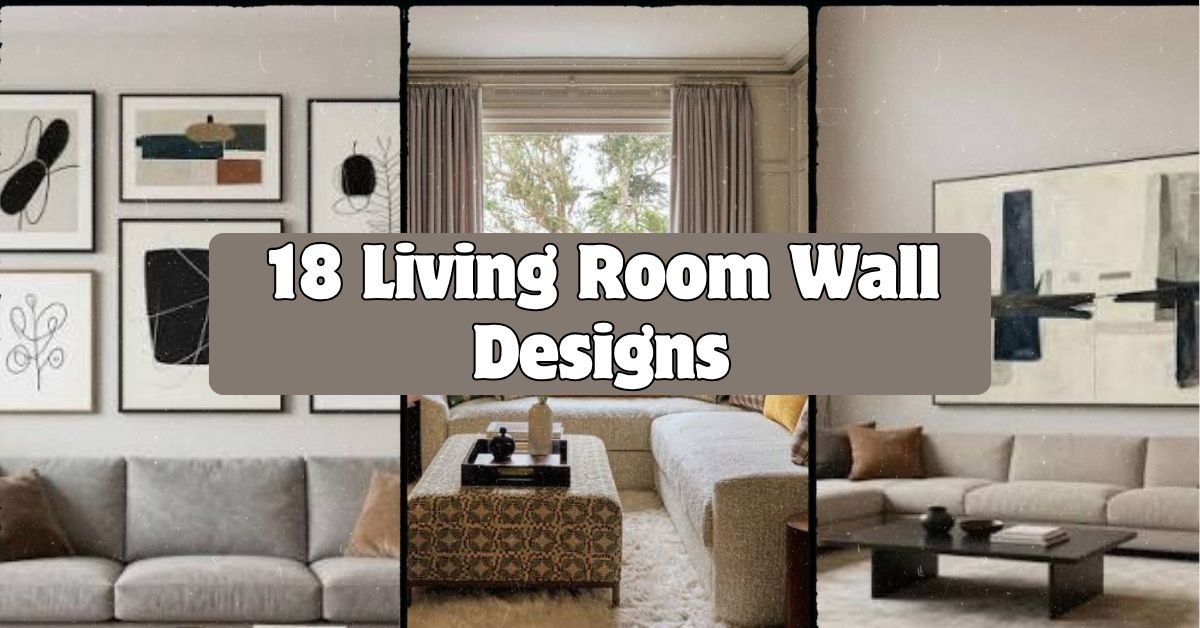
I’ve spent way too many weekends staring at blank walls trying to figure out what to do with them, so I put together this guide on 18 living room wall designs to save you that headache. Whether you’re renting or you own your place, whether you’ve got a huge budget or twenty bucks and a Saturday afternoon, there’s something here for you. I’ve tested a lot of these ideas myself, and I know which ones actually work versus which ones just look good in magazines.
Living room wall design refers to the decorative treatment applied to walls, including paint, molding, wallpaper, art arrangements, shelving, and textural elements. The best designs balance color, texture, and function to reflect a homeowner’s style while fitting the room’s layout and lighting.
Stick around and I’ll walk you through everything from budget-friendly gallery walls to statement paint jobs that cost less than you’d think. There’s a table in here too, so you can compare options at a glance.
What Makes a Living Room Wall Design Actually Work
Before we jump into the list, let’s talk about what separates a wall that looks intentional from one that looks like an afterthought. It’s not about spending a ton of money. It’s about balance. You want your eye to land somewhere, not bounce around confused. Color matters, sure, but so does scale. A tiny picture frame on a huge wall looks lost. A giant mirror in a small nook feels cramped.
I always tell people to think about their wall the way you’d think about an outfit. You need an anchor piece, then smaller details that support it. Once you get that idea in your head, the rest of this list will make a lot more sense.
1. Go Bold With an Accent Wall in a Deep Color
Painting one wall a rich, saturated color is still one of the easiest ways to transform a room. Think deep forest green, navy blue, or a warm terracotta. This works because it gives your eye a place to rest and instantly makes the room feel more designed.
Pick the wall behind your sofa or the one you see first when walking in. Keep the other walls neutral so the accent doesn’t compete with itself.
Practical tip: Test your color on a poster board and move it around the room at different times of day before committing to a full wall.
This idea flexes easily. Go moody and dark for a traditional look, or pick a muted sage for something more coastal or modern farmhouse.
Now that you’ve got color sorted, let’s talk texture, because paint alone can feel a little flat.
2. Add Shiplap or Wood Paneling for Texture
Wood paneling brings warmth and dimension that flat paint just can’t match. Shiplap has that classic farmhouse charm, but vertical slat paneling looks more modern and clean. Either way, wood adds texture without adding clutter.
Choose a lighter wood tone if your room already has dark furniture, so things don’t feel too heavy. Pair it with simple decor like a single piece of art or a small shelf, since the wood itself is already a statement.
Practical tip: Prefinished panels save you a weekend of sanding and staining, and most home stores sell them pre-cut.
Coastal homes love whitewashed shiplap, while modern spaces lean toward dark walnut slats spaced evenly apart.
Once your texture game is strong, it’s time to think about how you’ll display art on top of it.
3. Build a Gallery Wall With Mixed Frame Sizes
A gallery wall is basically a personal art museum on your wall. Mix different frame sizes, colors, and even textures like canvas next to metal frames. The key is keeping some consistency, like using only black and white photos, or all frames in similar tones.
Lay your pieces out on the floor first before hammering a single nail. This saves you from a wall full of holes and regret.
Practical tip: Cut paper templates the size of each frame and tape them to the wall to test your layout before hanging anything.
Traditional homes might use ornate gold frames, while modern spaces stick to clean black or white ones for a minimal vibe.
Speaking of art, let’s zoom out and talk about one giant statement piece instead of many small ones.
4. Hang One Oversized Statement Art Piece
Sometimes less really is more. One large piece of art, whether it’s a painting, a photograph, or even a big tapestry, can carry an entire wall on its own. This works great above a sofa or fireplace mantel.
The trick is scale. Your art should take up roughly two-thirds the width of the furniture below it, not the whole wall and not just a tiny sliver.
Practical tip: If original art feels too pricey, look for large-format prints online. Many sites sell museum-quality reproductions for under a hundred bucks.
Abstract pieces suit modern rooms, while landscape paintings or botanical prints fit more traditional and coastal spaces.
If art isn’t your thing, don’t worry. There’s a whole world of textured wall treatments that don’t involve a single frame.
5. Install Floating Shelves for Function and Style
Floating shelves give you a place to display books, plants, and little trinkets while keeping the wall from feeling empty. They’re also genuinely useful, which is more than you can say for most decor.
Stagger them at different heights instead of lining them up perfectly even. It creates visual movement and keeps things from looking too stiff.
Practical tip: Don’t overcrowd each shelf. Leave breathing room between objects so your eye doesn’t get overwhelmed.
Modern homes like sleek white or black shelves with minimal styling, while boho spaces pile on plants, woven baskets, and candles.
Now let’s compare a few of these budget-friendly options side by side so you can pick what fits your wallet.
H3: Wall Design Ideas by Budget
| Design Idea | Estimated Cost | Time to Complete | Skill Level |
|---|---|---|---|
| Accent paint wall | $30 to $60 | 1 afternoon | Beginner |
| Gallery wall (used frames) | $50 to $150 | 1 weekend | Beginner |
| Floating shelves | $40 to $120 | 2 to 4 hours | Beginner |
| Wood panel accent wall | $150 to $500 | 1 to 2 weekends | Intermediate |
| Wallpaper feature wall | $100 to $400 | 1 day | Intermediate |
| Built-in shelving unit | $800 to $3000 | 1 to 2 weeks | Professional |
6. Try Removable Wallpaper for a Big Pattern Punch
Wallpaper used to scare me, but peel-and-stick options changed the game completely. You can add florals, geometric patterns, or even a faux marble look without any long-term commitment.
Stick to one wall if the pattern is loud. It keeps the room from feeling too busy while still making a strong statement.
Practical tip: Smooth the wallpaper on with a squeegee or credit card as you go to avoid air bubbles that are hard to fix later.
Bold botanical prints suit coastal and boho homes, while geometric black and white patterns lean modern.
Once your pattern is up, mirrors are the next trick that designers swear by.
7. Use a Large Mirror to Bounce Light Around
Mirrors do double duty. They look great and they make small rooms feel bigger by reflecting light. An oversized mirror leaning against a wall or hung above a console table instantly adds depth.
Position it across from a window if you can. This bounces natural light deeper into the room and brightens up dark corners.
Practical tip: Lean a mirror instead of hanging it if you’re renting and can’t drill into walls.
Round mirrors feel soft and modern, while ornate framed ones suit traditional or vintage-inspired rooms.
Mirrors bring light in, but plants bring life. Let’s talk greenery next.
8. Mount a Vertical Garden or Wall Planters
Living walls sound intense, but they don’t have to be. A simple row of wall-mounted planters with trailing pothos or ferns adds color and life without taking up floor space.
Group three to five planters at varying heights for the best visual effect. Too few looks sparse, too many looks chaotic.
Practical tip: Choose low-maintenance plants like pothos or snake plants if you don’t have a great track record keeping things alive.
Boho and coastal homes go all in with lots of greenery, while modern spaces might use just one or two sculptural plants for contrast.
Plants add softness, but if you want something with more structure, wall molding might be your answer.
9. Add Picture Frame Molding for Architectural Detail
Picture frame molding is that classic look where thin wood trim creates rectangular shapes on the wall, almost like empty picture frames built right into the surface. It adds instant sophistication and works especially well in more traditional or transitional rooms.
Paint the molding the same color as the wall for a subtle, monochromatic effect, or contrast it with white trim against a colored wall for more drama.
Practical tip: Use lightweight MDF trim from a hardware store. It’s easy to cut and paint, even if you’ve never done trim work before.
This look feels most at home in traditional and transitional spaces, but a simplified version with fewer, larger panels can work in modern rooms too.
Molding adds structure, but let’s talk about something with even more texture: fabric.
10. Hang a Tapestry or Fabric Wall Hanging
Fabric on walls isn’t just a college dorm thing anymore. Woven tapestries, macrame hangings, and even quilted textiles add warmth, softness, and a handmade feel that paint just can’t replicate.
Choose a piece with texture and some dimension, like fringe or woven layers, rather than something flat. It catches light differently throughout the day and adds depth.
Practical tip: Use a wooden dowel to hang your tapestry. It keeps the fabric taut and looks intentional rather than sloppy.
Boho rooms practically require this look, but a simple linen wall hanging in neutral tones fits modern and Scandinavian spaces just fine too.
Fabric brings softness, but sometimes you want your wall to make a sculptural statement instead.
11. Install 3D Wall Panels for Depth and Shadow
Textured 3D panels, whether geometric, wave-shaped, or honeycomb, create shadow and depth that flat walls simply can’t achieve. They’re often made from PVC, wood, or gypsum and can be painted any color.
These work best as a single feature wall rather than covering the whole room. Too much texture everywhere gets visually exhausting.
Practical tip: Install a test panel in a low-visibility spot first to make sure your adhesive or mounting method actually holds on your specific wall type.
Modern and contemporary homes use these most often, though a wood-toned honeycomb panel can soften into a more transitional style.
Now that we’ve covered texture and depth, let’s swing back to something simpler: color blocking.
12. Try Color Blocking With Two-Tone Walls
Color blocking means splitting a wall into two distinct color zones, usually with a straight horizontal or diagonal line. It’s a fun way to add personality without committing to wallpaper or texture.
Keep one color neutral and the other bold. This balance keeps the look from feeling overwhelming while still making a statement.
Practical tip: Use painter’s tape and a level to get crisp, straight lines. Blurry edges will bug you every time you look at that wall.
Modern and eclectic homes love bold color block combos, while a soft blush and white combo can work in more traditional feminine spaces.
Let’s pair this with some smart lighting choices, because color alone isn’t the whole story.
13. Layer in Wall Sconces for Ambient Lighting
Wall sconces do more than light a room. They create shadows and highlights that make your wall design pop after the sun goes down. Placing them on either side of art or a mirror adds symmetry and a finished look.
Choose warm bulbs, around 2700K, for a cozy glow instead of harsh white light that feels more like an office.
Practical tip: Battery-operated sconces exist now, so you don’t need to deal with electrical wiring if you’re renting.
Brass sconces suit traditional rooms, while matte black fixtures feel more modern and industrial.
Lighting sets the mood, but nothing beats the impact of a full accent wall built from natural materials.
14. Create a Stone or Brick Veneer Accent Wall
Faux stone or thin brick veneer panels bring an industrial or rustic edge that’s hard to fake with paint alone. They’re lightweight compared to real stone and usually install with adhesive rather than mortar.
Use this around a fireplace or as a backdrop for a media console. It grounds the room and adds serious visual weight.
Practical tip: Order a sample panel before buying enough for the whole wall. Lighting in stores can make colors look totally different at home.
Industrial and modern farmhouse homes use this constantly, while a lighter limestone-toned veneer can soften into coastal or Mediterranean styles.
That covers heavier textures, so let’s lighten things up again with something more playful.
15. Display a Curated Plate or Object Wall
Instead of traditional art, hang decorative plates, vintage objects, or even small woven baskets in a curated arrangement. This look has deep roots in traditional and cottage-style decorating but works surprisingly well in eclectic modern spaces too.
Vary the sizes and shapes slightly, but stick to a cohesive color palette so the wall doesn’t look random.
Practical tip: Use plate hangers with adjustable spring clips so you can rearrange your layout without buying new hardware every time.
Cottage and traditional homes go heavy on antique plates, while modern eclectic spaces might mix in sculptural objects instead.
Let’s shift gears one more time and talk about a wall design that’s all about function.
16. Build a Media Wall With Integrated Storage
A media wall combines your TV, shelving, and sometimes a fireplace into one cohesive built-in feature. This works great for anyone tired of a lonely TV mounted on a blank wall with cords hanging everywhere.
Balance the TV visually with shelving or cabinets on either side so it doesn’t feel like the wall’s only purpose.
Practical tip: Hide cords using an in-wall cord management kit. It’s a small investment that makes a huge visual difference.
Modern homes lean toward sleek built-ins with hidden storage, while traditional spaces might use a wood mantel-style surround instead.
Now let’s talk about a design choice that’s less about function and more about pure atmosphere.
17. Paint an Accent Ceiling to Extend the Wall Design
This one surprises people, but painting your ceiling the same color as your accent wall, or even a shade darker, creates a cocoon-like effect that feels intentional and cozy rather than cramped.
Keep your trim white to create a crisp line between the two colors. This small detail keeps the look sharp instead of muddy.
Practical tip: Use a flat or matte finish on ceilings to avoid glare from overhead lighting.
Traditional and moody modern spaces both use this trick well, especially in smaller rooms where you want a snug, intentional feel.
Last but not least, let’s look at a design idea that ties everything together with pure geometry.
18. Add Geometric Wood Slat Wall Art
Geometric wood slat pieces, arranged in sunburst patterns, chevrons, or simple grids, add a sculptural, artistic touch without needing traditional framed art. These pieces cast subtle shadows that change throughout the day.
Stain the wood a shade that complements your existing furniture rather than matching it exactly. Slight contrast looks more intentional.
Practical tip: Many of these are available as prebuilt kits online if woodworking isn’t your thing.
Mid-century modern and Scandinavian homes use this look often, though a driftwood-toned version fits coastal spaces beautifully too.
Tips for Success
- Measure twice before hanging anything. A level and tape measure save you from lopsided disasters.
- Start with your biggest piece first, then build smaller details around it.
- Stick to a consistent color palette across the whole room, not just one wall, so things feel connected.
- Live with a temporary version, like leaning art against the wall, before committing to permanent installation.
- Don’t ignore scale. Undersized decor on a large wall almost always looks off.
- Mix textures, not just colors, for a wall that feels rich instead of flat.
- Natural light changes how colors look throughout the day, so check your choices morning, noon, and evening.
Common Mistakes and How to Avoid Them
Hanging art too high
: Center your art at eye level, roughly 57 inches from the floor to the middle of the piece, not the top of your furniture.
Overcrowding a small wall
: Choose one or two focal pieces instead of covering every inch. Empty space is part of the design.
Ignoring the room’s existing furniture
: Match your wall colors and textures to your sofa, rug, and other big pieces already in the room.
Skipping the planning stage
: Sketch your layout or use paper templates before drilling holes. It saves time and drywall repair.
Choosing trendy colors without testing them
: Sample paint on the actual wall for a few days since lighting changes how colors read throughout the day.
Forgetting about lighting placement
: Add sconces or adjustable lighting so your wall design looks good at night too, not just during the day.
Similar Variations
- Coastal Boho: Combines woven textures and driftwood tones with breezy, relaxed layouts for a beachy feel.
- Modern Farmhouse: Mixes shiplap, black metal accents, and neutral colors for a clean yet cozy look.
- Mid-Century Wall Design: Focuses on geometric shapes, warm wood tones, and simple sculptural art pieces.
- Industrial Loft Style: Leans on exposed brick, metal fixtures, and darker moody color palettes.
- Scandinavian Minimalist: Keeps walls light, airy, and mostly uncluttered with just a few natural elements.
- Traditional Gallery Style: Uses ornate frames, symmetrical layouts, and classic art subjects like landscapes.
Picking the right wall design really comes down to knowing your space and being honest about your maintenance habits and budget. Some of these ideas take an afternoon and twenty bucks, while others need a weekend and a trip to the hardware store, but every single one can transform how your living room feels. I hope this rundown of 18 Living Room Wall Designs gave you enough inspiration and practical direction to finally tackle that blank wall you’ve been staring at for way too long.
Leave a Reply