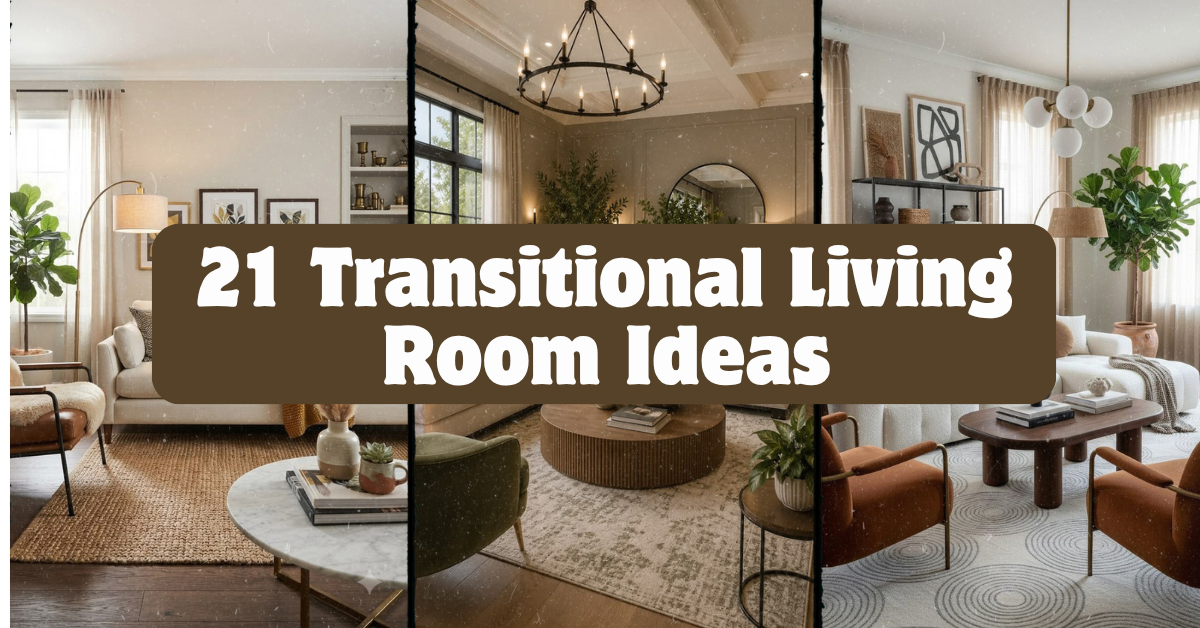
If you’re hunting for real 21 transitional living room ideas that don’t feel like the same five Pinterest photos recycled a hundred times, I’ve got you covered. I’ve spent way too many hours studying what makes this style click, and I’m laying out everything I know so you can skip the guesswork.
A transitional living room blends traditional furniture shapes with modern finishes and neutral colors. It balances classic comfort with clean, current style, avoiding anything too fussy or too cold. The result feels warm, current, and timeless at once.
Stick around, because I’m about to walk you through 21 specific ideas, plus some tables and tips that most articles skip entirely.
What Even Is a Transitional Living Room?
Okay, so here’s the deal. Transitional style is basically the middle child between traditional and modern. It grabs the comfy, curvy furniture your grandma might’ve loved, then pairs it with sleek lines and simple colors your modern-loving friend would approve of. No extremes allowed here.
Think soft neutral walls, a mix of textures, and furniture that doesn’t scream “one era only.” It’s not boho, it’s not farmhouse, it’s not strict mid-century. It’s a calm, balanced mix that works in almost any house. Honestly, that’s why so many people love it. It’s flexible, it’s timeless, and it rarely goes out of style.
1. Start With a Neutral Base Palette

Transitional rooms almost always begin with a quiet color base. Think warm whites, soft greige, taupe, or light gray. These shades let your furniture and textures do the talking instead of the walls.
Pick one dominant neutral for walls and larger furniture pieces, then use two or three supporting neutrals for pillows, throws, and rugs. This keeps the room from looking flat.
Practical tip: test paint swatches at different times of day. Neutrals shift dramatically under morning light versus evening lamps.
This idea works in almost any home style, from coastal cottages to city apartments, because neutral bases are basically a blank canvas. Once your palette is set, it’s time to think about the furniture that sits on top of it.
2. Mix Curved and Straight Furniture Lines

The secret sauce of transitional design is contrast in shapes. Pair a rolled-arm sofa with straight-edged side tables. Or add a curved accent chair next to a boxy coffee table.
This mix keeps the eye moving and avoids that overly matched “showroom” look. It also makes the room feel collected over time, not bought in one trip.
Actionable tip: if your sofa has soft curves, balance it with at least one sharp-lined piece like a rectangular ottoman or a linear console table.
This works beautifully whether your home leans traditional-heavy or more modern-minimal. Once your shapes are balanced, layering in texture is the next natural step.
3. Layer Textures Instead of Patterns

Transitional rooms lean on texture more than bold prints. Think woven baskets, chunky knit throws, linen curtains, and leather ottomans all living together.
Too many patterns can push the room into eclectic or maximalist territory, which isn’t the transitional vibe. Instead, let texture create visual interest while keeping colors calm.
Quick tip: aim for at least four different textures in one room, like smooth wood, soft fabric, woven fiber, and metal accents.
Coastal transitional spaces might add jute and linen, while a more urban take might lean into velvet and brushed metal. Now let’s talk about how furniture placement plays into this whole texture game.
4. Choose a Statement Rug With Subtle Pattern

A rug can anchor the whole room, but transitional style asks for subtlety. Skip loud geometric prints. Go for soft medallion patterns, faded traditional motifs, or simple tonal stripes.
The rug should feel like a whisper, not a shout. It ties the furniture together without competing with anything else in the room.
Practical tip: size your rug so all major furniture pieces have at least their front legs on it. This instantly makes a room feel more pulled together.
Traditional homes might lean toward classic Persian-inspired patterns, while modern spaces might choose a plain, low-pile rug in a warm neutral. Once your rug is set, lighting becomes your next big design lever.
Rug Size Guide for Common Room Dimensions
| Living Room Size | Recommended Rug Size | Furniture Placement Tip |
|---|---|---|
| 10×10 ft | 8×10 ft | All front legs on rug |
| 12×14 ft | 9×12 ft | Sofa and chairs fully on rug |
| 14×16 ft | 10×14 ft | Leave 18-24 inches of floor visible around edges |
| Small apartment (under 200 sq ft) | 5×8 ft | Center rug under coffee table only |
5. Add Warm Metallic Accents

Cold chrome doesn’t quite fit here. Instead, go for warm metals like brushed brass, aged bronze, or matte gold. These show up in lamp bases, picture frames, drawer pulls, and light fixtures.
Warm metals add a little shine without making the room feel showy. They’re the finishing touch that quietly elevates everything else.
Tip: stick to one metal finish throughout the room, or two at most, so things don’t feel scattered.
In a farmhouse-transitional mix, aged bronze feels right at home. In a more modern take, brushed gold works wonders. Speaking of lighting, let’s dig into that next.
6. Layer Your Lighting in Three Levels

A single overhead light won’t cut it. Transitional rooms use ambient, task, and accent lighting together. Think a ceiling fixture, a floor lamp near the reading chair, and small accent lights on shelves or art.
This layered approach makes the room feel cozy at night and functional during the day.
Practical tip: use warm-toned bulbs (around 2700K to 3000K) to keep that inviting glow instead of a stark white light.
Whether your home is coastal or classic, this three-level lighting trick works everywhere because it’s about function first, style second. Next, let’s talk about how your sofa choice shapes the whole room.
7. Choose a Slightly Tailored Sofa

Your sofa is the anchor piece, so pick one with clean lines but soft cushions. Skip anything overly tufted or overly boxy. A slightly rolled arm or a track arm with soft cushions usually hits the transitional sweet spot.
Neutral upholstery like a soft gray, warm beige, or muted green gives you flexibility for pillows and throws later.
Tip: choose performance fabric if you have kids or pets. It looks just as soft but holds up way better over time.
This idea flexes easily. Add turned wood legs for a more traditional feel, or slim metal legs for something more contemporary. Now let’s fill that sofa with the right accessories.
8. Use Pillows to Bridge Old and New

Throw pillows are your cheapest, easiest way to blend styles. Pair a classic damask or paisley pattern pillow with a simple linen or velvet solid.
This little combo captures the whole transitional idea in miniature: old pattern, new texture, together in one spot.
Practical tip: stick to three pillows per sofa cushion spot max. More than that starts feeling cluttered.
Try muted florals for a softer traditional lean, or graphic stripes for something more modern. Once your pillows are sorted, let’s think bigger with wall decor.
9. Hang Art With Simple, Classic Frames

Skip the ultra-modern black frames or the overly ornate gold ones. Transitional art usually sits in simple wood or slim metal frames that don’t distract from the piece itself.
Choose art with soft, muted colors that echo your room’s palette. Landscapes, abstract line art, and botanical prints all work great here.
Tip: hang art so the center sits at eye level, roughly 57 to 60 inches from the floor.
A more traditional room might lean into framed botanical prints, while modern spaces might prefer abstract canvases. Let’s move from the walls down to the floor with furniture arrangement.
10. Create Conversation-Friendly Furniture Groupings

Transitional living rooms aren’t just about looks, they’re about function too. Arrange your seating so people can actually talk without shouting across the room.
A sofa facing two chairs, with a coffee table in the middle, creates a natural conversation circle. Keep walking paths clear, usually about 30 inches wide.
Practical tip: measure your space before buying furniture. A too-big sectional kills the balanced feel transitional rooms need.
Open-concept modern homes might use furniture to define zones without walls, while traditional homes might already have natural room dividers. Next, let’s talk window treatments.
11. Choose Simple, Flowing Curtains

Skip heavy, ornate drapery. Transitional curtains are usually simple panels in linen, cotton, or a light blend. Neutral colors work best, though a subtle texture or weave adds interest.
Curtains should be functional too, letting in light during the day and offering privacy at night.
Tip: hang curtain rods close to the ceiling, not just above the window frame. This trick makes ceilings look taller instantly.
Coastal transitional spaces might choose sheer white linen, while a more classic home might add subtle pinch-pleat detailing. Now let’s talk coffee tables.
12. Pick a Coffee Table With Contrast Material

Your coffee table is a great spot to mix materials. Think a wood top with metal legs, or a stone top with a simple wood base.
This mixed-material approach is basically transitional style in furniture form. It’s one piece doing double duty, bridging old and new all on its own.
Practical tip: leave about 14 to 18 inches between your coffee table and sofa for comfortable legroom.
Modern homes might choose a glass and metal combo, while traditional spaces might prefer a wood and stone pairing. Storage solutions come next.
13. Add Closed Storage to Hide Clutter

Open shelves look nice, but too much visible clutter breaks the calm transitional vibe. Use cabinets, drawers, or baskets to tuck away remotes, chargers, and toys.
A media console with closed doors keeps the TV area looking clean, while a few woven baskets by the sofa handle blankets and magazines.
Tip: choose storage furniture that matches your wood tones so it blends rather than stands out.
Farmhouse-leaning rooms might use vintage trunks, while modern spaces might choose sleek built-ins. Let’s talk about how plants fit into all this.
14. Bring in Greenery With Simple Planters

A few live plants add life without disrupting the calm color scheme. Stick to simple, understated planters in ceramic, woven fiber, or matte metal.
Avoid neon or heavily patterned pots since they clash with the quiet transitional feel. Let the plant itself be the pop of color.
Practical tip: choose low-maintenance plants like snake plants or pothos if you don’t have a green thumb.
Coastal rooms might add a few palms, while modern spaces might prefer a single sculptural fiddle leaf fig. Let’s zoom out and check budget options next.
Budget Tiers for a Transitional Living Room Refresh
| Budget Level | What You Can Update | Estimated Cost |
|---|---|---|
| Low ($200-500) | Pillows, throws, one rug, wall art | $200-500 |
| Mid ($1,000-3,000) | New sofa, coffee table, lighting update | $1,000-3,000 |
| High ($5,000+) | Full furniture set, custom drapery, built-ins | $5,000-10,000+ |
15. Add a Statement Mirror

A large, simply-framed mirror bounces light around the room and adds a subtle focal point. Round or arched shapes soften a room full of straight furniture lines.
Mirrors also make small living rooms feel bigger, which is a nice bonus if you’re working with limited square footage.
Tip: place mirrors across from windows to reflect natural light deeper into the room.
Traditional spaces might choose an arched wood-framed mirror, while modern rooms might go for a simple round brass frame. Next, let’s chat about mixing wood tones.
16. Don’t Match All Your Wood Tones

Here’s something people get wrong all the time. You don’t need every wood piece to match perfectly. A slightly darker coffee table can sit just fine next to lighter wood shelves.
The key is keeping undertones similar, either all warm or all cool, so things feel intentional rather than random.
Practical tip: bring a small wood sample or photo when shopping for new furniture to compare undertones in person.
This trick works in basically every home style since mismatched-but-coordinated wood is a design rule that transcends trends. Now let’s think about ceiling details.
17. Add Subtle Architectural Details

If your budget allows, simple crown molding, wainscoting, or a coffered ceiling adds a traditional touch that balances out modern furniture.
These details don’t need to be elaborate. Even a simple picture-frame molding on walls adds classic character without looking dated.
Tip: paint molding the same color as your walls for a subtle, modern-traditional blend instead of stark white trim.
Older homes might already have some of these details built in, while newer builds might need to add them for that transitional charm. Let’s look at fireplace styling next.
18. Style Your Fireplace as the Focal Point

If you’ve got a fireplace, use it. A simple mantel with a few curated objects, like a mirror, some candles, and a small plant, creates an instant focal point.
Keep the mantel styling balanced, not too full, not too empty. Odd numbers of objects, like three or five items, tend to look more natural than even groupings.
Practical tip: vary the height of mantel objects so your eye moves smoothly across the display.
A stone fireplace surround leans more traditional, while a simple painted brick or clean tile surround feels more modern. Now let’s discuss ceiling fans and vents, often overlooked details.
19. Update Hardware and Fixtures for Cohesion

Small details like door handles, vent covers, and light switch plates matter more than people think. Swapping dated brass for brushed nickel, or vice versa, instantly updates a room’s feel.
This is a low-cost, high-impact fix that ties everything together without a big renovation.
Tip: match hardware finish to your lighting fixture finish for a cohesive, put-together look.
Older traditional homes benefit most from this update, though modern spaces can use it too for a quick refresh. Let’s move to seasonal flexibility next.
20. Keep Decor Swappable by Season

A smart transitional living room uses a neutral base so you can swap small decor items easily. Add darker, richer pillow colors in fall and winter, then lighter, breezier fabrics in spring and summer.
This keeps your room feeling fresh without a full redesign every few months.
Practical tip: store seasonal decor in labeled bins so switching things out takes minutes, not hours.
This approach works in any climate, though coastal and southern homes might lean lighter year-round. Finally, let’s wrap up with balance as the guiding principle.
21. Balance Old and New in Every Single Choice

If there’s one rule to remember, it’s this: every piece should feel like it’s meeting in the middle. Not too vintage, not too futuristic. Not too formal, not too casual.
When picking anything for this room, ask yourself if it leans too far one direction. If yes, balance it out with something on the opposite end.
Tip: keep a small mood board, even just on your phone, with a mix of traditional and modern reference photos to guide your choices.
This mindset is really the heart of transitional design, and it works no matter what specific style flavor you’re leaning toward.
Tips for Success
- Buy furniture in stages rather than all at once. This lets the room evolve naturally instead of looking staged.
- Keep at least 60% of your color palette neutral so accent colors actually pop when you use them.
- Invest in one or two higher-quality pieces, like a good sofa, rather than spreading budget thin across everything.
- Take a photo of your room and edit it in grayscale to check if your layout has good contrast and balance.
- Don’t rush the accessories. Live in the room for a few weeks before finalizing pillows, art, and decor.
- Ask yourself if a piece still works if you removed all the “trendy” details. Timeless pieces should hold up on their own.
Common Mistakes and How to Avoid Them
Overdoing the neutrals
: Add texture and at least one or two muted accent colors so the room doesn’t feel flat or boring.
Mixing too many styles at once
: Stick to blending just traditional and modern. Adding boho, industrial, and coastal on top confuses the whole look.
Ignoring scale
: Measure your room and furniture before buying. Oversized pieces in a small room ruin the balanced feel transitional style needs.
Skipping lighting layers
: Relying on one overhead light makes the room feel flat. Add lamps and accent lighting for warmth and depth.
Matching everything too perfectly
: A showroom-matched set feels stiff. Mix finishes and eras slightly for a collected, lived-in look.
Forgetting texture
: Smooth, flat surfaces everywhere feel cold. Add woven, knit, and soft materials throughout the room.
Similar Variations
- Modern Farmhouse Transitional – Adds shiplap and rustic wood details to the classic transitional base.
- Coastal Transitional – Leans into lighter blues, whites, and natural fiber textures for a beachy feel.
- Glam Transitional – Introduces more metallic accents and a touch of velvet for extra polish.
- Traditional-Modern Hybrid – Skews slightly more classic, with more ornate furniture details mixed with modern colors.
- Minimal Transitional – Strips down accessories even further for a cleaner, quieter version of the style.
- Warm Industrial Transitional – Mixes metal and wood elements with softer furniture shapes for a cozier industrial feel.
Transitional style really comes down to balance. It’s not about following strict rules, it’s about mixing old and new until it feels calm, warm, and put together. Whether you start with just a rug or go all in on a full furniture overhaul, these ideas give you a real roadmap to follow. I hope this list of 21 transitional living room ideas gave you exactly what you needed to start planning your own space with confidence.
Leave a Reply