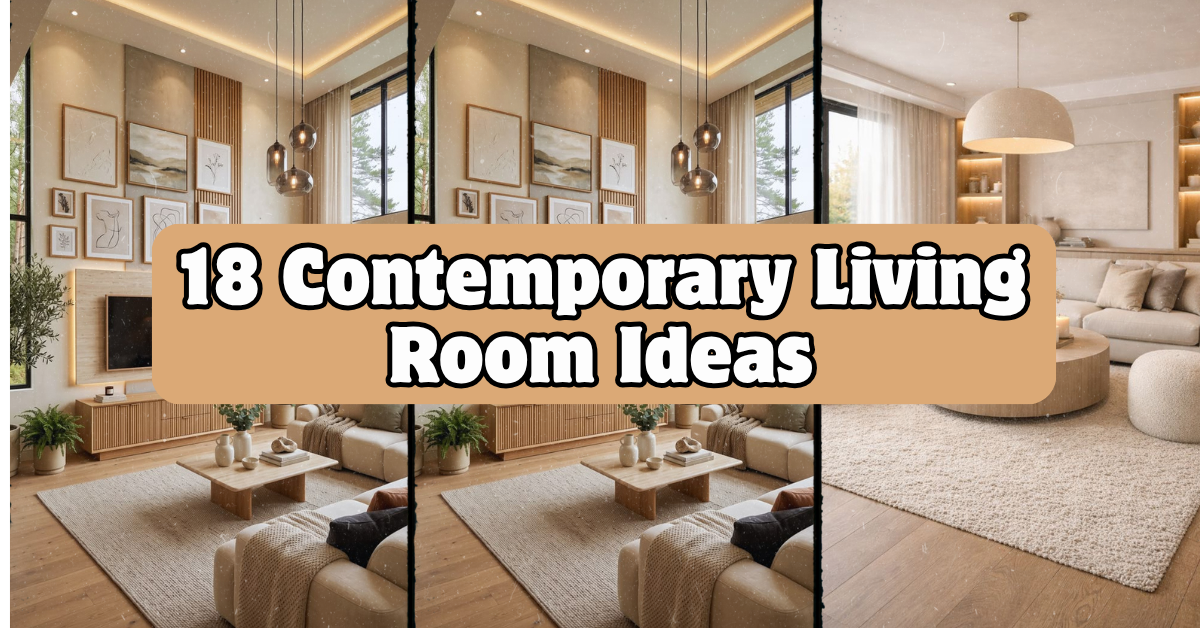
I’ve spent way too many hours scrolling through living room photos, and I can tell you that finding real, usable 18 Contemporary Living Room ideas isn’t as easy as it sounds. Most articles just show pretty pictures without explaining why anything works. That’s not what you’re getting here.
A contemporary living room is a space designed around current design trends, featuring clean lines, neutral color palettes with bold accents, mixed textures, and functional furniture. It changes with the times, unlike traditional styles that stay fixed to one era.
Stick around, because I’m about to walk you through 18 specific ways to bring this look into your own home, plus some mistakes I’ve watched people make over and over.
What Makes a Living Room “Contemporary” Anyway?
Okay, so here’s the thing about contemporary design. It’s not the same as modern. Modern refers to a specific era (think mid-century). Contemporary means “right now.” It’s always shifting.
Right now, contemporary living rooms tend to feature soft curves mixed with straight lines, a mostly neutral base with one or two punchy colors, and furniture that looks simple but feels expensive. There’s also a heavy focus on natural light and open layouts. Nothing feels cluttered or fussy. Every piece earns its spot in the room.
I like to think of it as your grandma’s formal living room’s cooler, more relaxed cousin.
1. Start With a Neutral Base and Add One Bold Accent Color

Most contemporary rooms lean on whites, grays, beiges, or soft browns for walls and big furniture pieces. Then they add one strong color, like emerald green, burnt orange, or deep navy, through pillows, art, or a single chair.
This keeps the room from feeling flat while still looking put together. Pick your accent color first, then build everything else around it.
Tip: Test your accent color on a throw pillow before committing to a whole chair in that shade.
This approach works in coastal homes too (think navy instead of black), and even traditional spaces can borrow this trick with jewel tones.
Once your color story is locked in, it’s time to think about what’s actually sitting on your floor.
2. Choose Low-Profile Furniture With Clean Lines

Contemporary furniture doesn’t have carved legs or fussy trim. Sofas sit lower, arms are simple, and everything has a streamlined shape. Think straight edges or soft, single curves, not scrolls or tufting.
This makes rooms feel more open, even in smaller spaces. A low sofa paired with a simple coffee table instantly signals “contemporary” before you add anything else.
Tip: Measure your sofa’s arm height. Anything under 24 inches usually reads as contemporary.
If you’re going for a more transitional style, you can mix one low-profile piece with slightly more traditional seating for balance.
Furniture sets the tone, but the floor beneath it matters just as much.
3. Layer a Textured Rug Over Hardwood or Light Flooring
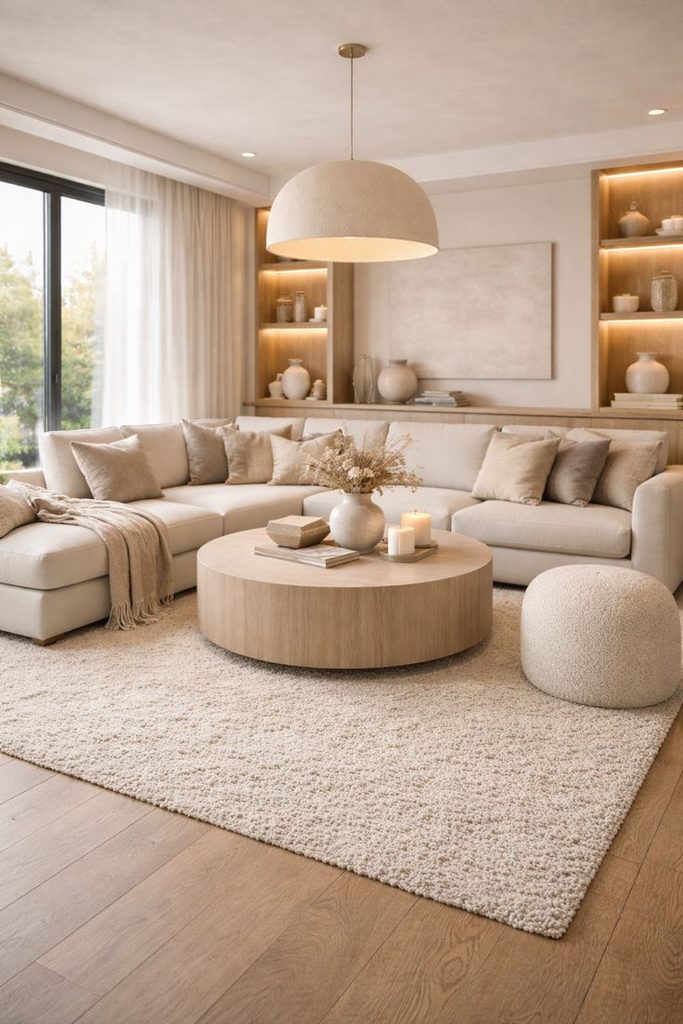
Contemporary rooms almost always have some kind of hard flooring, hardwood, polished concrete, or large-format tile. A textured rug (think chunky wool or a subtle geometric weave) softens the space without covering it in pattern overload.
Stick to rugs with low, subtle patterns or solid colors with visible texture. This keeps the eye calm.
Tip: Your rug should extend at least six inches past the edges of your main seating pieces.
Coastal and farmhouse styles love this trick too, just swap wool for jute.
Speaking of texture, let’s talk about the walls next.
4. Add a Statement Wall Without Going Overboard

One accent wall can transform a plain room. This could mean a bold paint color, wood paneling, or even textured plaster. The key with contemporary design is picking just one wall, not the whole room.
Keep the other three walls neutral so the statement wall actually stands out. This also makes the room feel bigger, not smaller.
Tip: Place your statement wall behind the sofa or TV, the natural focal point of the room.
Industrial lofts love exposed brick for this same effect, while coastal homes might use a soft blue-gray shiplap instead.
Now that your walls have some personality, let’s bring in some greenery.
5. Bring in Large Statement Plants for Life and Texture

A fiddle leaf fig, monstera, or snake plant in the corner does more for a room than most people realize. Contemporary spaces often feel a little sparse without something organic breaking up all those clean lines.
Go big. One large plant makes more impact than five small ones scattered around.
Tip: Choose a simple, matte ceramic pot in white, black, or terracotta to keep the focus on the plant itself.
This idea genuinely works everywhere, from boho apartments to sleek minimalist condos.
Plants bring life, but lighting brings mood, and that’s where we’re headed next.
6. Install Layered Lighting Instead of One Overhead Fixture

Contemporary rooms rarely rely on just one ceiling light. Instead, they layer things: a statement pendant, a floor lamp, some table lamps, maybe even hidden LED strips behind shelves.
This creates depth and lets you adjust the mood depending on the time of day. Harsh overhead lighting alone makes any room feel flat and a little sterile.
Tip: Aim for at least three different light sources at different heights in your living room.
Traditional homes benefit from this too, just swap sleek fixtures for something with a bit more detail.
Let’s look at how these lighting choices pair with your color and material decisions in one place.
Contemporary Lighting Style Guide
| Light Type | Best Placement | Typical Material | Mood Created |
|---|---|---|---|
| Sculptural pendant | Above coffee table | Metal or glass | Focal, dramatic |
| Arc floor lamp | Behind sofa | Black or brass metal | Soft, ambient |
| Table lamp pair | End tables | Ceramic or matte metal | Balanced, cozy |
| LED strip lighting | Behind shelving | Hidden, low-profile | Modern, subtle glow |
| Recessed ceiling lights | Room perimeter | Built-in | Even, functional |
7. Mix Metals Intentionally Instead of Matching Everything

Old design rules said to match all your metal finishes. Contemporary design throws that out. Mixing black metal with brushed brass or matte gold actually looks more current and interesting.
Pick two metals max and repeat them throughout the room in lighting, hardware, and frames.
Tip: Use your darker metal for larger pieces (like a lamp base) and your lighter metal for smaller accents (like picture frames).
Industrial and mid-century styles both lean into this same mixed-metal approach.
Now let’s talk about something people always forget: the ceiling.
8. Don’t Ignore the Ceiling, Add Interest Overhead

A plain white ceiling is fine, but contemporary rooms sometimes go a step further with exposed beams, a subtle color wash, or a textured finish. This is called the “fifth wall” for a reason.
Even something simple, like painting the ceiling one shade darker than your walls, adds coziness without much effort.
Tip: If your ceilings are low, stick to light colors up there to avoid making the room feel cramped.
Farmhouse and rustic styles often use exposed wood beams for a similar overhead effect.
Let’s move from the ceiling down to something you can actually touch, your textiles.
9. Combine at Least Three Different Textures in Soft Furnishings

Smooth leather, chunky knit throws, and linen pillows sitting together create visual interest without adding more color or pattern. This is one of the easiest ways to make a plain room feel intentional.
The trick is keeping your color palette tight while varying the material.
Tip: Grab items from three different texture families: something smooth, something woven, and something soft or fuzzy.
Scandinavian design practically lives on this idea, often using all-neutral textures for a cozy, calm feel.
Once your textures are sorted, let’s talk about how much (or how little) furniture you actually need.
10. Embrace Negative Space Instead of Filling Every Corner

Contemporary design isn’t about cramming a room full of stuff. Empty space is actually a design choice. It gives your eyes a place to rest and makes the pieces you do have stand out more.
Resist the urge to fill every wall or corner with something.
Tip: After arranging furniture, step back and ask if you could remove one more piece. Usually, you can.
Minimalist and Japandi styles take this even further, but even traditional rooms benefit from a little breathing room.
Speaking of Japandi, let’s dig into how natural materials fit into this whole picture.
11. Bring in Natural Materials Like Wood, Stone, and Rattan

Pure minimalism can feel cold. Adding natural materials warms things up without cluttering the space. A wood coffee table, a stone side table, or a rattan chair all add warmth while keeping lines simple.
This is what separates contemporary from strict modern or minimalist styles, it has a bit more soul.
Tip: Pick one natural material as your “anchor” and repeat it in at least two spots in the room.
Coastal and Scandinavian interiors basically run on this exact principle.
Now let’s talk about something that ties the whole room together: your art.
12. Hang Large-Scale Art Instead of Several Small Pieces

One oversized piece of art above the sofa does more visually than a cluster of small frames. Contemporary spaces favor bold, simple statements over busy arrangements.
Abstract art, black-and-white photography, or bold graphic prints all work well here.
Tip: Your art should be about two-thirds the width of the furniture piece it’s hanging above.
Traditional homes can still apply this rule, just choose classic landscape or portrait art instead of abstract pieces.
Budget Breakdown by Room Size
| Room Size | Budget Tier | Estimated Cost | What’s Included |
|---|---|---|---|
| Small (under 150 sq ft) | Basic refresh | $800-$1,500 | Paint, rug, pillows, one art piece |
| Medium (150-300 sq ft) | Mid-range update | $2,500-$5,000 | Above plus new sofa, lighting, plants |
| Large (300+ sq ft) | Full redesign | $6,000-$12,000+ | Full furniture set, custom lighting, statement wall |
13. Use a Gallery Wall of Mirrors Instead of Just Frames

Mirrors bounce light around a room and make it feel bigger. A cluster of differently shaped mirrors on one wall creates the same visual impact as a gallery wall, but with more function.
Stick to simple frames in one or two finishes so it doesn’t look too busy.
Tip: Arrange mirrors on the floor first before hanging, so you can adjust spacing without extra nail holes.
Coastal homes love round mirrors for this effect, while industrial spaces might use black metal frames instead.
Let’s shift gears now and talk furniture arrangement, because layout matters just as much as style.
14. Float Your Furniture Away From the Walls

Pushing every couch and chair against the wall is an old habit. Contemporary layouts often float furniture toward the center of the room, creating cozier conversation areas.
This works especially well in open-concept spaces where the living room blends into a dining or kitchen area.
Tip: Leave at least 30 inches of walking space around any floating furniture arrangement.
Open-concept farmhouse and modern homes both rely heavily on this floating furniture trick.
Now let’s talk about something small but mighty: your window treatments.
15. Choose Simple, Floor-Length Curtains in Neutral Tones

Heavy, patterned drapes feel dated fast. Contemporary rooms usually go with simple linen or cotton curtains in white, gray, or a soft tone that matches the walls.
Floor-length curtains hung close to the ceiling make windows (and the whole room) look taller.
Tip: Hang curtain rods four to six inches above the window frame for extra height.
Coastal spaces often use sheer white curtains for the same airy effect, just lighter in weight.
Curtains lead us naturally into another often-overlooked detail, your hardware and small fixtures.
16. Update Small Hardware for a Big Visual Shift

Cabinet handles, light switch covers, and even outlet plates can throw off a contemporary look if they’re outdated. Swapping these small details out is cheap but makes a noticeable difference.
Matte black or brushed nickel hardware tends to read as current right now.
Tip: Buy one hardware sample first and hold it up in your room’s actual lighting before ordering a full set.
This tip honestly applies to every design style, it’s just smart no matter what look you’re going for.
Let’s zoom out now and talk about how technology fits into all of this.
17. Hide or Minimize Visible Tech and Cords

Nothing kills a clean contemporary look faster than tangled cords and visible cable boxes. Built-in shelving with hidden outlets, cord clips, or even a simple woven basket to stash devices can fix this instantly.
Tip: Use cord covers that match your wall color so cables practically disappear.
Every design style benefits from this, but it’s especially crucial in contemporary spaces where clean lines are the whole point.
Last but not least, let’s talk about the finishing touch that ties a room together.
18. Add One Unexpected Vintage or Antique Piece

This might sound like it contradicts everything else, but one older piece, an antique mirror, a vintage side table, adds character and keeps the room from feeling like a showroom.
The contrast between old and new is actually a hallmark of well-done contemporary design.
Tip: Thrift stores and estate sales are great spots to find affordable vintage accents.
This mix-and-match approach is basically the foundation of eclectic design too.
Now that you’ve got 18 solid starting points, let’s cover a few extra things that’ll help you pull it all together successfully.
Tips for Success
- Start with a mood board before buying anything, even a simple Pinterest board helps you see if colors and textures actually work together.
- Buy your biggest furniture pieces last, once you know your color palette and layout, everything else falls into place easier.
- Don’t rush the whole room at once, contemporary spaces often look best when they evolve slowly over a few months.
- Keep a “maybe” box for accessories you’re unsure about, live with the room empty of them for a week before deciding.
- Invest more money in pieces you touch daily, like your sofa, and spend less on trendy accent items.
- Take a photo of your room and edit out clutter mentally, it helps you see what’s actually necessary versus decorative.
Common Mistakes and How to Avoid Them
Overloading with accent colors
: Stick to one bold accent color per room instead of introducing three or four competing shades.
Matching every piece of furniture perfectly
: Mix textures and slightly different tones instead. Perfectly matched sets look more like a showroom than a home.
Skipping window treatments entirely
: Bare windows can make a contemporary room feel unfinished. Even simple sheers add polish.
Choosing furniture based on trends alone
: Pick pieces you’ll still like in five years, then update trendy accents (pillows, art) as styles shift.
Forgetting about scale
: A tiny rug or oversized sofa throws off the whole room’s balance. Measure your space before buying anything big.
Leaving walls completely bare
: Empty walls can make a room feel cold. One statement piece of art or a mirror usually solves this fast.
Similar Variations
- Japandi Living Room: Blends Japanese minimalism with Scandinavian warmth, lots of wood, neutral tones, and simple lines.
- Industrial Contemporary: Mixes exposed brick and metal accents with contemporary furniture for an urban loft feel.
- Coastal Contemporary: Keeps the clean lines but swaps in blues, whites, and natural fibers like jute and rattan.
- Mid-Century Contemporary: Combines retro-inspired furniture shapes with today’s neutral color trends.
- Modern Farmhouse: Adds rustic wood and vintage touches to an otherwise clean, contemporary base.
- Transitional Living Room: Splits the difference between traditional furniture shapes and contemporary color palettes.
Pulling together a great living room really comes down to picking a few solid ideas and running with them, not trying to do everything at once. Start small, maybe with a bold accent wall or a new rug, and build from there as your budget and confidence grow. Whatever direction you go, these 18 Contemporary Living Room ideas should give you a real, practical starting point instead of just another list of pretty pictures.
Leave a Reply