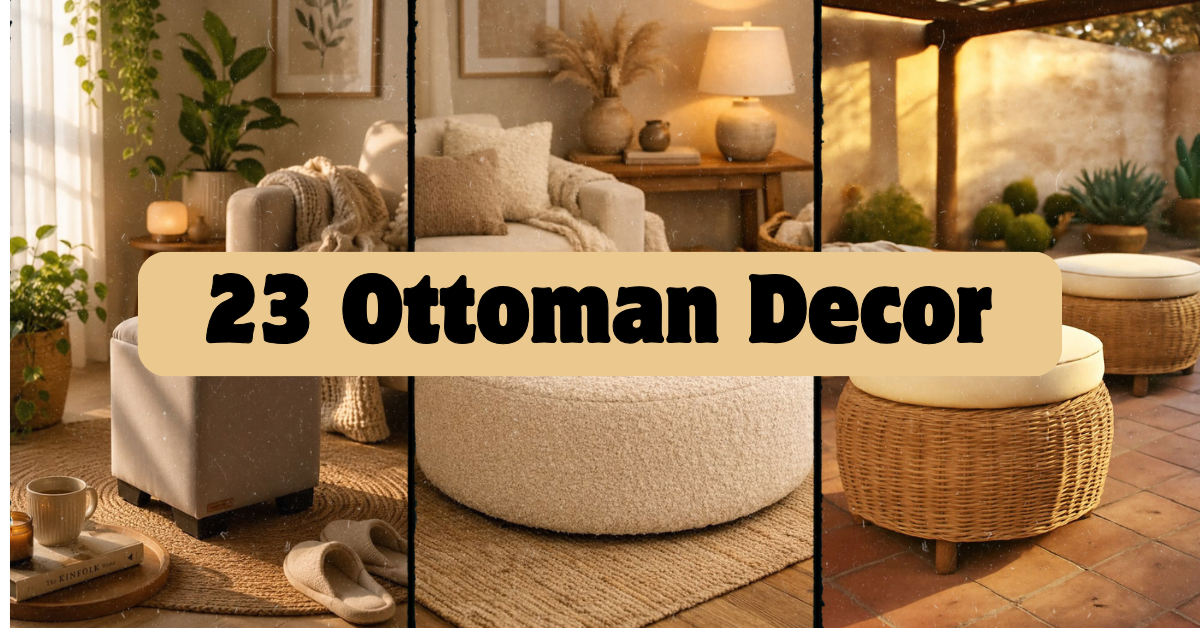
If you’ve been searching for 23 Ottoman Decor ideas that actually work in real homes, you’re in the right spot. I’ve spent way too many hours studying what makes an ottoman go from “meh, it’s just a footrest” to the piece that ties a whole room together. This guide covers every angle so you don’t have to keep scrolling through a dozen other sites.
An ottoman is a low, cushioned piece of furniture without a back or arms, used as a footrest, extra seating, or small table. Decorating around it means choosing the right size, shape, color, and accessories so it fits your room’s style and function. The best ottoman decor balances comfort with visual appeal.
Stick around, because I’m about to walk you through more than 20 ways to style an ottoman that most articles never even mention.
What Makes Ottoman Decor Its Own Thing
Ottomans are kind of the underdog of furniture. They don’t get the glory that sofas or coffee tables get, but they honestly do more work. One day it’s a footrest. The next day it’s extra seating when your in-laws show up unannounced. The day after that, it’s holding a tray of snacks during movie night.
Because ottomans are so flexible, decorating them takes a little thought. You’re not just picking a pretty object. You’re picking something that needs to function AND look good. That’s the fun challenge here, and it’s why I love this topic so much.
1. Pick a Round Ottoman for Small Living Rooms

Round ottomans are lifesavers in tight spaces. They don’t have sharp corners, so you can walk around them without stubbing your toe every five minutes. They also soften a room full of straight-edged furniture like sofas and bookshelves.
Go for a round ottoman in a neutral fabric if your room already has a lot going on. If your room feels boring, pick one in a bold color like mustard or deep green.
Quick tip: measure your walking path first. You want at least 30 inches of clearance around it.
This idea works in modern lofts just as well as it does in cozy farmhouse living rooms.
Speaking of shapes, let’s talk about what happens when you go big.
2. Use an Oversized Ottoman as a Coffee Table Replacement

Swapping your coffee table for a large ottoman changes the whole vibe of a room. It feels softer, more relaxed, less “don’t put your feet up here.”
Choose a sturdy ottoman with a flat top so you can still rest drinks or books on it. Add a large wooden tray on top to bring back some hard surface for practical use.
Actionable tip: pick an ottoman that’s at least 36 inches wide if it’s replacing a coffee table for two people to use comfortably.
This works especially well in coastal and boho homes where comfort matters more than formality.
Now let’s get into color, because this is where a lot of people get stuck.
3. Match Your Ottoman to Your Accent Pillows, Not Your Sofa

Here’s a mistake I see all the time. People try to match their ottoman fabric exactly to their couch. It ends up looking flat, like everything came from the same three-piece set at a big box store.
Instead, match your ottoman to your throw pillows or curtains. This creates a thread of color that moves around the room instead of sitting in one blob.
Try picking two colors from your pillows and using one of them for your ottoman.
This trick works in almost every style, from traditional to mid-century modern.
Next, let’s talk textures, because fabric choice changes everything.
Ottoman Fabric Comparison Table
| Fabric Type | Durability | Best For | Maintenance |
|---|---|---|---|
| Velvet | Medium | Formal living rooms | Needs regular brushing |
| Leather | High | High-traffic homes with kids/pets | Wipe clean, condition yearly |
| Linen | Low-Medium | Coastal or casual spaces | Spot clean, avoid direct sun |
| Performance Fabric | High | Families, pet owners | Machine washable covers |
| Boucle | Medium | Modern or Scandinavian rooms | Vacuum, spot clean only |
4. Add a Tufted Ottoman for a Touch of Elegance

Tufting adds texture without adding clutter. Those little buttons and folds catch light in a way that flat fabric just can’t.
A tufted ottoman looks amazing in a living room with traditional or transitional furniture. Stick to a single solid color so the tufting pattern gets to be the star.
Practical tip: pair a tufted ottoman with simple, unpatterned throw pillows nearby so the textures don’t compete.
If your home leans modern farmhouse, a tufted ottoman in linen or cotton keeps things from feeling too formal.
Now let’s move from texture to function with storage.
5. Choose a Storage Ottoman for Small Apartments

If you live somewhere small, a storage ottoman is basically a cheat code. You get seating, a footrest, and a hidden spot for blankets, remotes, or your kid’s toys.
Look for one with a hinged lid instead of a lift-off top. It’s way easier to use one-handed when your other hand is holding a snack.
Tip: measure your storage needs first. If you’re hiding blankets, make sure the ottoman is at least 18 inches deep.
This idea is a favorite in small-space apartments and studio setups where every piece needs to multitask.
Let’s talk about pairing ottomans together next.
6. Cluster Two Small Ottomans Instead of One Big One

Instead of one large ottoman, try two smaller matching ones. You can push them together for a coffee table look, or separate them for extra seating when friends come over.
This works great with round or square ottomans in the same fabric but different heights. It adds a little visual interest without looking mismatched.
Actionable tip: keep at least 6 inches between them when separated so the room doesn’t feel cramped.
This idea shines in mid-century modern spaces where clean lines and repetition are already part of the design language.
Now let’s bring in some pattern.
7. Go Bold With a Patterned Ottoman as a Focal Point

If your room is full of solid colors, a patterned ottoman can be the thing that wakes everything up. Think stripes, florals, or geometric prints.
Keep the rest of your furniture simple so the pattern doesn’t fight for attention. A patterned ottoman works best as the one loud voice in the room.
Tip: snap a photo of your room and hold up fabric swatches next to it before buying. Patterns look different in photos versus real light.
This works beautifully in eclectic or bohemian homes, but tone it down to a subtle pattern for traditional spaces.
Let’s shift gears and talk about height next.
8. Layer Trays on Top for a Styled Coffee Table Look

Turning your ottoman into a mini coffee table setup is one of my favorite tricks. Grab a large tray, then layer smaller items on top: a candle, a small stack of books, a little plant.
Choose a tray in a material that contrasts with your ottoman fabric. Wood on velvet, metal on linen, that kind of thing.
Tip: keep it to three or four items max. More than that starts to look cluttered fast.
This works in literally every home style because trays are basically decor chameleons.
Now let’s talk about where you actually put these things.
Ottoman Size Guide by Room Type
| Room Type | Recommended Width | Recommended Height | Notes |
|---|---|---|---|
| Small Apartment Living Room | 24-30 inches | 16-18 inches | Round shapes save space |
| Large Living Room | 36-48 inches | 17-19 inches | Can double as coffee table |
| Bedroom (foot of bed) | 40-50 inches | 15-17 inches | Match bed height minus 2 inches |
| Entryway | 20-28 inches | 16-18 inches | Sturdy enough to sit on for shoes |
| Home Office | 18-24 inches | 15-17 inches | Under-desk footrest size |
9. Place an Ottoman at the Foot of Your Bed

This one’s a classic for a reason. An ottoman at the foot of your bed gives you a spot to sit while putting on shoes, plus a place to toss clothes you’re not ready to hang up yet.
Pick one that’s close to the width of your bed, but a few inches narrower so it doesn’t look oversized. Neutral colors work best here since bedrooms usually already have a lot of texture from bedding.
Tip: choose a bench-style ottoman if you want more of a sitting surface than a footrest.
This works in traditional and hotel-style bedrooms especially well.
Let’s head to the entryway next.
10. Use a Small Ottoman in Your Entryway for Shoes

Entryways need function more than flash. A small, sturdy ottoman gives guests (and you) a place to sit while putting shoes on or off.
Pick a performance fabric or leather here since entryways deal with dirt, rain, and general chaos. Skip anything too plush or light-colored.
Tip: add a boot tray underneath to catch mud and keep the floor clean.
This works in every home style, but it’s an especially smart move in farmhouse and coastal entryways where mud and sand are a daily reality.
Now let’s talk about outdoor spaces.
11. Bring an Ottoman Outside for Patio Lounging

A lot of people forget ottomans can live outside too. A weather-resistant ottoman on a patio or covered porch adds comfort you don’t usually get outdoors.
Look for materials like resin wicker or outdoor-rated fabric that can handle humidity and sun without fading fast.
Tip: bring cushions inside during storms even if the frame is weatherproof, since fabric degrades faster than the base.
This idea works great in coastal and modern outdoor spaces where lounge-style seating is already the vibe.
Let’s talk about color psychology next, because it matters more than people think.
12. Choose Warm Tones for Cozy, Traditional Spaces

Warm ottoman colors like rust, mustard, and deep red make a room feel inviting. They pair naturally with wood furniture and warm lighting.
Stick to warm tones if your room already has a lot of natural light or wood tones. It keeps everything feeling connected instead of clashing.
Tip: test a fabric swatch in your room at both day and night to see how the color shifts under different lighting.
This works especially well in traditional, rustic, and farmhouse homes.
13. Choose Cool Tones for Modern, Minimalist Spaces

On the flip side, cool tones like navy, gray, and sage green feel calm and structured. They work great in rooms with a lot of clean lines and less clutter.
Pair a cool-toned ottoman with metal or glass accents to really lean into that modern feel.
Tip: avoid mixing too many cool tones at once. Pick one dominant cool color and let the rest of the room stay neutral.
This is a natural fit for Scandinavian and contemporary interiors.
Now let’s get into shapes beyond round and square.
14. Try an Ottoman With Tapered Wood Legs for a Mid-Century Look
Tapered wood legs instantly signal mid-century modern style. They lift the ottoman visually, making it feel less bulky even if the cushion top is large.

Pair with warm wood tones that match other furniture legs in the room for a cohesive look.
Tip: look for walnut or oak-toned legs since they’re the most common mid-century finishes and easiest to match.
This look also translates surprisingly well into modern farmhouse spaces if you keep the fabric simple.
15. Add a Skirted Ottoman for a Softer, Traditional Feel
Skirted ottomans hide their legs completely under fabric, giving a softer, more formal look. This works great in traditional or French country rooms.
Choose a solid fabric for the skirt if your room already has patterns elsewhere. Too much pattern on a skirted piece can overwhelm a space fast.
Tip: box-pleated skirts look neater over time than gathered ones, which can sag.
This style feels a little out of place in ultra-modern rooms, so save it for classic or vintage-inspired spaces.
16. Use a Leather Ottoman for Durability in High-Traffic Homes

If you’ve got kids, pets, or just a busy household, leather ottomans are worth the investment. They wipe clean and age with a nice patina instead of looking worn out.
Go for a distressed leather if you want it to hide scratches naturally. Smooth leather shows every scuff more obviously.
Tip: keep leather out of direct sunlight to avoid fading and cracking over time.
This works in industrial, modern, and traditional homes alike since leather is basically a style chameleon.
17. Style an Ottoman With a Chunky Knit Throw

Draping a chunky knit throw over one corner of your ottoman adds instant texture. It also gives you a blanket within reach for chilly movie nights.
Stick to a throw that contrasts in texture, not just color. Smooth fabric ottoman, chunky throw. Textured ottoman, smoother throw.
Tip: fold the throw in thirds and drape it asymmetrically instead of centering it. It looks more natural that way.
This works beautifully in Scandinavian, farmhouse, and boho spaces where coziness is the whole point.
18. Add a Slipcover for Seasonal Ottoman Updates

If you like changing your decor with the seasons, a slipcover is the easiest way to update your ottoman without buying a new one.
Keep a neutral cover as your base, then swap out a bold or seasonal cover for holidays or fall/winter months.
Tip: measure your ottoman’s exact dimensions before buying a slipcover. Generic sizes rarely fit perfectly.
This trick works especially well in transitional homes where flexibility matters more than a fixed style.
19. Use an Ottoman as a Plant Display Stand

An ottoman doesn’t always need to hold trays or people. Try placing a few potted plants on top for a mini indoor garden moment.
Choose a sturdy, flat-top ottoman so the pots sit level. Group plants of different heights for visual interest.
Tip: use a waterproof tray underneath to protect the fabric from water rings.
This idea is a natural fit for boho and coastal homes that already lean into greenery.
20. Pick a Geometric Ottoman for Contemporary Spaces

Hexagon and octagon-shaped ottomans add an unexpected geometric edge to a room. They photograph beautifully and break up a room full of standard rectangles and circles.
Pair with simple, solid-colored furniture so the shape gets to be the standout feature.
Tip: use these as accent pieces rather than primary seating, since odd shapes can be trickier to use as a footrest.
This shape fits naturally into contemporary and eclectic interiors.
21. Match Ottoman Fabric to Window Treatments

Tying your ottoman fabric to your curtains creates a subtle but powerful connection across the room. It doesn’t need to be an exact match, just a similar tone or pattern family.
Pick a shared color, even if the actual fabrics are different, to keep things feeling intentional rather than random.
Tip: bring a curtain swatch with you when shopping for ottoman fabric so you can compare in real light.
This works in traditional and transitional homes especially well.
22. Add a Nailhead Trim Ottoman for Subtle Detail

Nailhead trim adds a small but noticeable detail along the edge of an ottoman. It’s a classic touch that works in both traditional and transitional spaces.
Choose a trim finish that matches other metal accents in the room, like brass or nickel hardware.
Tip: brass trim tends to age well and doesn’t show fingerprints as easily as silver-toned trim.
This detail feels right at home in classic, transitional, and even some industrial-style rooms.
23. Use a Two-Toned Ottoman for a Custom Look
Two-toned ottomans, where the top and base are different fabrics or colors, add a custom, high-end feel without a custom price tag.
Pick colors that are close in tone rather than high contrast if you want a subtle effect. Go bold with contrast if you want a statement piece.
Tip: many furniture makers offer this as a build option, so ask before assuming you need a fully custom order.
This idea works in nearly any style since you control exactly how loud or quiet the contrast feels.
Tips for Success
- Always measure your space before buying an ottoman. A piece that looks small online can feel huge in a tight room.
- Choose fabric based on how the ottoman will actually be used, not just how it looks in a photo.
- Keep one ottoman as your “statement” piece per room. Too many bold choices compete with each other.
- Test furniture placement with painter’s tape on the floor before committing to a layout.
- Don’t ignore the underside. Check leg style and height since it affects how the whole piece reads visually.
- Buy trays and accessories after the ottoman, not before, so everything actually coordinates.
- Rotate seasonal accessories like throws and trays instead of buying new decor every few months.
Common Mistakes and How to Avoid Them
Matching ottoman fabric exactly to the sofa
: Skip the matchy-matchy look. Pull colors from pillows or curtains instead for a layered feel.
Buying an ottoman too small for the room
: Measure your seating area first. A tiny ottoman in a big room looks lost and out of place.
Overloading the top with too many decor items
: Stick to three or four objects max on any tray or surface to avoid visual clutter.
Ignoring fabric durability for high-use rooms
: Choose performance fabric or leather in homes with kids or pets instead of delicate materials like silk.
Forgetting about walking clearance
: Leave at least 30 inches of space around the ottoman so the room still feels easy to move through.
Choosing a shape that clashes with your room’s other furniture
: If your room is full of straight lines, a round ottoman softens things. If it’s full of curves, a square one balances it out.
Similar Variations
- Pouf Decor: A smaller, often backless and legless cousin of the ottoman, great for boho and eclectic spaces.
- Bench Seating Decor: Uses long, low benches instead of ottomans for a more structured, traditional look.
- Coffee Table Styling: Focuses on hard-surface tables instead of soft ottoman tops, common in formal living rooms.
- Floor Cushion Decor: A super casual, low-to-the-ground alternative popular in bohemian and Japandi homes.
- Accent Chair Pairing: Uses an extra chair instead of an ottoman for flexible seating in small living rooms.
If there’s one thing I want you to remember from all this, it’s that ottomans are way more flexible than people give them credit for. They can be a footrest, a coffee table, extra seating, or even a little garden display, all depending on how you style them. The trick is picking the right shape, fabric, and color for your specific room, then letting small details like trays and trim do the rest of the work.
I hope this deep dive into 23 Ottoman Decor gave you enough ideas to finally make that piece of furniture work as hard as it possibly can in your home.
Leave a Reply