
17 Bedroom Tv Wall Ideas can help you turn a plain bedroom wall into a comfortable, stylish focal point without sacrificing sleep, storage, or easy viewing. I’ll cover layouts, materials, colors, wiring, furniture, and budget-friendly details so you can choose with confidence.
The best bedroom TV wall combines comfortable viewing height, hidden cables, balanced lighting, and storage that fits the room. Popular options include a painted accent wall, wood slats, built-in cabinets, floating shelves, a media console, or a recessed TV niche.
Keep reading for practical ideas that work in small rooms, large primary suites, rental homes, and many different decorating styles.
A Quick Primer on Bedroom TV Walls
A bedroom TV wall is more than a place to hang a screen. It can act as a feature wall, storage zone, art display, or quiet backdrop for the bed. I like to start with three questions: Where will I watch from? How much storage do I need? And how can I hide the wires?
The answer helps shape the design. A small room may need a slim wall-mounted TV and floating shelf. A larger bedroom can handle built-in cabinetry or a full wood panel. You should also think about glare, viewing height, outlets, and how the wall looks when the TV is turned off. The best design feels useful first and decorative second.
1. Frame the TV With Warm Wood Slats

Vertical wood slats create texture without making the bedroom feel busy. Install them behind the TV, either across the full wall or within a centered panel. Oak, walnut, ash, and painted pine each give a different mood. Light oak feels airy, while walnut adds a rich, hotel-like touch.
Choose a low-profile black TV mount so the screen sits neatly against the slats. Add a narrow floating shelf below for a small speaker, remote, or one simple vase. Leave enough space around the TV for ventilation.
For a practical tip, mark every stud before mounting the slats and television. This prevents weak attachment points.
This idea suits modern, Scandinavian, Japandi, rustic, and contemporary bedrooms. Next, let’s look at a softer option using paint.
2. Paint a Deep Accent Wall Behind the Screen

A dark painted wall can make the TV look less noticeable. Charcoal, navy, olive green, deep brown, and muted black are strong choices. These colors also create a calm bedroom mood, especially when paired with warm white bedding and soft lamps.
Use eggshell or matte paint to reduce reflections from windows and ceiling lights. Paint the wall behind the TV, then repeat the color on a nearby wall or in small accessories for balance. A slim wood or brass frame around the screen can make the setup feel more finished.
Before painting, test a large sample at different times of day. Colors often look lighter in sunlight and darker under warm bulbs.
This TV wall works in traditional, modern farmhouse, moody, industrial, and minimalist homes. Now, we can make the wall do double duty with storage.
3. Add a Floating Media Console
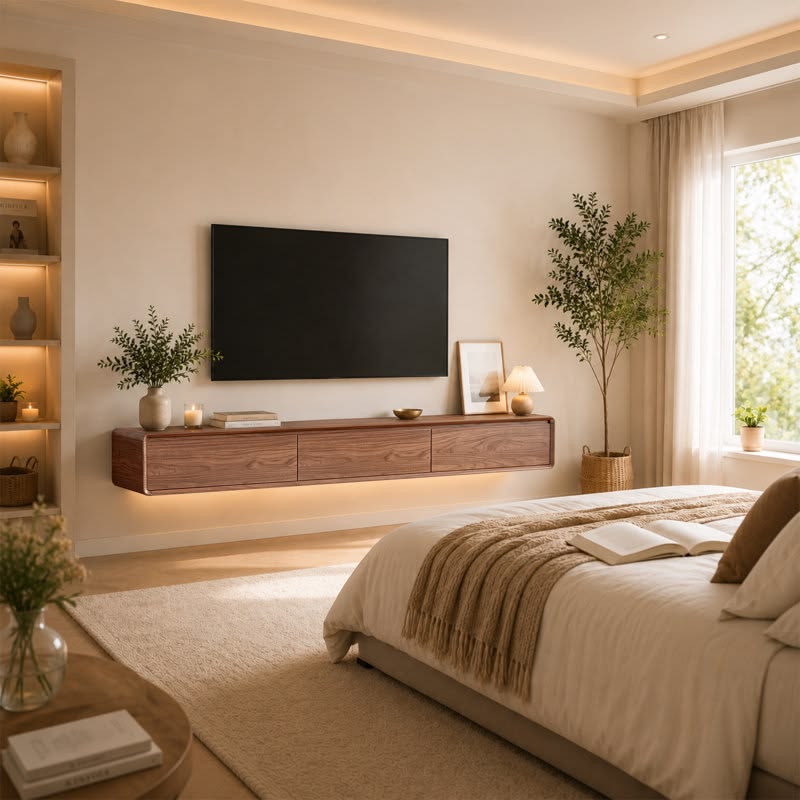
A floating media console keeps the floor visible, which helps small bedrooms feel larger. Choose a cabinet with doors so devices, chargers, and extra remotes stay hidden. Look for cable holes in the back and soft-close hinges for quieter nighttime use.
Mount the cabinet 8 to 12 inches below the television, depending on its height and your seating position. Keep the finish simple. White works with coastal rooms, natural wood suits warm interiors, and matte black fits modern spaces.
Use a level during installation. Even a small tilt is easy to notice when the cabinet runs directly beneath the screen.
This idea adapts well to modern, coastal, mid-century, and apartment bedrooms. With storage in place, the next step is choosing the right wall material.
4. Build a Stone-Look Feature Wall

A stone-look wall adds depth and a grounded feeling behind the TV. You can use thin brick, porcelain panels, lightweight faux stone, or textured wallpaper that imitates stone. Real stone can be heavy and expensive, so check the wall structure before installing it.
Choose warm beige, soft gray, or taupe instead of a very busy pattern. The TV should remain the main visual focus. Pair the wall with simple bedding, woven baskets, and warm wood furniture.
A useful shortcut is to install the stone-look material only within a wide rectangle behind the TV. This creates a framed effect while using less material.
This approach works in rustic, contemporary, industrial, lodge, and Mediterranean bedrooms. The next idea offers a cleaner look with built-in cabinetry.
Material Comparison for Bedroom TV Feature Walls
| Material | Typical visual effect | Maintenance | Best use | Installation note |
|---|---|---|---|---|
| Wood slats | Warm and textured | Dust with a soft cloth | Modern and Japandi rooms | Attach securely to studs or a strong backing |
| Painted drywall | Simple and flexible | Easy to touch up | Any decorating style | Use matte or eggshell paint to reduce glare |
| Faux stone panels | Rustic and layered | Wipe gently | Lodge and industrial rooms | Confirm panel weight and wall support |
| Fluted MDF | Soft vertical texture | Low maintenance | Contemporary bedrooms | Seal or paint cut edges |
| Textured wallpaper | Decorative and affordable | Depends on finish | Rental-friendly updates | Use removable adhesive when allowed |
| Porcelain slab | Sleek and luxurious | Very durable | High-end modern rooms | Professional installation is often best |
5. Use a Full-Width Built-In Media Wall

A full built-in wall gives the bedroom a custom, finished appearance. It can include the TV, closed cabinets, open shelves, drawers, and even a small desk. I recommend placing the TV in the center and using closed storage near the floor to keep the room calm.
Choose cabinet fronts that match your bedroom furniture. Flat panels feel modern. Shaker doors feel classic. Natural wood adds warmth to an otherwise white room.
Plan every device before construction begins. Measure the game console, soundbar, streaming box, and electrical outlets. Also include ventilation openings so electronics do not overheat.
This idea suits large primary bedrooms, traditional homes, transitional spaces, and new builds. If a full built-in is too costly, the next idea creates a similar look with simpler pieces.
6. Combine a Low Cabinet With Open Shelves

A low cabinet and two vertical shelves can mimic a built-in media wall without a large renovation. Center the TV above the cabinet, then install matching shelves on both sides. Keep the shelves shallow so the wall does not feel crowded.
Decorate with a few books, framed photos, pottery, or a small plant. Leave empty space between objects. Too many accessories can compete with the screen and make dusting harder.
For a budget-friendly result, use a ready-made console and wall-mounted shelves in the same color. Add trim around the pieces to make them look more connected.
This setup works in cottage, contemporary, Scandinavian, and mid-century bedrooms. Next, we’ll soften the technology with fabric.
7. Hang Curtains Around the TV

Curtains can hide the television when you want the bedroom to feel more restful. Install a ceiling-mounted track or slim rod wider than the TV. Use two panels that open from the center, leaving the screen fully visible during use.
Linen, cotton, and velvet all work, but they create different moods. Linen feels casual and coastal. Velvet feels dramatic. A thick blackout fabric can also reduce light around the screen.
Make sure the curtains do not block vents, speakers, or remote sensors. Choose panels that extend slightly past the screen on each side when closed.
This flexible idea works in boho, traditional, coastal, romantic, and rental bedrooms. Now let’s explore a solution for rooms where wall space is limited.
8. Mount the TV Inside a Recessed Niche

A recessed niche gives the television a clean, custom location. The screen sits inside the wall, while the surrounding surface can be painted, tiled, paneled, or wallpapered. This is especially useful when the room has an awkward alcove.
The niche should be large enough to allow ventilation and future TV upgrades. Do not press the screen tightly against the back wall. Include an outlet and cable path inside the recess before closing the wall.
If you are not remodeling, create a shallow faux niche with a box frame around the television. It gives a similar visual effect with less mess.
This idea fits modern, minimalist, luxury, and transitional bedrooms. The following guide can help you choose the right TV position and console size.
Bedroom TV Placement and Furniture Guide
| Viewing distance | Suggested TV size | Approximate console width | Best mounting approach |
|---|---|---|---|
| 5 to 6 feet | 32 to 43 inches | 42 to 54 inches | Wall mount or slim cabinet |
| 6 to 8 feet | 43 to 55 inches | 54 to 66 inches | Wall mount with floating shelf |
| 8 to 10 feet | 55 to 65 inches | 66 to 78 inches | Media console or built-in |
| 10 to 12 feet | 65 to 75 inches | 78 to 90 inches | Wide built-in or full panel |
| More than 12 feet | 75 inches or larger | 90 inches or more | Professional planning recommended |
9. Create a Soft Upholstered TV Wall
An upholstered wall panel can make the TV area feel cozy and quiet. Use one large panel behind the screen or several vertical panels arranged with narrow seams. Neutral gray, oatmeal, cream, and taupe are easy to live with.
Mount the TV on a strong bracket attached through the panel to the wall. The fabric should never carry the television’s weight. Keep the panel clean with a vacuum upholstery attachment.
This design is helpful in bedrooms where you want a softer look than wood or stone. It may also reduce some echo, although it should not be treated as full soundproofing.
This idea suits boutique hotel, modern, glamorous, and quiet luxury bedrooms. Next, we’ll use lighting to make the TV wall look better after dark.
10. Add Backlighting Behind the Television

Soft backlighting can reduce the harsh contrast between a bright screen and a dark room. Use warm white LED strips behind the television or around the wall panel. Choose dimmable lights so you can lower the brightness at bedtime.
Hide the power cord in a cable raceway or behind a decorative panel. Avoid flashing colored lights if your goal is a calm bedroom. Warm white or soft amber usually feels more relaxing.
Install the strip slightly inward from the TV edge so the light creates a glow rather than a bright outline. Test it at night before securing everything permanently.
This lighting idea works in modern, gaming, minimalist, and media-focused bedrooms. From light, we can move to art and make the wall feel less like an electronics zone.
11. Surround the TV With Simple Artwork

Artwork can help the TV blend into a bedroom instead of standing alone. Hang two or four pieces around the screen, keeping the arrangement balanced. Use calm subjects such as landscapes, line drawings, botanical prints, or abstract shapes.
Keep the artwork smaller than the TV so the wall does not look crowded. Match one color from the art to your bedding, curtains, or rug. Black frames create structure, while light wood frames soften the display.
Do not hang fragile glass pieces directly above the bed if the wall is not secure. Use lightweight frames and strong hardware.
This idea suits eclectic, traditional, transitional, and contemporary rooms. Next, we’ll use a single large panel for a more organized look.
12. Install a Wide Decorative Panel

A wide decorative panel can frame the TV and make a small screen feel properly scaled. Try painted MDF, fluted panels, beadboard, reclaimed wood, or a simple rectangular wall treatment. The panel should be wider than the television by at least several inches on both sides.
Paint the panel one shade darker than the main wall for subtle contrast. For a stronger effect, use a natural wood finish or a geometric design.
Measure the TV, soundbar, and future equipment before cutting the panel. Leave access to outlets and use removable sections where possible.
This design works in farmhouse, coastal, Art Deco, modern, and classic bedrooms. The next table compares useful budget levels for these transformations.
Bedroom TV Wall Budget Tiers
| Budget level | Approximate project range | Good choices | Main trade-off |
|---|---|---|---|
| Basic refresh | $50 to $200 | Paint, cable cover, small shelf | Less storage and texture |
| Easy upgrade | $200 to $600 | Floating console, wallpaper, LED lighting | May require careful DIY mounting |
| Mid-range remodel | $600 to $1,500 | Slat wall, paneling, larger console | More tools and installation time |
| Custom built-in | $1,500 to $5,000 or more | Cabinetry, niche, integrated lighting | Higher cost and less flexibility |
| Luxury finish | $5,000 or more | Stone slab, custom millwork, professional wiring | Requires detailed planning and skilled labor |
13. Use a Mirrored Panel Around the TV

A mirrored panel can make a narrow bedroom feel brighter and wider. Use smoked, bronze, or lightly tinted mirror rather than a highly reflective surface if you dislike glare. Place the TV in the center, with the mirror extending evenly around it.
The mirror should be securely attached and professionally cut around outlets and brackets. Avoid placing it directly opposite a bright window, since reflected light can make viewing uncomfortable.
Add warm wood furniture or fabric panels nearby to keep the room from feeling cold. A small plant can also soften the reflection.
This idea fits glamorous, Art Deco, contemporary, and compact apartment bedrooms. If mirrors feel too bold, the next option gives depth without strong reflections.
14. Try Fluted Panels for Gentle Texture
Fluted panels have narrow vertical grooves that add interest while keeping a clean shape. They can be made from MDF, PVC, wood veneer, or acoustic material. Choose a full wall installation for drama or a centered panel for a smaller project.
Cream, greige, warm white, and light oak make the texture feel soft. Dark green, navy, and charcoal create a richer statement. Use a slim floating shelf below the TV, but avoid filling every groove with objects.
Cutting fluted material can create rough edges, so sand and seal the ends carefully. Always confirm the panel is flat before mounting the television bracket.
This approach suits contemporary, Japandi, organic modern, and modern farmhouse bedrooms. Now let’s look at a design that helps hide the screen completely.
15. Hide the TV Behind Sliding Doors

Sliding doors let you close the television away when you are sleeping or relaxing. Use cabinet doors, barn-style panels, tambour doors, or a custom lift-up cover. The doors should move smoothly and sit clear of the screen when open.
Choose a finish that matches the rest of the bedroom. Painted doors blend into the wall. Wood doors add warmth. Rattan or cane inserts bring in texture and airflow.
Allow space for the doors to travel, and check that the remote still works if the equipment sits behind them. Add ventilation for streaming boxes and consoles.
This idea works in traditional, farmhouse, boho, contemporary, and luxury bedrooms. The next idea is especially useful when the bed is not directly centered on the wall.
16. Use a Swivel TV Mount for Flexible Viewing

A swivel mount allows you to angle the television toward the bed, a reading chair, or a nearby desk. This is useful in guest rooms, studio apartments, and bedrooms with off-center layouts.
Choose a mount rated for your TV’s weight and screen size. Leave enough clearance from nearby cabinets, walls, and doors. A cable sleeve can keep wires tidy while allowing the screen to move.
Do not mount the TV so high that you must lift your chin while lying down. The center of the screen should generally sit near your natural eye line from the main viewing position.
This practical solution suits small, modern, rental, and multipurpose rooms. Here is a quick guide to materials and the feeling each one creates.
TV Wall Finish and Room Mood Guide
| Finish | Color examples | Mood created | Furniture pairing |
|---|---|---|---|
| Light oak | Natural, honey, pale beige | Airy and relaxed | White, cream, or black furniture |
| Walnut | Medium to dark brown | Warm and refined | Brass, leather, or ivory accents |
| Matte paint | Navy, olive, charcoal | Calm and dramatic | Light bedding and warm lamps |
| White paneling | Soft white, ivory | Fresh and classic | Natural wood and woven textures |
| Black metal | Black, gunmetal | Industrial and graphic | Wood, leather, and concrete tones |
| Linen panel | Oatmeal, sand, gray | Soft and restful | Upholstered bed and ceramic accents |
17. Make a Coastal TV Wall With White Planks

White or pale blue wall planks create a bright coastal bedroom. Use shiplap, beadboard, or slim tongue-and-groove boards behind the screen. Keep the layout simple so it does not look like a beach theme park.
Pair the wall with rattan baskets, pale oak, blue-gray bedding, and linen curtains. A narrow console below the TV can hold devices without adding visual weight.
Choose a warm white instead of a sharp blue-white if the room already gets cool daylight. Seal wood properly, especially in humid homes.
This idea adapts to coastal, cottage, farmhouse, transitional, and Scandinavian styles. Next, we’ll add an earthy finish for a more natural bedroom.
Tips for Success
- Mount the TV at a comfortable height from the bed, not automatically near the ceiling.
- Use a stud finder or proper anchors before attaching a bracket, shelf, or cabinet.
- Plan cable paths before adding paneling, wallpaper, or built-ins.
- Choose matte finishes on walls that receive strong daylight.
- Keep at least one closed storage area for remotes, controllers, and extra cords.
- Add dimmable, warm lighting instead of relying only on bright overhead fixtures.
- Check the full door, drawer, and swivel range before final installation.
Common Mistakes and How to Avoid Them
Mounting the TV too high
Measure from your actual pillow and viewing position. The screen should feel natural to watch without neck strain.
Ignoring window glare
Watch the wall at different times of day before choosing the final location. Use curtains, adjustable blinds, or a matte finish to reduce reflections.
Leaving cables visible
Install a cable raceway, in-wall-rated wiring, or a removable panel before the wall treatment is complete. Never run unsafe cords through a sealed wall.
Overdecorating around the screen
Limit accessories to a few pieces with clear spacing. The TV already provides a strong visual shape.
Choosing furniture that is too deep
Measure the walking path between the bed and the TV wall. A shallow cabinet often works better than a bulky entertainment center.
Forgetting ventilation
Leave airflow around the TV and electronic devices. Closed cabinets need vents or open backs to prevent heat buildup.
Similar Variations
- Japandi TV Wall: Combines pale wood, simple shapes, soft beige, and very limited decoration.
- Coastal Boho TV Wall: Mixes white paneling, rattan, linen, blue accents, and relaxed artwork.
- Dark Academia TV Wall: Uses deep green, brown, charcoal, leather, books, and brass lighting.
- Modern Farmhouse TV Wall: Pairs painted shiplap, black hardware, wood cabinets, and neutral textiles.
- Organic Modern TV Wall: Blends plaster tones, natural wood, rounded furniture, stone, and woven details.
- Hotel-Style TV Wall: Uses upholstered panels, hidden lighting, symmetrical cabinetry, and luxurious neutral colors.
A well-planned bedroom TV wall should support comfortable viewing while making the whole room feel more organized. Start with the wall location, viewing height, and cable plan. Then choose a finish that works with your bed, flooring, lighting, and storage needs.
You do not need a major remodel to get a polished result. Paint, a floating cabinet, soft lighting, or a carefully placed panel can change the room quickly, and these 17 Bedroom Tv Wall Ideas give you a strong place to start.
Leave a Reply