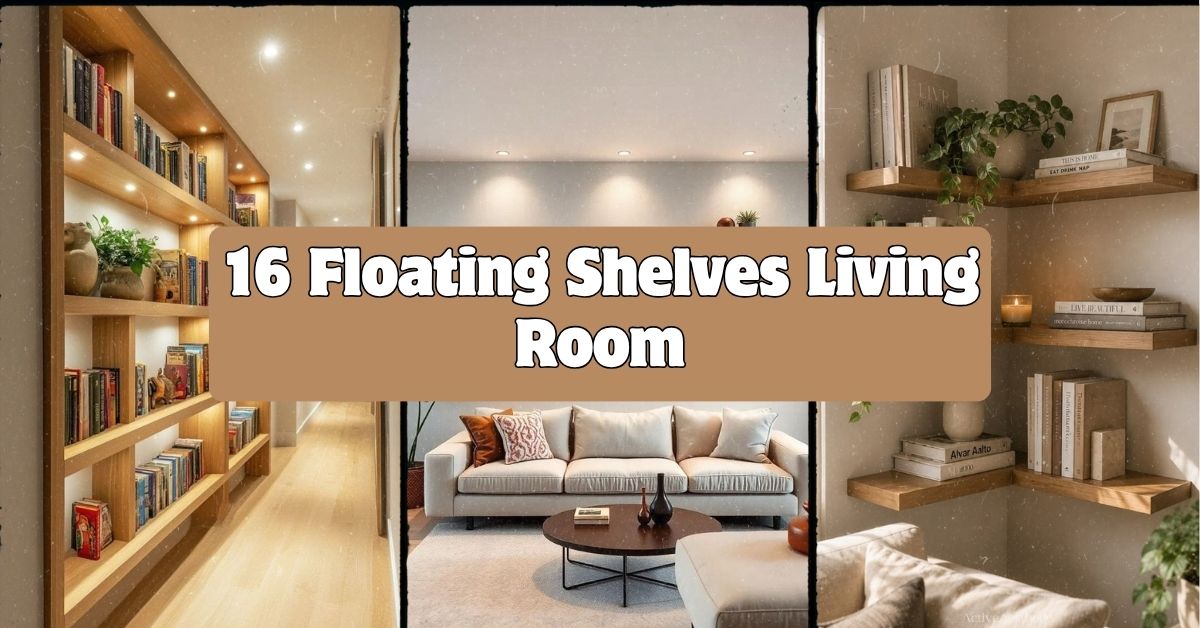
If you’ve been scrolling around looking for 16 floating shelves living room ideas that don’t feel repetitive or fake, I’ve got you covered here. I’ve pulled together real, practical setups that you can actually copy in your own space, not just pretty pictures that look impossible to recreate. By the end of this, you’ll know exactly how to plan, style, and hang shelves that make your living room look pulled together.
Floating shelves in a living room are wall-mounted shelves with no visible brackets, used to display books, decor, plants, and storage items while keeping floor space open. They work in almost any room size and style, from tiny apartments to large open-concept homes.
Stick with me and I’ll walk you through 16 distinct ways to use floating shelves, plus some real numbers on sizing, spacing, and materials so you don’t end up guessing.
What Floating Shelves Are and Why People Love Them
So here’s the deal with floating shelves. They’re basically shelves that seem to hang on the wall with no support underneath, even though there’s actually a hidden bracket doing all the work. That clean look is exactly why they’re everywhere right now.
I like them because they don’t eat up floor space like a bulky bookcase does. You can hang them anywhere, above a couch, next to a TV, in an awkward corner nobody knows what to do with. They also let you show off stuff you actually love, books, photos, plants, without cluttering your tables. Honestly, once you start using them, it’s hard to go back to regular furniture-heavy storage.
1. Stagger Three Shelves Above the Sofa

This one’s a classic for a reason. Instead of one long shelf, use three shelves of different lengths and stagger them at slightly different heights above your couch. It breaks up a big blank wall and gives you separate zones for books, plants, and framed photos.
Keep about 8 to 10 inches of gap between each shelf so things don’t feel cramped. A good rule: the top shelf should sit about 8 inches above the sofa back.
Practical tip: use a level and painter’s tape to map out spacing before you drill a single hole.
This works in modern, farmhouse, or even traditional living rooms, just swap the shelf material to match your vibe.
Next up, let’s talk about what happens when you go the opposite direction and use just one long shelf instead.
2. Run One Long Shelf Across an Entire Wall
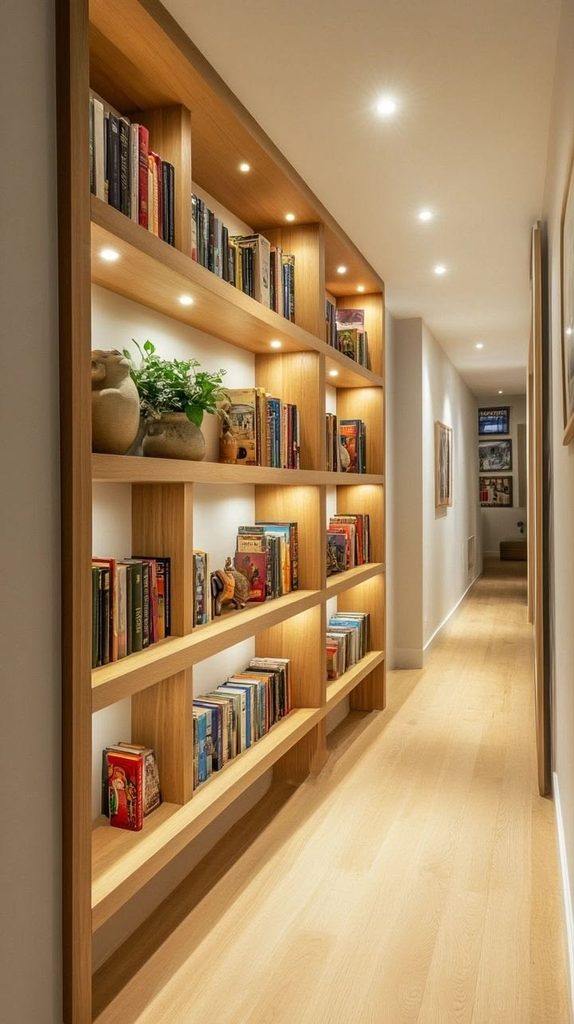
Sometimes less fuss is better. A single long floating shelf that spans most of a wall gives you a clean, gallery-style display without the visual noise of multiple pieces.
This works really well behind a sectional or along a narrow hallway wall connected to your living room. You get a ton of display space but the room still feels open because there’s just one line to look at.
Paint the shelf the same color as your wall for a nearly invisible look, or go contrasting if you want it to pop.
Practical tip: for anything longer than 48 inches, make sure it’s rated for wall studs, not just drywall anchors.
Coastal and Scandinavian homes love this look because it keeps things airy. Traditional homes can pull it off too with a wood-stained shelf instead of white.
Now let’s get into corner spaces, because those are often wasted real estate.
3. Fill Awkward Corners with Floating Corner Shelves

Every living room has that one weird corner that never knows what to do with itself. Corner floating shelves solve that instantly. They tuck into the angle of the wall and give you display space without adding bulky furniture.
Stack two or three small corner shelves vertically for a mini display tower. Use them for small plants, candles, or a little stack of favorite books.
Practical tip: measure the corner angle before ordering, most corner shelves assume a standard 90-degree wall.
This idea fits small apartments especially well, but it also works in bigger rooms as a way to fill dead space near a window or fireplace.
Speaking of fireplaces, that’s actually one of the best spots for floating shelves. Let’s go there next.
4. Flank the Fireplace with Matching Shelves

A fireplace is basically begging for floating shelves on either side. It creates symmetry and gives you a spot for books, art, or a stereo speaker without needing a full entertainment center.
Keep both shelves at the same height and depth so the whole wall feels balanced. I’d suggest depth around 10 to 12 inches, enough for real objects but not so deep it feels bulky.
Practical tip: leave at least 6 inches of clearance from the fireplace mantel to avoid heat damage to wood shelves.
This setup is a favorite in traditional and farmhouse homes, but modern spaces can do it too with thin black metal shelves instead of wood.
Now, let’s shrink things down and talk about what to actually put on these shelves once they’re hung.
Shelf Depth Guide by Use Case
| Use Case | Recommended Depth | Best Material |
|---|---|---|
| Books and small decor | 6-8 inches | Solid wood or MDF |
| Plants and vases | 8-10 inches | Wood or laminate |
| TV components/speakers | 10-14 inches | Reinforced wood or metal bracket |
| Large decor/baskets | 12-16 inches | Solid wood, thick plywood |
5. Mix Open Shelves with a Closed Cabinet Below

Not everything needs to be on display. Pairing floating shelves above with a low closed cabinet underneath gives you the best of both worlds, open display up top and hidden storage down low for remotes, cables, or board games.
This is a smart move for TV walls especially. The cabinet holds the mess, and the shelves above show off the pretty stuff.
Practical tip: match the cabinet finish to the shelf material so it reads as one cohesive unit, not two random pieces.
Modern and mid-century homes both do this really well with wood tones and simple lines.
Let’s move from function to something a little more playful: using shelves to build a mini gallery wall.
6. Build a Gallery Wall Using Shelf Ledges

Picture ledges are a specific type of floating shelf made just for leaning framed art and photos instead of stacking objects. You can layer multiple frames on one shelf, overlapping them slightly for a curated look.
Use three or four ledges stacked vertically with small gaps between them. This creates a gallery wall that’s actually easy to update since you just lean new frames instead of rehanging nails.
Practical tip: use removable putty behind each frame so they don’t slide when someone bumps the wall.
This idea is huge in modern farmhouse and eclectic homes, but even minimalist spaces can use it with black and white photos only.
Now let’s talk plants, because floating shelves and greenery are basically best friends.
7. Create a Plant Shelf Ladder Near a Window
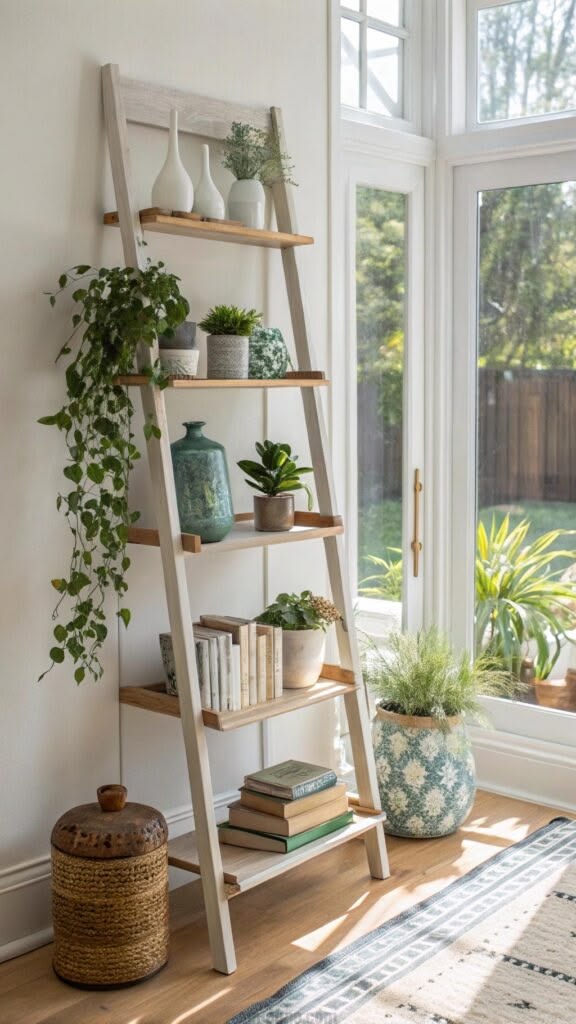
If you love plants, dedicate one wall near natural light to a plant shelf ladder. Stagger three or four shelves going up the wall, each holding a different plant size, trailing pothos on top, a small succulent below, maybe a fern in the middle.
This turns a boring wall into a living, breathing feature. It also solves the problem of not having enough windowsill space for all your plant babies.
Practical tip: use shelves with a slight lip or raised edge so pots don’t slide when you water them.
Coastal, boho, and Scandinavian living rooms all lean into this style naturally because it brings texture and life into a room.
Next, let’s look at a smaller scale version of this idea for people short on wall space.
8. Add a Single Statement Shelf Above a Console Table

Sometimes one shelf is all you need. Place a single floating shelf above a console table or media stand to add just a little extra display space without overwhelming the wall.
This works great in smaller living rooms where a full gallery setup would feel like too much. Use it for a couple of framed photos, a small plant, and maybe a candle.
Practical tip: keep the shelf about two-thirds the width of the console table below it for good visual balance.
Every style can pull this off. It’s really just about scaling the shelf and decor to match your room’s overall vibe, minimal for modern, layered for traditional.
Let’s zoom into color now, because shelf color changes the whole feel of a room.
Floating Shelf Color Pairings by Room Style
| Room Style | Shelf Color | Wall Color | Accent Decor Color |
|---|---|---|---|
| Modern | Matte black | White or light gray | Metallic gold, glass |
| Farmhouse | Natural wood | Cream or soft white | Greenery, ceramic |
| Coastal | Whitewashed wood | Light blue or white | Rope, rattan, blue glass |
| Traditional | Dark walnut | Deep green or navy | Brass, leather-bound books |
| Scandinavian | Light birch | White or pale gray | Black accents, candles |
9. Use Floating Shelves as a TV Wall Frame
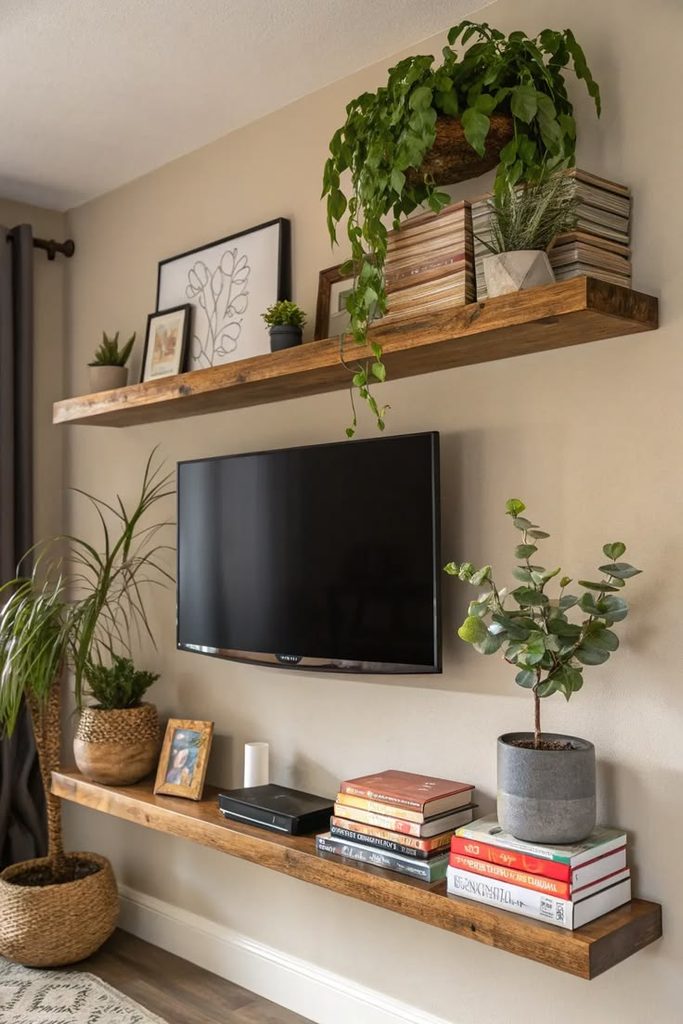
Instead of hanging your TV with nothing else around it, frame it with floating shelves on either side or just above it. This makes the TV feel intentional rather than like an afterthought stuck on a blank wall.
Keep decor on these shelves simple since the TV itself is already visually busy. A couple of small plants or books work better than a crowded display.
Practical tip: hide cable cords by running them through the wall or using a cord channel that matches the wall color.
Modern and industrial living rooms use this setup a lot, but you can soften it in traditional homes using wood shelves instead of metal ones.
Now let’s talk about a totally different placement: behind seating instead of above it.
10. Hang Shelves Behind a Reading Chair

A reading nook needs a small shelf nearby, and floating shelves solve that without needing a side table that takes up floor space. Mount a narrow shelf at arm height next to your favorite chair for a lamp, a stack of books, and maybe a cup of coffee.
This is such a simple upgrade but it makes a corner feel intentional instead of leftover.
Practical tip: mount the shelf at 26 to 28 inches from the seat of the chair, roughly the same height as a side table.
This idea fits cozy traditional and cottage-style rooms especially well, but a floating shelf in matte black also works for a more modern reading corner.
Let’s shift gears and talk about symmetry versus asymmetry in shelf layouts.
11. Try an Asymmetrical Shelf Cluster for a Modern Look

Not every shelf setup needs to be perfectly matched. An asymmetrical cluster, different lengths, different heights, slightly offset, creates a more artistic, modern feel compared to matching symmetrical shelves.
This works best on a wall that doesn’t have a strict focal point like a fireplace or TV. Think of it as functional wall art.
Practical tip: use odd numbers, three or five shelves, since odd groupings tend to look more natural to the eye than even ones.
Modern, industrial, and eclectic homes love this approach. Traditional homes usually stick with symmetry, but you could try a subtle asymmetrical version with matching wood tones to keep it from feeling too chaotic.
Now, let’s talk about a material choice that changes everything: floating shelves made from non-wood materials.
12. Swap Wood for Glass Shelves in a Small Space

If your living room is small or dark, glass floating shelves can help it feel bigger and lighter. They reflect light instead of blocking it, which matters a lot in rooms with limited windows.
Glass works especially well for displaying items you want to see fully, like colored glass vases or sculptural decor pieces.
Practical tip: choose tempered glass shelves at least 3/8 inch thick for safety and durability.
Modern and glam living rooms use glass shelves most often, but even a coastal room can use one glass shelf to display beach glass or shells for a light, airy touch.
Let’s move into something practical now: shelves built specifically for storage instead of just display.
13. Dedicate a Shelf Section to Hidden Storage Baskets
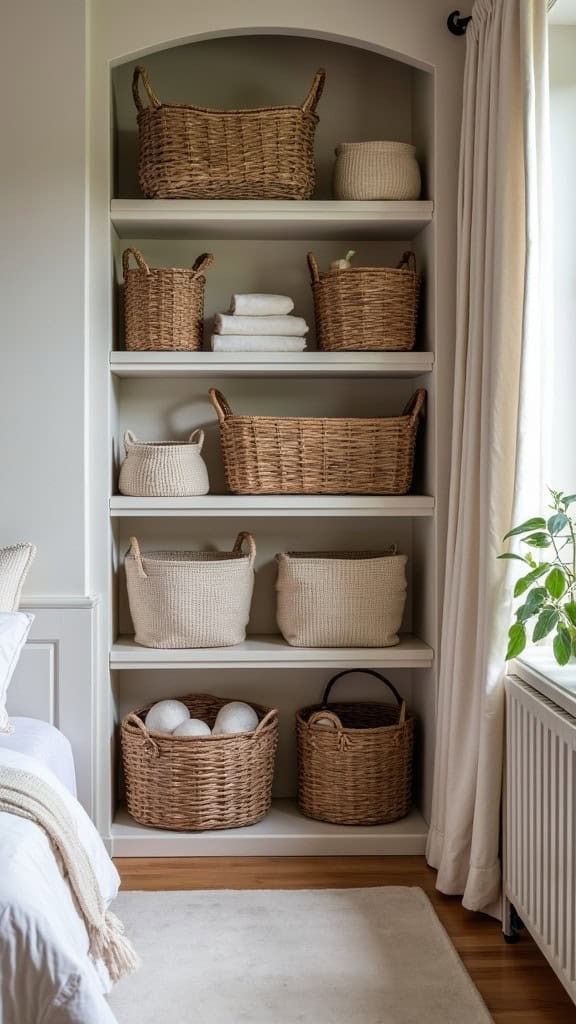
Floating shelves don’t have to be all about pretty display. Use small woven baskets or fabric bins on one or two shelves to hide remote controls, chargers, or kids’ toys while still keeping an open-shelf look.
This is a great middle ground between fully open shelving and a closed cabinet. You get storage without losing the airy feel floating shelves are known for.
Practical tip: measure basket height before buying, leave at least an inch of clearance so baskets slide in and out easily.
Farmhouse and boho rooms use woven baskets naturally, while modern rooms can use sleek fabric bins in solid neutral colors instead.
Now for something a little different: using shelves to separate rooms instead of just decorating a wall.
14. Use Floating Shelves as a Room Divider Feature

In open-concept homes, floating shelves can act as a soft divider between the living room and a dining or entry area. Mount them on a half-wall or even freestanding partition to create visual separation without a solid wall.
This gives you storage and display space while still letting light and sightlines flow through the room.
Practical tip: keep items below eye level on lower shelves so the divider doesn’t feel like a solid blocked wall.
This works especially well in modern and industrial open floor plans where full walls would feel too heavy.
Next, let’s talk about a fun seasonal use for floating shelves that a lot of people overlook.
15. Rotate Seasonal Decor on a Dedicated Display Shelf

Pick one shelf, just one, and use it as your rotating seasonal spot. Swap out decor for fall, winter holidays, spring, and summer without redoing your whole living room every few months.
This keeps your main decor stable while still letting you have fun with seasonal touches like pumpkins, string lights, or fresh flowers.
Practical tip: keep a small bin in a closet with your seasonal shelf items pre-organized by season so swaps take five minutes, not an hour.
Every home style can use this trick. It’s more about function than aesthetic, though the items you choose will naturally reflect your style.
Finally, let’s end with a setup for people who want shelves that do double duty as a home bar.
16. Turn a Shelf Set Into a Mini Home Bar Display
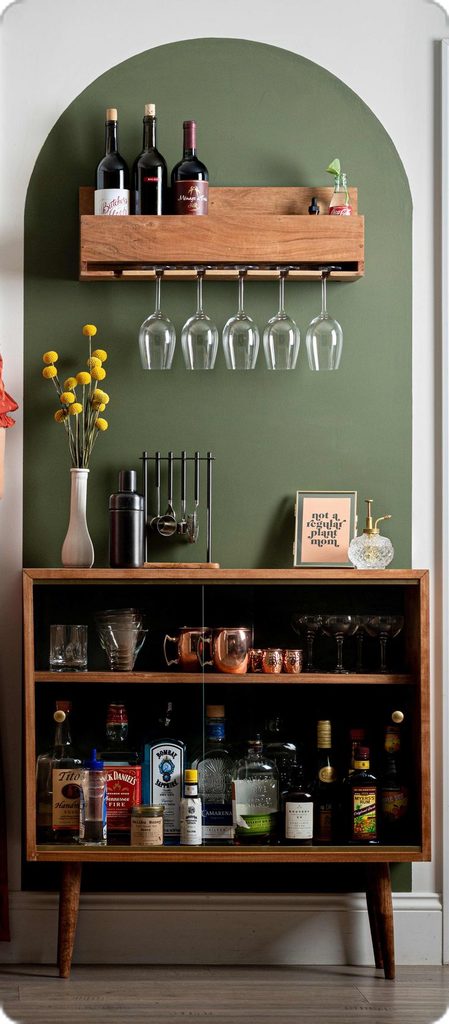
If you like entertaining, dedicate a small cluster of shelves to a mini bar setup, glasses, a few bottles, a small tray. This works especially well near a living room’s seating area so it’s easy to grab a drink during game night or a get-together.
Add a small mirror behind the shelves to make bottles and glassware catch the light.
Practical tip: use a shelf with a raised lip or non-slip liner so glasses don’t slide when the shelf gets bumped.
Modern and glam living rooms lean into this with metallic accents, while traditional homes can do it with brass fixtures and cut glass.
Tips for Success
- Always find your studs before drilling, even for “lightweight” shelves, since decor adds up fast.
- Stick to a weight limit chart for your specific shelf brand instead of guessing.
- Leave breathing room between objects on a shelf. Cramming everything together makes it look cluttered, not curated.
- Vary the height of objects on each shelf, tall candle next to a short stack of books, to keep the eye moving.
- Use a stud finder AND a level every single time, don’t eyeball it.
- Step back and view your shelf setup from across the room before committing to final placement.
- Repaint or refinish old shelves instead of buying new ones if you’re on a budget, it saves money and still looks fresh.
Common Mistakes and How to Avoid Them
Hanging shelves too high above furniture
: Keep shelves within 6 to 10 inches of the furniture below them so the eye reads them as connected, not floating randomly in space.
Overloading shelves with too many small items
: Group items in threes and leave at least a few inches of empty space on each shelf for breathing room.
Ignoring weight limits
: Check the manufacturer’s weight rating and always round down your estimate to stay safe, especially with books.
Using the wrong anchor for your wall type
: Drywall anchors work for light loads, but anything heavy needs to hit a wall stud or use heavy-duty toggle bolts.
Making every shelf the exact same style of decor
: Mix textures and shapes, wood, ceramic, glass, fabric, so the display doesn’t feel flat or one-note.
Forgetting to plan cord management for TV shelves
: Use cord covers or in-wall channels before hanging the TV, not after, since it’s much harder to fix later.
Similar Variations
- Floating Bookshelves: A version focused entirely on book storage, often deeper and reinforced for heavy loads.
- Ledge Shelves: Shallow shelves designed for leaning frames and art instead of stacking objects.
- Cube Floating Shelves: Boxed-in shelves that add depth and a more sculptural, geometric look.
- Corner Floating Shelves: Angled shelves built specifically to fit unused corner spaces.
- Industrial Pipe Shelves: Floating-style shelves supported by exposed metal pipe brackets for a raw, warehouse look.
- Backlit Floating Shelves: Shelves with built-in LED strips for a glowing display effect at night.
Floating shelves are honestly one of the easiest ways to change how a living room feels without a full renovation. Whether you go simple with one long shelf or get creative with a plant ladder or mini bar setup, the key is planning spacing, weight, and style before you start drilling. Once you find the combo that fits your space, you’ll wonder why you didn’t try 16 floating shelves living room ideas sooner.
Leave a Reply