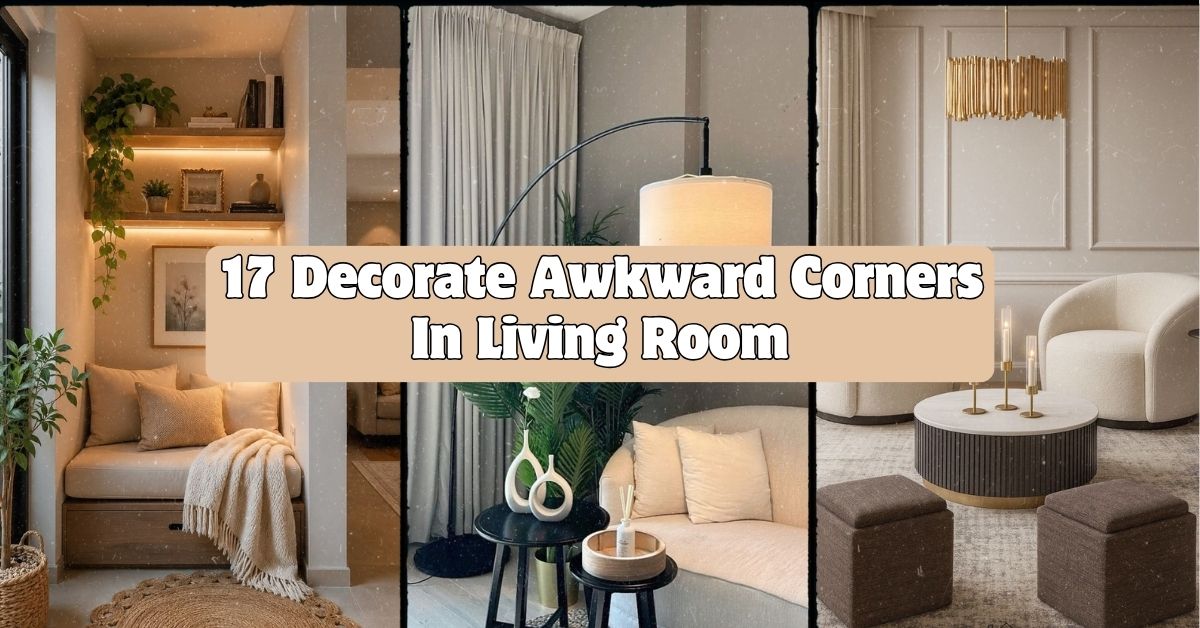
I’ve stared down more weird, empty living room corners than I can count, and I finally cracked the code on how to decorate awkward corners in living room spaces without them looking like an afterthought. That nagging feeling when you walk past a bare corner and think “something needs to go there” but you have no clue what? Yeah, I’ve been there too.
An awkward living room corner is any nook, angle, or dead space that doesn’t fit standard furniture placement. The fix involves scale-appropriate furniture, layered lighting, and decor that draws the eye without crowding the room.
Stick with me and I’ll walk you through 17 real, doable ideas that turn those forgotten corners into the best-looking part of your room.
What Makes a Corner “Awkward” Anyway
Before we jump into the fixes, let’s talk about why corners even become a problem in the first place. Most rooms have at least one corner that’s too small for a couch, too big for nothing, or shaped weird because of a window, vent, or support beam. Sometimes it’s just leftover space after you arrange the “main” furniture. I used to think these spots were a design failure on my part. Turns out, almost every home has one. The trick isn’t avoiding awkward corners. It’s learning to work with them instead of against them. Once you start seeing corners as opportunities instead of problems, decorating gets a lot more fun.
1. Add a Rounded Accent Chair

Sharp corners feel harsh, so I like softening them with a round or curved accent chair. The curve of the chair breaks up the boxy lines of the room and makes the whole corner feel more inviting. Pick a chair with a small footprint so it doesn’t block walking paths.
Practical tip: measure the corner space first and leave at least 18 inches of clearance around the chair so it doesn’t feel cramped.
This works in almost any style. A bouclé swivel chair feels modern, a wingback feels traditional, and a rattan peacock chair leans coastal.
Once your seating is settled, you’ll want something to anchor it, which brings me to lighting.
2. Place a Tall Floor Lamp for Height

Empty corners often feel awkward because they lack height. A tall floor lamp fixes that instantly. It draws the eye upward and fills vertical space without taking up floor room.
Go for a lamp that’s at least 60 inches tall for a real visual impact. Arc lamps work great over a reading chair, while slim tripod lamps fit tighter spots.
Modern homes look great with matte black or brass fixtures, while farmhouse spaces do well with a distressed wood base.
Lighting sets the mood, but plants bring the corner to life, so let’s talk greenery next.
3. Fill the Space With a Tall Potted Plant
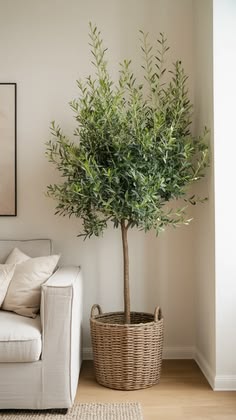
A big leafy plant is one of the easiest ways to decorate awkward corners in living room layouts. Height and texture from real or faux greenery soften hard angles and add color without any real effort.
Fiddle leaf figs, snake plants, and faux olive trees are popular because they’re tall and slim, so they don’t eat up floor space.
Tip: choose a pot that’s proportional. A 6-foot plant needs at least a 14-inch diameter pot to look balanced.
Boho and Scandinavian rooms love this look, while traditional spaces might prefer a topiary in a classic urn.
Now that we’ve got height and greenery, let’s build a whole cozy zone with a reading nook.
4. Build a Mini Reading Nook

Corners are perfect for small reading nooks because they’re naturally tucked away from foot traffic. All you need is a comfy chair, a small side table, and a light source.
I always add a soft throw blanket and a basket for books nearby. It makes the space feel lived-in instead of staged.
Actionable tip: keep the nook chair no wider than 30 inches so it fits without crowding the corner.
This idea flexes easily. Add a plaid throw for a cabin feel or a linen cushion for coastal vibes.
Next up, let’s talk about corner shelves, because vertical storage is a total game changer.
5. Install Floating Corner Shelves

Floating shelves are one of my favorite ways to use dead corner space. They hold books, plants, or decor without taking up floor room at all.
Stagger three shelves at different heights for visual interest. Keep items grouped in odd numbers, like three or five pieces per shelf, since that tends to look more natural to the eye.
Tip: leave at least 10 inches between shelves so taller items still fit.
Modern homes like clean white or black shelves, while rustic spaces look great with raw wood.
Shelves handle storage and style, but sometimes a corner needs a bold statement piece instead, so let’s cover that next.
6. Use a Statement Floor Mirror

A large leaning mirror instantly makes an awkward corner look intentional. Mirrors bounce light around the room and make small or oddly shaped spaces feel bigger.
I like full-length mirrors with a simple frame so they don’t compete with other decor. Lean it against the wall at a slight angle for a relaxed, collected look.
Practical tip: pick a mirror that’s at least three-quarters the height of the wall space for the best visual impact.
Art deco frames feel glam, thin metal frames feel modern, and wood frames feel more traditional or farmhouse.
Once light is bouncing around the room, it’s time to add some soft texture with a rug.
7. Anchor the Corner With a Small Area Rug

A rug placed under a corner grouping ties everything together. It defines the space as its own little zone instead of just leftover floor.
Choose a rug that’s proportional. If your corner setup includes a chair and side table, a 3×5 rug usually works great.
Tip: layer a smaller patterned rug over a larger neutral one for texture without overwhelming the space.
Jute rugs suit coastal and boho rooms, while wool rugs with geometric patterns fit modern or transitional spaces better.
Now let’s talk furniture placement, because sometimes the fix is simpler than you think.
8. Angle a Bookshelf Diagonally

Instead of pushing a bookshelf flat against the wall, try angling it across the corner. This “floats” the furniture and creates a triangular nook behind it, perfect for hiding cords or extra storage.
I’ve done this with a basic ladder shelf and it completely changed how the room felt. It also softens the boxy feeling most corners have.
Tip: leave at least 6 inches of gap behind the shelf so it doesn’t look like it’s floating awkwardly.
This trick works especially well in eclectic or mid-century modern rooms where asymmetry is part of the charm.
Speaking of storage, let’s look at a comparison of common corner furniture options so you can pick what fits your space and budget.
Corner Furniture Comparison
| Furniture Type | Best For | Average Cost | Space Needed |
|---|---|---|---|
| Accent Chair | Small seating nook | $150-$600 | 3×3 feet |
| Floating Shelves | Storage + display | $30-$150 | Wall space only |
| Corner Bookshelf | Books and decor | $80-$400 | 2×2 feet footprint |
| Floor Lamp | Lighting and height | $40-$250 | 1×1 foot footprint |
| Small Bar Cart | Entertaining corner | $100-$350 | 2×2 feet footprint |
| Plant Stand | Greenery display | $20-$100 | 1×1 foot footprint |
Once you know what furniture fits, you can start layering in smaller decor touches, which brings us to gallery walls.
9. Create a Mini Gallery Wall
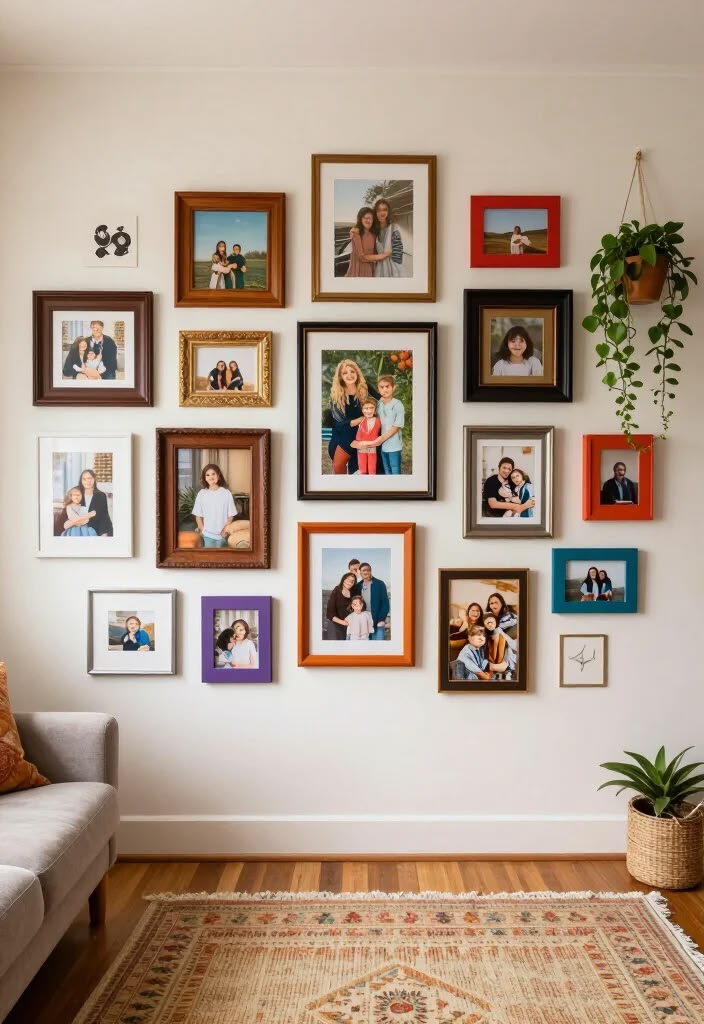
Corners aren’t just floor space, they’re wall space too. A cluster of framed art or photos wrapped around the corner adds personality fast.
I like mixing frame sizes and finishes for a collected-over-time look. Keep spacing consistent, about 2-3 inches between frames, so it reads as one cohesive grouping.
Tip: lay the frames out on the floor first to plan your layout before hammering anything into the wall.
Traditional homes love ornate gold frames, while modern spaces do better with thin black or white ones.
If art isn’t your thing, a corner desk might be a more functional fix, so let’s dig into that.
10. Set Up a Compact Corner Desk
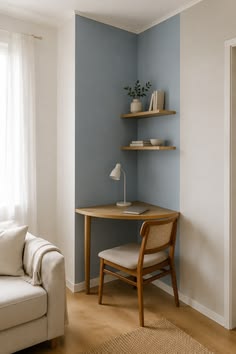
If you work from home or just need a spot for mail and bills, a small corner desk solves two problems at once. It fills dead space and gives you a functional zone.
Choose a desk no wider than 36 inches for tighter corners. Pair it with a slim chair that tucks in fully when not in use.
Tip: mount a small shelf above the desk for extra storage without adding floor clutter.
Scandinavian and modern farmhouse styles both do this well with light wood tones and minimal hardware.
Now, if your corner is near a window, there’s a totally different opportunity waiting for you.
11. Build a Window Seat Nook

Corners with windows are perfect for built-in or DIY window seats. Even a simple bench with cushions can transform a wasted corner into the coziest spot in the house.
Add two or three throw pillows and a small basket underneath for blankets or magazines. This keeps the space functional and pretty at the same time.
Tip: use outdoor-rated cushion foam indoors too, since it holds shape longer than standard foam.
Cottage and coastal styles shine here, especially with linen or striped cushion fabric.
Corners near entryways need a different approach though, so let’s talk about that next.
12. Add a Slim Console Table

Long, narrow corners near entryways or hallways are perfect for a slim console table. It’s a great spot for keys, mail, or a lamp without blocking the walking path.
Stick to tables under 12 inches deep for tight spaces. Add a small tray on top to keep clutter contained and organized looking.
Tip: hang a mirror or small art piece above the console to fill the vertical space too.
Modern homes like clean-lined metal consoles, while traditional spaces often use turned wood legs.
If you’ve got a truly tiny corner, sometimes less really is more, which is where pedestal decor comes in.
13. Use a Pedestal for a Single Statement Piece
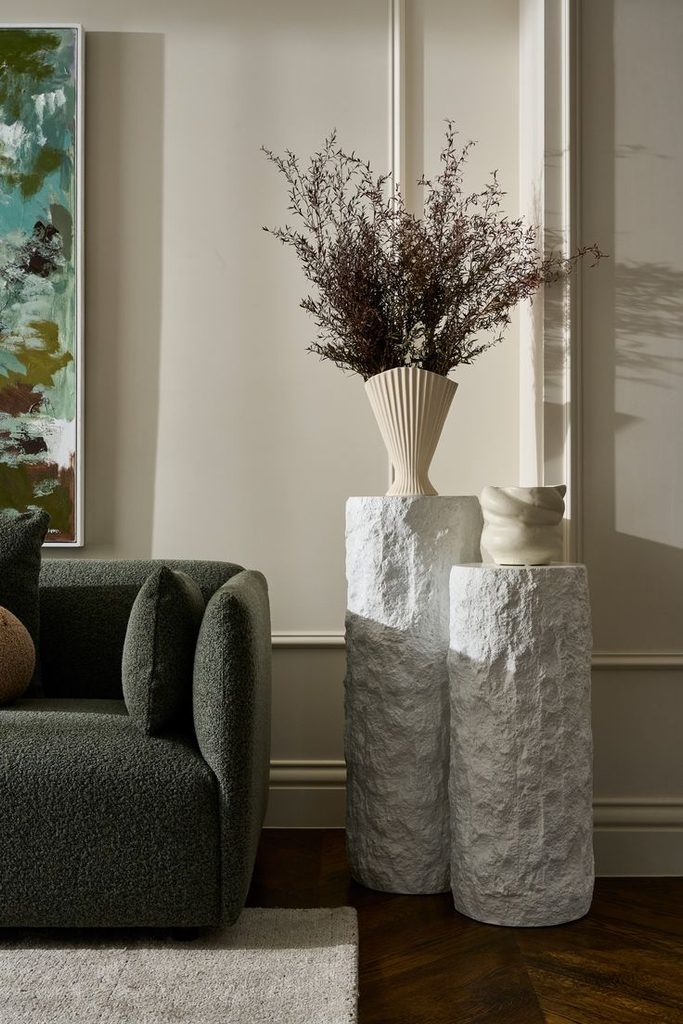
Not every corner needs a ton of stuff. Sometimes one bold piece on a pedestal, like a sculpture, big vase, or plant, makes more impact than a cluttered vignette.
I’ve found that simplicity actually draws more attention than a busy corner does. It gives the eye a place to rest.
Tip: keep the pedestal height between knee and waist level so the piece feels balanced within the room.
This minimalist approach fits modern, Japandi, and contemporary spaces especially well.
For corners near your seating area, layering in a side table might make more sense, so here’s how to do that right.
14. Layer a Round Side Table With Decor
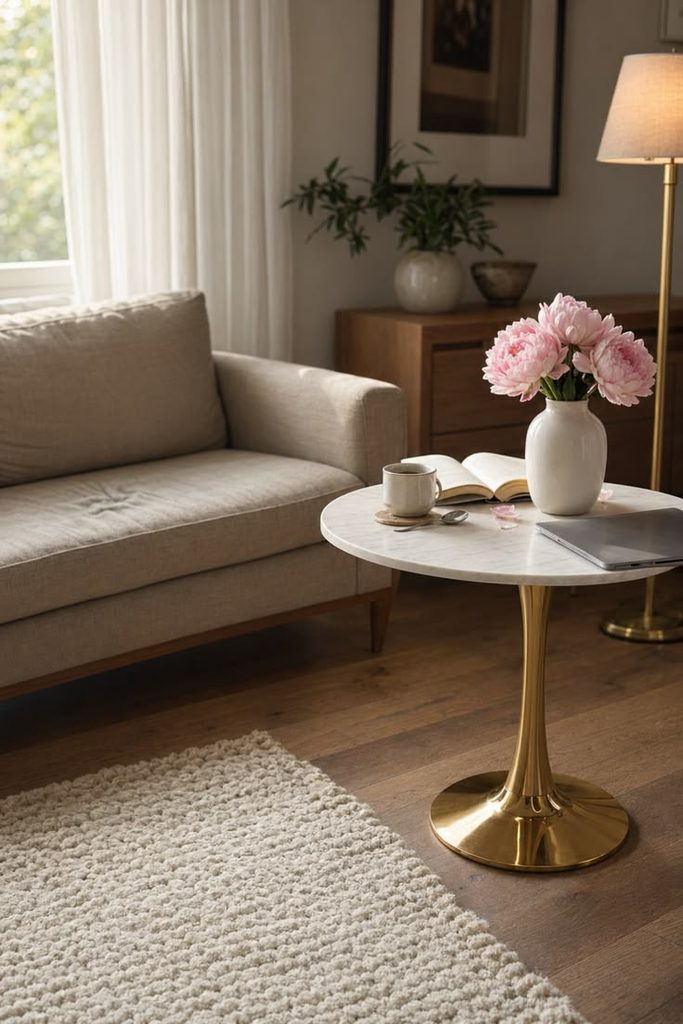
A small round side table softens the sharp angle of a corner and gives you a spot for a lamp, coasters, or a candle. Round shapes work better than square ones here because they don’t add to the boxy feel.
Style it with three items max, like a small plant, a stack of books, and a candle. This keeps it looking curated instead of cluttered.
Tip: choose a table around 20-24 inches tall to match standard chair arm height.
Traditional rooms like wood tables with turned legs, while modern rooms prefer glass or metal.
Corners near your TV setup need a slightly different fix, and that’s where corner media units come in.
15. Use a Corner TV Stand or Media Unit
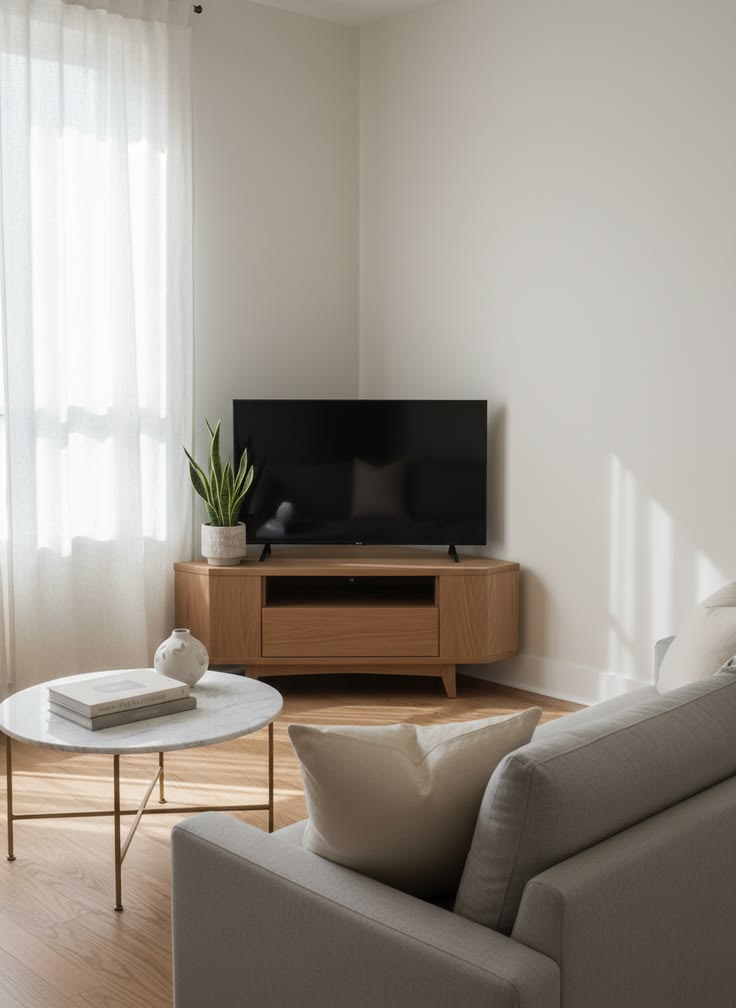
Corner TV units are designed specifically for this problem. They fit snugly into the angle and free up wall space elsewhere in the room.
Look for one with built-in cord management so your setup stays neat. Add a few decor pieces on top, like a small plant or framed photo, so it doesn’t feel purely functional.
Tip: measure the diagonal wall space, not just one wall, to get the right size unit.
Mid-century and modern homes usually have the best selection of corner media furniture.
Now, if you want something a little more artistic, let’s talk about corner curtains and drapery tricks.
16. Hang Drapery to Soften an Odd Angle

If a corner is oddly shaped because of a window or architectural quirk, floor-length curtains can visually straighten things out. Hanging drapes wide and high creates the illusion of a taller, more balanced wall.
Choose curtain rods that extend at least 4-6 inches beyond the window frame on each side. This makes the window (and the corner) look bigger and more intentional.
Tip: use blackout lining if the corner doubles as a media or reading nook.
Coastal and traditional homes both benefit from soft linen or cotton drapery in neutral tones.
Finally, if you want a corner that changes with the seasons, here’s a flexible option to consider.
17. Create a Rotating Seasonal Display Corner

Instead of committing to one permanent look, treat a corner like a small display that changes with the seasons or holidays. A small table or shelf works as the base, and you swap out decor every few months.
I love this for keeping a room feeling fresh without a full redesign. Pumpkins in fall, greenery in winter, and fresh flowers in spring all work great here.
Tip: keep a storage bin labeled by season so swapping decor takes minutes, not hours.
This idea fits literally any style since you control what goes on display.
Budget Tiers for Corner Decorating
| Budget Level | What You Can Do | Estimated Cost |
|---|---|---|
| Low ($20-$75) | Plant, small shelf, throw pillow | Under $75 |
| Mid ($100-$400) | Accent chair, floor lamp, rug | $100-$400 |
| High ($400-$1000+) | Custom nook, built-in shelving, statement furniture | $400-$1000+ |
Tips for Success
- Always measure the corner space before buying furniture, including depth, width, and ceiling height.
- Stick to a max of three focal points per corner so it doesn’t feel busy.
- Use lighting on a dimmer or lamp with warm bulbs to make the corner feel cozy, not clinical.
- Pick one dominant color and two accent colors for the corner to keep it visually connected to the rest of the room.
- Leave breathing room. Don’t push furniture flush into the corner if it blocks natural walking paths.
- Test decor arrangements with painter’s tape on the floor before committing to furniture placement.
- Rotate decor seasonally so the corner never feels stale or forgotten.
Common Mistakes and How to Avoid Them
Overcrowding the space
: Adding too many decor pieces makes the corner feel cluttered instead of curated. Stick to odd-numbered groupings of three or five items max.
Ignoring scale
: Oversized furniture in a small corner looks stuffed, while tiny furniture in a big corner looks lost. Measure twice before buying.
Skipping lighting
: A dark corner always feels awkward, no matter what furniture you add. Add at least one light source per corner.
Matching everything too perfectly
: A corner that matches too exactly feels stiff and showroom-like. Mix textures and finishes for a natural, collected look.
Forgetting the ceiling line
: Corners near vaulted ceilings or slanted walls need taller furniture or art to fill the vertical gap properly.
Blocking natural pathways
: Furniture placed too far into the room can create bottlenecks. Always leave at least 24-30 inches for walking space.
Similar Variations
- Corner Reading Nooks: A cozy chair and lamp setup designed purely for quiet reading time.
- Corner Bar Setups: A small bar cart or shelf styled with glassware for entertaining.
- Corner Plant Stations: Multiple plants grouped together to create a mini indoor garden vibe.
- Corner Gallery Walls: Wraparound art displays that use both walls of the corner for visual interest.
- Corner Meditation Spaces: A cushion, small rug, and calming decor for a quiet mindfulness spot.
- Corner Pet Nooks: A stylish bed or crate tucked into the corner, styled to blend with the room’s decor.
At the end of the day, awkward corners aren’t really a design flaw, they’re just waiting for the right idea to click. Whether you go big with a reading nook or keep it simple with a plant and a lamp, the goal is the same: make the space feel intentional instead of forgotten. I hope these 17 decorate awkward corners in living room ideas give you the confidence to finally tackle that one spot you’ve been avoiding for years.
Leave a Reply