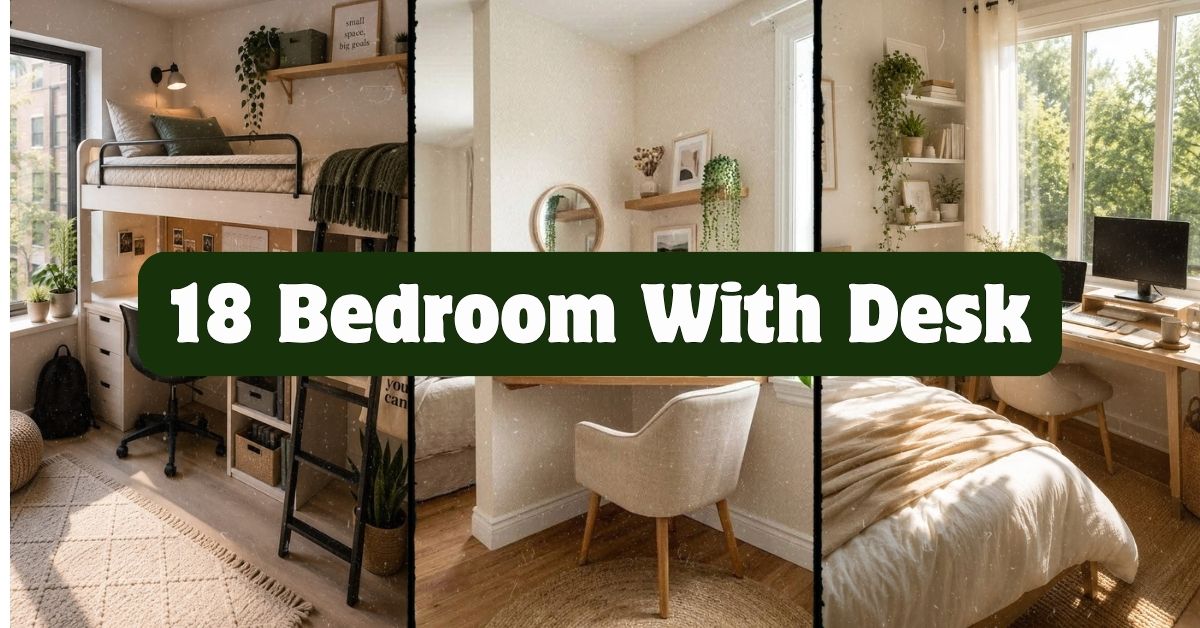
An 18 Bedroom With Desk setup can turn an unused corner into a calm work zone without making the room feel crowded. I’ll show you practical layouts, furniture choices, storage tricks, and decorating ideas that work in bedrooms of many sizes.
A bedroom with a desk should balance rest and productivity. Choose a desk that fits the available wall or corner, add a comfortable chair, provide task lighting, and use storage to keep work items separate from sleep areas.
You’ll also learn how to make the desk feel like part of the room instead of an office dropped beside the bed. Let’s start with the layout choices that make the biggest difference.
Understanding the Bedroom-with-Desk Style
A bedroom with a desk has two jobs. It needs to feel restful at night while supporting schoolwork, hobbies, remote work, or personal projects during the day. That balance can be tricky, especially in a small bedroom.
I find the best designs begin with function. First, decide what you will do at the desk. A laptop needs less space than a full monitor setup. Crafting calls for wider surfaces. Makeup and writing may need drawers instead of open shelves.
After that, focus on visual calm. Keep the desk close to a wall, window, or built-in area. Use colors and materials that match the bed and nightstands. A desk does not need to disappear, but it should feel connected to the rest of the room.
1. Place a Slim Desk Under the Window

A narrow desk under the window uses a spot that often sits empty. Natural light makes the area pleasant during the day, and the view can give your eyes a break from a screen. Choose a desk between 36 and 48 inches wide if you need room for a laptop, lamp, and notebook.
Keep the desk depth around 18 to 24 inches so it does not block walking space. A pale wood desk works well with white walls, while a black or walnut finish adds contrast. Add a low-back chair that can slide underneath when not in use.
Use a roller shade or linen curtain to control glare. This layout suits modern, farmhouse, Scandinavian, and coastal bedrooms. Next, let’s look at a setup that works even when a window is unavailable.
2. Turn an Empty Corner Into a Compact Work Zone

An empty corner can become a useful bedroom office with a small writing desk and a corner-friendly chair. Look for a desk with a 30- to 40-inch width, or choose an L-shaped model if you need more surface area.
I like using a round mirror or framed print above the desk. It softens the hard lines and makes the corner feel decorated rather than forgotten. A small plant, ceramic cup, and one desk lamp are enough. Too many accessories will quickly make the area feel crowded.
Choose a chair with a slim frame instead of a large padded office chair. Add a floor basket below the desk for notebooks, chargers, or blankets. This idea fits traditional, boho, industrial, and contemporary rooms. Once the corner is working, you can make the desk more flexible with furniture that serves two purposes.
3. Use a Floating Desk to Save Floor Space

A wall-mounted floating desk is one of my favorite choices for a small bedroom. It has no bulky legs, so the floor stays open and easy to clean. Some models include drawers or a lift-up top for hiding office supplies.
Mount the desk at a comfortable height, usually close to standard table height, and test the chair position before drilling. Leave enough space for your knees and check that nearby drawers, doors, and windows can open fully.
Pair a white floating desk with soft beige walls for a quiet look. A wood version feels warmer, while a dark finish creates a sharper modern style. Add a narrow wall shelf above it for books and a small lamp. Floating desks work with minimalist, Japandi, coastal, and modern interiors. With the floor cleared, the next idea adds even more hidden storage.
4. Choose a Desk With Built-In Drawers

A desk with drawers helps keep a bedroom tidy because supplies have a clear home. This is especially helpful if you share the room with school materials, paperwork, art tools, or gaming equipment.
Before buying, measure the drawer depth and check whether it can hold the items you actually use. A 40- to 48-inch desk often gives enough space for a laptop and writing area while still fitting against a bedroom wall. Select a finish that repeats another material in the room, such as matching wood on the bed frame or nightstand.
Use one drawer for daily tools, one for cables, and one for less-used items. This setup suits classic, farmhouse, transitional, and modern bedrooms. Now that storage is covered, let’s compare practical desk sizes.
Bedroom Desk Size Guide
| Desk type | Typical width | Typical depth | Best use |
|---|---|---|---|
| Compact writing desk | 30 to 36 inches | 16 to 20 inches | Laptop, journaling, light homework |
| Standard desk | 40 to 48 inches | 20 to 24 inches | Laptop, monitor, lamp, books |
| Wide work desk | 55 to 72 inches | 24 to 30 inches | Dual monitors, crafts, large projects |
| Floating shelf desk | 24 to 42 inches | 12 to 18 inches | Very small rooms and occasional work |
| Corner desk | 42 to 60 inches per side | 18 to 24 inches | More surface area in a corner |
The right size keeps the bedroom comfortable, so next I’ll show you how to combine a desk with another daily function.
5. Combine the Desk With a Vanity

A desk can double as a bedroom vanity if you choose the right storage and lighting. Select a simple table with drawers, then add a mirror and a small tray for personal items. When you need to work, move the cosmetics aside and keep the surface clear.
Use a mirror with a thin frame so the setup does not look too heavy. A wall-mounted sconce on each side gives better light than one lamp placed directly in front of the mirror. Keep makeup and office supplies in separate containers to avoid visual clutter.
A white desk with brass hardware feels traditional, while light oak and a frameless mirror look Scandinavian. This idea also works in glam, cottage, and transitional rooms. After blending two functions, you can make the desk disappear completely when it is not needed.
6. Hide the Workspace Inside a Closet

If your bedroom has an unused closet, you can turn it into a compact office nook. Remove the door if allowed, install a desktop across the back wall, and add shelves above it. If you rent, use a freestanding desk that fits inside instead of making permanent changes.
Paint the closet interior a color that feels intentional, such as muted green, warm white, or dusty blue. Add a plug-in wall light or a small desk lamp. Use labeled boxes for papers and equipment so the space stays easy to manage.
A curtain can hide the work area at night and make the bedroom feel calmer. This approach suits small apartments, cottage rooms, modern bedrooms, and eclectic homes. Once the workspace can close away, let’s consider a bed-and-desk combination for very tight rooms.
7. Install a Loft Bed With a Desk Below

A loft bed with a desk underneath uses vertical space instead of spreading furniture across the floor. It can be a smart choice for a child’s room, teen bedroom, studio apartment, or guest room.
Check the ceiling height before buying. You need enough room above the mattress for comfortable sitting, plus enough clearance below for the desk and chair. Choose a model with strong rails and a stable ladder. For children, follow the manufacturer’s age and safety guidance.
Keep the lower desk area bright with a wall lamp or adjustable task light. Use open shelves for books and closed bins for clutter. A wood loft bed suits rustic and Scandinavian rooms, while painted white works well in coastal spaces. If a loft feels too large, the next option takes up less visual space.
8. Add a Narrow Console Desk Behind the Bed

A narrow console desk behind the bed creates a quiet work zone without taking over a side wall. This works best when the bed is centered in the room and there is enough space to pull out a chair.
Choose a console between 12 and 18 inches deep. It can hold a laptop, a small lamp, and a notebook, but it may not suit large monitors or craft work. Use a low-profile chair or stool that can tuck beneath the desk.
A wood console adds warmth to a white bedroom. A painted console can match the wall and blend into the background. Add a narrow table lamp and one framed photograph instead of a tall collection of décor. This layout works in boutique, traditional, modern, and apartment bedrooms. Next, here are useful material choices for the desk itself.
Desk Material Comparison
| Material | Strengths | Watch-outs | Best matching styles |
|---|---|---|---|
| Solid wood | Warm, durable, repairable | Heavier and often more costly | Farmhouse, traditional, rustic |
| Veneer | Wood look with lower weight | Edges can chip if handled roughly | Scandinavian, modern, transitional |
| Metal | Strong, slim, industrial feel | Can look cold without soft accents | Industrial, modern, minimalist |
| Laminated MDF | Easy to clean and budget-friendly | May swell if exposed to water | Contemporary, student rooms |
| Glass | Makes small rooms feel open | Shows fingerprints and needs care | Glam, modern, compact spaces |
The surface matters, but the chair can make or break the whole setup. Let’s focus on comfort next.
9. Select a Chair That Fits the Bedroom

A bedroom desk chair should support your back without looking like a large corporate office chair. Measure the desk height and choose a chair that lets your feet rest flat on the floor. Your elbows should sit comfortably near the desk surface.
For a softer look, try a fabric chair with a curved back. A molded wood chair suits Scandinavian rooms, while a simple upholstered armchair works in traditional bedrooms. If you work for long periods, choose comfort over appearance and add a slim lumbar cushion if needed.
Make sure the chair can slide under the desk. This small detail keeps the walkway clear and makes the room look more organized. Use a felt pad under the legs to protect hardwood floors. Once seating is comfortable, the right lighting will make the work area easier to use.
10. Layer Task Lighting With Soft Bedroom Lighting

A desk needs focused light, but the entire bedroom should still feel warm. Use a task lamp with an adjustable neck so you can direct light onto a book or keyboard. A lamp with a shade helps reduce harsh glare.
Place the lamp opposite your writing hand when possible. Right-handed users often prefer light from the left, while left-handed users may find the opposite placement easier. For evening use, choose a warm-white bulb around 2700K to 3000K for a softer room feel.
Add a ceiling fixture, wall sconce, or bedside lamp for general lighting. Avoid relying on one bright overhead light. Brass works in traditional and glam rooms, black metal fits industrial spaces, and pale wood suits Nordic interiors. With the lighting balanced, you can use wall space more effectively.
11. Build Storage Above the Desk

Vertical storage keeps supplies close while leaving the floor free. Install one long shelf for books, a pegboard for tools, or two small cabinets for items you prefer to hide.
Keep the heaviest objects on lower shelves. Use baskets, small boxes, and magazine files to group items by purpose. A shelf should not be packed edge to edge. Leaving a little open space makes the setup feel calmer.
Try repeating the bedroom’s main colors in the storage pieces. For example, use cream boxes with a walnut shelf and rust-colored accents in a warm neutral bedroom. In a child’s room, labeled bins make cleanup easier. This idea adapts to industrial, farmhouse, colorful, and minimalist styles. Next, we’ll use color to separate work from rest without building a wall.
12. Create a Gentle Color Zone Around the Desk

A different color behind the desk can define the work area without making the bedroom feel divided. Paint a small rectangle, use removable wallpaper, or hang a fabric panel behind the desk.
Choose a shade that supports focus but still matches the room. Soft sage, muted blue, warm clay, and light taupe are easy choices. Avoid a very bright color if the desk is near the bed, since it may make the sleeping area feel more active.
Keep the desk finish simple when the wall has a pattern. If the wall is plain, a colorful chair or framed print can add interest. This strategy works with modern, bohemian, coastal, and vintage décor. Now let’s look at color combinations that keep the whole room connected.
Bedroom Desk Color Palettes
| Main bedroom color | Desk finish | Accent color | Overall effect |
|---|---|---|---|
| Warm white | Light oak | Sage green | Calm and natural |
| Pale gray | Matte black | Soft blue | Clean and modern |
| Sand beige | Medium walnut | Terracotta | Cozy and grounded |
| Dusty blue | White | Brass or tan | Coastal and relaxed |
| Blush beige | White oak | Rust or cream | Soft and warm |
| Deep green | Natural wood | Ivory | Rich and balanced |
A thoughtful palette helps the desk belong in the bedroom, and the next idea adds personality through the wall behind it.
13. Hang a Small Gallery Wall Above the Desk

A gallery wall gives the desk a finished look and makes the area feel personal. Use a mix of art prints, photos, small mirrors, and simple objects. Keep the arrangement compact so it does not compete with the bed.
Lay the frames on the floor first. Arrange them with roughly 2 to 3 inches between pieces, then take a quick photo before hanging them. This saves time and helps you spot awkward gaps.
Choose frames that repeat one or two finishes from the room. Black frames create structure, natural wood feels relaxed, and white frames blend with pale walls. Keep the lower edge of the display high enough that it will not be bumped while working. This idea fits eclectic, traditional, modern, and boho bedrooms. Next, we’ll bring in a natural element without sacrificing desk space.
14. Add Greenery Without Crowding the Worktop

Plants can make a desk area feel fresh, but large pots quickly use up valuable work space. Try a small pothos, snake plant, peperomia, or faux plant in a pot that matches the room.
Place the plant on a shelf, wall bracket, or slim pedestal beside the desk instead of directly beside your keyboard. Choose plants based on the available light. A bright window supports more options, while a darker room may need a low-light plant or a realistic artificial version.
Use woven baskets and natural wood to support a relaxed look. For a modern bedroom, choose a simple white or concrete planter. This idea works with tropical, boho, Scandinavian, and farmhouse styles. Once the décor feels alive, you can add a surface that protects the desk from daily wear.
15. Use a Desk Pad to Define the Work Area

A desk pad protects the surface and creates a clear place for the keyboard, notebook, or writing tools. It also adds color without requiring new furniture.
Choose leather or faux leather for a polished modern look. Felt feels softer and helps reduce small sounds. A woven mat works well in coastal or bohemian spaces. Measure the desktop first so the pad does not hang over the edges.
Keep the rest of the surface simple. A lamp, pen cup, and small tray are usually enough. When work is finished, place the laptop on a shelf or inside a drawer if possible. This quick reset helps the bedroom return to rest mode. The next idea is especially useful for people who need more than one screen or device.
16. Plan a Bedroom Gaming and Study Desk

A gaming or study desk needs more planning than a basic writing table. Look for a surface at least 48 inches wide for one monitor, keyboard, mouse, and notebook. Choose 60 inches or more if you use two monitors or larger speakers.
Use cable clips along the rear edge and a cable tray under the desk. Keep the monitor at a comfortable eye level, and leave space for airflow around computers. A soft rug can reduce chair noise and make the setup feel less harsh.
Black furniture with wood accents works in industrial rooms. White furniture with gentle lighting suits modern bedrooms. For a calmer look, skip bright colored lights and use one subtle LED strip behind the monitor. Here are a few budget levels to help plan the purchase.
Bedroom Desk Budget Tiers
| Budget level | Typical purchases | What to prioritize |
|---|---|---|
| Under $150 | Basic desk, simple chair, lamp | Correct size and stable construction |
| $150 to $400 | Better desk, supportive chair, storage | Comfort, drawers, cable control |
| $400 to $800 | Quality desk, ergonomic chair, shelving | Long-term durability and finish |
| Over $800 | Custom or premium furniture, built-ins | Exact fit, materials, integrated storage |
A gaming or study desk can still look calm when cables and lighting are controlled. Finally, let’s make the setup work for guests and changing needs.
17. Design a Guest Bedroom With a Flexible Desk

A guest bedroom desk can serve visitors, remote workers, students, or family members. Choose a clean-lined desk that does not make the room feel like a permanent office. A foldable chair or small upholstered chair can provide comfort without taking up much space.
Add an outlet strip with USB ports so guests can charge devices easily. Keep a small basket nearby with extra pens, notepaper, and a spare phone charger. If the room also has a dresser, avoid filling every surface with work items.
Use neutral bedding and one accent color to make the room welcoming. A light wood desk works in cottage, coastal, traditional, and contemporary spaces. With flexibility in mind, the final idea focuses on a desk that can change as your needs do.
18. Choose Modular Furniture for a Changing Room

Modular furniture lets you adjust the bedroom setup over time. Choose a desk with movable shelves, a separate drawer unit, or stackable storage pieces. If your work needs change, you can rearrange the parts instead of replacing everything.
This is useful in children’s rooms and rental homes. A small desk may work for homework now, while a wider top can be added later. Choose neutral furniture and use décor for personality, since accessories are easier to change than large pieces.
Add casters only to furniture that needs to move, and make sure they lock securely. Keep heavy storage low for stability. Modular desks fit modern, minimalist, industrial, and eclectic homes. With the right pieces, a bedroom workspace can grow without taking over the room.
Tips for Success
- Measure the desk wall, walking paths, outlets, windows, and door swings before buying furniture.
- Keep at least 30 inches of clear walking space where possible.
- Choose a chair that slides fully under the desk when the room is not in use.
- Use baskets, drawers, or boxes to separate work supplies from bedroom items.
- Place the desk near natural light, but use curtains or shades to reduce screen glare.
- Hide power cords with clips, sleeves, or a cable tray under the desktop.
- Reset the desk each evening so the room still feels like a place to rest.
Common Mistakes and How to Avoid Them
Mistake: Choosing a desk that is too deep.
Fix: Measure the room and walkway first. A desk that is 16 to 20 inches deep may be enough for a laptop and notebook.
Mistake: Using only one harsh ceiling light.
Fix: Add an adjustable task lamp and use warm, layered lighting for evening work.
Mistake: Ignoring chair comfort.
Fix: Test the seat height and back support. Your feet should touch the floor, and your shoulders should stay relaxed.
Mistake: Filling every shelf with decorations.
Fix: Keep useful items within reach and leave open space between groups of objects.
Mistake: Letting work spread across the bed.
Fix: Add a drawer, basket, or nearby shelf where the laptop and papers can be stored after work.
Mistake: Forgetting cable management.
Fix: Install a cable tray or clips before adding devices. It is easier to organize cords at the start.
Similar Variations
- Small Scandinavian Bedroom Office: Light wood, white walls, slim furniture, and very little decoration create an airy work zone.
- Coastal Bedroom With Desk: Use pale blue, sandy beige, woven textures, and light wood for a relaxed feel.
- Boho Bedroom Workspace: Add layered textiles, plants, warm wood, baskets, and handmade-looking accessories.
- Modern Glam Desk Bedroom: Combine a sleek desk, velvet chair, brass details, and a framed mirror.
- Industrial Bedroom Office: Choose metal furniture, dark accents, exposed-style lighting, and reclaimed wood.
- Farmhouse Bedroom With Desk: Pair a painted wood desk with soft neutrals, woven storage, and simple vintage décor.
A successful bedroom desk setup is not about buying the largest desk or filling every corner. It is about choosing furniture that fits, lighting that supports your eyes, and storage that keeps work from taking over your sleeping space.
When the colors, materials, and scale match the rest of the room, the desk feels natural. With these 18 Bedroom With Desk ideas, you can create a space that works hard by day and feels peaceful at night.
Leave a Reply