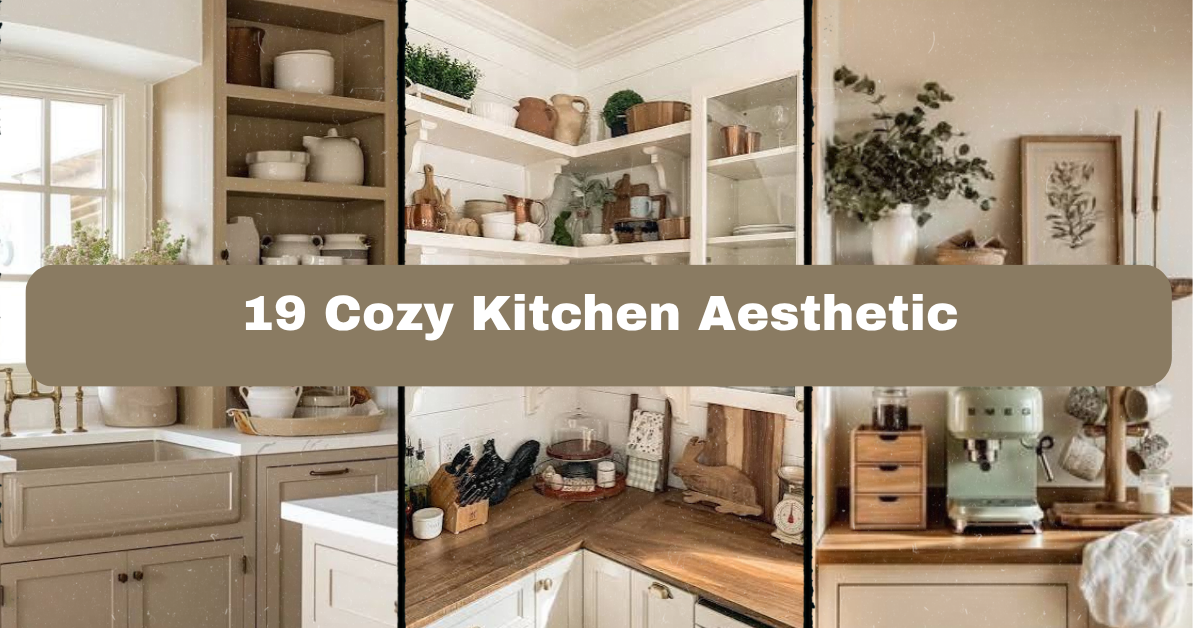
19 Cozy Kitchen Aesthetic ideas can help you turn a plain cooking space into a warm, useful room that feels personal and inviting.
A cozy kitchen aesthetic combines warm colors, natural materials, soft lighting, useful furniture, and personal decor to create a comfortable space for cooking, eating, and gathering.
Keep reading for simple design ideas that work in both small apartments and large family kitchens.
What Makes a Kitchen Feel Cozy?
A cozy kitchen is not defined by one color or decorating trend. It is more about the feeling created by the room. I think of it as a balance between comfort and function. Warm wood, soft textiles, open shelves, handmade items, and gentle lighting all help.
The best cozy kitchens also look lived in, not staged. A wooden cutting board can stay on the counter. A favorite mug can sit near the coffee maker. The goal is to make daily tasks feel pleasant without covering every surface. You can create this look with a small budget, too. A new lamp, runner, or set of curtains may change the mood more than a full renovation.
1. Warm Up the Room With Creamy Neutral Cabinets
Cream, ivory, beige, and warm white cabinets create an easy base for a cozy kitchen. Unlike stark white, these shades have a soft undertone that feels calm and welcoming. They also reflect light, which makes a small kitchen seem more open.
Pair creamy cabinets with natural wood shelves, brass knobs, or a stone countertop with gentle veining. If you already have dark cabinets, you do not need to replace them. Paint the walls a light oatmeal shade or add cream-colored accessories instead.
For a quick update, change only the cabinet handles. Choose rounded brass, aged bronze, or ceramic pulls. This idea fits modern, farmhouse, traditional, and cottage kitchens with ease, so next, let’s add warmth through texture.
2. Add Open Wood Shelves for Everyday Charm
Open shelves bring warmth and personality to a kitchen. Wood shelves are especially useful because they soften hard surfaces such as tile, metal, and stone. They also give you a place to display dishes you use often.
Choose shelves made from oak, pine, walnut, or reclaimed wood. Keep the styling simple. Stack two or three plates, add a bowl, and leave space between groups. Too many objects can make shelves look messy.
A practical tip is to place everyday items on the lowest shelf. Store decorative pieces higher up. In a modern home, use clean floating shelves. In a rustic or traditional kitchen, choose thicker wood with visible knots. Once the shelves are in place, the next step is making the countertop feel just as inviting.
3. Create a Small Coffee or Tea Station
A coffee corner can make your kitchen feel more personal without taking much space. Use one section of the counter, a small cart, or a narrow wall shelf. Add a coffee maker, kettle, mugs, jars of tea, and a small tray.
Wood, ceramic, and glass work well together here. Try a warm mug color such as rust, sage, mustard, or soft blue. A framed print or tiny plant can finish the arrangement.
Keep the setup practical. Place spoons, filters, and sweeteners in containers you can reach easily. I like using a tray because it keeps small items together and makes cleaning faster. In a sleek modern kitchen, use matching containers. In a farmhouse space, try labeled jars and handmade mugs. From this little station, we can build a wider color plan.
4. Use Earthy Colors Instead of Bright White
Earthy colors instantly make a kitchen feel more relaxed. Think terracotta, olive green, clay, muted mustard, mushroom, warm gray, and dusty blue. These colors do not need to cover the entire room. Small touches can have a strong effect.
Use one main neutral, one earthy color, and one darker accent. For example, pair warm white cabinets with olive textiles and walnut accessories. Another option is beige walls, terracotta pottery, and black hardware.
Paint is the easiest place to begin, but you can also use rugs, curtains, art, and dishware. Test paint samples during morning and evening light before choosing one. This approach works in Mediterranean, cottage, desert, and contemporary homes. A clear color plan will make the following material choices much easier.
Cozy Kitchen Color Combinations
| Main color | Supporting color | Accent color | Best materials |
|---|---|---|---|
| Warm white | Sage green | Aged brass | Oak, linen, ceramic |
| Mushroom beige | Terracotta | Walnut brown | Clay, rattan, stone |
| Dusty blue | Cream | Natural wood | Cotton, oak, glass |
| Olive green | Soft ivory | Matte black | Marble, linen, iron |
| Light taupe | Muted mustard | Dark bronze | Bamboo, leather, pottery |
5. Layer a Woven Runner for Softness
A woven runner adds comfort underfoot and breaks up a long stretch of tile or wood flooring. Choose a washable cotton, flatweave wool, or indoor-outdoor runner. These materials handle kitchen spills better than thick shag rugs.
Look for patterns with small-scale stripes, faded diamonds, checks, or simple geometric shapes. A little pattern hides crumbs and marks between cleanings. Keep the colors connected to the rest of the room. A beige and rust rug works well with wood cabinets, while a blue and cream design suits a coastal kitchen.
Measure the walkway before buying. Leave enough space for doors and drawers to open. In a modern kitchen, use a simple flatweave. In a vintage or farmhouse room, try a faded traditional pattern. With the floor softened, we can turn to the light above it.
6. Choose Warm, Layered Lighting
Good lighting can change the entire mood of a kitchen. Cool blue-white bulbs often make the room feel harsh. Warm bulbs create a softer, more comfortable effect, especially in the evening.
Use more than one light source. Add pendant lights over an island, under-cabinet lighting for food preparation, and a small lamp on a counter or shelf. If you have a dining nook, a shaded fixture above the table can make it feel separate and intimate.
For everyday use, choose task lighting that does not cast shadows on your work surface. Use dimmable fixtures when possible. Clear glass works in a modern kitchen, while fabric or rattan shades suit cottage and coastal rooms. Once the lighting feels right, natural materials can add another layer of comfort.
7. Bring in Wood Cutting Boards and Serving Pieces
Wood accessories make a kitchen feel warm because they add natural color and visible texture. Display a few cutting boards against the backsplash, or place a wooden bowl beside a fruit bowl. You can also use wood trays, salad servers, stools, and bread boxes.
Choose pieces that are useful, not just decorative. A large board can protect the counter while also acting as a serving platter. Use different wood tones carefully. Two or three related shades usually look collected rather than chaotic.
Keep wooden items dry and oil cutting boards when they begin to look pale. Do not soak them for long periods. This idea adapts well to Scandinavian, farmhouse, modern, and traditional kitchens. Next, let’s add handmade pieces that make the space feel less mass-produced.
8. Display Handmade Ceramic Dishware
Handmade ceramics bring small variations in shape and glaze that make a kitchen feel special. Look for bowls, mugs, pitchers, utensil holders, and serving plates in soft, imperfect finishes. Cream, speckled white, green, blue, and clay tones all work beautifully.
You do not need a full matching set. Mix similar colors with different shapes. Place a few favorite pieces on open shelves, or use a large ceramic crock to hold wooden spoons.
A practical tip is to choose sturdy pieces for daily use and reserve delicate items for display. Handmade pottery suits cottage, rustic, Japanese-inspired, and Mediterranean kitchens. If your kitchen already has many textures, choose simple ceramics with quiet glazes. The next idea will help organize these lovely pieces.
Material Guide for Cozy Kitchen Accessories
| Material | Visual effect | Best use | Care note |
|---|---|---|---|
| Oak or beech wood | Warm and natural | Boards, stools, bowls | Keep dry and oil boards |
| Stoneware ceramic | Handmade and grounded | Mugs, plates, crocks | Check for dishwasher safety |
| Rattan | Light and relaxed | Baskets, pendant shades | Keep away from standing water |
| Linen | Soft and casual | Towels, curtains, napkins | Wash gently to reduce shrinkage |
| Aged brass | Warm and classic | Knobs, faucets, frames | Polish lightly or let patina develop |
| Glass | Bright and airy | Jars, doors, vases | Clean often to avoid fingerprints |
9. Use Woven Baskets to Hide Kitchen Clutter
Baskets are one of my favorite ways to make a kitchen look tidy without making it feel stiff. Use them on top of cabinets, under a bench, or inside open shelving. They can hold napkins, produce, cookbooks, or small appliances.
Choose seagrass, rattan, water hyacinth, or cotton rope. Matching baskets create a calmer look, while slightly different shapes feel more collected. Avoid storing damp towels or wet produce in natural-fiber baskets because moisture can cause odor and mold.
Measure shelves before buying. A basket that fits tightly will be hard to remove. In a coastal kitchen, use pale seagrass. In a rustic kitchen, choose darker woven fibers. Now that clutter has a home, we can make room for a little greenery.
10. Add Herbs and Easy-Care Kitchen Plants
Plants bring life, color, and a fresh feeling to a kitchen. Herbs such as basil, thyme, mint, rosemary, and chives are useful as well as attractive. Place them near a bright window, but protect them from very hot direct sunlight.
If your kitchen has limited light, try pothos, snake plants, or spider plants. Use pots in terracotta, ceramic, or woven covers to match the room’s colors. A small plant on a shelf may be enough. You do not need to fill every corner.
Water according to the plant’s needs rather than on a fixed schedule. Make sure pots have drainage. Herbs fit farmhouse and Mediterranean styles, while simple green plants work well in modern and Scandinavian kitchens. With greenery added, textiles can make the room even softer.
11. Hang Linen Curtains or a Simple Café Curtain
Kitchen windows often look warmer with fabric. Linen and cotton curtains filter sunlight and add movement to an otherwise hard-working room. A café curtain that covers only the lower half of the window gives privacy while keeping the upper glass open.
Choose natural shades such as flax, cream, faded blue, or soft green. Small checks and narrow stripes can add a farmhouse touch. For a cleaner modern look, use one plain panel or a simple roller shade in woven fabric.
Keep curtains away from the stove and use washable fabric. Hang the rod slightly wider than the window so the panels do not block too much light. This idea works in cottage, coastal, traditional, and modern kitchens. From the window, we can move to the walls and add meaningful decoration.
12. Decorate With Useful Wall Art
Kitchen art does not have to be limited to food signs. Choose botanical prints, still-life paintings, vintage market posters, family recipes, or simple line drawings. Art adds color without taking up counter space.
Use one large piece on an empty wall, or group several small frames together. Keep the frame finish connected to your hardware. Wood frames feel relaxed, while black frames look sharper and more modern.
Protect valuable art from steam by placing it away from the sink and stove. For a budget-friendly option, print public-domain botanical images and place them in thrifted frames. This idea suits almost any home style. Once the walls have character, a well-chosen focal point can bring the whole room together.
Kitchen Art and Display Size Guide
| Location | Recommended size | Good display choice | Practical clearance |
|---|---|---|---|
| Above a small table | 18 to 30 inches wide | Framed print or pair of prints | Keep at least 6 inches above table |
| Empty wall beside cabinets | 24 to 36 inches wide | One large artwork | Avoid blocking switches |
| Above a breakfast bench | 30 to 48 inches wide | Horizontal artwork | Leave 8 to 12 inches above bench |
| Open shelf backdrop | 8 to 16 inches tall | Small art or plate | Keep away from heat |
| Narrow wall between doors | 12 to 20 inches wide | Vertical print or mirror | Check door swing first |
13. Make a Breakfast Nook Feel Like a Retreat
A breakfast nook gives your kitchen a place to pause. Even a small corner can hold a round table and two chairs. If space is tight, use a wall-mounted drop-leaf table or a narrow bench.
Choose comfortable seating with cushions in linen, cotton, or washable performance fabric. A round table improves movement in a small room, while a wood bench adds a casual farmhouse feel. Add a pendant or wall light above the area so it feels intentional.
Keep the surface useful. A small vase, fruit bowl, or candle is enough. In a modern home, choose simple molded chairs. In a traditional home, use turned wood legs and patterned cushions. A cozy eating space naturally leads to more inviting seating throughout the kitchen.
14. Add One Comfortable Kitchen Stool or Bench
A stool or bench can make a kitchen feel more social. It gives someone a place to sit while chatting, sorting vegetables, or enjoying a quick snack. Select a seat with a supportive height and a surface that is easy to wipe.
Wood stools add warmth, while upholstered benches offer more comfort. If you use counter stools, leave enough room for knees and movement. A backless stool tucks away neatly, but a stool with a back is better for longer sitting.
Choose two or three seats that match the kitchen rather than filling every available space. This works in industrial, farmhouse, Scandinavian, and classic kitchens. Once seating is comfortable, small vintage details can add a sense of history.
15. Mix in a Few Vintage Kitchen Finds
Vintage pieces make a kitchen feel personal and layered. Try an old wooden stool, enamel bowl, brass candlestick, framed recipe card, or antique scale. You only need a few items. Too many can make the room feel like a shop.
Look for pieces with useful shapes and colors that support your palette. A faded blue bowl may become a fruit holder. An old tray can organize oils or spices. Check secondhand items for cracks, loose handles, and unsafe finishes before using them with food.
Vintage accents suit cottage, traditional, farmhouse, and eclectic kitchens. For modern spaces, use one old piece as contrast instead of building a full vintage look. Next, we can create warmth through the backsplash and countertop details.
16. Choose Textured Tile or a Warm Backsplash
A backsplash is a large design area, so its texture matters. Handmade-look ceramic tile, zellige-style tile, brick, beadboard, and natural stone can all add a cozy feeling. Soft variation is often more inviting than a perfectly flat, shiny surface.
Use cream tile with warm grout for a quiet look, or add muted green and blue for more color. If replacing tile is not possible, try removable backsplash panels or paint designed for suitable surfaces.
Always check cleaning needs before choosing a rough finish. Tile behind the range should be easy to wipe. In a traditional kitchen, use a small subway tile. In a modern space, choose larger handmade-look slabs. A thoughtful backsplash gives the final design choices a strong foundation.
Backsplash Options Compared
| Backsplash material | Cozy quality | Cleaning level | Works best with |
|---|---|---|---|
| Handmade-look ceramic tile | Soft variation and craft feel | Easy with sealed grout | Cottage, modern, farmhouse |
| Natural stone | Rich texture and organic color | Moderate, may need sealing | Traditional, Mediterranean |
| Beadboard panel | Warm and homey | Easy if painted well | Cottage, coastal |
| Brick veneer | Rustic and textured | Moderate, seal against grease | Industrial, farmhouse |
| Glass tile | Light-reflective and clean | Easy | Small modern kitchens |
| Marble-look porcelain | Classic with less upkeep | Easy | Transitional, classic |
17. Style the Counter With a Useful Vignette
A counter vignette is a small group of related objects arranged together. For example, place a wooden tray beside the stove with olive oil, salt, pepper, and a small utensil crock. This looks intentional while keeping daily tools close.
Use different heights. A bottle, bowl, and short jar create more visual interest than three objects at the same level. Leave open counter space for cooking. A cozy kitchen should still work well.
Limit each zone to a few items and wipe underneath them often. In a minimalist kitchen, use one tray with matching containers. In an eclectic kitchen, mix glass, wood, and ceramic. With the counter styled, we can make the ceiling and cabinet tops work harder.
18. Use the Space Above Cabinets Carefully
The area above cabinets can add charm, but it is easy to overfill. Use a few large items instead of many small decorations. A woven basket, pottery jug, stack of old cutting boards, or trailing faux plant can work well.
Keep the color palette simple so the area does not look dusty or busy. Leave some empty space between objects. If your cabinets reach the ceiling, skip this idea and focus on lighting or wall art instead.
Choose lightweight items that are easy to remove for cleaning. In a farmhouse room, use baskets and crockery. In a modern kitchen, display one sculptural object. This brings us to the final idea, which is all about making the kitchen feel like yours.
19. Add Personal Details That Tell Your Story
The coziest kitchen is not perfect. It reflects the people who use it. Display a recipe written by a family member, a travel bowl, a favorite cookbook, or a small framed photograph. These details make the room feel real.
Choose items that you enjoy seeing often. You can place a meaningful object on a shelf, attach a recipe card to a clipboard, or use a treasured dish for fresh fruit. Keep personal decor away from steam, grease, and busy prep areas.
This idea adapts to every style because personal items are what make a design unique. A modern kitchen can hold one bold memory, while a cottage kitchen can display a whole collection. With that final layer, the room becomes warm rather than simply well decorated.
Tips for Success
- Start with lighting and clutter control before buying decorative items.
- Pick one warm neutral and two supporting colors to keep the room connected.
- Use washable rugs, curtains, and seat cushions in busy areas.
- Leave clear counter space beside the sink and main cooking zone.
- Repeat a material at least twice, such as wood on shelves and stools.
- Mix old and new pieces so the kitchen feels collected over time.
- Bring home paint, tile, and fabric samples before making final choices.
Common Mistakes and How to Avoid Them
Using too many warm colors:
Choose one main earthy shade and repeat it in small amounts. Too many strong colors can make the room feel crowded.
Filling every open shelf:
Leave blank space between dish stacks and decorative objects. Open space helps shelves look calm and makes daily items easier to reach.
Choosing rugs that are hard to clean:
Use flatweave, washable, or indoor-outdoor designs near sinks and prep areas. Check the care label before buying.
Ignoring task lighting:
Add under-cabinet lights or focused pendants where you chop and cook. Ambient lighting alone may leave work areas dim.
Adding decor that blocks function:
Keep appliances, drawers, outlets, and walkways clear. Every item should either help the room work or bring real joy.
Mixing too many finishes:
Limit hardware and metal finishes to two or three. Repeat each finish so the room looks planned.
Similar Variations
- Cozy Farmhouse Kitchen: Uses painted cabinets, natural wood, apron sinks, simple textiles, and vintage accents.
- Warm Scandinavian Kitchen: Combines pale wood, soft white, clean shapes, plants, and very little clutter.
- Cottage Kitchen: Favors floral fabric, painted furniture, open shelving, handmade ceramics, and gentle colors.
- Coastal Cozy Kitchen: Uses sandy neutrals, faded blue, woven materials, light wood, and breezy curtains.
- Mediterranean Kitchen: Adds terracotta, olive green, patterned tile, rustic wood, and handcrafted pottery.
- Dark Cozy Kitchen: Uses deep green, navy, or charcoal with warm lighting, brass details, and lighter wood accents.
A cozy kitchen does not require a major remodel or a large decorating budget. Start with one change that improves the way the room feels and works, then build slowly with useful pieces, warm materials, and personal touches.
When comfort, function, and personality share the same space, your kitchen becomes more than a place to prepare food. It becomes a room people want to use, which is the real charm of a 19 Cozy Kitchen Aesthetic
Leave a Reply