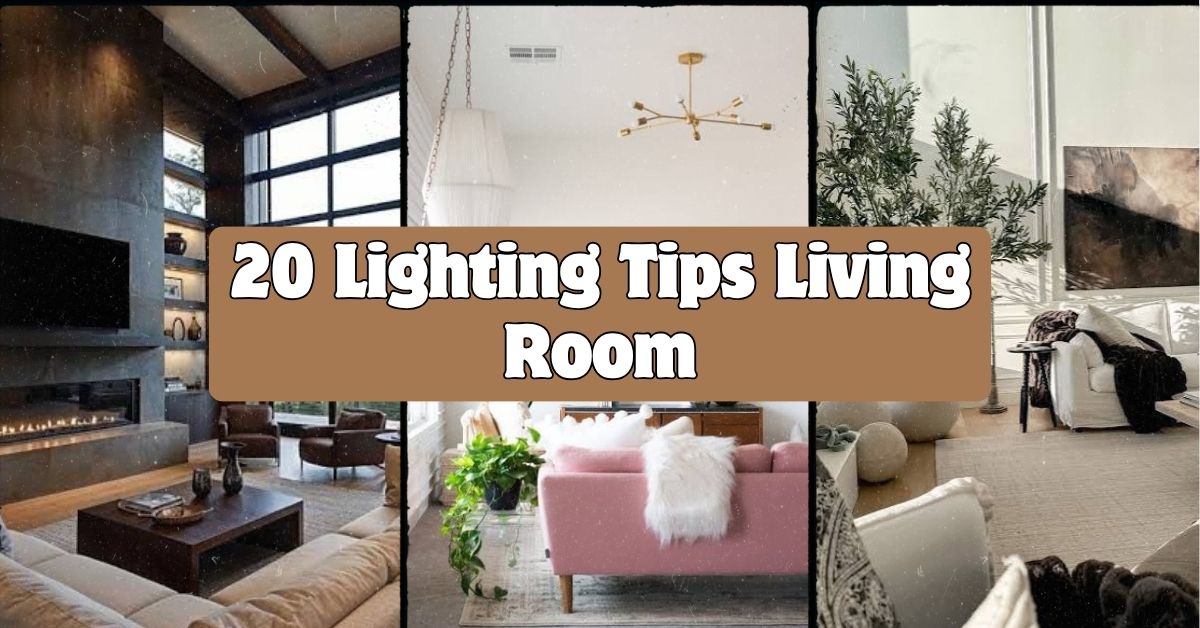
I’ve spent way too many nights staring at my living room wondering why it felt like a dentist’s waiting room, so I put together these 20 lighting tips living room ideas after testing what actually works and what just looks good in a magazine. This isn’t theory. This is stuff I’ve tried, tweaked, and sometimes ripped out of the wall in frustration.
What are the best lighting tips for a living room? The best living room lighting combines three light types: ambient (overhead), task (reading lamps), and accent (highlighting art or shelves). Layer these with dimmers, warm bulbs (2700K-3000K), and varied fixture heights for a room that feels balanced, not flat or harsh.
Stick around, because I’m about to show you the exact mistakes I made (and fixed) so you don’t have to learn the hard way.
Why Lighting Makes or Breaks Your Living Room
Here’s the thing nobody tells you: furniture and paint colors get all the credit, but lighting does the heavy lifting. A gorgeous couch under one harsh overhead bulb still looks sad. I learned this when I moved into my first apartment and had exactly one ceiling fixture. The whole room felt like an interrogation room. Once I started layering different light sources, everything changed. Same furniture, same walls, totally different vibe. Lighting isn’t just about seeing where your feet are. It’s mood, it’s function, it’s the difference between a room you want to sit in and one you rush through.
1. Layer Three Types of Light in Every Room
You need ambient, task, and accent lighting working together, not just one ceiling fixture doing all the work. Ambient light fills the room generally, think overhead fixtures or recessed lights. Task lighting helps you read, work, or do close-up stuff, like a floor lamp next to your reading chair. Accent lighting highlights something specific, like a piece of art or a bookshelf.
My tip: start with ambient, then add one task light and one accent light minimum. Modern homes often skip fussy chandeliers for clean flush-mounts, while traditional spaces love layered sconces and table lamps. Coastal rooms lean into natural light plus soft linen shades. Once you’ve got your three layers sorted, it’s time to think about temperature.
2. Choose Warm Bulbs Over Cool White Ones
Bulb color temperature changes everything about how a room feels. Cool white bulbs (4000K and up) make living rooms feel clinical, like a hospital hallway. Warm bulbs (2700K to 3000K) create that cozy, golden glow most people actually want in a living space.
Check the packaging next time you buy bulbs. It’ll list the Kelvin temperature right there. My actionable tip: buy a few different temperatures and test them in your actual room before committing to a whole set. Farmhouse and traditional styles practically demand warm light, while modern minimalist spaces sometimes use slightly cooler tones for a crisp look. Once your bulbs match your vibe, dimmers become your next best friend.
3. Install Dimmer Switches on Every Fixture You Can
Dimmers changed my whole relationship with my living room. Full brightness for cleaning and game night. Low and moody for movies or hanging out. One switch, endless options.
Installing a dimmer is a weekend project, not a renovation. Most hardware stores sell simple swap-in dimmer switches for under twenty bucks. Just make sure your bulbs are dimmable (LED packaging will say so). This tip works in literally any style home, from ultra-modern lofts to cozy cottage living rooms. Now that you can control brightness, let’s talk about where the light actually comes from.
4. Add Floor Lamps in Empty Corners
Empty corners are lighting opportunities, not just dead space. A floor lamp tucked into a bare corner does double duty: it fills the room with light and makes an awkward empty spot feel intentional.
I like arc floor lamps near seating areas and tall skinny ones in tighter corners. Pick a shade color that complements your walls, not just your furniture. Practical tip: place one within arm’s reach of your favorite chair so you’re not stretching across the room to flip a switch. Boho and mid-century modern rooms both love a statement floor lamp with visual texture. Speaking of statement pieces, let’s move up to the ceiling.
5. Hang a Pendant Light Instead of a Basic Flush Mount
Swapping a boring flush-mount ceiling fixture for a pendant light instantly upgrades the whole room’s personality. Pendants hang lower, draw the eye, and act like a piece of jewelry for your ceiling.
Make sure you’ve got enough ceiling height, generally at least eight feet, so nobody’s bonking their head. Go for a pendant with some visual weight if your living room is large, and something more delicate for smaller spaces. Actionable tip: measure your room’s width and height before shopping so you don’t end up with something too small (a common rookie mistake). Industrial and modern farmhouse styles practically live for a good pendant light. Next, let’s tackle the reading nook nobody’s lighting properly.
6. Set Up a Proper Reading Light Near Your Favorite Seat
If you’ve got a spot where you actually read or scroll your phone, it needs its own dedicated light. Overhead lighting alone creates shadows and eye strain when you’re trying to focus on a page or screen.
A simple table lamp or adjustable floor lamp positioned slightly behind and above your shoulder works best. This avoids glare while still giving you enough light to see clearly. My tip: look for lamps with adjustable arms or heads so you can redirect the light as needed. Traditional rooms often use brass or bronze reading lamps, while Scandinavian spaces keep it simple with wood and white shades. Now let’s talk about the fixtures on your walls.
7. Add Wall Sconces for Soft, Even Light
Wall sconces do something ceiling lights can’t: they wash light evenly across a wall without creating that single bright hot spot in the middle of the room. They’re especially great flanking a fireplace or on either side of a media console.
Sconces free up floor and table space too, since they don’t need furniture to sit on. Practical tip: install them at eye level when seated, roughly 60 to 66 inches from the floor, so the glow feels natural instead of glaring. Traditional and transitional homes use sconces constantly, but even modern spaces are catching on with sleek, minimal sconce designs. Once your walls are covered, don’t forget the shelves.
Lighting Fixture Comparison by Room Size
| Fixture Type | Best Room Size | Average Cost Range | Light Coverage |
|---|---|---|---|
| Flush Mount | Small (under 150 sq ft) | $30-$100 | Even, general glow |
| Pendant Light | Medium to Large (150-300 sq ft) | $80-$400 | Focused, dramatic |
| Floor Lamp | Any size, corner filler | $40-$250 | Localized, warm pool |
| Wall Sconce (pair) | Medium to Large | $60-$300 total | Even wall wash |
| Table Lamp | Any size, side table use | $25-$150 | Soft, localized |
| Recessed Lighting (per can) | Large (300+ sq ft) | $75-$150 installed | Broad, even ambient |
8. Use LED Strip Lights Behind Your TV or Shelving
This one feels like a cheat code. LED strip lights stuck behind your TV or along the back of open shelving creates a soft glow that reduces eye strain during movie nights and makes your shelves look like a display case instead of a cluttered mess.
They’re cheap, usually under thirty dollars, and stick on with adhesive backing. Most come with remotes so you can change colors or just stick with warm white. Actionable tip: measure the back of your TV or shelf before ordering so you get the right length strip. Modern and eclectic living rooms both love this trick, since it feels a little unexpected without being over the top. Speaking of unexpected, let’s talk about candles for a second.
9. Bring In Candles for Flexible, No-Wiring Ambiance
Not everything needs an electrician. Candles add warm, flickering light with zero installation required. Cluster a few different heights on your coffee table or mantel for an instant mood boost during dinner parties or quiet nights in.
I keep a mix of pillar candles and tea lights around so I can adjust the amount of light depending on the occasion. Safety tip: always place candles away from curtains or anything flammable, and never leave them burning unattended. This trick fits every single design style, from farmhouse to glam to coastal, because candlelight is universally cozy. Now let’s get into something a little more technical: smart bulbs.
10. Switch to Smart Bulbs for Total Control
Smart bulbs let you control brightness, color, and even scheduling from your phone. I can dim my living room lights from the couch without getting up, which sounds lazy but honestly it’s just smart living.
Brands like these connect to apps where you can set warm light for evenings and brighter light for daytime automatically. Practical tip: start with just two or three smart bulbs in your most-used fixtures before converting your whole house, since they cost more than regular bulbs. This upgrade works in any style home because it’s invisible tech hiding inside a regular-looking bulb. Next, let’s think about where natural light fits into all this.
11. Maximize Natural Light Before Adding Artificial Light
Before you buy a single lamp, figure out how your natural light behaves throughout the day. A living room that gets strong afternoon sun needs different artificial lighting than one that’s dim by 3pm.
Sheer curtains let light filter in softly without blasting your room, while heavier drapes block it out for movie watching. Practical tip: track your room’s light at 9am, noon, and 6pm for one day so you know exactly when you’ll need extra lamps turned on. Coastal and Scandinavian homes maximize natural light with minimal window treatments, while traditional homes often layer sheers under heavier curtains. Once you know your natural light pattern, mirrors become a genius trick.
12. Place a Mirror to Bounce Light Around the Room
Mirrors reflect both natural and artificial light, making a room feel brighter and bigger without adding a single new fixture. Hang one across from a window or near a lamp to double the light’s reach.
I put a large mirror on the wall opposite my main window and the room instantly felt twice as bright in the mornings. Practical tip: avoid hanging mirrors directly across from a TV screen, since they’ll create annoying glare. This works in literally every design style since mirrors are basically decor chameleons. Now, let’s talk about dimmable ceiling fans with lights, because they’re everywhere and often done wrong.
13. Upgrade Your Ceiling Fan Light Kit
If your living room has a ceiling fan with a built-in light, don’t ignore it. Those stock light kits are often weak, single-bulb setups that barely light a small room, let alone a large one.
Swap the light kit for one with multiple bulbs or a brighter LED panel. Practical tip: check your fan’s wattage limit before buying replacement bulbs so you don’t overload the fixture. This upgrade matters most in ranch-style and mid-century homes where ceiling fans are common living room fixtures. Now let’s zoom into accent lighting for art and shelves specifically.
14. Use Picture Lights to Highlight Art
A dedicated picture light mounted above a piece of art turns it into a focal point instead of just something hanging on the wall. These slim fixtures direct light downward onto the piece without flooding the whole room.
They’re a small detail, but they make a huge difference in how “finished” a room looks. Practical tip: choose a picture light with a warm bulb so you don’t wash out the colors in your art. Traditional and gallery-style living rooms use these constantly, but even modern spaces benefit from one well-placed picture light over a statement piece. Let’s talk about something people forget entirely: outdoor-adjacent light through doors.
15. Add Under-Cabinet or Under-Shelf Lighting
If you’ve got built-in cabinets or open shelving in your living room, tuck small LED puck lights or strips underneath. This creates a soft glow that highlights books, decor, or glassware while adding another light layer to the room.
It’s a subtle touch, but it adds depth. Practical tip: battery-operated puck lights are great if you don’t want to deal with wiring, and most last months on a single charge. Built-in shelving in craftsman and traditional homes especially benefits from this warm, tucked-away glow. Now, let’s talk about something a lot of people overlook: light bulb wattage per room size.
Recommended Lumens by Living Room Size
| Room Size (sq ft) | Total Lumens Needed | Example Bulb Combo |
|---|---|---|
| 100-150 | 1,500-2,250 | 3 lamps at 500-750 lumens each |
| 150-250 | 2,250-3,750 | 1 pendant + 2 floor lamps |
| 250-350 | 3,750-5,250 | Recessed lights + 2 table lamps |
| 350+ | 5,250+ | Recessed lights + pendant + multiple lamps |
16. Match Lamp Shade Color to Your Wall Tone
The color of your lampshade actually changes the color of light hitting your walls. A white shade throws neutral light, while a cream or amber shade warms everything up even more.
If your walls are already warm-toned, a warm shade doubles down on cozy. If they’re cool gray or blue, a warm shade can balance things out nicely. Practical tip: hold the shade up against your wall paint swatch before buying to see how they interact. Coastal homes often go with white or natural linen shades, while traditional spaces lean into deeper amber and gold tones. Next, let’s talk about track lighting for open-concept spaces.
17. Install Track Lighting for Flexible Direction
Track lighting lets you point individual lights exactly where you need them, which is huge in open-concept living rooms that flow into dining or kitchen areas. You can highlight an art wall, brighten a reading corner, and light a walkway all from one track.
It’s more flexible than fixed recessed lighting since you can adjust the heads anytime. Practical tip: go with adjustable LED heads so you can change brightness and angle without swapping bulbs. Modern and industrial living rooms use track lighting the most, since it fits that exposed, adjustable aesthetic. Now let’s cover a detail that’s easy to skip: light switch placement.
18. Group Light Switches for Easy Control
If you’ve got five different light sources but the switches are scattered across three walls, that’s a problem. Group your switches or use smart plugs so you can control multiple lights from one spot without walking around the room flipping things on one by one.
Smart plugs are a cheap fix if rewiring isn’t an option. Practical tip: a $15 smart plug on your floor lamp means you can turn it on from your phone before you even walk in the door. This tip matters in every style home since convenience isn’t tied to aesthetics. Let’s wrap up the technical stuff with color-changing bulbs.
19. Try Color-Changing Bulbs for Movie Nights or Parties
Color-changing smart bulbs let you shift your living room from bright white daytime light to deep blue or purple party vibes in seconds. It sounds gimmicky until you actually use it during a movie night or a get-together.
Most apps let you save preset scenes so you’re not fiddling with settings every time. Practical tip: keep these in secondary fixtures like floor lamps rather than your main light source, so you always have a neutral option too. This works especially well in eclectic and modern homes that already embrace bold personality. Finally, let’s talk about the simplest tip of all.
20. Turn Off One Light Source at a Time to Test the Mood
This sounds too simple to matter, but it works. Once you’ve layered in several light sources, turn them off one at a time and watch how the room’s mood shifts. You’ll quickly figure out which combo feels best for movie night versus a dinner party versus just relaxing solo.
This costs nothing and takes five minutes. Practical tip: do this test at night when it’s dark outside so you’re seeing the true effect of your artificial lighting without natural light interfering. Every single home style benefits from this test, because it’s less about decor and more about understanding your own space.
Tips for Success
- Buy a few bulbs of different color temperatures before committing to a whole set for the room
- Install at least one dimmer switch on your main ambient light source
- Keep a lamp within reach of every seating area so nobody’s stretching across the room
- Test your lighting setup after dark, not just during the day when natural light hides flaws
- Mix fixture heights (floor, table, ceiling) instead of putting everything at eye level
- Don’t skip picture lights or accent lighting just because they feel like an extra step
- Keep spare warm-white bulbs on hand so a burnout doesn’t leave you stuck with a mismatched fixture
Common Mistakes and How to Avoid Them
Relying on one overhead light for the whole room
: Add at least two more light sources, like a floor lamp and a table lamp, to break up harsh shadows and create depth.
Using cool white bulbs in a cozy living room
: Swap to 2700K-3000K warm bulbs, which feel more inviting and match most living room color schemes.
Skipping dimmers because they seem like a hassle
: Install basic swap-in dimmer switches, most take under thirty minutes and cost less than dinner out.
Placing lamps too far from seating areas
: Position every lamp within arm’s reach of where people actually sit or read.
Ignoring natural light patterns
: Track how sunlight moves through your room for one full day before buying new fixtures, so you’re not overspending on lights you don’t need.
Choosing a pendant light that’s too small for the room
: Measure your ceiling height and room width first, then size your fixture up rather than down.
Similar Variations
- Task-Focused Lighting – Prioritizes reading lamps and desk-style lighting over ambient mood lighting, great for home offices doubling as living rooms
- Smart Home Lighting Setup – Built entirely around app-controlled bulbs and voice assistants for total remote control
- Minimalist Lighting Scheme – Uses fewer fixtures with higher quality, focusing on one or two statement pieces instead of layering many sources
- Candlelit Cozy Corner – Skips electric accent lighting almost entirely in favor of candle clusters and warm natural light
- Gallery Wall Lighting – Centers the whole plan around picture lights and track lighting to showcase art collections
- Outdoor-Indoor Flow Lighting – Matches indoor living room lighting temperature and style to adjoining patio or sunroom fixtures for a seamless transition
Getting your living room lighting right isn’t about buying the fanciest fixtures or spending a fortune. It’s about layering different light sources, picking the right bulb temperature, and paying attention to how your specific room actually behaves throughout the day. Small changes, like adding a dimmer or swapping a cool bulb for a warm one, make a bigger difference than most people expect.
I hope these 20 lighting tips living room ideas give you a clear starting point, whether you’re working with a tiny apartment or a big open-concept space. Start with one or two changes, see how they feel, and build from there.
Leave a Reply