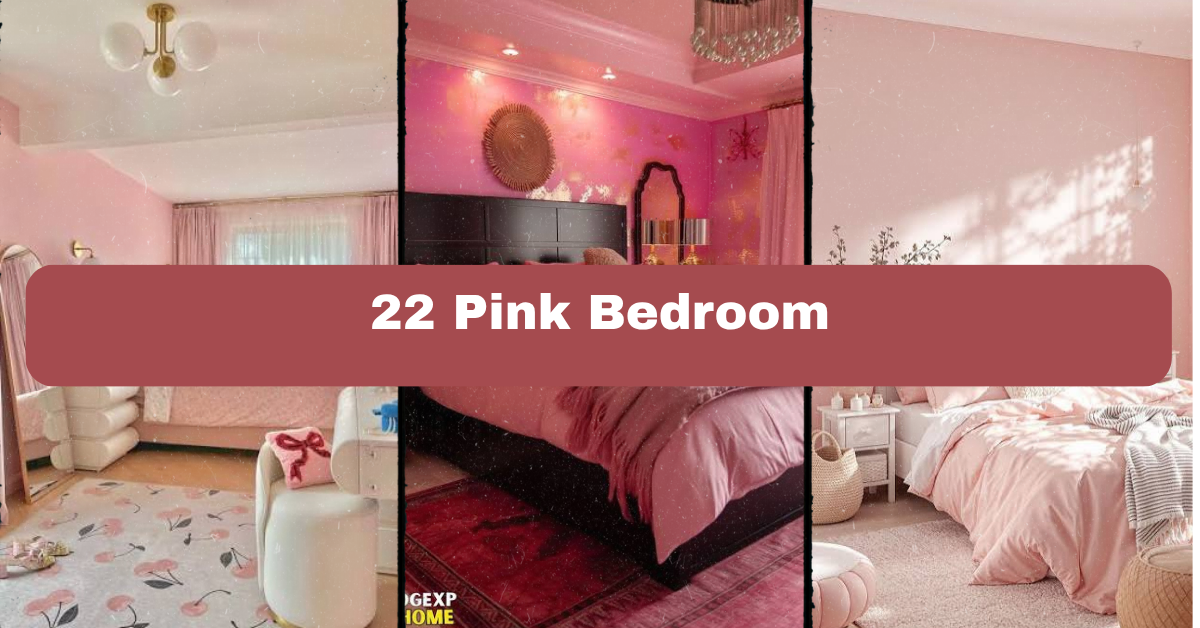
A 22 Pink Bedroom design can feel soft, modern, playful, or wonderfully grown-up when the color, lighting, furniture, and textures work together. I’ll walk you through 22 practical ideas that make pink feel stylish instead of overwhelming.
The core question is how to decorate a pink bedroom without making it look childish or too bright. Use pink as a wall color, accent, textile, or furniture shade, then balance it with neutrals, natural wood, metal, layered lighting, and textures that suit the room’s purpose and style.
You’ll find ideas for small bedrooms, shared rooms, modern spaces, romantic retreats, and budget-friendly makeovers. Let’s start with the most important choice: the right pink.
Understanding the Pink Bedroom Look
Pink is not just one color. Blush pink feels quiet and warm. Dusty rose looks mature. Coral adds energy, while mauve brings a soft, moody touch. The best pink bedroom starts with the feeling you want the room to create.
I like to treat pink as part of a full color story rather than the only color in the room. Cream, beige, white, gray, green, navy, and brown can all change how pink looks. Natural light matters, too. A shade that seems gentle in the store may look much stronger beside a sunny window.
Before buying paint or bedding, collect a few samples. Look at them in the morning, afternoon, and evening. This simple step can prevent an expensive mistake.
1. Paint One Pink Accent Wall
A single pink accent wall gives the bedroom character without covering the entire room in color. I usually recommend the wall behind the bed because it naturally becomes the room’s focal point. A dusty rose, muted blush, or warm clay pink works especially well there.
Keep the other walls soft white, warm cream, or pale beige. Choose bedding in a related shade, but avoid matching every item exactly. A cream duvet with rose pillows looks more layered than a full pink bedding set.
For an immediate update, paint the wall behind the headboard and use painter’s tape for clean edges. Test the paint first, especially if the room gets limited sunlight.
This idea suits modern, farmhouse, traditional, and apartment bedrooms because the accent wall can be as bold or subtle as the style requires. Next, let’s look at a softer way to bring pink into the room.
2. Create a Soft Blush Bedroom With Cream
Blush pink and cream make a bedroom feel calm, warm, and easy to live with. This pairing is gentler than bright pink and white, which can sometimes feel sharp. I like using cream for the walls or main bedding, then adding blush through curtains, cushions, artwork, and a small bench.
Choose fabrics with different finishes. Try linen curtains, a cotton duvet, a knitted throw, and a velvet pillow. The colors may be simple, but the textures keep the room from looking flat.
A useful tip is to choose one main blush item, such as a bedspread, and repeat the shade in three smaller places. This creates a visual connection without making the room feel too coordinated.
The cream and blush palette works beautifully in traditional, Scandinavian, cottage, and minimalist rooms. Once the base feels right, you can add a stronger pink detail.
3. Use Dusty Rose for a Grown-Up Feel
Dusty rose has a muted quality that makes pink feel more mature. It contains soft gray or brown undertones, so it pairs well with walnut wood, aged brass, charcoal, and warm white. I love this shade for bedrooms where the goal is cozy rather than sugary.
Try dusty rose on the walls with a simple white ceiling. Add a dark wood bed, ivory sheets, and brass lamps. A charcoal throw at the foot of the bed can give the room enough contrast.
To avoid a dull result, include one lively detail. A fresh plant, patterned pillow, or small piece of colorful art can wake up the palette.
Dusty rose adapts well to modern, vintage, industrial, and transitional interiors. It also provides a smooth bridge into deeper pink tones, which brings us to the next idea.
4. Pair Pink With Terracotta and Clay Tones
Pink and terracotta create a warm, earthy bedroom with a relaxed feel. Use a pale pink wall with terracotta bedding, or reverse the balance with neutral walls and pink pillows. Add clay-colored pottery, woven baskets, and warm wood for a natural finish.
This combination is especially helpful if cool pinks make your room feel sterile. Terracotta brings warmth and depth. Cream, sand, and tan can soften the stronger colors.
For a simple update, buy two terracotta pillow covers and one textured throw. Place them on a blush or neutral bed. You do not need to repaint the room to try the palette.
The look fits desert-inspired, boho, Mediterranean, and modern rustic homes. Before choosing your exact shades, use this quick guide to compare pink combinations.
Pink Bedroom Color Palette Guide
| Main pink shade | Best supporting colors | Suggested metal | Overall mood |
|---|---|---|---|
| Pale blush | Cream, light oak, soft gray | Brushed brass | Calm and airy |
| Dusty rose | Warm white, walnut, charcoal | Aged brass | Mature and cozy |
| Mauve | Taupe, mushroom, deep green | Black or bronze | Moody and refined |
| Coral pink | Sand, ivory, light wood | Matte black | Bright and energetic |
| Rose pink | Navy, cream, dark brown | Brass | Romantic and rich |
| Clay pink | Terracotta, beige, olive | Copper | Earthy and relaxed |
5. Add Pink Through the Bed and Bedding
If you rent your home or prefer flexibility, pink bedding is one of the easiest choices. A pink duvet cover can change the whole room in minutes. I suggest choosing a slightly muted shade instead of a very bright one, especially if you want the room to feel restful.
Layer the bed with white or cream sheets, a pink duvet, and two patterned pillows. Add one contrasting cushion in olive, navy, rust, or brown. This prevents the bed from looking like one solid block of color.
Choose cotton percale for a crisp feel, linen for a relaxed look, or velvet for a richer style. Washable covers are practical, particularly in children’s rooms.
Pink bedding works in nearly every home style. When you want an even faster change, focus on the pillows and throw at the end of the bed.
6. Mix Pink Pillows in Different Textures
Pink pillows add color without a major commitment. I like mixing three shapes: standard sleeping pillows, square decorative cushions, and one smaller lumbar pillow. Use different textures so the arrangement feels collected.
For example, combine a blush linen pillow, a dusty rose velvet cushion, and a cream pillow with a small geometric pattern. Keep the patterns related, but do not make them identical.
A practical rule is to use two or three pink shades rather than only one. Place the darkest shade closest to the headboard and the lightest shade in front. This creates depth.
This approach suits minimalist, boho, coastal, and classic bedrooms. After adding soft textiles, consider the surface beside the bed, where a small color detail can make a big difference.
7. Choose a Pink Bedside Table
A pink bedside table can act like a small piece of artwork. Look for a painted nightstand, a lacquered cabinet, or a simple table in muted rose. One pink table is enough if you want an unusual accent without a full furniture set.
Balance it with a neutral bed and plain bedding. Add a ceramic lamp, a small tray, and one useful item such as a clock or book. Avoid filling the tabletop with too many decorations.
If you already own a wooden nightstand, paint it instead of buying new furniture. Sand the surface, use a suitable primer, and apply thin coats of furniture paint. Test the color on the back first.
A pink nightstand works in vintage, modern, eclectic, and cottage rooms. From there, the next smart move is to give the bed a strong visual frame.
8. Install a Pink Upholstered Headboard
A pink upholstered headboard brings comfort and color to the center of the room. Choose velvet for a rich, glamorous look, linen for a casual feel, or boucle for a soft modern finish. A tall headboard can make a low ceiling feel more dramatic, while a simple rectangular design keeps the room calm.
Pair the headboard with neutral bedding so it remains the star. Cream, gray, tan, and white all work well. If the pink is bold, repeat only a small amount of that shade in the artwork or a cushion.
Measure the bed and wall carefully before ordering. The headboard should be wide enough to frame the mattress, but it should not block outlets or windows.
This idea suits hotel-inspired, modern, traditional, and romantic bedrooms. The following material guide can help you choose a headboard finish.
Pink Headboard Material Comparison
| Material | Feel | Care level | Best design style |
|---|---|---|---|
| Cotton | Simple and breathable | Low | Casual and cottage |
| Linen | Relaxed and natural | Medium | Coastal and Scandinavian |
| Velvet | Soft and luxurious | Medium | Glamorous and vintage |
| Boucle | Cozy and textured | Medium | Modern and playful |
| Faux leather | Smooth and bold | Low | Contemporary and urban |
| Performance fabric | Durable and stain-resistant | Low | Family and guest rooms |
9. Frame the Bed With Pink Curtains
Pink curtains can soften hard lines and make the bed feel more inviting. For a light, airy bedroom, choose sheer blush curtains. For privacy and better sleep, use lined drapes in dusty rose, mauve, or warm pink.
Hang the curtain rod several inches above the window frame and extend it past both sides. This makes the window look wider and allows more light into the room when the curtains are open.
Keep the curtain pattern simple if the bedding already has prints. Plain curtains often look more expensive and remain useful when your style changes.
Pink curtains fit romantic, traditional, coastal, and contemporary rooms. Once the windows are dressed, look down at the floor because a rug can connect all the colors.
10. Layer a Woven Rug for Warmth
A rug adds comfort underfoot and helps anchor a pink bedroom. A natural jute rug can balance rosy walls with earthy texture. A cream wool rug makes blush pink feel softer. A patterned rug with pink, beige, and brown can tie several furniture pieces together.
Place at least two-thirds of the rug under the bed when possible. In a small room, use runners on both sides instead. Make sure the rug does not block drawers or doors.
For easy cleaning, choose a low-pile rug in a busy bedroom. A washable rug is a smart choice for children’s rooms, pets, or anyone who enjoys breakfast in bed.
Woven rugs work in boho, farmhouse, coastal, Scandinavian, and modern spaces. Next, add light that makes the pink tones look their best.
11. Use Warm Lighting to Soften Pink
Lighting changes the way pink appears. Cool white bulbs can make blush look gray or dull, while very yellow bulbs may turn pale pink orange. I prefer warm white bulbs in the range of about 2700K to 3000K for a relaxed bedroom.
Use three layers of light: ceiling lighting for general brightness, bedside lamps for reading, and a small accent light for atmosphere. A brass lamp can warm dusty rose, while a black lamp adds a sharper modern edge.
Install dimmable bulbs if possible. The same room can feel bright in the morning and peaceful at night.
Warm lighting suits every style, but the fixture should match the room. Try a woven pendant in a boho room, a glass lamp in a traditional bedroom, or a simple globe light in a modern one.
12. Add Green Plants for Fresh Contrast
Green and pink sit beautifully together because the plant leaves add a natural contrast. A rubber plant, pothos, snake plant, or small olive tree can break up a pink wall or bedding set.
Choose planters in cream, terracotta, woven fiber, or matte black. If your room is small, use one tall plant in a corner instead of many small pots. Keep plants away from heating vents and check their light needs before buying.
A practical tip is to start with low-maintenance plants. They add life without creating another daily task.
This pairing works in tropical, boho, modern, cottage, and Scandinavian rooms. To keep the greenery and pink from competing, use the next color guide as a simple balancing tool.
Pink Bedroom Accent Color Guide
| Pink level in room | Recommended contrast | Neutral anchor | Decorative accent |
|---|---|---|---|
| Small accents only | Sage green | White | Natural wood |
| One pink wall | Olive green | Cream | Terracotta |
| Pink bedding | Navy blue | Soft gray | Brass |
| Pink headboard | Deep green | Beige | Black |
| Several pink textiles | Chocolate brown | Warm white | Aged bronze |
| Bright coral pink | Teal or cobalt | Sand | Matte black |
13. Combine Pink With Navy Blue
Navy blue gives pink a strong, classic counterpoint. This combination works particularly well when you want a bedroom that feels stylish but not overly sweet. Use navy in the headboard, an accent chair, artwork, or a throw blanket.
Keep the main pink shade soft, such as blush, rose, or dusty pink. Add white or pale gray bedding to give both colors room to breathe. Brass hardware can connect the warm pink and cool navy.
For a quick change, place a navy lumbar pillow across a pink duvet. It is a small detail with a clear visual effect.
Navy and pink suit traditional, coastal, preppy, and modern bedrooms. If you prefer a quieter contrast, replace navy with a softer natural shade.
14. Build a Pink and Sage Green Retreat
Pink and sage green create a gentle, garden-inspired bedroom. Sage is less intense than emerald or forest green, so it does not overpower pale pink. Use sage on a painted dresser, bedding border, curtains, or botanical artwork.
Choose warm white walls and natural wood furniture to keep the colors grounded. A woven basket or rattan lamp can make the room feel even more relaxed.
Do not use too many equal blocks of pink and green. Let one color lead. For example, use pink bedding with small sage accents, or sage walls with blush textiles.
This palette fits cottage, English country, modern organic, and coastal styles. For a deeper and more dramatic mood, the next idea takes pink in a richer direction.
15. Try Mauve With Deep Green
Mauve and deep green create a cozy, slightly dramatic bedroom. Mauve has gray or purple undertones, while deep green adds weight and contrast. This pairing is ideal for rooms with good natural light or people who enjoy a moody color scheme.
Use mauve on the walls or bed, then add forest green through curtains, a bench, or artwork. Keep the ceiling and trim light if the room is small. Warm brass lighting can prevent the palette from feeling too dark.
Test both paint colors together before committing. Undertones can shift under different bulbs.
Mauve and deep green suit vintage, eclectic, contemporary, and maximalist interiors. If you would rather keep the mood light, focus on pink artwork instead of full pink walls.
16. Create a Pink Gallery Wall
A gallery wall gives you a way to use pink through art rather than paint. Mix prints with rose tones, abstract shapes, botanical drawings, and simple textural pieces. Add one or two neutral works so the display does not feel too colorful.
Lay the frames on the floor first. Keep about two to four inches between most pieces, and use one larger image as an anchor. Matching frames create order, while mixed frames feel more collected.
Hang the center of the arrangement around eye level. If it sits above the bed, leave enough space so the artwork does not feel crowded.
This idea adapts to modern, vintage, eclectic, and children’s bedrooms. Use the budget guide below if you want to plan the makeover without overspending.
Pink Bedroom Budget Planning Guide
| Project | Budget-friendly choice | Mid-range choice | Higher-cost choice |
|---|---|---|---|
| Accent wall | DIY paint samples and one gallon | Premium washable paint | Professional finish or mural |
| Bedding | Cotton duvet cover | Linen-blend set | High-quality linen or velvet cover |
| Headboard | Slipcovered DIY panel | Ready-made upholstered headboard | Custom upholstered design |
| Lighting | Table lamp with warm bulb | Dimmable bedside lamps | Layered designer fixtures |
| Rug | Small washable runner | Medium wool or cotton rug | Large handwoven rug |
| Artwork | Printable art in simple frames | Local prints or framed photography | Original artwork |
| Storage | Painted baskets | Matching fabric bins | Built-in cabinetry |
17. Paint the Ceiling a Pale Pink
A pale pink ceiling adds a gentle surprise and can make the bedroom feel more complete. Choose a very light blush rather than a strong rose. The effect should be soft, almost like a warm tint in the sky.
Keep the walls neutral if you want the ceiling to be the main feature. White walls, light wood, and cream bedding will reflect the color without making the room feel closed in.
Use a flat ceiling paint to hide small surface flaws. Paint a sample board first and hold it overhead if possible, since ceiling light changes color perception.
This idea works in cottage, romantic, modern, and children’s rooms. From the ceiling, we can move to a smaller feature that adds charm without taking up floor space.
18. Add Pink Wall Shelves
Pink wall shelves combine storage and decoration. Choose floating shelves in blush, painted wood, or powder-coated metal. Use them to display books, framed art, a small plant, and one personal object.
Keep the shelf arrangement practical. Put heavier items on lower shelves and avoid placing anything fragile directly above the bed. In a child’s room, mount shelves securely into studs or use suitable wall anchors.
A useful styling rule is to leave some empty space. Crowded shelves make a small bedroom feel busy.
Pink shelves work in playful, modern, Scandinavian, and eclectic rooms. If you need storage for clothing rather than display, the next idea makes a larger impact.
19. Paint a Dresser in a Pink Shade
A pink dresser can refresh old furniture and add a strong color moment. Soft rose works well with traditional handles, while coral or raspberry can suit a more playful room. Pair the dresser with neutral walls so it does not compete with the bed.
Before painting, clean, lightly sand, and prime the surface. Remove the hardware and paint the drawers separately for a neater finish. Replace old knobs with brass, ceramic, or matte black pulls.
Use the top of the dresser for a mirror, lamp, tray, and one decorative item. Leave enough clear space for daily use.
This project suits farmhouse, vintage, modern, and colorful eclectic bedrooms. A dresser is useful, but an occasional chair can make the room feel more complete.
20. Place a Pink Accent Chair in the Corner
A pink accent chair creates a small reading or dressing area. Choose a blush slipper chair for a clean modern look, a rose velvet chair for a romantic room, or a woven chair with pink cushions for a relaxed space.
Place it near a window or beside a floor lamp. Add a small side table for a book, water glass, or candle. Make sure there is at least enough space to pull the chair out comfortably without blocking a walkway.
If the room is tight, select a narrow chair without bulky arms. For a larger bedroom, a small bench or reading chair can become a useful second seating area.
This idea works in traditional, modern, boho, and boutique hotel styles. Next, let’s use pink in a more playful way through pattern.
21. Mix Pink Patterns Carefully
Pattern can keep a pink bedroom from looking plain. Try small florals, broad stripes, gingham, geometric shapes, or soft abstract prints. The key is to vary the scale. One large pattern should be supported by smaller, quieter designs.
For example, use a floral duvet, striped pillow, and plain blush throw. Keep the colors connected by repeating cream, green, navy, or tan across the fabrics.
Avoid using more than three major patterns in a small room. If you love prints, let the walls and larger furniture stay simple.
This approach fits cottage, traditional, eclectic, and playful children’s rooms. If you want the boldest version of pink, the final idea shows how to use it with confidence.
22. Go Bold With Raspberry or Hot Pink
A bright raspberry or hot pink bedroom can feel energetic and personal. It works best when the bold shade has a clear place in the room. Paint one wall, choose a strong headboard, or use vivid bedding rather than applying the color everywhere.
Balance hot pink with white, black, pale gray, or natural wood. A black metal bed can make bright pink look modern, while light oak makes it feel friendlier. Keep decorative items edited so the color remains intentional.
If you are nervous, begin with a hot pink lamp, art print, or cushion. Live with it for a few days before making a larger change.
Bold pink works in modern, maximalist, teen, pop-art, and eclectic rooms. Now that the main ideas are covered, these final tips will help you make the whole design feel polished.
Tips for Success
- Test every paint shade on more than one wall before buying a full tin.
- Choose one main pink shade and use two related shades only as accents.
- Balance pink with at least one grounded neutral, such as cream, beige, gray, brown, or white.
- Repeat important colors in three separate areas, such as bedding, artwork, and a lamp.
- Use warm white bulbs so blush and rose tones do not look cold.
- Keep walkways clear, especially around bedside tables, chairs, and dressers.
- Mix textures such as linen, cotton, wood, metal, wool, velvet, and woven fiber.
- Select washable covers and wipeable surfaces for children’s or guest bedrooms.
- Use vertical details, such as tall curtains or a high headboard, to make a small room feel taller.
- Bring home paint cards or fabric samples before buying matching furniture.
Common Mistakes and How to Avoid Them
Using the same pink everywhere
Use one leading pink and repeat it in smaller pieces. Add contrast with cream, wood, green, navy, or charcoal.
Choosing paint without checking natural light
View samples throughout the day and under your bedroom’s actual bulbs. Pink can shift from peachy to gray depending on the light.
Making every item match
Mix finishes and shades. A room feels more personal when the bedding, furniture, artwork, and accessories coordinate without being identical.
Ignoring the room’s size
Use pale pinks, mirrors, light furniture, and fewer large accessories in a small room. Save strong colors for one feature.
Adding too many small decorations
Choose a few useful or meaningful pieces instead of filling every surface. Empty space helps the important details stand out.
Forgetting comfort
A beautiful bedroom still needs good curtains, supportive pillows, useful bedside lighting, and enough storage. Design should make daily life easier.
Similar Variations
- Blush Scandinavian Bedroom: Soft blush, pale wood, cream textiles, and simple shapes create a bright and peaceful room.
- Dusty Rose Vintage Bedroom: Dusty pink pairs with antique furniture, floral prints, brass details, and layered fabrics.
- Pink Coastal Bedroom: Pale pink joins white, sandy beige, light blue, rattan, and breezy linen.
- Pink Desert Boho Bedroom: Clay pink, terracotta, woven materials, plants, and warm wood create an earthy retreat.
- Mauve Modern Bedroom: Muted mauve combines with charcoal, clean-lined furniture, soft lighting, and minimal artwork.
- Raspberry Maximalist Bedroom: Strong pink, mixed patterns, colorful art, and contrasting furniture create a cheerful statement room.
Pink works best when it has support. Start with the mood you want, choose a pink with the right undertone, and balance it with useful furniture, comfortable textiles, and a few contrasting colors.
Whether you choose one pillow or redesign the entire room, these ideas can help you create a bedroom that feels personal, comfortable, and stylish through every version of a 22 Pink Bedroom.
Leave a Reply