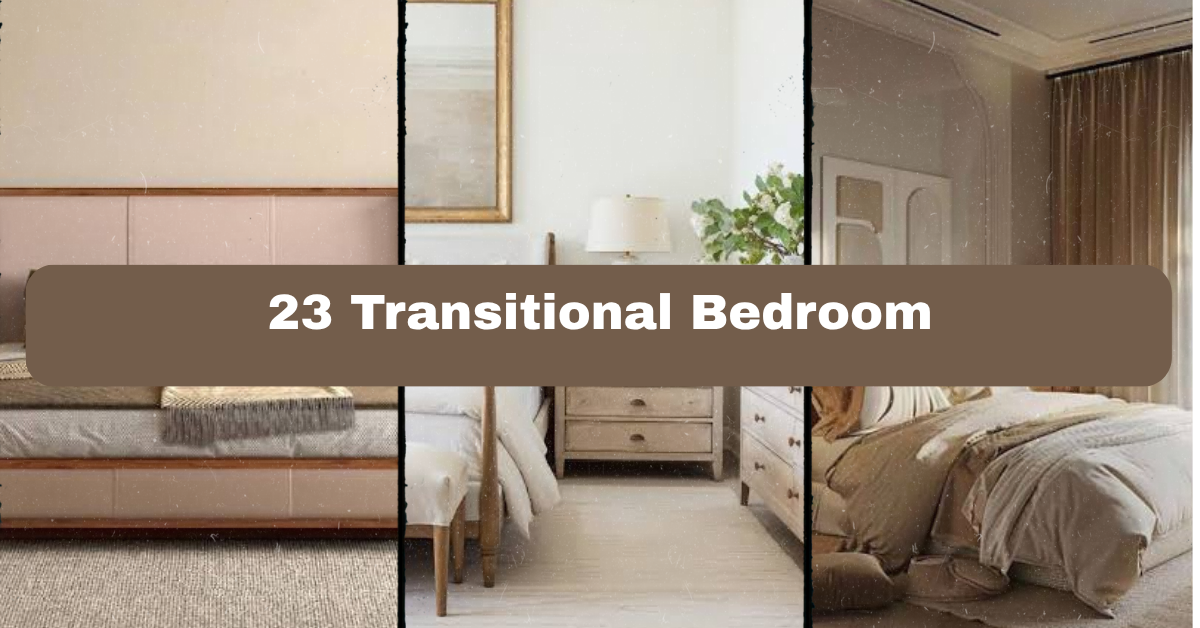
23 Transitional Bedroom ideas blend classic comfort with clean, modern lines for a room that feels polished but relaxed. I’ll walk you through 23 practical ways to create this balanced look, from furniture and color to lighting, textiles, and finishing touches.
What is a transitional bedroom? It is a bedroom style that combines traditional shapes, warm materials, and modern simplicity. Neutral colors, balanced furniture, layered textures, and restrained decor create a comfortable room that feels timeless rather than overly formal or stark.
You’ll also learn how to make the style work in small rooms, rental homes, coastal spaces, and family houses without making the design feel forced.
What Makes a Transitional Bedroom Work?
When I think about transitional bedroom design, I picture a room that sits between old and new. It may have a classic upholstered bed, but the bedding is simple. The nightstands may show traditional craftsmanship, while the lamps have clean shapes.
The goal is balance. You do not need matching antiques or a room full of modern furniture. Instead, combine familiar materials such as wood, linen, cotton, brass, and wool with uncluttered forms. A calm color palette helps everything connect.
This style also feels practical. It is warm enough for everyday living but neat enough to look finished. Start with a few strong pieces, then add texture and personality slowly. That approach keeps a transitional bedroom from becoming busy.
1. Choose an Upholstered Bed With a Clean Silhouette
An upholstered bed gives a transitional bedroom softness without looking overly fussy. Look for a simple rectangular headboard in linen, cotton, velvet, or a textured performance fabric. Light gray, warm beige, oatmeal, and muted taupe are easy choices.
Avoid too many button tufts, ornate curves, or shiny details if you want a more current look. A tall, straight headboard feels classic but still fresh. If your room is small, choose a low-profile frame so the bed does not overpower the space.
I suggest measuring the wall and leaving enough room for nightstands before ordering. A headboard that is too wide can make the room feel cramped.
This idea works in modern homes with sleek bedding, in traditional homes with turned-leg furniture, and in coastal rooms with natural linen.
Your bed sets the tone, so next, build the room around a grounded neutral palette.
2. Build a Layered Neutral Color Palette
Transitional bedrooms often use neutral colors, but neutral does not mean plain. Start with two or three base shades, such as ivory, greige, soft brown, or warm white. Then add one deeper accent, like charcoal, navy, olive, or espresso.
Use the lightest color on the walls or large bedding pieces. Bring in medium tones through curtains, wood furniture, and rugs. Save the darkest shade for small details, such as picture frames, lamps, or a throw pillow.
I like to test paint samples during both daylight and evening. A warm gray can look beige in one room and cool blue in another.
This palette adapts easily to modern, farmhouse, traditional, and coastal styles. Simply change the accent color and materials.
Once the colors feel settled, texture will keep the room from looking flat.
3. Mix Smooth and Textured Bedding
A transitional bed looks best when the bedding has several quiet layers. Start with crisp cotton sheets, then add a quilt or coverlet, a folded blanket, and two or three decorative pillows. Keep the colors related rather than identical.
For example, pair ivory sheets with a taupe quilt, a gray-beige blanket, and pillows in subtle stripes or small geometric patterns. Linen adds a relaxed feel, while sateen cotton creates a smoother, more polished finish.
Do not pile on every pillow you own. The bed should still be easy to use. I recommend keeping one sleeping pillow per person and adding only a few decorative cushions.
This approach suits modern bedrooms with simple patterns, traditional spaces with damask details, and rustic rooms with woven blankets.
A textured bed needs a comfortable floor beneath it, which brings us to the rug.
4. Anchor the Room With a Properly Sized Rug
A rug helps define the sleeping area and adds warmth underfoot. For a queen bed, an 8-by-10-foot rug usually gives generous coverage. A 9-by-12-foot rug works well in a larger room or with wider nightstands.
Place the rug under the lower two-thirds of the bed so it extends beyond both sides. If a full-size rug is not practical, use two runners along the bed or a smaller rug at the foot.
Choose wool for softness and durability, cotton for a lighter feel, or a low-pile synthetic rug for easier cleaning. Subtle patterns hide daily dust better than solid white rugs.
This idea fits every home style. Use a faded Persian pattern for traditional rooms, a simple geometric design for modern spaces, or jute for coastal and rustic bedrooms.
Now that the main furnishings feel grounded, use the chart below to refine your colors and materials.
Transitional Bedroom Palette Guide
| Base color | Supporting shade | Accent color | Best material pairing |
|---|---|---|---|
| Warm white | Greige | Charcoal | Linen, oak, black metal |
| Soft beige | Cream | Olive green | Wool, rattan, aged brass |
| Light gray | White | Navy blue | Cotton, walnut, brushed nickel |
| Taupe | Mushroom brown | Terracotta | Velvet, oak, ceramic |
| Pale blue-gray | Sand | Deep brown | Linen, cane, antique brass |
5. Pair Traditional Nightstands With Simple Hardware
Nightstands are a good place to mix old and new. Choose wood nightstands with a classic shape, such as tapered legs, framed drawers, or a slightly raised edge. Then look for simple hardware in brushed brass, matte black, or aged bronze.
You do not have to buy a matching bedroom set. In fact, two different nightstands can make the room feel more collected. Keep them similar in height and visual weight so the bed still feels balanced.
Before shopping, measure the height of your mattress. The nightstand surface should sit close to the top of the mattress for easy access.
This idea can lean modern with flat-front drawers, traditional with turned legs, or cottage-inspired with painted wood.
With the bedside pieces in place, lighting can add both function and character.
6. Use Matching Bedside Lamps for Visual Balance
Matching lamps create order, which is useful in a bedroom filled with different textures. Choose lamps with simple ceramic, glass, wood, or metal bases. A fabric shade softens the light and supports the comfortable mood.
The lamp should be tall enough to light a book without shining directly into your eyes. As a general guide, a lamp around 24 to 30 inches tall often works well on a standard nightstand, but the mattress and table height matter most.
Use warm bulbs around 2700K for a soft evening glow. Add dimmers if possible. They make a noticeable difference when you want low light before bed.
This look works across styles. Use clear glass for modern rooms, ceramic for traditional spaces, and woven shades for coastal bedrooms.
A bedside lamp solves task lighting, but the ceiling fixture can become the room’s main design moment.
7. Install a Soft, Sculptural Ceiling Light
A transitional bedroom benefits from one attractive overhead fixture. Consider a linen drum pendant, a simple chandelier, or a semi-flush mount with aged brass or brushed nickel.
The shape should have some personality, but it should not compete with the bed. Avoid fixtures that are too ornate if the rest of the room is already detailed. In a low-ceiling room, choose a semi-flush mount instead of a hanging pendant.
Check the fixture’s scale before buying. A common sizing method is to add the room’s length and width in feet, then use that number in inches as a rough diameter guide. For example, a 10-by-12-foot room may suit a fixture about 22 inches wide.
This idea adapts to modern, classic, farmhouse, and coastal interiors by changing the finish and shade material.
Next, add a second lighting layer for reading and gentle evening light.
8. Layer Lighting With Sconces or Floor Lamps
A well-designed bedroom needs more than one light source. Add wall sconces beside the bed if you want a clean look and free nightstand space. Swing-arm sconces are especially useful for reading.
If wiring is not available, choose plug-in sconces or use a slim floor lamp beside a reading chair. Keep cords organized with cord covers or clips that match the wall.
I suggest using three levels of light: overhead lighting for general use, bedside lights for tasks, and a small accent light for atmosphere. This makes the room feel more flexible.
The idea works in rentals with plug-in fixtures and in custom homes with hardwired sconces. It also suits modern and traditional rooms equally well.
Use this budget guide before buying the next major pieces.
Transitional Bedroom Budget Guide
| Project | Budget option | Mid-range option | Higher-cost option |
|---|---|---|---|
| Upholstered bed | $300 to $700 | $700 to $1,500 | $1,500 and up |
| Area rug | $100 to $300 | $300 to $800 | $800 and up |
| Table lamps | $40 to $100 each | $100 to $250 each | $250 and up each |
| Curtains | $50 to $150 per panel | $150 to $350 per panel | $350 and up per panel |
| Accent chair | $150 to $400 | $400 to $900 | $900 and up |
9. Add Full-Length Curtains in a Soft Fabric
Curtains make a bedroom feel finished and can improve privacy and light control. In a transitional space, linen blends, cotton, velvet, and textured polyester all work well.
Hang the curtain rod several inches above the window frame and extend it beyond the window on both sides. This makes the window look wider and allows more light into the room when the curtains are open.
For a calm effect, choose panels close to the wall color. If the room needs more contrast, try muted stripes or a small geometric pattern. Use blackout lining if morning light affects your sleep.
This idea fits traditional rooms with pinch pleats, modern rooms with simple panels, and coastal rooms with airy white fabric.
Curtains soften the walls, while artwork gives them a personal point of view.
10. Create One Strong Artwork Moment
A transitional bedroom does not need a gallery wall on every surface. One large artwork piece above the bed or dresser often looks more confident. Choose a landscape, abstract painting, botanical print, or black-and-white photograph.
The colors should connect with the bedding and rug. They do not need to match exactly. A painting with small hints of navy or olive can tie those accent colors into the room.
Measure the wall before shopping. Artwork above a bed usually looks best when it is about two-thirds the width of the headboard. Hang it low enough to relate to the furniture, but high enough to avoid feeling crowded.
This idea adapts to any style through the image itself. Try a calm abstract for modern, a landscape for traditional, or a seascape for coastal decor.
Once the wall art is selected, use mirrors to manage light and proportion.
11. Place a Mirror Where It Reflects Light
A mirror can make a bedroom feel brighter and more spacious. Lean a tall mirror against a wall, hang one above a dresser, or place a round mirror over a small console.
Look for frames in wood, brass, black metal, or rattan. The frame should repeat a finish already used somewhere else in the room. That small connection helps the design feel intentional.
Do not place a mirror where it reflects clutter, an unattractive view, or direct morning glare. I prefer positioning one across from a window or beside a lamp so it catches soft light.
This idea works in narrow rooms, apartments, and large primary bedrooms. A plain black frame feels modern, while carved wood or antique brass feels more traditional.
With reflective surfaces handled, bring in natural texture for a warmer finish.
12. Introduce Woven and Natural Materials
Natural materials prevent a neutral bedroom from feeling cold. Add a woven basket, cane bench, rattan tray, jute accent, or wood stool. These pieces bring gentle variation without adding loud color.
Use baskets for extra blankets, laundry, or pillows. A wood tray on the dresser can hold perfume, a candle, and a small dish. Try not to scatter woven items everywhere. Two or three well-placed pieces are enough.
Mix light and medium wood tones carefully. They can work together, but each should appear more than once so it feels connected.
This idea fits coastal, farmhouse, organic modern, and traditional homes. Change rattan to carved wood for a formal look or dark woven materials for a modern room.
The next table can help you choose materials that fit your needs.
Bedroom Material Comparison
| Material | Strengths | Watch-outs | Best use |
|---|---|---|---|
| Linen | Breathable, relaxed, textured | Wrinkles easily | Bedding and curtains |
| Cotton | Soft, washable, widely available | Can wear faster at low quality | Sheets and quilts |
| Wool | Warm, durable, naturally textured | Higher cost, may shed at first | Area rugs and throws |
| Rattan | Light, natural, casual | Can crack in very dry conditions | Baskets and furniture |
| Velvet | Rich, soft, dramatic | Shows marks and pressure | Accent chairs and pillows |
| Oak | Durable, warm, classic | Can feel heavy in dark finishes | Bedside tables and benches |
13. Use a Bench at the Foot of the Bed
A bench gives the bed a finished look and provides a useful place to sit, fold clothing, or set down a book. Choose a style that is simple and slightly narrower than the bed.
Upholstered benches in oatmeal, gray, or brown work well. A wood bench adds more structure, while a woven bench creates a relaxed touch. Make sure the height does not block drawers or walking paths.
In a small bedroom, use a narrow stool or a pair of small ottomans instead. Keep at least 24 inches of walking space around major furniture when possible.
This idea adapts to traditional rooms with turned legs, modern rooms with clean metal bases, and coastal spaces with light wood.
The bench adds function, and the next step adds a comfortable place to pause.
14. Add a Small Reading Chair
If you have an unused corner, a reading chair can make the bedroom feel more complete. Choose a compact upholstered chair with a supportive back. Add a small side table and a floor lamp so the spot feels purposeful.
Place the chair near a window if the view is pleasant. If not, angle it toward the room rather than directly at the bed. A small stool can serve as a footrest without taking up much space.
Use a durable fabric if the chair will get regular use. Performance linen or tightly woven cotton is easier to maintain than delicate velvet.
This idea works in large primary bedrooms, guest rooms, and studio apartments. A tailored chair feels modern, while a skirted chair feels more traditional.
Now keep the room useful by giving everyday items a proper home.
15. Add Closed Storage for a Calm Appearance
Transitional design looks best when surfaces are not crowded. Use a dresser, wardrobe, or storage bench with doors and drawers to hide clothing, electronics, and extra bedding.
Choose furniture with clean fronts and modest hardware. Avoid too many open shelves unless you enjoy styling them often. Closed storage also helps a guest bedroom feel welcoming because visitors have a clear place for belongings.
Before buying a dresser, measure the wall, drawer clearance, and door swing. Secure tall furniture to the wall, especially in homes with children or pets.
This approach suits minimalist modern rooms, traditional bedrooms with paneled furniture, and cottage spaces with painted storage.
Once clutter is under control, a few personal objects can stand out instead of getting lost.
16. Style Surfaces With the Rule of Three
A dresser or nightstand needs some decoration, but it does not need a full display. I like using three different types of objects: something tall, something low, and something with texture.
For example, place a lamp at the back, a small framed photo in front, and a ceramic bowl beside it. On a dresser, try a mirror, a tray, and one vase. Leave empty space around each group.
This method keeps the room collected but not crowded. Rotate small pieces seasonally instead of buying more every time you want a change.
The idea works across styles. Use pottery and wood for organic rooms, brass and glass for traditional rooms, or black accents for modern bedrooms.
Use the following size guide before adding more furniture.
Furniture Clearance Guide
| Area | Recommended minimum clearance |
|---|---|
| Walkway beside bed | 24 inches |
| Walkway at foot of bed | 30 inches |
| Space in front of dresser | 36 inches |
| Space between bed and chair | 24 to 30 inches |
| Curtain rod above window | 4 to 8 inches |
| Artwork above dresser | 6 to 10 inches |
17. Choose Hardware That Connects the Room
Hardware may seem small, but it can pull the whole bedroom together. Repeat one or two finishes across drawer pulls, lamps, curtain rods, and picture frames.
Aged brass adds warmth and works well with beige, cream, and walnut. Brushed nickel feels lighter and pairs with gray, blue, and white. Matte black creates contrast and suits modern or farmhouse rooms.
You do not need every finish to match. The key is repetition. If you use black hardware once, bring black back in a lamp base, artwork frame, or small accessory.
This idea adapts easily to every home style by changing the finish and shape. Round knobs feel classic, while slim bar pulls feel more current.
With the details connected, pay attention to the ceiling and wall surfaces.
18. Add Subtle Wall Molding or Paneling
Wall molding can give a transitional bedroom architectural interest without making it look formal. Try simple picture-frame molding, board-and-batten panels, or a narrow chair rail.
Paint the molding and wall the same color for a quiet, modern effect. Use a slightly deeper shade on the panels if you want more definition. Keep the pattern simple and evenly spaced.
If you rent, use removable molding, peel-and-stick trim, or wallpaper with a panel design. Always test adhesive products on a hidden area first.
This idea works in older homes, new builds, modern apartments, and traditional houses. The scale of the pattern matters more than the style of the property.
Walls are one layer, and the ceiling can add an unexpected finishing touch.
19. Paint the Ceiling a Gentle Color
A pale blue, soft beige, or muted gray ceiling can make a bedroom feel more designed without becoming dramatic. Keep the wall color nearby on the color wheel so the transition feels smooth.
In a small room, use a lighter ceiling to create an airy effect. In a large room with high ceilings, a slightly deeper color can make the space feel more comfortable.
Use a flat ceiling paint to hide small imperfections. If you are unsure, paint a sample board and view it throughout the day.
This idea can suit coastal bedrooms with pale blue, traditional rooms with warm cream, or modern rooms with soft gray.
A thoughtful ceiling color pairs nicely with the right window and sleep treatments.
20. Control Light With Layered Window Treatments
Combine sheer panels with blackout shades or lined curtains when you want flexibility. Sheers filter daylight, while blackout layers support better sleep and privacy.
Roman shades work well in rooms with limited wall space. Drapery panels are better when you want to emphasize tall windows. Choose inside-mount shades for a clean look or outside-mount treatments to make a window appear larger.
Measure each window carefully. Record the width, height, frame depth, and distance to nearby furniture before ordering.
This idea fits modern bedrooms with woven shades, traditional rooms with tailored drapes, and coastal spaces with white linen panels.
Now consider how the design changes when your bedroom is smaller than average.
21. Use Space-Saving Furniture in a Small Bedroom
A transitional style does not require a large room. Choose a bed with built-in drawers, slim nightstands, and wall-mounted lighting. Skip bulky furniture with deep decorative edges.
Use one large rug instead of several small rugs. Hang curtains high to create a taller visual line. A mirror across from a window can also help bounce light around the room.
Choose furniture that serves two purposes. A storage ottoman can hold blankets, and a narrow dresser can act as a media console or vanity.
This idea works especially well in apartments, guest rooms, and modern homes. In a traditional small room, select furniture with delicate legs rather than heavy bases.
When space is limited, color discipline becomes even more important.
22. Create a Transitional Bedroom on a Budget
You can get this look without replacing everything. Start by keeping the best furniture you already own. Paint mismatched pieces, change drawer hardware, and replace worn lampshades before shopping for new items.
Spend more on the pieces you touch every day, such as the mattress, sheets, and main chair. Save on artwork, baskets, and decorative pillows by shopping secondhand or making simple changes yourself.
Use one new accent color to connect old and new pieces. A navy throw, warm wood tray, or brass lamp can make a tired room feel more intentional.
This budget approach works in rentals, starter homes, traditional houses, and modern apartments.
A final style decision can make the room feel truly personal.
23. Add Personal Details Without Losing Balance
A transitional bedroom should feel like yours, not like a showroom. Add a framed family photo, a favorite travel object, a handmade vase, or a book stack that you actually enjoy.
Limit sentimental pieces to a few strong favorites. Too many small items can make the room feel crowded. Choose objects in colors and materials that already appear in the space.
I also like adding one unexpected detail, such as a vintage stool, a patterned pillow, or a sculptural branch. It gives the room character while the neutral foundation keeps everything calm.
This idea adapts to any home style because personal objects are what make the design specific to you. Once those details are in place, the room should feel balanced, useful, and comfortable.
Tips for Success
- Measure every wall, doorway, window, and furniture clearance before ordering.
- Choose a maximum of three main colors and repeat them throughout the room.
- Mix at least three textures, such as linen, wood, and wool.
- Use warm white bulbs instead of cool blue bulbs for a more restful mood.
- Keep large furniture simple so artwork and textiles can add personality.
- Repeat metal finishes at least twice so they look intentional.
- Leave some open surface space. A calm room needs visual breathing room.
Common Mistakes and How to Avoid Them
Using too many beige shades
Choose beige tones with similar undertones. Test fabric and paint samples together before committing.
Buying a rug that is too small
Select a rug large enough to reach beyond the sides of the bed. If that is not possible, use coordinated runners.
Matching every furniture piece
Use related shapes and finishes instead of buying a full matching set. A collected room usually feels more relaxed.
Ignoring lighting temperature
Choose bulbs around 2700K for warm, comfortable light. Add dimmers for better control at night.
Filling every surface with decor
Group objects in small arrangements and leave open areas on dressers and nightstands.
Mixing too many design styles
Pick one main direction, such as modern transitional or coastal transitional, then add small touches from other styles.
Similar Variations
- Modern Transitional: Uses clean furniture, simple artwork, black accents, and very little ornament.
- Traditional Transitional: Adds classic wood furniture, tailored upholstery, brass details, and refined patterns.
- Coastal Transitional: Combines soft blue, sandy beige, linen, light wood, and relaxed woven accents.
- Farmhouse Transitional: Blends practical wood furniture, cotton textiles, soft white, and aged metal.
- Organic Transitional: Focuses on natural wood, stone, wool, clay, and earthy colors with simple forms.
- Glam Transitional: Adds velvet, polished metal, layered lighting, and richer accent colors while keeping the shapes restrained.
A successful transitional bedroom is less about buying a matching collection and more about making thoughtful connections. Keep the foundation neutral, mix classic and modern forms, layer useful textures, and leave room for personal details.
When each piece supports comfort and balance, these 23 Transitional Bedroom ideas can help you create a room that feels timeless, warm, and completely your own.
Leave a Reply