
I’ve pulled together 24 moody living room ideas that actually work in real homes, not just in perfectly styled magazine shoots. If you’ve ever scrolled through pictures of dark, cozy living rooms and wondered “can I actually pull this off in my house,” I get it. That’s exactly why I put this list together.
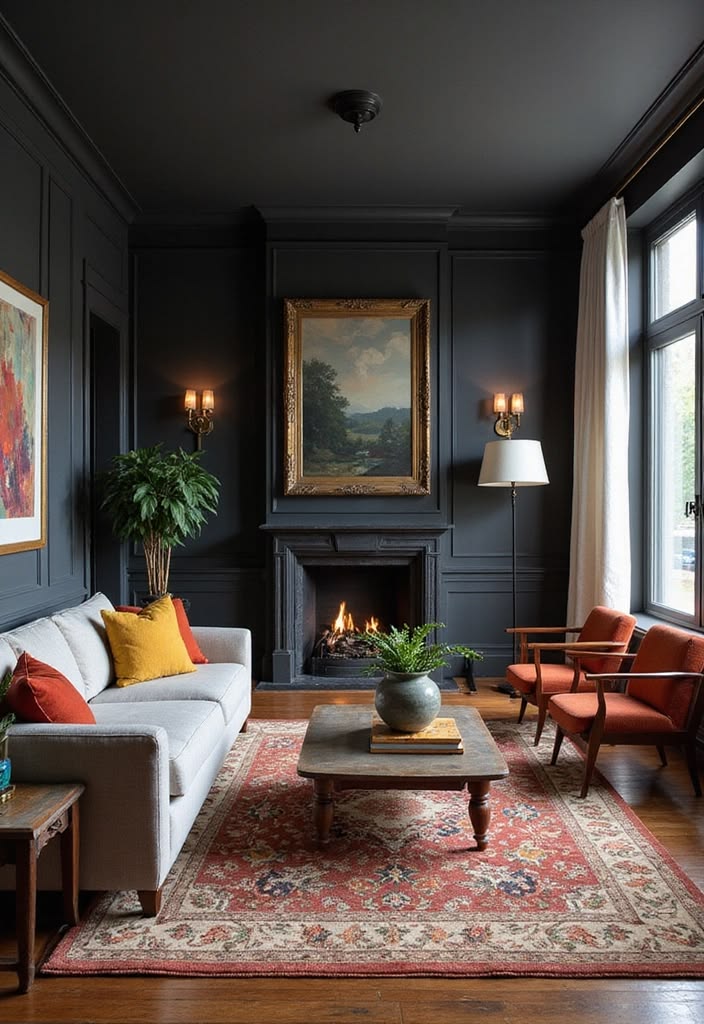
Moody living rooms use deep, saturated colors like charcoal, forest green, or deep navy paired with warm lighting and rich textures to create a cozy, dramatic space. This design style trades bright and airy for intimate and layered, often using dark wall paint, plush fabrics, and warm-toned lighting to pull the whole room together.
Stick around and I’ll walk you through 24 specific ways to bring this look into your own space, plus the mistakes that trip people up and how to dodge them.
What Exactly Is a Moody Living Room?
So what makes a living room “moody” anyway? Basically, it’s a space that feels rich, warm, and a little dramatic instead of bright and minimal. Think deep wall colors, soft lamp light instead of harsh overheads, and textures like velvet, leather, and wood that all pack visual weight. It’s the opposite of the all-white, super airy look that’s been everywhere for years.
I like to think of moody rooms as the ones that make you want to curl up with a book and never leave. They feel like a hug. And honestly, once you start layering in the right colors and textures, this style is pretty forgiving. Let’s get into the ideas.
1. Paint Your Walls a Deep Charcoal Gray

Charcoal gray is probably the easiest gateway color into moody design. It’s darker than your typical greige but not as intense as pure black. This shade works because it acts like a neutral, so your furniture and art still pop against it.
Pick a matte or eggshell finish so the wall doesn’t look flat or too shiny under lamp light. One practical tip: paint a large sample swatch and look at it morning, afternoon, and night before committing, since charcoal shifts a lot depending on light.
This works in modern spaces with clean furniture lines, but it also softens up nicely in traditional rooms with crown molding and vintage furniture. Once your walls are set, you’ll want lighting that actually flatters that dark backdrop, which brings me to my next idea.
2. Layer in Warm, Low Lighting Instead of Overhead Lights
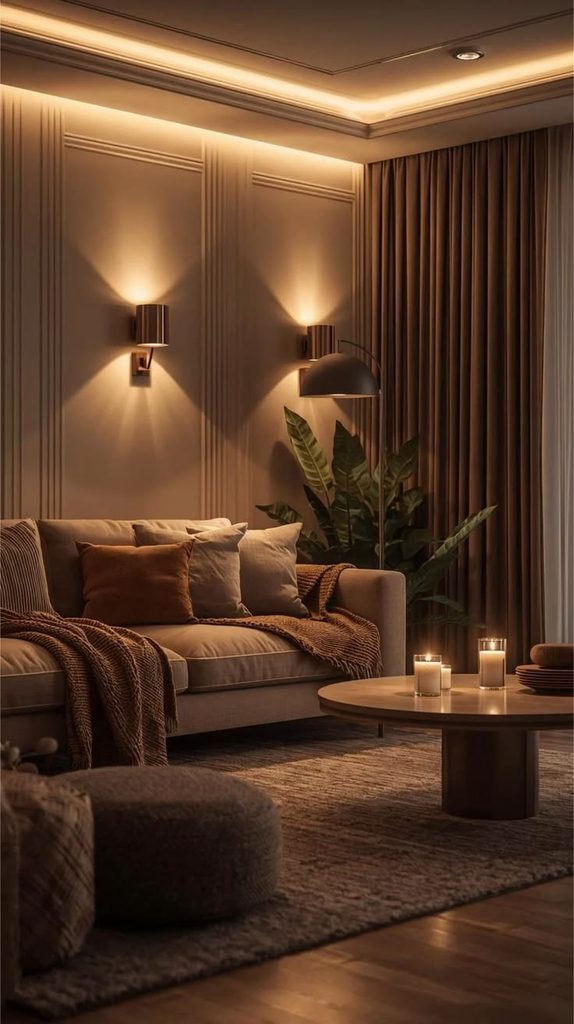
Overhead lighting is the enemy of moody rooms. It’s harsh and flat and kills the whole vibe. Instead, go for table lamps, floor lamps, and maybe a dimmer switch on any ceiling fixture you do keep.
Warm bulbs (look for 2700K on the packaging) give off that golden, cozy glow instead of a cold white light. Try placing at least three light sources around the room at different heights: one lamp on a side table, one floor lamp in a corner, and maybe a small accent light near a bookshelf.
This trick works no matter what style you’re going for, whether it’s farmhouse, industrial, or coastal. Once the lighting is dialed in, the next step is picking furniture that can hold its own against darker walls.
3. Choose a Statement Sofa in a Rich, Saturated Color

Your sofa is the biggest piece of furniture in the room, so it needs to carry some visual weight. Deep emerald, burgundy, or navy velvet sofas look incredible against dark walls. Even a charcoal or espresso leather sofa adds depth without feeling boring.
Avoid anything too glossy or shiny since it can feel cold. Velvet, boucle, and soft leather all add texture that plays well with moody lighting. A quick tip: if you’re not ready to commit to a colored sofa, start with a neutral one and add colorful throw pillows and a blanket instead.
Modern homes might lean toward a low-profile navy sofa, while traditional spaces do well with a rolled-arm burgundy piece. Now that your main seating is set, let’s talk about what goes on the walls around it.
4. Hang Dark, Framed Art With Gold or Black Frames
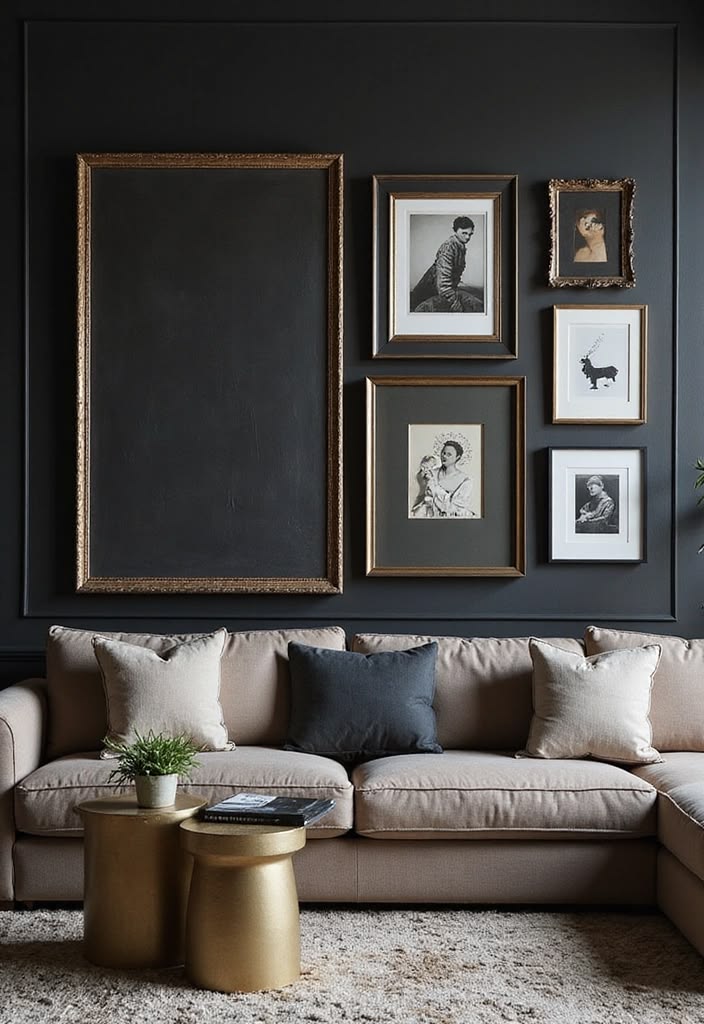
Art sets the tone fast. In a moody room, go for pieces with dark backgrounds, moody landscapes, or abstract pieces with deep color palettes. Skip anything too bright or pastel since it’ll clash with the vibe you’re building.
Frame choice matters here. Black frames feel modern and sharp. Gold or brass frames add warmth and a little glam. Try grouping three to five pieces in a gallery wall instead of one giant piece, since the layered look feels more intentional.
This idea flexes easily. Coastal homes can use dark botanical prints, while traditional spaces might lean into oil-style portraits or landscapes. Speaking of layering, let’s move on to textiles, which do a ton of heavy lifting in moody design.
Color Palette Combinations for Moody Living Rooms
| Palette Name | Wall Color | Accent Colors | Best For |
|---|---|---|---|
| Forest Night | Deep forest green | Brass, cream, burgundy | Traditional, cottagecore |
| Midnight Study | Navy blue | Warm wood tones, gold | Modern, transitional |
| Smoky Charcoal | Charcoal gray | Rust, mustard, black | Industrial, minimalist |
| Wine Cellar | Deep burgundy | Camel, black, gold | Traditional, eclectic |
| Espresso Warmth | Warm dark brown | Terracotta, cream, olive | Farmhouse, rustic |
5. Add a Plush Area Rug in a Deep, Textured Weave

A rug grounds the whole room, literally. In a moody space, skip the light, airy jute rugs and go for something with depth, like a dark wool rug or a Persian-style rug with rich reds and blues woven in.
Texture matters just as much as color here. A thick pile rug feels more luxurious underfoot and adds warmth to the whole space. My tip: size your rug so all your main furniture pieces sit at least partially on it, since a too-small rug makes the room feel disconnected.
Modern rooms do well with solid dark rugs, while eclectic or traditional spaces can handle busier patterns. Once your floor is sorted, curtains are the next big texture opportunity.
6. Hang Floor-to-Ceiling Curtains in a Heavy Fabric
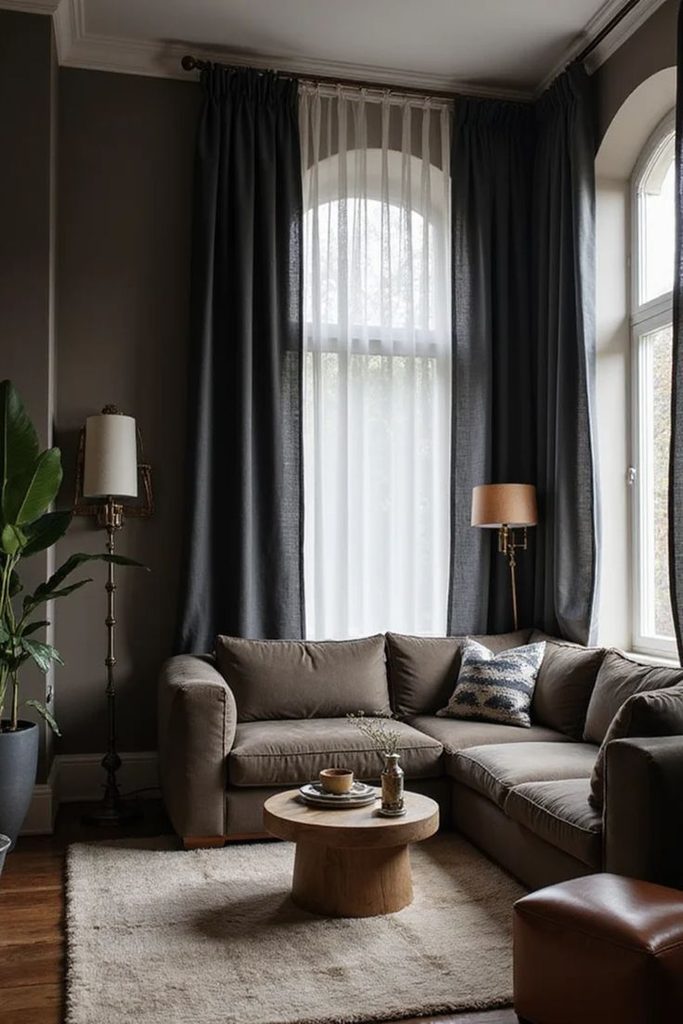
Curtains do double duty in a moody room. They block light when you want it dim, and they add serious texture and drapery. Velvet curtains in deep colors like emerald or wine are a classic choice, but even a heavy linen in charcoal works great.
Hang your curtain rod close to the ceiling, not right above the window frame. This makes the ceiling feel taller and the window feel bigger, which balances out all that visual weight from dark walls and furniture.
This works across styles. Coastal homes might choose a deep navy linen, while glam spaces go for full velvet with a subtle sheen. Now let’s talk about the smaller layers that pull a room together: pillows and throws.
7. Mix Textures With Velvet, Boucle, and Chunky Knit Throws

Moody rooms live or die by texture. If everything is smooth and flat, the room feels cold even with dark colors. Mixing velvet pillows, a boucle ottoman, and a chunky knit throw blanket adds dimension you can actually feel.
Stick to a tight color palette so the mixed textures don’t feel chaotic, maybe two or three colors max across all your soft furnishings. A good rule: if your sofa is a solid color, add pattern through pillows, and vice versa.
This idea works in basically every design style since texture is universal. Scandinavian moody rooms lean into knits and wool, while glam rooms go heavier on velvet and silk. Speaking of pulling things together, let’s talk wood tones next.
8. Bring in Dark Wood Furniture for Grounding Weight
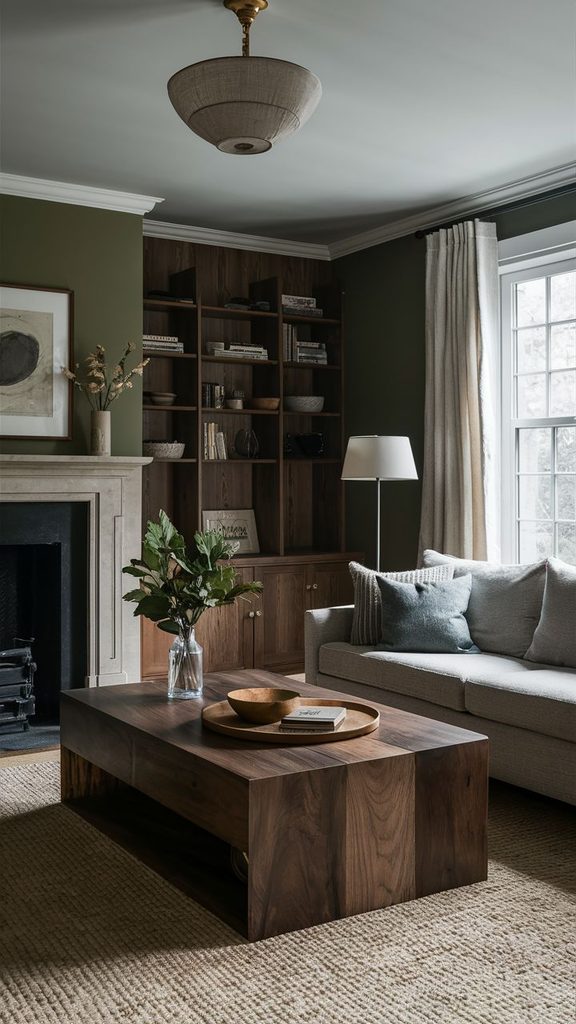
Dark wood furniture, think espresso, walnut, or ebony finishes, adds a grounding element that keeps a moody room from feeling too soft or floaty. A dark wood coffee table, media console, or bookshelf gives your eye something solid to land on.
Mixing wood tones is fine, but keep them all on the warmer or cooler side so they don’t clash. My tip: if you already have lighter wood pieces, a coat of dark stain or paint can transform them without buying new furniture.
Traditional homes love ornate dark wood pieces, while modern spaces prefer clean-lined, simple silhouettes in the same dark tones. Now that your furniture’s grounded, let’s add some greenery to soften things up.
9. Add Deep Green Houseplants for Organic Contrast

Plants bring life into a moody room without breaking the color scheme. Deep green leafy plants like a fiddle leaf fig, snake plant, or pothos look incredible against dark walls, almost like living art.
Choose planters in matte black, brass, or terracotta to keep the tones consistent with the rest of the room. A quick tip: cluster two or three plants of different heights together instead of scattering single plants around, since grouping creates more visual impact.
This works everywhere, honestly. Boho spaces can go wild with lots of plants, while minimalist moody rooms might stick to just one or two statement plants. Next, let’s talk about a design element people often forget: the ceiling.
10. Paint the Ceiling to Match or Complement the Walls

This one surprises people, but painting your ceiling the same color as your walls (or a shade darker) makes a moody room feel enveloping instead of chopped up. It’s sometimes called “the fifth wall” technique.
This trick works best in rooms with decent natural light, since an all-dark room with no windows can start to feel like a cave. If your room is smaller or darker already, try a slightly lighter shade on the ceiling instead of an exact match.
Modern and transitional homes have really embraced this look lately. Traditional spaces can do it too, especially with added crown molding painted in a contrasting trim color. Once your ceiling’s handled, let’s look at how fireplaces fit into this whole aesthetic.
11. Use a Fireplace as a Moody Focal Point
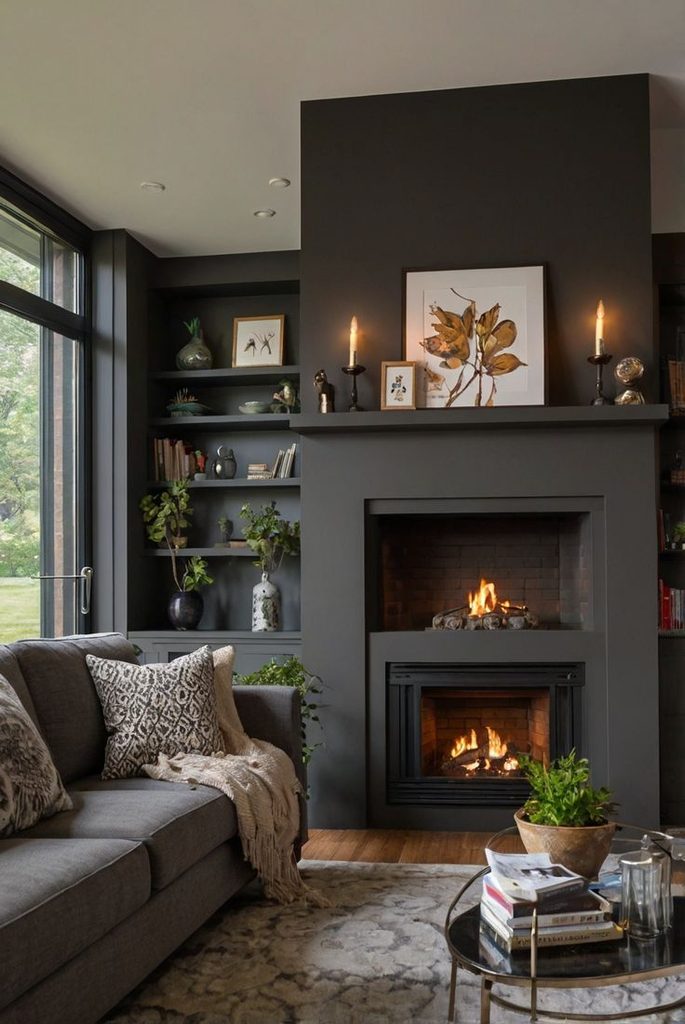
If you’re lucky enough to have a fireplace, lean into it. A dark stone or painted brick surround instantly adds drama. Even a simple black metal fireplace surround can transform a plain living room into a moody focal point.
Style the mantel with a mix of candles, a dark-framed mirror, and maybe one or two decorative objects in brass or matte black. My tip: keep the mantel styling asymmetrical rather than perfectly matched on both sides, since it looks more natural and collected-over-time.
This idea shines in traditional and farmhouse homes especially, though modern spaces can pull it off with a sleek linear fireplace design. Now, let’s talk about something a lot of people overlook: the ceiling fixtures themselves.
12. Swap Bright Overhead Fixtures for Statement Lighting

Even though I said to avoid harsh overhead lighting earlier, that doesn’t mean you skip ceiling fixtures altogether. A statement chandelier or pendant light in black metal, aged brass, or smoked glass adds drama while still giving you flexible lighting options with a dimmer.
Pick a fixture with a warm bulb and dim it low most nights. Save full brightness for cleaning or hosting a bigger group. A good tip: hang pendant lights lower than you think you should, since it creates a cozier, more intimate feeling in the room.
Industrial spaces love black metal cage fixtures, while glam rooms might choose a smoked glass chandelier. Speaking of focal points, let’s talk about bookshelves next.
Budget Tiers for Moody Living Room Makeovers
| Budget Level | Approximate Cost | What You Can Do |
|---|---|---|
| Starter | $200–$500 | New paint color, throw pillows, a rug, and lamps |
| Mid-Range | $800–$2,000 | Paint plus one statement furniture piece (sofa or chair), new curtains, art |
| Full Refresh | $3,000–$6,000 | New sofa, rug, curtains, lighting fixtures, and a few art pieces |
| Complete Overhaul | $8,000+ | Full furniture swap, custom paint work, new flooring, fireplace update |
13. Style Open Shelves With Dark Books and Curated Objects

Open shelving in a moody living room becomes basically a mini gallery. Group books by color, favoring dark covers or removing dust jackets for a uniform look. Mix in small sculptures, candles, or a small framed print between book stacks.
Leave some negative space on each shelf. Packed-tight shelves feel cluttered instead of curated. A simple tip: stack some books horizontally and others vertically to create visual rhythm across the shelf.
This idea works in almost any home style since it’s really about styling technique, not furniture. Eclectic homes can go bold with more objects, while minimalist moody spaces keep it to just books and one or two decor pieces. Next, let’s talk about a detail that ties a room together: hardware and metal finishes.
14. Stick to One or Two Metal Finishes Throughout the Room

Mixing brass lamp bases, black curtain rods, and chrome picture frames can feel messy fast. In a moody room, picking one dominant metal finish (like aged brass or matte black) and one secondary finish keeps everything feeling pulled together.
Brass and black is a classic, reliable combo for moody spaces. It adds warmth (brass) and depth (black) without competing. My tip: do a quick walk around your room and note every metal finish you currently have, then slowly swap out the odd ones over time.
This detail matters across every style, though glam rooms lean brass-heavy while industrial spaces go almost all black. Now, let’s talk about something that can make or break the mood: window treatments beyond just curtains.
15. Layer Sheer and Blackout Curtains for Flexible Light Control

Sometimes you want soft, filtered light. Other times you want the room fully dark and cozy for movie night. Layering a sheer curtain underneath a heavier blackout curtain gives you both options without extra hardware.
Choose a sheer in a warm, slightly smoky tone rather than bright white, so it doesn’t clash with your dark walls when light passes through it. A practical tip: use a double curtain rod so both layers hang and move independently.
This setup works in every home style. It’s especially useful in coastal or farmhouse moody rooms where you still want some daytime brightness. Now let’s move to a detail that often gets skipped: mirrors.
16. Add a Large Dark-Framed Mirror to Bounce Light Around
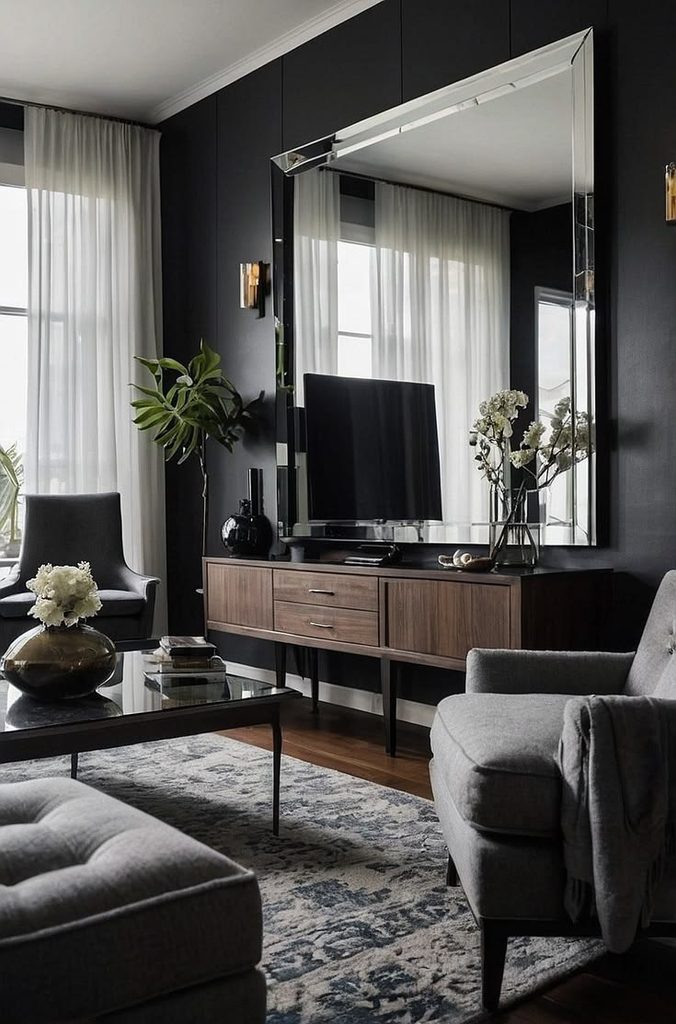
Dark rooms need help bouncing light around, and a big mirror does exactly that. A large mirror in a black, bronze, or aged brass frame adds both function and style. Lean it against a wall or hang it above the sofa or fireplace.
Position it across from a window if possible, so it reflects natural light deeper into the room. My tip: go bigger than you think you need. An oversized mirror almost always looks better than a small one in a moody space.
Traditional homes love ornate mirror frames, while modern rooms prefer simple, thin-framed round or rectangular mirrors. Next, let’s talk about a smaller detail that adds a lot: candles and ambient flame.
17. Use Candles and Warm Ambient Flame for Instant Coziness

Nothing says “moody and cozy” quite like candlelight. Cluster a few pillar candles on a tray on your coffee table, or line a few on the mantel. The flickering warm light adds texture and softness that lamps alone can’t replicate.
Choose candles in dark holders or simple glass to keep the look intentional rather than cluttered. A quick tip: unscented candles are better for living rooms since strong scents can clash with other stuff going on in your home, like cooking smells.
This works in every style, from boho to traditional to modern. Just adjust the candle holders to match your existing metal finishes. Now, let’s talk about seating beyond the main sofa.
18. Add an Accent Chair in a Bold Pattern or Deep Color
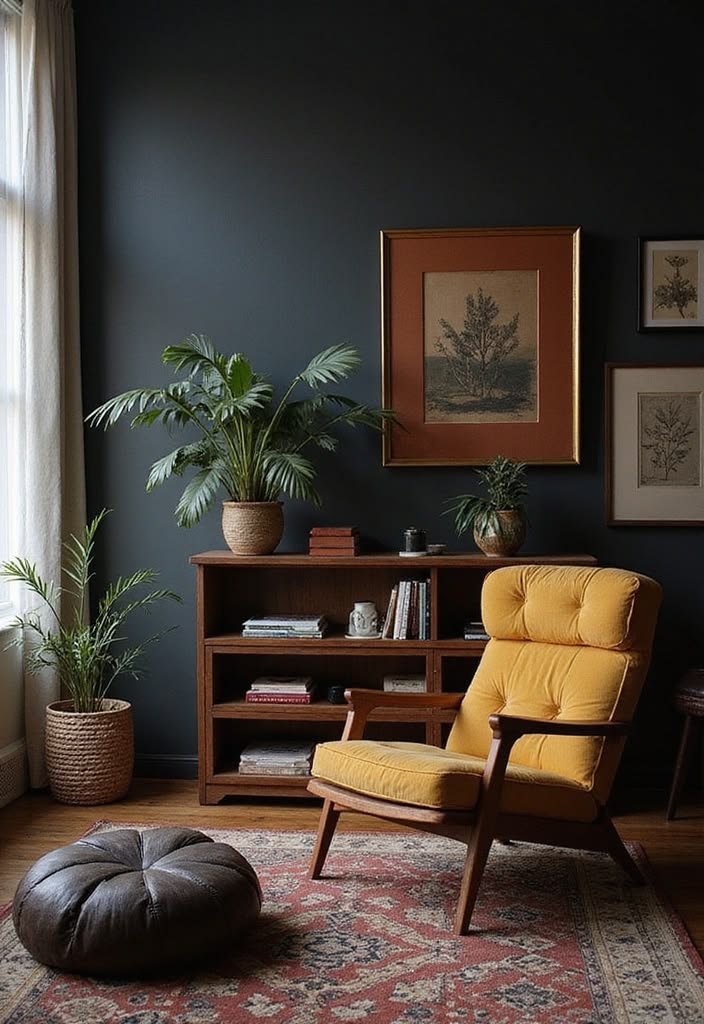
A single accent chair gives you a chance to add personality without redoing the whole room. Think a deep green velvet armchair, a leather wingback, or even a patterned chair in a rich jewel tone.
Place it at an angle to the sofa rather than directly across, which creates a more relaxed, conversational layout. My tip: if your sofa is a solid neutral, this is the spot to go bold with pattern or color.
Traditional homes might choose a wingback chair, while modern spaces lean toward a sleek barrel chair. Once your seating is sorted, let’s talk about how to layer in pattern through pillows without overdoing it.
19. Layer Pillows in Varying Sizes but Matching Color Families

Too many random pillow patterns can make a moody room feel busy instead of cozy. Stick to one color family (like deep reds, rust, and burgundy) but vary the textures and sizes. Two large pillows, two medium, and one small lumbar pillow is a good formula.
Mix solid velvet with one patterned pillow for interest, but don’t go overboard. My tip: odd numbers of pillows (three or five) tend to look more natural than even numbers.
This works across styles just by adjusting the color family. Coastal moody rooms might use deep blues and greens, while farmhouse spaces lean into rust and cream. Next, let’s talk about a detail that’s easy to forget: your coffee table styling.
20. Style Your Coffee Table With Layered Trays and Textures
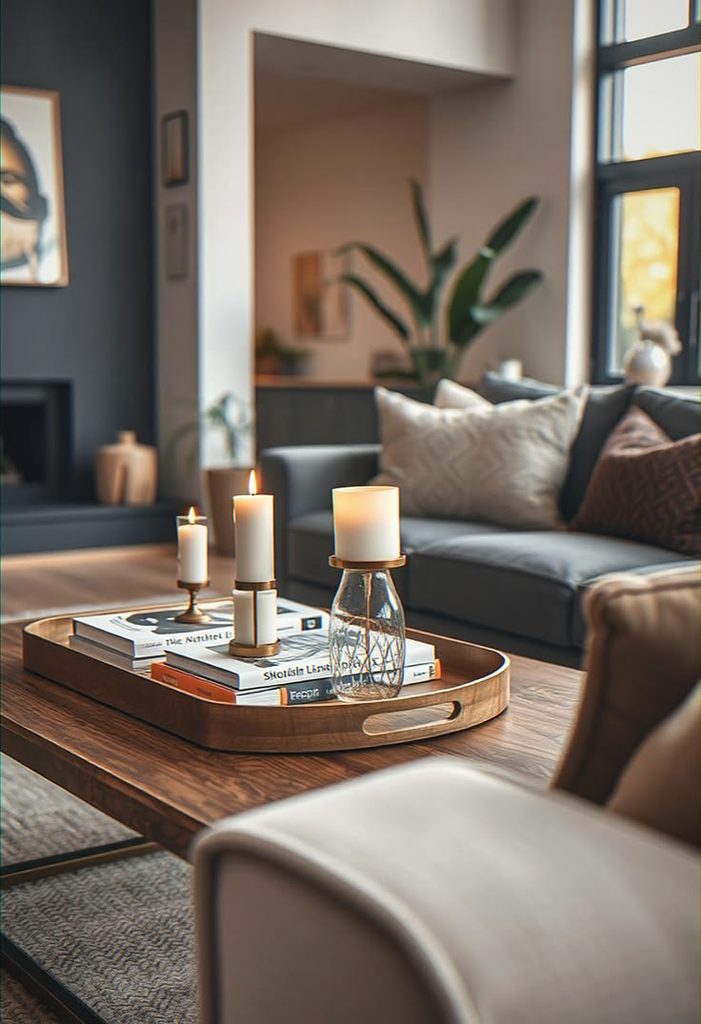
An empty coffee table feels unfinished in a moody room. Layer a tray, a stack of dark books, a small plant, and maybe a candle. Keep the tray as your base so everything feels contained rather than scattered.
Vary the heights of what you place on it. A tall vase, a short candle, and a flat stack of books creates a nice visual rhythm. My tip: leave about a third of the table empty so it doesn’t feel overloaded.
This styling trick works everywhere, though minimalist rooms should stick to two or three objects max, while eclectic spaces can layer in more. Now, let’s talk about an often-overlooked spot: the entryway into your living room.
21. Use a Darker Trim or Baseboard Color Instead of Bright White
Bright white trim can feel jarring against dark walls. Instead, try painting your trim and baseboards a soft off-white, warm gray, or even matching them closer to your wall color for a seamless look.
This small swap makes a bigger difference than people expect. My tip: if you’re not ready to commit to dark trim everywhere, start with just the living room and see how you like living with it before doing the whole house.
Modern homes often go for a monochromatic look with trim matching walls closely. Traditional spaces might keep white trim but choose a warmer white instead of a stark, cool one. Next, let’s talk about textiles on the floor beyond just the main rug.
22. Add a Smaller Layered Rug Under the Coffee Table

If your main rug is solid, adding a smaller patterned rug layered on top under just the coffee table area adds texture without overwhelming the room. This trick is especially useful in rectangular rooms where one rug alone can look plain.
Choose a smaller rug with a pattern that includes at least one color already in your room’s palette, so it feels connected rather than random. My tip: layering rugs also helps define separate zones in an open-concept living space.
This works well in boho, eclectic, and traditional moody rooms especially. Modern spaces might skip this one in favor of a single clean rug instead. Now, let’s talk about a final furniture piece that often gets ignored: the side table.
23. Choose Side Tables With Dark Finishes and Interesting Shapes

Side tables are small, but they add a lot of personality when chosen well. A dark wood side table with an interesting shape, like a curved pedestal or a carved detail, adds visual interest next to your sofa or chair.
Avoid matching side tables perfectly if you can. Mixing two different but complementary dark side tables (one round, one square, for example) feels more collected and personal. My tip: make sure whatever side table you pick is tall enough to comfortably reach from your seat, usually right around the same height as your sofa arm.
Modern homes like sculptural, simple side tables, while traditional spaces might choose something with carved wood details. Finally, let’s wrap up with one last idea that ties everything together.
24. Keep One Element Light to Prevent the Room From Feeling Too Heavy

This last idea is important. Even in the moodiest room, you need one lighter element to keep things from feeling like a cave. This could be a cream-colored throw blanket, a lighter wood coffee table, or even just one pale pillow on an otherwise dark sofa.
This small contrast actually makes the dark colors look richer by comparison. My tip: think of it like seasoning in cooking. Just a pinch of light keeps the whole room balanced instead of flat.
This rule applies no matter what style you’re working in. Whether you’re going modern, coastal, or traditional, that single light touch keeps the moody vibe feeling intentional instead of oppressive.
Tips for Success
- Test paint colors at different times of day before committing to a full wall
- Layer at least three different light sources for a warm, flexible glow
- Keep your metal finishes limited to two per room for a cohesive look
- Add texture through fabric, not just color, since flat surfaces read as cold
- Leave one light element in the room so the mood feels intentional, not heavy
- Shop secondhand for dark wood furniture pieces to save money on this look
- Use a dimmer switch on any overhead fixture you keep in the room
Common Mistakes and How to Avoid Them
Using only overhead lighting
: Swap it out for lamps and dimmers so the light feels warm instead of harsh and flat.
Painting the whole room dark with no light contrast
: Add at least one lighter element, like a cream throw or pale rug, to keep the space from feeling like a cave.
Mixing too many metal finishes
: Stick to one or two finishes throughout the room, like black and brass, for a cohesive feel.
Choosing a rug that’s too small
: Size up so your main furniture pieces sit at least partially on the rug.
Skipping texture in favor of color alone
: Mix velvet, boucle, wood, and knit textures so the room feels layered instead of flat.
Overcrowding shelves and surfaces
: Leave breathing room between decor objects so the styling feels curated, not cluttered.
Similar Variations
- Dark Academia Living Room – Leans into vintage books, leather furniture, and warm wood tones for a scholarly, cozy feel.
- Moody Coastal Living Room – Combines deep navy and green tones with lighter driftwood accents for a beachy but still dramatic look.
- Industrial Moody Living Room – Uses black metal, exposed brick, and dark leather for an edgier, urban feel.
- Traditional Moody Living Room – Mixes deep jewel tones with classic furniture silhouettes and ornate frames.
- Scandinavian Moody Living Room – Balances dark walls with light wood floors and minimal, functional furniture for a softer take on the trend.
- Boho Moody Living Room – Layers rich patterns, plants, and warm lighting for a more eclectic, collected-over-time feel.
At the end of the day, going moody in your living room isn’t about making the space feel dark and gloomy. It’s about layering warmth, texture, and rich color so the room feels like somewhere you actually want to spend time. Start small if you need to, maybe just a paint color or a new rug, and build from there.
I hope these 24 moody living room ideas gave you a clear starting point and enough real, practical steps to actually make it happen in your own home.
Leave a Reply