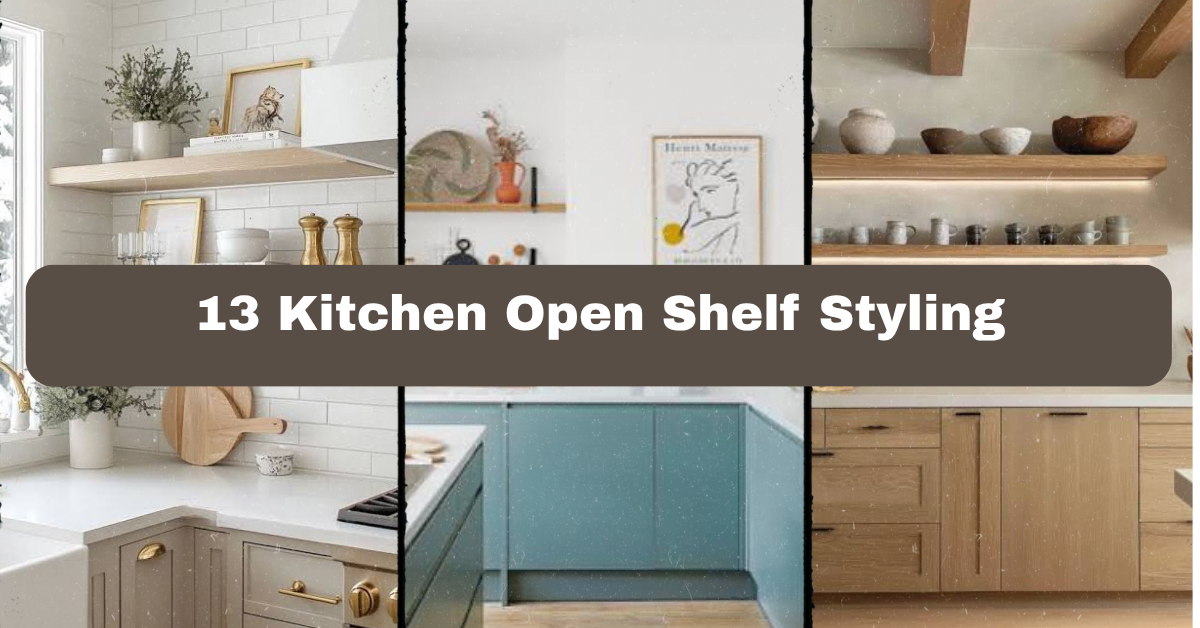
13 Kitchen Open Shelf Styling can make an ordinary kitchen feel warm, useful, and personal without adding visual clutter.
The core question is how to style open kitchen shelves attractively and practically. The best approach combines daily dishes, varied heights, natural textures, a limited color palette, useful storage, and enough empty space for the shelves to breathe.
I’ll walk you through 13 shelf ideas, from simple plate stacks to lighting and seasonal updates. You’ll also get practical sizing guides, color combinations, and easy fixes for common mistakes.
What Is Kitchen Open Shelf Styling?
Kitchen open shelf styling means arranging dishes, cookware, food containers, plants, and decorative pieces on wall-mounted shelves in a planned way. The goal is not to fill every inch. It is to make useful items look inviting while keeping the kitchen easy to use.
I like to think of shelves as a small display area with a job to do. Plates should be easy to grab. Mugs should feel within reach. Decorative items can add charm, but they should not block the things you use every day. A simple color plan helps everything look connected. So do different heights, natural materials, and a little empty space.
1. Build a Base With Everyday White Dishes
White plates, bowls, and cups create a clean foundation for open shelves. They make the kitchen feel bright and help colorful accents stand out. You do not need a matching dinnerware set. Similar shades of white, cream, and soft gray can look relaxed and collected.
Stack flat plates in groups of four to eight. Place bowls beside them, then add two or three mugs nearby. Keep the most-used pieces on the lower shelf so they are easy to reach. I also like adding one small wooden bowl or cutting board to stop the display from feeling too plain.
This idea works in modern, farmhouse, Scandinavian, and traditional kitchens.
Practical tip: Use shelf liners under ceramic dishes to reduce sliding and protect painted wood.
Once your base is calm and simple, you can add color without making the shelves feel busy.
2. Use One Accent Color to Create Order
Open shelving can look messy when every item has a different color. Choosing one accent shade gives the display a clear visual thread. Try deep green, blue, terracotta, mustard, black, or soft pink.
Start with neutral dishes, then add the accent color through mugs, vases, cookbooks, or a small piece of art. Repeat that color at least three times. For example, a blue mug, blue book spine, and blue ceramic pitcher will feel more connected than one random blue item.
I would keep bright colors limited to small pieces. Large blocks of strong color can overpower a narrow kitchen.
This approach adapts easily to coastal, cottage, modern, and boho homes.
Practical tip: Lay your chosen items on the counter before placing them on the shelves. Remove anything that does not support the color plan.
With the palette in place, the next step is adding height and movement.
3. Mix Tall, Medium, and Low Objects
A shelf full of items that are all the same height can look flat. A better arrangement includes tall, medium, and low pieces. This creates a gentle rhythm that draws the eye across the wall.
Use a tall cutting board, pitcher, vase, or cookbook holder at one end. Add a medium stack of bowls in the center. Finish with a low tray, small jar, or short plant. Avoid placing every tall piece together, or one side may feel heavy.
I usually begin with the largest items first. Then I fill the gaps with smaller objects. This is faster than starting with tiny decorations and trying to fit large pieces around them.
This height-based method suits minimalist, rustic, transitional, and eclectic kitchens.
Practical tip: Take a quick photo from across the room. The camera often shows uneven height better than your eyes do.
Now that the shelves have movement, you can use texture to make the arrangement feel warmer.
4. Add Wood for Warmth and Contrast
Wooden cutting boards, serving paddles, trays, and bowls bring warmth to open kitchen shelves. They also soften hard materials such as tile, metal, glass, and glossy ceramic. A few wood pieces can make a white kitchen feel less cold.
Lean two cutting boards against the back wall. Place the larger one behind the smaller one so both shapes remain visible. Add a wooden bowl or tray on the opposite side to balance the display. Choose finishes that are similar, but do not worry if they are not identical.
Avoid stacking too many boards together. Three or four pieces are usually enough for an average shelf section.
Wood works well with farmhouse, Japandi, modern rustic, Mediterranean, and traditional styles.
Practical tip: Keep food-safe boards away from direct splashes and wipe them often with a damp cloth instead of soaking them.
Texture makes a shelf feel lived in, but the right material mix keeps it from becoming too heavy.
Quick Material Guide for Open Kitchen Shelves
| Material | Best visual effect | Good companion materials | Care level |
|---|---|---|---|
| Light wood | Warm, casual, natural | White ceramic, linen, rattan | Low |
| Dark wood | Rich, grounded, dramatic | Brass, cream pottery, black metal | Low |
| Rattan | Airy, relaxed, coastal | Glass, pale wood, blue ceramic | Low |
| Ceramic | Handmade, soft, colorful | Wood, cotton, stone | Medium |
| Glass | Light and open | Metal, white dishes, greenery | Medium |
| Metal | Clean, industrial, structured | Wood, stoneware, leather | Low |
| Stone or marble | Classic, substantial | Brass, glass, white pottery | Medium |
5. Group Items in Small Visual Collections
Instead of spreading single objects across the shelf, create small groups. A stack of bowls beside a vase feels more intentional than one bowl placed alone. Grouping also makes the shelves easier to reset after daily use.
Try arranging items in threes. One group might include a small plant, a mug stack, and a narrow frame. Another could include a pitcher, cutting boards, and a low bowl. The pieces do not need to match. They only need to share a color, material, or purpose.
Leave a few inches between groups so they do not blend into one long row.
This strategy works in traditional, maximalist, cottage, and contemporary kitchens.
Practical tip: Give each group a clear center item. The other pieces should support it rather than compete with it.
Small groupings create order, and trays can make that order even easier to maintain.
6. Use Trays to Contain Small Items
Trays are useful on open shelves because they collect small items into one neat zone. Place olive oil, salt, pepper, and everyday seasonings on a small tray near the cooking area. On another shelf, use a tray for tea tins, sugar, and a honey jar.
Wooden trays add warmth. Metal trays suit industrial kitchens. Marble or stone trays feel more polished. Choose a tray that is smaller than the shelf depth, leaving room around it.
Do not use trays for everything. Too many can make the shelves look boxed in. One or two is often enough.
This idea fits farmhouse, industrial, modern, and vintage kitchen styles.
Practical tip: Choose trays with a raised edge. They hold bottles safely and make spills easier to manage.
Once small objects are contained, you can bring in display pieces that add height and personality.
7. Display Cutting Boards as Functional Art
Cutting boards are among the easiest items to style because they are useful and attractive. Their shape adds height, while their natural finish brings a relaxed kitchen feel. Round, paddle, oval, and rectangular boards each create a different look.
Lean boards against the backsplash or wall instead of laying them flat. Place the tallest board behind a shorter one. Add a ceramic crock, bowl, or small plant beside the group. Keep boards close to the prep area if you use them often.
Do not display boards that are cracked, stained, or difficult to clean. Open shelves make worn items more noticeable.
Cutting board displays suit farmhouse, French country, Mediterranean, rustic, and modern kitchens.
Practical tip: Use clear shelf stops or a narrow ledge to keep leaning boards from sliding forward.
Functional displays are helpful, but a shelf also needs a little life. Plants are a simple way to add it.
8. Bring in Greenery That Fits the Kitchen
A small plant can make kitchen shelves feel fresh and less rigid. Herbs such as rosemary, thyme, basil, and mint are useful near a sunny window. If your shelves are darker, choose a faux herb, trailing plant, or small low-light option instead.
Use one plant per shelf section rather than turning the wall into a garden. Small ceramic pots help connect the greenery to your dishes. Woven baskets or terracotta pots create a more relaxed look.
Keep living plants away from heat, steam, and direct splashes. Water them at the sink, then return them to the shelf after the leaves dry.
Greenery works in coastal, boho, farmhouse, Scandinavian, and modern kitchens.
Practical tip: Put a waterproof saucer under every plant pot to protect wood and painted shelves.
Plants add color and softness. The next table can help you choose a palette that keeps everything balanced.
Color Palette Combinations for Open Shelves
| Main shelf palette | Accent color | Natural texture | Overall feeling |
|---|---|---|---|
| White and cream | Sage green | Light wood | Calm farmhouse |
| White and pale gray | Navy blue | Rattan | Coastal and fresh |
| Black and white | Terracotta | Dark wood | Modern rustic |
| Cream and tan | Olive green | Linen and ceramic | Earthy and soft |
| Pale blue and white | Brass | Marble or light wood | Classic coastal |
| Warm beige | Matte black | Walnut | Contemporary and grounded |
| Dusty pink and cream | Brown | Woven baskets | Gentle vintage |
9. Stand Plates Upright for Shape and Color
Most people stack plates flat, but standing a few upright adds a new shape to the display. Use a plate rack, shallow groove, or secure shelf ledge. Decorative plates with painted edges or handmade patterns can act like wall art while staying useful.
Place upright plates behind bowls or cups. Keep them grouped in twos, threes, or fours instead of displaying one tiny plate by itself. If the plates have strong patterns, use plain dishes around them.
Make sure the shelf can support the extra weight. A plate rack should sit firmly and should not wobble when you remove a dish.
This arrangement fits English cottage, vintage, Mediterranean, farmhouse, and eclectic kitchens.
Practical tip: Put felt pads beneath the plate rack to prevent scratches and reduce movement.
Upright plates create a strong backdrop, and the next idea shows how books can add both color and function.
10. Add Cookbooks With Covers Facing Out
Cookbooks bring color, personality, and a useful reference point to open shelves. Choose books with covers or spines that support your kitchen palette. A stack of two or three books can raise a small bowl or vase to the right height.
Keep the books you use often on the lower shelf. Display special editions, vintage cookbooks, or family recipe collections higher up. Mix standing books with horizontal stacks so the lines do not become repetitive.
Avoid filling an entire shelf with books. They are heavier than they look, and too many can make the arrangement feel like a bookcase.
Cookbooks work with modern, farmhouse, traditional, industrial, and eclectic interiors.
Practical tip: Measure shelf depth before buying display books. Oversized cookbooks can stick out and make the wall feel cramped.
Books tell a story, while glassware can make the same shelves feel lighter and more open.
11. Let Glassware Add a Light, Airy Layer
Clear glasses, amber tumblers, green bottles, and ribbed jars add shine without using strong visual weight. They work especially well when your shelves already contain dark wood or colorful ceramics.
Group glasses by type. Place matching tumblers in a neat row, then add one carafe or pitcher nearby. If you use vintage glassware, repeat its color in a mug, vase, or small bowl. Keep fragile pieces away from the front edge and from areas where cabinet doors may hit them.
Glass catches natural light, so it can make a small kitchen feel more open. It also helps break up a display made mostly of solid ceramic.
This idea suits coastal, art deco, modern, vintage, and minimalist kitchens.
Practical tip: Store your most-used glasses upside down only if the shelf surface is smooth and clean. Otherwise, store them upright to protect delicate rims.
After adding glass, you can make the shelves feel more personal with one or two meaningful objects.
12. Include a Small Personal or Vintage Detail
Open shelves should look like your kitchen, not a store display. Add one meaningful object, such as a handmade mug, inherited bowl, small framed recipe, pottery piece, or vintage kitchen tool.
Keep personal items limited. One special object can draw attention. Five unrelated pieces may look cluttered. Place the item where it can be seen but will not be bumped during cooking.
Choose objects that connect to the rest of the room through color or material. A brass measuring cup can work with brass cabinet pulls. A blue ceramic bowl can echo a nearby rug or pendant light.
This personal touch adapts to every style, including minimalist and modern kitchens.
Practical tip: Rotate personal pieces every few months so the shelves feel fresh without buying new decor.
Meaningful objects give the display character. The final idea focuses on one often-missed detail: lighting.
Shelf Styling Size and Spacing Guide
| Shelf element | Recommended size or spacing | Why it helps |
|---|---|---|
| Space between grouped items | 2 to 5 inches | Keeps groups visually separate |
| Empty space on each shelf | About 20% to 30% | Prevents a crowded look |
| Small plant pot | 4 to 6 inches wide | Adds life without taking over |
| Typical cookbook stack | 2 to 4 books | Adds height without excess weight |
| Plate stack | 4 to 8 plates | Looks useful and balanced |
| Shelf depth for dishes | 10 to 12 inches | Fits most plates and bowls |
| Tall display item | 10 to 16 inches | Creates a clear height change |
| Space above tallest item | At least 3 inches | Keeps the shelf from feeling tight |
13. Add Under-Shelf or Nearby Lighting
Lighting can make open shelves useful after sunset and more attractive during the day. Small LED strips, puck lights, or picture lights can highlight dishes and create a soft evening glow.
Warm white bulbs around 2700K to 3000K usually feel comfortable in a kitchen. Hide cords when possible, and choose dimmable lighting if you can. Place lights toward the front underside of each shelf so the objects below receive even light.
Avoid bright blue-white bulbs. They can make ceramic look harsh and make the kitchen feel less welcoming.
This idea works in modern, industrial, traditional, Scandinavian, and transitional homes.
Practical tip: Test the light at night before final installation. Reflections on glossy dishes may show you that the fixture needs to move slightly.
With the lighting finished, your shelves can look good during both busy mornings and quiet evenings.
Tips for Success
- Measure the shelf depth before buying dishes, trays, baskets, or decor.
- Keep heavy stoneware and large cookbooks on shelves with strong brackets.
- Place daily-use items between waist and eye level whenever possible.
- Repeat two or three colors so mixed pieces look connected.
- Leave some wall or shelf surface visible around each group.
- Wipe dishes and shelf surfaces regularly because open storage collects dust.
- Keep breakable glassware away from the busiest cooking and serving zones.
Common Mistakes and How to Avoid Them
Overfilling every shelf
Leave clear gaps between groups. Empty space gives the eye a place to rest and makes useful items easier to remove.
Using too many colors
Choose a main palette with one or two accent shades. Repeat the accents instead of adding a new color for every object.
Ignoring item weight
Check the shelf brackets, wall anchors, and material strength before displaying heavy pottery, stone, or stacks of books.
Placing decor where it blocks daily tasks
Move frequently used dishes close to the counter and keep decorative pieces away from prep, sink, and cooking splash zones.
Making every group symmetrical
Use balance instead of perfect matching. Pair a tall cutting board on one side with a plant or pitcher on the other, but vary the exact shapes.
Forgetting maintenance
Choose washable pieces and leave enough room to remove items. A shelf that is hard to clean will quickly become frustrating.
Similar Variations
- Coastal Open Shelving: Uses white dishes, pale blue accents, glassware, rope textures, and light wood.
- Modern Farmhouse Shelves: Combines simple pottery, black metal brackets, wood boards, neutral colors, and practical storage.
- Japandi Kitchen Shelving: Favors calm neutrals, clean lines, natural wood, handmade ceramics, and very little clutter.
- Desert Boho Shelves: Adds terracotta, woven baskets, clay pottery, warm beige tones, and dried grasses.
- English Cottage Shelves: Mixes floral plates, vintage mugs, cookbooks, copper pieces, and soft painted colors.
- Industrial Kitchen Shelves: Uses dark wood, steel brackets, clear glass, black dishes, and functional restaurant-style storage.
Open shelves look best when they balance beauty with daily use. Start with the pieces you already reach for, choose a small color plan, add different heights, and stop before every gap disappears.
If you style with purpose instead of trying to fill space, your kitchen will feel organized, welcoming, and truly yours through 13 Kitchen Open Shelf Styling.
Leave a Reply