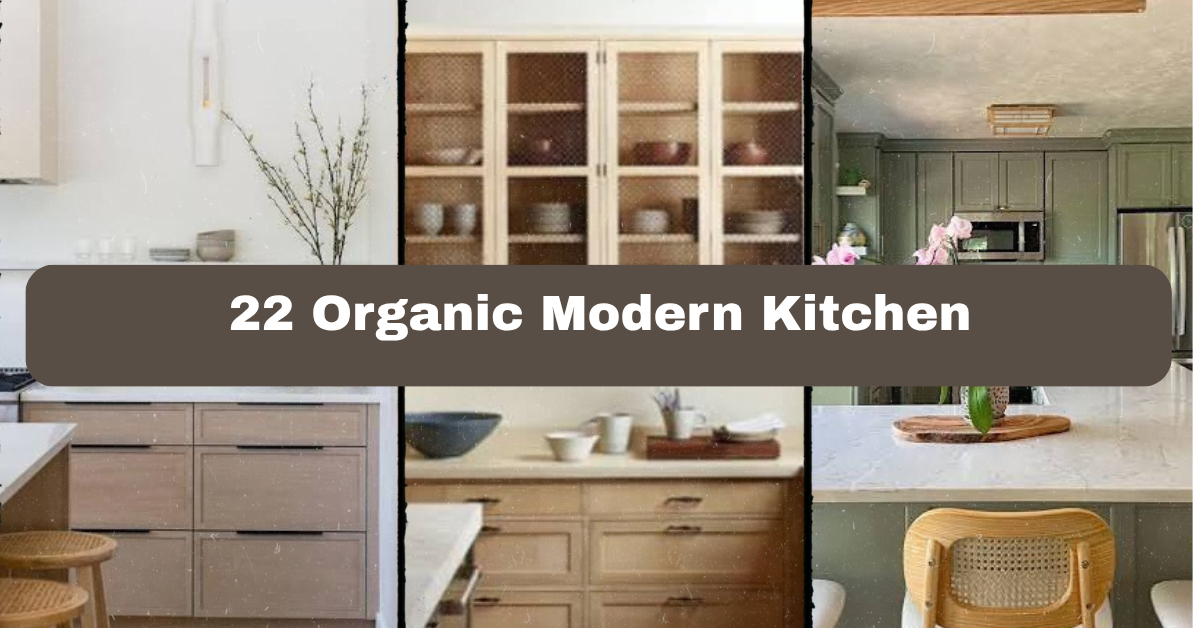
22 Organic Modern Kitchen ideas can help you create a space that feels calm, warm, practical, and connected to nature. I’ll walk you through the best materials, colors, layouts, and finishing touches so you can build the look with confidence.
An organic modern kitchen combines clean lines, natural materials, soft neutral colors, simple shapes, and useful storage. It balances modern function with warm wood, stone, plants, woven textures, and handmade details.
Keep reading for 22 practical ideas that work in large kitchens, small apartments, older homes, and brand-new builds.
What Is an Organic Modern Kitchen?
When I think of an organic modern kitchen, I picture a room that feels fresh but not cold. The cabinets may have flat fronts, yet the wood grain keeps them welcoming. The counters may look sleek, but natural stone adds movement and character. This style blends modern kitchen design with earthy colors, tactile materials, and relaxed decoration.
The goal is balance. You want enough clean structure to keep the room from looking cluttered. You also need enough texture to stop it from feeling plain. Think oak, walnut, stone, linen, clay, rattan, and greenery. The best part is that you do not need a complete remodel. A pendant light, wood stool, handmade bowl, or new runner can shift the mood quickly.
1. Choose Flat-Panel Wood Cabinets
Flat-panel cabinets are one of the easiest ways to create an organic modern foundation. Their simple shape feels current, while natural wood keeps the room from looking too stark. White oak, walnut, ash, and maple all work well. Choose a finish with a visible grain instead of a heavy, glossy coating.
I like using wood on the lower cabinets and a softer painted color above. This keeps the kitchen light while adding warmth near the floor. For a quick update, replace old doors or add wood drawer fronts. In a modern home, use slab doors and slim pulls. In a traditional home, pair simple wood cabinets with a few classic details.
Once the cabinet style is set, the color palette can bring the whole room together.
2. Build a Warm Neutral Color Palette
Organic modern kitchens usually rely on quiet colors. Warm white, mushroom, oatmeal, sand, beige, taupe, and soft gray are good starting points. These shades create a calm background for wood and stone. They also make small kitchens appear brighter without the sharp feeling of bright white paint.
Try choosing three main colors: one for cabinets, one for walls or tile, and one darker accent. For example, pair creamy cabinets with light oak and charcoal hardware. You can also use olive green or muted clay as a small accent. Test paint samples in morning and evening light before making a final choice.
This palette works in coastal rooms with pale blue accents and in farmhouse spaces with deeper tan or brown tones. Next, add a counter surface with natural movement.
3. Install a Natural Stone Countertop
A natural stone countertop gives an organic modern kitchen depth and personality. Quartzite, soapstone, marble, granite, and limestone each create a different mood. Look for soft veining, cloudy patterns, or small mineral changes instead of loud, high-contrast designs.
If you cook often, ask about sealing, heat resistance, staining, and maintenance before choosing a slab. Soapstone feels soft and dramatic, while quartzite can offer a lighter look with strong durability. A honed finish usually feels more relaxed than a glossy polish.
You do not need stone everywhere. Use it on the island and choose a simpler surface around the perimeter to control costs. In a traditional kitchen, a marble-look surface feels classic. In a minimalist kitchen, one quiet slab can do all the decorating.
With the counter selected, the backsplash becomes the next chance to add texture.
4. Use Handmade-Looking Backsplash Tile
A handmade or handmade-inspired backsplash adds gentle variation to clean kitchen lines. Look for ceramic tile with uneven edges, soft color shifts, or a lightly glossy surface. Cream, warm white, dusty green, and pale gray all work beautifully with wood cabinets.
A stacked layout looks modern and orderly. A simple vertical layout can make the ceiling feel taller. Keep the grout close in color to the tile if you want a calm surface. Choose a contrasting grout when you want the pattern to stand out.
Before installation, tape sample tiles to the wall and view them under your actual lighting. This idea suits modern, cottage, Mediterranean, and coastal homes because the tile can change from sleek to rustic depending on its shape and color. Now let’s compare some dependable material choices.
Material Comparison for an Organic Modern Kitchen
| Material | Best use | Visual effect | Maintenance |
|---|---|---|---|
| White oak | Cabinets, shelves, island panels | Light, warm, natural | Wipe spills quickly |
| Walnut | Island, accents, lower cabinets | Rich, deep, refined | Protect from standing moisture |
| Soapstone | Countertops, sinks | Soft, dark, relaxed | Periodic oiling may deepen color |
| Quartzite | Counters and backsplashes | Natural stone movement | Seal as recommended |
| Honed marble | Counters, baking areas | Classic, matte, softly veined | Needs sealing and careful cleaning |
| Ceramic tile | Backsplash and walls | Handmade, varied, tactile | Easy routine cleaning |
| Limestone | Floors and accents | Earthy, quiet, porous | Requires sealing and care |
The right materials create the base, but lighting will determine how those materials feel at different times of day.
5. Add Oversized Natural Pendant Lights
Large pendant lights can make an island feel more intentional. Choose fixtures made from rattan, woven grass, linen, ceramic, aged brass, or wood. Rounded shades soften a kitchen filled with straight cabinet lines.
For a standard island, two or three pendants often work better than one tiny fixture. Leave enough space between each light so the group feels balanced. Hang them high enough to protect sight lines, but low enough to provide useful task lighting. Your electrician can confirm the best height for your ceiling and island.
I often prefer a simple shape with a strong texture. It becomes a focal point without adding visual clutter. In a coastal home, use woven shades. In an industrial kitchen, try aged metal with a linen diffuser.
After the main lights are in place, layer smaller sources around the room.
6. Layer Warm, Practical Lighting
A beautiful kitchen still fails if the work areas are dark. Use three lighting layers: ambient, task, and accent. Recessed ceiling lights provide general brightness. Under-cabinet strips help with chopping and cleaning. Pendants or wall lights add visual warmth.
Choose bulbs around 2700K to 3000K for a soft, welcoming glow. Use a higher color rendering index when possible so food and finishes look more natural. Put different zones on separate switches or dimmers. This lets you brighten the room for cooking and soften it for dinner.
Hide LED strips under the cabinet rail for a clean appearance. In a traditional home, use shaded sconces. In a modern loft, use slim black or brass fixtures. Once the light feels right, bring in seating that supports both comfort and style.
7. Select Wooden or Woven Counter Stools
Counter stools should look good, but they also need to be comfortable and easy to move. Organic modern kitchens benefit from stools made of oak, walnut, rattan, leather, paper cord, or molded wood. Choose a shape with a gentle curve to balance square islands.
A backless stool works in a compact kitchen because it slides beneath the counter. A stool with a back offers better support for long meals. Measure the counter height before buying. Most kitchen counters need counter-height stools, while raised bars require taller bar-height seating.
Keep the finish connected to another wood tone in the room, but do not force every piece to match. Woven stools suit coastal and bohemian spaces. Simple wood stools fit Scandinavian, modern, and farmhouse kitchens.
Next, use open storage carefully so the room feels lived-in rather than crowded.
8. Add One or Two Open Wood Shelves
Open shelves can display the natural side of an organic modern kitchen. Use thick wood shelves with simple brackets or hidden supports. Oak works well with light kitchens, while walnut adds contrast to pale walls.
Do not fill every inch. Leave breathing room between bowls, glasses, cutting boards, and small plants. Keep everyday items within easy reach and place delicate decor higher up. A shelf depth of about 10 to 12 inches works for many dishes, but measure your wall and clearance first.
Open shelving adapts easily. Use reclaimed wood in a farmhouse kitchen, smooth walnut in a modern space, or pale pine in a coastal room. If you dislike dusting, install one shelf instead of a full wall. The next step is choosing storage that keeps the remaining surfaces clear.
Practical Kitchen Shelf and Clearance Guide
| Item | Recommended measurement or rule | Why it matters |
|---|---|---|
| Open shelf depth | 10 to 12 inches | Fits plates, bowls, and glasses |
| Space above countertop | 18 to 24 inches | Allows useful prep space |
| Shelf thickness | 1.25 to 2 inches | Looks substantial and resists bending |
| Walkway beside island | 36 inches minimum | Allows one person to pass |
| Main work aisle | 42 to 48 inches | Supports cooking with two people |
| Shelf spacing | 12 to 16 inches vertically | Fits common kitchen items |
| Display group size | 3 to 5 objects | Prevents a crowded look |
Good storage keeps the visual style calm, so let’s make the hidden areas work harder too.
9. Hide Small Appliances Behind a Pocket Door
Coffee makers, blenders, and toasters can quickly cover an otherwise beautiful counter. A hidden appliance garage solves the problem while keeping frequently used tools nearby. Pocket doors, lift-up doors, and tambour panels can all work.
Add outlets inside the cabinet so you do not need to move the appliance every morning. Confirm that the cabinet has enough ventilation and that the door will not block nearby work areas. Store only daily-use items inside. Rarely used appliances belong elsewhere.
Use the same cabinet material for a quiet appearance. A fluted wood door can add texture, while a painted door blends into the wall of cabinets. This solution fits sleek modern kitchens and traditional kitchens alike.
Once the counters are controlled, consider how the floor can add warmth underfoot.
10. Choose a Quiet, Earthy Floor
Flooring has a major effect on the mood of an organic modern kitchen. Wide-plank oak, natural stone, terracotta tile, porcelain with a limestone look, and warm-toned cork are useful choices. Avoid floors with overly busy patterns if the counters and backsplash already have movement.
For wood, choose a matte finish and a medium or light stain. Very orange finishes can make the room feel dated, while a neutral brown often feels more relaxed. Porcelain tile is a practical option for homes that need moisture resistance and easy cleaning.
Use a large-format tile for a cleaner modern look. Smaller terracotta tiles bring a more rustic or Mediterranean feel. The right flooring gives the kitchen a strong base, and the next idea adds softness.
11. Lay Down a Washable Runner
A runner brings pattern, color, and comfort to the work zone. Choose a low-pile, washable, or indoor-outdoor rug that can handle crumbs and splashes. Look for faded rust, olive, tan, cream, or soft blue rather than a bright synthetic pattern.
Measure the walkway first. The runner should not catch on cabinet doors or extend so far that it becomes a trip hazard. A 2.5-by-7-foot or 3-by-8-foot size often works in front of a single cabinet run, but always use your actual measurements.
A vintage-style rug warms a modern kitchen, while a simple flat weave fits Scandinavian or coastal rooms. Use a non-slip pad underneath. With the floor softened, add natural texture to the walls and smaller surfaces.
12. Bring in Woven Texture
Woven texture keeps an organic modern kitchen from feeling overly polished. Add a rattan tray, seagrass basket, cane cabinet insert, woven pendant, or paper-cord stool. These materials create small shadows and visual depth.
Use texture in groups of two or three so it feels planned. For example, place a woven tray on the island, a basket beside the pantry, and a cane-front cabinet near the dining area. Avoid using every woven item in the same shade. A mix of honey, tan, and natural beige looks more relaxed.
Woven details can make a modern kitchen feel softer, a farmhouse kitchen feel lighter, and a coastal kitchen feel more layered. Next, introduce greenery for a living touch.
Texture and Finish Pairings
| Base finish | Add this texture | Result |
|---|---|---|
| White cabinets | Oak, rattan, jute | Warm and airy |
| Walnut cabinets | Linen, soapstone, aged brass | Rich and grounded |
| Gray cabinets | Light wood, ceramic, greenery | Soft and balanced |
| Cream cabinets | Terracotta, seagrass, olive plants | Earthy and relaxed |
| Black accents | Pale oak, plaster, woven fibers | Strong but not harsh |
| Concrete counters | Walnut, leather, handmade tile | Industrial with warmth |
Texture works best when it is supported by a few natural shapes, especially plants.
13. Add Herbs and Easy-Care Plants
Plants make a kitchen feel more alive, but they should fit the room’s light and your routine. Place basil, rosemary, thyme, or mint near a bright window. Use a trailing pothos on a high shelf or a small olive tree in a sunny corner.
Choose ceramic, terracotta, stone, or woven planters that match the kitchen palette. Put a saucer under each pot to protect the counter. Keep plants away from hot burners, strong drafts, and areas where leaves could fall into food.
If your kitchen has low light, use hardy plants or high-quality faux stems instead of forcing herbs to survive. This idea works in every home style. Once greenery is in place, use handmade ceramics to add another layer of character.
14. Display Handmade Ceramics
Handmade pottery adds small changes in shape and color that manufactured pieces often lack. Display a few bowls, mugs, pitchers, or serving platters on open shelves or an island tray. Choose pieces in cream, clay, gray, olive, or sandy colors.
You do not need a large collection. Three useful pieces can look better than a shelf packed with objects. Mix smooth ceramic with rough stoneware for contrast. Keep food-safe pieces available for daily use so the display remains practical.
In a modern kitchen, choose simple sculptural pottery. In a cottage or Mediterranean kitchen, use more variation and warmer clay tones. Handmade ceramics make the room feel personal, and the next idea can make the architecture feel just as special.
15. Use Limewash or Plaster-Style Walls
A limewash or plaster-style wall finish gives an organic modern kitchen a soft, cloudy backdrop. It adds depth without introducing a busy pattern. Warm white, mushroom, pale beige, and muted gray-green are especially easy to pair with wood cabinets.
Real limewash needs the right surface preparation and may require more care than standard paint. A mineral paint or plaster-look finish can offer a similar effect with less work. Always test a sample because these finishes change with light and application technique.
Use the finish on one wall if you want a subtle statement. In a Mediterranean home, it can feel natural and historic. In a newer home, it adds age and softness. With the walls handled, look upward and consider the ceiling.
16. Add Wood or Painted Ceiling Beams
Ceiling beams can bring architectural warmth to a plain kitchen. Real structural beams may be possible during a renovation, while lightweight decorative beams can create the look more simply. Use pale oak for a Scandinavian feeling, medium wood for farmhouse warmth, or dark beams for contrast.
Do not add beams just because the room feels empty. They work best when the ceiling is high enough and the layout has clear lines. Keep the beam design simple so it supports the cabinetry instead of competing with it.
In a traditional house, beams can highlight original character. In a modern home, one clean beam can add a strong natural detail. After adding overhead structure, keep the hardware below it consistent.
Kitchen Hardware Finish Guide
| Finish | Works well with | Overall mood | Care notes |
|---|---|---|---|
| Aged brass | Walnut, cream, olive | Warm and collected | Shows patina over time |
| Brushed brass | White oak, beige, marble | Soft and polished | Wipe fingerprints |
| Matte black | Light wood, white, terracotta | Graphic and modern | Can show dust |
| Pewter | Gray, stone, blue-green | Quiet and cool | Low visual contrast |
| Brushed nickel | White, oak, gray | Clean and flexible | Easy everyday care |
| Leather pulls | Wood, cream, handmade tile | Casual and tactile | Keep away from standing water |
Hardware acts like jewelry in the room, but the sink and faucet need to support the same visual language.
17. Choose a Deep, Simple Kitchen Sink
A single-bowl sink with a clean apron or undermount edge fits the organic modern look well. Fireclay, stainless steel, granite composite, and soapstone each offer a different appearance. A deep bowl is useful for washing large pans and hiding dishes briefly when guests arrive.
Before choosing, check cabinet size, faucet holes, disposal needs, and installation requirements. A farmhouse sink may require cabinet changes, while an undermount sink works best with a compatible solid counter.
Pair the sink with a simple faucet in aged brass, brushed nickel, or matte black. In a traditional kitchen, fireclay feels timeless. In a modern space, stainless steel or dark composite looks crisp.
18. Mix Metals With a Clear Plan
Mixing metals can make a kitchen feel collected instead of showroom-perfect. The key is to repeat each finish enough to look intentional. For example, use aged brass on the cabinet pulls and pendant lights, then brushed nickel on the faucet and a few appliances.
Keep the largest metal elements in two finishes or fewer. Too many competing colors can make the room look random. Match the warmth of the metal to the room. Brass suits creamy paint and walnut, while nickel works nicely with gray stone and pale oak.
This strategy adapts across styles. Black and brass feel modern, brass and bronze feel traditional, and nickel with woven shades feels coastal. With the metal plan set, bring in one useful natural feature: a wood cutting board display.
19. Display Oversized Wood Cutting Boards
Large wood cutting boards are both useful tools and attractive decor. Lean two or three boards against the backsplash, grouped by size. Choose maple, walnut, teak, or olive wood, and look for simple shapes without heavy lettering.
Keep the boards away from the sink splash zone and hot cooktop. Wash them according to the maker’s instructions and condition them with food-safe mineral oil when needed. Do not use decorative boards for raw meat unless they are designed for that purpose.
This detail adds warmth to a minimalist kitchen and a practical note to a more rustic space. It also gives an empty counter a purpose. Next, make the island feel like furniture instead of just a work surface.
20. Design the Island Like a Furniture Piece
An organic modern island should feel useful and grounded. Consider a waterfall stone edge for a sleek look, wood paneling for warmth, or painted cabinetry in a muted earthy shade. Open legs or furniture-style feet can make a large island feel lighter.
Keep the island proportional to the room. You need comfortable circulation around it, plus enough depth for prep and seating if included. Add drawers for pots, tray dividers, and a dedicated waste system so the island earns its space.
In a traditional home, use furniture feet and framed details. In a modern home, choose a clean slab design. The island is usually the visual anchor, so the final ideas should focus on editing and balance.
Island Size and Seating Reference
| Island feature | Common recommendation | Planning note |
|---|---|---|
| Comfortable island depth | 36 to 48 inches | Allows prep and storage |
| Counter overhang for seating | 12 to 15 inches | Gives knees enough room |
| Space per seated person | 24 inches wide | Prevents crowding |
| Clearance around island | 36 inches minimum | Supports basic movement |
| Two-cook work aisle | 42 to 48 inches | Better for shared cooking |
| Counter stool height | 24 to 27 inches | Usually fits a 36-inch counter |
| Bar stool height | 28 to 33 inches | Usually fits a raised bar |
A well-sized island improves daily life, and a careful edit will keep it from becoming a dumping ground.
21. Keep Countertop Decor Sparse
Organic modern design needs breathing room. Instead of covering the counters, choose a few useful objects with strong shapes. A stone bowl, wooden tray, ceramic vase, soap dispenser, or small plant may be enough.
Create one or two styled zones. For example, place a coffee setup on one side and a cooking setup near the range. Keep the middle open for food preparation. Use trays to group small items so they can be moved together when needed.
This approach works especially well in small kitchens because clear counters make the room feel larger. In a traditional kitchen, use more decorative pottery. In a minimalist kitchen, use one sculptural object. With the surfaces edited, finish the room with thoughtful art.
22. Hang Nature-Inspired Kitchen Art
Art gives an organic modern kitchen personality without changing the cabinets or counters. Look for botanical prints, landscape photography, abstract forms inspired by stone, woven wall pieces, or simple still-life paintings. Use wood, linen, clay, or thin metal frames.
Choose artwork that repeats a color already present in the room. A muted green print can connect to plants, while a sandy landscape can tie together beige tile and oak cabinets. Keep artwork away from direct heat and heavy moisture. Use washable glass or protected prints when possible.
A single large piece often looks calmer than many tiny frames. This idea works in modern, farmhouse, coastal, and traditional homes because the subject and frame can shift with the setting.
Tips for Success
- Start with the permanent finishes first, such as flooring, cabinets, counters, and backsplash tile.
- Test wood samples beside your chosen paint and stone before ordering anything.
- Use warm bulbs so white surfaces do not look cold at night.
- Measure appliance doors, walkways, shelf depth, and stool clearance before buying furniture.
- Repeat natural materials at least twice so the room feels connected.
- Choose finishes based on how much cleaning and sealing you are willing to do.
- Leave some empty space. A calm kitchen is not the same as an empty kitchen.
Common Mistakes and How to Avoid Them
Using too many natural materials
Choose a main wood, a main stone, and one or two supporting textures. Too many competing grains and patterns can make the room feel busy.
Choosing cool white paint with orange wood
Test paint in real daylight and at night. Warm whites, beige, and soft mushroom shades usually sit better beside natural oak and walnut.
Installing open shelves without a storage plan
Measure the objects you want to display first. Keep everyday dishes on lower shelves and use closed cabinets for items that create visual clutter.
Ignoring maintenance needs
Ask how often stone must be sealed and how wood should be cleaned. Pick practical alternatives if you do not want regular upkeep.
Making every item beige
Organic modern does not mean colorless. Add olive, charcoal, clay, muted blue, black, or aged metal for contrast.
Forgetting task lighting
A pendant may look beautiful but cannot light every work area. Add under-cabinet lighting near counters and the sink.
Similar Variations
- Scandinavian Organic Modern: Uses pale wood, simple furniture, soft white walls, and minimal decoration.
- Organic Modern Farmhouse: Adds apron sinks, aged hardware, shaker-style details, and rustic wood.
- Coastal Organic Modern: Brings in pale oak, woven fibers, sandy colors, soft blue, and breezy linen.
- Mediterranean Organic Modern: Combines plaster walls, terracotta, warm stone, arched details, and dark wood.
- Desert Organic Modern: Uses clay, sand, rust, cactus green, textured plaster, and sculptural ceramics.
- Japandi Kitchen: Blends Japanese simplicity with Scandinavian warmth, using quiet colors, clean storage, and natural wood.
The strongest organic modern kitchens are not built from one trend alone. They combine useful layouts, natural textures, warm lighting, and a restrained color scheme. I would start with the parts that are hardest to change, then add softer pieces such as rugs, plants, pottery, stools, and art.
You do not need a perfect renovation to get the look. A few thoughtful choices can make the room calmer, warmer, and easier to use, which is the real appeal of a 22 Organic Modern Kitchen.
Leave a Reply