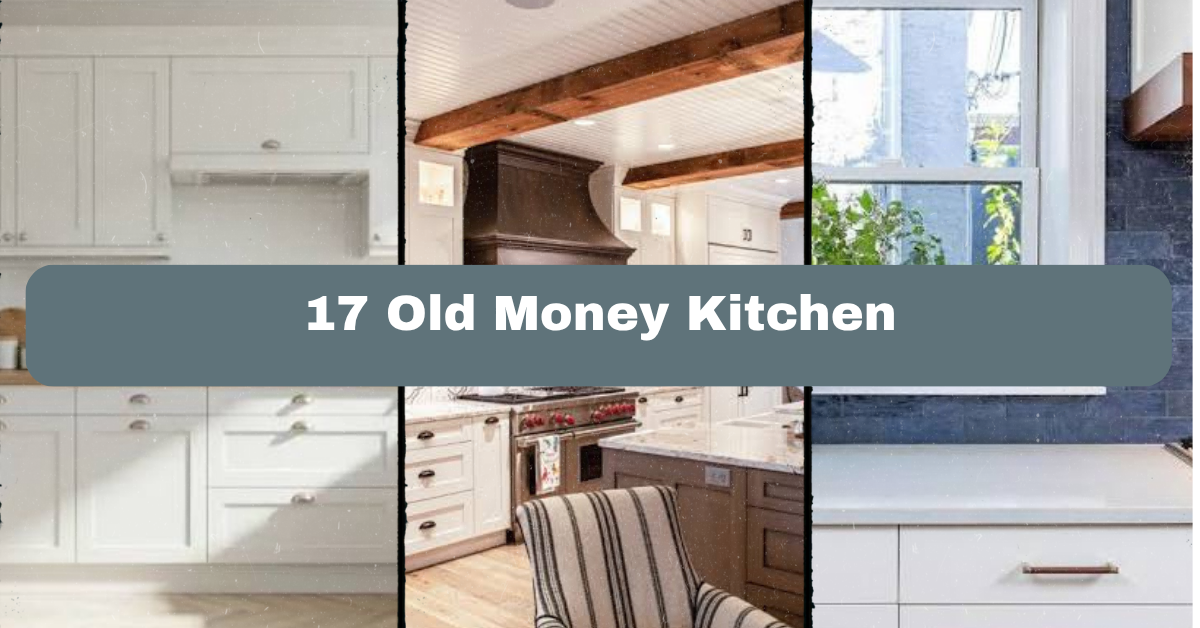
17 Old Money Kitchen ideas can help you create a room that feels refined, warm, and lived-in without looking flashy. I’ll walk you through the colors, materials, furniture, lighting, and small details that make this style work in real homes.
What is an old money kitchen? It is a timeless kitchen built with quality materials, classic cabinetry, muted colors, natural textures, vintage accents, and restrained decoration. The goal is a comfortable, collected room that feels established rather than trendy.
You do not need a huge budget or a historic mansion to get the look. Keep reading to see how small choices can make a modern kitchen feel quietly elegant.
What Defines an Old Money Kitchen?
To me, an old money kitchen feels like it has stories. It is not overly perfect, shiny, or packed with matching decor. Instead, it mixes classic design with useful pieces that can last for years.
Think painted wood cabinets, marble or soapstone counters, aged brass hardware, linen curtains, and a table that looks better with a few scratches. The color scheme is usually soft and grounded. Cream, olive, navy, warm gray, and wood tones are common choices.
The secret is restraint. You want quality over quantity. One beautiful pendant can do more than ten decorative objects. A vintage cutting board can add more charm than a shelf full of signs. The finished room should feel welcoming enough for breakfast and polished enough for a dinner party.
1. Choose Shaker Cabinets in a Soft, Historic Color
Shaker cabinets are one of the easiest ways to create an old money kitchen foundation. Their simple recessed panels feel traditional, but they do not look fussy. Choose painted wood or high-quality wood veneer in shades such as warm white, mushroom, putty, sage, or muted blue.
Avoid bright white if you want a softer look. Creamy paint works better with brass, walnut, and stone. You can also use two cabinet colors, such as ivory uppers and deep olive lowers, as long as the tones feel connected.
For an immediate update, replace flat cabinet pulls with cup pulls or slim aged brass handles. Keep the hardware consistent across the room.
This idea works in traditional, modern farmhouse, coastal, and transitional homes. Next, let’s choose a counter that gives those cabinets a sense of permanence.
2. Install a Countertop with Natural Character
Old money kitchen design rarely depends on a spotless, artificial-looking surface. Natural stone brings depth and a gentle sense of age. Marble, soapstone, limestone, and honed granite are strong choices because their patterns feel organic.
Carrara marble offers soft gray veining and a classic look. Soapstone is darker and more dramatic, with a smooth, matte finish. Honed granite can give you the appearance of stone without the high-gloss surface found in many modern kitchens.
If natural stone is outside your budget, look for a quartz surface with quiet veining. Avoid busy patterns that dominate the room.
Ask for large samples before deciding. Place them beside your cabinet color, flooring, and backsplash in both daylight and evening light. This works with classic, contemporary, and rustic homes. Now, we can use the backsplash to add another layer of history.
3. Use Handmade-Looking Tile Behind the Range
A backsplash should support the kitchen, not steal every glance. Handmade or handmade-style tile adds small shifts in color and texture that make the room feel less mass-produced.
Try ivory zellige tile, narrow subway tile, stone slab, or simple square ceramic tile. A soft cream backsplash pairs well with dark green cabinets and walnut accents. If your counters already have strong veining, choose a quiet backsplash with little contrast.
You can also use a full-height stone backsplash behind the range for a more tailored look. Keep the grout close to the tile color if you want a calm surface. Choose darker grout only when you want the tile pattern to stand out.
This approach fits English country, Mediterranean, modern, and coastal kitchens. With the hard finishes selected, the next step is finding a palette that keeps everything connected.
4. Build a Muted, Layered Color Palette
A successful old money kitchen uses several related colors instead of one flat shade. Start with a warm neutral, then add one deep tone and one natural wood color.
For example, pair cream cabinets with olive accents, walnut stools, and aged brass. Another option is navy cabinetry with limestone counters, warm white walls, and oak flooring. The colors should look calm, even when they have contrast.
Sample paint on more than one wall. Kitchens often have changing light, especially near windows. I also recommend leaving space between strong colors. If the cabinets are dark, keep the walls and counters lighter.
This palette can shift toward modern with cleaner lines or toward traditional with more wood and antique details. Here is a simple guide to combinations that work well together.
Old Money Kitchen Color Combinations
| Main cabinet color | Countertop choice | Accent color | Best wood pairing |
|---|---|---|---|
| Warm ivory | Honed marble | Olive green | Medium oak |
| Muted sage | Cream quartz | Aged brass | Walnut |
| Deep navy | White marble | Warm tan | Natural oak |
| Mushroom taupe | Soapstone | Soft black | Dark walnut |
| Dusty blue | Limestone | Terracotta | Light oak |
| Forest green | Honed granite | Burnished bronze | Medium walnut |
With your colors in place, you can start adding furniture that makes the kitchen feel like part of a home rather than a showroom.
5. Add a Freestanding Island or Furniture-Style Base
A built-in island can look beautiful, but a furniture-style island feels more collected. Look for turned legs, inset doors, visible trim, or a contrasting finish. An old dresser or sturdy worktable can also become an island if it has the right height and structure.
The island does not need to match the perimeter cabinets. A walnut island in a cream kitchen creates warmth. A painted island in deep blue can act as a strong focal point.
Make sure there is enough walking space around it. Aim for about 36 inches of clearance in regular work areas, with more room where two people cook side by side.
This idea adapts easily to farmhouse, traditional, apartment, and modern kitchens. Once the island has a strong shape, comfortable seating will make it feel useful every day.
6. Select Counter Stools with Real Materials
Skip overly sleek bar stools if you want a relaxed, established look. Choose stools made from oak, walnut, leather, rush, cane, or painted wood. A simple ladder-back stool can look especially charming with a traditional island.
Seat height matters. For a counter that is about 36 inches high, choose counter stools with seats around 24 to 26 inches high. For a bar-height surface, use taller stools.
Consider comfort as well as appearance. A footrest, curved back, and slightly padded seat make a big difference. Keep the finish coordinated with other wood tones, but do not force an exact match.
These stools work in English country, Scandinavian, transitional, and coastal spaces. Next, we’ll soften the room with textiles and window treatments.
7. Hang Linen Curtains or a Tailored Roman Shade
Fabric brings softness to a kitchen filled with stone, wood, tile, and metal. Linen curtains or a relaxed Roman shade can make even a new kitchen feel more personal.
Choose natural shades such as flax, oatmeal, soft white, or muted stripe. If your cabinets are plain, a small check or ticking stripe adds interest without becoming loud. Hang curtains just outside the window frame so they do not block useful light.
For a sink window, an inside-mounted Roman shade keeps the area neat. Washable linen blends are practical in busy kitchens. Keep fabric away from open flames and high-heat cooking areas.
This detail works in cottage, modern farmhouse, coastal, and classic interiors. With the windows softened, a well-chosen light fixture can give the room its strongest decorative moment.
8. Install a Classic Pendant or Small Chandelier
Lighting should look useful first and decorative second. Aged brass pendants, opal glass shades, lantern fixtures, and small chandeliers all suit an old money kitchen.
For an island, use two or three fixtures depending on its length. The bottom of the pendants often sits about 30 to 36 inches above the counter, though your sightline and ceiling height matter too. Use warm bulbs around 2700K to keep the room welcoming.
Avoid oversized fixtures that block views across the kitchen. A simple lantern can work better than a large sculptural light.
This idea can lean formal with crystal or polished brass, rustic with iron, or modern with aged bronze and clean glass. The next table will help you compare useful materials before you commit.
Material Guide for an Old Money Kitchen
| Material | Visual effect | Care level | Best location |
|---|---|---|---|
| Honed marble | Classic, softly veined | Moderate | Counters, backsplash |
| Soapstone | Deep, matte, historic | Low to moderate | Counters, sink surround |
| Oak | Warm and natural | Moderate | Flooring, stools, shelves |
| Walnut | Rich and refined | Moderate | Island, accents, furniture |
| Linen | Relaxed and tactile | Moderate | Curtains, shades, towels |
| Aged brass | Warm and traditional | Low | Hardware, lighting, faucet |
| Ceramic tile | Handmade and timeless | Low | Backsplash, floor |
| Wicker or rush | Casual, textured | Moderate | Stools, baskets, seating |
The larger materials establish the mood, but the smaller objects are what make the space feel truly lived in.
9. Display Wooden Boards, Copper Pots, and Useful Objects
Old money kitchens often display practical items instead of random decorations. A stack of wooden cutting boards, a copper pan, or a ceramic pitcher can add warmth while remaining useful.
Lean two or three boards against the backsplash. Hang copper pans from a simple rail if you have enough wall space. Place a stoneware bowl near the prep area for lemons, onions, or fresh bread.
Choose objects with signs of quality and use. A slightly worn board is often more appealing than a perfect new one. Still, keep the display edited. Too many pieces will make the counters look crowded.
This strategy suits rustic, traditional, Mediterranean, and modern kitchens. Once the counters have a few useful accents, open shelving can add height and personality.
10. Use Open Shelving with Restraint
Open shelves can create a beautiful old money kitchen, but only when they are carefully edited. Choose thick wood shelves, painted shelves, or stone shelves with simple brackets. Avoid filling every inch.
Group items by function. Put everyday plates on one shelf, glasses on another, and a small plant or framed print at the end. Use a mix of ceramics, but keep the colors related. Cream, blue, brown, and green usually work well together.
Leave empty space between groups. That breathing room makes the display look intentional. Install shelves where you can reach them easily, not only where they photograph well.
This idea works in small apartments, modern kitchens, cottage homes, and large traditional rooms. Next, let’s bring in a rug to make the room feel less hard and formal.
11. Layer a Flat-Weave Rug for Warmth
A rug can soften the sound of a kitchen and bring color underfoot. Choose a flat-weave runner, vintage kilim, washable cotton rug, or low-pile wool design.
Look for muted reds, faded blue, tan, olive, or cream. These colors hide small crumbs better than bright white. Place the rug along the sink or between the island and cabinets. It should be long enough to anchor the area without catching on doors.
Always use a non-slip pad. In a kitchen, a rug that shifts is not charming. Washable styles are especially useful if you cook often or have pets.
This works with bohemian, traditional, Scandinavian, and coastal homes. With the floor softened, the sink and faucet can add another classic detail.
12. Choose a Deep Sink and Bridge-Style Faucet
A deep apron-front sink is a natural fit for an old money kitchen. Fireclay gives a bright, classic finish, while soapstone and stainless steel offer different levels of contrast. A large single-bowl sink is useful for washing pans and preparing food.
Pair it with a bridge faucet, gooseneck faucet, or polished nickel fixture. Aged brass feels warmer, while polished nickel has a crisp, historic look. Choose the finish based on your lighting and cabinet hardware.
Measure carefully before ordering. Apron-front sinks may require cabinet changes, and faucet holes need to match the fixture.
This idea works in farmhouse, English country, transitional, and modern kitchens. The following guide can help you balance classic materials with practical daily use.
Kitchen Fixture and Finish Pairings
| Sink style | Faucet finish | Cabinet color | Overall mood |
|---|---|---|---|
| White fireclay apron-front | Aged brass | Cream | Warm and classic |
| White undermount | Polished nickel | Navy | Tailored and bright |
| Soapstone farmhouse | Oil-rubbed bronze | Sage | Rustic and grounded |
| Stainless single-bowl | Brushed brass | Mushroom | Transitional |
| Copper apron-front | Dark bronze | Warm white | Collected and dramatic |
A refined kitchen also needs a place for quiet beauty, so let’s make room for artwork and greenery.
13. Add Framed Art and Fresh Greenery
Kitchen art should feel personal, not like a collection of cooking slogans. Try a small still life, botanical print, landscape, portrait, or vintage food illustration. Use wood, brass, or painted frames that connect with the room.
Place art away from direct heat and splashing. A framed piece on a side wall often works better than one directly above the range. If you have open shelves, lean one small print behind the dishes.
For greenery, use herbs in terracotta pots, a bowl of lemons, or a simple branch in a ceramic vase. Fresh items bring life without adding clutter.
This adapts to every home style. Use coastal prints for a beach house, botanical art for a cottage, or abstract work for a modern kitchen. A few carefully chosen accessories can now complete the room.
14. Bring in Antique or Vintage Accessories
The old money look depends on pieces that do not seem bought all at once. Search for vintage trays, silver containers, ceramic crocks, brass candlesticks, old recipe boxes, or woven baskets.
You do not need rare antiques. A secondhand wooden stool or thrifted platter can provide the same sense of history. Look for solid construction, useful shapes, and finishes that improve with age.
Mix old pieces with new appliances and fresh textiles. The contrast keeps the kitchen from feeling like a museum. Use three to five vintage accents in a medium-sized kitchen, then stop and live with them for a few days.
This works in industrial, traditional, modern, and farmhouse homes. To finish the design, hide the visual clutter that can quickly undo all this careful work.
15. Conceal Appliances and Everyday Clutter
A polished kitchen still needs to function. The trick is to give daily items a proper home. Use appliance garages, deep drawers, pantry cabinets, or a dedicated coffee station to keep counters clear.
Store cutting boards upright in a divider. Add drawer organizers for utensils. Keep soap in a refillable ceramic or glass dispenser instead of a bright plastic bottle. Use matching baskets for snacks, linens, or pet supplies.
Do not hide every appliance if you use it constantly. A beautiful stand mixer can stay on the counter when it becomes part of the room’s character.
This approach suits compact modern kitchens as well as large traditional ones. With storage under control, you can make the final choices based on comfort instead of appearance alone.
16. Create a Small Dining or Conversation Area
If space allows, add a round table, bench, or two comfortable chairs near the kitchen. Old money interiors often feel connected because people can sit, talk, and eat in the same area.
Choose a wood table with a simple profile. A painted table can look charming, while walnut creates a richer mood. Add linen seat cushions, a vintage pendant, or a small vase of flowers.
Keep the area proportional to the room. In a compact kitchen, a small round table is easier to move around than a long rectangle. Leave enough space for chairs to pull out without blocking the work zone.
This idea fits breakfast nooks, open-plan homes, apartments, and country kitchens. The last design idea brings all the layers together through thoughtful maintenance and styling.
17. Let Patina and Imperfection Stay Visible
An old money kitchen should not look untouched. Small marks, softened wood, worn brass, and natural variation can make the room feel more believable.
That does not mean ignoring damage. Repair loose handles, seal porous counters when needed, and clean spills quickly. The goal is honest age, not neglect.
Use finishes that can improve over time. Unlacquered brass develops a deeper tone. Wood gains richness when cared for. Natural stone shows subtle changes as it is used.
This principle works especially well in traditional and rustic spaces, but it can also soften a sharp modern kitchen. Now let’s pull the key decisions into a simple success checklist.
Tips for Success
- Start with a calm base of warm white, cream, taupe, olive, navy, or muted blue.
- Choose two or three metal finishes at most, and repeat each one more than once.
- Mix new purchases with thrifted, inherited, or vintage pieces.
- Use natural materials where they matter most, such as wood, stone, linen, and ceramic.
- Measure walkways before buying an island, rug, stools, or dining table.
- Keep countertops mostly clear, but display useful objects with attractive shapes.
- Order samples of paint, tile, stone, and cabinet finishes before making final decisions.
Common Mistakes and How to Avoid Them
Making everything match
Use related finishes instead of identical ones. A walnut island can sit comfortably beside oak floors when the undertones work together.
Choosing harsh white lighting
Use warm bulbs around 2700K for a softer, more welcoming glow. Add task lighting beneath cabinets for food preparation.
Overdecorating open shelves
Display only items you use or genuinely enjoy. Leave empty space so the shelves feel collected rather than crowded.
Using delicate materials without considering daily life
Ask how each surface handles spills, heat, stains, and cleaning. Choose honed stone, durable tile, and washable textiles when needed.
Buying oversized furniture
Tape the footprint of an island, table, or rug on the floor before ordering. Check door swings and walking paths too.
Adding fake vintage details everywhere
Choose a few real or well-made pieces instead of filling the room with distressed signs, artificial patina, or imitation antiques.
Similar Variations
- English Country Kitchen: Uses floral fabrics, painted cabinets, old wood, and relaxed ceramic pieces.
- Modern Old Money Kitchen: Keeps the classic palette but uses clean cabinet lines, simple lighting, and fewer accessories.
- Coastal Old Money Kitchen: Adds soft blue, white oak, woven textures, and light linen without becoming beach-themed.
- French Country Kitchen: Brings in limestone, aged metal, curved furniture, and warm plaster-like colors.
- Traditional Estate Kitchen: Focuses on paneled cabinetry, rich wood, stone counters, tailored window treatments, and formal lighting.
- Rustic Heritage Kitchen: Uses rougher wood, handmade tile, soapstone, iron, and practical vintage accessories.
The best old money kitchen is not the one with the most expensive materials. It is the one with a calm palette, useful furniture, natural texture, and details that feel chosen over time.
Start with the pieces you use every day. Add quality where it matters, edit the clutter, and let a little wear make the room feel human. With that approach, you can create a timeless 17 Old Money Kitchen that feels collected, comfortable, and completely your own.
Leave a Reply