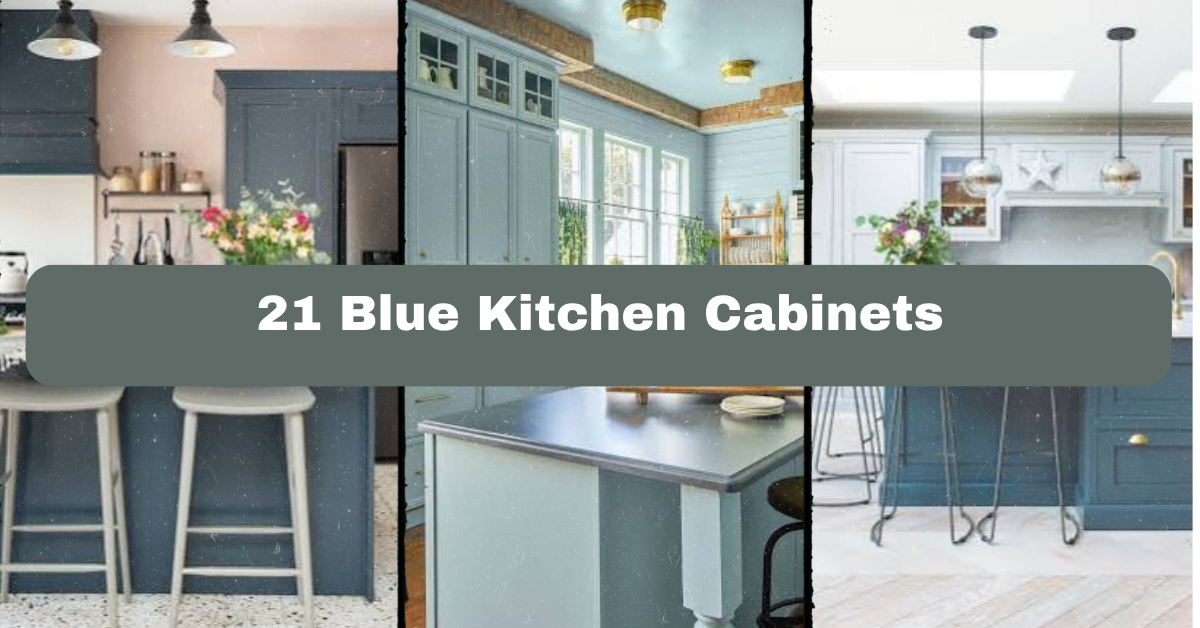
These 21 Blue Kitchen Cabinets ideas will help you choose the right shade, hardware, finishes, and decor for a kitchen that feels stylish, useful, and welcoming.
What are blue kitchen cabinets? They are cabinet doors finished in blue paint or stain, ranging from pale sky blue to deep navy. Blue cabinets add color, work with many wood and metal finishes, and suit modern, coastal, farmhouse, traditional, and eclectic kitchens.
I’ll walk you through cabinet colors, layout choices, lighting, hardware, and simple decorating moves. You’ll also find practical tips for avoiding a kitchen that feels too dark or too cold.
A Quick Primer on Blue Kitchen Cabinets
Blue kitchen cabinets can feel calm, classic, bold, or playful, depending on the shade and finish. I think of blue as one of the easiest cabinet colors to live with because it works with warm wood, white walls, natural stone, brass, black, and even soft green.
The main choice is temperature. Cool blues feel crisp and airy, while blue-green shades feel softer and more relaxed. Navy and ink blue bring drama, but they need good lighting and lighter surrounding finishes. Before choosing paint, look at your counters, flooring, backsplash, and nearby rooms. A blue sample can look very different beside white quartz than beside honey oak.
1. Pair Navy Cabinets With Warm White Walls
Navy blue cabinets create a strong foundation, especially when paired with warm white walls. The creamy wall color keeps the room from feeling stark, while the dark blue adds depth and structure. I like this combination in kitchens with white quartz counters, oak floors, and simple ceramic tile.
Choose brushed brass pulls if you want a classic look. Use matte black hardware for a sharper, modern effect. Add a wood cutting board, woven baskets, and a small runner to soften the contrast.
Before painting every cabinet, test navy samples near a window and under your evening lights. Dark blue absorbs light, so bright task lighting matters.
This idea works in traditional, transitional, farmhouse, and modern kitchens, leading naturally to a softer blue option.
2. Use Dusty Blue for a Soft Farmhouse Feel
Dusty blue cabinets have a muted, slightly gray quality that feels relaxed rather than bright. They look especially good with butcher block counters, white subway tile, and aged brass hardware. This shade is a smart choice if you want color but do not want the cabinets to dominate the room.
For furniture, choose a simple wood table or painted island stool with woven seats. Keep decorative items useful, such as stoneware pitchers, wooden trays, and linen tea towels. A warm white ceiling helps the blue look gentle instead of chilly.
Ask your paint store for a sample board, then view it in morning and afternoon light. Muted colors can shift more than expected.
Dusty blue suits farmhouse, cottage, Scandinavian, and coastal homes, and it sets up an even airier cabinet choice next.
3. Create an Airy Kitchen With Pale Blue Cabinets
Pale blue cabinets make a small kitchen feel open and light. The color reflects more light than navy, yet still gives the room personality. Pair pale blue lower cabinets with white uppers, or use the shade on every cabinet for a calm, single-color scheme.
I would choose light counters, pale oak flooring, and nickel or chrome hardware here. Add glass jars, white dishes, and a few blue-gray textiles. Avoid too many icy whites, which can make the room feel cold.
Use satin or semi-gloss paint for easier cleaning around handles and food prep areas. Keep the backsplash simple so the pale cabinet color remains the focus.
This look adapts well to coastal, cottage, modern, and small apartment kitchens, while the next approach adds more color depth.
4. Choose Blue-Gray Cabinets for a Balanced Neutral
Blue-gray cabinets sit between a color and a neutral. They are useful when you want a kitchen that feels interesting but still easy to coordinate. This shade pairs beautifully with white marble-look counters, medium wood floors, and soft black accents.
For seating, try black metal stools with wood seats. Add a gray-blue runner, a ceramic vase, and framed art in muted greens or warm beige. If your room has low light, choose a blue-gray with a noticeable green or warm undertone rather than a blue that looks icy.
Paint a large sample board and place it beside the backsplash before making a final choice. Small paint chips are often misleading.
Blue-gray works in transitional, modern farmhouse, industrial, and coastal interiors, and the palette below can help you compare nearby shades.
Blue Cabinet Color Guide
| Cabinet shade | Best companion colors | Good hardware | Overall effect |
|---|---|---|---|
| Pale blue | Warm white, light oak, sand | Chrome, nickel | Airy and gentle |
| Dusty blue | Cream, beige, natural wood | Aged brass | Soft and relaxed |
| Blue-gray | White, taupe, medium oak | Black, nickel | Balanced and versatile |
| Navy | Warm white, walnut, brass | Brass, black | Dramatic and classic |
| Teal blue | Cream, terracotta, rattan | Brass, bronze | Rich and collected |
5. Make the Island the Blue Focal Point
You do not need blue on every cabinet. A blue kitchen island can act as a strong focal point while the perimeter cabinets stay white, cream, or natural wood. This is one of my favorite ways to add color without making a permanent choice feel overwhelming.
Choose a shade with enough contrast to stand apart from the wall cabinets. A navy island works with white cabinets, while dusty blue looks beautiful beside warm oak. Add counter stools that repeat one island detail, such as brass legs or a wood seat.
Keep island decor simple. A bowl of fruit, one cutting board, and a small vase are enough. Leave work space clear.
This approach fits modern, farmhouse, transitional, and cottage kitchens, and it makes two-tone cabinets feel even more intentional.
6. Combine Blue Lower Cabinets With White Uppers
Blue lower cabinets and white upper cabinets give you color near the floor while keeping the upper half of the kitchen bright. This layout is especially helpful in narrow rooms or kitchens with limited natural light.
I like pairing medium blue lowers with white quartz, a simple white backsplash, and light wood accents. Use matching hardware on both cabinet colors so the design feels connected. Open shelves can replace one or two upper cabinets and provide space for everyday dishes.
Make sure the blue lower shade relates to another feature, such as a rug, pendant, or artwork. A small repeated color detail can pull the room together.
This combination suits coastal, contemporary, cottage, and Scandinavian homes, and the next idea shows how to bring blue into open shelving.
7. Add Blue Cabinets Around Open Wood Shelves
Open wood shelves break up a wall of blue cabinets and add warmth. The contrast between painted doors and natural wood keeps the kitchen from looking too polished or flat. Use oak, walnut, or reclaimed wood based on the depth of your cabinet color.
Place everyday bowls, glasses, cookbooks, and a few plants on the shelves. Do not overcrowd them. I suggest grouping items by color and leaving some open space so the shelves look useful rather than messy.
Install shelves on a wall away from the stove if possible. Grease and steam make frequent cleaning harder. A clear protective finish helps wood handle kitchen moisture.
This idea works with modern, rustic, industrial, and farmhouse styles, and it pairs well with a more dramatic backsplash.
8. Use Patterned Tile Behind Solid Blue Cabinets
Blue cabinets provide a calm backdrop for a patterned backsplash. Consider small geometric tile, a soft floral pattern, or handmade-look squares in white, cream, and muted green. Since the cabinets already have color, choose a backsplash with a controlled palette.
Keep the counters quiet. Plain quartz or lightly veined stone gives the eye a place to rest. For furniture, use simple stools and a wood dining table rather than adding another strong pattern.
Order tile samples before buying. Tile texture and grout color can change the whole effect. Warm gray or cream grout is often easier to live with than bright white.
This design fits Mediterranean, eclectic, cottage, and vintage kitchens, and the table below helps match materials to cabinet shades.
Cabinet and Finish Pairings
| Blue cabinet color | Countertop choice | Backsplash choice | Flooring or wood accent |
|---|---|---|---|
| Navy | White quartz | Warm white subway tile | Walnut or medium oak |
| Pale blue | Light quartz | Glossy white square tile | White oak |
| Teal | Cream quartz | Cream zellige-style tile | Terracotta or natural oak |
| Blue-gray | Marble-look quartz | Soft gray ceramic tile | Medium oak |
| Dusty blue | Butcher block | Handmade white tile | Honey oak or pine |
9. Warm Teal Cabinets With Brass Hardware
Teal blue cabinets bring a green undertone into the kitchen, making them feel warmer than many true blues. This shade looks rich with cream counters, terracotta accessories, and aged brass hardware. It is a good choice when you want color with a slightly artistic feel.
Choose furniture in natural materials, such as rattan stools, a wood table, or a cane-back chair. Add a runner with rust, tan, and cream tones. Keep wall art simple so the cabinets remain the main feature.
Test teal in both direct and indirect light. Some shades look blue in the morning and much greener at night.
Teal adapts to boho, Mediterranean, vintage, and modern kitchens, and the next idea makes blue feel more tailored.
10. Add Shaker Doors for a Timeless Blue Kitchen
Shaker cabinet doors have clean frames and simple panels, which makes them a reliable match for blue paint. They can look classic without feeling old-fashioned. Navy, blue-gray, and muted denim are especially attractive on this door style.
Pair Shaker doors with marble-look counters, subway tile, and cup pulls for a traditional kitchen. For a modern version, use slab-style counters, slim bar pulls, and minimal decor. A farmhouse table or upholstered counter stool can add comfort.
Choose a durable cabinet enamel and inspect the door sample before ordering. The grooves in Shaker doors can show dust, so plan to wipe them regularly.
This style fits farmhouse, transitional, coastal, and classic homes, and a richer hardware choice can change its personality quickly.
11. Mix Blue Cabinets With Brass and Wood
Blue, brass, and wood create a warm, layered palette. The blue gives the room color, brass adds a soft glow, and wood prevents the scheme from feeling too cool. I would use this trio with navy or blue-gray cabinets, oak flooring, and a wood range hood.
Repeat brass in two or three places, such as cabinet pulls, pendant lights, and a faucet. Too many shiny pieces can look busy. Choose one wood tone for stools, cutting boards, and open shelves when possible.
Use a satin or aged brass finish if you want a softer look. Polished brass feels brighter and more formal.
This combination works in traditional, modern, eclectic, and transitional kitchens, and the next idea offers a lower-contrast metal option.
12. Pair Blue Cabinets With Matte Black Details
Matte black hardware gives blue cabinets a clean, graphic outline. It looks especially sharp with blue-gray, denim, and deep navy doors. Add black through the faucet, lighting, window frames, or bar stool legs, but keep the counters and walls light.
For furniture, choose stools with black metal bases and light wood seats. Decor can include black-framed art, white ceramics, and a small plant. This balance keeps the kitchen from feeling heavy.
Install cabinet hardware at consistent heights and spacing. Small alignment mistakes stand out when black handles contrast strongly with blue doors.
This look suits modern, industrial, Scandinavian, and updated farmhouse spaces, and the following table can guide your budget planning.
Blue Cabinet Budget Planning
| Project level | Typical work included | Where to spend first |
|---|---|---|
| Refresh | Paint, new pulls, lighting updates | Prep work and quality paint |
| Mid-range update | Painted doors, new counters, backsplash | Cabinet finish and countertop |
| Major remodel | New cabinets, layout, counters, flooring | Storage design and installation |
| Custom kitchen | Custom sizes, built-ins, specialty finishes | Cabinet construction and fit |
| Rental-friendly | Removable pulls, lighting, decor, contact paper accents | Reversible details |
13. Use Glass-Front Blue Upper Cabinets
Glass-front upper cabinets lighten a blue kitchen by allowing the eye to see through the doors. They are useful for displaying attractive dishes, glasses, and serving pieces. Frosted or reeded glass gives a softer effect and hides clutter better than clear glass.
Use blue on the cabinet frames and keep the interior white or wood-toned. Place everyday items inside so the display remains practical. Avoid filling every shelf with mismatched packaging.
Measure your dishes before choosing shelf spacing. Add warm interior lighting if the cabinets are deep or shadowed. LED strip lights can make glass fronts easier to use at night.
This idea works in traditional, English cottage, transitional, and modern kitchens, and it can be combined with a bold island.
14. Paint the Pantry Wall a Coordinating Blue
If full blue cabinetry feels like too much, paint a pantry wall, built-in storage area, or small cabinet section in a related blue. This creates a color moment without covering the entire kitchen. Use a lighter or darker version of the main cabinet shade for a layered effect.
Add labels, woven baskets, and wood shelves to keep the pantry attractive and organized. If the pantry is visible from the kitchen, repeat the cabinet hardware so both spaces feel connected.
Use washable paint because pantry walls can collect fingerprints and dust. A sample board helps you compare the color with nearby cabinets.
This strategy suits small, modern, cottage, and open-plan kitchens, and it leads nicely into a space-saving blue cabinet idea.
15. Choose Blue Cabinets for a Compact Galley Kitchen
Blue cabinets can work beautifully in a galley kitchen when the rest of the finishes stay light. Choose a medium or pale blue for both sides, then use white walls, reflective counters, and under-cabinet lighting to maintain brightness.
Keep furniture slim. A narrow rolling cart, folding stool, or small café table may work better than bulky seating. Use vertical storage for trays, cutting boards, and pantry goods.
Select cabinet pulls rather than knobs if you want a longer visual line along the narrow room. Keep decor limited to one runner, a few open shelves, and useful countertop items.
This approach fits apartment, coastal, contemporary, and classic homes, and the next idea adds energy through color contrast.
16. Add Terracotta Accents to Blue Cabinets
Terracotta brings warmth to blue cabinetry and prevents the palette from feeling chilly. Use terracotta planters, a clay pendant, patterned floor tile, or a runner with rust-colored details. The contrast is lively but still easy to manage.
Choose cream counters and natural wood furniture to connect the two colors. Keep terracotta accents spread across the room instead of placing them all in one area. A blue-gray cabinet may need soft rust tones, while navy can handle deeper clay colors.
Start with one planter or runner before buying more. It is easier to build a palette slowly than to remove too many competing accessories.
This combination suits Mediterranean, Southwestern, boho, and casual modern kitchens, and the table below offers useful sizing guidance.
Kitchen Decor and Lighting Size Guide
| Item | Useful starting size | Placement advice |
|---|---|---|
| Runner rug | 2 to 3 feet wide | Leave a small border near cabinets |
| Pendant over island | 10 to 18 inches wide each | Keep fixtures evenly spaced |
| Island stool seat | 24 to 26 inches high | Best for standard counter height |
| Island stool seat | 28 to 30 inches high | Best for bar-height counters |
| Open shelf depth | 10 to 12 inches | Deep enough for most dishes |
| Pendant clearance | About 30 to 36 inches above counter | Keeps sight lines comfortable |
17. Use Navy Cabinets in a Butler’s Pantry
A butler’s pantry is a great place for deep blue cabinets because the smaller room can handle a stronger color. Navy storage makes glassware, white dishes, and metal fixtures stand out. It also creates a rich transition between the kitchen and dining area.
Use open shelves for serving pieces and closed doors for less attractive supplies. A small stone backsplash and under-cabinet lighting add function without making the space feel crowded.
Before choosing a dark color, check whether the pantry has a window or reliable overhead lighting. If not, add bright task lights under shelves.
This idea works in traditional, English, transitional, and modern homes, and a two-tone ceiling can make the pantry feel larger.
18. Add a Blue Range Hood for a Custom Look
A blue range hood can tie the entire kitchen together, especially when the cabinets are white, oak, or cream. Match the hood to a blue island, or use it as the only painted feature. A wood-trimmed hood adds warmth and makes the design feel built in.
Keep the hood shape suited to the home. Simple rectangular lines work in modern spaces, while a tapered or paneled hood fits traditional rooms. Repeat the blue in a runner, stool cushion, or small piece of art.
Check ventilation requirements before focusing on style. The hood must be sized and installed correctly for your cooktop.
This feature works in farmhouse, modern, coastal, and transitional kitchens, and the final cabinet idea takes blue in a more playful direction.
19. Try Two Shades of Blue in One Kitchen
Using two blue shades creates depth without adding many colors. For example, choose pale blue upper cabinets with navy lowers, or use a blue-gray perimeter with a darker island. Keep the undertones related so the combination feels planned.
Use one metal finish throughout and select counters that work with both blues. Decor should repeat the lighter and darker tones through textiles, dishes, or art. Avoid adding several unrelated accent colors.
Place the darker shade on the island or lower cabinets if you want the room to feel grounded. Put the lighter color above eye level to keep the kitchen open.
This idea suits contemporary, coastal, playful, and transitional spaces, and it works especially well when the layout needs visual separation.
20. Blend Blue Cabinets With Natural Stone
Natural stone counters can give blue cabinets a softer, organic setting. White quartzite, soapstone, granite, and marble-look surfaces each create a different mood. Look for stone with warm gray, cream, tan, or subtle blue movement that connects to the cabinet color.
Keep furniture simple so the stone and cabinets do not compete. Wood stools and plain linen curtains work well. For decor, use stoneware, cutting boards, and greenery instead of many bright accessories.
Always view a large stone sample beside the cabinet sample. Veining can look much stronger across a full counter than it does on a small display.
This pairing fits luxury, farmhouse, traditional, and natural modern kitchens, and the final idea focuses on lighting.
21. Layer Lighting Around Blue Cabinets
Good lighting is essential for blue cabinets. Use ceiling fixtures for general light, under-cabinet strips for food prep, and pendants over an island for focused brightness. Layered lighting helps navy and other dark shades look rich instead of dull.
Choose warm to neutral bulbs that make white counters and wood accents look natural. Add dimmers so you can shift from bright cooking light to softer evening light. Reflective backsplash tile can also bounce light across the room.
Stand in the kitchen at night before finalizing the plan. Open cabinet doors and check whether work areas are shadowed.
This approach benefits every style, from coastal to industrial, and it brings all 21 blue kitchen cabinet ideas together in a practical way.
Tips for Success
- Test cabinet samples beside the countertop, floor, backsplash, and wall color.
- Check paint colors in morning, afternoon, and artificial light.
- Use warm wood or cream finishes to soften cool blue shades.
- Choose cabinet hardware based on daily comfort, not appearance alone.
- Plan task lighting before installing upper cabinets or open shelves.
- Use washable rugs and durable fabrics near food prep areas.
- Repeat the cabinet color in small details, such as art, pottery, or window fabric.
Common Mistakes and How to Avoid Them
Choosing blue from a tiny paint chip
Order a large sample or paint a board. Move it around the kitchen and check it in different lighting.
Using too many cool finishes
Balance blue cabinets with warm white walls, wood, brass, rattan, or clay accessories.
Making a dark kitchen darker
Add under-cabinet lighting, brighter ceiling fixtures, and light counters before committing to navy or ink blue.
Ignoring cabinet door style
Match the door profile to your home. Shaker doors feel flexible, slab doors feel modern, and detailed doors feel more traditional.
Overdecorating open shelves
Display only useful and attractive items. Leave empty space so the shelves do not look crowded.
Skipping the hardware test
Hold sample knobs and pulls in your hand. Check their size, grip, finish, and placement before ordering in bulk.
Similar Variations
- Coastal Blue: Pale blue cabinets, white counters, light wood, and breezy linen accents.
- Modern Navy: Flat-panel doors, clean counters, black hardware, and simple lighting.
- Blue Farmhouse: Shaker cabinets, white tile, wood counters, and aged brass.
- Mediterranean Teal: Green-blue cabinets, terracotta tile, cream walls, and warm metal.
- Blue-Gray Transitional: Muted cabinets, marble-look counters, classic hardware, and balanced decor.
- Blue Cottage: Dusty blue paint, glass-front doors, floral accents, and soft wood tones.
Blue cabinetry can be quiet or dramatic, depending on the shade, lighting, and materials around it. The safest plan is to start with samples, build a warm supporting palette, and choose finishes that match how you really use the room.
Whether you prefer navy, pale blue, teal, or blue-gray, these 21 Blue Kitchen Cabinets ideas can help you create a kitchen that feels personal and practical.
Leave a Reply