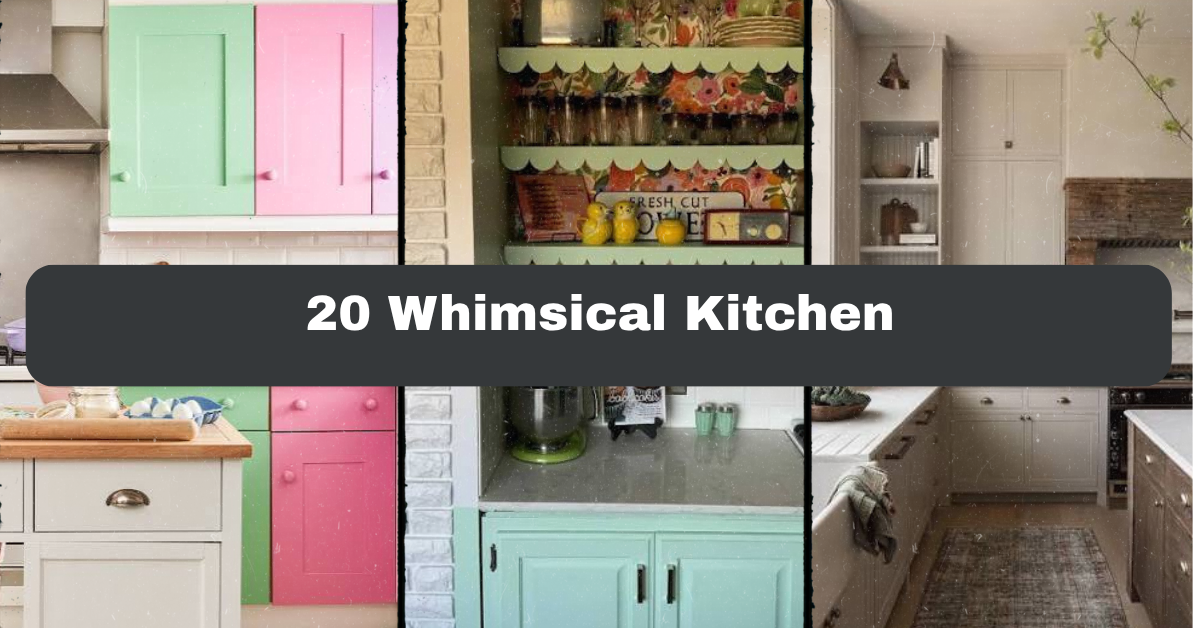
20 Whimsical Kitchen ideas can turn an ordinary cooking space into a cheerful room filled with color, charm, and personal details. I’ll show you how to create that look without making the kitchen feel messy or hard to use.
What makes a kitchen whimsical, and how can it stay practical? A whimsical kitchen combines playful colors, unusual shapes, cheerful patterns, vintage touches, and nature-inspired details while keeping storage, lighting, work areas, and easy cleaning in place.
You do not need a full remodel to get the look. Keep reading for creative ideas that work in small apartments, classic homes, modern spaces, and busy family kitchens.
What Does a Whimsical Kitchen Look Like?
To me, a whimsical kitchen feels happy the moment you walk in. It may include mint cabinets, scalloped shelves, flowered curtains, colorful dishes, or a pendant light shaped like a mushroom. The goal is not to fill every corner with decorations. It is to mix useful pieces with a few surprising details.
Start with a practical base. Choose durable flooring, easy-clean counters, and enough storage for daily cooking. Then add personality through paint, hardware, textiles, art, lighting, and open shelving. A whimsical kitchen can be soft and cottage-like, bold and retro, or bright and modern. The best version reflects your taste while still giving you room to chop, wash, cook, and move around.
1. Paint the Cabinets a Cheerful Pastel Color
Pastel cabinets create an instant playful mood. Try butter yellow, soft pink, pale aqua, lavender, or pistachio green. These colors feel light, but they still make the room memorable. For balance, pair them with warm white walls, light wood counters, or simple brass handles.
If you have dark floors or black appliances, a dusty pastel may work better than a very pale shade. In a small kitchen, use one color on the lower cabinets and white on the uppers to keep the room open.
For an easy update, paint only the island or a single cabinet wall. Use a satin or semi-gloss finish because it handles fingerprints and light cleaning better than flat paint. This idea fits cottage, Scandinavian, retro, and contemporary homes with a careful color choice.
Next, add a finish that makes those cheerful cabinets feel even more special.
2. Choose Scalloped Edges for Shelves and Counters
Scalloped edges bring a gentle, storybook detail to a kitchen. You can use them on open shelves, a range hood trim, a window valance, a countertop edge, or the side panels of an island. The curved pattern softens straight cabinets and adds movement without taking up extra space.
Keep the shape modest if your kitchen already has bold tile or patterned wallpaper. A small scallop can look polished. A large repeating curve feels more playful.
You can buy ready-made wood trim, cut thin plywood edging, or ask a cabinetmaker to add the detail during a renovation. Paint the trim the same color as the cabinet for a calm look, or use a contrasting shade for more drama. Scallops work well in traditional, English cottage, coastal, and modern kitchens when the rest of the room stays simple.
With the edges softened, the next step is to bring in pattern underfoot.
3. Layer a Patterned Kitchen Runner
A washable runner can make a plain kitchen feel warm and collected. Look for stripes, tiny flowers, fruit motifs, checks, or faded geometric shapes. Place it in front of the sink, along the main work path, or beside the island.
Choose a low-pile design so doors do not catch on it. A non-slip pad keeps the runner safer, especially near water. For busy homes, pick a machine-washable rug made from cotton, recycled polyester, or another durable fiber.
The rug does not need to match the cabinets exactly. Instead, repeat one of its colors in a tea towel, vase, or piece of art. This creates a connection without making the room look too planned. A floral runner suits a farmhouse kitchen, while a striped or geometric runner can fit a modern or mid-century space.
Now that the floor has personality, use the table below to choose a color direction.
Whimsical Kitchen Color Palette Guide
| Palette | Main Color | Supporting Colors | Best With |
|---|---|---|---|
| Soft cottage | Butter yellow | Cream, sage, pale blue | Wood counters and brass hardware |
| Fresh garden | Sage green | Blush pink, white, terracotta | Floral fabrics and ceramic dishes |
| Retro pop | Aqua | Cherry red, warm white, yellow | Chrome details and checkerboard floors |
| Moody storybook | Plum | Dusty rose, walnut, cream | Aged brass and dark wood |
| Coastal playful | Sea glass blue | Sand, coral, white | Rattan, linen, and light oak |
| Modern pastel | Pale lavender | Charcoal, white, natural wood | Flat-front cabinets and simple lighting |
4. Display Colorful Everyday Dishes
Everyday dishes can become part of the decor when you choose colors and shapes with care. Stack yellow plates, blue bowls, or speckled mugs on open shelves. Add a few handmade pieces with uneven rims for a relaxed, collected feeling.
Use dishes that you actually reach for. This keeps the display useful instead of turning it into clutter. Arrange items by color, size, or function. For example, place large plates at the bottom, bowls in the middle, and cups near the top.
Leave some empty space between stacks. A shelf packed from end to end will look heavy. If you have glass-front cabinets, use them to protect delicate pieces while still showing their colors. This idea works in rental kitchens, farmhouse rooms, and sleek modern spaces alike.
Your dishes now add color, so let the walls tell a more imaginative story.
5. Install a Playful Wallpaper Accent
Wallpaper can create a strong whimsical moment without covering the entire kitchen. Use it behind open shelves, inside a breakfast nook, above a backsplash, or on one wall away from the stove. Look for small fruit prints, hand-drawn flowers, birds, mushrooms, leaves, or playful geometric designs.
Avoid placing standard wallpaper directly behind a cooktop unless it has proper protection. Heat, grease, and steam can damage many wall coverings. A glass panel or washable backsplash may offer better protection in that area.
For a small kitchen, a tiny repeating print often feels less overwhelming than a large mural. If you rent, try peel-and-stick wallpaper on a smooth, clean surface. Check the product instructions before applying it. Wallpaper works across styles, from vintage cottage to bold maximalist and modern eclectic.
After the walls gain character, add a focal point that glows.
6. Hang an Unexpected Pendant Light
Lighting can make a kitchen feel like a little jewel box. Choose a pendant shaped like a flower, globe, lantern, mushroom, shell, or paper lantern. A colorful glass shade can also bring whimsy without adding visual clutter.
Hang pendants where they will not block sightlines. Over an island, the bottom of the fixture is often placed about 30 to 36 inches above the counter, but the exact height depends on the room and the people using it. Ask an electrician to handle hardwired installation.
Use warm white bulbs around 2700K to create a cozy evening glow. Place task lighting under cabinets so the decorative pendant is not doing all the work. This idea adapts easily to modern kitchens with sculptural lighting, traditional rooms with lanterns, or coastal spaces with woven shades.
A glowing fixture deserves a grounded companion, so next, bring in natural texture.
7. Add Woven Baskets and Natural Fibers
Woven baskets add softness to hard kitchen surfaces. Use them to store napkins, produce, cookbooks, or extra dish towels. Seagrass, rattan, water hyacinth, and cotton rope all bring a relaxed, handmade feeling.
Choose baskets with sturdy handles if you move them often. Line food storage baskets with washable fabric, and avoid placing natural fibers directly beside a sink where they may stay damp. A shallow basket on top of the refrigerator can hide rarely used items, while a larger basket under a console can hold table linens.
Mixing natural materials with bright paint keeps a whimsical room from feeling too sugary. Try rattan stools with pink cabinets or a seagrass basket beside blue tile. Woven accents work especially well in coastal, boho, farmhouse, and Scandinavian kitchens.
The room has softness now. A small herb display can add life and fragrance.
8. Create a Tiny Indoor Herb Garden
A row of herbs brings color, texture, and usefulness to the kitchen. Place basil, thyme, mint, rosemary, or chives on a sunny sill or a narrow wall shelf. Use mismatched ceramic pots for a collected look, or choose one repeating color for a cleaner arrangement.
Make sure the plants receive enough light. Most common culinary herbs need several hours of bright light, and a small grow light can help in a dim room. Use pots with drainage holes and a tray beneath them to protect the sill.
Label each herb with painted wood tags, small chalk labels, or stamped metal markers. Trim plants often so they stay full instead of becoming tall and thin. This idea suits nearly any home style because greenery naturally bridges rustic, modern, coastal, and vintage decor.
Use this guide to match materials with the right kitchen location.
Material and Maintenance Guide
| Material | Best Kitchen Use | Main Benefit | Care Note |
|---|---|---|---|
| Rattan | Stools, baskets, pendant shades | Warm and lightweight | Keep away from standing water |
| Ceramic | Planters, utensil jars, dish displays | Colorful and easy to wipe | Handle carefully to avoid chips |
| Painted wood | Shelves, trim, signs | Adds cottage charm | Use washable paint and seal edges |
| Glass | Pendants, cabinet doors, jars | Bright and reflective | Clean often near cooking areas |
| Stainless steel | Appliances and work surfaces | Durable and hygienic | Wipe with the grain |
| Cotton or linen | Curtains, towels, seat cushions | Softens the room | Wash regularly and air-dry when possible |
| Seagrass | Baskets and trays | Natural texture | Avoid prolonged moisture |
9. Use Fruit-Shaped or Hand-Painted Hardware
Cabinet hardware is a small detail with a big effect. Try knobs shaped like lemons, cherries, flowers, mushrooms, or leaves. Hand-painted ceramic pulls can also make plain cabinets feel custom.
Use whimsical hardware selectively. You might place it on the island, pantry door, or a row of upper cabinets rather than every drawer. This keeps the room playful without making the design feel theme-heavy.
Measure the existing holes before buying replacements. If the new pulls use a different spacing, you may need to fill old holes and drill new ones. For daily use, choose hardware with a smooth finish and a shape that is easy to grip.
Fruit and floral knobs fit cottage and vintage kitchens, while simple leaf or geometric pulls can work in modern spaces. The hardware is in place, so let a small seating area add another layer of charm.
10. Build a Cozy Breakfast Nook
A breakfast nook gives the kitchen a place to pause. Use a small round table, a built-in bench, or two compact chairs. Round shapes help people move around tight corners and make conversation feel easy.
Add a washable seat cushion in a floral, checked, or striped fabric. A wall-mounted shelf can hold mugs, cookbooks, or a small vase. If space is limited, choose a drop-leaf table that folds flat when you need more walking room.
Keep the colors connected to the kitchen but not identical. For example, pair sage cabinets with a dusty pink cushion and a natural wood table. Make sure the seat height works comfortably with the table, and leave enough clearance for knees. This idea works in apartments, farmhouse homes, vintage houses, and modern open-plan spaces.
A nook feels even more inviting when the wall behind it has something personal to say.
11. Frame Cheerful Kitchen-Themed Art
Kitchen art does not need to be serious. Frame botanical drawings, vintage food labels, still-life prints, handwritten recipes, or colorful illustrations of vegetables. A small gallery wall can make an empty corner feel finished.
Mix frame sizes, but repeat one element such as oak, white, or brass. Before hanging, lay the frames on the floor and test the arrangement. Keep the center of the grouping near eye level, and avoid placing unprotected paper where steam or splashes are common.
You can also frame fabric scraps, children’s artwork, or a favorite recipe card. These personal pieces often feel more meaningful than store-bought prints. In a traditional kitchen, use ornate frames. In a modern room, choose simple black or pale wood frames. The art is ready, and a mirrored detail can make the whole room feel brighter.
12. Add a Small Decorative Mirror
A mirror can reflect light and make a compact kitchen feel more open. Choose a rounded, wavy, arched, or scalloped frame for a whimsical touch. Hang it across from a window or near a light source so it brightens the room.
Do not place a delicate mirror where it can be hit by cabinet doors, pots, or busy traffic. A framed acrylic mirror may be safer in a family kitchen. Clean it with a soft cloth and keep spray away from the frame.
A mirror does not have to be large. Even a small one above a coffee station or beside a pantry can create an interesting focal point. Wavy mirrors suit modern and eclectic kitchens, while antique frames work beautifully with cottage or traditional rooms.
Use the following size guide before buying one more decorative feature.
Kitchen Accent Size Guide
| Feature | Suggested Size for Small Kitchen | Suggested Size for Large Kitchen | Placement Tip |
|---|---|---|---|
| Runner rug | 2 x 6 feet | 3 x 8 feet | Keep edges clear of appliance doors |
| Pendant shade | 10 to 16 inches wide | 16 to 24 inches wide | Center over an island or table |
| Open shelf | 24 to 36 inches long | 36 to 60 inches long | Leave room between displayed pieces |
| Wall mirror | 18 to 24 inches wide | 28 to 40 inches wide | Keep away from direct splash zones |
| Breakfast table | 30 to 36 inches round | 42 to 48 inches round | Allow about 36 inches for circulation |
| Art grouping | 24 to 36 inches wide | 36 to 60 inches wide | Hang at comfortable eye level |
| Herb shelf | 18 to 30 inches long | 30 to 48 inches long | Place near bright light |
13. Try Checkerboard or Painted Floors
A checkerboard floor gives a kitchen instant personality. Classic black and white is bold, but softer combinations can feel more relaxed. Try cream and terracotta, pale blue and white, or sage and warm beige.
If you are renovating, consider durable porcelain tile or sheet flooring that copies the pattern. For a budget update, use a stencil and floor paint on a properly prepared wood floor. Test the paint in a hidden area first, and follow the product directions for curing time.
Keep the rest of the room calmer when the floor is strong. Solid cabinet colors and simple counters will let the pattern shine. In a modern kitchen, use oversized squares. In a vintage or farmhouse kitchen, smaller checks may feel more natural. Once the floor has a pattern, add a vertical feature to balance it.
14. Paint the Ceiling a Soft, Surprising Color
The ceiling is often forgotten, but it can become a quiet source of charm. Paint it pale blue, blush, butter yellow, or a warm cream that differs slightly from the walls. A color overhead can make a white kitchen feel more complete without adding objects to the counters.
Use a lighter shade if the ceiling is low. Darker colors can feel cozy, but they may make a small room seem shorter. If you have ceiling beams, paint the beams white and use color between them, or reverse the treatment for more contrast.
Before painting, wash away grease near the cooking area and use painter’s tape around trim. Test the color at different times of day because daylight and warm bulbs can change how it looks. This idea works in old homes, modern apartments, cottage kitchens, and colorful maximalist rooms.
The ceiling has color, so now let the backsplash bring in pattern and texture.
15. Choose a Colorful Tile Backsplash
A playful backsplash can carry the main design theme. Consider fish-scale tile, small hexagons, hand-painted squares, zellige-style surfaces, or tiles in mixed pastel colors. Use a simple layout if the tile itself has strong variation.
For easier cleaning, choose a smooth surface behind the cooktop. Textured tiles look beautiful, but deep grooves can collect grease. A darker grout may also be more forgiving near food preparation areas, while light grout keeps a small kitchen feeling bright.
You do not have to tile the entire wall. A short backsplash behind the sink or a narrow strip under open shelves can be enough. Use one backsplash color in nearby textiles or dishes to create a visual link. Colorful tile fits Mediterranean, cottage, retro, coastal, and contemporary homes.
A lively backsplash needs good storage nearby, so make your storage part of the design.
16. Turn Storage Into a Colorful Display
Storage does not have to disappear. Install a peg rail for pans, wooden spoons, mugs, and small baskets. Add a freestanding hutch, a painted pantry cabinet, or glass-front doors to show off useful pieces.
Group items by task. Keep cooking tools near the stove, mugs near the coffee area, and lunch containers near the refrigerator. This makes the room easier to use and prevents the display from becoming random.
Paint a peg rail the same color as the cabinets for a quiet effect, or use a contrasting shade for a focal point. Choose strong hooks that can hold the weight of the items you plan to hang. This approach works in small kitchens because it uses wall space, and it also suits farmhouse, industrial, vintage, and modern designs.
The storage is useful and attractive. Next, add one statement piece that gives the room a sense of story.
17. Add a Vintage or Vintage-Style Appliance
A retro refrigerator, range, toaster, or mixer can become the star of a whimsical kitchen. Rounded corners and colors like cream, robin’s egg blue, red, or pale pink bring instant character.
A true vintage appliance can be beautiful, but check its wiring, energy use, seals, and replacement parts before buying. A modern appliance with a retro shape gives you the look with updated safety and performance.
Let one appliance lead. Too many competing statement pieces can make the kitchen feel like a showroom. Repeat its color in small details, such as a vase, stool, or towel. A retro appliance works naturally in mid-century, diner-inspired, cottage, and eclectic homes.
Now balance that bold object with a quieter, handmade surface.
18. Use a Handmade Ceramic Collection
Handmade ceramics bring small surprises to shelves and counters. Look for wavy vases, face mugs, speckled pitchers, colorful spoon rests, and uneven bowls. Their tiny variations make the kitchen feel lived in.
Display three to five related pieces together rather than scattering them across every surface. Keep fragile ceramics away from the sink edge and busy prep zones. A tray can help group a collection and make it easier to move when cleaning.
Choose one common thread, such as a glaze color, shape, or maker. This creates order while still allowing each piece to feel unique. Handmade ceramics suit rustic, Japanese-inspired, modern, coastal, and cottage kitchens. The collection adds charm, and a touch of fabric can soften the harder ceramic surfaces.
19. Hang a Short Cafe Curtain
A cafe curtain adds privacy and softness without blocking all daylight. Choose gingham, floral cotton, striped linen, or a small fruit print. Hang it across the lower half of a window, especially above a sink or breakfast nook.
Measure the inside width of the window and allow enough fullness for gentle folds. A curtain that is about one and a half to two times the window width usually gives a fuller look. Washable fabric is the safest choice for a kitchen.
Avoid long curtains near a stove or open flame. Use a tension rod for a renter-friendly installation, or install a small curtain rod for a more finished look. Cafe curtains fit farmhouse, French country, cottage, coastal, and retro kitchens.
The final idea adds whimsy through sound, movement, and a little surprise.
20. Install a Charming Kitchen Chalkboard
A chalkboard can be both decorative and useful. Paint a small section of wall, use a framed board, or hang a magnetic chalkboard near the pantry. Write the weekly menu, a shopping list, a favorite quote, or a simple drawing.
Choose a location away from water and direct heat. Season a new chalkboard by rubbing the side of a piece of chalk across the surface, then wiping it clean. This helps prevent ghost marks. Use liquid chalk only if the board allows it.
A wood frame gives a cottage feeling, while a slim black frame looks modern. Keep the writing short so the board stays readable. This final touch works in family kitchens, rental homes, farmhouse spaces, and eclectic apartments.
Tips for Success
- Start with one strong feature, such as colorful cabinets, patterned tile, or a statement light.
- Keep work surfaces mostly clear so the room remains easy to cook in.
- Repeat two or three colors throughout the kitchen instead of using every color at once.
- Choose washable rugs, curtains, and cushions for areas near food and water.
- Mix smooth and textured materials to keep the room from feeling flat.
- Check lighting at night before committing to paint colors or wallpaper.
- Use open shelving for items you use often, not objects you want to hide from dust.
Common Mistakes and How to Avoid Them
Using too many competing patterns
Choose one main pattern and one or two smaller supporting patterns. Keep the colors connected.
Ignoring the work triangle
Place the sink, refrigerator, and cooking area so you can move between them without squeezing past furniture or open doors.
Choosing delicate materials near the stove
Use heat-resistant, washable, or protected surfaces in areas exposed to grease, steam, and splashes.
Filling every shelf and counter
Leave empty space around displays. It gives the eye a place to rest and makes cleaning easier.
Picking style over comfort
Test stools, chairs, handles, and lighting heights before final installation. A whimsical kitchen still needs to feel good every day.
Forgetting the room’s natural light
Test paint, tile, and fabric samples during morning, afternoon, and evening. Colors can shift dramatically under different bulbs and sunlight.
Similar Variations
- Whimsical Cottage Kitchen: Soft colors, floral prints, vintage dishes, painted wood, and cozy fabric details.
- Retro Diner Kitchen: Checkerboard floors, chrome accents, bold red or aqua, rounded appliances, and graphic signs.
- Coastal Whimsy Kitchen: Sea glass colors, shell shapes, woven baskets, light wood, and relaxed linen.
- Garden-Inspired Kitchen: Green cabinets, botanical art, herb pots, floral wallpaper, and natural textures.
- Modern Playful Kitchen: Flat-front cabinets, sculptural lighting, pastel accents, curved furniture, and minimal clutter.
- Dark Storybook Kitchen: Deep blue, plum, forest green, antique brass, moody art, and warm wood.
A whimsical kitchen works best when practical choices form the foundation and playful details create the mood. You can begin with paint, hardware, lighting, textiles, or a single shelf of colorful dishes. Small changes often have more impact than a complete renovation.
The goal is a room that makes daily tasks feel brighter while still giving you enough storage, comfort, and clear work space. With these 20 Whimsical Kitchen ideas, your kitchen can feel useful, personal, and delightfully unexpected.
Leave a Reply