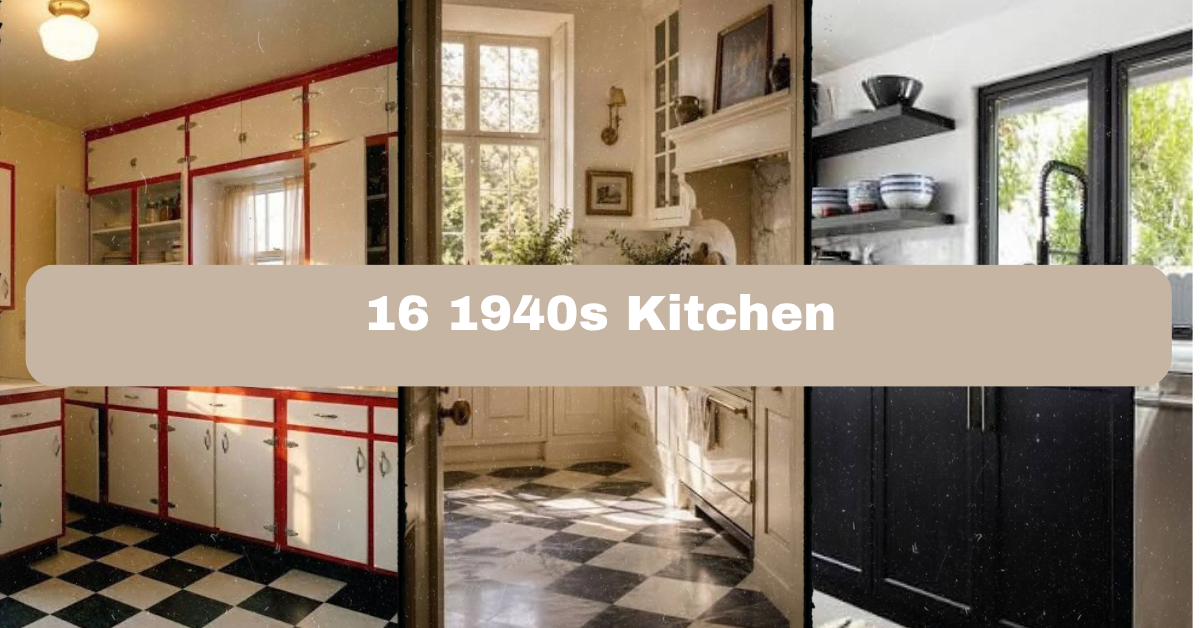
These 16 1940s Kitchen ideas will help you create a warm, practical room with vintage charm while still meeting the needs of modern life.
What makes a 1940s kitchen special? It combines hardworking layouts, painted cabinets, simple appliances, cheerful colors, chrome details, and easy-clean surfaces. The best designs feel useful, welcoming, and rooted in mid-century history.
I’ll show you how to bring those details together without making your kitchen look like a movie set. You’ll also find color ideas, material choices, budget tips, and ways to blend vintage style with newer homes.
Understanding the 1940s Kitchen Style
When I picture a 1940s kitchen, I see a room that works hard but still feels cheerful. These kitchens were often compact, bright, and carefully organized. Homeowners used every inch, so shelves, wall cabinets, breakfast nooks, and built-in storage mattered.
The style sits between older farmhouse design and the cleaner mid-century look that came later. You’ll see painted wood, metal hardware, checkerboard floors, enamel surfaces, and practical furniture. Popular colors included mint green, butter yellow, pale blue, red, cream, and soft pink.
You do not need a fully original kitchen to capture the mood. A few strong details can do the job. Start with the layout, then add color, lighting, furniture, and accessories that feel useful rather than cluttered.
1. Choose a Soft Vintage Color Palette
Color sets the mood in a 1940s kitchen. I like starting with a gentle base such as warm white, cream, pale gray, or light butter yellow. Then I add one or two stronger shades, such as mint green, dusty blue, cherry red, or soft pink.
Painted cabinets are one of the easiest ways to bring in this look. Cream cabinets feel calm and traditional, while mint or pale blue cabinets create a more playful vintage effect. Keep the ceiling and larger wall areas light so the room still feels open.
For a practical update, paint only the lower cabinets in a vintage color and leave the upper cabinets white. This gives you charm without making the space feel busy. The palette works in farmhouse, cottage, modern, and coastal homes because the colors are soft and easy to balance.
Once your main colors are chosen, the next step is selecting cabinet finishes that support them.
2. Install Painted Shaker or Slab-Front Cabinets
Cabinet doors in a 1940s-inspired kitchen should look simple and sturdy. Shaker doors work well because their clean frames resemble traditional painted cabinetry. Flat slab doors can also work, especially when you want a more streamlined look with a mid-century touch.
I usually recommend satin or eggshell paint. It has enough shine to be wiped clean but does not look overly glossy. White, cream, sage, muted turquoise, and pale yellow all suit the period.
If replacing cabinets is not in your budget, repaint the existing doors. Remove the hardware, clean the surfaces, sand lightly, prime, and apply two thin coats of cabinet paint. Add new hinges only if the old ones are damaged. This idea fits traditional and farmhouse homes, but it also softens a modern kitchen with sharp lines.
After the cabinets are set, small pieces of hardware can make the room feel much more authentic.
3. Add Chrome Pulls and Porcelain Knobs
Hardware may be small, but it has a strong visual effect. Chrome cup pulls, rounded metal knobs, and simple latches all suit a 1940s kitchen. Porcelain knobs in white, black, or pale blue bring a softer farmhouse feeling.
Avoid mixing too many finishes. Choose one main metal for cabinet hardware, faucet parts, and visible shelf brackets. Polished chrome gives a crisp, classic look. Brushed nickel is easier to maintain and blends well with newer appliances.
Before ordering hardware, measure the existing holes. If you are drilling new holes, make a cardboard template so every pull sits at the same height. This quick step prevents crooked handles and unnecessary cabinet damage.
The same hardware can work with cottage, traditional, industrial, or modern decor. Next, bring the period look down to the floor with a durable pattern.
4. Use a Checkerboard or Small-Pattern Floor
A checkerboard floor instantly gives a kitchen a vintage foundation. Classic black and white is bold, but cream and muted green feel more relaxed. Pale blue and white can make the room look cooler and brighter.
For a 1940s effect, choose small or medium squares rather than oversized modern tiles. Sheet vinyl, porcelain tile, and luxury vinyl plank can all recreate the look. Vinyl is especially practical because it is softer underfoot and simple to clean.
Use a simple floor pattern if your cabinets have strong color. If the cabinets are white or cream, a more noticeable checkerboard design can add interest. The style adapts easily to retro, farmhouse, coastal, and even contemporary kitchens.
Now that the larger surfaces are covered, it helps to compare color combinations before buying paint or tile.
1940s Kitchen Color Pairings
| Main color | Supporting color | Accent color | Overall effect |
|---|---|---|---|
| Warm white | Mint green | Chrome | Fresh and classic |
| Cream | Cherry red | Black | Cheerful diner style |
| Pale blue | White | Butter yellow | Light and coastal |
| Soft pink | Cream | Dark green | Playful vintage cottage |
| Sage green | Tan | Brass or bronze | Earthy and traditional |
| Butter yellow | Pale gray | Red | Sunny and welcoming |
5. Select Easy-Clean Countertops
Countertops in a 1940s kitchen were chosen for work, not display. For a similar feeling, consider laminate, ceramic tile, soapstone, or a simple quartz surface. Laminate is often the most budget-friendly choice and comes in retro patterns, solid colors, and faux stone finishes.
White laminate with a metal edge creates a classic diner-inspired look. Cream or pale gray counters are less stark and pair well with painted cabinets. Small ceramic tiles can add charm, but remember that grout requires more cleaning.
I suggest using a matte or low-sheen finish instead of a dramatic polished slab. It feels more period-appropriate and hides small marks. In a modern home, simple quartz can provide the same clean appearance with easier maintenance and better durability.
With a quiet counter in place, a compact sink can become the next useful vintage feature.
6. Choose a Deep Porcelain or Apron-Front Sink
A deep white sink gives a 1940s kitchen a practical centerpiece. Apron-front sinks are especially attractive in farmhouse-style rooms, while a simple undermount or drop-in porcelain sink can look more historically modest.
Look for a broad single basin if you wash large pans often. A divided basin may be better for someone who prefers separate washing and rinsing areas. White fireclay, enameled cast iron, and porcelain all create the right visual effect, though they vary in weight and maintenance.
Check your cabinet size before ordering. Some apron-front sinks require cabinet modifications. Use a curved chrome faucet with separate hot and cold handles if you want a stronger vintage impression. This idea suits cottage, farmhouse, traditional, and updated urban kitchens.
A good sink needs good light, so the next idea focuses on fixtures that create a warm working glow.
7. Hang Schoolhouse or Glass Globe Lighting
Lighting can change the whole personality of the room. Schoolhouse pendants, milk-glass globes, and simple flush-mount fixtures all suit a 1940s kitchen. They provide a soft shape without adding visual clutter.
Use one central fixture in a small kitchen. In a larger room, combine a ceiling light with a pendant over the table or island. Warm LED bulbs around 2700K to 3000K give a cozy glow while still offering useful task light.
Keep the fixture finish consistent with your hardware. Chrome, aged brass, and painted metal are good choices. If your kitchen is modern, a simple globe pendant can add history without making the entire room look old-fashioned.
Once the room is lit, a breakfast table can make the kitchen feel more social and true to the period.
8. Create a Compact Breakfast Nook
Many 1940s kitchens made room for casual meals, coffee, and quick conversations. You can recreate that feeling with a small round table, a built-in bench, or a narrow wall-mounted table.
Choose painted wood, chrome legs, or a laminate top with a metal edge. Red vinyl chairs create a diner effect, while cream wood chairs feel more like a country kitchen. A bench with a washable cushion adds comfort without taking up much floor space.
Measure carefully before buying furniture. Leave about 36 inches of walking space around the table when possible. In a tiny apartment, use a drop-leaf table that folds flat against the wall. This idea works in traditional, coastal, retro, and modern homes.
The right furniture size matters, so here are useful measurements to keep the layout comfortable.
Kitchen Nook Size Guide
| Element | Recommended size | Best use |
|---|---|---|
| Two-person round table | 30 to 36 inches wide | Small kitchen or apartment |
| Four-person table | 36 to 42 inches wide | Family breakfast area |
| Wall-mounted drop-leaf table | 20 to 30 inches deep | Narrow room |
| Bench seat depth | 16 to 20 inches | Comfortable dining |
| Walking clearance | 36 inches minimum | Main traffic path |
| Table height | 28 to 30 inches | Standard dining comfort |
9. Add Open Shelves for Everyday Dishes
Open shelving can make a small kitchen feel wider and more useful. In a 1940s-style room, shelves often held dishes, jars, cookbooks, and daily supplies. Use painted wood, simple brackets, or a narrow metal rail.
Keep the display practical. Show plates, bowls, mugs, and one or two decorative pieces rather than filling every inch. Cream dishes with a colored rim look especially appropriate. Glass jars can hold flour, sugar, pasta, or dry beans.
Install shelves away from the stove if possible. Grease can build up quickly on exposed dishes. For a modern adaptation, use one open shelf between two closed cabinets. That gives you the vintage look while keeping most storage protected.
After adding storage, bring in fabric details that soften hard surfaces and add comfort.
10. Dress the Windows in Simple Fabric
Window treatments in a 1940s kitchen were often modest and useful. Cafe curtains, short gingham panels, and cotton Roman shades can add color without blocking sunlight.
Choose fabric that can be washed easily. Gingham, small florals, stripes, and fruit motifs all fit the period. If the room already has a checkerboard floor or colorful cabinets, use a quieter pattern. A cream curtain with a narrow red or blue trim may be enough.
Hang the curtain rod just above the window frame to make the window look taller. Avoid heavy drapes because they can make a working kitchen feel dark and crowded. This idea adapts well to farmhouse, cottage, coastal, and vintage-modern spaces.
Textiles can also appear underfoot, where the right rug adds warmth and protects the floor.
11. Layer a Washable Runner for Warmth
A narrow runner makes a kitchen more comfortable and helps define the cooking area. Choose a flat-weave cotton rug, washable runner, or low-pile vintage-style design. Stripes, tiny diamonds, and faded geometric patterns feel right for a 1940s-inspired room.
Pick colors that repeat the cabinets or curtains. A muted red runner can connect white cabinets with red hardware. A blue-and-cream pattern works well in a pale coastal kitchen. Avoid thick shag rugs, which collect crumbs and can become a tripping hazard.
Use a nonslip pad, especially near the sink. Measure the walkway first so the rug does not block cabinet doors. This simple layer works in nearly any home style and can be changed when you want a new color direction.
The next step is adding wall detail without turning the kitchen into a crowded display.
12. Install Beadboard or Small Subway Tile
Beadboard and small subway tile both bring texture to a 1940s kitchen. Painted beadboard feels warm and cottage-like, while white tile with dark grout creates a cleaner utility-room look.
Use beadboard on one wall, beneath a chair rail, or as a backsplash behind open shelves. For tile, choose modest sizes such as 3 by 6 inches rather than very large slabs. Cream grout can soften the contrast, while gray or black grout makes the pattern stand out.
Protect beadboard from water around the sink by using a sealed finish or tile in the splash zone. In a modern kitchen, use tile only behind the range and keep the rest of the walls plain. That creates a restrained vintage accent.
Here is a quick comparison to help you choose a surface that fits your budget and maintenance needs.
Vintage Kitchen Surface Comparison
| Material | Typical cost level | Maintenance | Best location | Style effect |
|---|---|---|---|---|
| Painted beadboard | Low to medium | Wipe and reseal | Dry walls | Cottage and farmhouse |
| Ceramic subway tile | Medium | Clean grout regularly | Backsplash | Classic and practical |
| Laminate backsplash | Low | Very easy to wipe | Behind counters | Retro and budget-friendly |
| Stainless steel | Medium to high | Wipe fingerprints | Behind range | Utility and modern vintage |
| Soapstone | High | Occasional oiling | Countertops | Traditional and aged |
| Quartz | Medium to high | Low maintenance | Countertops | Modern with vintage color |
13. Display a Vintage-Style Range Hood
The range hood does not have to look futuristic. A simple white, cream, black, or stainless steel hood can blend into the kitchen while still providing proper ventilation.
For a stronger vintage look, choose a hood with rounded corners, a visible trim band, or a chimney shape. You can also build a custom wood surround and paint it to match the cabinets. Always follow local ventilation rules and the manufacturer’s instructions.
Do not cover a working hood with decorative material that blocks airflow. Measure the cooking surface and hood width carefully before ordering. This idea works in modern kitchens because the appliance remains useful while the outer shape adds character.
With the major fixtures finished, it is time to make the room feel lived in through useful accessories.
14. Use Glass Jars, Metal Canisters, and Wall Baskets
Storage accessories can make a 1940s kitchen feel complete. Glass jars with simple labels are useful for flour, rice, sugar, and oats. Metal canisters in cream, red, turquoise, or pale yellow add color while keeping dry goods protected.
Wire wall baskets can hold onions, towels, or cooking tools. A wooden peg rail gives you a place for aprons, measuring cups, and small pans. These pieces should serve a purpose. Too many decorative signs or novelty objects can make the room feel staged.
Place the items you use every day within easy reach. Keep heavier containers on lower shelves and lighter pieces above the counter. This practical approach fits farmhouse, retro, industrial, and modern kitchens.
A few carefully chosen graphics can finish the room without overwhelming these useful details.
15. Add Period-Inspired Art and Signage
Wall art is a simple way to suggest the 1940s without replacing every surface. Look for botanical prints, fruit illustrations, old-style food labels, simple kitchen diagrams, or reproduction advertisements.
Use one large print near the breakfast nook or create a small group of two or three matching pieces. Choose frames in wood, painted metal, or simple black. Avoid covering every wall. A kitchen needs breathing room.
If you like signs, pick one with a practical message or a classic food theme. The goal is warmth, not clutter. In a modern home, one framed print above a counter may be all you need. In a cottage kitchen, a small gallery wall can feel natural.
The final design idea brings in the most personal layer, which is the mix of old-looking and new-working pieces.
16. Mix Vintage Details with Modern Appliances
A comfortable 1940s kitchen does not need a truly old refrigerator or stove. Modern appliances are safer, more efficient, and easier to use. The trick is choosing shapes and finishes that do not fight the room.
White, cream, black, and stainless steel appliances can all work. Retro-style refrigerators with rounded doors create a strong focal point, while panel-ready appliances can disappear behind matching cabinet fronts. Keep appliance sizes suited to the room so the kitchen does not lose its compact character.
I like combining one obvious vintage feature with quieter modern upgrades. For example, use a retro refrigerator, induction cooktop, LED lighting, and a modern dishwasher. This approach suits every home style because it protects comfort while keeping the design personal.
Use this final planning guide to balance the look, the budget, and everyday function.
1940s Kitchen Budget Tiers
| Budget level | Best improvements | Approximate project focus |
|---|---|---|
| Under $500 | Paint, knobs, curtains, jars, art | Cosmetic refresh |
| $500 to $2,000 | Lighting, runner, open shelves, hardware | Noticeable style update |
| $2,000 to $7,000 | Countertop, sink, backsplash, cabinet work | Partial renovation |
| $7,000 to $20,000 | New cabinets, flooring, appliances | Major remodel |
| Above $20,000 | Full layout change and custom work | Complete renovation |
Tips for Success
- Start with the kitchen layout before buying decorative items. A beautiful room still needs safe, clear work zones.
- Choose one main accent color and one smaller accent. Too many bright shades can make the space look chaotic.
- Measure every wall, cabinet, appliance opening, and walkway before ordering materials.
- Use washable fabrics and sealed finishes near the sink, stove, and food preparation areas.
- Mix vintage-looking pieces with modern safety features, such as updated wiring, ventilation, and appliance controls.
- Repeat finishes in small ways. For example, echo a cabinet color in the rug, curtains, or dishware.
- Leave some surfaces open. Empty counter space makes the room feel calmer and more useful.
Common Mistakes and How to Avoid Them
Making every item look antique
Choose one or two strong period features, then balance them with clean modern pieces. A fully themed room can feel more like a display than a home.
Using colors that are too bright
Vintage colors are often softer than people expect. Test paint samples in morning and evening light before committing to a full cabinet color.
Ignoring storage needs
Open shelves look attractive, but they cannot replace all closed storage. Keep everyday dishes visible and store less attractive supplies behind doors.
Choosing style over safety
Old appliances, loose rugs, poor lighting, and blocked ventilation create real problems. Keep electrical work, gas connections, and range ventilation up to current standards.
Overcrowding a small kitchen
A 1940s kitchen usually benefits from compact furniture and simple decor. Remove anything that blocks cabinet doors, work surfaces, or walking paths.
Mixing too many metal finishes
Chrome, brass, bronze, and black metal can compete with one another. Select one main finish and use a second only as a small accent.
Similar Variations
- 1940s Farmhouse Kitchen: Uses painted wood, apron-front sinks, gingham, and warm cream tones for a relaxed country feel.
- Retro Diner Kitchen: Focuses on chrome edges, red accents, vinyl seating, checkerboard floors, and bold signage.
- 1940s Cottage Kitchen: Adds floral fabrics, soft pinks, open shelves, beadboard, and delicate dishware.
- Vintage Coastal Kitchen: Combines pale blue, white, natural wood, glass, and simple nautical touches.
- Modern Vintage Kitchen: Keeps the historic color palette and hardware but uses sleek appliances, quartz counters, and clean lighting.
- Industrial Heritage Kitchen: Mixes 1940s utility details with metal shelving, exposed fixtures, dark accents, and reclaimed wood.
A successful 1940s-inspired kitchen should feel useful first and nostalgic second. Begin with a hardworking layout, add a soft period color palette, and choose a few details that have real purpose. Painted cabinets, chrome hardware, a compact table, vintage textiles, and modern appliances can work together without looking forced.
I find the best rooms are not perfect copies of the past. They borrow the warmth, order, and cheerful character of the era while fitting the way you cook and live now. With that balance in mind, you can create a welcoming 16 1940s Kitchen.
Leave a Reply