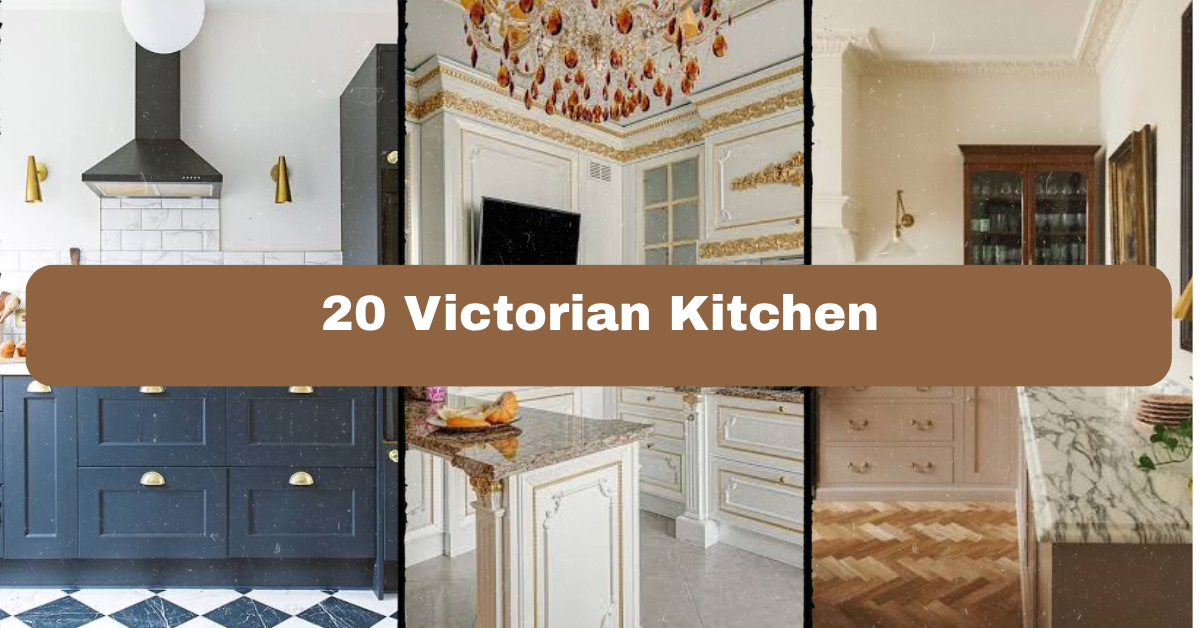
20 Victorian Kitchen ideas can help you create a room that feels historic, practical, and welcoming without turning it into a dark museum. I’ll walk you through the key colors, materials, furniture, lighting, and finishing touches that make this style work today.
A Victorian kitchen combines dark or muted colors, painted wood, patterned tile, sturdy cabinetry, decorative trim, vintage fixtures, and practical work areas. The look is detailed, warm, and rooted in late-19th-century British and American home design.
You’ll also see how to balance old-fashioned charm with modern comfort. The best part is that you do not need to renovate every surface to get the look.
What Defines a Victorian Kitchen?
When I picture a Victorian kitchen, I see a hardworking room with character. It is not perfectly polished. It has painted wood, aged metal, patterned surfaces, and useful pieces that look as if they have been around for years.
The style grew during the Victorian era, so it often includes rich colors, decorative molding, furniture-like cabinets, and strong craftsmanship. Think deep green, burgundy, cream, walnut, brass, encaustic tile, and old-fashioned pottery.
Still, your kitchen does not need to look heavy. I like mixing one or two historic details with clean modern appliances. That keeps the room useful for daily life. You can also use lighter paint, open shelving, or simple hardware if your space is small.
The goal is not to copy a period room exactly. It is to create a kitchen with warmth, layers, and a sense of history.
1. Choose Deep, Muted Wall Colors
Color sets the mood before you add a single accessory. For a Victorian kitchen, consider muted forest green, slate blue, warm ochre, smoky gray, or deep cranberry. These shades feel richer than bright modern colors, but they still work well in a family kitchen.
Use the darkest color on lower cabinets or one feature wall if the room is small. Pair it with cream, soft white, or warm beige on upper walls. This prevents the kitchen from feeling closed in.
For an easy update, paint the island in a deep shade while keeping the main cabinets lighter. Add aged brass pulls and wood cutting boards to warm the palette.
This idea also adapts well to modern homes when you use simple cabinet doors and fewer decorative details, so next, let’s look at the cabinetry itself.
2. Install Furniture-Style Cabinetry
Victorian kitchens often feel more like furnished rooms than rows of plain storage. Choose cabinets with framed doors, inset panels, turned legs, or furniture-style feet. A freestanding pantry cabinet can add instant period character.
Painted cabinetry works especially well. Cream, muted blue, dark green, and warm gray are reliable choices. If you prefer wood, use oak, walnut, or stained ash with a low-sheen finish.
A practical tip is to add decorative legs only to the island or a tall pantry. Too many details can make cleaning harder. Keep the working cabinets simple and reserve the ornate touches for focal pieces.
In a modern kitchen, slab drawers can be mixed with one traditional cabinet wall. In a traditional home, full inset cabinetry creates a more complete Victorian effect, leading naturally to the right countertop material.
3. Use Natural Stone or Wood-Look Counters
Countertops should feel sturdy and useful. Victorian kitchens often suit soapstone, marble, slate, butcher block, or dark granite. These materials bring depth and help the room feel less factory-made.
Soapstone is especially appealing because it has a soft, matte surface and works with dark paint. Marble offers a brighter, more elegant look, while butcher block adds warmth beside painted cabinets.
If natural stone is outside your budget, consider a quartz surface with subtle veining or a laminate that imitates slate. Choose a low-gloss finish whenever possible. High shine can make the room feel too contemporary.
For immediate impact, use butcher block on a small baking station or island instead of replacing every counter. This works in cottage, farmhouse, and modern homes too, so the next feature can add even more period texture.
4. Add a Patterned Tile Backsplash
Patterned tile gives a Victorian kitchen its visual personality. Look for small squares, geometric encaustic patterns, floral motifs, or simple subway tile with dark grout. A narrow decorative border can frame a range wall without overwhelming the room.
Cream and olive, blue and white, burgundy and tan, or charcoal and ivory are useful combinations. If your cabinets already have lots of detail, choose a quieter tile with a handmade surface.
Install the tile behind the range first if you are working in stages. That area receives the most attention and benefits from an easy-to-clean surface. Use a sealed grout in a medium tone to hide everyday cooking marks.
The same idea fits coastal homes with blue-and-cream tile or modern homes with a restrained geometric pattern. Before choosing the final tile, compare how colors and materials will work together.
Victorian Kitchen Palette Guide
| Palette | Main Color | Supporting Color | Metal Finish | Best With |
|---|---|---|---|---|
| Heritage Green | Forest green | Cream and walnut | Aged brass | Oak floors and stone counters |
| Soft Victorian | Dusty blue | Warm white and tan | Brushed nickel | Small kitchens and cottages |
| Dramatic Classic | Charcoal | Burgundy and ivory | Antique brass | Large rooms with strong lighting |
| Botanical | Olive | Ochre and soft gray | Bronze | Floral tile and wood accents |
| Light Period | Pale sage | Cream and natural oak | Polished nickel | Narrow or north-facing kitchens |
5. Select a Large Ceramic or Farmhouse Sink
A deep ceramic sink is both practical and visually strong. White fireclay gives a clean contrast against dark cabinets, while a butler sink with a flat front feels especially traditional.
If you cook often, choose a wide basin that can hold large pans. A divided sink is helpful if you wash by hand, but a single bowl usually has a more authentic farmhouse appearance.
Pair the sink with a bridge faucet or a high-arched faucet in brass, bronze, or nickel. Check the sink cabinet size before ordering. Some large models require extra support or a custom base.
In a modern kitchen, a white apron sink can soften sleek cabinets. In a cottage or traditional space, add a wood drainboard and ceramic soap dish for a more complete look, then bring attention upward with the faucet.
6. Install a Bridge or High-Back Faucet
Victorian plumbing fixtures often have a stronger shape than standard modern faucets. A bridge faucet, cross handle, or high-back design can make the sink area look intentional.
Choose aged brass for warmth, polished nickel for a brighter period look, or oil-rubbed bronze for a darker room. Match the faucet finish to at least two other details, such as cabinet pulls and pendant lights.
Before buying, measure the sink holes and check the faucet reach. A beautiful faucet is not useful if the water lands too close to the basin edge. I also recommend choosing ceramic cartridges or another easy-care interior.
This feature suits modern, farmhouse, industrial, and classic kitchens. Once the main plumbing detail is in place, the room needs lighting that makes those rich materials easy to enjoy.
7. Hang Schoolhouse or Opal Glass Lights
Lighting can change a dark Victorian palette completely. Schoolhouse pendants, opal glass globes, and shaded brass fixtures provide a soft, practical glow. Look for rounded glass, visible fittings, and a finish that relates to your hardware.
Hang one pendant over a small island or two evenly spaced lights over a longer work surface. Keep the bottom of the fixture high enough for clear sight lines. A dimmer switch gives you more control during meal prep and evening gatherings.
Use warm LED bulbs around 2700K to keep cream walls and wood from looking harsh. Add under-cabinet lighting for safe chopping and washing.
Modern kitchens can use oversized schoolhouse lights over simple counters. Traditional spaces can layer them with a central chandelier, taking us to another useful architectural detail.
8. Frame the Room With Decorative Trim
Trim is a quiet way to make a new kitchen feel older. Add crown molding above cabinets, beadboard below a chair rail, or simple casing around doors and windows. Even a narrow strip of molding can give the room more structure.
Keep the profile suited to your home. Thick, ornate trim may look strange in a small apartment, while a simple beaded edge can work almost anywhere. Paint the trim the same color as the cabinets for a calm look, or use warm white for contrast.
A practical tip is to install beadboard on the island end panels instead of covering every wall. It adds texture while keeping the project manageable.
This works in traditional and cottage kitchens, while modern homes benefit from thinner trim and cleaner lines. With the room framed, you can soften the hard surfaces underfoot.
9. Lay a Patterned Runner or Wool Rug
A runner makes a hardworking kitchen feel more comfortable. Choose wool, flat-weave cotton, washable vintage-style fabric, or a low-pile indoor-outdoor rug. Look for faded patterns rather than bright, sharp graphics.
Persian-style motifs, small florals, and geometric borders all fit the Victorian mood. Burgundy, muted blue, olive, and tan are easy colors to coordinate with cabinets and tile.
Place the runner where you stand most often, such as between the sink and range. Use a non-slip pad and leave enough room for cabinet doors to open fully. Avoid thick shag rugs because crumbs and moisture can become a problem.
A faded runner can make a modern kitchen feel warmer and a farmhouse kitchen feel more collected. Next, let’s add furniture that gives the room a lived-in quality.
Flooring and Rug Size Guide
| Kitchen Area | Recommended Rug Size | Best Shape | Practical Note |
|---|---|---|---|
| Single-wall kitchen | 2.5 x 6 to 2.5 x 8 feet | Runner | Keep it 3 to 6 inches from cabinet fronts |
| Galley kitchen | 2.5 x 8 to 3 x 10 feet | Runner | Use a low pile near appliances |
| Small island | 4 x 6 feet | Rectangle | Leave walking space on every side |
| Large island | 5 x 8 feet | Rectangle | Center the rug on the island, not the room |
| Sink station | 2 x 3 or 2 x 4 feet | Small rectangle | Choose a washable material |
10. Use Open Shelves for Everyday Dishes
Open shelves can make a Victorian kitchen feel less crowded and more personal. Install stained wood shelves on brass or iron brackets. Store the pieces you use often, such as plates, mugs, mixing bowls, and glass jars.
Use a simple color story. White pottery with blue accents looks calm. Cream dishes with wood and brass feel warmer. Too many colors can turn shelves into visual clutter.
Mount shelves into studs or use proper anchors. Leave enough room between the counter and the lowest shelf for cooking tasks. I like placing heavier items on the bottom shelf and lighter pieces above.
This idea works in coastal, farmhouse, and modern kitchens when the shelves are kept neat. Once your dishes are visible, a few vintage pieces can tell the room’s story.
11. Display Antique-Style Copper and Brass
Metal accessories add the soft shine Victorian kitchens often need. Consider a copper kettle, brass candlesticks, a wall-mounted pot rail, or a small collection of metal measuring cups.
Do not cover every surface. A few useful pieces look more convincing than a crowded display. Hang copper pans near the range, or place one brass tray on an island for oils and salt.
Real copper changes color over time, which adds character. If you want less upkeep, choose lacquered copper or antique-finish replicas. Keep polished and aged metals close in tone so they do not compete.
In an industrial kitchen, darker metal can take the lead. In a modern space, one copper group adds warmth without making the room feel old-fashioned. Next, we can bring in decorative ceramics and glass.
12. Add Ceramic Crocks and Colored Glass
Ceramics bring softness to a kitchen filled with stone, wood, and metal. Use large crocks for utensils, a footed bowl for fruit, or small blue-and-white jars for tea and spices. Hand-thrown pieces are ideal because small variations make them feel collected.
Colored glass also works well. Amber bottles, green medicine-style jars, and ruby glass can sit on a shelf or windowsill. Keep the display away from direct heat and place fragile pieces where they will not be bumped.
A practical tip is to group objects in odd numbers and vary their heights. Three pieces often look more natural than six identical items.
This approach suits English cottage, eclectic, and coastal interiors. With the decorative layer developing, it helps to know which materials offer the best look for your budget.
Material Comparison for a Victorian Kitchen
| Material | Appearance | Care Level | Typical Use |
|---|---|---|---|
| Fireclay | Smooth, bright, traditional | Moderate | Apron-front sink |
| Soapstone | Matte, dark, softly veined | Low to moderate | Countertops and shelves |
| Butcher block | Warm, natural, tactile | Moderate | Island or baking counter |
| Brass | Golden, historic, warm | Low to moderate | Faucets, knobs, lighting |
| Encaustic tile | Patterned, handmade look | Moderate | Backsplash or floor |
| Oak | Clear grain, classic, durable | Low | Cabinets, shelves, flooring |
| Beadboard | Grooved, cottage-like texture | Low | Island panels and walls |
13. Build a Pantry Wall With Glass Doors
A pantry wall can become the main feature of a Victorian kitchen. Choose tall cabinets with glass-front doors, mullions, or a mix of open and closed storage. Store flour, tea, jars, and serving pieces where they are easy to see.
Paint the cabinet a color that contrasts with the main run. Deep blue against cream cabinets is striking, while dark green beside walnut feels more traditional.
Use matching glass jars inside the pantry to keep the view tidy. Label only the items that need quick identification. Too many labels can make the arrangement feel overly styled.
In a small kitchen, one glass-front upper cabinet can provide the same effect. In a modern home, use black-framed glass and plain doors for a cleaner interpretation, then consider the central island.
14. Make the Island Look Like an Old Worktable
A Victorian island does not need to look like a large built-in box. Try a freestanding worktable, painted dresser base, or furniture-style island with turned legs. This gives the kitchen a lighter, more flexible feel.
Use a wood top for baking and chopping, or stone if the island includes a sink. Add drawers for utensils and a lower shelf for baskets or cookware.
Keep the island size proportional to the room. Leave about 36 inches of clear space around it for basic movement, and more if two people regularly cook together.
A modern kitchen can use a simple rectangular island with one decorative leg detail. A farmhouse room can go more rustic. Either way, the island should support the way you actually cook, leading us to storage for small tools.
15. Add a Rail for Utensils and Pans
A brass or black metal rail can make useful tools part of the decor. Hang wooden spoons, copper pans, strainers, and small baskets where you can reach them.
Install the rail on a backsplash wall or beside the range. Keep it away from open flames and leave enough clearance above counters. Use sturdy hooks with rounded ends so tools do not slide off.
This storage idea works particularly well when cabinet space is limited. Choose only items you use often. A rail filled with random objects can quickly look messy.
In modern kitchens, a slim black rail keeps the look simple. In traditional kitchens, brass hooks and copper pans create a stronger period feeling. The next detail helps turn empty wall space into a useful feature.
16. Use a Plate Rack or Built-In Display Nook
A plate rack adds both storage and charm. It can sit above the counter, inside a pantry, or on the end of an island. Choose a painted rack for a softer look or stained wood for more contrast.
Display a small number of plates, cutting boards, and linens. Leave enough space between each item so the rack does not feel crowded. If you have children, place breakable dishes higher up or use sturdy stoneware.
You can also build a shallow wall nook with beadboard backing and one shelf. It offers the same decorative effect without taking much room.
This works in cottage, traditional, and eclectic homes. Modern spaces can use a narrow rack with plain white dishes, keeping the shape while reducing the ornament.
Budget Planning for Victorian Details
| Budget Tier | Suggested Projects | Materials | Visual Result |
|---|---|---|---|
| Under $100 | Paint, knobs, jars, runner | Hardware-store paint and vintage-style accessories | Quick style refresh |
| $100 to $500 | Lighting, shelves, faucet accents | Opal glass, wood shelves, brass hardware | Stronger focal details |
| $500 to $2,000 | Sink, backsplash, island update | Fireclay, patterned tile, butcher block | Noticeable functional change |
| $2,000 to $7,000 | Cabinet fronts, counters, pantry | Custom or semi-custom components | Coordinated period character |
| $7,000 and above | Full renovation | New layout, cabinetry, plumbing, flooring | Complete Victorian-inspired kitchen |
17. Choose Wood or Stone Flooring With Character
Flooring should support the room without stealing attention from the cabinets. Wide-plank oak, dark-stained wood, slate, checkerboard tile, and small patterned tile all suit a Victorian kitchen.
Wood adds warmth and works well with deep paint. Slate feels grounded and practical. Checkerboard flooring gives a clear period reference, especially in black and cream or gray and white.
If you are replacing flooring, choose a slip-resistant surface with a finish that hides small marks. In an older home, inspect the subfloor before installing tile because uneven surfaces can create problems.
For a modern version, choose pale oak and a quiet rug. For a classic version, use dark wood or slate with brass hardware, then bring in window treatments for softness.
18. Dress the Windows With Simple Fabric
Textiles keep a Victorian kitchen from feeling hard or overly formal. Use café curtains, linen Roman shades, woven blinds, or small floral valances. Choose patterns that repeat one color already found in the room.
A tiny floral print can feel authentic without looking fussy. Striped linen offers a cleaner cottage look. If the kitchen receives strong sunlight, use a lined shade to protect wood and painted surfaces.
Mount the curtain rod slightly above the window frame to make the window appear taller. Keep fabric away from the stove and sink splash zone. Washable material is a smart choice.
This works in traditional and farmhouse homes, while modern kitchens can use plain linen in olive, cream, or gray. With the windows softened, the walls are ready for practical artwork.
19. Hang Practical Vintage-Inspired Artwork
Kitchen artwork should feel connected to food, gardening, or daily work. Try botanical prints, old seed illustrations, framed recipes, still-life paintings, or a simple wooden sign with useful information.
Use thin wood, bronze, or dark-painted frames. Group two or three small prints instead of filling every wall. Place artwork away from steam and direct heat so it lasts longer.
A practical tip is to frame a page from an old cookbook or a reproduction of a historic food label. It costs little and adds a personal touch.
In a modern kitchen, choose one large botanical print with a clean frame. In a cottage room, mix several smaller pieces for a collected appearance, then finish the design with the right soft goods.
20. Finish With Linen, Wood, and Handmade Details
The final layer often makes the biggest difference. Add linen tea towels, wooden spoons, woven baskets, ceramic pitchers, and a small vase of herbs. These details make the room feel used rather than staged.
Choose natural textures instead of shiny plastic. Fold towels over an oven handle, place a basket under the island, and keep a wooden board near the counter. Use herbs such as rosemary or thyme if the window gets enough light.
Do not buy everything at once. I prefer adding pieces slowly so the kitchen develops a personal feel. One handmade bowl can matter more than a shelf full of matching accessories.
This finishing approach works with nearly any home style. A modern kitchen may use fewer pieces, while a traditional one can handle more layers and pattern.
Tips for Success
- Start with one anchor feature, such as a deep green island, patterned backsplash, or farmhouse sink.
- Test paint colors in both daylight and evening light before buying several gallons.
- Mix old-looking details with modern appliances for easier cooking and cleaning.
- Repeat each metal finish at least twice so the room feels coordinated.
- Leave clear counter space around the sink, range, and main prep area.
- Choose washable rugs, sealed grout, and durable fabrics in busy work zones.
- Use open shelving for daily items, not objects you rarely touch.
- Keep decorative pieces away from heat, water splashes, and narrow walkways.
- Measure cabinet doors, sink bases, and appliance clearances before ordering replacements.
- Let the room include a few imperfections. Victorian style feels better when it is warm, not overly staged.
Common Mistakes and How to Avoid Them
Using too many dark colors
Balance deep cabinets or walls with cream ceilings, lighter counters, bright sinks, and layered lighting. Dark does not have to mean gloomy.
Choosing decoration before function
Plan work zones first. Make sure doors open, appliances have clearance, and frequently used tools are easy to reach before adding display pieces.
Mixing too many metal finishes
Select one main finish and one supporting finish. For example, use aged brass for faucets and pulls, then add small touches of black iron.
Making every surface ornate
Choose a few detailed areas, such as the island, backsplash, or pantry wall. Keep the remaining surfaces calmer so the room can breathe.
Ignoring modern maintenance needs
Use sealed stone, washable paint, durable tile, and easy-clean hardware in high-use areas. Historic appearance does not require difficult upkeep.
Buying fake vintage pieces in matching sets
Mix materials, ages, and textures. A new ceramic crock beside an antique-looking brass tray feels more natural than a complete themed collection.
Similar Variations
- English Country Victorian: Uses floral fabrics, painted cabinets, warm wood, and relaxed displays of pottery.
- Dark Victorian Gothic: Leans into charcoal, blackened metal, stained wood, dramatic lighting, and rich burgundy accents.
- Victorian Farmhouse: Combines apron sinks, beadboard, open shelves, simple linens, and practical worktable islands.
- Light Victorian Cottage: Uses cream, pale sage, soft blue, small floral patterns, and lighter oak for an airy result.
- Modern Victorian: Keeps historic colors, brass fixtures, and decorative tile but pairs them with flat surfaces and streamlined appliances.
- Coastal Victorian: Blends period trim and furniture-style cabinets with faded blue, white, natural fiber, and weathered wood.
A successful Victorian kitchen is not about filling the room with antiques. It is about choosing a few lasting materials, adding useful decoration, and creating a comfortable sense of age. Start with the parts that matter most to you, then layer in color, texture, lighting, and personal pieces over time.
Whether you update one wall or plan a full renovation, these ideas can help you build a kitchen that feels practical, warm, and full of character through every one of these 20 Victorian Kitchen ideas.
Leave a Reply