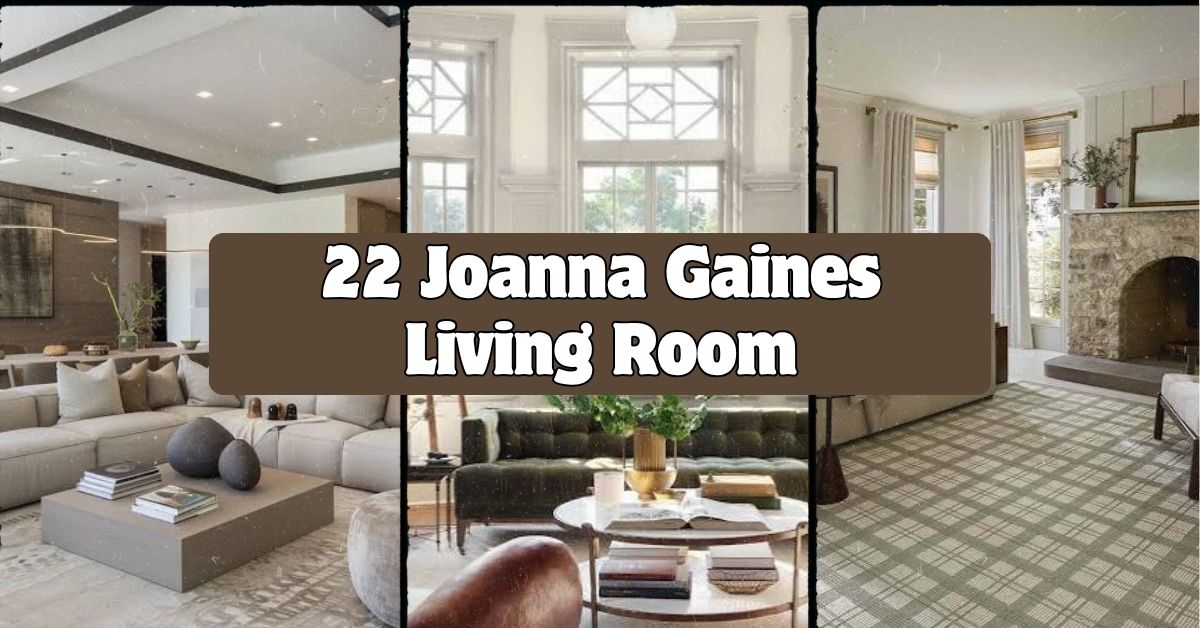
If you’ve been scrolling for hours trying to figure out how to get that cozy, lived-in farmhouse feel, this list of 22 Joanna Gaines living room ideas is going to save you a ton of guesswork. I’ve pulled together the most practical, real-world versions of her signature style so you don’t have to piece it together from a hundred different Pinterest boards.
The Joanna Gaines living room style blends neutral colors, natural wood, vintage touches, and comfy oversized furniture into a space that feels warm and lived-in rather than staged. It leans on texture and simplicity instead of bold patterns or trendy colors.
Keep reading and I’ll walk you through exactly how to bring this look into your own space, piece by piece, without breaking your budget.
What Makes the Joanna Gaines Living Room Style So Popular?
Honestly, I think people love this style because it feels calm. There’s no loud color screaming for attention. Everything just kind of works together, like it’s been collected over years, not bought all at once from one store.
The main ingredients are simple: neutral walls, natural wood furniture, soft textiles, and a mix of old and new pieces. Think shiplap, leather sofas, wood beams, and a big soft rug. It’s farmhouse, but it’s not corny farmhouse with rooster signs everywhere. It’s grown-up, comfortable, and honestly pretty easy to copy once you know the formula. That’s what this whole article is about.
1. Start With a Warm White or Greige Wall Color
Joanna’s rooms almost always start with a neutral base. Think warm whites, soft greige, or light putty tones on the walls. This isn’t boring, it’s a canvas. It lets your furniture and textures do the talking instead of fighting with a busy paint color.
Practical tip: try a sample pot on a poster board and move it around the room at different times of day before committing. Light changes everything.
This works whether your home leans modern farmhouse, traditional, or even coastal. Coastal homes might lean more toward a cooler white, while traditional spaces do better with a creamy warm tone.
Once your walls are set, it’s time to bring in the bones of the room, the furniture.
2. Choose an Oversized, Slouchy Sofa
A huge part of this look comes from furniture that feels relaxed, not stiff. Joanna often picks deep, slouchy sofas in linen or performance fabric that practically beg you to flop down after a long day. Neutral colors like oatmeal, cream, or soft gray keep it flexible for whatever pillows or throws you add later.
Actionable tip: measure your space first, but lean toward the bigger sofa option if you have room. Oversized seating makes a room feel intentional, not empty.
This idea flexes easily. Modern farmhouse likes linen, while traditional homes might choose a rolled-arm sofa in the same neutral tone.
Next, let’s talk about what goes under that big comfy sofa.
3. Layer a Chunky, Natural Fiber Rug
Rugs ground the whole room. Joanna tends to use jute, wool, or other natural fiber rugs with subtle texture instead of bold patterns. They add warmth without competing with anything else in the space.
Practical tip: size up your rug. A common mistake is buying one too small, which makes furniture look like it’s floating. Your front two legs of the sofa should sit on the rug.
Coastal spaces can swap jute for a light seagrass weave, while traditional rooms might add a subtle geometric pattern in the same neutral palette.
Now that your floor is covered, let’s build up from there with some wood furniture pieces.
4. Bring in Reclaimed or Weathered Wood Furniture
Wood is basically the backbone of this style. Coffee tables, console tables, and shelving with a weathered or reclaimed look add instant character. It’s not about shiny, polished furniture, it’s about pieces that look like they have a story.
Tip: mix wood tones slightly instead of matching everything perfectly. A little variation looks more natural and collected over time.
This adapts well across styles. Rustic homes go heavier on distressed wood, while modern spaces might choose cleaner lines with a lighter wood tone.
Speaking of mixing things up, let’s talk metal accents next.
5. Add Black Metal Accents for Contrast
Black metal shows up a lot in Joanna’s designs, whether it’s window frames, light fixtures, or table legs. It adds just enough contrast against all that warm wood and neutral fabric so the room doesn’t feel flat.
Practical tip: pick one or two black metal elements, like a lantern-style light fixture or a metal-framed mirror, rather than overdoing it everywhere.
Modern farmhouse and industrial styles lean into black metal heavily, while coastal or traditional rooms might use it more sparingly.
Once you’ve got some contrast going, it’s time to think about how you’re arranging your seating.
Neutral Color Palette Guide
| Color Name | Best Used For | Pairs Well With |
|---|---|---|
| Warm White | Walls, trim | Wood tones, black metal |
| Greige | Walls, large furniture | Cream, olive green |
| Oatmeal | Sofas, chairs | Jute rugs, leather |
| Charcoal | Accent pieces | White walls, wood |
| Soft Sage | Throw pillows, accents | Cream, wood, black |
6. Create a Conversation-Friendly Furniture Layout
Joanna’s living rooms are made for actual living, not just looking pretty. That means furniture is arranged so people can talk, not stare at the TV all night. Chairs face each other, sofas sit close enough for conversation, and there’s always a coffee table within reach.
Tip: leave about 30 inches of walking space between furniture pieces so the room feels open, not cramped.
Traditional homes might add a second sofa facing the first, while smaller modern apartments can swap one sofa for two comfy accent chairs.
Let’s move on to something that ties the whole seating area together, a good coffee table.
7. Pick a Coffee Table With Personality
The coffee table is where Joanna often adds a little character, whether it’s a chunky wood slab, a vintage trunk, or an X-base table with iron legs. It’s functional, but it’s also a design statement.
Actionable tip: choose a coffee table about two-thirds the length of your sofa for the best visual balance.
Farmhouse and rustic spaces love a raw wood slab, while modern rooms might go for a cleaner, simpler wood or stone top.
Now let’s talk about the walls, because they need some love too.
8. Use Shiplap or Wood Paneling as an Accent Wall
Shiplap basically became Joanna’s signature, and for good reason. It adds texture to walls without adding color or clutter. Even just one accent wall can completely change the feel of a room.
Tip: if full shiplap feels like too much commitment, try a smaller version behind a fireplace or shelving unit first.
Coastal homes often use whitewashed shiplap, while modern farmhouse spaces might paint it the same warm white as the rest of the walls for a subtle texture effect.
Once your walls have some texture, it’s time to fill them with the right kind of art.
9. Hang Simple, Neutral Artwork in Wood Frames
Joanna tends to keep art simple. Botanical prints, black and white photography, or abstract neutral pieces in wood frames all fit the bill. The goal is texture and interest without loud colors stealing focus.
Practical tip: hang art so the center sits at eye level, about 57 inches from the floor, for the most natural look.
Traditional rooms might frame family photos in matching wood frames, while modern spaces lean toward larger, minimal abstract pieces.
Once your walls are dressed, let’s add some greenery to soften things up.
10. Add Real or High-Quality Faux Greenery
Plants bring life into a neutral room without adding a ton of color. Joanna often uses large potted plants like fiddle leaf figs or olive trees, plus smaller touches like eucalyptus branches in a vase.
Tip: if you don’t have a green thumb, invest in one or two high-quality faux plants. Cheap plastic ones are pretty easy to spot and can cheapen the whole look.
Coastal rooms might add palms, while traditional spaces often stick with classic ferns or olive branches.
Let’s talk lighting next, because it makes a bigger difference than people expect.
11. Layer Lighting With Lanterns and Warm Bulbs
Good lighting makes or breaks a cozy room. Joanna often uses lantern-style fixtures, warm bulb temperatures, and multiple light sources instead of one harsh overhead light.
Practical tip: aim for at least three light sources in a living room, an overhead fixture, a floor lamp, and a table lamp, all using warm white bulbs (around 2700K).
Modern farmhouse loves black metal lanterns, while traditional homes might use brass sconces for a softer, classic glow.
Now that the lighting is set, let’s talk about textiles that make the room feel extra cozy.
12. Mix Textures With Chunky Knit Throws and Pillows
Texture is everything in this style. Chunky knit throws, linen pillow covers, and woven baskets all add depth without adding busy patterns or bright colors.
Tip: stick to two or three textures per seating area so it feels curated, not cluttered. A knit throw, a linen pillow, and a leather ottoman is plenty.
Coastal homes might swap knits for lighter cotton textures, while traditional rooms often add a bit of subtle pattern like herringbone.
Let’s shift now to something that often gets overlooked, window treatments.
13. Choose Simple Linen Curtains
Heavy patterned curtains don’t really fit this style. Joanna usually goes with simple linen or cotton curtains in white or neutral tones that let natural light pour in.
Actionable tip: hang curtain rods a few inches above the window frame and let curtains puddle slightly at the floor for a softer, more relaxed look.
Modern spaces might skip curtains entirely for clean lines, while traditional homes add simple tiebacks for a classic touch.
Now let’s talk about a piece that often becomes the room’s focal point, the fireplace.
14. Make the Fireplace a Focal Point
A lot of Joanna’s living rooms are built around a fireplace, often finished in whitewashed brick, shiplap, or simple painted stone. It becomes the anchor that everything else in the room works around.
Tip: keep the mantel styling simple, one piece of art or a mirror, plus a small collection of objects like candles or a vase. Less is more here.
Coastal homes might paint the brick a soft white, while traditional spaces often keep the natural brick or stone look.
Budget Tiers for a Joanna Gaines Style Makeover
| Budget Level | What You Focus On | Estimated Cost Range |
|---|---|---|
| Starter | Paint, pillows, throws, rug | $300 to $700 |
| Mid-Range | Add coffee table, lighting, art | $1,500 to $3,000 |
| Full Room | New sofa, rug, lighting, wood furniture | $4,000 to $8,000 |
| High-End | Custom furniture, fireplace update, built-ins | $10,000+ |
15. Add Vintage or Antique Finds
Nothing says Joanna Gaines quite like a vintage piece with some history. An old trunk, a weathered ladder, or a flea market mirror adds instant character that new furniture just can’t fake.
Practical tip: check local estate sales or thrift stores before buying “aged” furniture new. You’ll usually find better pieces for less money.
Traditional homes might lean into antique furniture heavily, while modern farmhouse spaces use just one or two vintage pieces as accents.
Speaking of accents, let’s talk about how open shelving fits into this style.
16. Style Open Shelving With Curated Objects
Open shelves let you show off books, baskets, and small decor pieces without cluttering the room. Joanna tends to style shelves with a mix of heights, textures, and negative space so it doesn’t look overstuffed.
Tip: group items in threes, and always leave some empty space on each shelf. A shelf that’s too full feels chaotic instead of curated.
Coastal rooms might add baskets and driftwood, while modern spaces stick to fewer, more sculptural objects.
Now, let’s talk about how to bring in a pop of color without breaking the neutral rule.
17. Introduce One Muted Accent Color
Even though the palette stays mostly neutral, Joanna often sneaks in one muted color like sage green, dusty blue, or soft terracotta through pillows, a throw, or a piece of art.
Actionable tip: pick just one accent color and repeat it two or three times around the room for balance, like a pillow and a vase in the same tone.
Traditional homes might use a deeper hunter green, while coastal spaces often choose a soft ocean blue.
Let’s move to something practical now, storage that doesn’t look like storage.
18. Use Baskets for Stylish, Hidden Storage
Woven baskets are a Joanna Gaines staple. They hide blankets, toys, or magazines while adding texture at the same time. It’s storage that actually looks good sitting out in the open.
Tip: choose baskets with handles for easy access, and vary the sizes slightly so they don’t look too matchy.
Modern homes might choose sleeker, more geometric baskets, while farmhouse spaces love the more rustic, woven look.
Next, let’s talk about a design trick that makes small rooms feel bigger.
19. Keep Window Areas Clear and Bright
Joanna rarely blocks natural light with heavy furniture or dark curtains. Keeping window areas open and bright makes even a smaller living room feel more spacious and welcoming.
Practical tip: avoid placing tall furniture directly in front of windows. Keep sightlines to the outside as clear as possible.
This works in every style, though coastal homes take it the furthest with sheer curtains and minimal window treatments.
Now let’s talk ceilings, because wood beams can totally transform a room.
20. Add Exposed Wood Beams if Possible
If your budget and home structure allow it, exposed wood beams add serious character to a room’s ceiling. They’re a signature Joanna Gaines move that instantly makes a space feel more architectural and intentional.
Tip: if real beams aren’t possible, faux beam kits exist that mimic the look for a fraction of the cost and effort.
Modern farmhouse loves this look, while traditional homes might paint beams a darker stain for a more formal feel.
Let’s talk about pulling the whole room together with a statement mirror next.
21. Hang a Large Statement Mirror
A big mirror, often in a simple wood or black metal frame, bounces light around the room and adds a focal point without adding clutter. Joanna often places these above a mantel or console table.
Actionable tip: choose a mirror that’s about two-thirds the width of the furniture piece below it for the best proportion.
Coastal spaces might choose a rounder, lighter frame, while traditional rooms often go for a more ornate but still neutral frame.
Finally, let’s finish with a detail that ties everything together, the little accessories.
22. Finish With Simple, Meaningful Accessories
The last layer is the small stuff, candles, a stack of books, a ceramic vase. Joanna keeps these simple and meaningful rather than cluttered. Every object should feel like it has a purpose or a story.
Tip: before adding a new accessory, ask if it adds texture, color, or meaning to the space. If not, skip it.
This idea works everywhere, since every style benefits from thoughtful, uncluttered finishing touches.
Tips for Success
- Start with the big pieces first, sofa and rug, then layer in smaller decor
- Stick to a consistent color palette so the room feels cohesive, not random
- Mix textures generously, but keep colors simple
- Shop secondhand for character pieces before buying new
- Don’t rush the room. This style is built over time, not in one weekend
- Always measure your space before buying furniture
- Keep at least one wall mostly open for visual breathing room
Common Mistakes and How to Avoid Them
Overdoing the farmhouse theme
: Skip rooster decor and barn wood overload. Keep it simple and let a few key pieces speak instead of covering every surface.
Buying furniture too small for the space
: Measure first, and when in doubt, size up. Oversized furniture usually looks more intentional than undersized pieces.
Using too many bright colors
: Stick to neutrals with one or two muted accent colors instead of mixing five different bold tones.
Skipping texture
: A room with only smooth, flat surfaces feels cold. Add knits, wood grain, and woven baskets for warmth.
Cluttering open shelves
: Leave breathing room between objects. Group in threes and resist filling every inch of space.
Ignoring lighting temperature
: Cool white bulbs can make a warm room feel sterile. Stick to warm white bulbs around 2700K for that cozy glow.
Similar Variations
- Modern Farmhouse: A cleaner, more minimal take with less clutter and simpler lines than classic farmhouse.
- Coastal Farmhouse: Adds lighter woods, softer blues, and breezier textiles for a beachy feel.
- Rustic Farmhouse: Leans heavier into reclaimed wood, exposed beams, and vintage iron accents.
- Boho Farmhouse: Mixes in woven textures, macrame, and warmer earth tones for a more eclectic feel.
- Traditional Farmhouse: Keeps more formal furniture shapes with the same neutral, wood-heavy palette.
- Industrial Farmhouse: Adds more raw metal, exposed brick, and factory-style lighting into the mix.
Getting this look right really just comes down to layering the right textures, sticking to a calm color palette, and choosing furniture that feels comfortable, not showy. Once you understand the formula behind it, it’s actually pretty simple to recreate in almost any home, no matter your starting budget. Whether you tackle one room or your whole house, these 22 Joanna Gaines living room ideas give you a real, practical roadmap to get there.
Leave a Reply