
I’ve spent a lot of time digging through home design ideas, and today I want to share 16 simple living room ceiling design ideas that actually work in real homes, not just magazine spreads. If you’ve ever stared up at your plain white ceiling and thought “this room needs something,” you’re in the right place.
A living room ceiling design refers to the decorative or structural treatment applied to the overhead surface of a living space, using materials like wood, paint, molding, or lighting to add visual interest. Simple designs focus on clean lines, minimal clutter, and cost-effective updates that don’t require a full renovation.
Stick around, because I’m going to walk you through specific ideas you can actually pull off this weekend, plus a few that might take a little more planning but are totally worth it.
What Makes a Ceiling Design “Simple” Anyway?
Okay, so before we get into the list, let’s talk about what I mean by “simple.” I don’t mean boring. I mean designs that don’t need a contractor crew living in your house for three weeks. Simple ceiling design ideas use things like paint, lightweight wood panels, peel-and-stick tiles, or smart lighting placement. They’re budget-friendly and most homeowners can do at least some of the work themselves. The goal isn’t to make your ceiling the loudest thing in the room. It’s to make it feel finished, cozy, and like someone actually thought about it. That’s really the whole point here.
1. Paint It a Soft Contrast Color
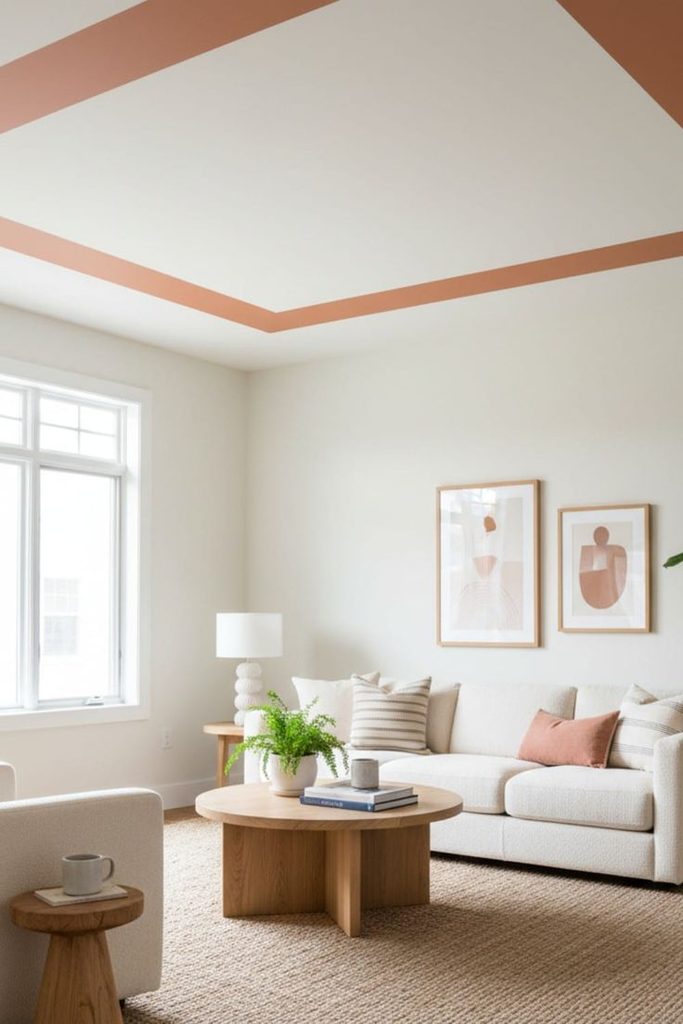
Most people paint ceilings plain white and call it done. But a soft contrast color, think pale sage, warm greige, or dusty blue, can make your living room feel intentional instead of like an afterthought. This works because it draws the eye upward without screaming for attention.
Pick a shade that’s a few tones lighter or darker than your wall color for the best flow. A matte or eggshell finish hides imperfections better than gloss.
Practical tip: test your color on a poster board and tape it to the ceiling for a full day to see how it looks in different light.
This trick works in modern, farmhouse, and traditional homes alike since it’s just a color swap, not a structural change.
Once you’ve got your color picked, you might want to add some texture on top of it, which brings me to the next idea.
2. Add Exposed Wood Beams for Warmth

Exposed beams give a room that cozy cabin feel without needing an actual log cabin. You can use real reclaimed wood or faux lightweight beams that install with adhesive and screws, no heavy lifting required.
Stain them a rich walnut or leave them raw and pale for a more Scandinavian vibe. They pair well with neutral furniture and woven textures like jute rugs or linen curtains.
Practical tip: space beams evenly, usually 24 to 36 inches apart, so the ceiling doesn’t feel cluttered.
This idea shines in farmhouse, rustic, and even coastal living rooms where natural materials are already part of the color scheme.
Beams add dimension, but if you want something even more architectural, let’s talk about coffered ceilings next.
3. Try a Coffered Ceiling Grid
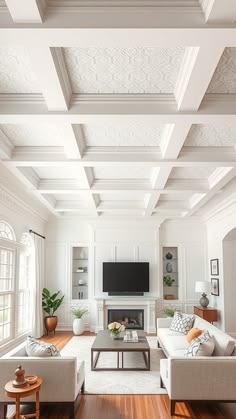
Coffered ceilings use a grid of beams or molding to create recessed squares or rectangles. It sounds fancy, but lightweight polyurethane kits make this doable for regular homeowners now.
This design adds serious depth and makes ceilings feel higher, even when they’re not. Paint the coffers white and the walls a deeper color for contrast, or keep everything monochrome for a subtle, elegant look.
Practical tip: measure your room first. Coffered grids look best in rooms at least 12 feet by 12 feet so the pattern doesn’t feel cramped.
This works beautifully in traditional and transitional living rooms, especially ones with crown molding already in place.
Speaking of molding, let’s zoom in on that next because it’s one of the easiest upgrades on this whole list.
4. Install Simple Crown Molding

Crown molding is that little detail that makes a ceiling look “finished” instead of just stopping abruptly at the wall. It’s a small addition but it changes the whole feel of a room.
Go with a simple, narrow profile for modern spaces or a wider, more ornate style for traditional rooms. White is the classic choice, but painting it the same color as your ceiling creates a seamless, modern look.
Practical tip: use lightweight foam molding if you’re installing it yourself. It’s way easier to cut and hang than solid wood.
This idea adapts to literally every home style because molding has been around for centuries and works with almost any decor.
Now let’s talk about something a little different, using wallpaper on your ceiling instead of just paint.
5. Wallpaper the Ceiling for a Bold Statement

Wallpapering a ceiling, sometimes called a “ceilume,” is having a real moment right now. It’s a great way to add pattern without covering your walls in something too loud.
Choose a subtle print like a small floral or geometric pattern if your walls are already busy. Go bold with a large-scale pattern if your walls are plain and neutral.
Practical tip: use peel-and-stick wallpaper for a renter-friendly option that’s way easier to remove later.
This idea fits eclectic, boho, and traditional living rooms especially well, since those styles already embrace pattern and personality.
If wallpaper feels like too much commitment, tray ceilings might be your next best option.
6. Build Out a Tray Ceiling
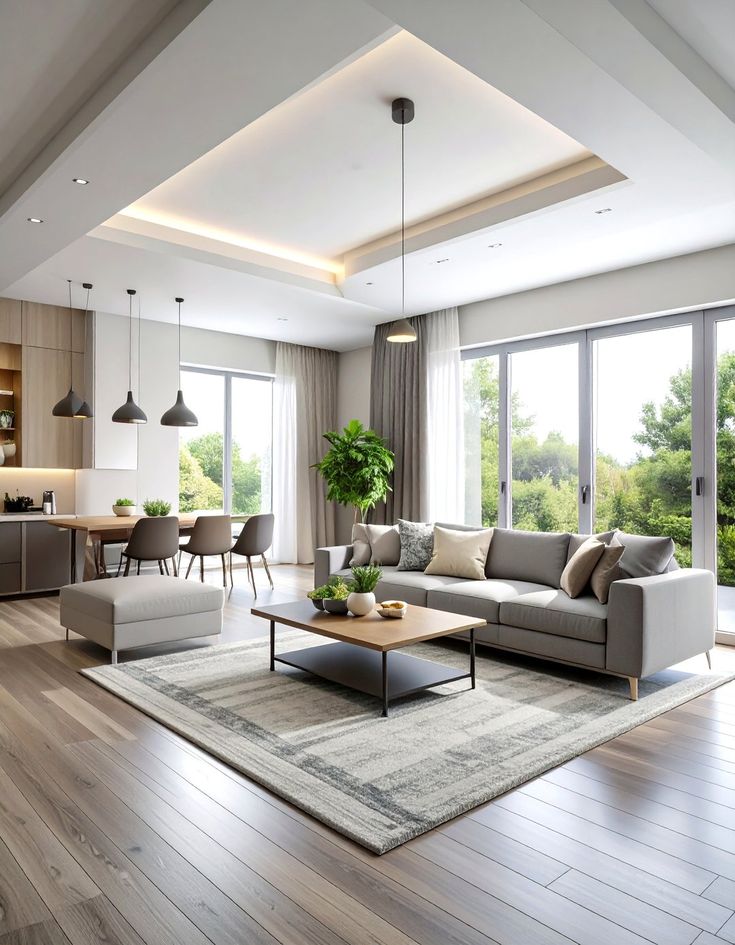
A tray ceiling has a recessed center, usually a rectangle or square, that sits higher than the surrounding ceiling edge. It adds architectural interest without a full remodel if you use lightweight materials.
Paint the inner tray a slightly different shade than the outer border to highlight the shape. Adding rope lighting inside the tray creates a soft glow effect at night.
Practical tip: keep the tray at least 8 to 12 inches from the walls so it looks proportional, not squished.
This design works great in transitional and traditional homes, and it’s especially popular in dining and living rooms with higher ceilings.
Speaking of lighting, let’s dig into that a little more because it can completely change how your ceiling design reads.
7. Use Recessed Lighting for a Clean Look

Recessed lighting, also called can lights, sits flush with the ceiling so there’s no bulky fixture hanging down. It’s one of the most popular choices for a reason: it’s clean, modern, and works with pretty much any decor style.
Space lights about 4 to 6 feet apart for even coverage. Dimmable LED bulbs let you control the mood from bright and functional to soft and relaxed.
Practical tip: hire an electrician for this one unless you’re experienced with wiring. Ceiling work involving electricity isn’t the place to guess.
This works in modern, minimalist, and contemporary living rooms where clean lines matter most.
Lighting Style Comparison for Living Room Ceilings
| Lighting Type | Best For | Average Cost (per fixture) | Installation Difficulty |
|---|---|---|---|
| Recessed Can Lights | Modern, minimalist rooms | $75-$150 | Moderate to Hard |
| Flush Mount Fixtures | Small or low ceilings | $40-$120 | Easy |
| Chandeliers | Traditional, formal rooms | $150-$600+ | Moderate |
| Track Lighting | Rooms needing flexible light direction | $60-$200 | Easy to Moderate |
| Rope/LED Strip Lights | Trays, coves, accent lighting | $20-$80 | Easy |
Now that lighting is covered, let’s talk about something a bit unexpected: shiplap on the ceiling.
8. Add Shiplap for a Farmhouse Feel
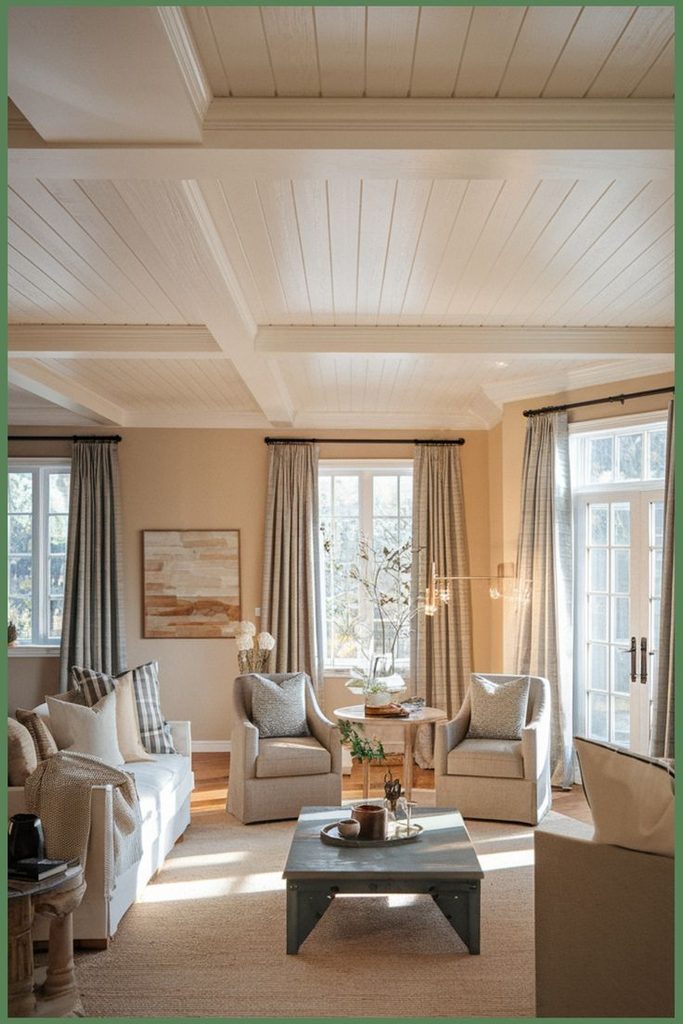
Shiplap isn’t just for walls anymore. Running horizontal wood planks across a ceiling gives it texture and that cozy, cabin-meets-farmhouse charm everyone loves.
Paint it crisp white for a classic look, or leave it natural wood-toned for more warmth. It pairs beautifully with exposed beams if you want to combine ideas from this list.
Practical tip: use lightweight MDF shiplap boards instead of solid wood to make installation faster and cheaper.
This idea is basically made for farmhouse and coastal living rooms, but it can work in modern spaces too if you keep the color palette simple.
If wood isn’t your thing, maybe it’s time to think about a mirrored or metallic ceiling accent instead.
9. Add a Metallic or Mirrored Accent Panel

This one’s a little unexpected, but hear me out. A small metallic or mirrored panel section on the ceiling can reflect light and make a room feel bigger and brighter.
Use it sparingly, maybe just over a seating area or in the center of the room, so it doesn’t feel like a disco ball situation. Brushed brass, silver leaf, or antiqued mirror all work well depending on your metal accents elsewhere in the room.
Practical tip: keep the rest of the ceiling matte so the metallic section really pops as a focal point.
This works especially well in glam, art deco, and modern eclectic living rooms where shine and reflection are already part of the design language.
Next, let’s slow things down a bit and talk about a textured plaster finish.
10. Use a Textured Plaster Finish
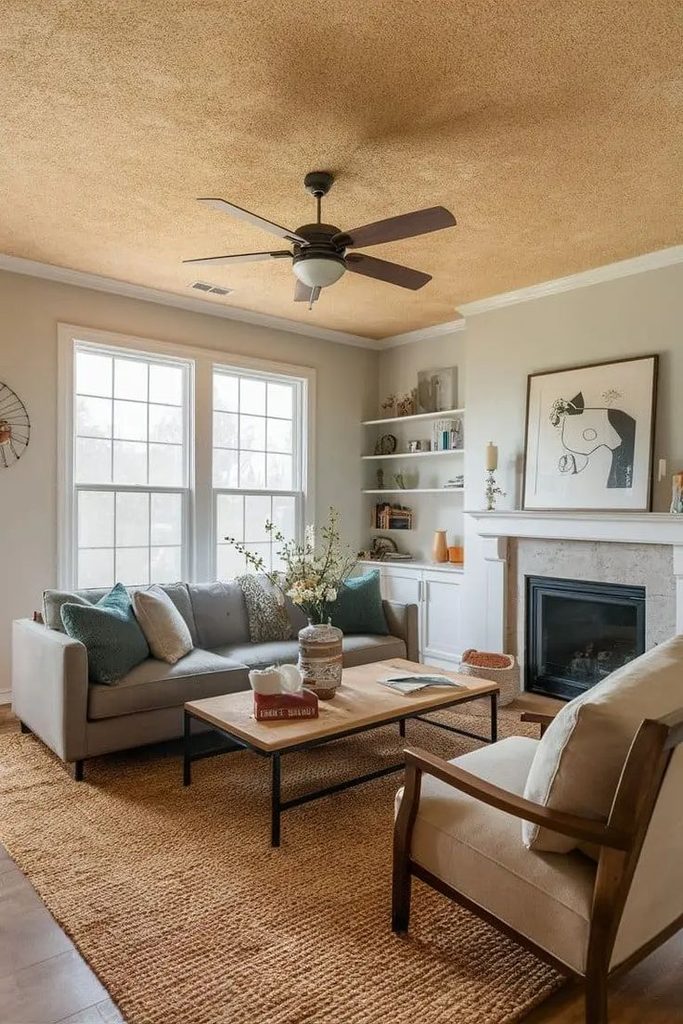
Smooth ceilings are fine, but a lightly textured plaster finish adds subtle depth without being loud. Think soft swirls or a light stucco-style texture rather than the old popcorn ceilings from decades past.
This works especially well in Mediterranean, Spanish, or Southwestern-style living rooms. Keep the color warm and neutral, like a soft terracotta-white blend, to stay true to that style.
Practical tip: hire a professional plasterer for this one. DIY texture jobs can look uneven if you’re not experienced.
Even in modern homes, a subtle texture can soften a room that feels too sharp or cold.
Let’s shift gears now and talk about ceiling fans, because yes, they count as part of your ceiling design too.
11. Choose a Statement Ceiling Fan

A ceiling fan isn’t just functional, it’s also a design element whether you like it or not. Choosing one with intention can actually elevate the whole room instead of feeling like an afterthought.
Go for a fan with wood blades and a matte black or brass finish for a more elevated look. Skip the builder-grade white plastic fans if you can, they tend to date a room fast.
Practical tip: measure your room size first. Rooms under 175 square feet need a fan with a blade span around 42-48 inches, while larger rooms need 52-60 inches.
This idea works in literally every home style since fans come in so many finishes now, from farmhouse to industrial to coastal.
Now let’s talk about something a little more artistic: ceiling medallions.
12. Install a Ceiling Medallion Around Light Fixtures
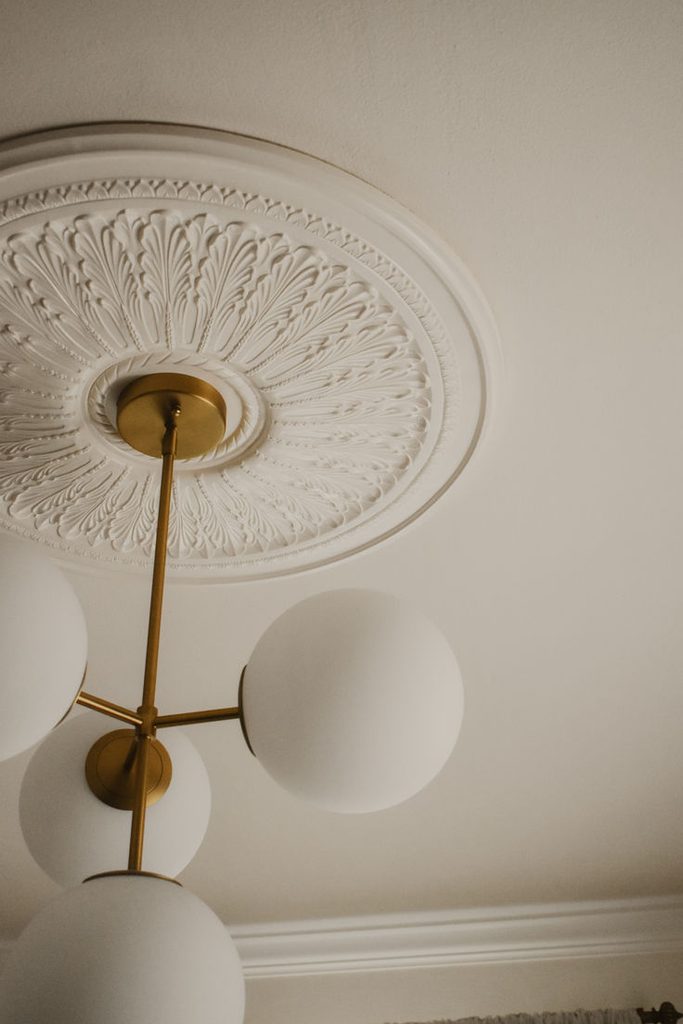
A medallion is a decorative circular piece that sits around a light fixture or fan, adding a touch of detail right where your eye naturally goes. It’s a small detail, but it makes a big visual difference.
Choose a simple, subtle medallion for modern rooms or a more ornate, carved-look one for traditional spaces. Paint it to match the ceiling for a subtle effect, or contrast it for more drama.
Practical tip: lightweight polyurethane medallions are easy to install with adhesive, no need for heavy hardware.
This idea is a favorite in traditional, French country, and vintage-inspired living rooms.
Ceiling Design Budget Tiers
| Budget Tier | Price Range | Best Options |
|---|---|---|
| Low Budget | $50-$300 | Paint color change, peel-and-stick wallpaper, ceiling medallion |
| Mid Budget | $300-$1,200 | Faux wood beams, recessed lighting, shiplap panels |
| High Budget | $1,200-$5,000+ | Coffered ceiling grid, tray ceiling build-out, custom plaster texture |
With budget in mind, let’s look at a simpler option next: two-tone ceilings.
13. Try a Two-Tone Ceiling Border

A two-tone ceiling has a different color or finish around the perimeter compared to the center. It’s a subtle way to add depth without going full-on tray ceiling construction.
Paint a 12 to 18 inch border in a slightly darker shade than the rest of the ceiling. This creates a soft frame effect that draws the eye up gently instead of aggressively.
Practical tip: use painter’s tape and a level to keep your border lines crisp and even.
This idea works great in transitional and contemporary living rooms where subtlety matters more than bold statements.
Now, let’s talk about something more textural again: wood slat ceilings.
14. Install Wood Slat Panels for a Modern Look

Wood slat panels, thin strips of wood spaced evenly apart, have become super popular in modern and Scandinavian-style homes. They add warmth and texture while still feeling clean and organized.
Choose a light oak or walnut tone depending on your existing furniture. Slats also work well combined with acoustic panels behind them, helping absorb sound in open living rooms.
Practical tip: pre-made slat panel kits are available online and often just need adhesive or a few screws to install.
This idea fits modern, Scandinavian, and Japandi living rooms especially well, though it can work in transitional spaces too.
Next, let’s cover something for those who want a little sparkle: a starburst light fixture as a ceiling focal point.
15. Center a Statement Light Fixture

Sometimes the ceiling design isn’t about the ceiling material at all, it’s about what hangs from it. A bold pendant light, chandelier, or sculptural fixture can be the whole design statement on its own.
Choose a fixture that’s proportional to your room size. A too-small fixture gets lost, and a too-large one overwhelms the space.
Practical tip: hang pendant lights so the bottom sits about 30-36 inches above your coffee table or seating area for the best visual balance.
This idea works in every style imaginable since lighting fixtures come in endless shapes, finishes, and sizes.
Last but not least, let’s talk about the simplest option of all: leaving your ceiling clean and letting the crown molding or trim do the talking.
16. Keep It Minimal With Clean Trim Only
Sometimes the best design choice is knowing when to stop. A plain white ceiling with just a simple trim line where it meets the wall can look intentional and calm, especially in smaller rooms.
This works because it doesn’t compete with statement furniture, art, or rugs. It lets everything else in the room shine.
Practical tip: use a slightly glossier finish than your walls on the ceiling trim to create subtle contrast without adding color.
This idea is perfect for minimalist, Scandinavian, and small apartment living rooms where visual calm matters more than drama.
Tips for Success
- Always test paint colors and wallpaper samples on your actual ceiling before committing, lighting changes everything.
- Measure your ceiling height before choosing beams, trays, or coffered grids since low ceilings can feel cramped with heavy add-ons.
- Combine textures carefully. Pick one or two ceiling features max so the room doesn’t feel busy.
- Match your ceiling design to your existing flooring and trim style for a cohesive look throughout the room.
- Budget for lighting separately from ceiling material costs since electrical work often adds unexpected expenses.
- Take photos of your room at different times of day before choosing a finish, since natural light affects how colors and textures read.
Common Mistakes and How to Avoid Them
Choosing a ceiling design that’s too bold for a small room
: Stick with subtle textures or light colors in smaller spaces so the ceiling doesn’t feel like it’s closing in on you.
Skipping the measuring step before installing beams or trays
: Always measure room dimensions and ceiling height first, since these features need enough space to look proportional.
Using heavy materials on a ceiling that isn’t structurally reinforced
: Stick with lightweight faux wood, foam molding, or polyurethane panels unless you’ve confirmed your ceiling can handle more weight.
Ignoring lighting placement when planning ceiling design
: Plan your lighting layout at the same time as your ceiling design, not as an afterthought, since the two work together.
Forgetting to prime before painting a textured or previously stained ceiling
: Always prime first so your paint color goes on evenly and doesn’t peel or discolor over time.
Overdoing pattern or color changes across the whole ceiling
: Choose one focal feature, like a border, beam, or fixture, rather than combining too many bold elements at once.
Similar Variations
- Statement Wallpaper Ceilings: Bold pattern-heavy ceilings that act as the room’s main focal point.
- Industrial Exposed Beam Ceilings: Raw wood or metal beams left visible for a warehouse-inspired look.
- Scandinavian Slat Ceilings: Light wood slats paired with minimal furniture for a calm, airy feel.
- Classic Coffered Ceilings: Grid-style molding often paired with formal, traditional living room decor.
- Coastal Shiplap Ceilings: White-painted horizontal planks that bring a beachy, relaxed vibe indoors.
- Modern Tray Ceilings: Recessed center sections paired with hidden LED lighting for a sleek, updated look.
At the end of the day, your ceiling doesn’t have to stay plain and forgotten. A little paint, some trim, or even a bold light fixture can completely change how your living room feels without breaking your budget or your weekend plans. I hope this list gave you some real, doable inspiration to look up and actually get excited about that blank space above your head, because honestly, these 16 simple living room ceiling design ideas prove that even the most overlooked part of a room can become one of its best features.
Leave a Reply