If you’ve been hunting for the best 16 Two Chairs Sitting Area ideas, I’ve got you covered here with everything I’ve learned from designing and testing these setups myself. I’ve spent way too many weekends rearranging furniture in my own living room, so I know what actually works and what just looks good in photos.
A two chairs sitting area is a small furniture grouping built around two chairs facing each other or angled toward a shared focal point, often with a small table between them. It works in living rooms, bedrooms, offices, or sunrooms and needs only 6 to 8 square feet of floor space.
Stick with me and I’ll walk you through 16 different ways to pull this off, plus the mistakes that trip most people up.
What Makes a Two Chairs Sitting Area So Popular
Here’s the thing about a two chairs sitting area. It’s small but it packs a punch. You don’t need a huge sofa or a ton of square footage. Just two chairs, maybe a little table, and boom, you’ve got a cozy spot for coffee, reading, or catching up with a friend.
I love this setup because it feels personal. A sofa says “everyone’s welcome.” Two chairs say “let’s actually talk.” That’s a big reason designers keep using this trick in tiny apartments and big houses alike. It fits almost anywhere. A corner, a bay window, even a spot by your bed. Once you start noticing them, you’ll see two-chair setups everywhere.
1. Face Two Accent Chairs Toward a Window
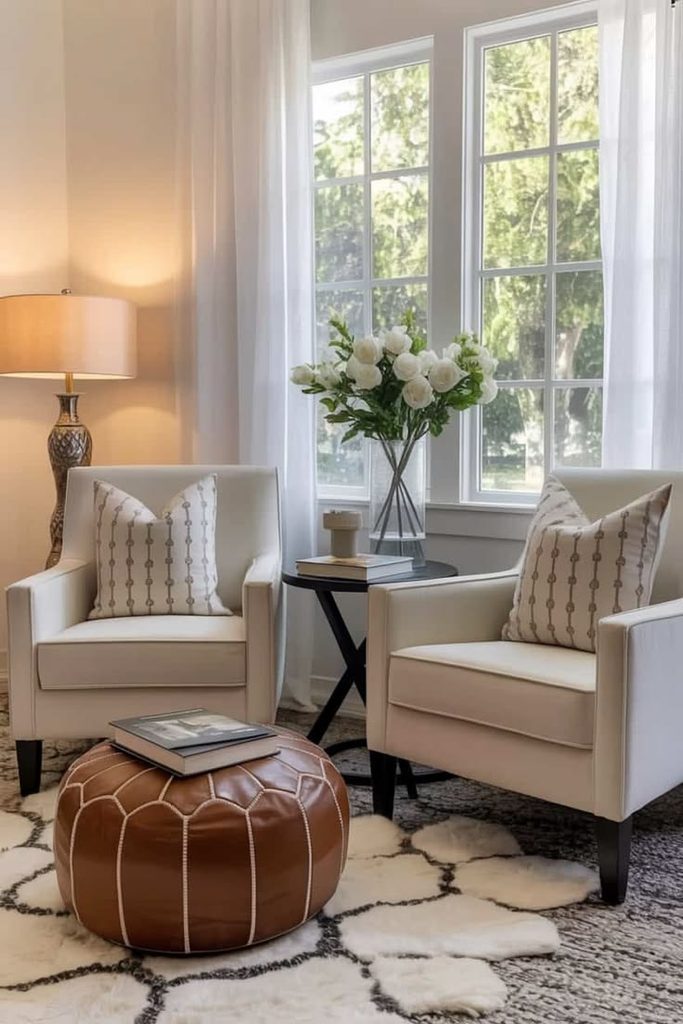
Nothing beats natural light when you’re trying to create a relaxing nook. Pick two chairs with similar shapes but maybe different fabrics for a little contrast. Place them facing the window, angled slightly toward each other so people can still chat.
Add a small side table between them for coffee cups or a book. Keep the color palette light if the room already gets a lot of sun, since bright light can wash out bold prints.
Quick tip: measure your window width first. You want the chairs to feel balanced, not crammed to one side.
This idea works great in coastal or farmhouse homes with lots of windows. It also fits modern spaces if you pick sleek, low-profile chairs. Now let’s talk about what happens when you don’t have a window to work with.
2. Anchor the Space With a Round Accent Table
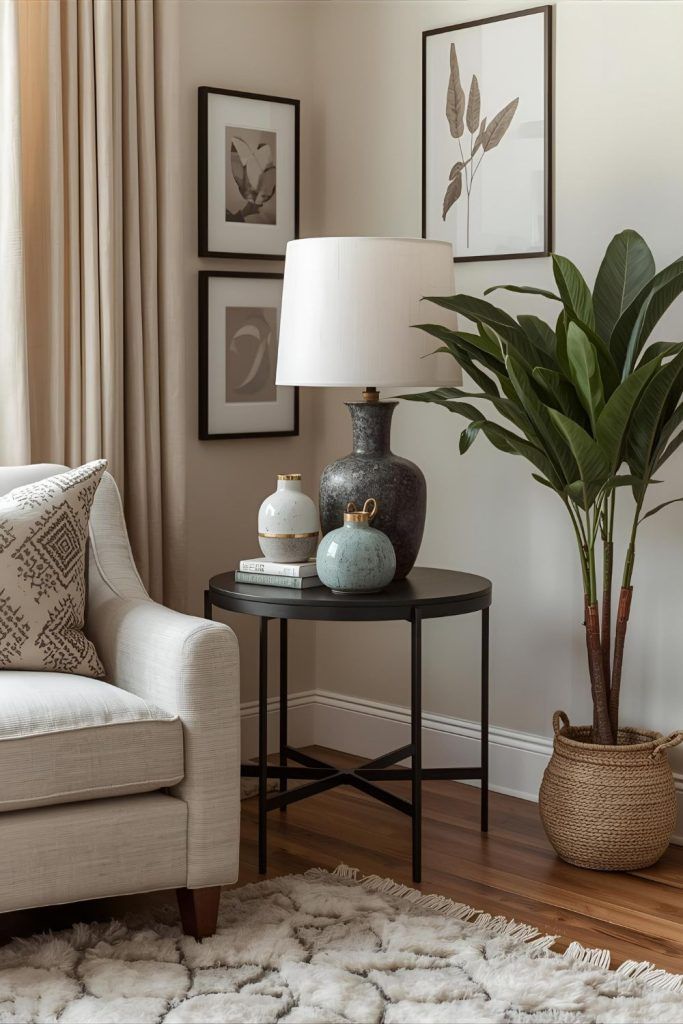
When there’s no window nearby, a round table becomes your focal point instead. Round shapes feel friendlier than square ones and they don’t have sharp corners to bump into, which matters in smaller rooms.
Choose a table about knee height so it’s easy to reach from either chair. Wood tones warm up the space, while metal or glass tables feel more modern.
Actionable tip: keep the table diameter under 24 inches if your chairs are close together, so there’s still room to walk past.
Traditional homes look great with a carved wood table. Modern spaces do better with a simple pedestal base in black or brass. Once your table’s in place, you’ll want to think about how the chairs themselves are covered.
3. Mix Two Different Fabric Patterns on Purpose
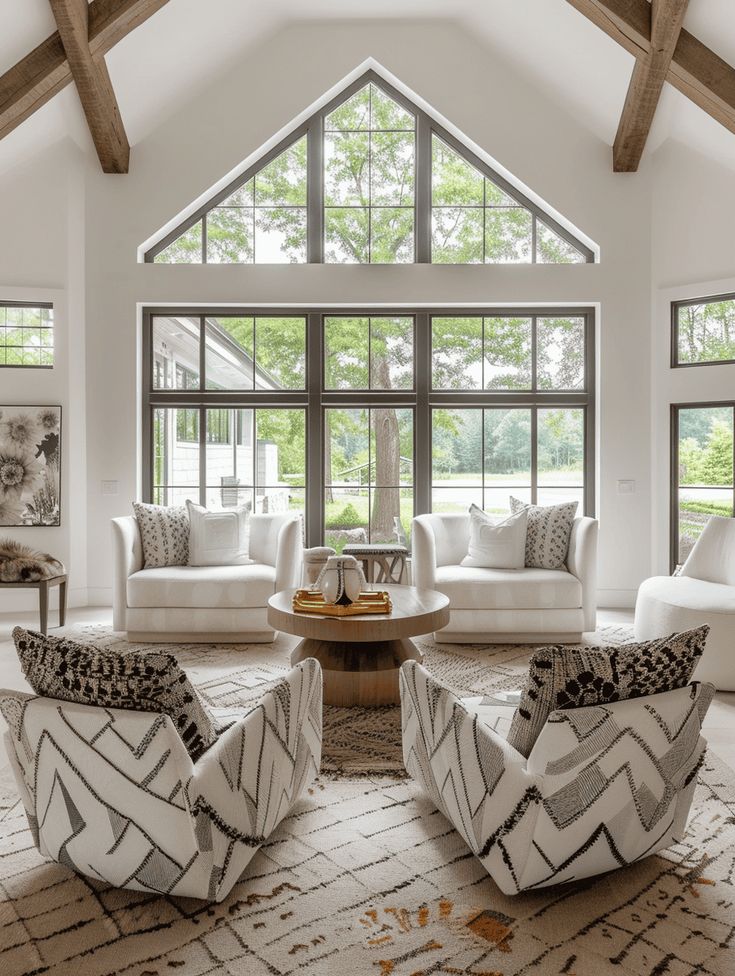
I know it sounds risky, but two chairs don’t have to match. Pairing a solid color chair with a patterned one adds personality without overwhelming the room. Just keep one color thread running through both fabrics so they still feel connected.
For example, if one chair has a navy and cream stripe, the solid chair could be navy too. That little repeat ties everything together.
Practical tip: hold fabric swatches side by side before you buy. If they clash instead of complement, swap one out.
This trick works especially well in eclectic or bohemian homes, but even traditional rooms can handle a subtle pattern mix. Speaking of color, let’s dig into palettes a bit more.
Color Palette Combinations for Two Chair Seating Areas
| Palette Name | Chair 1 Color | Chair 2 Color | Accent Table Finish | Best For |
|---|---|---|---|---|
| Coastal Calm | Soft Blue | Cream | Whitewashed Wood | Beach houses, sunrooms |
| Warm Neutral | Camel Tan | Ivory | Brass | Traditional, transitional |
| Bold Contrast | Charcoal Gray | Mustard Yellow | Black Metal | Modern, eclectic |
| Earthy Boho | Terracotta | Olive Green | Rattan | Boho, farmhouse |
| Monochrome Chic | Light Gray | Dark Gray | Glass | Minimalist, contemporary |
Now that you’ve got some color direction, let’s talk about scale and proportion.
4. Choose Chair Sizes That Match the Room Scale

Big chairs in a tiny room feel like they’re swallowing the space. Tiny chairs in a huge room look lost and awkward. I always measure the area first before falling in love with a chair style.
For small rooms, look for chairs under 30 inches wide. For larger rooms, you can go bigger, maybe armchairs with wide, deep seats that feel like a hug.
Tip: leave at least 30 inches of walking space around the seating area so it doesn’t feel cramped.
Modern farmhouse spaces often use slightly oversized chairs for a cozy vibe, while modern lofts lean toward slim profiles. Once size is sorted, it’s time to think vertical with lighting.
5. Add a Floor Lamp Between the Chairs
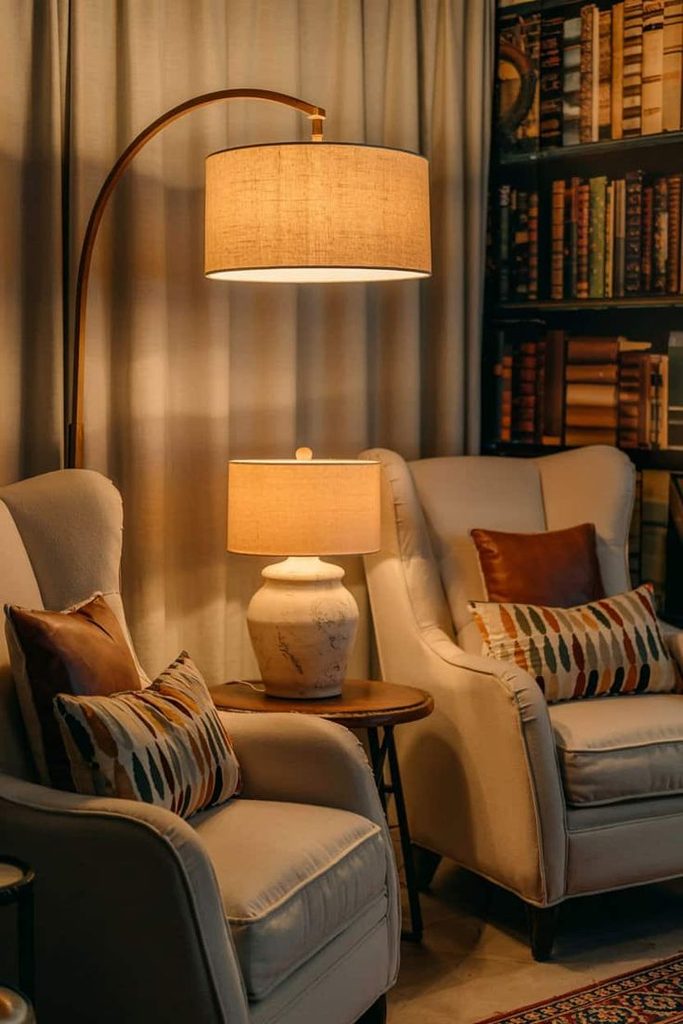
A shared floor lamp does double duty. It lights up both chairs and acts as a stylish divider without taking up much floor space. I like arc lamps because they can stretch over a small table without needing their own footprint.
Pick a warm bulb, around 2700K, for a cozy glow instead of harsh white light. Dimmable lamps give you flexibility for reading versus relaxing.
Actionable tip: position the lamp so its light hits both chairs evenly, not just one side.
Industrial-style homes look great with a matte black arc lamp. Traditional homes might prefer a brass floor lamp with a fabric shade. Lighting sets the mood, but rugs ground the whole area.
6. Layer a Round or Oval Rug Underneath
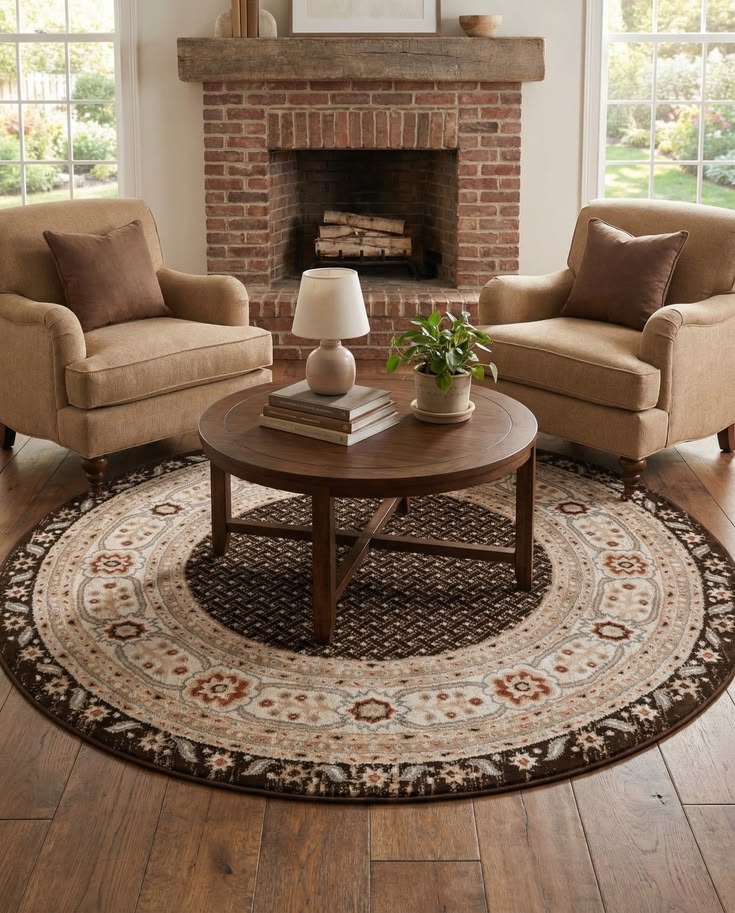
A rug pulls a two chairs sitting area together, especially on hardwood or tile floors. I always suggest sizing the rug so both chairs’ front legs sit on it. That little detail makes the whole grouping feel intentional instead of randomly placed.
Round or oval rugs soften the geometry if your chairs and table are already boxy. Textured rugs like jute add warmth without adding visual clutter.
Quick tip: go at least 5 feet in diameter for two chairs plus a small table, so there’s enough overlap.
Bohemian rooms love a printed or patterned rug here, while minimalist spaces do better with something plain and textured. Next, let’s talk about what goes on the walls behind your chairs.
7. Hang Art or a Mirror Behind the Chairs
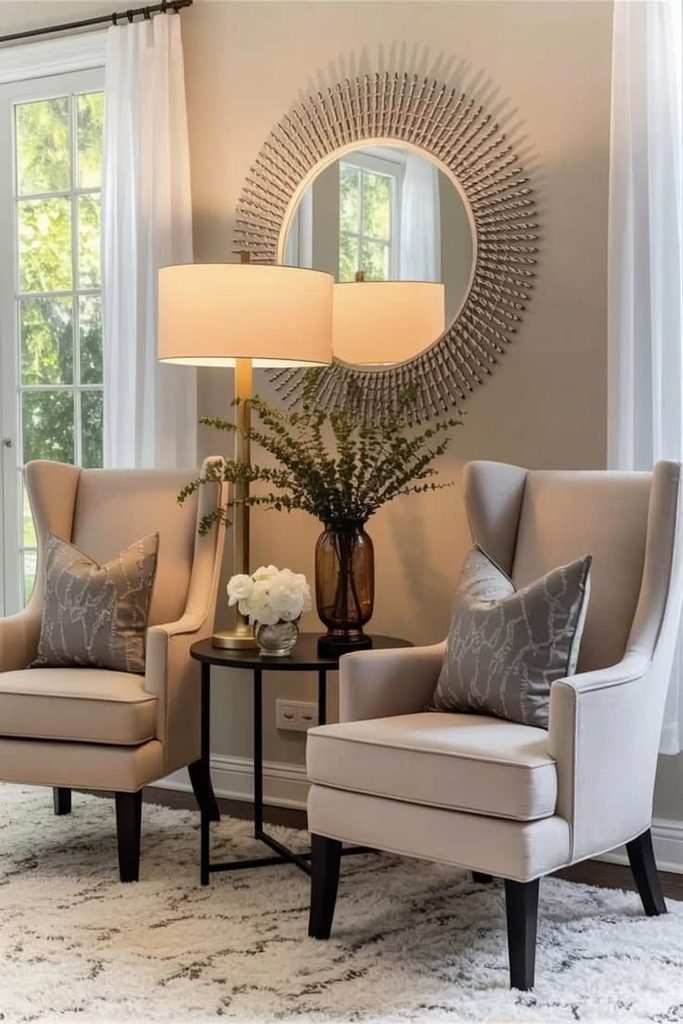
An empty wall behind your sitting area feels unfinished. I like hanging one large piece of art or a mirror centered above the space between both chairs. It draws the eye up and makes the whole nook feel deliberate.
Mirrors also bounce light around, which is great if your two chairs sitting area doesn’t get much natural sun.
Tip: hang art so the center sits about 57 to 60 inches from the floor, which is standard eye level for most people.
Coastal homes often use a single oversized mirror with a woven frame. Traditional spaces might hang a gallery wall instead. Once your walls are dressed, don’t forget the little extras.
8. Add a Small Stack of Books or a Tray on the Table
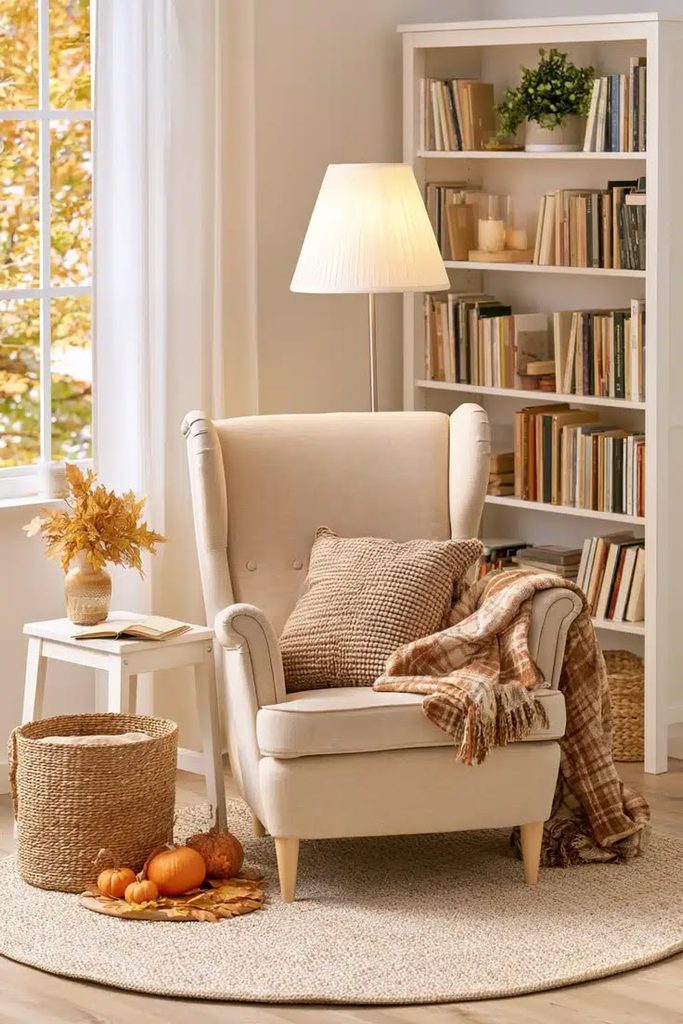
I always add something personal on the table between two chairs. A small stack of books, a tray with a candle, or a little plant. It makes the space feel lived in instead of staged.
Keep it simple though. Two or three items max, so the table doesn’t feel cluttered.
Practical tip: choose items with different heights, like a tall candle next to a short stack of books, for visual interest.
This works in every home style honestly, since you can swap the specific items to match your vibe. Modern homes might use a single sculptural object, while cottage style homes might pile on more texture. Let’s move to something people often forget: the ceiling.
9. Use a Pendant Light Instead of a Floor Lamp

If floor space is tight, skip the lamp and hang a pendant light above the seating area instead. This frees up legroom and still gives you that cozy overhead glow.
Pick a pendant that hangs about 30 inches above the table if there is one, or higher if there’s no table at all.
Tip: choose a dimmer switch so you can adjust brightness depending on the time of day.
Industrial and modern homes look sharp with a simple globe pendant. Farmhouse spaces might choose a lantern-style fixture instead. Now let’s think about what’s actually holding up those chairs.
10. Pick Chair Legs That Match Your Flooring Tone
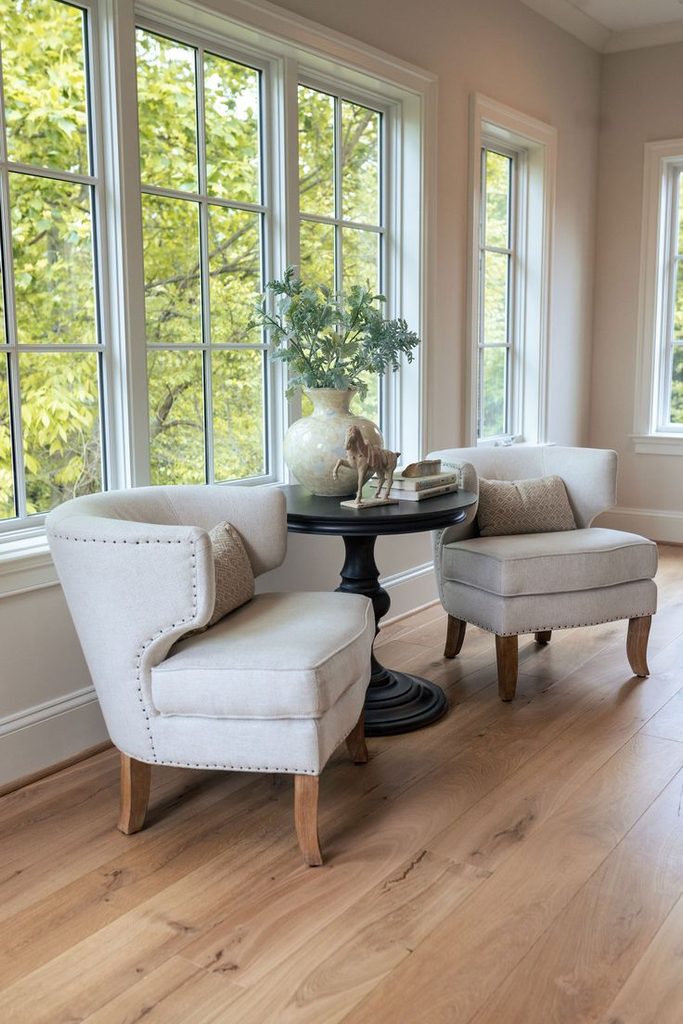
This is a small detail that makes a big difference. Wood chair legs that clash with your floor tone can make the whole area feel disconnected. I always try to match or complement, not contrast harshly.
If you have warm oak floors, look for chairs with similar warm wood tones. If your floors are cool gray, black or dark walnut legs tend to blend better.
Actionable tip: bring a small flooring sample with you when shopping for chairs, if you can.
Scandinavian style leans toward light wood legs across the board. Traditional rooms often go darker with cherry or mahogany tones. Speaking of style, let’s compare a few budget options.
Budget Tiers for a Two Chairs Sitting Area Setup
| Budget Level | Chair Cost (Pair) | Table Cost | Rug Cost | Total Estimate |
|---|---|---|---|---|
| Budget-Friendly | $150–$300 | $40–$80 | $50–$100 | $240–$480 |
| Mid-Range | $400–$800 | $100–$200 | $150–$300 | $650–$1,300 |
| High-End | $1,000–$2,500 | $250–$600 | $350–$800 | $1,600–$3,900 |
No matter your budget, you can still build a great little nook. Let’s talk about arranging chairs at an angle instead of straight on.
11. Angle the Chairs Instead of Facing Them Directly
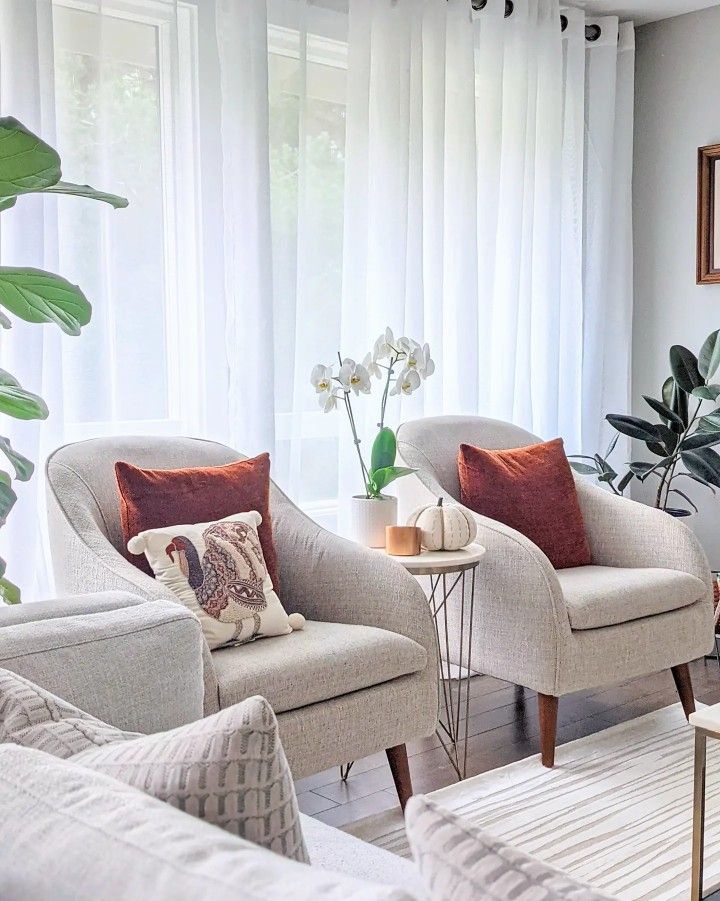
Chairs facing each other head-on can feel a little intense, almost like an interview setup. Angling them slightly, maybe 15 to 20 degrees, feels more natural for conversation and lets people look elsewhere without feeling awkward.
This also opens up sightlines to a window or the TV, so the area feels connected to the rest of the room instead of isolated.
Tip: use a rug to help visually anchor the angled placement so it doesn’t look accidental.
This works especially well in open-concept modern homes where the sitting area needs to relate to multiple parts of the room. Next, let’s talk about using chairs with arms versus without.
12. Choose Armless Chairs for Tight Spaces
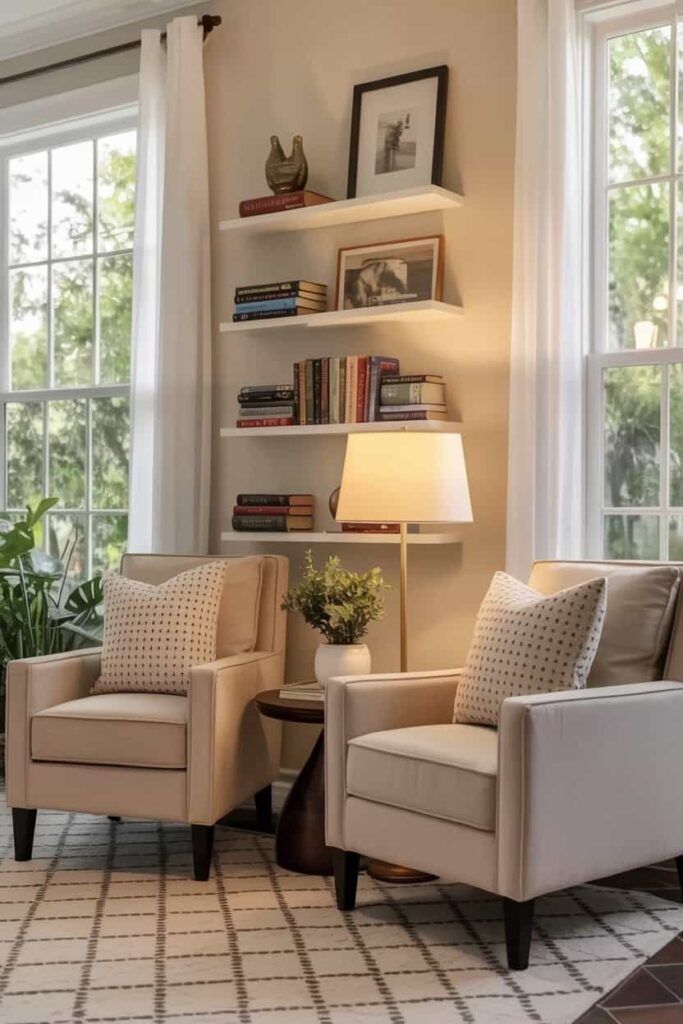
If your two chairs sitting area is squeezed into a small corner, armless chairs save real space. They also feel lighter visually, which helps a tiny room feel less crowded.
Look for slipper chairs or slim accent chairs without bulky arms. You lose a little bit of comfort but gain a lot of flexibility.
Practical tip: measure the width without arms, not just the overall chair width, when comparing options.
Modern and minimalist homes benefit most from this trick, though even traditional homes can use armless chairs in a slipcovered style for a softer look. Let’s talk texture next.
13. Mix Textures Like Velvet, Linen, and Wood

A two chairs sitting area with only smooth textures can feel flat. I like combining a velvet chair with a linen chair, or adding a wood table next to a metal lamp. The contrast in texture keeps things visually interesting even in a small space.
This doesn’t mean going overboard. Two or three textures max keeps it cohesive instead of chaotic.
Tip: touch fabric samples in person before buying if you can. Photos don’t always show texture accurately.
Bohemian and eclectic homes thrive on texture mixing. Modern homes should keep it more restrained, maybe just two textures total. Now let’s think about adding a third small piece to the mix.
14. Add a Small Ottoman as a Shared Footrest

An ottoman between two chairs, or off to the side, gives both seats a shared footrest without adding another full chair. It’s a small addition but it makes the space feel more relaxed and lived-in.
Pick an ottoman low enough that it doesn’t block sightlines between the chairs. A tufted or upholstered ottoman also doubles as extra seating when guests come over.
Actionable tip: choose an ottoman with a tray top if you want it to double as a table too.
Traditional and transitional homes often use a tufted ottoman, while modern spaces might pick a simple leather cube. Let’s wrap up the main ideas with plants.
15. Bring in a Tall Plant to Soften Hard Edges

Chairs and tables have a lot of straight lines and hard edges. A tall plant, like a fiddle leaf fig or a snake plant, softens all that geometry and adds a little life to the corner.
Place it slightly behind or beside the seating area, not directly in the walking path.
Tip: pick a low-maintenance plant if your two chairs sitting area doesn’t get much natural light, like a pothos or snake plant.
Coastal and bohemian homes lean into lots of greenery, while modern homes might use just one sculptural plant for a cleaner look. Last but not least, let’s talk about symmetry versus asymmetry.
16. Play With Asymmetry Instead of Perfect Symmetry
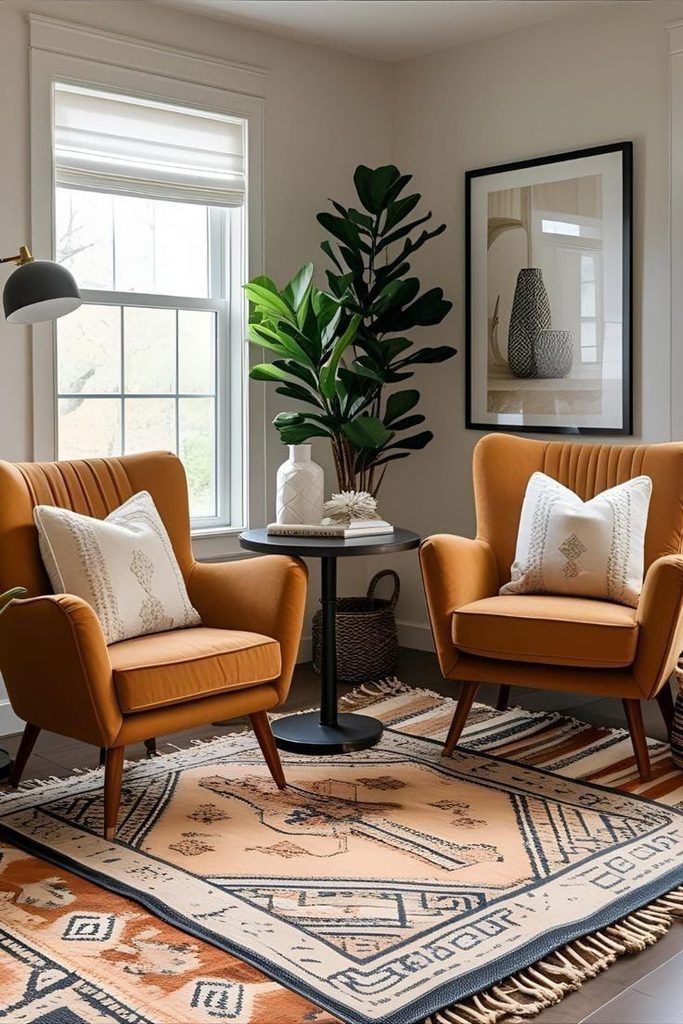
Not every two chairs sitting area needs matching everything. Try one chair slightly larger than the other, or place the table off-center instead of dead in the middle. This creates a more relaxed, collected-over-time feeling instead of a showroom look.
Tip: if you go asymmetrical, keep at least one element consistent, like fabric color, so it still feels planned.
Eclectic and bohemian homes embrace this fully. Even traditional homes can use subtle asymmetry for a more personal touch. And that wraps up all 16 ideas, but let’s cover a few more things before you start shopping.
Tips for Success
- Always measure your space before buying chairs, not after you fall in love with a style.
- Keep a walking path of at least 30 inches around the seating area so it doesn’t feel blocked.
- Choose one statement piece, whether it’s a chair, rug, or lamp, and build the rest of the area around it.
- Test fabric swatches in the actual room lighting before committing, since lighting changes how colors look.
- Don’t skip the table. Even a small one gives the space function beyond just sitting.
- Add at least one soft element, like a throw blanket, so the area doesn’t feel too rigid.
- Step back and view the whole grouping from across the room before finalizing placement.
Common Mistakes and How to Avoid Them
Placing chairs too far apart
: Keep them close enough that conversation feels natural, usually within 6 to 8 feet of each other.
Ignoring scale
: Match chair size to room size. Oversized chairs in a small room make the whole space feel cramped.
Skipping the rug
: A rug anchors the area and makes it feel like a real destination in the room, not just leftover furniture.
Matching everything too perfectly
: A little contrast in fabric or texture keeps the space from feeling stiff or showroom-like.
Forgetting lighting
: A dark corner with two chairs won’t get used. Add a lamp or make sure it’s near natural light.
Overcrowding the table
: Too many decorative items make the space feel cluttered instead of cozy. Stick to two or three pieces.
Similar Variations
- Coastal Reading Nook – Light woods, blue and white fabrics, and lots of natural light for a beachy feel.
- Boho Corner Lounge – Layered rugs, patterned pillows, and mixed textures for a relaxed, collected look.
- Modern Minimalist Duo – Sleek chairs, one accent color, and clean lines with almost no clutter.
- Farmhouse Fireside Chairs – Two chairs angled toward a fireplace with cozy throws and wood accents.
- Traditional Library Seating – Leather chairs, a small side table, and a nearby bookshelf for a classic study feel.
- Scandinavian Window Nook – Light wood, neutral fabrics, and simple lines placed right by a window.
Building a 16 Two Chairs Sitting Area really comes down to picking the right scale, adding a little personality through texture and color, and making sure the space actually invites people to sit down and stay a while. Once you nail those basics, the rest is just having fun with the details.
Leave a Reply