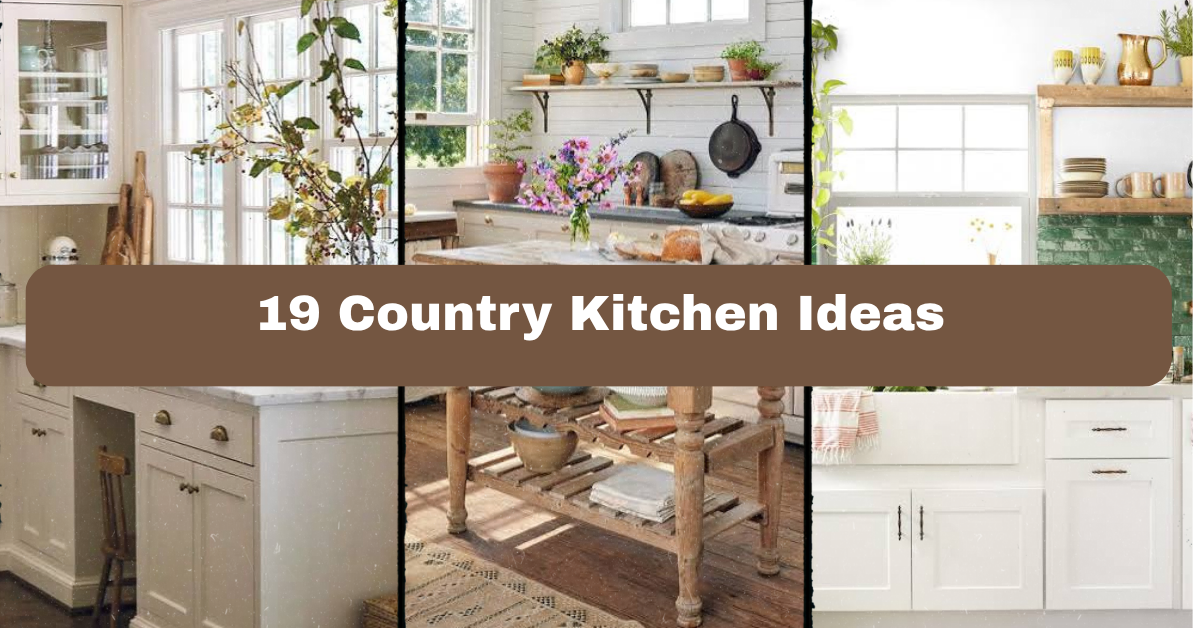
19 Country Kitchen Ideas can help you create a room that feels warm, useful, and full of personality. I’ll walk you through practical choices for colors, cabinets, lighting, furniture, storage, and finishing touches.
What are country kitchen ideas? They are design approaches that use natural materials, soft or earthy colors, practical furniture, open storage, and handcrafted details to create a welcoming kitchen with a relaxed rural feel.
Keep reading for ideas that work in large kitchens, small apartments, modern homes, and older cottages. You’ll also find simple ways to get the look without starting a full remodel.
What Makes a Country Kitchen Feel So Welcoming?
When I picture a country kitchen, I see a room made for real life. It should be comfortable enough for morning coffee, sturdy enough for busy meal prep, and attractive without looking too perfect.
Country style often includes wood, painted cabinets, stone, ceramic, linen, woven baskets, and aged metal. The color palette may be soft and light, or it may use deeper shades such as forest green, navy, clay, and warm brown. The key is balance. Too many rustic details can make a room feel busy. Too many polished surfaces can remove the relaxed charm.
You do not need a farmhouse to use this style. A few thoughtful changes can bring country character to a modern kitchen, rental, or small cooking space.
1. Paint Cabinets in a Soft, Earthy Color
Painted cabinets can change the entire mood of a country kitchen. Cream, sage green, dusty blue, mushroom, and warm gray all work well because they feel gentle rather than harsh. I especially like using one color on the lower cabinets and a lighter shade above.
Choose simple shaker doors or flat-front cabinets with small knobs. Brass, bronze, pewter, and black hardware each create a different effect. Add a wood cutting board, woven baskets, and a few ceramic pieces to soften the painted finish.
For a practical update, test paint samples beside your counters and flooring before buying gallons. Natural light can make a color look much lighter.
This idea suits traditional homes with cream cabinets, modern homes with muted green, and coastal rooms with pale blue. Next, let’s bring warmth to the room with natural wood.
2. Add a Natural Wood Island or Worktable
A wood island gives a country kitchen a strong central feature. It also adds texture to rooms filled with painted cabinetry and smooth counters. Look for oak, pine, maple, or reclaimed wood with visible grain.
The island can include drawers, open shelves, a butcher block top, or seating for two. If your kitchen is small, use a narrow worktable instead of a built-in island. A movable piece gives you extra prep space without making the layout permanent.
Seal the wood with a food-safe finish if you plan to chop directly on it. Leave enough room for doors and drawers to open comfortably. Around 36 inches of walking space is a useful target for a main walkway.
This works with farmhouse, Scandinavian, modern rustic, and English country styles. Once the center of the room feels warm, the next step is to make the walls work harder.
3. Use Open Shelves for Everyday Dishes
Open shelving brings a relaxed, lived-in quality to country kitchens. It also lets you display dishes, mugs, jars, and small art instead of hiding everything behind cabinet doors.
Choose thick wood shelves for a rustic room, painted shelves for a cottage kitchen, or slim metal brackets for a more modern look. Keep the display useful. Place everyday plates near the dishwasher or prep area, and store less-used items higher up.
A practical tip is to leave some empty space between groups of objects. Stack plates, line up mugs, and add one small plant or framed print. Do not fill every inch.
Open shelves can look casual in a farmhouse kitchen, neat in a modern kitchen, or airy in a coastal space. With storage in place, we can now choose a color palette that keeps the room visually calm.
4. Build a Warm, Limited Color Palette
A country kitchen feels more finished when the colors relate to one another. Start with two main colors and one accent. For example, combine warm white cabinets, oak wood, and muted blue accessories.
You can also use cream, olive green, and aged brass for a traditional look. Terracotta, natural wood, and charcoal create a richer farmhouse palette. Keep large surfaces quiet, then add stronger color through curtains, pottery, rugs, or painted furniture.
I suggest collecting fabric, paint, tile, and hardware samples before making final choices. View them in morning and evening light. A color that looks soft in a store may appear intense near a sunny window.
This approach adapts easily to modern, coastal, cottage, and traditional kitchens. The table below gives a few combinations you can use right away, and then we’ll move to the sink area.
Country Kitchen Color Palette Guide
| Main color | Supporting color | Accent | Best material pairing | Overall mood |
|---|---|---|---|---|
| Warm white | Oak | Sage green | Wood shelves and ceramic tile | Light and classic |
| Sage green | Cream | Aged brass | Brass knobs and linen | Soft and traditional |
| Navy blue | White | Natural rattan | Woven stools and oak | Coastal country |
| Mushroom gray | Walnut | Terracotta | Stone counters and clay pots | Earthy and calm |
| Olive green | Pale beige | Black | Iron lighting and wood | Rustic and grounded |
5. Choose a Deep Farmhouse Sink
A deep apron-front sink is one of the most recognizable country kitchen features. It offers plenty of room for large pans, baking trays, and messy food preparation. Fireclay, porcelain, stainless steel, and copper are common choices.
White fireclay creates a classic look, while stainless steel feels more practical and modern. Copper adds warmth but needs special care and develops a changing patina over time. Pair the sink with a bridge faucet or a simple high-arc faucet in brass, bronze, or matte black.
Before ordering, check the cabinet size and counter support requirements. Farmhouse sinks are heavy, and some models need the cabinet front modified.
This feature suits English country, farmhouse, rustic, and modern country kitchens. Once the sink is selected, the backsplash can add another layer of useful texture.
6. Install Handmade-Looking Backsplash Tile
A backsplash is a great place to add character without covering the entire kitchen in pattern. Handmade-looking ceramic tile has slight variations that make the wall feel less flat and more personal.
Try creamy subway tile for a classic room, square zellige-style tile for a textured finish, or small green tiles behind the range. Keep the grout close in color to the tile if you want a quiet look. Use contrasting grout when you want each shape to stand out.
Order samples first. Tile color can change depending on the light and nearby cabinets. Also, choose a smooth enough surface that can be wiped clean behind the cooktop.
This idea works with traditional cabinets, modern slab doors, cottage furniture, and coastal colors. Now let’s look at lighting, which can change how all these materials appear.
7. Hang a Simple Pendant or Enamel Light
Good lighting makes a country kitchen more useful and more inviting. Over an island, use two or three pendants with metal, glass, or enamel shades. Over a table, one larger fixture can create a warm focal point.
Black metal gives the room a farmhouse edge. Aged brass feels more classic. White enamel looks simple and practical, especially in a cottage kitchen. Choose warm bulbs around 2700K to 3000K for a comfortable glow.
Do not rely on one ceiling fixture. Add under-cabinet lighting for food prep and a small lamp on a counter or shelf if you have room. Install dimmers so the light can shift from cooking to relaxing.
This lighting plan fits rustic, modern country, coastal, and industrial country interiors. Next, we’ll make the floor feel softer and more comfortable.
8. Layer a Woven Rug for Warmth
A washable runner can make a country kitchen feel finished while adding comfort underfoot. Woven cotton, wool, jute, and indoor-outdoor rugs all bring useful texture.
Place a runner beside the sink or along a long cabinet wall. Choose a pattern with colors already found in the room, such as cream, blue, brown, or olive. A faded stripe, small check, or geometric weave often feels more country than a bold modern print.
Use a non-slip pad underneath, especially on tile or wood floors. In busy kitchens, select a low-pile or washable style that does not trap crumbs.
A jute rug suits rustic rooms, a striped cotton runner works in coastal kitchens, and a simple wool design fits traditional spaces. Use the guide below to choose the right rug size before moving on to furniture.
Kitchen Rug Size Guide
| Kitchen area | Suggested rug size | Best use | Practical note |
|---|---|---|---|
| Narrow sink run | 2 x 6 feet | One-person prep area | Keep edges clear of appliances |
| Long galley kitchen | 2.5 x 8 feet | Full cabinet walkway | Use a strong non-slip pad |
| In front of an island | 3 x 5 feet | Small accent zone | Leave a border of visible flooring |
| Breakfast nook | 5 x 7 feet | Table and chairs | Place all chair legs on the rug |
| Large kitchen seating area | 8 x 10 feet | Table or island zone | Check door and drawer clearance |
9. Add a Freestanding Hutch or Pantry Cabinet
Freestanding storage gives a country kitchen the charm of collected furniture. A hutch can hold dishes, glassware, linens, or cookbooks. A tall pantry cabinet can store dry goods while adding height to an empty wall.
Look for painted wood, glass doors, beadboard panels, or simple vintage hardware. If the piece feels too dark, paint the inside a lighter color or replace solid doors with glass. Keep the top useful but not crowded. A bowl, small lamp, and framed picture may be enough.
Before bringing home a vintage cabinet, measure doorways and check for signs of water damage. Anchor tall furniture to the wall for safety.
This storage idea fits cottage, farmhouse, traditional, and eclectic kitchens. With larger storage handled, we can add smaller details that make daily cooking easier.
10. Display Useful Crockery and Cookware
Country kitchens look best when decoration has a purpose. Display a stack of white plates, a row of wooden spoons, a ceramic pitcher, or a few copper pans. These items add color and texture while staying within reach.
Use a rail with hooks for utensils or small pans. Place canisters near the coffee station. Keep heavy cookware on a lower shelf rather than high above your head. Group similar materials together so the display looks planned.
I like choosing one repeated finish, such as cream pottery or warm wood, to connect different objects. Rotate seasonal pieces instead of buying more storage.
This idea can feel rustic with cast iron, coastal with blue-and-white dishes, or modern with clean ceramic shapes. Next, let’s give the windows a softer, more relaxed frame.
11. Frame Windows with Linen or Gingham
Window treatments can make a kitchen feel less stark. Linen café curtains, cotton checks, woven shades, and simple Roman blinds all work well with country design.
Choose a fabric that lets in enough daylight for food preparation. Small checks and stripes add a classic cottage feel. Natural linen creates a quieter, modern country look. If the room already has patterned tile or a busy rug, select a solid fabric.
Mount the curtain rod slightly wider than the window so the fabric can sit outside the frame when open. Keep cloth away from the cooktop and use washable material near food prep areas.
This detail works in traditional, coastal, farmhouse, and French country kitchens. With the windows softened, we can add a touch of nature without creating extra clutter.
12. Bring in Herbs and Easy-Care Plants
Plants make a country kitchen feel active and fresh. A small pot of rosemary, thyme, basil, or mint can sit near a bright window. If natural light is limited, use a hardy plant such as pothos or a small snake plant.
Place herbs in matching terracotta pots, old tins, or simple ceramic containers. Use a tray beneath them to catch water and protect the counter. Avoid crowding the sink or placing plants where leaves may touch hot surfaces.
One large plant in a woven basket can fill an empty corner better than many tiny pots. Choose greenery that matches the room’s colors rather than treating plants as random decoration.
This idea suits farmhouse, Mediterranean, English country, and modern kitchens. The following table can help you select materials that support the look without causing extra maintenance.
Country Kitchen Material Comparison
| Material | Visual effect | Durability | Care needs | Good location |
|---|---|---|---|---|
| Oak | Warm and familiar | High | Wipe spills quickly | Island or shelves |
| Marble | Classic and natural | Medium | Seal and avoid harsh acids | Baking counter |
| Quartz | Clean and consistent | High | Low maintenance | Main countertop |
| Fireclay | Traditional and bright | High | Avoid sudden heavy impacts | Farmhouse sink |
| Copper | Warm and aged | Medium | Allow patina or polish | Hardware or cookware |
| Terracotta | Earthy and handmade | Medium | Seal to resist stains | Planters or floor accents |
13. Add Beadboard or Shiplap in a Small Area
Wall paneling can bring cottage character, but it works best when used with restraint. Add beadboard beneath a chair rail, behind open shelves, or on the side of an island. Shiplap can create a broader farmhouse effect on one wall.
Paint the paneling in a soft white, cream, pale gray, or muted green. Use moisture-resistant material near the sink, and seal the surface so it can be wiped clean.
Do not cover every wall if your kitchen already has strong wood grain or patterned tile. One focused area usually creates more impact and costs less.
Beadboard fits traditional and coastal rooms, while shiplap suits farmhouse and rustic spaces. Next, let’s make room for a table where the kitchen can become a social space.
14. Create a Small Breakfast Nook
A breakfast nook gives a country kitchen a friendly place to pause. Use a round wood table, a painted pedestal table, or a narrow farmhouse table that fits against a wall. Add a bench on one side to save space.
Mix seating styles. A wooden bench with two painted chairs feels collected instead of overly matched. Add a washable cushion in ticking stripe, gingham, or plain linen. Keep the table size practical so chairs do not block the main walkway.
For a tiny kitchen, choose a drop-leaf table or wall-mounted folding table. Measure chair clearance before buying. You usually need around 24 inches of width per seated person for comfortable use.
This setup works in cottage, Scandinavian, traditional, and modern country homes. Once seating is comfortable, we can give the ceiling and upper space a little more character.
15. Use Exposed Beams or Wood Ceiling Details
Exposed beams add architectural warmth and draw the eye upward. If your home has original beams, clean them gently and let their natural marks show. For a newer home, decorative wood beams can create a similar feeling.
Choose a finish that relates to the floor or island. Dark beams create contrast, while pale wood keeps a small kitchen light. Avoid adding heavy beams to a low ceiling unless they are shallow and spaced carefully.
A simpler option is a wood-plank ceiling, one stained beam, or a narrow strip of tongue-and-groove paneling. Confirm that any decorative beam is properly secured and does not block lights, vents, or sprinklers.
This idea feels natural in rustic and farmhouse spaces, but pale wood can also work in coastal and modern country kitchens. Now let’s add pattern in a controlled way.
16. Use Checks, Stripes, and Small Floral Prints
Country style welcomes pattern, but the pattern should support the room rather than compete with it. Checks, gingham, ticking stripes, small florals, and simple botanical prints are reliable choices.
Use one pattern on a roman shade, seat cushion, tea towel, or runner. Repeat one color from that pattern somewhere else, such as on cabinet hardware, pottery, or artwork. Mixing patterns is possible, but vary their scale. Pair a small check with a wider stripe instead of two tiny prints.
Washable covers are especially helpful for breakfast areas and busy family kitchens. Keep larger surfaces calm if you use patterned fabric.
This approach can look English country with florals, farmhouse with checks, or modern country with a single restrained stripe. Use the budget guide below to decide where to spend first.
Country Kitchen Budget Priorities
| Budget level | Best first upgrade | Typical materials | What to avoid |
|---|---|---|---|
| Under $100 | Hardware, textiles, plants | Knobs, runner, towels, herbs | Buying many unrelated accents |
| $100 to $500 | Lighting or open shelves | Pendant, wood shelf, brackets | Choosing fixtures without measuring |
| $500 to $2,000 | Sink, faucet, or island | Fireclay sink, wood table, faucet | Ignoring plumbing or cabinet changes |
| $2,000 to $8,000 | Cabinet painting or backsplash | Professional paint, ceramic tile | Skipping samples and prep |
| Over $8,000 | Full layout or cabinet update | New cabinets, counters, flooring | Changing style without a clear plan |
17. Choose Vintage-Inspired Hardware
Small hardware changes can make plain cabinets feel more country. Cup pulls, bin pulls, ceramic knobs, latches, and simple round knobs all add character.
Use aged brass for warmth, oil-rubbed bronze for a darker rustic look, or pewter for a softer traditional finish. You can mix knobs and pulls, but keep the finish consistent. For example, use knobs on doors and cup pulls on drawers.
Measure existing screw spacing before ordering replacements. Keep the old hardware in a labeled bag if you are updating a rental. This makes it easier to restore the kitchen later.
Vintage-inspired hardware fits almost any version of country style, including modern farmhouse and French country. With those small details in place, we can finish with art that feels personal.
18. Hang Practical, Nature-Inspired Artwork
Artwork keeps a country kitchen from feeling like a showroom. Look for botanical prints, fruit studies, landscape paintings, seed packets, bread boards, or handmade pottery arranged on a shelf.
Choose frames in wood, black, brass, or painted colors that already appear in the room. A single large print can anchor a blank wall. For a gallery arrangement, mix sizes but keep the spacing even.
Protect artwork from steam and direct splashes. Avoid placing valuable paper pieces directly above the sink or range. A small framed print near the breakfast table may be safer and easier to enjoy.
This idea works with traditional landscapes, coastal sketches, rustic signs, or clean modern line art. One final layer can make the whole kitchen feel more welcoming.
19. Finish with a Comfortable, Lived-In Layer
The best country kitchens do not look untouched. Add a wooden stool, a bowl of seasonal fruit, a stack of linen napkins, or a well-used cutting board. These details suggest that the room is meant to be enjoyed.
Choose a few pieces with different textures. A ceramic vase, woven basket, iron candle holder, and soft towel can create interest without filling every surface. Leave clear counter space for cooking and cleaning.
I recommend stepping back once everything is placed. Remove anything that feels random or makes the room hard to use. Country style is about comfort, not clutter.
This finishing approach adapts to every home style. Use rattan for coastal country, aged wood for rustic country, or simple ceramics for modern country. With the main ideas complete, here are a few practical rules to keep the design on track.
Tips for Success
- Measure every wall, walkway, cabinet, and doorway before buying furniture or fixtures.
- Choose washable fabrics for runners, curtains, seat cushions, and kitchen towels.
- Repeat two or three materials throughout the room, such as oak, ceramic, and aged brass.
- Keep at least one clear counter area for chopping, mixing, or placing hot dishes.
- Test paint and tile samples in both daylight and evening light.
- Mix old-looking and new pieces so the kitchen feels collected, not themed.
- Install task lighting where you actually prepare food, not only in the center of the ceiling.
Common Mistakes and How to Avoid Them
Using too many rustic decorations
Choose a few strong details, such as a wood island, vintage cabinet, or woven rug. Too many signs, baskets, and distressed objects can make the room feel crowded.
Ignoring the kitchen work zones
Keep the sink, refrigerator, and cooking area easy to reach. Decorative furniture should never block appliance doors, drawers, or main walkways.
Choosing a paint color without testing it
Place large samples beside counters, floors, and trim. Check them throughout the day before making a final decision.
Using delicate materials in messy areas
Reserve fragile rugs, untreated wood, and valuable artwork for safer locations. Select sealed, washable, or durable finishes near the sink and range.
Matching every piece too closely
Country kitchens feel natural when materials vary slightly. Combine painted wood, natural grain, ceramic, linen, and metal instead of buying one complete matching set.
Forgetting modern convenience
Keep outlets, task lighting, drawer storage, and easy-clean surfaces in the plan. A beautiful kitchen still needs to support daily cooking.
Similar Variations
- Modern Country: Combines shaker cabinets, simple lighting, pale wood, and uncluttered surfaces.
- English Country: Uses floral fabrics, rich greens, painted furniture, aged brass, and traditional artwork.
- French Country: Blends soft plaster colors, curved furniture, natural stone, linen, and antique details.
- Coastal Country: Uses white, blue, rattan, light wood, striped fabric, and breezy window treatments.
- Rustic Country: Focuses on rough wood, stone, iron, earthy colors, and sturdy handmade pieces.
- Scandinavian Country: Keeps the warm materials but uses lighter colors, cleaner lines, and less decoration.
A welcoming country kitchen comes from a mix of useful choices, not one special product. Start with the pieces that affect the room most, such as cabinet color, lighting, flooring, or an island. Then add texture through pottery, fabric, wood, and plants.
You can create the look slowly, one practical change at a time, with these 19 Country Kitchen Ideas.
Leave a Reply