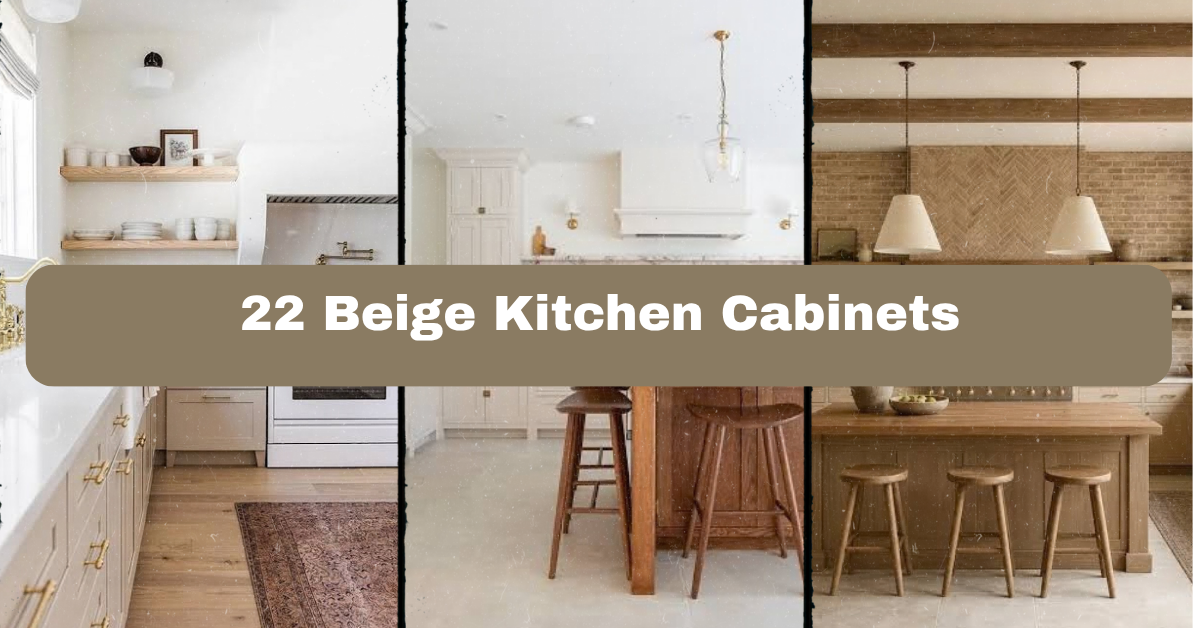
22 Beige Kitchen Cabinets can make a kitchen feel warm, calm, and finished without looking plain or dated. I’ll walk you through 22 practical ways to style them, from hardware and counters to lighting, rugs, and wall color.
What are 22 beige kitchen cabinet ideas? They are design approaches for using beige cabinetry with coordinated colors, materials, lighting, hardware, furniture, and decor. The ideas suit modern, traditional, coastal, farmhouse, transitional, and small kitchen styles.
You’ll see how small choices change the whole room. I’ll also share useful measurements, color pairings, mistakes to avoid, and easy upgrades that work on different budgets.
A Quick Primer on Beige Kitchen Cabinets
Beige cabinets sit between bright white and deeper brown. That middle ground makes them easy to live with. They add warmth without making a kitchen feel heavy, and they usually hide small marks better than pure white cabinets.
The word beige covers many shades. Some lean creamy, some look sandy, and others have gray, pink, or yellow undertones. This matters because the wrong beige can clash with your floor or countertop. I always check cabinet samples in morning, afternoon, and evening light before choosing paint or finishes.
Beige cabinetry also works with more than one style. Pair it with brass for a classic room, black hardware for contrast, or wood accents for a relaxed space. The key is to repeat warm tones throughout the kitchen so the cabinets look intentional.
1. Pair Beige Cabinets With a Bright White Countertop
A white countertop gives beige cabinets a clean, crisp partner. This combination works especially well when the room has limited natural light. The white surface reflects light, while the beige doors keep the kitchen from feeling stark.
Quartz, marble, and porcelain slabs can all work here. If you want a quiet look, choose a countertop with soft gray or cream veining. Avoid a very blue-white surface if your cabinets have strong yellow undertones. It may make the beige look muddy.
For an easy update, bring a cabinet door and countertop sample together before ordering. Check them beside your backsplash, too. This look suits modern, transitional, farmhouse, and traditional kitchens.
With the counter chosen, the backsplash becomes the next place to add texture and personality.
2. Use Handmade-Look Tile for Gentle Texture
Beige cabinets can look flat when every surface is smooth. A handmade-look backsplash adds movement without taking over the room. Look for tiles with uneven edges, soft color variation, or a satin glaze.
Cream, warm white, pale taupe, and muted sage are useful choices. A simple stacked layout feels current, while a classic running bond pattern feels more traditional. Keep the grout close to the tile color if you want a calm wall. Choose a slightly darker grout if you want each tile to stand out.
I suggest ordering a sample board instead of judging one loose tile. Ten tiles together show color variation much better. This idea adapts easily to coastal, cottage, modern, and Mediterranean kitchens.
Once the wall has texture, you can fine-tune the room’s color balance.
3. Add Matte Black Hardware for Clear Contrast
Matte black pulls and knobs give beige cabinets a sharper outline. They are especially helpful if your counters, walls, and backsplash are all light. The dark hardware acts like punctuation, making the cabinet layout easier to see.
Use knobs on doors and pulls on drawers for a practical mix. For a more streamlined look, use pulls everywhere. On upper doors, choose hardware that is easy to grip but not so large that it overwhelms the cabinet face.
As a starting point, try pulls between 3 and 6 inches on standard drawers. Test one piece with removable adhesive before drilling. Black hardware works in modern, industrial, farmhouse, and even traditional kitchens when the shape is simple.
Now that the cabinets have contrast, warm metal can add a softer layer if you want a less graphic finish.
4. Warm the Room With Aged Brass Fixtures
Aged brass and beige are natural partners. Both have warm undertones, so they create a welcoming kitchen without much effort. Use brass for cabinet hardware, the faucet, pendant lights, or small shelf brackets.
You do not need every metal to match perfectly. Still, I prefer one main metal and one small secondary finish. For example, use aged brass on the faucet and hardware, then add black only through a light fixture or window frame.
Avoid shiny yellow brass if you want a relaxed look. Satin brass or unlacquered brass usually feels softer. This pairing fits traditional, transitional, Parisian, and warm modern kitchens.
With the metal direction set, the following palette guide can help you compare color combinations before shopping.
Beige Cabinet Color Pairings
| Cabinet beige | Countertop color | Backsplash color | Accent color | Best overall mood |
|---|---|---|---|---|
| Cream beige | Soft white quartz | Warm white tile | Aged brass | Classic and bright |
| Sand beige | Honed limestone look | Pale taupe tile | Olive green | Earthy and relaxed |
| Greige beige | White with gray veining | Light gray ceramic | Matte black | Modern and balanced |
| Mushroom beige | Cream quartz | Dusty rose or beige tile | Bronze | Soft and collected |
| Golden beige | Light wood or ivory stone | Sand-colored tile | Deep green | Rich and grounded |
| Pink beige | Warm white marble look | Blush or cream tile | Aged brass | Gentle and elegant |
A clear palette makes it easier to choose flooring, textiles, and decorative pieces without creating a crowded room.
5. Mix in Natural Wood for a Softer Kitchen
Wood keeps beige cabinets from feeling too uniform. Add it through open shelves, a butcher block island, stools, cutting boards, or a vent hood surround. You can use one wood tone or combine close shades for a collected look.
Light oak creates a Scandinavian or coastal mood. Walnut adds depth and suits a more refined kitchen. Reclaimed wood brings farmhouse character, but it should be sealed properly near water and cooking areas.
I recommend repeating the wood at least twice. For example, pair oak counter stools with a wood cutting board display. This makes the accent feel planned rather than random. The approach works in modern, rustic, Japandi, and farmhouse homes.
After adding wood, an island can provide another chance to shape the room’s color and function.
6. Give the Island a Slightly Deeper Beige Finish
Using a darker beige on the island creates depth without the sharp contrast of navy or black. Choose a shade that is one or two steps deeper than the perimeter cabinets. Mushroom, taupe, camel, and warm greige are good options.
This works best when the countertop runs across both cabinet colors. A shared surface helps the two finishes feel connected. You can also use a wood island base with beige perimeter cabinets for more contrast.
Before painting, test the darker color beside the floor. Some taupes become purple near gray flooring, while golden beiges can look orange beside red-toned wood. This idea suits transitional, modern farmhouse, and classic kitchens.
The island color is only one part of the focal point, so next, consider the stools that sit around it.
7. Choose Counter Stools That Repeat a Room Accent
Counter stools should support the cabinet color, not compete with it. For beige kitchens, woven seats, warm wood frames, leather, and muted fabric are all useful choices. Pick a material that repeats somewhere else in the room.
For example, tan leather stools can connect to a wood floor. Black metal stools can repeat black window frames. Woven rattan stools can echo a basket or pendant shade.
Measure before buying. Most kitchen counters need stools with a 24 to 26 inch seat height, while standard bar-height counters usually need 28 to 30 inch seats. Leave about 24 inches of counter width per person. This styling works in coastal, modern, rustic, and eclectic kitchens.
Once the seating is comfortable and coordinated, lighting can make the entire beige palette look more intentional.
8. Install Layered Lighting in Warm White
Lighting changes how beige cabinets appear. Cool bulbs can make them look gray or dull, while very warm bulbs may turn yellow. I usually recommend bulbs around 2700K to 3000K for a comfortable kitchen, with brighter task lighting under the cabinets.
Use three layers: ceiling lighting for general brightness, pendants or a chandelier for visual focus, and under-cabinet lighting for food preparation. Choose high color rendering bulbs when possible so food and finishes look more natural.
Place under-cabinet strips toward the front edge of the cabinet bottom. This lights the counter better than placing them deep against the wall. Layered lighting works in every kitchen style, from minimalist to traditional.
The right light reveals your surfaces clearly, which makes the next material choice much easier.
Common Kitchen Lighting Choices
| Lighting type | Suggested color temperature | Best location | Main purpose |
|---|---|---|---|
| Recessed ceiling light | 2700K to 3000K | Ceiling grid | General room lighting |
| Under-cabinet LED strip | 3000K | Cabinet underside | Countertop task lighting |
| Pendant light | 2700K to 3000K | Over island or peninsula | Focus and atmosphere |
| Interior cabinet light | 2700K to 3000K | Glass-front cabinet | Display lighting |
| Toe-kick light | 2700K | Cabinet base | Gentle evening glow |
| Decorative wall sconce | 2700K | Open wall or sink area | Accent lighting |
Light temperature is only part of the plan. Placement matters just as much, especially around counters and work areas.
9. Select a Floor That Grounds the Warm Cabinet Color
A beige kitchen benefits from flooring with enough contrast to define the cabinets. Pale oak, natural stone, terracotta-look porcelain, and medium walnut can all work. The best choice depends on the beige undertone.
If the cabinets are creamy, a slightly deeper floor prevents the room from blending together. If the cabinets are dark taupe, a light floor can keep the kitchen airy. Large-format tile creates fewer grout lines and can make a small room appear more open.
Always compare flooring samples under the actual kitchen lighting. A sample in a showroom may look completely different at home. This idea fits Mediterranean, farmhouse, contemporary, and coastal interiors.
After the floor is set, a rug can add comfort while bringing the colors together.
10. Layer a Washable Runner for Comfort and Color
A runner beside the sink or range adds softness to a hard-working kitchen. It can also connect beige cabinets to the floor, backsplash, and nearby rooms. Look for washable cotton, low-pile polyester, or indoor-outdoor materials.
Muted terracotta, faded blue, olive, charcoal, and cream are reliable colors. Avoid a rug that matches the cabinets exactly. A little contrast helps the whole room look more designed.
For safety, choose a runner with a non-slip pad and keep its edges clear of cabinet doors. A 2.5 by 7 foot runner often suits a narrow galley area, while a wider open kitchen may need a 3 by 8 foot size. Runners work with boho, vintage, farmhouse, and modern styles.
With the floor softened, wall color can complete the background around your cabinetry.
11. Paint the Walls in a Compatible Neutral
Wall color should support the beige cabinets without disappearing into them. Warm white creates a bright, low-contrast room. Pale greige adds a quiet shift. Soft sage, dusty blue, and muted clay give more personality while staying easy to live with.
Before choosing paint, identify the cabinet undertone. Hold paint chips vertically beside a door and check them in different light. If the cabinet looks yellow, avoid a wall color with a strong yellow base. If it looks gray, a creamy wall can add balance.
Use samples at least 12 by 12 inches so you can see the color from across the room. This method works in traditional, cottage, modern, and coastal kitchens.
A calm wall lets you be more adventurous with the backsplash or the next decorative feature.
12. Add Glass-Front Doors to Break Up Solid Cabinetry
Glass-front doors make beige cabinetry feel lighter. They provide a place to display plates, glasses, cookbooks, or a few favorite pieces. Reeded glass offers privacy while still catching light. Clear glass gives a more open appearance but requires tidy shelves.
Use this feature on one small cabinet bank rather than every upper door. Too much display space can make a kitchen look busy. Add warm interior lighting if the cabinet is deep or sits in a darker corner.
Keep the contents simple. Stack white dishes, place wood boards vertically, or group items by color. Glass doors adapt well to English country, transitional, vintage, and modern kitchens.
Once one display zone is styled, the next table can help you choose materials for the rest of the room.
Kitchen Material Comparison
| Material | Visual effect with beige cabinets | Maintenance level | Good use |
|---|---|---|---|
| Honed quartz | Soft and calm | Low | Busy family kitchens |
| Polished quartz | Bright and reflective | Low | Dark or small kitchens |
| Marble | Natural veining and character | Moderate to high | Classic statement counters |
| Porcelain slab | Modern stone appearance | Low | Counters and full-height backsplashes |
| Oak | Warm and casual | Moderate | Shelves, stools, island details |
| Walnut | Deep and polished | Moderate | Island accents and furniture |
| Terracotta tile | Earthy and lively | Moderate | Floors and accent walls |
| Stainless steel | Crisp and professional | Moderate | Range hood or worktop sections |
The strongest rooms usually mix two or three materials, not six or seven competing ones.
13. Create an Open Shelf With a Purposeful Display
Open shelves can make a beige kitchen feel less closed in. Install one or two shelves near the coffee station, sink, or range. Use them for items you reach for often, not random decorations.
A useful shelf display might include everyday mugs, a small plant, a wood board, and a jar of cooking utensils. Leave open space between groups so the shelf can breathe. Thick wood shelves feel warm, while slim metal shelves look more modern.
Mount shelves into wall studs or use the correct anchors for the wall type. Keep them away from direct steam if possible. This idea suits minimalist, farmhouse, coastal, and industrial kitchens.
Once the shelves are useful, green plants can bring another living layer into the space.
14. Bring in Greenery With Low-Maintenance Plants
Plants add color to beige cabinets without creating a loud focal point. Herbs near a sunny window are both decorative and practical. Pothos, snake plants, and small rubber plants can work in kitchens with indirect light.
Use pots that repeat your room’s finishes. Terracotta adds warmth, ceramic adds a clean look, and woven baskets suit a casual kitchen. Keep plants away from hot burners and avoid placing large pots where cabinet doors open.
If natural light is limited, use one small plant instead of forcing several to survive. Even a bowl of fresh lemons or a vase of leafy branches can provide the same color lift. This approach works in boho, cottage, modern, and Mediterranean rooms.
Nature-inspired accents can lead naturally into a more earthy color scheme.
15. Use Olive, Sage, or Moss as an Accent Color
Green works beautifully with beige because it adds contrast without feeling harsh. Olive creates a grounded, earthy look. Sage feels lighter and more relaxed. Moss or forest green adds drama in small amounts.
Bring the color in through a backsplash, window fabric, artwork, stools, or a painted island. I would not use every green shade at once. Choose one main green and repeat it two or three times.
For a small change, replace drawer pulls with aged brass and add an olive runner. For a larger project, paint the island in a muted green that shares the cabinets’ warmth. This palette suits English country, organic modern, farmhouse, and Mediterranean styles.
If green is not your favorite, blue can bring a cooler but still welcoming contrast.
16. Balance Beige Cabinets With Dusty Blue Accents
Dusty blue adds calm contrast to warm beige. It keeps the room from looking too yellow while avoiding the sharp feel of bright navy. Consider blue-gray bar stools, a painted island, patterned curtains, or a small backsplash section.
The blue should look muted rather than electric. Search for shades described as slate, denim, smoky blue, or faded blue. Pair them with warm white and natural wood to keep the kitchen balanced.
This color scheme works well in rooms with natural light, especially when the floor has oak or honey tones. It fits coastal, transitional, farmhouse, and Scandinavian homes.
With the major colors balanced, the next guide can help you choose accents by style and function.
Accent Color and Material Guide
| Accent direction | Useful colors | Materials to add | Best style matches |
|---|---|---|---|
| Warm organic | Olive, rust, camel | Wood, linen, terracotta | Organic modern, rustic |
| Soft coastal | Dusty blue, sea glass, cream | Rattan, ceramic, light oak | Coastal, cottage |
| Graphic modern | Charcoal, black, white | Steel, glass, quartz | Modern, industrial |
| Classic refined | Navy, soft gray, brass | Marble, brass, wool | Traditional, transitional |
| Desert-inspired | Clay, sand, cactus green | Leather, plaster, woven fiber | Desert boho, Southwestern |
| Romantic vintage | Dusty rose, cream, sage | Aged brass, floral fabric | Cottage, vintage |
This type of limited palette prevents beige from becoming bland or visually disconnected.
17. Frame the Range With a Decorative Hood
A hood can become the strongest architectural feature in a beige kitchen. A plaster, painted wood, or stone-look hood adds shape above the range and breaks up a long cabinet wall.
For a quiet look, paint the hood the same beige as the cabinets. For more depth, use a slightly lighter cream or a textured plaster finish. Wood trim can make the hood feel custom without requiring a full renovation.
Keep the hood proportionate to the range. A common starting point is a hood that is at least as wide as the cooking surface, though local ventilation requirements should guide the final design. This idea works in Mediterranean, modern farmhouse, traditional, and European kitchens.
A strong hood draws attention upward, so the area above the cabinets deserves careful thought too.
18. Style the Space Above Cabinets With Restraint
The area above cabinets does not need to be filled. If the gap is small, leaving it empty often looks cleaner. If the space is large, use a few tall, meaningful pieces rather than a collection of small objects.
Try woven baskets, large ceramic vessels, framed art, or a trailing plant. Repeat the kitchen’s beige, wood, black, or green accents so the display feels connected. Avoid items that collect grease and dust easily, especially near the range.
Measure the gap before buying anything. Leave a little breathing room around each piece instead of wedging objects tightly against the ceiling. This approach fits farmhouse, traditional, rustic, and eclectic kitchens.
When the upper area is calm, artwork can add personality at eye level.
19. Hang Art That Introduces Color Without Clutter
Kitchen art can make beige cabinets feel personal. Choose a framed botanical print, food illustration, abstract painting, or vintage sign that includes two or three colors already present in the room.
Keep art away from direct heat and areas exposed to frequent splashes. A framed piece on a side wall or above a breakfast nook is safer than one directly behind the range. Use washable or protected frames where moisture is common.
One large print often looks more polished than several tiny pieces. In a narrow kitchen, a vertical artwork can fill an empty wall without making the walkway feel crowded. This idea works in modern, cottage, traditional, and eclectic homes.
The next measurement guide can help you place runners, art, and seating without making the room feel tight.
Practical Kitchen Spacing Guide
| Feature | Useful minimum or target measurement |
|---|---|
| Space between opposing counters | About 42 inches for one cook |
| Space between opposing counters for two cooks | About 48 inches |
| Walkway around an island | About 36 inches minimum |
| Counter space per stool | About 24 inches |
| Standard counter stool height | 24 to 26 inches |
| Bar-height stool height | 28 to 30 inches |
| Runner clearance from cabinet doors | Keep edges from catching doors |
| Artwork above a table or console | Leave about 6 to 10 inches above furniture |
| Pendant clearance above an island | Often 30 to 36 inches above the counter |
These are planning guides, not a substitute for local building rules or the exact layout of your kitchen.
20. Add a Coffee or Beverage Station
A small beverage zone gives beige cabinets a daily-use purpose. Set up a coffee maker, kettle, mugs, jars, and a tray on one section of counter. If space allows, use a short open shelf above it for cups and supplies.
Choose containers in glass, ceramic, or wood to keep the area attractive. A dark tray can create contrast, while brass labels or a small framed print add charm. Keep the station close to an outlet and away from the busiest food-prep section.
This idea works in small apartments as well as large kitchens. It adapts to modern, farmhouse, vintage, and hotel-inspired styles.
A useful station can also become a reason to introduce one final layer of texture.
21. Use Linen, Cane, and Woven Details
Soft woven materials keep beige cabinets from looking too polished or cold. Add a linen café curtain, cane-front bar stools, woven baskets, or textured dish towels. These details are small, but they change how the room feels.
Choose fabrics in cream, flax, tan, muted green, or dusty blue. Avoid using the same weave everywhere. One cane feature and one linen feature are usually enough for a medium kitchen.
Washable fabrics are best near the sink and range. Keep baskets away from standing water, and use liners if they will hold produce. Woven accents fit coastal, boho, cottage, organic modern, and rustic interiors.
Texture adds comfort, and the final idea focuses on the feature that makes the whole room feel finished.
22. Repeat One Signature Detail Throughout the Kitchen
The most polished beige kitchens often have one detail that appears in several places. It might be aged brass, arched shapes, olive green, fluted glass, warm oak, or a particular tile pattern.
Repeat that feature three times, but vary its use. For example, use fluted glass on one cabinet, a reeded pendant, and a textured vase. Or repeat oak through stools, shelves, and cutting boards. The result feels connected without looking matched.
I suggest choosing this signature detail after the cabinets, counter, and floor are set. Then add it through affordable accessories first. This approach works with every style because the repeated feature can be bold, subtle, rustic, or sleek.
A thoughtful repeated detail brings the cabinet color, materials, and accessories into one clear design story.
Tips for Success
- Test beige cabinet samples beside the floor, counter, backsplash, and wall paint.
- Check samples in both natural daylight and evening lamp light.
- Choose cabinet hardware that feels comfortable in your hand, not just attractive in a photo.
- Use warm white bulbs, but avoid bulbs so warm that cream surfaces look yellow.
- Repeat important accent colors at least twice so they feel connected.
- Keep a small kitchen work zone free of decor, especially beside the range and sink.
- Order extra backsplash tile in case of future repairs or replacements.
- Use washable runners, stain-resistant fabrics, and sealed natural materials in busy areas.
- Mix smooth and textured finishes so the room has visual depth.
- Take cabinet door, flooring, and counter samples with you when shopping for paint and accessories.
Common Mistakes and How to Avoid Them
Choosing beige by name alone:
Look at the undertone instead. A beige labeled “warm” may look yellow, while another may lean pink or gray. Compare real samples in your kitchen.
Using one beige on every surface:
Create separation with a different counter, wall color, wood tone, or backsplash texture. Small changes keep the room from looking flat.
Mixing too many metals:
Choose one main metal for hardware and plumbing. Add a second metal only in small, deliberate amounts.
Ignoring artificial lighting:
A cabinet color can change dramatically under cool bulbs. Install or test the intended light temperature before making the final color decision.
Filling every open shelf and cabinet top:
Decor needs empty space around it. Display useful or meaningful pieces, then remove anything that looks crowded or collects grease.
Skipping practical measurements:
Check walkway width, stool height, door clearance, and runner placement before buying furniture or accessories.
Similar Variations
- Warm Transitional Beige: Beige cabinets, white counters, brass hardware, and classic tile create a balanced look that feels current but familiar.
- Coastal Beige: Pair sandy cabinetry with dusty blue, light oak, woven shades, and soft white surfaces for a relaxed seaside mood.
- Desert Boho: Add terracotta, clay, cactus green, leather, and woven textures for a sunbaked, casual kitchen.
- Organic Modern Beige: Use simple cabinet doors, honed stone, pale wood, olive accents, and sculptural lighting for a calm natural style.
- Modern Greige: Choose gray-beige cabinets, black hardware, slab fronts, and minimal decor for a clean contemporary room.
- Cottage Beige: Mix beadboard, floral or botanical art, aged brass, glass-front doors, and painted wood details for a comfortable country feel.
Beige cabinets are flexible, but they still need contrast, texture, and a clear color plan. Start with the fixed elements, such as the floor, counters, and backsplash, then add hardware, lighting, furniture, and decor in layers.
You do not need to remodel everything to change the mood. A new runner, warmer bulbs, better hardware, or a few wood accents can make a surprising difference. With the right balance, 22 Beige Kitchen Cabinets can become a warm and welcoming foundation for almost any kitchen style.
Leave a Reply