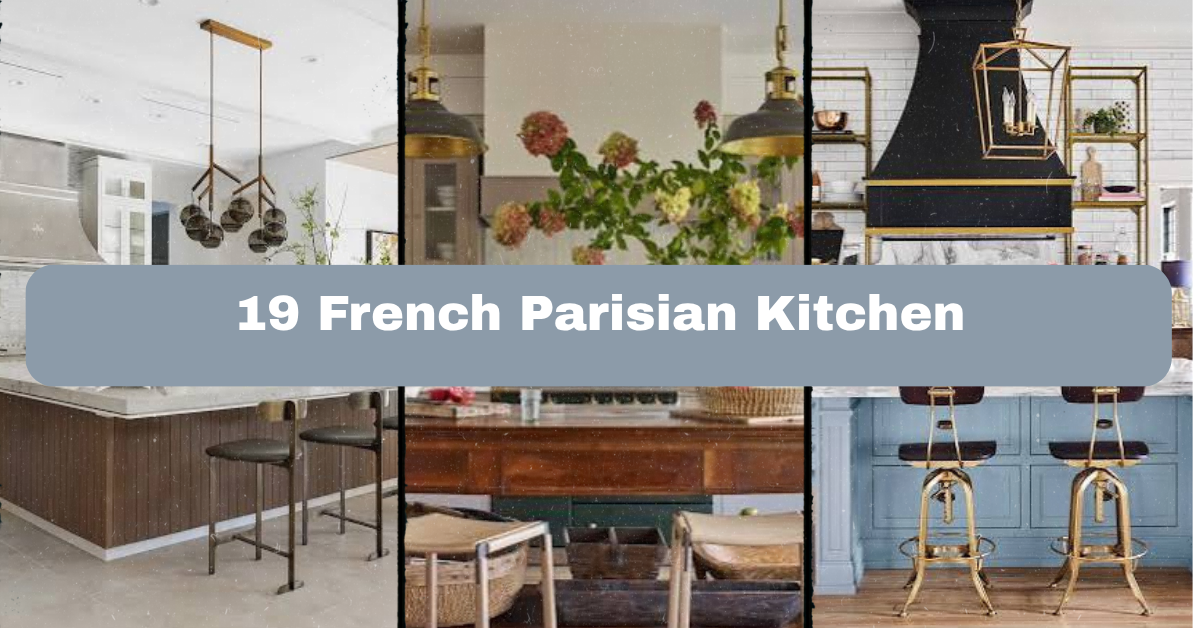
19 French Parisian Kitchen ideas can help you create a room that feels elegant, warm, practical, and lived-in without looking overly decorated. I’ll walk you through the details that make this style work, from cabinets and lighting to color, hardware, and small finishing touches.
What is a French Parisian kitchen? It is a graceful kitchen style that blends classic architecture, pale colors, natural materials, vintage details, and modern function. The look feels refined but comfortable, with beauty balanced by everyday practicality.
Keep reading, and you’ll see how to bring that Paris apartment feeling into a small kitchen, a modern home, or even a rental.
What Defines a French Parisian Kitchen?
When I picture a French Parisian kitchen, I see tall windows, soft daylight, old-world details, and a table ready for coffee. The style is not about making every item match. It is about combining polished pieces with relaxed, useful ones.
Think painted cabinetry, marble or stone surfaces, aged brass, linen curtains, wood boards, and open shelves. A little wear is welcome. So is an antique mirror or a chair that looks like it came from a flea market.
The best kitchens in this style balance three things: charm, function, and restraint. You want details, but not clutter. You want elegance, but not a showroom feel. Below are practical ways to create that balance.
1. Start With Soft, Architectural Cabinet Colors
Cabinet color sets the mood for the entire kitchen. For a Parisian look, I usually prefer warm white, creamy ivory, muted sage, pale gray, dusty blue, or soft mushroom. These shades feel gentle and allow other materials to stand out.
Avoid very bright white if you want a more relaxed room. A warmer paint color looks better beside aged brass, oak, marble, and woven textures. Shaker doors, slim rails, and simple recessed panels all work well. If your cabinets are flat-fronted, add character with decorative trim or vintage hardware.
For an easy update, paint only the lower cabinets and keep the upper cabinets light. This gives the room depth without making it feel heavy. In a modern home, use clean slab doors in a muted color. In a traditional home, choose paneled doors with a slightly worn finish.
This soft foundation makes it easier to add the classic Parisian details that come next.
2. Add Tall Cabinets That Feel Like Built-In Furniture
Parisian kitchens often look collected because storage resembles furniture instead of a row of basic cupboards. A tall pantry cabinet, glass-front hutch, or freestanding cupboard can add that feeling.
Look for details such as crown molding, furniture feet, inset doors, or a stained wood interior. You do not need a fully custom kitchen. A vintage armoire can hold dishes, linens, or small appliances. Paint it the same color as the cabinets for a seamless look, or use wood for contrast.
I like placing a tall cabinet near the dining area. It creates a visual connection between the kitchen and the rest of the room. Use the shelves for white dishes, wine glasses, baskets, and a few serving pieces.
In a modern kitchen, choose a simple full-height cabinet with minimal trim. In a cottage or traditional home, use a more decorative hutch. Either way, the goal is storage with personality.
Next, bring in a surface that feels both luxurious and naturally aged.
3. Choose Marble, Soapstone, or Honed Stone Counters
A classic stone countertop gives a French kitchen its calm, established character. Carrara marble is a popular choice because of its pale background and soft gray veining. Honed marble looks less glossy and hides small marks better than a polished finish.
If marble feels too delicate or expensive, consider soapstone, limestone-look quartz, or a matte porcelain surface. These options still provide the quiet look of natural stone. Keep the edge profile simple. A small eased edge or a slim bevel usually looks more authentic than a thick, dramatic edge.
I recommend viewing a full slab before choosing a stone. Veining can look very different from a small sample. Also, ask about sealing and care before installation.
For a modern version, use a clean white quartz with gentle veining. For a rustic version, try soapstone or butcher block. For a coastal home, pale limestone tones work beautifully.
Once the main surface is selected, the backsplash can add another layer of old-world texture.
4. Use Handmade-Looking Tile for Gentle Texture
A Parisian backsplash should support the room instead of stealing attention. Small ceramic tiles with uneven edges, soft glaze variation, or a slightly rippled surface work especially well.
Classic white subway tile is a safe choice, but do not stop there. Try elongated zellige tile, slim rectangular tile, or square tile with warm gray grout. Cream, pale blue, muted green, and blush beige can all fit the style.
I like taking the backsplash to the underside of open shelves or the ceiling behind a range. In a small kitchen, a full-height backsplash can make the room feel taller and more finished. Use a simple tile layout so the handmade surface remains the focus.
For a sleek modern home, choose a regular tile in a soft matte finish. In a farmhouse kitchen, use irregular handmade tile. In a coastal space, try watery blue or sandy cream.
Now that the hard surfaces have character, the palette needs a clear plan.
Color Palette Guide for a French Parisian Kitchen
| Palette | Main color | Supporting color | Accent metal | Best with |
|---|---|---|---|---|
| Classic cream | Warm ivory | Soft gray | Aged brass | Marble and oak |
| Parisian sage | Muted sage | Cream white | Antique brass | Natural stone |
| Dusty blue | Pale blue-gray | Warm white | Satin brass | Light wood |
| Mushroom neutral | Taupe mushroom | Chalk white | Bronze | Soapstone |
| Soft black and white | Cream white | Charcoal black | Polished nickel | Traditional trim |
5. Install Aged Brass or Unlacquered Brass Hardware
Hardware is a small detail with a big effect. Aged brass pulls and knobs bring warmth to pale cabinetry. Unlacquered brass changes over time, developing a deeper, less perfect finish. That natural aging is part of the charm.
Use cup pulls on drawers, knobs on cabinet doors, and longer pulls on tall pantry doors. Mixing two shapes can make the kitchen feel more collected. Keep the finish consistent unless you have a clear reason to mix metals.
Before ordering, make a cardboard template of each pull size. Hold it against your cabinets to check the scale. A pull that looks right online may feel too large in person.
For a modern Parisian kitchen, choose slim brass bar pulls. In a traditional room, use rounded knobs and bin pulls. For a rental, replace the existing hardware and save the original pieces in a labeled bag.
With the hardware in place, the sink and faucet can add another strong vintage note.
6. Choose a Deep Sink With a Sculptural Faucet
A deep apron-front sink instantly suggests a European country kitchen, but it can also work in a city-inspired Parisian space. Fireclay, porcelain, stainless steel, and stone composite are all useful options.
White fireclay feels traditional and bright. A stainless steel workstation sink feels more modern while still looking clean and practical. Pair the sink with a bridge faucet, gooseneck faucet, or simple pull-down model in brass, nickel, or aged bronze.
I would choose the faucet based on daily use first. Make sure the spout reaches the center of the basin and that the handle placement feels comfortable. Style should never make washing dishes harder.
A small kitchen can use a compact single-bowl sink. A larger kitchen may suit a wide farmhouse basin or a separate prep sink. In a sleek apartment, choose an undermount sink with a classic faucet for a quieter interpretation.
Next, soften the room with lighting that feels more like furniture than equipment.
7. Hang Lighting With Vintage Character
Lighting should make the kitchen feel warm at night and interesting during the day. Opal glass pendants, pleated fabric shades, brass sconces, and small picture lights all fit the Parisian mood.
Use pendants over an island or dining table, then add sconces near open shelves or a range wall. A single ceiling fixture can work in a small kitchen, but layered lighting gives you more control.
I suggest choosing warm bulbs around 2700K to 3000K. This range gives cabinets and wood a cozy appearance without making white surfaces look yellow. Add dimmers wherever possible.
Do not hang pendants too low. As a general guide, keep the bottom of the shade about 30 to 36 inches above a counter or island. In a modern kitchen, use a simple globe pendant. In a traditional kitchen, choose a lantern or pleated shade.
The next layer is architectural, and it can make a plain room feel much older.
8. Frame the Room With Molding and Panel Details
Crown molding, picture-frame trim, beadboard, and wall paneling can give a newer kitchen the bones of a Paris apartment. You do not need to use all of them. One or two carefully placed details are often enough.
Add crown molding where cabinets meet the ceiling if the room has enough height. Use beadboard on an island, pantry wall, or breakfast nook. Picture-frame molding can create an elegant backdrop around a dining area or range hood.
I recommend painting trim the same color as the wall or cabinets for a quiet effect. For more contrast, use cream trim against a muted blue or green wall.
In a contemporary home, keep the profiles narrow and simple. In a traditional home, use deeper molding and more decorative trim. In a rental, try removable molding strips or a tall framed mirror to create a similar impression.
Once the room has architectural structure, the floor can ground the whole design.
Material Comparison for Parisian-Style Kitchen Floors
| Flooring material | Typical visual effect | Maintenance level | Good choice for |
|---|---|---|---|
| Light oak | Warm and relaxed | Moderate | Modern, Scandinavian, cottage |
| Checkerboard tile | Classic and graphic | Low to moderate | Traditional, eclectic |
| Limestone-look porcelain | Soft and natural | Low | Busy family kitchens |
| Terracotta tile | Aged and rustic | Moderate | French country, farmhouse |
| Painted wood | Charming and casual | Moderate to high | Older homes and cottages |
9. Lay Down Wide-Plank Wood or Classic Checkerboard Tile
Flooring changes how the room feels underfoot and from across the house. Wide-plank oak adds warmth and works well with pale cabinets. Look for natural variation rather than highly uniform boards.
Checkerboard tile is another strong choice. Cream and charcoal are more relaxed than stark black and white. You can also use cream and pale gray, beige and terracotta, or white and muted green.
If real wood is not practical, choose porcelain tile that resembles oak or limestone. It handles spills and heavy use better. For authentic character, consider a matte finish instead of a glossy one.
I like placing a washable runner near the sink to add comfort and color. In a modern kitchen, use large-format stone-look tile. In a farmhouse kitchen, choose reclaimed-looking wood. In a small Paris apartment, a simple checkerboard floor can make the space feel intentional.
Now let’s make the kitchen feel less like a work zone and more like a place to stay.
10. Create a Small Dining Moment
A French kitchen often includes a place for lingering. That might be a round café table, a narrow banquette, or two bistro chairs near a window.
Choose furniture with a light footprint. A round pedestal table improves movement in a tight room. Bentwood chairs add classic shape, while woven seats bring texture. If you have a long wall, install a slim built-in bench with drawers underneath.
Keep the dining area connected to the kitchen palette. A wood table can warm up painted cabinets. A marble-topped table can echo the counters. Add a linen cushion, a simple vase, or a small framed print.
For a modern home, use a clean tulip-style table with vintage chairs. For a rustic home, choose a worn wood table. For a coastal home, use painted wood and woven seating.
After creating a place to sit, use textiles to make the room feel softer.
11. Add Linen Curtains, Runners, and Kitchen Towels
Textiles keep a kitchen from feeling too hard. Linen café curtains are especially useful in a Parisian-inspired space. They filter light while keeping the room private. Choose natural flax, cream, faded blue, or a subtle stripe.
A runner can define a long galley kitchen and make standing at the sink more comfortable. Cotton and wool blends feel richer than thin synthetic mats. Choose a pattern with some variation so small marks are less obvious.
I also like keeping a few good-looking towels visible. Stripe, check, and simple botanical prints add charm without filling the counters.
Wash textiles often, and avoid placing loose fabric too close to a cooktop. In a modern space, use one linen Roman shade. In a country kitchen, layer a café curtain with a full curtain at the window.
With the soft goods added, it is time to bring in useful objects that also act as decoration.
12. Display Everyday Pieces on Open Shelves
Open shelving works well in a French Parisian kitchen because it makes daily objects part of the room. White plates, glass tumblers, copper pans, and wooden boards can look beautiful when arranged with care.
Use shelves where you can reach them easily. They are best for dishes and glasses you use often, not items that need constant dusting. Keep the shelves from becoming crowded. Leave small gaps between stacks and group similar items together.
I suggest using two or three materials per shelf. For example, combine white ceramics, a wood board, and a small green plant. This creates variety without visual noise.
For a modern kitchen, use thick floating shelves in oak. For a traditional kitchen, choose painted shelves with brackets. For a rental, use a freestanding etagere instead of drilling into the wall.
Next, let’s talk about how to add vintage charm without making the kitchen feel like a costume set.
Open Shelf Spacing and Display Guide
| Shelf use | Recommended shelf depth | Useful vertical clearance | Best items |
|---|---|---|---|
| Cups and small plates | 8 to 10 inches | 10 to 12 inches | Mugs, bowls, saucers |
| Dinner plates | 10 to 12 inches | 12 to 14 inches | Plates, serving dishes |
| Cookbooks | 10 to 12 inches | 12 to 14 inches | Books, framed art |
| Glassware | 8 to 10 inches | 9 to 11 inches | Tumblers, wine glasses |
| Pots and pans | 12 to 14 inches | 14 to 18 inches | Cookware, baskets |
13. Mix One or Two Vintage Pieces Into the Room
A vintage piece gives the kitchen a sense of history. It could be a brass mirror, an old cutting board, a marble pastry slab, a wooden stool, or a small painted cabinet.
The key is editing. One large antique item may have more impact than ten tiny accessories. Look for useful pieces with signs of age, such as worn wood, faded paint, or gentle patina.
I like using a vintage mirror on a wall opposite a window. It reflects light and makes a compact kitchen feel more open. An old stool can sit beside an island, while a weathered board can lean against the backsplash.
For a modern room, use one antique piece as contrast. In a traditional room, combine several older elements with simple shapes. In a coastal kitchen, choose pale wood and aged ceramic instead of heavy dark antiques.
Now we can add greenery and food-related details that keep the space lively.
14. Bring in Herbs, Flowers, and Market-Style Accessories
Plants make a kitchen feel active and welcoming. A pot of rosemary, thyme, or basil adds fragrance and can be used while cooking. Place herbs near a bright window, but keep them away from direct heat.
For flowers, use a small bunch in a ceramic pitcher or glass jar. Seasonal branches, tulips, and simple wildflowers all work. You do not need a huge arrangement. A low centerpiece is easier to live with and does not block conversation.
Other useful accents include a wooden baguette board, a wire fruit basket, a ceramic butter dish, and a linen bread bag. Choose items you would actually use.
In a modern home, display one sculptural plant. In a farmhouse kitchen, use a galvanized or wooden container. In a coastal kitchen, try herbs in pale ceramic pots.
The next idea keeps the room visually calm while still giving it personality.
15. Use Art Instead of Filling Every Wall With Cabinets
Art is often overlooked in kitchens, yet it can make the room feel connected to the rest of the home. A small landscape, still life, botanical print, or vintage food illustration can add color and emotion.
Hang art away from direct steam and splashes. A wall near the dining nook or pantry is usually safer than the space directly behind the sink. Use a simple wood, brass, or painted frame.
I prefer one medium-sized piece over a crowded gallery wall in a small kitchen. If you have a wide blank wall, lean framed art on a shelf or countertop ledge. Just make sure it is stable and away from heat.
For a modern home, choose abstract art in muted colors. For a traditional home, use a landscape or botanical print. For a coastal home, select a quiet seaside painting.
Now let’s make sure the kitchen remains useful, not just attractive.
16. Hide Modern Appliances Behind Calm Visual Lines
A French-inspired kitchen can include every modern convenience. The trick is to keep large appliances from dominating the view.
Panel-ready refrigerators and dishwashers can match the cabinetry. A built-in microwave can sit inside a pantry cabinet. Small appliances can live on a counter shelf or behind a retractable door.
I suggest choosing one appliance finish and repeating it sparingly. Stainless steel works well with modern Parisian rooms. Integrated panels feel quieter in a more traditional design. A range hood can become a focal point if it has plaster, wood, or a simple metal finish.
Measure appliance doors carefully before adding panels or trim. Doors need enough clearance to open fully.
In a minimalist kitchen, hide nearly everything. In a farmhouse kitchen, display a range or copper cookware. In a small apartment, use compact appliances and open storage strategically.
The final design ideas focus on the details that make the room feel complete.
Budget Planning for a Parisian Kitchen Update
| Project level | Approximate scope | Smart priorities |
|---|---|---|
| Under $500 | Styling refresh | Hardware, textiles, plants, framed art |
| $500 to $2,000 | Surface update | Paint, lighting, shelves, faucet |
| $2,000 to $8,000 | Partial remodel | Countertops, backsplash, sink, flooring |
| $8,000 and above | Major renovation | Cabinetry, layout, appliances, custom trim |
17. Choose a Statement Range Hood With Simple Shape
A range hood can act like architecture. Instead of a bulky stainless steel box, consider a plaster-look hood, a painted wood hood, or a slim brass-trimmed design.
The shape should fit the scale of the room. A large kitchen can handle a wider hood with molding or curved corners. A small kitchen needs a cleaner profile. Keep decoration modest so the hood does not compete with the backsplash.
I recommend selecting the hood after confirming ventilation needs. A beautiful design will not help if it cannot handle the cooking surface below it. Check the required width, duct size, and installation rules with your contractor.
For a modern version, use a smooth plaster-style hood. For a traditional kitchen, add subtle trim. For a rustic home, combine painted wood with a simple metal insert.
A strong hood gives the cooking wall focus, so the next detail should remain quieter.
18. Keep Countertop Styling Useful and Sparse
Countertops in a Parisian kitchen should look ready for cooking, not staged for a catalog. Display a few useful items, such as a wood cutting board, a ceramic utensil crock, a bowl of fruit, and a coffee tray.
Group objects in small zones. Place oils and salt near the cooktop. Keep a tray beside the coffee machine. Put a board and knife near the area where you prepare food. This makes the room easier to use.
I try to leave at least one clear work area. Even a small kitchen benefits from a section of open counter. Store duplicates and rarely used gadgets elsewhere.
In a modern home, use fewer objects with stronger shapes. In a country kitchen, add a crock or woven basket. In a coastal kitchen, use pale ceramics and natural wood.
The last idea adds a personal touch that no renovation can replace.
19. Finish With Personal, Livable Details
The most convincing French Parisian kitchens do not feel perfect. They feel personal. Add the objects that tell your story: a favorite cookbook, a ceramic bowl from a trip, a handwritten recipe, or a framed family photograph.
Use repetition to keep personal items connected to the room. Repeat the cabinet color in a vase. Echo the brass hardware in a picture frame. Match a runner to the colors in your artwork.
I recommend placing sentimental pieces where they can be seen but not damaged. A framed recipe can hang near the dining area. A special serving bowl can sit on an open shelf. Keep fragile items away from the sink and stove.
This approach works in every home style. In a modern kitchen, let one old object add warmth. In a traditional kitchen, use family pieces to deepen the history. In a small apartment, choose one meaningful focal point.
With these layers in place, the room can feel both Parisian and completely yours.
Tips for Success
- Choose the cabinet color and countertop together before buying paint.
- Test metal finishes in the actual room because lighting changes their appearance.
- Keep at least one clear counter section for food preparation.
- Use warm bulbs and install dimmers for a softer evening mood.
- Measure shelves, appliances, and furniture before ordering anything.
- Mix old and new pieces, but repeat colors or materials to keep the room connected.
- Select washable runners and curtains for areas exposed to spills.
Common Mistakes and How to Avoid Them
Overdecorating the open shelves
: Display only items you use or genuinely enjoy. Leave empty space so the shelves can breathe.
Choosing a cold white palette
: Pair white cabinets with cream, warm wood, aged metal, or soft gray to prevent a stark result.
Using oversized furniture in a small kitchen
: Measure walkways before buying a table, island, or hutch. Keep main paths close to 36 inches when possible.
Ignoring practical lighting
: Add task lighting under cabinets and near food preparation areas. Decorative lighting alone is not enough.
Mixing too many metal finishes
: Choose one main finish and one supporting finish. Repeat each finish at least twice.
Making everything look brand new
: Add texture through aged brass, worn wood, handmade tile, linen, or vintage accessories.
Similar Variations
- French Country Kitchen: More rustic and relaxed, with distressed wood, farmhouse sinks, and natural stone.
- Modern Parisian Kitchen: Cleaner cabinet lines, hidden appliances, and fewer decorative objects.
- Parisian Bistro Kitchen: Darker accents, café chairs, pendant lights, and graphic checkerboard flooring.
- Scandinavian Parisian Kitchen: Pale wood, soft neutrals, simple furniture, and restrained decoration.
- Coastal French Kitchen: Light blue, sandy cream, woven textures, and weathered wood.
- Parisian Eclectic Kitchen: Classic architecture mixed with colorful art, vintage finds, and unexpected furniture.
A beautiful French-inspired kitchen comes from balance. Start with calm colors and practical materials. Then add aged metal, handmade texture, useful displays, and a few pieces with history. You do not need a full renovation to capture the feeling.
I would focus first on the details you see and use every day, then build around them slowly for a room that feels truly like a 19 French Parisian Kitchen.
Leave a Reply