Blog

  • 22 Joanna Gaines Living Room Ideas That Actually Work in Real Homes

    22 Joanna Gaines Living Room Ideas That Actually Work in Real Homes

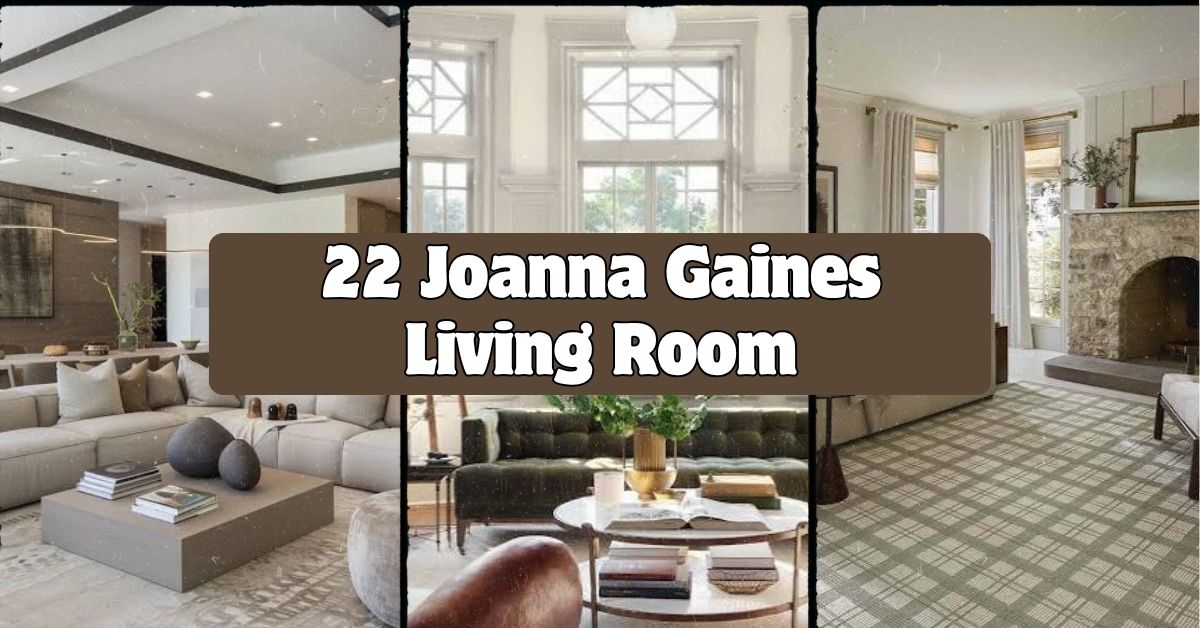
    If you’ve been scrolling for hours trying to figure out how to get that cozy, lived-in farmhouse feel, this list of 22 Joanna Gaines living room ideas is going to save you a ton of guesswork. I’ve pulled together the most practical, real-world versions of her signature style so you don’t have to piece it together from a hundred different Pinterest boards.

    The Joanna Gaines living room style blends neutral colors, natural wood, vintage touches, and comfy oversized furniture into a space that feels warm and lived-in rather than staged. It leans on texture and simplicity instead of bold patterns or trendy colors.

    Keep reading and I’ll walk you through exactly how to bring this look into your own space, piece by piece, without breaking your budget.

    What Makes the Joanna Gaines Living Room Style So Popular?

    Honestly, I think people love this style because it feels calm. There’s no loud color screaming for attention. Everything just kind of works together, like it’s been collected over years, not bought all at once from one store.

    The main ingredients are simple: neutral walls, natural wood furniture, soft textiles, and a mix of old and new pieces. Think shiplap, leather sofas, wood beams, and a big soft rug. It’s farmhouse, but it’s not corny farmhouse with rooster signs everywhere. It’s grown-up, comfortable, and honestly pretty easy to copy once you know the formula. That’s what this whole article is about.

    1. Start With a Warm White or Greige Wall Color

    Modern Greige Living Room Interior Design: An In-Depth Guide
    Credit: fancy house design

    Joanna’s rooms almost always start with a neutral base. Think warm whites, soft greige, or light putty tones on the walls. This isn’t boring, it’s a canvas. It lets your furniture and textures do the talking instead of fighting with a busy paint color.

    Practical tip: try a sample pot on a poster board and move it around the room at different times of day before committing. Light changes everything.

    This works whether your home leans modern farmhouse, traditional, or even coastal. Coastal homes might lean more toward a cooler white, while traditional spaces do better with a creamy warm tone.

    Once your walls are set, it’s time to bring in the bones of the room, the furniture.

    2. Choose an Oversized, Slouchy Sofa

    The living room in Joanna Gaines' castle project is effortlessly transitional | Homes and Gardens
    Credit: Homes and gardens

    A huge part of this look comes from furniture that feels relaxed, not stiff. Joanna often picks deep, slouchy sofas in linen or performance fabric that practically beg you to flop down after a long day. Neutral colors like oatmeal, cream, or soft gray keep it flexible for whatever pillows or throws you add later.

    Actionable tip: measure your space first, but lean toward the bigger sofa option if you have room. Oversized seating makes a room feel intentional, not empty.

    This idea flexes easily. Modern farmhouse likes linen, while traditional homes might choose a rolled-arm sofa in the same neutral tone.

    Next, let’s talk about what goes under that big comfy sofa.

    3. Layer a Chunky, Natural Fiber Rug

    Magnolia Home and Loloi's New Spring Rugs Are Perfect for Layering Color in Your Space
    Credit: Bhg

    Rugs ground the whole room. Joanna tends to use jute, wool, or other natural fiber rugs with subtle texture instead of bold patterns. They add warmth without competing with anything else in the space.

    Practical tip: size up your rug. A common mistake is buying one too small, which makes furniture look like it’s floating. Your front two legs of the sofa should sit on the rug.

    Coastal spaces can swap jute for a light seagrass weave, while traditional rooms might add a subtle geometric pattern in the same neutral palette.

    Now that your floor is covered, let’s build up from there with some wood furniture pieces.

    4. Bring in Reclaimed or Weathered Wood Furniture

    Fixer Upper's Best Living Room Designs and Ideas | HGTV
    Credit: Hgtv

    Wood is basically the backbone of this style. Coffee tables, console tables, and shelving with a weathered or reclaimed look add instant character. It’s not about shiny, polished furniture, it’s about pieces that look like they have a story.

    Tip: mix wood tones slightly instead of matching everything perfectly. A little variation looks more natural and collected over time.

    This adapts well across styles. Rustic homes go heavier on distressed wood, while modern spaces might choose cleaner lines with a lighter wood tone.

    Speaking of mixing things up, let’s talk metal accents next.

    5. Add Black Metal Accents for Contrast

    15 Best Living Rooms by Joanna Gaines - Nikki's Plate
    Credit: Nikki’s Plate

    Black metal shows up a lot in Joanna’s designs, whether it’s window frames, light fixtures, or table legs. It adds just enough contrast against all that warm wood and neutral fabric so the room doesn’t feel flat.

    Practical tip: pick one or two black metal elements, like a lantern-style light fixture or a metal-framed mirror, rather than overdoing it everywhere.

    Modern farmhouse and industrial styles lean into black metal heavily, while coastal or traditional rooms might use it more sparingly.

    Once you’ve got some contrast going, it’s time to think about how you’re arranging your seating.

    Neutral Color Palette Guide

    Color NameBest Used ForPairs Well With
    Warm WhiteWalls, trimWood tones, black metal
    GreigeWalls, large furnitureCream, olive green
    OatmealSofas, chairsJute rugs, leather
    CharcoalAccent piecesWhite walls, wood
    Soft SageThrow pillows, accentsCream, wood, black

    6. Create a Conversation-Friendly Furniture Layout

    Before and After: Step Inside Chip and Jo's Colorado Mountain House Renovation | HGTV
    Credit: Hgtv

    Joanna’s living rooms are made for actual living, not just looking pretty. That means furniture is arranged so people can talk, not stare at the TV all night. Chairs face each other, sofas sit close enough for conversation, and there’s always a coffee table within reach.

    Tip: leave about 30 inches of walking space between furniture pieces so the room feels open, not cramped.

    Traditional homes might add a second sofa facing the first, while smaller modern apartments can swap one sofa for two comfy accent chairs.

    Let’s move on to something that ties the whole seating area together, a good coffee table.

    7. Pick a Coffee Table With Personality

    EXCLUSIVE: 4 Cozy Rooms Inside Joanna Gaines' Colorado Getaway That Will Inspire Your Next Home Refresh
    Credit: Bhg

    The coffee table is where Joanna often adds a little character, whether it’s a chunky wood slab, a vintage trunk, or an X-base table with iron legs. It’s functional, but it’s also a design statement.

    Actionable tip: choose a coffee table about two-thirds the length of your sofa for the best visual balance.

    Farmhouse and rustic spaces love a raw wood slab, while modern rooms might go for a cleaner, simpler wood or stone top.

    Now let’s talk about the walls, because they need some love too.

    8. Use Shiplap or Wood Paneling as an Accent Wall

    Decorating With Shiplap: Ideas From HGTV's Fixer Upper | HGTV
    Credit: hgtv

    Shiplap basically became Joanna’s signature, and for good reason. It adds texture to walls without adding color or clutter. Even just one accent wall can completely change the feel of a room.

    Tip: if full shiplap feels like too much commitment, try a smaller version behind a fireplace or shelving unit first.

    Coastal homes often use whitewashed shiplap, while modern farmhouse spaces might paint it the same warm white as the rest of the walls for a subtle texture effect.

    Once your walls have some texture, it’s time to fill them with the right kind of art.

    9. Hang Simple, Neutral Artwork in Wood Frames

    Joanna Gaines Modern Farmhouse Living Room | Living Spaces
    Credit: living space

    Joanna tends to keep art simple. Botanical prints, black and white photography, or abstract neutral pieces in wood frames all fit the bill. The goal is texture and interest without loud colors stealing focus.

    Practical tip: hang art so the center sits at eye level, about 57 inches from the floor, for the most natural look.

    Traditional rooms might frame family photos in matching wood frames, while modern spaces lean toward larger, minimal abstract pieces.

    Once your walls are dressed, let’s add some greenery to soften things up.

    10. Add Real or High-Quality Faux Greenery

    The Controversial Décor Trend Joanna Gaines Is Backing
    Credit: MyDomaine

    Plants bring life into a neutral room without adding a ton of color. Joanna often uses large potted plants like fiddle leaf figs or olive trees, plus smaller touches like eucalyptus branches in a vase.

    Tip: if you don’t have a green thumb, invest in one or two high-quality faux plants. Cheap plastic ones are pretty easy to spot and can cheapen the whole look.

    Coastal rooms might add palms, while traditional spaces often stick with classic ferns or olive branches.

    Let’s talk lighting next, because it makes a bigger difference than people expect.

    11. Layer Lighting With Lanterns and Warm Bulbs

    15 Best Living Rooms by Joanna Gaines - Nikki's Plate
    Credit: nikki’s plate

    Good lighting makes or breaks a cozy room. Joanna often uses lantern-style fixtures, warm bulb temperatures, and multiple light sources instead of one harsh overhead light.

    Practical tip: aim for at least three light sources in a living room, an overhead fixture, a floor lamp, and a table lamp, all using warm white bulbs (around 2700K).

    Modern farmhouse loves black metal lanterns, while traditional homes might use brass sconces for a softer, classic glow.

    Now that the lighting is set, let’s talk about textiles that make the room feel extra cozy.

    12. Mix Textures With Chunky Knit Throws and Pillows

    The Christmas Throw Edit: Joanna Gaines vs. Shea McGee | Homes and Gardens
    Credit: Homes & Gardens

    Texture is everything in this style. Chunky knit throws, linen pillow covers, and woven baskets all add depth without adding busy patterns or bright colors.

    Tip: stick to two or three textures per seating area so it feels curated, not cluttered. A knit throw, a linen pillow, and a leather ottoman is plenty.

    Coastal homes might swap knits for lighter cotton textures, while traditional rooms often add a bit of subtle pattern like herringbone.

    Let’s shift now to something that often gets overlooked, window treatments.

    13. Choose Simple Linen Curtains

    7 Gorgeous Window Treatment Ideas From Joanna Gaines You'll Want To Steal
    Credit: House Digest

    Heavy patterned curtains don’t really fit this style. Joanna usually goes with simple linen or cotton curtains in white or neutral tones that let natural light pour in.

    Actionable tip: hang curtain rods a few inches above the window frame and let curtains puddle slightly at the floor for a softer, more relaxed look.

    Modern spaces might skip curtains entirely for clean lines, while traditional homes add simple tiebacks for a classic touch.

    Now let’s talk about a piece that often becomes the room’s focal point, the fireplace.

    14. Make the Fireplace a Focal Point

    Our Favorite Fireplaces From Fixer Upper | HGTV
    Credit: Hgtv

    A lot of Joanna’s living rooms are built around a fireplace, often finished in whitewashed brick, shiplap, or simple painted stone. It becomes the anchor that everything else in the room works around.

    Tip: keep the mantel styling simple, one piece of art or a mirror, plus a small collection of objects like candles or a vase. Less is more here.

    Coastal homes might paint the brick a soft white, while traditional spaces often keep the natural brick or stone look.

    Budget Tiers for a Joanna Gaines Style Makeover

    Budget LevelWhat You Focus OnEstimated Cost Range
    StarterPaint, pillows, throws, rug$300 to $700
    Mid-RangeAdd coffee table, lighting, art$1,500 to $3,000
    Full RoomNew sofa, rug, lighting, wood furniture$4,000 to $8,000
    High-EndCustom furniture, fireplace update, built-ins$10,000+

    15. Add Vintage or Antique Finds

    Joanna Gaines' mid-century modern living room helped me redesign my space | Homes and Gardens
    Credit: Homes and Gardens

    Nothing says Joanna Gaines quite like a vintage piece with some history. An old trunk, a weathered ladder, or a flea market mirror adds instant character that new furniture just can’t fake.

    Practical tip: check local estate sales or thrift stores before buying “aged” furniture new. You’ll usually find better pieces for less money.

    Traditional homes might lean into antique furniture heavily, while modern farmhouse spaces use just one or two vintage pieces as accents.

    Speaking of accents, let’s talk about how open shelving fits into this style.

    16. Style Open Shelving With Curated Objects

    Shelf Decorating Ideas: How to Style Shelves Like A Pro
    Credit: Decorilla

    Open shelves let you show off books, baskets, and small decor pieces without cluttering the room. Joanna tends to style shelves with a mix of heights, textures, and negative space so it doesn’t look overstuffed.

    Tip: group items in threes, and always leave some empty space on each shelf. A shelf that’s too full feels chaotic instead of curated.

    Coastal rooms might add baskets and driftwood, while modern spaces stick to fewer, more sculptural objects.

    Now, let’s talk about how to bring in a pop of color without breaking the neutral rule.

    17. Introduce One Muted Accent Color

    18 Neutral Living Room Ideas with a Touch of Wow
    Credit: Bhg

    Even though the palette stays mostly neutral, Joanna often sneaks in one muted color like sage green, dusty blue, or soft terracotta through pillows, a throw, or a piece of art.

    Actionable tip: pick just one accent color and repeat it two or three times around the room for balance, like a pillow and a vase in the same tone.

    Traditional homes might use a deeper hunter green, while coastal spaces often choose a soft ocean blue.

    Let’s move to something practical now, storage that doesn’t look like storage.

    18. Use Baskets for Stylish, Hidden Storage

    Make Your Home Less Messy by Organizing with Baskets
    Credit: Bhg

    Woven baskets are a Joanna Gaines staple. They hide blankets, toys, or magazines while adding texture at the same time. It’s storage that actually looks good sitting out in the open.

    Tip: choose baskets with handles for easy access, and vary the sizes slightly so they don’t look too matchy.

    Modern homes might choose sleeker, more geometric baskets, while farmhouse spaces love the more rustic, woven look.

    Next, let’s talk about a design trick that makes small rooms feel bigger.

    19. Keep Window Areas Clear and Bright

    10+ Living Room Window Ideas for Light & Style 2026
    Credit: Apro

    Joanna rarely blocks natural light with heavy furniture or dark curtains. Keeping window areas open and bright makes even a smaller living room feel more spacious and welcoming.

    Practical tip: avoid placing tall furniture directly in front of windows. Keep sightlines to the outside as clear as possible.

    This works in every style, though coastal homes take it the furthest with sheer curtains and minimal window treatments.

    Now let’s talk ceilings, because wood beams can totally transform a room.

    20. Add Exposed Wood Beams if Possible

    Beamed ceiling ideas: 11 designs that celebrate beautiful beams | Homes and Gardens
    Credit: Homes and Gardens

    If your budget and home structure allow it, exposed wood beams add serious character to a room’s ceiling. They’re a signature Joanna Gaines move that instantly makes a space feel more architectural and intentional.

    Tip: if real beams aren’t possible, faux beam kits exist that mimic the look for a fraction of the cost and effort.

    Modern farmhouse loves this look, while traditional homes might paint beams a darker stain for a more formal feel.

    Let’s talk about pulling the whole room together with a statement mirror next.

    21. Hang a Large Statement Mirror

    20 Breathtaking Living Room Mirror Ideas to Try
    Credit: MyDomaine

    A big mirror, often in a simple wood or black metal frame, bounces light around the room and adds a focal point without adding clutter. Joanna often places these above a mantel or console table.

    Actionable tip: choose a mirror that’s about two-thirds the width of the furniture piece below it for the best proportion.

    Coastal spaces might choose a rounder, lighter frame, while traditional rooms often go for a more ornate but still neutral frame.

    Finally, let’s finish with a detail that ties everything together, the little accessories.

    22. Finish With Simple, Meaningful Accessories

    11 Cheap Living Room Decor Ideas
    Credit: Bhg

    The last layer is the small stuff, candles, a stack of books, a ceramic vase. Joanna keeps these simple and meaningful rather than cluttered. Every object should feel like it has a purpose or a story.

    Tip: before adding a new accessory, ask if it adds texture, color, or meaning to the space. If not, skip it.

    This idea works everywhere, since every style benefits from thoughtful, uncluttered finishing touches.

    Tips for Success

    • Start with the big pieces first, sofa and rug, then layer in smaller decor
    • Stick to a consistent color palette so the room feels cohesive, not random
    • Mix textures generously, but keep colors simple
    • Shop secondhand for character pieces before buying new
    • Don’t rush the room. This style is built over time, not in one weekend
    • Always measure your space before buying furniture
    • Keep at least one wall mostly open for visual breathing room

    Common Mistakes and How to Avoid Them

    Overdoing the farmhouse theme
    : Skip rooster decor and barn wood overload. Keep it simple and let a few key pieces speak instead of covering every surface.

    Buying furniture too small for the space
    : Measure first, and when in doubt, size up. Oversized furniture usually looks more intentional than undersized pieces.

    Using too many bright colors
    : Stick to neutrals with one or two muted accent colors instead of mixing five different bold tones.

    Skipping texture
    : A room with only smooth, flat surfaces feels cold. Add knits, wood grain, and woven baskets for warmth.

    Cluttering open shelves
    : Leave breathing room between objects. Group in threes and resist filling every inch of space.

    Ignoring lighting temperature
    : Cool white bulbs can make a warm room feel sterile. Stick to warm white bulbs around 2700K for that cozy glow.

    Similar Variations

    • Modern Farmhouse: A cleaner, more minimal take with less clutter and simpler lines than classic farmhouse.
    • Coastal Farmhouse: Adds lighter woods, softer blues, and breezier textiles for a beachy feel.
    • Rustic Farmhouse: Leans heavier into reclaimed wood, exposed beams, and vintage iron accents.
    • Boho Farmhouse: Mixes in woven textures, macrame, and warmer earth tones for a more eclectic feel.
    • Traditional Farmhouse: Keeps more formal furniture shapes with the same neutral, wood-heavy palette.
    • Industrial Farmhouse: Adds more raw metal, exposed brick, and factory-style lighting into the mix.

    Getting this look right really just comes down to layering the right textures, sticking to a calm color palette, and choosing furniture that feels comfortable, not showy. Once you understand the formula behind it, it’s actually pretty simple to recreate in almost any home, no matter your starting budget. Whether you tackle one room or your whole house, these 22 Joanna Gaines living room ideas give you a real, practical roadmap to get there.
  • 19 Green Walls Living Room Ideas That Will Make Your Space Feel Alive

    19 Green Walls Living Room Ideas That Will Make Your Space Feel Alive

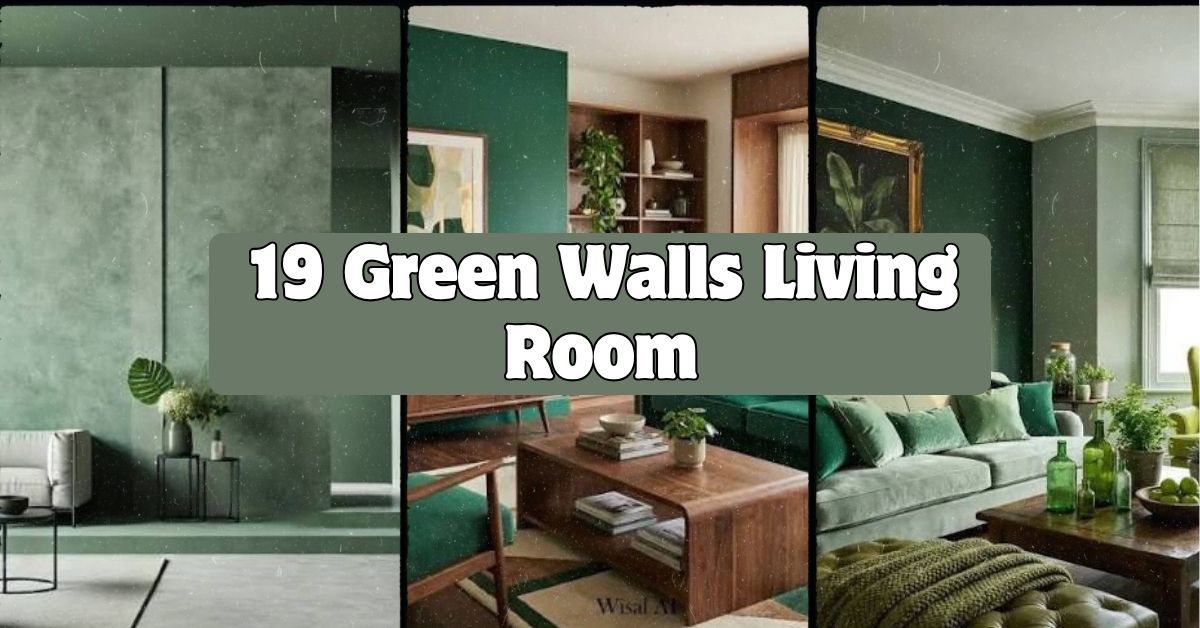
    I’ve spent way too many hours scrolling through paint swatches, and I finally cracked the code on 19 Green Walls Living Room ideas that actually work in real homes, not just magazine spreads. If you’ve been staring at a boring beige wall wondering what color could make your living room feel fresh, you’re in the right spot.

    Green walls in a living room use various shades of green, from deep forest to soft sage, as the main color for one or more walls to create a calming, nature-inspired atmosphere. This color choice works because green pairs easily with wood tones, metals, and most furniture styles already in your home.

    Stick around, because I’m about to show you 19 different ways to pull this off, plus some mistakes I made so you don’t have to.

    Why Green Walls Are Having a Moment

    I get why people are nervous about green. It feels bold. But here’s the thing, green is basically nature’s neutral. Think about it. Trees, grass, plants, they’re all green and nobody thinks that’s “too much.” Your eyes are trained to feel calm around this color.

    That’s why designers keep pushing green walls for living rooms right now. It’s not just a trend that’ll die in a year. Green works with almost every other color you already own. Your brown leather couch? Perfect with green. Your gray rug? Also perfect. That kind of flexibility is rare in the color world.

    Now let’s get into the actual ideas.

    1. Go Deep with Forest Green for a Cozy Den Feel

    25 Green Living Room Ideas for a Warm, Organic, and Luxurious Look | Wisal
    Credit: Wisal

    Forest green wraps a room in warmth almost instantly. This shade works best on all four walls if you want that cabin-like coziness, or just one accent wall if you’re testing the waters. Pair it with warm wood furniture, brass lamps, and cream throw pillows to keep things from feeling too dark.

    My tip: paint a large sample board and move it around the room for a full day before committing. Light changes everything with dark greens.

    This look shines in traditional and rustic homes, but modern spaces can pull it off too with sleek black frames and minimal decor. Once you’ve nailed the deep tones, you might want to soften things up a bit, which brings me to sage.

    2. Soften Things Up with Sage Green Walls

    25 Cozy Sage Green Living Room Ideas for a Soft and Luxurious Home | Wisal
    Credit: Wisal

    Sage green is the gentle cousin of forest green. It’s dusty, muted, and never screams for attention. This color works in small living rooms because it doesn’t swallow light the way darker greens can.

    Pair sage with white trim, light oak furniture, and linen curtains. It creates a soft, breathable space that feels lived-in but never messy.

    Quick tip: test sage in both morning and evening light. It can look gray in low light and more green in bright sun.

    Coastal and farmhouse homes love this shade, but it also fits minimalist and Scandinavian spaces nicely. If sage feels too quiet for you, let’s crank things up with emerald.

    3. Make a Statement with Emerald Green Accent Walls

    15 Emerald Green Living Room Ideas That Feel Bold and Luxurious | Wisal
    Credit: Wisal

    Emerald green is for people who want drama without going full jewel-box crazy. One accent wall in this color instantly becomes the focal point of the room. Everything else should stay simple, think white walls, black furniture legs, gold accents.

    Actionable tip: use emerald on the wall behind your couch or TV so it frames your main seating area instead of competing with it.

    This shade fits art deco and glam living rooms best, though modern homes use it too with cleaner lines and less shine. Once your statement wall is set, you’ll want furniture that doesn’t fight with it, which is where color pairing really matters.

    Green Shade Comparison Table

    Green ShadeBest Room SizeLight NeededMood Created
    Forest GreenMedium to LargeBright natural lightCozy, warm
    Sage GreenSmall to MediumAny light levelCalm, airy
    Emerald GreenAny size (accent wall)Bright light preferredBold, luxurious
    Olive GreenMedium to LargeModerate to brightEarthy, grounded

    4. Try Olive Green for an Earthy, Grounded Look

    Looking for a living room color palette that never goes out of style? Olive green, warm beige, and rich chocolate brown create a space that feels elegant, cozy, and effortlessly luxurious. Add
    Credit: siya_interiors

    Olive green sits between brown and green, which makes it super easy to match with natural materials. Wicker baskets, jute rugs, and terracotta pots all look like they belong when olive is on the walls.

    I’d suggest pairing olive with mustard yellow or burnt orange accents for a warm, retro feel. Keep furniture simple in cream or camel tones so the wall color stays the star.

    Practical tip: olive can look muddy under yellow-toned lighting, so switch to daylight bulbs if the color feels off.

    Bohemian and mid-century modern homes both love this shade. Now that we’ve covered the earthy tones, let’s talk about how texture changes everything.

    5. Add Texture with a Green Venetian Plaster Finish

    Green decorative plaster: types and solutions in the interior | Blog Elf Decor
    Credit: Elf Decor

    Flat paint is fine, but Venetian plaster in green adds depth you can actually see and feel. This technique creates subtle color variation across the wall, almost like the color is alive.

    This works great in living rooms where you want a high-end, custom look without wallpaper. Pair it with simple furniture so the wall texture gets to shine.

    Tip: hire a pro for this one unless you’ve done plaster work before. It’s not a beginner DIY project.

    This finish fits modern luxury and Mediterranean-style homes especially well. If plaster feels too fancy, wallpaper is a great middle ground, which is exactly what we’re covering next.

    6. Use Botanical Green Wallpaper for Instant Personality

    Green Wallpaper For Walls In India | Nature-Inspired Designs – Tetsip Media
    Credit: Tetsip

    Wallpaper with green leaves or botanical prints gives you color and pattern in one shot. This is a great option if solid paint feels too plain but a full mural feels too intense.

    Choose wallpaper with a mix of green shades and some white or cream background so the room doesn’t feel too heavy. Furniture should stay neutral here, think beige sofas and light wood tables.

    Actionable tip: order a sample roll before buying the full amount. Patterns look different in small swatches versus a full wall.

    This idea works beautifully in coastal, cottage, and traditional living rooms. Once your pattern game is strong, let’s look at how green pairs with natural light.

    7. Maximize Natural Light with Mint Green Walls

    How to Style Green Living Rooms: Tips for Color & Decor
    Credit: Fancy House Design

    Mint green is lighter and brighter than sage, making it perfect for rooms that don’t get tons of sunlight. It reflects light instead of absorbing it, which can make small or dark living rooms feel bigger.

    Pair mint with white furniture and light gray accents for a fresh, airy vibe. Adding a few dark green plants keeps the room from feeling too pastel or babyish.

    Tip: avoid mint in rooms with yellow-toned lighting since it can shift the color cooler than you expect.

    This shade fits modern farmhouse and Scandinavian homes really well. Speaking of plants, let’s talk about how to double down on that nature theme.

    8. Bring the Outdoors In with Green Walls Plus Live Plants

    Best Living Wall Ideas - How to Create a Vertical Garden
    Credit: ELLE Decor

    This is the ultimate green-on-green move. Paint your walls a medium green, then fill the room with real plants in varying shades. The layered greens create depth that a single paint color can’t achieve alone.

    Choose plants like pothos, snake plants, or fiddle leaf figs that thrive indoors. Keep pots in terracotta or white to contrast against the green wall.

    Practical tip: group plants in odd numbers, like three or five, for a more natural-looking display.

    This works in almost every style, from bohemian to modern to traditional. Now let’s shift from painted walls to something a little more unexpected.

    9. Create Contrast with Green Walls and Black Trim

    25 Cozy Sage Green Living Room Ideas for a Soft and Luxurious Home | Wisal
    Credit:Wisal

    Black trim against green walls creates a sharp, sophisticated look. This works especially well with medium to dark green shades since the contrast doesn’t feel jarring.

    Pair this combo with white or cream furniture to balance out the darker tones. Gold or brass hardware on doors and windows adds a touch of warmth.

    Tip: paint the trim in a satin or semi-gloss finish so it catches light differently than the matte green walls.

    This pairing fits modern and transitional homes best. If black trim feels too bold, let’s try something softer with wood tones instead.

    10. Warm Things Up with Green Walls and Natural Wood Accents

    25 Cozy Sage Green Living Room Ideas for a Soft and Luxurious Home | Wisal
    Credit: Wisal

    Wood and green are basically best friends. This combo feels grounded and warm without trying too hard. Use wood in your coffee table, shelving, or even a wood-slat accent wall alongside the green paint.

    Stick with medium to warm wood tones like oak or walnut rather than very light or very dark woods, which can clash with certain greens.

    Actionable tip: bring a wood sample home and hold it against your green paint chip before buying furniture.

    This look is a staple in Scandinavian, mid-century, and farmhouse living rooms. Once wood and green are working together, textiles are the next layer to think about.

    Budget Guide for Green Wall Projects

    Project TypeEstimated Cost (per wall)Time NeededDifficulty
    Basic paint (1 coat)$30-$601 dayEasy
    Premium paint (2 coats)$60-$1201-2 daysEasy
    Wallpaper$150-$4001 dayModerate
    Venetian plaster$500-$1,2002-4 daysHard (hire a pro)
    Wood accent + paint combo$200-$6002-3 daysModerate

    11. Layer Textiles in Complementary Green Tones

    25 Green Living Room Ideas for a Warm, Organic, and Luxurious Look | Wisal
    Credit: Wisal

    Once your walls are green, don’t stop there. Throw pillows, blankets, and area rugs in slightly different green shades add depth without overwhelming the room. Mix a darker green pillow with a lighter green throw for visual interest.

    Choose fabrics like linen or cotton for a relaxed feel, or velvet for something more luxurious. Avoid using the exact same shade as your walls since it can flatten the whole look.

    Tip: pull one green from your wall color and one or two shades lighter or darker for your textiles.

    This layering trick works across every style, from boho to glam to modern. Now let’s talk about a bolder move: painting the ceiling too.

    12. Paint the Ceiling Green for a Cocooning Effect

    The Designer-Approved Tip to Make Any Room Feel Complete
    Credit: Country Living Magazine

    This one surprises people, but painting your ceiling the same green as your walls creates a cocoon-like, cozy feeling. It works especially well in rooms with lower ceilings since it removes the visual break between wall and ceiling.

    Keep your trim white for contrast, or go monochrome and paint everything the same green for a bold, immersive look.

    Practical tip: use a flat or matte finish on the ceiling to avoid glare from overhead lighting.

    This works surprisingly well in both cottage-style and modern minimalist homes. If a full green ceiling feels like too much, a simple green accent nook might be your next move.

    13. Create a Cozy Reading Nook with a Green Accent Corner

    Reading Nook + Snuggery Design Ideas | HGTV
    Credit: HGTV

    Instead of committing to a whole wall, paint just a corner or alcove green. This creates a little pocket of color that’s perfect for a reading chair or small desk setup.

    Add a floor lamp, a small bookshelf, and a comfy chair to complete the nook. Green works great here because it feels calming, which is exactly the vibe you want for reading.

    Tip: use painter’s tape to get crisp, clean lines around the corner before painting.

    This idea fits small apartments and larger homes alike, and works in almost any design style. Let’s round things out with a few more creative approaches to green walls.

    14. Combine Two Greens for a Two-Tone Wall Effect

    23 New Two Colour Combination for Living Room Walls to Try in 2026
    Credit: Interior company

    Painting the bottom half of your wall a darker green and the top half a lighter shade (or vice versa) creates a custom, designer look. Add a thin wood or trim strip where the colors meet for a clean division.

    This technique works great in living rooms with chair rail molding already installed. Keep furniture simple so the two-tone wall stays the focal point.

    Actionable tip: use the darker shade on the bottom for a grounded feel, or flip it for a more airy, lifted look.

    This works in traditional, transitional, and even coastal homes. Next, let’s look at how metallics play with green.

    15. Add Metallic Accents to Green Walls for Extra Shine

    15 Emerald Green Living Room Ideas That Feel Bold and Luxurious | Wisal
    Credit: Wisal

    Gold, brass, and copper accents against green walls create a rich, almost jewel-toned effect. Think picture frames, lamp bases, or even a metallic accent chair.

    Keep metallics to about two or three spots in the room so it doesn’t feel like too much shine. Green and gold especially have a classic, elegant pairing that never really goes out of style.

    Tip: mix warm metallics with warm greens (like olive or forest) and cooler metallics with cooler greens (like sage or mint).

    This combo fits glam, art deco, and traditional living rooms best. If you’re renting and can’t paint, don’t worry, I’ve got you covered next.

    16. Fake the Look with Removable Green Wallpaper for Renters

    Emerald Green Malachite wallpaper by Livettes | Livettes Wallpaper
    Credit: Livetts wallpaper

    Peel-and-stick wallpaper has come a long way. You can get realistic green textures, from solid colors to botanical prints, without touching a paintbrush.

    This is perfect for apartments or rental homes where painting isn’t allowed. Application is simple: clean the wall, smooth the paper on section by section, and trim the edges.

    Practical tip: apply in a room with good airflow so the adhesive sets properly and doesn’t bubble.

    This works for any style since the wallpaper options are nearly endless now. Let’s talk about a smaller commitment next: green furniture instead of walls.

    17. Skip the Wall Paint and Use a Green Sofa Instead

    15 Green Living Room Ideas To Reinvigorate Your Space | Furniture & Choice
    Credit: furniture & Choice

    If painting feels too permanent, a green sofa gives you the same color impact without touching the walls. Keep your walls neutral (white, beige, or light gray) so the sofa becomes the star.

    Choose a deep green like hunter or forest for a bold statement, or a muted sage for something softer. Add throw pillows in complementary colors to tie the room together.

    Tip: velvet sofas show off deep greens especially well because the fabric catches light differently.

    This works in literally every design style since it’s furniture, not permanent paint. Now let’s cover one more idea before wrapping up: mixing green with pattern-heavy decor.

    18. Mix Green Walls with Bold Patterned Curtains

    Best Curtains for Green Walls (Designer Tips & Color Ideas) -
    Credit: Up To Date Interiors

    Solid green walls create the perfect backdrop for patterned curtains. Florals, geometric prints, or even stripes can add movement to the room without clashing, as long as the pattern includes some green in it.

    Choose curtains in linen or cotton for a relaxed feel, or silk for something more formal. This is a low-cost way to add personality without repainting anything.

    Actionable tip: bring a paint swatch with you when shopping for curtains so you can match tones accurately.

    This idea fits eclectic, bohemian, and traditional homes especially well. Last but not least, let’s talk about lighting.

    19. Use Warm Lighting to Enhance Green Wall Tones

    15 Green Living Room Ideas To Reinvigorate Your Space | Furniture & Choice
    Credit: Furniture & choice

    Lighting completely changes how green looks on your walls. Warm white bulbs (around 2700K to 3000K) bring out the cozy, golden undertones in green, while cool white bulbs can make green look flat or even gray.

    Add a mix of floor lamps, table lamps, and dimmable overhead lights so you can adjust the mood depending on time of day.

    Tip: always test your paint color under the actual lighting you’ll use at night, not just daylight.

    This works in every single style of home since lighting is universal. With all these ideas in mind, let’s go over some quick tips to make sure your project turns out great.

    Tips for Success

    • Always test paint samples on your actual wall, not just a paint chip, since lighting changes everything.
    • Start with a smaller accent wall if you’re nervous about commitment.
    • Balance dark greens with light furniture and vice versa to avoid a cave-like feeling.
    • Use a semi-gloss or satin finish in high-traffic living rooms since it’s easier to clean than matte.
    • Don’t forget the fifth wall, your ceiling, when planning your color scheme.
    • Bring home fabric and material samples before buying anything permanent.
    • Live with a sample for at least a week before painting the whole room.

    Common Mistakes and How to Avoid Them

    Painting without testing light changes
    : Always check your green swatch in morning, afternoon, and evening light before committing.

    Choosing a shade that’s too dark for a small room
    : Stick with sage, mint, or other lighter greens if your living room lacks natural light.

    Matching furniture too closely to the wall color
    : Keep at least a shade or two of contrast between your walls and your biggest furniture pieces.

    Ignoring the finish type
    : Flat finishes hide imperfections but scuff easily; satin or semi-gloss holds up better in living rooms.

    Forgetting about trim and ceiling color
    : Plan your trim and ceiling colors alongside your wall color, not as an afterthought.

    Similar Variations

    • Blue Accent Walls: A cooler alternative that creates a calm, ocean-inspired living room feel.
    • Terracotta Walls: Warm, earthy tone that pairs beautifully with the same natural textures green does.
    • Charcoal Gray Walls: A moodier, more neutral option for people who want drama without color commitment.
    • Two-Tone Neutral Walls: Swap green for beige and white in a similar two-color split design.
    • Botanical Wallpaper Rooms: Full pattern rooms that lean even harder into the nature theme than a solid green wall.

    I know picking a wall color feels like a bigger decision than it should be, but green really is one of the safest bold choices you can make. It works with wood, metal, and almost any furniture style you already own, and it never feels dated the way some trendy colors do. Whether you go with a deep forest shade or a barely-there sage, these 19 Green Walls Living Room ideas give you plenty of starting points to make your space feel calmer, warmer, and a lot more like you.

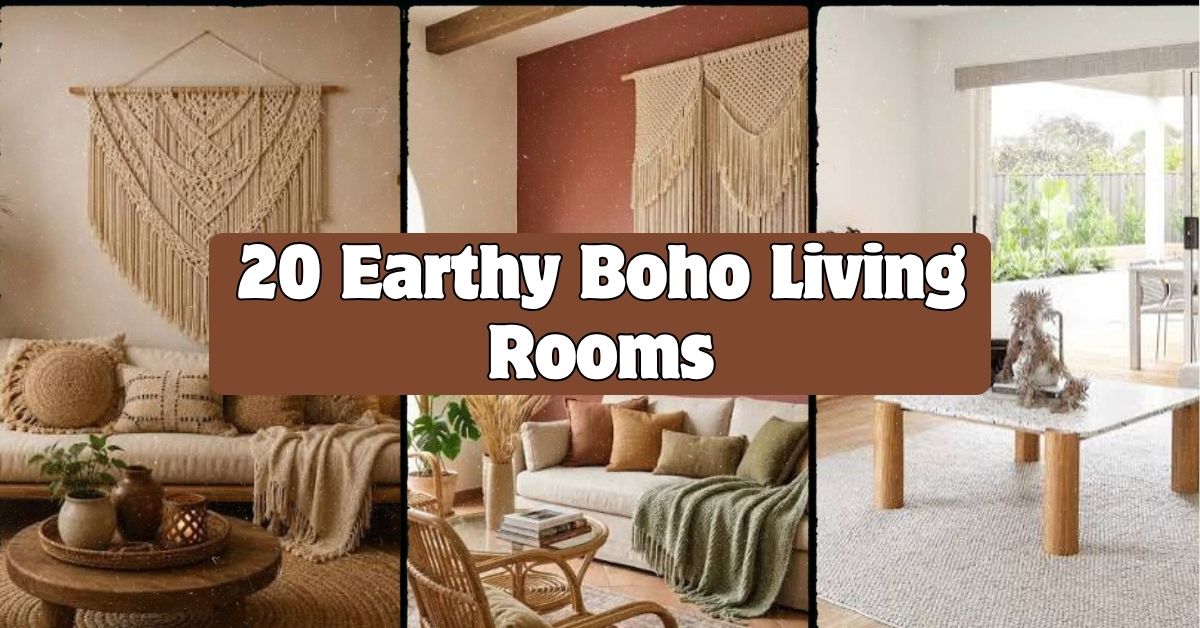
  • 20 Earthy Boho Living Rooms

    20 Earthy Boho Living Rooms

    If you’ve been scrolling through home decor pages looking for that perfect mix of cozy and free-spirited, these 20 earthy boho living rooms are about to become your new favorite bookmark. I’ve spent way too many hours studying what makes this style work, and I’m here to hand you the full playbook.

    Earthy boho living room design blends natural materials, warm neutral tones, and relaxed textures like rattan, jute, and linen to create a space that feels grounded, collected, and comfortable. It draws from nature-inspired colors and handmade decor pieces.

    Stick around, because I’m about to walk you through 20 real ways to bring this look into your own space, plus a few mistakes I’ve made along the way so you don’t have to.

    What Makes a Living Room “Earthy Boho” Anyway?

    Okay, so let’s talk about what this style actually means. Earthy boho is basically bohemian design’s more grounded cousin. Instead of bright jewel tones and loud patterns, you get warm browns, sandy beiges, and muted greens. Think sun-baked clay pots, woven baskets, and plants that spill over their shelves. It’s messy in a good way. Nothing matches perfectly, and that’s the whole point.

    This style borrows from nature. Wood, stone, clay, cotton, wool. It feels lived-in, not staged. If your living room has a personality that’s part hippie, part minimalist, and part plant parent, you’re already halfway there.

    1. Start With a Warm Neutral Base Layer

    How to Create a Boho Living Room in 2024: Expert Tips
    Credit: TLC

    Every earthy boho room needs a solid foundation, and that starts with your walls and big furniture pieces. Think warm whites, oatmeal, and soft terracotta instead of stark white or cool gray. These tones act like a blank canvas that lets your textures and decor do the talking.

    Paint your walls in a creamy off-white or light clay color. Then bring in a sofa in a similar tone, maybe boucle or linen fabric. Here’s a quick tip: test paint swatches at different times of day since warm neutrals shift depending on lighting.

    This base works whether your home leans modern, farmhouse, or traditional. It’s flexible because neutral doesn’t mean boring. It means adaptable.

    Once your foundation is set, it’s time to start layering texture on top of it.

    2. Layer a Chunky Woven Rug for Grounding Warmth

    7 Boho Rug Layering Ideas for a Laid-Back Look
    Credit: Eco crave

    A good rug pulls the whole room together, especially in earthy boho spaces where texture does a lot of heavy lifting. Go for something chunky and handwoven, like jute or a Moroccan-style wool rug with tribal patterns. These add visual interest without screaming for attention.

    Layering two rugs, a large jute one under a smaller patterned wool piece, adds depth and makes the space feel intentional rather than half-finished. My actionable tip: size your rug so all your furniture legs sit on it, or at least the front legs of your sofa and chairs.

    This trick works across styles too. Coastal spaces love a light jute rug, while traditional rooms can handle a deeper, patterned one.

    Next, let’s talk about what goes on top of that rug.

    3. Choose Low-Slung, Curved Furniture

    20 Chic Boho Living Room Ideas for a High-End Nature Retreat | Wisal
    Credit: Wisal

    Boho living rooms often skip the stiff, boxy furniture you’d see in a formal setting. Instead, they lean into curved silhouettes and low profiles. A rounded sofa or a bench with soft edges feels more relaxed and inviting.

    Look for furniture with visible wood frames, rattan detailing, or nubby fabric upholstery. A low coffee table made from a tree trunk slice or reclaimed wood adds character instantly. Practical tip: measure your walking paths first so curved pieces don’t end up blocking traffic flow.

    This furniture style adapts well into mid-century modern rooms too, since both share a love for organic shapes.

    Once your furniture is settled, it’s time to think about what hangs above it.

    4. Add Macrame or Woven Wall Hangings

    Macrame Wall Hangings Australia | Tapestry - Fansee Australia
    credit: Fansee Australia

    Bare walls feel cold in an earthy boho room. Macrame wall hangings, woven tapestries, or rattan mirrors fill that gap with handmade texture. They’re basically wall art that whispers instead of shouts.

    Hang a large macrame piece behind your sofa as a focal point, or cluster smaller woven pieces in a gallery-style arrangement. Quick tip: use removable adhesive hooks if you’re renting, so you don’t damage the walls.

    This idea shifts easily into Scandinavian interiors too, especially with lighter, cream-colored macrame pieces instead of darker jute ones.

    Now let’s bring some green into the mix.

    5. Fill Corners With Oversized Leafy Plants

    This boho TV corner is proof that plants really do make everything better 🌿✨ With every glance, there's a pop of green, climbing up shelves, tucked beside baskets, even framing the TV
    Credit: flowbylara

    You really can’t do earthy boho without plants. Big leafy ones like fiddle leaf figs, monsteras, or rubber plants bring life and softness into corners that would otherwise feel empty. Plants also tie the “earthy” part of this style together in the most literal way possible.

    Group a few plants of different heights together for a jungle-like corner. Use woven baskets or terracotta pots as planters instead of plastic ones. Tip: rotate your plants toward the light every week or two so they grow evenly.

    This works in almost any home style, though modern spaces might prefer a single statement plant over a full cluster.

    Speaking of plants, let’s talk about the vessels that hold them.

    Table: Earthy Boho Color Palette Combinations

    Palette NameWall ColorAccent ColorsBest For
    Desert ClayTerracottaSage green, creamSouthwest-inspired rooms
    Sandy NeutralOatmeal beigeRust, chocolate brownSmall living rooms
    Forest FloorWarm taupeOlive green, mustardLarger open-plan spaces
    Sun-BleachedOff-whiteCamel, dusty pinkCoastal boho blends

    6. Use Terracotta and Clay Pottery as Decor

    20 Terracotta Boho Living Room 2026 Concepts for an Earthy Warm Home | Wisal
    Credit: wisal

    Terracotta pots, vases, and bowls aren’t just for plants. They work as standalone decor pieces on shelves, coffee tables, and mantels. Their rough, matte texture fits perfectly into the earthy boho vibe because they look handmade even when they’re store-bought.

    Mix different sizes and shapes together for an eclectic display. A cluster of three terracotta vases in varying heights looks intentional, not random. Tip: leave a few pots empty. You don’t need to fill every single container with flowers or greenery.

    This decor idea works beautifully in Mediterranean and rustic farmhouse spaces too.

    Now let’s move to something softer, literally.

    7. Pile on Textured Throw Pillows and Blankets

    Decorating With Throw Blankets to Make Your Space Extra Cozy | HGTV
    Credit: HGTV

    Texture is basically the secret sauce of earthy boho design. Throw pillows in chunky knit, linen, or mudcloth patterns add depth to your sofa without adding clutter. Mix a few patterns together as long as they share a similar color family.

    Add a woven or knitted throw blanket draped over the arm of your couch or folded at the foot of a chair. Practical tip: stick to three or four pillows max per sofa so it doesn’t feel overstuffed.

    This layering trick works in almost every design style, from traditional to Japandi, just by swapping the pattern intensity.

    Let’s shift focus now to lighting, because it changes everything.

    8. Choose Warm, Low-Glow Lighting Fixtures

    20 Boho Living Room Ideas to Unleash Your Inner Free Spirit in 2025
    Credit: ELLE Decor

    Harsh white lighting kills the cozy boho mood instantly. Instead, go for warm-toned bulbs and fixtures made from natural materials like rattan, paper, or wood. A woven pendant light or a rattan floor lamp adds both function and style.

    Layer your lighting with floor lamps, table lamps, and maybe a few string lights for ambiance. Tip: choose bulbs labeled “warm white” or around 2700K for that golden, soft glow.

    This lighting approach fits beautifully into rustic and Mediterranean interiors as well, since both styles favor warmth over brightness.

    Next, let’s talk about a piece of furniture that often gets overlooked.

    9. Bring in a Vintage or Reclaimed Wood Coffee Table

    Functional Vintage Natural Wood Coffee Table For Stylish Living Rooms
    Credit: Ashdeco

    A coffee table sets the tone for your whole seating area. In earthy boho rooms, reclaimed wood pieces with visible grain and imperfections work way better than glossy, mass-produced tables. They add history and warmth.

    Look for something with a live edge or a slightly weathered finish. Thrift stores and flea markets are goldmines for this kind of furniture. Tip: seal any raw wood pieces with a matte finish to protect them from spills.

    This idea adapts into industrial and farmhouse styles too, especially when paired with metal accents.

    Let’s talk about window treatments next, since they’re easy to overlook.

    10. Hang Light, Airy Curtains in Natural Fabrics

    19 Boho Curtain Ideas to Transform Any Room with Style
    Credit: Eversofreshly

    Curtains do more work than people realize. Linen or cotton curtains in soft neutral shades let light filter through while adding a relaxed, breezy feel to the room. Avoid heavy, formal drapes here since they clash with the laid-back boho mood.

    Hang your curtain rods a few inches above the window frame to make ceilings feel taller. Tip: choose unlined linen panels for the softest, most natural drape.

    This works especially well in coastal boho spaces, where light and airy always wins.

    Now let’s get into some wall texture ideas beyond hanging art.

    11. Add Exposed Wood Beams or Wood Paneling Accents

    Shiplap Ceilings with Beams: 5 Stunning Pairings That Transform Any Room - Barron Designs
    credit: Barron Design

    If your space allows for it, exposed wood beams or a wood-paneled accent wall instantly boosts that earthy, cabin-like feeling. Even faux beams can do the trick if you’re not doing structural work.

    Choose a warm wood tone that matches your furniture, like walnut or oak. Tip: if a full accent wall feels like too much, try wood paneling on just the lower half of one wall instead.

    This works incredibly well in traditional and mountain-modern homes too.

    Table: Budget Tiers for Earthy Boho Living Room Makeovers

    Budget LevelWhat You Can DoEstimated Cost Range
    Starter ($100-$300)New throw pillows, one plant, curtains$100-$300
    Mid-Range ($300-$800)Add a rug, wall hangings, lighting swap$300-$800
    Full Refresh ($800-$2000)New sofa, coffee table, paint, plants$800-$2000
    High-End ($2000+)Custom furniture, wood accent wall, built-ins$2000+

    12. Mix Metal Accents Like Brass or Copper

    Colourful Boho Industrial Style With Moroccan Accents
    Credit: Home Designing

    Earthy boho doesn’t mean skipping metal completely. Small touches of brass, copper, or aged bronze add a subtle shine that contrasts nicely with all the matte textures around it. Think candle holders, lamp bases, or picture frames.

    Keep metal accents small and scattered rather than one big shiny piece. Tip: mix warm metals together (brass and copper) rather than combining warm and cool tones like brass and chrome.

    This trick blends smoothly into glam and mid-century modern spaces too.

    Let’s talk about seating arrangements now.

    13. Create a Cozy Floor Seating Nook

    20 Cozy Reading Nook Ideas That Are Bound to Please
    credit: Elle Decor

    Boho design loves floor seating. A low nook with floor cushions, a small round rug, and maybe a low side table creates a relaxed spot for reading or chatting that feels different from your main sofa area.

    Use oversized floor pillows in mudcloth or kilim patterns. Tip: keep this nook near a window for natural light during the day.

    This idea works especially well in smaller apartments where a second sofa just isn’t practical.

    Now, let’s talk about baskets, because they’re more useful than you’d think.

    14. Use Woven Baskets for Storage and Style

    Bohemian Décor Ideas For Your Home – Blog | The Basket Company
    Credit: The Basket Company

    Baskets are basically the multitaskers of earthy boho decor. They store blankets, magazines, or plant pots while adding texture at the same time. Seagrass, rattan, and water hyacinth baskets all work great here.

    Stack two or three baskets of different sizes in a corner or use one as a stylish trash bin alternative. Tip: look for baskets with leather handles for an extra boho touch.

    This storage solution works in nearly any home style since baskets are pretty universally loved.

    Let’s move on to something a little unexpected.

    15. Incorporate Animal Hide or Faux Hide Rugs

    Elevate Your Home Decor with Natural Animal Skin Rugs - Cowhide Rugs
    Credit: Cowhide Rugs

    A small cowhide or faux hide rug layered over a jute base rug adds an unexpected texture that’s very “earthy boho.” It breaks up the pattern-heavy woven rugs with something smoother and more organic-looking.

    Place it at an angle rather than perfectly straight for a more relaxed, collected-over-time look. Tip: choose faux hide if you’re vegan or just prefer cruelty-free materials, since it looks nearly identical now.

    This layering trick fits western and rustic interiors just as well.

    Now let’s talk about a decor detail that’s easy to skip: books.

    16. Style Bookshelves With Natural Objects

    15 Natural Living Room Ideas with Wood and Organic Elements | Wisal
    credit: Wisal

    Your bookshelves shouldn’t just hold books. Mix in natural objects like dried pampas grass, small driftwood pieces, stone bookends, or pottery. This breaks up the visual monotony of a wall of spines.

    Group items in threes for a balanced look, and leave some negative space so it doesn’t feel cluttered. Tip: turn a few books sideways and stack them horizontally to add height variation.

    This styling trick works beautifully in eclectic and transitional living rooms too.

    Let’s talk about ceiling details next, since they often get ignored.

    17. Add a Woven Pendant or Rattan Ceiling Fixture

    Elegant Woven Rattan Pendant Light | Stylish Rattan Light Fixture – Lightsin UK
    credit: Lightsinuk

    Ceilings are prime real estate that a lot of people forget about. A woven rattan pendant light or a paper lantern-style fixture adds texture from above and keeps the eye moving through the whole room, not just at furniture level.

    Choose a fixture that hangs low enough to feel intentional but high enough to avoid bumping heads. Tip: pair it with a dimmer switch so you control the mood easily.

    This detail transitions well into Japandi and coastal spaces too.

    Now, let’s think about scent and ambiance, which people often forget is part of decor.

    18. Bring In Dried Botanicals Instead of Fresh Flowers

    How do you display your dried flowers? 🌾🪵 | As we near the start of spring and witness the changing seasons, let's explore imaginative ways to showcase a rustic charm on our
    Credit: @flowbylara

    Dried florals like pampas grass, eucalyptus, or wheat stalks last way longer than fresh flowers and fit the earthy boho aesthetic perfectly. They add movement and softness without needing constant care.

    Place a big bundle in a tall floor vase or a smaller cluster on your coffee table. Tip: spray dried florals with a light hairspray to help them last longer and resist crumbling.

    This decor choice works in rustic, cottagecore, and farmhouse living rooms as well.

    Let’s talk about one more furniture piece that’s often overlooked: the accent chair.

    19. Add a Rattan or Wicker Accent Chair

    Supremely Stylish Living Room Ideas with Rattan Furniture
    Credit: Fancy house design

    An accent chair made from rattan or wicker, maybe a peacock-style chair or a simple woven armchair, adds a strong visual statement without overwhelming the room. It’s a classic boho piece that instantly signals the style.

    Pair it with a soft cushion in a earthy tone so it doesn’t feel too stiff or scratchy. Tip: place it near a window so the natural texture catches the light nicely throughout the day.

    This chair style adapts into coastal and tropical living rooms with almost no changes needed.

    And finally, let’s wrap up with something that ties everything together.

    20. Layer in Handmade or Artisan Ceramic Accents

    20 Terracotta Boho Living Room 2026 Concepts for an Earthy Warm Home | Wisal
    Credit: Wisal

    Handmade ceramic bowls, mugs displayed on open shelves, or small sculptural pieces add that final “collected over time” feeling that earthy boho rooms need. These pieces often have slightly imperfect shapes and glazes, which is exactly the point.

    Display a few on your coffee table or shelving alongside your plants and books. Tip: shop local makers or craft fairs for one-of-a-kind pieces instead of mass-produced lookalikes.

    This finishing touch works in literally every design style because handmade always feels personal.

    Tips for Success

    • Start with textiles before furniture if you’re on a tight budget. Pillows, throws, and rugs change a room fast and cheap.
    • Don’t buy everything at once. Boho rooms look best when they feel collected over months or years, not purchased in one weekend trip.
    • Stick to a limited color story (three to four colors max) so all your mismatched textures still feel cohesive.
    • Keep at least one big plant alive and thriving before adding more. Dead plants ruin the whole vibe fast.
    • Shop secondhand for big furniture pieces like coffee tables and shelving units. It saves money and adds authentic character.
    • Balance rough textures (jute, rattan) with a few smooth ones (ceramic, metal) so the room doesn’t feel one-note.

    Common Mistakes and How to Avoid Them

    Too many patterns at once
    : Stick to two or three pattern types max and repeat similar colors across them so it feels planned, not chaotic.

    Cold or bright white lighting
    : Swap bulbs for warm white (2700K) and add lamps instead of relying only on overhead lights.

    Overcrowding with plants and decor
    : Leave breathing room. Not every surface needs something on it. Empty space helps the eye rest.

    Skipping the rug size guide
    : A rug that’s too small makes furniture look like it’s floating. Measure your seating area first and size up if unsure.

    Buying everything brand new and matching
    : Mix textures, eras, and finishes on purpose. Perfectly matched furniture sets actually work against this style.

    Ignoring natural light
    : Earthy tones can look muddy in dark rooms. Add mirrors or lighter accent pieces if your space doesn’t get much sun.

    Similar Variations

    • Desert Boho: Leans into rust, sand, and cactus greens with southwestern patterns and pottery.
    • Coastal Boho: Lighter, breezier version with whites, blues, and lots of natural fiber textures like seagrass.
    • Jungle Boho: Packed with tropical plants, deep greens, and rattan furniture for a lush, dense feel.
    • Scandi Boho: Combines Scandinavian minimalism with boho warmth, using lighter woods and simpler patterns.
    • Global Boho: Mixes textiles and decor from many cultures and regions for a well-traveled, layered look.
    • Modern Boho: Strips back some of the clutter and pattern for cleaner lines while keeping the natural materials.

    Putting together a space like this really just comes down to layering texture, sticking to warm natural tones, and letting things feel a little imperfect on purpose. You don’t need a huge budget or a total renovation to get there either. Start small, add pieces slowly, and trust that the mismatched, collected look is exactly what makes it work. I hope these 20 earthy boho living rooms gave you enough inspiration and practical steps to finally start (or finish) the space you’ve been picturing in your head.

  • 18 Living Room Wall Designs That’ll Make Your Space Look Amazing

    18 Living Room Wall Designs That’ll Make Your Space Look Amazing

    I’ve spent way too many weekends staring at blank walls trying to figure out what to do with them, so I put together this guide on 18 living room wall designs to save you that headache. Whether you’re renting or you own your place, whether you’ve got a huge budget or twenty bucks and a Saturday afternoon, there’s something here for you. I’ve tested a lot of these ideas myself, and I know which ones actually work versus which ones just look good in magazines.

    Living room wall design refers to the decorative treatment applied to walls, including paint, molding, wallpaper, art arrangements, shelving, and textural elements. The best designs balance color, texture, and function to reflect a homeowner’s style while fitting the room’s layout and lighting.

    Stick around and I’ll walk you through everything from budget-friendly gallery walls to statement paint jobs that cost less than you’d think. There’s a table in here too, so you can compare options at a glance.

    What Makes a Living Room Wall Design Actually Work

    Before we jump into the list, let’s talk about what separates a wall that looks intentional from one that looks like an afterthought. It’s not about spending a ton of money. It’s about balance. You want your eye to land somewhere, not bounce around confused. Color matters, sure, but so does scale. A tiny picture frame on a huge wall looks lost. A giant mirror in a small nook feels cramped.

    I always tell people to think about their wall the way you’d think about an outfit. You need an anchor piece, then smaller details that support it. Once you get that idea in your head, the rest of this list will make a lot more sense.

    1. Go Bold With an Accent Wall in a Deep Color

    Top 9 Accent Wall Colors to Add Dimension to Your Space
    Credit: Decorilla

    Painting one wall a rich, saturated color is still one of the easiest ways to transform a room. Think deep forest green, navy blue, or a warm terracotta. This works because it gives your eye a place to rest and instantly makes the room feel more designed.

    Pick the wall behind your sofa or the one you see first when walking in. Keep the other walls neutral so the accent doesn’t compete with itself.

    Practical tip: Test your color on a poster board and move it around the room at different times of day before committing to a full wall.

    This idea flexes easily. Go moody and dark for a traditional look, or pick a muted sage for something more coastal or modern farmhouse.

    Now that you’ve got color sorted, let’s talk texture, because paint alone can feel a little flat.

    2. Add Shiplap or Wood Paneling for Texture

    35 Wood Paneling Makeover Ideas to Give Your Walls Character in 2025
    Credit: Housebeautiful

    Wood paneling brings warmth and dimension that flat paint just can’t match. Shiplap has that classic farmhouse charm, but vertical slat paneling looks more modern and clean. Either way, wood adds texture without adding clutter.

    Choose a lighter wood tone if your room already has dark furniture, so things don’t feel too heavy. Pair it with simple decor like a single piece of art or a small shelf, since the wood itself is already a statement.

    Practical tip: Prefinished panels save you a weekend of sanding and staining, and most home stores sell them pre-cut.

    Coastal homes love whitewashed shiplap, while modern spaces lean toward dark walnut slats spaced evenly apart.

    Once your texture game is strong, it’s time to think about how you’ll display art on top of it.

    3. Build a Gallery Wall With Mixed Frame Sizes

    Gallery Wall Ideas: Transform Your Space with Curated Art Collections
    Credit: Rossetti Art

    A gallery wall is basically a personal art museum on your wall. Mix different frame sizes, colors, and even textures like canvas next to metal frames. The key is keeping some consistency, like using only black and white photos, or all frames in similar tones.

    Lay your pieces out on the floor first before hammering a single nail. This saves you from a wall full of holes and regret.

    Practical tip: Cut paper templates the size of each frame and tape them to the wall to test your layout before hanging anything.

    Traditional homes might use ornate gold frames, while modern spaces stick to clean black or white ones for a minimal vibe.

    Speaking of art, let’s zoom out and talk about one giant statement piece instead of many small ones.

    4. Hang One Oversized Statement Art Piece

    How Big Should Oversized Wall Art Be for a Large Living Room
    Credit: Rossettiart

    Sometimes less really is more. One large piece of art, whether it’s a painting, a photograph, or even a big tapestry, can carry an entire wall on its own. This works great above a sofa or fireplace mantel.

    The trick is scale. Your art should take up roughly two-thirds the width of the furniture below it, not the whole wall and not just a tiny sliver.

    Practical tip: If original art feels too pricey, look for large-format prints online. Many sites sell museum-quality reproductions for under a hundred bucks.

    Abstract pieces suit modern rooms, while landscape paintings or botanical prints fit more traditional and coastal spaces.

    If art isn’t your thing, don’t worry. There’s a whole world of textured wall treatments that don’t involve a single frame.

    5. Install Floating Shelves for Function and Style

    Staggered Floating Shelves for Every Room
    Credit: Ash Deco

    Floating shelves give you a place to display books, plants, and little trinkets while keeping the wall from feeling empty. They’re also genuinely useful, which is more than you can say for most decor.

    Stagger them at different heights instead of lining them up perfectly even. It creates visual movement and keeps things from looking too stiff.

    Practical tip: Don’t overcrowd each shelf. Leave breathing room between objects so your eye doesn’t get overwhelmed.

    Modern homes like sleek white or black shelves with minimal styling, while boho spaces pile on plants, woven baskets, and candles.

    Now let’s compare a few of these budget-friendly options side by side so you can pick what fits your wallet.

    H3: Wall Design Ideas by Budget

    Design IdeaEstimated CostTime to CompleteSkill Level
    Accent paint wall$30 to $601 afternoonBeginner
    Gallery wall (used frames)$50 to $1501 weekendBeginner
    Floating shelves$40 to $1202 to 4 hoursBeginner
    Wood panel accent wall$150 to $5001 to 2 weekendsIntermediate
    Wallpaper feature wall$100 to $4001 dayIntermediate
    Built-in shelving unit$800 to $30001 to 2 weeksProfessional

    6. Try Removable Wallpaper for a Big Pattern Punch

    45 Gorgeous Removable Wallpapers - Peel and Stick Wallpaper Designs
    Credit: ELLE

    Wallpaper used to scare me, but peel-and-stick options changed the game completely. You can add florals, geometric patterns, or even a faux marble look without any long-term commitment.

    Stick to one wall if the pattern is loud. It keeps the room from feeling too busy while still making a strong statement.

    Practical tip: Smooth the wallpaper on with a squeegee or credit card as you go to avoid air bubbles that are hard to fix later.

    Bold botanical prints suit coastal and boho homes, while geometric black and white patterns lean modern.

    Once your pattern is up, mirrors are the next trick that designers swear by.

    7. Use a Large Mirror to Bounce Light Around

    Decorating Living Room Walls with Mirrors: Modern Ideas | F
    Credit: fancyhouse

    Mirrors do double duty. They look great and they make small rooms feel bigger by reflecting light. An oversized mirror leaning against a wall or hung above a console table instantly adds depth.

    Position it across from a window if you can. This bounces natural light deeper into the room and brightens up dark corners.

    Practical tip: Lean a mirror instead of hanging it if you’re renting and can’t drill into walls.

    Round mirrors feel soft and modern, while ornate framed ones suit traditional or vintage-inspired rooms.

    Mirrors bring light in, but plants bring life. Let’s talk greenery next.

    8. Mount a Vertical Garden or Wall Planters

    Vertical gardens mounted on walls - what is a green wall
    Credit: Plantaup

    Living walls sound intense, but they don’t have to be. A simple row of wall-mounted planters with trailing pothos or ferns adds color and life without taking up floor space.

    Group three to five planters at varying heights for the best visual effect. Too few looks sparse, too many looks chaotic.

    Practical tip: Choose low-maintenance plants like pothos or snake plants if you don’t have a great track record keeping things alive.

    Boho and coastal homes go all in with lots of greenery, while modern spaces might use just one or two sculptural plants for contrast.

    Plants add softness, but if you want something with more structure, wall molding might be your answer.

    9. Add Picture Frame Molding for Architectural Detail

    Top Wall Molding Ideas to Add Character to Any Room
    Credit: Decorilla

    Picture frame molding is that classic look where thin wood trim creates rectangular shapes on the wall, almost like empty picture frames built right into the surface. It adds instant sophistication and works especially well in more traditional or transitional rooms.

    Paint the molding the same color as the wall for a subtle, monochromatic effect, or contrast it with white trim against a colored wall for more drama.

    Practical tip: Use lightweight MDF trim from a hardware store. It’s easy to cut and paint, even if you’ve never done trim work before.

    This look feels most at home in traditional and transitional spaces, but a simplified version with fewer, larger panels can work in modern rooms too.

    Molding adds structure, but let’s talk about something with even more texture: fabric.

    10. Hang a Tapestry or Fabric Wall Hanging

    17 Fabric Wall Art Ideas to Add Texture to Your Space | Apartment Therapy
    Credit: apartment terapy

    Fabric on walls isn’t just a college dorm thing anymore. Woven tapestries, macrame hangings, and even quilted textiles add warmth, softness, and a handmade feel that paint just can’t replicate.

    Choose a piece with texture and some dimension, like fringe or woven layers, rather than something flat. It catches light differently throughout the day and adds depth.

    Practical tip: Use a wooden dowel to hang your tapestry. It keeps the fabric taut and looks intentional rather than sloppy.

    Boho rooms practically require this look, but a simple linen wall hanging in neutral tones fits modern and Scandinavian spaces just fine too.

    Fabric brings softness, but sometimes you want your wall to make a sculptural statement instead.

    11. Install 3D Wall Panels for Depth and Shadow

    The Ultimate 3D Wall Panel Guide for Your Home
    Credit: usabuildersdepot

    Textured 3D panels, whether geometric, wave-shaped, or honeycomb, create shadow and depth that flat walls simply can’t achieve. They’re often made from PVC, wood, or gypsum and can be painted any color.

    These work best as a single feature wall rather than covering the whole room. Too much texture everywhere gets visually exhausting.

    Practical tip: Install a test panel in a low-visibility spot first to make sure your adhesive or mounting method actually holds on your specific wall type.

    Modern and contemporary homes use these most often, though a wood-toned honeycomb panel can soften into a more transitional style.

    Now that we’ve covered texture and depth, let’s swing back to something simpler: color blocking.

    12. Try Color Blocking With Two-Tone Walls

    Two-Tone Walls Are a Low-Lift, Big-Impact Paint Option
    Credit: Bhg

    Color blocking means splitting a wall into two distinct color zones, usually with a straight horizontal or diagonal line. It’s a fun way to add personality without committing to wallpaper or texture.

    Keep one color neutral and the other bold. This balance keeps the look from feeling overwhelming while still making a statement.

    Practical tip: Use painter’s tape and a level to get crisp, straight lines. Blurry edges will bug you every time you look at that wall.

    Modern and eclectic homes love bold color block combos, while a soft blush and white combo can work in more traditional feminine spaces.

    Let’s pair this with some smart lighting choices, because color alone isn’t the whole story.

    13. Layer in Wall Sconces for Ambient Lighting

    Light Layering: Mastering the Art of Illuminating Your Space with Style
    Credit: Decorilla

    Wall sconces do more than light a room. They create shadows and highlights that make your wall design pop after the sun goes down. Placing them on either side of art or a mirror adds symmetry and a finished look.

    Choose warm bulbs, around 2700K, for a cozy glow instead of harsh white light that feels more like an office.

    Practical tip: Battery-operated sconces exist now, so you don’t need to deal with electrical wiring if you’re renting.

    Brass sconces suit traditional rooms, while matte black fixtures feel more modern and industrial.

    Lighting sets the mood, but nothing beats the impact of a full accent wall built from natural materials.

    14. Create a Stone or Brick Veneer Accent Wall

    7 Chic DIY Stone And Faux Stone Accent Walls - Shelterness
    Credit: Shelterness

    Faux stone or thin brick veneer panels bring an industrial or rustic edge that’s hard to fake with paint alone. They’re lightweight compared to real stone and usually install with adhesive rather than mortar.

    Use this around a fireplace or as a backdrop for a media console. It grounds the room and adds serious visual weight.

    Practical tip: Order a sample panel before buying enough for the whole wall. Lighting in stores can make colors look totally different at home.

    Industrial and modern farmhouse homes use this constantly, while a lighter limestone-toned veneer can soften into coastal or Mediterranean styles.

    That covers heavier textures, so let’s lighten things up again with something more playful.

    15. Display a Curated Plate or Object Wall

    The Plate Wall Comeback: 18 Ways to Do It Without Looking Like a Farmhouse Airbnb
    Credit: Home Designing

    Instead of traditional art, hang decorative plates, vintage objects, or even small woven baskets in a curated arrangement. This look has deep roots in traditional and cottage-style decorating but works surprisingly well in eclectic modern spaces too.

    Vary the sizes and shapes slightly, but stick to a cohesive color palette so the wall doesn’t look random.

    Practical tip: Use plate hangers with adjustable spring clips so you can rearrange your layout without buying new hardware every time.

    Cottage and traditional homes go heavy on antique plates, while modern eclectic spaces might mix in sculptural objects instead.

    Let’s shift gears one more time and talk about a wall design that’s all about function.

    16. Build a Media Wall With Integrated Storage

    Built-In TV Wall Unit with Hidden Storage | Ambi Woodwork
    Credit: ambiwoodwork

    A media wall combines your TV, shelving, and sometimes a fireplace into one cohesive built-in feature. This works great for anyone tired of a lonely TV mounted on a blank wall with cords hanging everywhere.

    Balance the TV visually with shelving or cabinets on either side so it doesn’t feel like the wall’s only purpose.

    Practical tip: Hide cords using an in-wall cord management kit. It’s a small investment that makes a huge visual difference.

    Modern homes lean toward sleek built-ins with hidden storage, while traditional spaces might use a wood mantel-style surround instead.

    Now let’s talk about a design choice that’s less about function and more about pure atmosphere.

    17. Paint an Accent Ceiling to Extend the Wall Design

    20 Accent Wall Ideas to Bring Life to a Boring Room | HGTV
    Credit: HGTV

    This one surprises people, but painting your ceiling the same color as your accent wall, or even a shade darker, creates a cocoon-like effect that feels intentional and cozy rather than cramped.

    Keep your trim white to create a crisp line between the two colors. This small detail keeps the look sharp instead of muddy.

    Practical tip: Use a flat or matte finish on ceilings to avoid glare from overhead lighting.

    Traditional and moody modern spaces both use this trick well, especially in smaller rooms where you want a snug, intentional feel.

    Last but not least, let’s look at a design idea that ties everything together with pure geometry.

    18. Add Geometric Wood Slat Wall Art

    Wall Arts – tagged "3d wall art" – CraftivaArt
    Credit: Craftivaart

    Geometric wood slat pieces, arranged in sunburst patterns, chevrons, or simple grids, add a sculptural, artistic touch without needing traditional framed art. These pieces cast subtle shadows that change throughout the day.

    Stain the wood a shade that complements your existing furniture rather than matching it exactly. Slight contrast looks more intentional.

    Practical tip: Many of these are available as prebuilt kits online if woodworking isn’t your thing.

    Mid-century modern and Scandinavian homes use this look often, though a driftwood-toned version fits coastal spaces beautifully too.

    Tips for Success

    • Measure twice before hanging anything. A level and tape measure save you from lopsided disasters.
    • Start with your biggest piece first, then build smaller details around it.
    • Stick to a consistent color palette across the whole room, not just one wall, so things feel connected.
    • Live with a temporary version, like leaning art against the wall, before committing to permanent installation.
    • Don’t ignore scale. Undersized decor on a large wall almost always looks off.
    • Mix textures, not just colors, for a wall that feels rich instead of flat.
    • Natural light changes how colors look throughout the day, so check your choices morning, noon, and evening.

    Common Mistakes and How to Avoid Them

    Hanging art too high
    : Center your art at eye level, roughly 57 inches from the floor to the middle of the piece, not the top of your furniture.

    Overcrowding a small wall
    : Choose one or two focal pieces instead of covering every inch. Empty space is part of the design.

    Ignoring the room’s existing furniture
    : Match your wall colors and textures to your sofa, rug, and other big pieces already in the room.

    Skipping the planning stage
    : Sketch your layout or use paper templates before drilling holes. It saves time and drywall repair.

    Choosing trendy colors without testing them
    : Sample paint on the actual wall for a few days since lighting changes how colors read throughout the day.

    Forgetting about lighting placement
    : Add sconces or adjustable lighting so your wall design looks good at night too, not just during the day.

    Similar Variations

    • Coastal Boho: Combines woven textures and driftwood tones with breezy, relaxed layouts for a beachy feel.
    • Modern Farmhouse: Mixes shiplap, black metal accents, and neutral colors for a clean yet cozy look.
    • Mid-Century Wall Design: Focuses on geometric shapes, warm wood tones, and simple sculptural art pieces.
    • Industrial Loft Style: Leans on exposed brick, metal fixtures, and darker moody color palettes.
    • Scandinavian Minimalist: Keeps walls light, airy, and mostly uncluttered with just a few natural elements.
    • Traditional Gallery Style: Uses ornate frames, symmetrical layouts, and classic art subjects like landscapes.

    Picking the right wall design really comes down to knowing your space and being honest about your maintenance habits and budget. Some of these ideas take an afternoon and twenty bucks, while others need a weekend and a trip to the hardware store, but every single one can transform how your living room feels. I hope this rundown of 18 Living Room Wall Designs gave you enough inspiration and practical direction to finally tackle that blank wall you’ve been staring at for way too long.

  • 15 Plants In Living Room Ideas That Actually Work

    15 Plants In Living Room Ideas That Actually Work

    If you’ve been searching for 15 plants in living room ideas, I’ve got you covered with everything you need to know before you buy a single leaf. I’ve spent way too many hours testing plant placement in my own space, killing a few pothos along the way, and figuring out what actually works versus what just looks nice on Pinterest. This guide pulls together the real stuff.

    Filling a living room with 15 plants means mixing sizes, light needs, and styles so the space feels alive instead of cluttered. The right combo turns a plain room into a green, breathing sanctuary without turning it into a jungle you can’t navigate.

    Stick around, because I’m breaking down exact plant picks, placement tricks, and a few mistakes that almost made me give up on indoor gardening entirely.

    What Does A Plant-Filled Living Room Even Mean

    Okay, so before we get into the list, let’s talk about what this whole “15 plants in living room” idea actually looks like in real life. It’s not about cramming every corner with greenery until you can’t find your couch. It’s about layering plants of different heights, textures, and pot styles so the room feels curated, not chaotic.

    Think tall floor plants near windows, medium ones on shelves, and small ones scattered on side tables. The goal is balance. You want your eye to move around the room and land on greenery without feeling overwhelmed. Trust me, once you get the hang of it, this becomes second nature.

    1. Anchor One Corner With A Tall Fiddle Leaf Fig

    Interior Design Trends: The Rise & Fall of the Fiddle-Leaf Fig - Kathy Kuo Home
    Credit: Kathy Home

    Every plant-heavy living room needs a statement piece, and a fiddle leaf fig does that job well. Its big, glossy leaves make a strong visual anchor, especially near a bright window. I like placing mine in a woven basket planter for texture.

    Practical tip: rotate the pot a quarter turn every week so it grows evenly instead of leaning toward the light.

    This plant works in modern spaces with clean lines, but it also softens traditional rooms with heavy furniture. Once you’ve got your anchor plant settled, you can start building out the smaller layers around it.

    2. Fill Empty Floor Space With A Snake Plant

    20 Plant Decorating Ideas to Elevate Your Space | HGTV
    Credit: Hgtv

    Snake plants are basically the easiest plant on this list. They tolerate low light, forget-to-water weeks, and still look sharp with their tall, striped leaves. I keep one in my dim hallway corner and it hasn’t complained once.

    Pair it with a simple ceramic pot in white or black for a clean look. If your room leans coastal, try a light rattan pot instead.

    Tip: water only when the soil feels completely dry, usually every two to three weeks. Once you’ve got a hardy floor plant like this, it’s time to bring in something with a bit more drama for your shelves.

    3. Drape A Pothos Over A Bookshelf

    🌿 Let your plants do the decorating Trailing pothos cascading over sheer white curtains, sunlight filtering through the leaves,this is what effortless boho living looks like. No gallery wall needed when nature
    Credit:flowbylara

    Pothos vines are the easy win of houseplants. They grow fast, trail beautifully, and don’t ask for much. Let one spill over the edge of a bookshelf or a tall cabinet for that lush, jungle-adjacent look everyone loves right now.

    Mix a golden pothos with a marble queen variety on the same shelf for contrast in leaf color. This works especially well in eclectic or boho living rooms where mismatched textures feel intentional.

    Quick tip: trim the vines occasionally to keep them full instead of scraggly. Once your shelves are dripping with green, you’ll want something structural on the ground to balance it out.

    4. Use A Rubber Plant As A Sculptural Piece

    A healthy statement plant can completely transform a room. This rubber tree (ficus elastica) brings height, texture, and rich greenery to this living space—styled in a neutral planter to complement the home's
    Credit: plantdoctors

    Rubber plants have thick, dark green leaves that almost look plastic they’re so shiny. They bring a sculptural quality to a room, kind of like living furniture. I put mine next to my reading chair, and it makes that corner feel finished.

    Choose a terracotta pot for warmth or a matte black one for a moody, modern vibe. Either way, this plant photographs beautifully and holds its shape well.

    Tip: wipe the leaves with a damp cloth monthly to keep that natural shine. Now that you’ve got structure, let’s talk about adding some softness with ferns.

    5. Soften Corners With A Boston Fern

    9 Indoor Ferns to Make Your Home Feel Like Paradise
    Credit: Bhg

    Ferns bring a soft, feathery texture that balances out all the bold leaves from plants like rubber trees and fiddle figs. Boston ferns especially love humidity, so they’re great near a bathroom-adjacent living room or on a plant stand away from direct heat vents.

    I’ve found they do best in hanging planters or on pedestal stands where their fronds can cascade freely.

    Tip: mist the leaves a few times a week if your home runs dry, especially in winter. This plant fits coastal and cottage-style rooms particularly well. Once your textures are layered, small tabletop plants come next to fill in the gaps.

    Light Requirements Quick Reference

    PlantLight NeededWatering FrequencyBest Placement
    Fiddle Leaf FigBright, indirectWeeklyNear south-facing window
    Snake PlantLow to brightEvery 2-3 weeksCorners, hallways
    PothosLow to mediumWeeklyShelves, hanging baskets
    Rubber PlantBright, indirectWeeklyFloor space, near seating
    Boston FernMedium, indirect2-3 times weeklyHumid corners

    6. Add A Monstera For Bold Texture

    Botany Monstera – elegant wallpaper – Photowall
    Credit: photowall

    Monstera deliciosa is one of those plants everyone recognizes now thanks to its iconic split leaves. It brings serious personality to a room without needing much fuss. I keep mine on a plant stand near my sofa so the leaves catch the afternoon light.

    Give it a moss pole to climb as it matures, which adds height without taking up more floor space. This plant looks incredible in modern and mid-century living rooms.

    Tip: dust the leaves regularly since dust blocks the light they need to photosynthesize well. With your bold texture plant in place, let’s add some height variation using hanging plants.

    7. Hang A String Of Pearls From A High Shelf

    DIY String of Pearls Decor for Trendy Spaces
    Credit: Backyard Boss

    String of pearls adds a totally different shape to your plant collection. Those little round beads trailing down create movement and draw the eye upward, which makes rooms feel taller than they are.

    Hang it from a ceiling hook or place it on a high shelf where it can spill over freely. It pairs beautifully with minimalist or Scandinavian interiors thanks to its delicate, sculptural look.

    Tip: this one needs bright light and minimal water, so don’t treat it like your ferns. Overwatering kills it fast. Next, let’s talk about a plant that brings color instead of just green shades.

    8. Bring In A Calathea For Pattern And Color

    Calathea: How to Grow and Care for Calathea Plants Indoors
    Credit: The Spruce

    Calathea plants have leaves with wild patterns, stripes, and sometimes even purple undersides. They’re a great way to break up all that solid green with something more visually interesting.

    Keep them away from direct sun since it fades their patterns. I put mine on a side table where it gets filtered light through a sheer curtain.

    Tip: these plants like consistent humidity, so a pebble tray underneath helps a lot. This plant works great in eclectic and boho rooms craving more color. Once you’ve got pattern covered, structure with a palm is a natural next step.

    9. Frame Your Window With A Areca Palm

    How to Care for Areca Palm in India (Beginner-Friendly Guide)
    Credit: Urvann

    Palms bring a resort-like feel to a living room, and areca palms are one of the easier types to keep alive indoors. Their feathery fronds soften hard window frames and add a breezy, relaxed vibe.

    Place one on either side of a large window for symmetry, or just one in a corner if space is tight. This look works beautifully in coastal and tropical-inspired rooms.

    Tip: areca palms like consistently moist soil, so check them every few days rather than waiting for total dryness. With your palm framing the window, small trailing plants can fill in nearby gaps.

    10. Layer In A Trailing Philodendron

    20 Decorating With Plants Ideas for Vibrant Living Spaces
    Credit: Nestroxe

    Philodendrons are cousins to pothos but with slightly different leaf shapes and growth patterns. I like using them on a plant ladder alongside other trailing varieties for a fuller, layered look.

    Mix a heartleaf philodendron with a brasil variety for two-tone color variation on the same shelf. This combo feels lush without requiring much extra care.

    Tip: these plants root easily in water, so you can propagate cuttings to fill more pots for free. This works in almost any style, from farmhouse to modern. Now let’s talk about a plant that adds height without a huge floor footprint.

    11. Use A Dracaena For Vertical Height

    Dracaena Marginata Care: Prevent Brown Tips Indoors | PlantSolve
    Credit: plantsolve

    Dracaena plants grow tall and narrow, which makes them perfect for tight corners where you still want height. Their spiky leaves add a slightly architectural feel that contrasts nicely with rounder, softer plants.

    I tucked mine between my sofa and the wall where it fills dead space without blocking traffic flow.

    Tip: these are drought tolerant, so err on the side of underwatering rather than overwatering. This plant suits modern and industrial living rooms especially well. Once your verticals are set, ground-level texture from a peace lily rounds things out.

    12. Add A Peace Lily For Blooming Interest

    How to Grow and Care for Peace Lily Plants | HGTV
    Credit: HGTV

    Most plants on this list are all about foliage, but peace lilies give you actual white blooms, which adds a nice contrast. They also tell you when they’re thirsty by drooping dramatically, so they’re basically self-explanatory care-wise.

    Place one in a spot with medium, indirect light, like a few feet back from a window. I like pairing the white blooms with a simple white or cream pot for a clean, cohesive look.

    Tip: trim spent blooms at the base to encourage new flowers. This plant fits traditional and transitional living rooms nicely.

    Budget Tiers For Building A 15-Plant Living Room

    Budget LevelPlant TypesApproximate Total CostPot Style
    Budget-FriendlyPothos, snake plant, philodendron$80-120Plastic nursery pots with basic ceramic covers
    Mid-RangeMonstera, rubber plant, calathea$200-350Terracotta and woven rattan mix
    Higher-EndMature fiddle leaf fig, large areca palm, statement dracaena$400-600+Designer ceramic and ribbed stoneware

    13. Fill Gaps With A ZZ Plant

    How to Care for a ZZ Plant — An Expert Guide | Livingetc
    Credit: livingetc

    ZZ plants are the unsung heroes of low-maintenance greenery. Their waxy, dark leaves catch light beautifully, and they tolerate almost total neglect. I use mine to fill awkward gaps between furniture where nothing else quite fits.

    They work in nearly any pot style since their leaves do all the visual work. A simple black pot lets the plant shine without competition.

    Tip: these plants can go a month without water and still look great. This makes them ideal for busy people. This plant fits modern, minimalist, and even industrial spaces without any styling effort.

    14. Add A Bird’s Nest Fern For Unique Texture

    9 Indoor Ferns to Make Your Home Feel Like Paradise
    Credit: Bhg

    Unlike the feathery Boston fern, bird’s nest ferns have wide, wavy, solid leaves that look almost tropical. They add a totally different texture to your plant lineup and do well in medium light spots.

    I keep mine on a low shelf where its unique shape is easy to notice without competing with taller plants nearby.

    Tip: these ferns prefer to be watered from the bottom to avoid rot in their center. This plant complements coastal and tropical living room themes especially well.

    15. Round It Out With A Small Succulent Cluster

    How to Decorate Your Home with Succulents - Cascade Floral Wholesale
    Credit: Cascade Floral

    Not every plant needs to be big. A cluster of small succulents on a coffee table or windowsill adds texture and interest without taking up real space. Mix different shapes, like rosettes and spiky varieties, in one shallow tray for a curated look.

    This is a great spot to use up leftover small pots you already have lying around.

    Tip: succulents need way more light than people think, so keep them near your brightest window. This small detail works in every single style, from modern to farmhouse to boho.

    Tips for Success

    • Group plants by similar light and water needs so care becomes routine instead of guesswork
    • Choose pots in varying heights using stands, shelves, and stools to create visual layers
    • Stick to two or three pot materials max so the room doesn’t feel too busy
    • Rotate plants closer to windows during winter when daylight hours shrink
    • Leave walking paths clear so your living room still feels functional, not obstacle-course-y
    • Repot new plants within the first few weeks since nursery pots are often too small
    • Group plants in odd numbers like three or five within a cluster for a more natural look

    Common Mistakes and How to Avoid Them

    Overwatering everything on the same schedule
    : Group plants by actual water needs and check soil moisture individually instead of watering on autopilot.

    Placing every plant in direct sunlight
    : Research each plant’s specific light needs since many popular houseplants actually prefer indirect or filtered light.

    Ignoring pot drainage
    : Always use pots with drainage holes or add a layer of gravel at the bottom to prevent root rot.

    Buying only one plant size
    : Mix tall floor plants, medium shelf plants, and small tabletop plants for a layered, intentional look.

    Skipping the acclimation period
    : Give new plants a week or two in one spot before moving them, since sudden changes stress them out.

    Forgetting to clean leaves
    : Dust buildup blocks light absorption, so wipe large leaves down every few weeks with a damp cloth.

    Similar Variations

    • Jungle Boho Living Room – Leans into oversized tropical leaves and mismatched vintage pots for a wild, lived-in feel
    • Minimalist Green Corner – Uses just two or three sculptural plants in matching pots for a clean, editorial look
    • Coastal Plant Nook – Pairs palms and ferns with light woven baskets and airy, breezy fabrics
    • Scandinavian Plant Shelf – Focuses on trailing plants in simple white or wood pots against neutral walls
    • Modern Desert Living Room – Swaps tropical plants for cacti and succulents in geometric concrete planters

    Building a room with 15 plants in living room spaces isn’t about going overboard. It’s about choosing plants that fit your light, your lifestyle, and your existing style, then layering them with intention. Once you get the mix right, your living room starts to feel calmer and more alive at the same time, and honestly, that’s a pretty good trade for a little extra watering.

  • 14 Spanish Style Living Room Ideas That Bring Warmth and Character Home

    14 Spanish Style Living Room Ideas That Bring Warmth and Character Home

    I’ve spent way too many hours scrolling through home decor photos, and I keep landing on the same style over and over: Spanish design. If you’re hunting for 14 Spanish style living room ideas that actually work in a real house, not just a magazine spread, you’re in the right spot.

    Spanish style living rooms combine warm earth tones, wrought iron details, textured walls, and natural materials like terracotta and wood. The look draws from Mediterranean and colonial influences, creating a cozy yet dramatic space that feels lived-in and rich with history.

    Stick around, because I’m about to walk you through everything from wall finishes to furniture picks, plus a couple tables that break down colors and budgets so you don’t have to guess.

    What Makes a Room Feel “Spanish Style” Anyway?

    Okay so here’s the thing about Spanish style. It’s not just one look. It’s a mashup of old world charm, Moorish patterns, and rustic farmhouse vibes, all rolled into one room. Think thick walls, dark wood beams, iron light fixtures, and pops of color from tiles or textiles.

    I always tell people this style feels like a warm hug. It’s not stiff or overly polished. It’s meant to feel collected over time, like your grandma’s house but way more stylish. The colors lean warm. The textures feel rough and real. And honestly, it works in almost any climate because it’s all about comfort first.

    Now let’s get into the good stuff.

    1. Paint Walls in Warm Terracotta or Clay Tones

    20 Terracotta Boho Living Room 2026 Concepts for an Earthy Warm Home | Wisal
    Credit: Wisal

    Terracotta is basically the backbone of Spanish style. This burnt orange, clay-like color instantly makes a room feel warmer and more grounded. It pairs beautifully with white trim or dark wood furniture.

    I’d suggest testing a sample patch first because terracotta can look different depending on your lighting. Morning light makes it glow, while evening light can make it look muddier.

    Practical tip: Use a matte or eggshell finish instead of glossy paint. It keeps that rustic, sun-baked look instead of feeling plastic-y.

    This idea adapts well too. In a modern home, pair terracotta with clean lines and minimal decor. In a farmhouse space, add distressed wood and it still feels right at home.

    Next up, let’s talk about what goes on the floor, because that matters just as much as the walls.

    2. Choose Terracotta Tile or Wood Flooring

    13 Ways to Modernize Spanish Style Without Losing Its Charm
    Credit: Bhg

    Flooring sets the whole tone before you even add furniture. Spanish style leans heavily on terracotta tiles, which have that classic reddish-brown color and slightly uneven texture. If tile isn’t your thing, wide-plank wood floors in a dark walnut or chestnut stain work just as well.

    Avoid anything too shiny or perfectly uniform. The charm here comes from imperfection.

    Practical tip: If you’re renting and can’t change flooring, a jute or wool rug in warm tones can mimic that grounded, earthy feel without any construction.

    This works across styles too. Coastal homes can use lighter terracotta tones, while traditional homes might go darker and richer.

    Once your floor is sorted, it’s time to think about the walls again, but this time with texture.

    3. Add Textured Plaster Walls for Old World Charm

    Spanish Revival Interior Design Must-Have Features for Your Home
    Credit: Decorilla

    Smooth drywall doesn’t quite capture that Spanish feel. Textured plaster, sometimes called Venetian plaster or stucco finish, gives walls a handmade, slightly uneven look that instantly reads as old world.

    You don’t need to redo your entire house. Even one accent wall with this texture can transform a room.

    Practical tip: Hire a professional for plaster work if you’ve never done it before. It’s tricky to get an even, natural look on your first try.

    This idea translates well into Mediterranean, rustic, and even Tuscan-inspired spaces. It’s less common in modern minimalist homes, but a subtle plaster finish can still work if kept pale and simple.

    Now that your walls have some life to them, let’s bring in furniture that matches the mood.

    4. Bring In Dark Wood Furniture With Carved Details

    Before & After: Charming Modern Spanish Interior Design
    credit: Decorilla

    Spanish style furniture tends to be chunky, dark, and a little dramatic. Think carved wood coffee tables, heavy sideboards, and chairs with leather seats. The wood is usually a deep walnut, mahogany, or espresso tone.

    This furniture isn’t delicate. It’s meant to feel substantial and grounded, almost like it’s been in the family for generations.

    Practical tip: Mix in one or two lighter pieces so the room doesn’t feel too heavy or dark overall.

    Modern homes can borrow this idea by choosing simpler carved details. Coastal homes might swap dark wood for a mid-tone wood to keep things breezy.

    Once your furniture is set, let’s talk about how iron accents tie the whole look together.

    5. Use Wrought Iron Fixtures and Accents

    20 Modern Spanish Colonial Living Room Ideas - Edward George
    Credit: Edward George

    Iron is everywhere in Spanish design. You’ll see it in chandeliers, curtain rods, mirror frames, and even furniture legs. It adds a slightly dramatic, old world touch without being too fussy.

    I love this because iron pieces are usually pretty affordable and easy to find secondhand.

    Practical tip: Look for iron pieces with scrollwork or simple geometric patterns. Both feel authentic to the style.

    This detail is flexible too. Farmhouse and rustic styles use iron heavily already, so it’s an easy crossover. Modern spaces can use black iron in a more minimal, streamlined way.

    Speaking of lighting, let’s dig deeper into that next.

    6. Layer In Warm, Low Lighting

    Grounded Warmth: Modern Mexican Living Room Decorating Ideas
    Credit: Fancy House Design

    Spanish style rooms rarely feel bright and airy. They lean moody, warm, and a little dim, almost like candlelight. You get this by using warm-toned bulbs, table lamps, and iron chandeliers instead of harsh overhead lighting.

    This kind of lighting makes a room feel cozy in the evening and adds depth throughout the day too.

    Practical tip: Swap your bulbs to a warm white (around 2700K) instead of daylight bulbs. It’s a five-minute fix that changes the whole vibe.

    Coastal and Mediterranean styles use similar warm lighting. Modern homes can still borrow this trick by using warm bulbs in sleek, simple fixtures.

    Now let’s talk about walls again, but this time about art and decor.

    Spanish Style Color Palette Guide

    Color FamilyExample ShadesBest Used For
    Warm EarthTerracotta, Clay, Burnt SiennaWalls, tile, accent pillows
    Deep NeutralsEspresso, Walnut, CharcoalFurniture, flooring, trim
    Rich AccentsDeep Red, Mustard, OchreRugs, curtains, throw pillows
    Cool ContrastCobalt Blue, WhiteTile patterns, ceramic decor
    Metallic TouchBlack Iron, Aged BrassLight fixtures, hardware

    7. Hang Talavera Tile Art or Mirrors

    Mexican Tile Mirror Spanish Colonial Talavera Frame
    Credit: Rustica House

    Talavera tiles are those colorful, hand-painted ceramic tiles you see in Spanish and Mexican design. You don’t need to tile a whole wall. Even a small framed piece or a mirror with a tiled border adds instant character.

    These tiles usually feature blues, yellows, and greens against a white background, which gives a nice pop of color against all those warm neutrals.

    Practical tip: Group three or four small tile pieces together on one wall for a gallery effect without overwhelming the space.

    This idea works beautifully in eclectic or bohemian homes too. Even a minimalist space can handle one small tiled mirror as a focal point.

    Let’s move from walls to windows next.

    8. Use Heavy, Textured Curtains

    7 Tips to Coordinate Open-Concept Living Room Curtains – Joydeco
    Credit: Joydeco

    Spanish style windows usually have substantial curtains, often in linen, velvet, or a heavy woven fabric. Think deep colors like burgundy, mustard, or forest green. These curtains block light well and add a sense of drama.

    I like this because it makes even a plain window feel intentional and finished.

    Practical tip: Hang curtain rods a few inches above the window frame to make ceilings feel taller.

    Traditional and rustic homes already lean this direction. Modern homes can go lighter with linen in neutral tones but keep the same heavy, floor-length style.

    Now let’s bring some greenery into the mix.

    9. Add Potted Plants With Structural Shapes

    26 Spanish Style Living Room Ideas for 2026 – Styli Casa
    Credit: Stylicasa

    Spanish courtyards are famous for their greenery, so bringing that indoors makes total sense. Think potted olive trees, ferns, or even cacti in terracotta pots. The shapes should feel structural rather than wild and messy.

    Plants soften all that heavy furniture and warm color, giving the room some breathing room.

    Practical tip: Choose terracotta or ceramic pots instead of plastic ones. It’s a small swap that keeps the theme consistent.

    This idea fits almost any style. Coastal homes might use palms, while modern homes could use simple snake plants in matching pots.

    Next, let’s talk seating arrangements.

    10. Arrange Furniture Around a Central Rug

    51 Living Room Rug Ideas - Stylish Area Rugs for Living Rooms
    Credit: ELLE Decor

    A big, patterned rug anchors a Spanish style living room and gives your furniture layout a clear focal point. Look for rugs with geometric patterns, warm colors, or a subtle Moorish-inspired design.

    Arrange your sofa and chairs around this rug so conversation feels easy and the room feels balanced.

    Practical tip: Size your rug so all major furniture pieces have at least their front legs on it. This keeps the space feeling connected instead of scattered.

    Bohemian and eclectic homes lean into bold rug patterns even more. Minimalist spaces can choose a single-color rug with subtle texture instead.

    Let’s talk about ceilings next, because they’re often overlooked.

    11. Expose or Add Wood Beams to the Ceiling

    Smooth Wood Beams
    Credit: Barron Design

    Exposed wood beams are a signature Spanish design element. They add texture and warmth up top, balancing out the heavier furniture below. If your ceiling doesn’t have real beams, faux beams can create the same effect for less money.

    This detail makes a room feel older and more architecturally interesting, even in a newer build.

    Practical tip: Stain beams a shade darker than your flooring to create subtle contrast without clashing.

    Rustic and farmhouse homes already love this feature. Even a coastal home can use lighter, whitewashed beams for a breezier feel.

    Budget Breakdown for a Spanish Style Living Room Refresh

    Budget TierWhat You Can AffordEstimated Cost
    Small RefreshPaint, throw pillows, one rug$300 to $600
    Mid-Level UpdateAbove plus new curtains, lighting, wall art$800 to $2,000
    Full Room OverhaulAbove plus furniture, flooring updates, faux beams$3,000 to $8,000
    Luxury RenovationCustom tile work, real wood beams, designer furniture$10,000 and up

    12. Choose Leather Seating for Authentic Texture

    20 Modern Spanish Colonial Living Room Ideas - Edward George
    Credit: Edward George

    Leather sofas and chairs, especially in cognac, brown, or deep red tones, feel right at home in a Spanish style living room. Leather ages well and gets that nice worn-in patina over time, which fits the whole “collected over generations” vibe.

    You don’t need a full leather living room set. Even one leather accent chair can do the trick.

    Practical tip: Add a few textured throw pillows on leather seating to soften it up and keep things from feeling too formal.

    Rustic and industrial homes already use leather heavily. Coastal homes can use a lighter tan leather to keep things feeling breezy instead of heavy.

    Let’s finish up with one more idea that ties everything together.

    13. Mix In Woven Baskets and Natural Textures

    Spanish Style Interior Design: Complete Home Guide
    Credit: Decordiv

    Woven baskets, rattan accents, and natural fiber decor add texture without adding more color or pattern. Use them for storage, plant holders, or even as wall decor hung in a cluster.

    This keeps the room from feeling too formal or too heavy, balancing out all that dark wood and iron.

    Practical tip: Use a large woven basket as a stylish way to hide blankets or extra pillows.

    This detail works in coastal, bohemian, and farmhouse homes just as easily. Even modern spaces can use one simple woven piece as a textural contrast.

    14. Add a Fireplace With a Stucco Surround

    Keep It Cozy With These 15 Stunning Stucco Fireplace Ideas - Curbly
    Credit: Curbly

    If you’re lucky enough to have a fireplace, giving it a stucco or plaster surround instantly makes it feel more authentic to Spanish design. Rounded edges and a slightly uneven texture work best here.

    A fireplace like this becomes the natural focal point of the room, especially with iron tools or a carved wood mantel nearby.

    Practical tip: Keep the mantel decor simple, just a mirror or a few candles, so the texture of the stucco stays the star.

    This idea works in traditional and rustic homes easily. Modern homes can simplify the shape but keep the plaster texture for a subtle nod to the style.

    Tips for Success

    • Start with paint and lighting before buying furniture. These two changes affect the mood the most and cost the least.
    • Shop secondhand for iron and wood pieces. Vintage stores often have authentic finds cheaper than new retail options.
    • Don’t rush the color scheme. Live with paint samples for a few days before committing.
    • Balance heavy elements with light ones. Too much dark wood and iron can feel like a cave instead of a cozy room.
    • Layer textures over patterns. Spanish style relies more on texture (plaster, wood grain, leather) than busy prints.
    • Keep decor purposeful. Every item should feel like it has a story, not just filler.
    • Test small before going big. Try one tiled mirror or one leather chair before committing to a full room overhaul.

    Common Mistakes and How to Avoid Them

    Going too dark everywhere
    : Balance dark wood and iron with lighter walls or a pale rug so the room doesn’t feel heavy or cramped.

    Skipping texture on walls
    : Flat, smooth walls make the whole room feel generic. Add at least one textured or plastered wall for authenticity.

    Overdoing the tile patterns
    : A little Talavera tile goes a long way. Use it as an accent, not the main event, or the room can feel busy.

    Choosing furniture that’s too delicate
    : Spanish style furniture should feel substantial. Thin, spindly legs and light frames clash with the overall mood.

    Ignoring lighting temperature
    : Bright white bulbs kill the warm, cozy feeling this style relies on. Stick with warm-toned bulbs throughout the room.

    Forgetting greenery
    : A room full of wood, iron, and terracotta needs a few plants to soften things up and keep it from feeling stiff.

    Similar Variations

    • Mediterranean Coastal – Combines Spanish warmth with lighter blues and whites for a beachy, sun-washed feel.
    • Spanish Colonial – Leans more formal with darker wood, ornate iron details, and richer fabrics.
    • Rustic Hacienda – Focuses on raw wood, exposed beams, and simple, earthy decor with less polish.
    • Moorish Revival – Adds more geometric patterns, arched details, and bold tile work throughout the space.
    • Tuscan Farmhouse – Blends Spanish texture with Italian countryside colors like olive green and soft gold.
    • Boho Spanish Fusion – Mixes woven textures, plants, and global patterns with classic Spanish furniture pieces.

    At the end of the day, Spanish style is about warmth, texture, and a little bit of drama done right. It’s not about following strict rules. It’s about picking pieces that feel rich, worn-in, and comfortable, then letting them work together naturally. Whether you go all in or just borrow a few details here and there, these 14 Spanish style living room ideas give you a solid starting point for a space that feels warm, grounded, and full of character.

  • 19 Living Room Couch Ideas

    19 Living Room Couch Ideas

    If you’re hunting for 19 Living Room Couch Ideas that actually work in real homes (not just fancy showrooms), I’ve got you covered. I’ve spent way too many hours scrolling design sites and rearranging my own furniture, so I know what actually holds up and what just looks good in a photo.

    A living room couch is the piece of furniture that anchors your whole room, sets the tone for your color scheme, and takes the most daily wear of anything you own. The right couch choice depends on your room size, your lifestyle, and how you want the space to feel, whether that’s cozy, sleek, or somewhere in between.

    Stick around, because I’m about to walk you through couch styles, colors, layouts, and a few mistakes that trip up almost everyone.

    What Makes a Couch the Right Fit for Your Room

    Ever stood in a furniture store, staring at ten different sofas, totally frozen? I’ve been there. Picking a couch isn’t just about what looks cute on Instagram. It’s about how you actually live.

    Do you have kids who jump on cushions? Do you host game nights? Is your room small and awkward shaped? All of that matters way more than trends. A couch should fit your space, match how you use your room, and still look good in five years. That’s the sweet spot I’m chasing with every idea below.

    1. Go Bold with a Deep Emerald Velvet Sofa

    26 Insanely Gorgeous Green Sofa Living Room Ideas That Are Totally Worth the Hype
    Credit: The Coolist

    A deep green velvet couch instantly makes a room feel rich without trying too hard. It works because green pairs with almost every neutral you already own, like beige walls or gray rugs.

    Velvet adds texture, and texture is what makes a room feel finished instead of flat. Pair it with brass or gold accents for a slightly glam touch, or keep hardware simple if you want a calmer vibe.

    Practical tip: choose a velvet with a tight weave. It resists crushing better over time and holds up under daily use.

    This idea slides easily into modern homes, but it also works in traditional spaces if you swap the legs for a carved wood base instead of sleek metal.

    Next up, let’s talk about a couch color that never actually goes out of style.

    2. Stick with a Classic Neutral Linen Couch

    35 Neutral Living Room Ideas That Are Anything But Plain
    Credit: ELLE

    Neutral linen sofas are the safest bet if you like changing your decor often. Cream, oatmeal, and soft gray tones work with basically any accent color you throw at them.

    Linen has a relaxed, slightly wrinkled look that feels lived-in and comfortable, not stiff. It’s a great base for layering colorful throw pillows or patterned blankets without things clashing.

    Actionable tip: choose a linen blend with some polyester mixed in. Pure linen wrinkles fast and stains easier.

    This works in coastal homes, farmhouse spaces, and minimalist rooms alike. It’s basically the little black dress of couches.

    Now let’s get into shape, because couch silhouette matters just as much as color.

    3. Try a Curved Sofa for a Softer Room Layout

    Curved Furniture Trend: 17 Pieces That Soften Sharp Modern Lines
    Credit: Home Designing

    Curved couches are having a real moment, and honestly, I get why. They soften a room that’s full of hard edges, like square coffee tables or rectangular rugs.

    A curved sofa also naturally creates a cozier conversation area since the shape kind of hugs the space around it. It works great in rooms where you want people facing each other without a stiff, formal setup.

    Tip: measure your walking paths before buying. Curved sofas can eat up more floor space than a straight one of the same length.

    Modern and art deco style rooms love this shape, but even traditional rooms can pull it off with a tufted curved back.

    Speaking of shape, let’s talk about how a sectional can completely change how your room functions.

    4. Use an L-Shaped Sectional to Define Zones

    Ideas to Arrange an L-Shaped Couch in the Living Room | Castlery US
    Credit: Castlery

    An L-shaped sectional is perfect if your living room flows into a dining or kitchen area. It naturally creates a boundary without needing a wall.

    This shape gives you tons of seating for movie nights or big gatherings, and the corner piece is great for stretching out with a blanket. Choose a performance fabric if you have pets or kids, since sectionals get more daily traffic than a regular sofa.

    Tip: leave at least 30 inches of walking space around the sectional so the room doesn’t feel cramped.

    Coastal and modern farmhouse homes use this shape a lot, usually in lighter fabrics like cotton or performance weave.

    Let’s shift gears now and look at how a couch’s fabric texture changes the whole room’s feel.

    Couch Fabric Comparison Table

    Fabric TypeDurabilityFeelBest ForMaintenance Level
    Performance VelvetHighSoft, plushHomes with kids/petsLow
    Linen BlendMediumRelaxed, breathableCoastal, farmhouse roomsMedium
    LeatherVery HighSmooth, coolModern, masculine spacesLow
    BoucleMediumBouncy, texturedBoho, eclectic roomsMedium
    ChenilleHighSoft, cozyFamily roomsLow

    5. Add Warmth with a Boucle Sofa

    A Guide to Styling a Bouclé Sofa in Your Home – Homio Decor
    Credit: Homio Decor

    Boucle fabric has this bumpy, looped texture that feels a little retro and a little modern at the same time. It’s soft to the touch and adds instant coziness to a room without needing extra blankets everywhere.

    Cream or oatmeal boucle couches pair really well with wood tones, like a walnut coffee table or rattan accent chair. The texture does a lot of the visual work, so you don’t need a busy pattern anywhere else in the room.

    Tip: vacuum boucle weekly with a soft brush attachment. The loops trap dust more than flat fabrics.

    This style fits boho and Scandinavian rooms especially well, though it can work in transitional spaces too.

    Now, let’s talk about going darker with your couch choice for a totally different mood.

    6. Anchor the Room with a Charcoal Gray Sofa

    Grey Sofa Living Room Ideas: Colors, Accents & Layout Tips
    Credit: Fancy House Design

    Charcoal gray couches feel grounded and a little moody in the best way. They hide stains better than lighter fabrics, which is a real win if you’ve got a busy household.

    This color works as a neutral, so you can go wild with pillows, art, or a colorful rug without worrying about clashing. It also photographs really well against white or light gray walls, creating nice contrast.

    Tip: pair charcoal with warm wood tones, not cool metals, to avoid the room feeling too cold or sterile.

    Modern, industrial, and transitional homes all use this shade often, usually with clean-lined furniture around it.

    Let’s move from color to pattern, because a patterned couch can be a bold statement piece too.

    7. Make a Statement with a Patterned Sofa

    16 Patterned Sofas to Add Personality to Your Home
    Credit: ELLE Decor

    A patterned couch, like a floral print or geometric design, becomes the star of the room instantly. This works best when everything else around it stays simple, like solid color walls and plain throw pillows.

    Choose a pattern that has at least one color already in your room, like your rug or curtains, so it ties together instead of feeling random.

    Tip: if you’re nervous about commitment, start with a patterned couch in a smaller room, since the pattern won’t overwhelm the space as much.

    Traditional and eclectic homes lean into bold patterns the most, but even modern rooms can handle a subtle geometric print.

    Now let’s talk about a totally different approach: keeping things low and lean with a modern silhouette.

    8. Choose a Low-Profile Sofa for a Modern Look

    25+ Best Sofas for Small Living Rooms, Plus Expert Advice
    Credit: TLC

    Low-profile couches, meaning ones with shorter backs and legs, make ceilings feel taller and rooms feel more open. This is a great trick for smaller apartments or rooms with lower ceilings.

    These sofas usually have clean lines and minimal detailing, which fits well with modern or Scandinavian style rooms. Pair with a low coffee table to keep the whole seating area feeling balanced.

    Tip: add one taller item nearby, like a floor lamp or tall plant, so the room doesn’t feel flat overall.

    This style rarely fits traditional homes well, since those spaces usually lean toward taller, more formal furniture pieces.

    Let’s flip that idea and talk about when a taller, more tufted couch actually makes more sense.

    9. Bring Old-World Charm with a Tufted Chesterfield

    Chesterfield Sofas in Contemporary Living room Interiors
    Credit: Fancy house design

    A Chesterfield sofa, with its rolled arms and deep button tufting, brings instant old-world charm into a room. Leather versions look classic and age beautifully, developing a nice patina over years of use.

    This style works great as a statement piece in a study or formal living room, paired with dark wood furniture and warm lighting.

    Tip: if leather feels too heavy for your space, look for a linen or velvet Chesterfield instead. Same silhouette, softer feel.

    Traditional and British-inspired interiors use this style most, but a colorful velvet Chesterfield can even work in an eclectic mix.

    Now let’s talk about something totally different: a couch that does double duty for smaller spaces.

    10. Maximize Small Spaces with a Sleeper Sofa

    How to Style a Sleeper Sofa for Comfort & Use – Spaze
    Credit: spaze

    A sleeper sofa isn’t just for guest rooms anymore. Modern designs look just as sleek as regular couches, but they fold out into a bed when you need extra sleeping space.

    This is a smart pick for studio apartments or homes without a dedicated guest room. Look for a memory foam mattress insert, since older pull-out models are notoriously uncomfortable.

    Tip: measure your doorway and stairwell before buying. Sleeper sofas are heavier and bulkier to move than standard couches.

    This works in nearly every home style since manufacturers now make sleepers in modern, traditional, and even boho fabric options.

    Let’s talk next about a couch idea that’s all about mixing textures instead of just one fabric.

    11. Mix Textures with a Two-Tone Sofa

    Mixed Furniture: A Designer's Guide to Mixing Furniture Styles
    Credit: Decorilla

    A two-tone couch, like a boucle seat cushion with a leather frame, adds visual interest without needing extra decor. This idea works especially well in minimalist rooms that need a little more personality.

    Keep the two textures in the same color family, like cream and tan, so it reads as intentional instead of mismatched.

    Tip: shop from brands that specialize in custom upholstery if you want full control over which fabric goes where on the frame.

    Eclectic and mid-century modern rooms use this trick a lot, often mixing wood, leather, and boucle all in one piece.

    Now, let’s zoom out and talk about scale, because couch size can make or break your whole room layout.

    Sofa Size Guide by Room Dimension

    Room SizeRecommended Sofa LengthSeating CapacityNotes
    Under 120 sq ft60-72 inches2-3 peopleLoveseat or apartment sofa
    120-200 sq ft72-84 inches3 peopleStandard sofa
    200-300 sq ft84-96 inches3-4 peopleSofa plus loveseat combo
    Over 300 sq ft96+ inches or sectional5+ peopleSectional recommended

    12. Create Flow with a Modular Sofa System

    What Is a Modular Sofa? Benefits, Types & Buying Tips
    Credit: Povison

    Modular sofas let you rearrange the pieces whenever you want. Move a section here, add a piece there, or split it into two smaller couches for a different room entirely.

    This is a genius option if you move apartments often or like to change your layout every season. Most modular systems connect with simple clips or just sit flush against each other.

    Tip: buy one or two extra ottoman pieces. They can work as spare seating or a coffee table alternative.

    Modern and Scandinavian homes use modular systems the most, though boho spaces are catching on too with mix-and-match fabric options.

    Let’s talk color again, but this time going in a totally unexpected direction.

    13. Try a Terracotta or Burnt Orange Sofa

    10 Orange Sofa Living Room Ideas That Make a Bold Statement
    Credit: Purelyispo

    A terracotta couch brings warmth into a room instantly, almost like sunset colors baked into your furniture. It pairs beautifully with olive green, mustard, and warm wood tones.

    This color choice works especially well in rooms with lots of natural light, since the warm tone reflects nicely off sunlit walls.

    Tip: balance a bold color like this with plenty of neutral textiles, like a jute rug or linen curtains, so the room doesn’t feel too intense.

    Boho and desert-inspired homes lean into this color constantly, though a subtle terracotta accent can work in transitional spaces too.

    Now let’s talk about a smaller detail that changes the whole couch’s personality: the arm style.

    14. Choose Track Arms for a Cleaner Silhouette

    Sofa Arm Styles Explained: Rolled, Track & Slope
    Credit: iHome Studio

    Track arms, meaning straight and narrow arms instead of rounded ones, give a couch a cleaner and more modern look. This small detail changes the entire personality of a sofa, even if the fabric and color stay the same.

    Track arm sofas usually take up less visual space, which is great for smaller rooms or open floor plans where you want things feeling light.

    Tip: pair track arm sofas with rounded coffee tables to soften the overall look and avoid too many sharp angles in one room.

    This style is a modern and contemporary favorite, though it can work in transitional spaces paired with softer fabrics.

    Let’s talk about something a little unexpected next: using two smaller sofas instead of one big couch.

    15. Swap One Big Couch for Two Smaller Sofas

    This Is the Living Room Layout Designers Love for 2025 | Apartment Therapy
    Credit: Apartment Therapy

    Using two matching loveseats facing each other instead of one large sofa creates a more social, conversation-friendly layout. This works especially well in bigger living rooms that feel too open with just one couch.

    It also gives you flexibility, since you can move one loveseat to another room if your layout ever changes.

    Tip: keep both sofas identical in fabric and color to avoid the room feeling mismatched or busy.

    Traditional and transitional homes use this layout often, especially in formal living rooms designed around conversation.

    Now, let’s get into something practical: choosing a couch based on how much daily abuse it needs to survive.

    16. Pick Performance Fabric for High-Traffic Homes

    Design for Real Life: High-Performance Upholstery Fabrics You'll Love – Tonic Living
    Credit: Tonic Living

    Performance fabric is treated to resist stains, spills, and general wear better than regular upholstery. If you’ve got kids, pets, or just a busy household, this fabric type saves you a ton of stress.

    Most performance fabrics now come in the same textures as regular ones, like velvet or boucle, so you’re not sacrificing style for durability.

    Tip: ask for a fabric swatch and test it with a drop of water or juice before buying. Good performance fabric should bead up the liquid instead of soaking it in.

    This works across every home style since performance fabric brands now cover nearly every color and texture trend out there.

    Let’s talk about one more color idea that works surprisingly well in almost any room.

    17. Balance the Room with a Blush Pink Sofa

    How to Design a Living Room with a Pink Sofa | Expert Tips
    Credit: Fancy house design

    Blush pink couches feel soft and calming, not overly girly like people assume. Paired with black accents or dark wood furniture, it actually reads pretty sophisticated.

    This color works great as a statement piece in an otherwise neutral room, giving just enough personality without overwhelming the space.

    Tip: stick to a dusty or muted pink rather than a bright bubblegum shade for a more grown-up look.

    Modern and glam interiors use this color a lot, though a muted blush also fits nicely into Scandinavian rooms.

    Now let’s wrap up the color and shape ideas with something totally functional: a couch built around storage.

    18. Add Function with a Storage Ottoman Sofa Combo

    8 Clever DIY Storage Ottoman Ideas to Elevate Your Living Space – Wallpics
    credit: Wallpics

    Pairing your couch with a storage ottoman instead of a regular coffee table gives you hidden space for blankets, remotes, or kids’ toys. This is a small swap that makes a big difference in smaller living rooms.

    Choose an ottoman that matches your couch’s fabric family so it feels like one cohesive set instead of two random pieces.

    Tip: measure the ottoman height against your couch seat height. They should be close, within a couple inches, for a comfortable coffee table replacement.

    This idea works in every home style since storage ottomans come in every fabric and shape imaginable now.

    Let’s finish with one final idea that ties the whole room together: layering textures around your couch.

    19. Layer Textures Around Your Couch for a Finished Look

    27 Layered Texture Living Room Ideas For 2026 That Make It Look Done Without Looking Overdone
    Credit: The Coolist

    The couch itself matters, but what surrounds it matters just as much. Layer a chunky knit throw, a couple textured pillows, and maybe a sheepskin accent to make the whole seating area feel finished and cozy.

    This trick works no matter what couch style you picked, since texture layering is really about balancing soft and structured elements together.

    Tip: use an odd number of pillows, usually three or five, for a layout that feels intentional instead of random.

    Every home style benefits from this trick, whether you’re going modern, traditional, coastal, or boho.

    Tips for Success

    • Measure your doorways and hallways before buying anything bigger than a loveseat, since delivery day surprises are the worst.
    • Sit on a couch for at least ten minutes in the store before buying. Comfort changes the longer you’re seated.
    • Order fabric swatches at home so you can see how they look under your actual lighting, not store lighting.
    • Choose a couch color one shade darker than what you think you want, since fabric always looks lighter once it’s in a big piece.
    • Leave enough space, usually 14 to 18 inches, between your couch and coffee table for comfortable legroom.
    • Don’t match your couch color exactly to your walls. A little contrast makes the room feel more dynamic.
    • Buy the best cushion fill you can afford. High-density foam holds its shape way longer than cheap fiber fill.

    Common Mistakes and How to Avoid Them

    Buying a couch too big for the room
    : Measure your space first and leave at least 3 feet of walking room around any furniture piece.

    Choosing style over comfort
    : Always sit on a couch before buying, even if it means visiting a store instead of ordering online.

    Ignoring fabric durability
    : Pick performance fabric or leather if you have kids, pets, or host often, even if it costs a bit more upfront.

    Matching every piece of furniture too closely
    : Mix textures and slightly different wood tones so the room doesn’t feel like a showroom display.

    Skipping the rug under the couch
    : A rug that’s too small makes furniture look like it’s floating. The front legs of your couch should sit on the rug.

    Forgetting about natural light
    : Dark couches can make already dim rooms feel smaller. Test fabric swatches in your actual room lighting first.

    Similar Variations

    • Coastal Grandmother Couch Style: Soft linen sofas in cream and blue tones with lots of natural texture like rattan and jute.
    • Dark Academia Living Room: Deep leather or velvet couches paired with rich wood furniture and vintage-inspired decor.
    • Japandi Sofa Setup: Low-profile, neutral couches with clean lines, blending Japanese minimalism with Scandinavian warmth.
    • Maximalist Sofa Layering: Bold patterned couches mixed with clashing prints and bright colors for a busy, collected look.
    • Desert Modern Living Room: Terracotta and warm neutral couches paired with cactus greens and natural wood accents.
    • Grandmillennial Sofa Style: Traditional silhouettes like tufted or rolled arm sofas, but in updated, brighter fabric choices.

    Picking the right couch really comes down to knowing your space, your daily habits, and the mood you’re going for. Whether you land on a bold emerald velvet piece or a simple neutral linen sofa, the goal is a living room that actually feels like yours. I hope these 19 Living Room Couch Ideas gave you enough inspiration to finally make that decision you’ve been putting off.

  • 19 Mid Century Modern Living Room Ideas That Actually Work in Real Homes

    19 Mid Century Modern Living Room Ideas That Actually Work in Real Homes

    I’ve spent way too many hours scrolling design boards, and I can tell you this guide on 19 Mid Century Modern Living Room ideas is going to save you from that same rabbit hole. I pulled together the stuff that actually holds up in real homes, not just showroom photos.

    A mid century modern living room mixes clean lines, warm wood tones, and simple furniture shapes from the 1940s to 1960s design era. It focuses on function, low profiles, and a mix of organic and geometric forms with minimal clutter.

    Stick with me and I’ll walk you through 19 specific ways to bring this look into your own space, plus some mistakes I see people make way too often.

    What Even Is Mid Century Modern, Anyway?

    Okay so here’s the deal. Mid century modern isn’t just “old furniture that looks cool.” It’s a whole design movement born right after World War II when people wanted homes that felt fresh, open, and easy to live in. Think tapered wooden legs, low-slung sofas, and shapes inspired by nature but built with new materials like molded plywood and fiberglass. The style is warm, not cold. It’s not minimalist in a sterile way either. It’s more like your grandma’s good taste met a spaceship designer. Once you see the pattern, you start spotting it everywhere.

    1. Start With a Low-Profile Sofa

    Low Profile Sofa Buying Guide 2026 — Seat Height, Comfort & Style | Furni
    Credit: Furni

    Mid century sofas sit lower to the ground than modern couches. They usually have thin arms, tapered wood legs, and a straight or gently curved back. This shape is the backbone of the whole look, so get this piece right first.

    Pick a neutral or muted color like mustard, olive, or burnt orange for a classic feel. A practical tip: measure your ceiling height first. Low sofas can make tall rooms feel awkward if you don’t balance them with taller lamps or art.

    This idea works in almost any home style. Coastal homes can use a low sofa in a soft blue linen, while traditional homes might stick to warm wood tones.

    Once your sofa anchors the room, you’ll want seating around it that doesn’t compete for attention.

    2. Add an Accent Chair With Curved Lines

    Curved Furniture Trend: 17 Pieces That Soften Sharp Modern Lines
    Credit: Home Designing

    A single statement chair does a lot of heavy lifting in mid century rooms. Look for egg-shaped, barrel-back, or shell-shaped chairs. These curves soften all the straight lines from your sofa and shelving.

    Choose a bold fabric here since it’s just one chair. A mustard bouclé or deep teal velvet adds personality without overwhelming the space. Practical tip: place the chair at a slight angle instead of squared off with the sofa. It looks more natural and less “furniture showroom.”

    In a modern farmhouse space, swap velvet for a nubby linen. In a boho room, add a woven throw over the back.

    Next up, let’s talk about what holds all this furniture up off the floor.

    3. Choose Furniture With Tapered Wood Legs

    4 Furniture Leg Styles to Know for 2026 | Living Spaces
    Credit: living Space

    Tapered legs are basically the signature move of mid century furniture. They’re thin, angled, and usually made from teak, walnut, or oak. This detail alone can make a piece read as “mid century” even if the rest of the design is simple.

    Look for legs that angle outward rather than sitting straight down. A quick tip: if you’re buying secondhand furniture, check the leg shape first before anything else. It’s the fastest way to spot the era.

    This detail works beautifully in Scandinavian rooms too, since both styles share a love of visible wood grain and simple joinery.

    Now that your furniture has the right bones, let’s build out the color story around it.

    4. Build a Warm, Earthy Color Palette

    15 Earthy Living Room Ideas To Warm Up Your Home | Furniture & Choice
    Credit: furniturechoice

    Mid century rooms lean into warm, saturated tones instead of stark black and white. Think burnt orange, avocado green, mustard yellow, and deep teal. These colors pair with warm wood tones instead of fighting them.

    Classic Mid Century Color Combos

    Base Wall ColorAccent Color 1Accent Color 2Wood Tone Pairing
    Warm whiteMustard yellowBurnt orangeWalnut
    Soft sage greenRustCreamTeak
    Light grayDeep tealOchreOak
    Warm beigeOlive greenChocolate brownCherry

    Practical tip: paint one accent wall instead of the whole room if you’re nervous about commitment. This still gives that retro punch without overwhelming the space.

    This palette adapts well to eclectic homes, where you can mix in brighter jewel tones for more energy.

    With your colors picked, it’s time to think about texture, because flat color alone feels a little boring.

    5. Layer in Natural Textures Like Wood, Leather, and Wool

    15 Mocha Mousse Living Room Ideas That Feel Rich and Elegant | Wisal
    credit: Wisal

    Mid century design isn’t just about shapes and colors. Texture plays a huge role too. Leather accent chairs, wool rugs, and wood paneling all show up often in this style.

    Mixing textures keeps a room from feeling flat or one-note. A practical tip: aim for at least three different textures in one seating area, like a leather chair, a wool throw, and a jute rug.

    Coastal homes can swap leather for canvas, while industrial spaces might add more raw metal alongside the wood.

    Speaking of rugs, let’s talk about how flooring choices tie this whole look together.

    6. Use a Geometric Area Rug

    Geometric Area Rug Ideas and Living Room Rug Reveal | Bless This Nest
    Credit: Bless This Nest

    Rugs with bold geometric patterns are a mid century staple. Think diamonds, triangles, or abstract shapes in muted but contrasting colors. This grounds the furniture and adds visual interest to the floor.

    Wool rugs work best since they were the go-to material in that era. Practical tip: size your rug so all your front furniture legs sit on it, not just the coffee table. This makes the room feel intentional instead of pieced together.

    Traditional homes can use similar geometric shapes but in softer, more muted tones for a subtler effect.

    Once your rug sets the stage, lighting is next on the list, and it matters more than people think.

    7. Install a Sputnik or Atomic-Style Light Fixture

    Mid-Century Modern Dining Room Lighting: A Sputnik Guide – Seus Lighting
    Credit: Seus Lighting

    Lighting fixtures from this era often have a starburst or “atomic” shape, with multiple arms shooting out from a central point. These are called Sputnik fixtures, and they instantly signal mid century style.

    Hang one over your seating area or dining nook for maximum effect. Practical tip: choose warm-toned bulbs, not cool white ones. Cool light feels clinical and fights against the warm color palette you built earlier.

    This fixture style also works great in glam or eclectic spaces where a little sparkle is welcome.

    Now let’s talk about something people forget: the walls themselves.

    8. Add Wood Paneling or a Wood Slat Accent Wall

    Wood Wall Panels Natural Warm Stylish Interiors
    Credit: Jobu Home

    Wood paneling was everywhere in mid century homes, and it’s making a serious comeback. A wood slat accent wall adds warmth and texture without any paint or wallpaper.

    You don’t need to panel the whole room. One wall behind the TV or sofa is plenty. Practical tip: use thin wood slats spaced evenly apart over a painted backdrop for a modern twist on the old-school look.

    This idea works in Japandi spaces too, since both styles love visible wood grain and simple lines.

    Once your walls have some texture, let’s fill in the empty corners with the right kind of storage.

    9. Choose Low, Long Storage Pieces Like Credenzas

    What Is a Credenza and How Is It Different From a Sideboard?
    Credit: Bhg

    Credenzas and sideboards are classic mid century storage pieces. They’re long, low, and usually made from warm wood with simple hardware or none at all. These pieces hide clutter while keeping the room’s low profile intact.

    Practical tip: use a credenza as your TV stand instead of a bulky modern media console. It instantly makes the whole setup feel more retro and intentional.

    In transitional homes, a credenza with slightly curved edges can bridge old and new styles nicely.

    Now that storage is sorted, let’s talk about the smaller pieces that tie a room together.

    10. Style Open Shelving With Curated Objects

    28 Genius Living Room Shelves Ideas That Instantly Deliver Calm, Style, and Wow Factor
    Credit: The Coolist

    Open shelving lets you show off ceramics, books, and small sculptures, which were big during the mid century era. This isn’t about clutter. It’s about a few well-chosen pieces with breathing room around them.

    Practical tip: group items in odd numbers, like three or five, and vary the heights. This creates a natural rhythm instead of a straight, boring line.

    Minimalist homes can use this idea too, just with fewer objects and more negative space.

    Speaking of small details, let’s talk about plants, because mid century rooms almost always have them.

    11. Bring in Sculptural Houseplants

    Forming Serene Living Spaces With Natural Wood & Indoor Plants
    Credit: Home Designing

    Big leafy plants like fiddle leaf figs, snake plants, or monstera fit perfectly into this style. Their organic shapes echo the curves found in mid century furniture and add a much needed pop of green against warm wood tones.

    Practical tip: use a simple ceramic or woven planter instead of anything busy or patterned. The plant should be the star, not the pot.

    This idea works across nearly every style, from boho to Scandinavian, since plants are basically universal.

    Next, let’s look at how art choices can round out the whole room.

    12. Hang Abstract or Geometric Wall Art

    Geometric Wall Art: 9 Ideas for Every Modern Room | Rossetti Art
    Credit: Rossetti Art

    Mid century art tends to be abstract, geometric, or nature-inspired with clean lines and muted colors. Think shapes rather than realistic scenes. This kind of art keeps the walls interesting without clashing against your other patterns.

    Practical tip: use a gallery wall of smaller framed prints instead of one giant piece if your budget is tight. Thrift stores are goldmines for this kind of art.

    Contemporary homes can lean into bolder, larger-scale abstract pieces for more drama.

    Now let’s talk about something a lot of people overlook: the coffee table shape.

    13. Pick a Sculptural Coffee Table

    Eight contemporary living rooms with sculptural coffee tables
    Credit: Dezeen

    Coffee tables in this style often have kidney, boomerang, or oval shapes instead of plain rectangles. Wood grain is usually the star here, sometimes paired with a glass top for a lighter feel.

    Practical tip: if your room is small, choose a lower, smaller-scale table so it doesn’t compete with your low sofa. Bulky tables can make a mid century room feel cramped fast.

    Glam spaces can use a similar shape but in a mirrored or brass finish for extra shine.

    With your table set, let’s think about window treatments, since curtains can make or break the vibe.

    14. Use Simple, Unfussy Window Treatments

    Living room blind ideas - stylish ways to dress your windows | Ideal Home
    Credit: Ideal Home

    Mid century homes kept window treatments simple. Think plain linen panels, woven wood blinds, or even no curtains at all if privacy isn’t an issue. Heavy drapes with tassels and patterns don’t belong here.

    Practical tip: hang curtain rods close to the ceiling instead of right above the window frame. This makes ceilings look taller, which balances out those low sofas nicely.

    Farmhouse rooms can borrow this idea too, just with a slightly heavier linen texture.

    Now, let’s talk budget, because not everyone wants to spend a fortune chasing this look.

    Budget Tiers for a Mid Century Living Room Refresh

    Budget LevelWhat You Can AffordExample Pieces
    Under $500Accent pieces onlyThrow pillows, wall art, a rug, small lamp
    $500 to $1,500One major furniture swapAccent chair or credenza
    $1,500 to $4,000Full seating areaSofa, coffee table, rug, lighting
    $4,000+Full room overhaulCustom furniture, paneling, lighting, art

    Practical tip: secondhand and vintage shops often have real mid century pieces for way less than new “inspired by” furniture. Refinishing an old piece can save serious money.

    Speaking of saving money, let’s talk about a trick designers use all the time: mixing old and new.

    15. Mix Genuine Vintage Pieces With New Furniture

    Mixed Furniture: A Designer's Guide to Mixing Furniture Styles
    Credit: Decorilla

    You don’t need an entirely vintage room to nail this style. Mixing one or two real vintage finds with newer furniture keeps the room from feeling like a museum or a costume set.

    Practical tip: buy your big pieces new for comfort and durability, then hunt for smaller vintage items like lamps, side tables, or art. This balances comfort with authenticity.

    Traditional homes often do this naturally already, mixing heirloom pieces with newer buys, so the crossover feels easy.

    Let’s move on to something that ties the whole room together visually: symmetry versus balance.

    16. Balance the Room Instead of Forcing Symmetry

    Symmetrical living rooms could be 2023's big decor trend | Livingetc
    Credit: Livingetc

    Mid century design likes balance, but not strict symmetry. A room might have a sofa on one side balanced by a chair and floor lamp on the other, rather than matching furniture on both sides.

    Practical tip: step back and squint at your room. If one side feels heavier, add a plant, lamp, or art piece to the lighter side until it feels even.

    Eclectic homes thrive on this kind of loose balance since it allows more personality to shine through.

    Now let’s talk ceilings and floors, since people almost always forget these surfaces.

    17. Consider Warm Wood Flooring or a Wood-Look Alternative

    Wood floor ideas for a living room: 10 practical and stylish looks | Homes and Gardens
    Credit: Home & Garden

    Original mid century homes almost always had warm wood floors, often in medium to dark tones. If you’re stuck with carpet or cool-toned flooring, a warm rug can fake the effect pretty well.

    Practical tip: peel-and-stick wood look vinyl planks are a renter-friendly way to get this look temporarily without any big commitment or damage deposit risk.

    Coastal or beach house styles can lean lighter, using bleached wood tones instead of deep walnut.

    Next, let’s talk about a small detail that makes a huge difference: hardware and metal finishes.

    18. Stick to Warm Metal Finishes Like Brass or Bronze

    A Guide to Mixing Metals in Interior Design
    Credit: Kathy

    Cool metals like chrome or stainless steel weren’t really part of the original mid century palette. Warm metals like brass, bronze, and antique gold fit much better with the wood tones and warm colors you’re already using.

    Practical tip: swap out cabinet hardware or lamp bases for brass versions. It’s a small, cheap change that pulls the whole room together.

    Industrial spaces can mix in a little black metal for contrast, but should still lean warm overall to keep the mid century feel intact.

    Last but not least, let’s talk about the final layer that brings everything to life: personal touches.

    19. Add Personal, Collected Objects for Character

    Add Character to Your Home: Here Are 7 Simple Ways to Do It
    Credit: Wit & Delight

    The best mid century rooms don’t look staged. They look collected over time. Vinyl records, ceramic vases, travel souvenirs, or family photos in simple frames all add life to the space.

    Practical tip: don’t buy everything at once. Let your room grow slowly with pieces that actually mean something to you. It’ll feel more authentic and way less like a showroom.

    This idea honestly works for every single style out there, since personal touches are what make any house feel like home.

    Tips for Success

    • Start with one or two big furniture pieces before adding smaller decor, so you don’t end up with a cluttered mismatch.
    • Keep your color palette to three or four main tones so the room doesn’t feel chaotic.
    • Shop vintage stores, estate sales, and online marketplaces before buying new reproductions.
    • Test paint colors on your actual walls at different times of day before committing.
    • Don’t be afraid to mix in a few modern pieces for comfort, like a supportive mattress-style sofa cushion.
    • Keep window treatments simple so they don’t distract from your furniture shapes.
    • Take photos of your room from a distance to check balance instead of just judging up close.

    Common Mistakes and How to Avoid Them

    Buying everything from one matching furniture set
    : Real mid century rooms mix pieces from different sources. Shop separately for a more authentic, collected feel.

    Using cool white lighting throughout the room
    : Warm bulbs suit this style much better. Swap cool white bulbs for warm white or soft amber tones.

    Choosing furniture that’s too bulky or overstuffed
    : Mid century pieces have slim profiles. Look for slimmer arms, tapered legs, and lower backs when shopping.

    Skipping texture and sticking to only one material
    : A room with only fabric or only wood feels flat. Add leather, wool, wood, and ceramic for variety.

    Ignoring scale in a small room
    : Oversized furniture crowds a small mid century space fast. Measure your room and choose furniture sized to fit, not just furniture you love in photos.

    Forgetting warm color accents
    : An all-neutral room misses the point of this style. Add at least one or two saturated colors like mustard or rust.

    Similar Variations

    • Scandinavian Modern: Lighter woods, more white space, and a focus on cozy textures like sheepskin.
    • Danish Modern: A closely related style with even simpler lines and heavy focus on craftsmanship.
    • Japandi: Blends Japanese minimalism with mid century warmth for a calmer, more neutral feel.
    • Atomic Age: Leans harder into space-race motifs like starburst shapes and bold, playful colors.
    • Retro Modern: A looser, more playful take that mixes several decades of retro influence together.
    • Organic Modern: Focuses more on curves and natural materials with fewer geometric patterns than classic mid century style.

    At the end of the day, this style works because it feels warm, functional, and lived-in instead of cold or overly trendy. Pick a few ideas that speak to you, start small, and let the room grow naturally over time. Whether you go all in or just borrow a few key pieces, these 19 Mid Century Modern Living Room ideas give you a real starting point for a space that feels both classic and comfortable.

  • 15 Living Room Paint Color Ideas

    15 Living Room Paint Color Ideas

    I’ve put together 15 living room paint color ideas that actually work in real homes, not just in magazine photos with perfect lighting. If you’ve ever stood in a paint aisle holding five swatches and feeling zero closer to a decision, I get it. That’s exactly why I wrote this.

    Living room paint color selection depends on natural light, room size, furniture tone, and desired mood. Warm neutrals suit small or dark rooms. Cool tones and deep hues work well in larger, brighter spaces. Test samples before committing.

    Stick around, because I’m breaking down 15 specific colors and combos, plus the mistakes that make people repaint within a year.

    What Makes a Living Room Paint Color “Work”

    Picking a paint color isn’t just about liking a shade in the store. It’s about how that color behaves in your actual room. Light changes everything. A color that looks soft and dreamy at 10 AM can look flat and gray by 6 PM. I always tell people to think about their room’s job first. Is it a cozy movie-night spot? A bright space for entertaining? That answer should guide your color, not the other way around. Once you know the mood you want, picking the shade gets a lot easier. Let’s get into the ideas.

    1. Warm Greige for a Cozy, Neutral Base

    35 Neutral Living Room Ideas That Are Anything But Plain
    Credit: ELLE

    Greige (that gray-beige hybrid) is still one of the safest, smartest choices for living rooms. It’s warm enough to feel inviting but neutral enough to pair with almost any furniture color you already own. I like it because it doesn’t scream “trend,” so it won’t feel dated in five years.

    Pair it with warm wood tones, brass accents, and a chunky knit throw for texture. Add a deep green or rust-colored pillow to keep it from feeling flat.

    Practical tip: Test greige in both your brightest and darkest corner before painting the whole room. It shifts more than people expect.

    This works in modern farmhouse, transitional, and traditional homes alike. Next up, if you want something a little richer, let’s talk deep blues.

    2. Deep Navy for a Bold, Cozy Statement

    14 Colors That Go With Navy Blue, According to Designers
    Credit: Veranda

    Navy walls sound scary until you see them done right. This color makes a room feel intentional and grown-up. It also hides scuffs way better than white ever will.

    Balance the darkness with light furniture, like a cream sofa or pale wood coffee table. Gold and brass lighting fixtures pop beautifully against navy. Keep window treatments light and airy so the room doesn’t feel like a cave.

    Actionable tip: Only go navy if your room gets decent natural light. In a windowless room, it can feel heavy.

    Coastal homes love navy for that nautical touch, while modern homes use it as a dramatic accent wall instead of all four walls.

    3. Soft Sage Green for a Calm, Earthy Feel

    25 Cozy Sage Green Living Room Ideas for a Soft and Luxurious Home | Wisal
    Credit: Wisal

    Sage green has become a living room favorite, and for good reason. It’s calming without being boring. It also plays nicely with both warm and cool undertones in your furniture.

    Combine sage with natural materials like rattan, linen, and light oak. A few terracotta accents will warm it up instantly.

    Practical tip: Choose a matte or eggshell finish for sage. Glossy finishes can make green walls look almost fluorescent under certain lighting.

    Coastal and boho living rooms lean into sage naturally, while modern spaces use it as a quiet backdrop for bold art.

    Color Palette Combinations by Style

    StyleWall ColorAccent ColorTrim Color
    Modern FarmhouseWarm GreigeRust OrangeBright White
    CoastalSoft SageNavy BlueOff-White
    TraditionalDeep NavyBrass/GoldCream
    BohoTerracottaMustard YellowWarm White
    MinimalistCool GrayBlackPure White

    4. Terracotta for Warmth Without the Commitment of Red

    Versus Paint Presents Terracotta for Interior and Exterior Home Use - SA Decor & Design
    Credit: SA Decor

    Terracotta gives you that cozy, sun-baked warmth without going full-on red. It’s earthy, grounding, and surprisingly easy to live with once it’s on the wall.

    Pair it with woven textures, cream furniture, and green plants for a fresh contrast. Wood tones in medium brown work especially well here.

    Practical tip: Use terracotta on one accent wall first if you’re nervous. You can always expand later once you see it in your space.

    This color shines in boho and Southwestern-style rooms, but a muted terracotta also works in traditional spaces with the right trim.

    Now let’s cool things down a little with a shade that’s having a real moment right now.

    5. Cool Charcoal Gray for a Sleek, Modern Look

    15 Charcoal Gray Living Room Ideas for a Sophisticated Look | Wisal
    Credit: Wisal

    Charcoal gray is the sophisticated cousin of black. It gives you drama without feeling like you’re living in a cave. It’s especially great in rooms with lots of natural light, since the light softens the intensity.

    Keep furniture light and clean-lined, think white boucle chairs or a pale linen sofa. Metallic accents in silver or chrome complete the modern feel.

    Actionable tip: Paint a large sample board (at least 2×2 feet) and move it around the room across a full day before deciding.

    Modern and industrial living rooms use charcoal as a main wall color, while traditional homes often save it for built-ins or trim instead.

    6. Buttery Yellow for an Instant Mood Lift

    Butter Yellow Decor: 15 Ways to Add This Trending Sunny Shade
    Credit: Home Designing

    If your living room feels dark or gloomy, buttery yellow can fix that fast. It’s cheerful without being loud, and it makes a room feel sunny even on cloudy days.

    Balance it with white trim, natural wood furniture, and simple black accents to keep it from feeling too sweet.

    Practical tip: Go for a muted, dusty yellow instead of a bright lemon shade. It photographs better and ages better too.

    Cottagecore and traditional homes love this color, while modern spaces use a more muted mustard version for the same effect.

    7. Muted Blush Pink for Soft Sophistication

    The Ultimate Guide To Pink Living Rooms | Furniture & Choice
    Credit: Furniture & Choice

    Blush pink has grown up. It’s no longer just for nurseries. A dusty, muted blush can make a living room feel warm, soft, and surprisingly sophisticated.

    Pair it with black metal accents, warm wood tones, and cream textiles. This combo keeps the pink from feeling too feminine or delicate.

    Actionable tip: Test blush pink next to your existing sofa fabric. Some pinks clash badly with certain grays and beiges.

    Modern glam and traditional living rooms both use blush beautifully, especially with brass hardware and soft lighting.

    8. Rich Forest Green for Dramatic Depth

    Using Green in Your Living Room: Shades, Schemes and Styling
    Credit: Home Designer

    Forest green is bold, but it’s also timeless. It reads more like a design choice than a trend, which means it won’t feel embarrassing to you in a few years.

    Style it with warm wood furniture, brass lighting, and jewel-toned accent pillows. A leather chair also looks incredible against forest green walls.

    Practical tip: Use a satin finish so the color has a slight glow without being too shiny for a large wall.

    Traditional and English-cottage-style homes practically beg for forest green, while modern homes use it sparingly on a single wall.

    9. Crisp White with Warm Undertones for Timeless Simplicity

    Best White-on-White Living Room Ideas for Modern Interiors
    Credit: Fancy house design

    White never really goes out of style, but the wrong white can feel cold and sterile. A warm white with a hint of cream or beige keeps the room feeling soft, not clinical.

    Layer in texture through pillows, rugs, and wood furniture since the walls themselves are simple. This is a great backdrop for colorful art or bold furniture pieces.

    Actionable tip: Avoid stark, blue-based whites in rooms with north-facing windows. They can look gray and flat.

    Minimalist and Scandinavian living rooms rely on warm white as their foundation, letting furniture and textiles do the talking.

    Budget Comparison for Painting a Living Room

    Budget TierPaint QualityAvg Cost (Gallon)Rooms CoveredBest For
    LowBasic Latex$20-$301 small roomRenters, temporary spaces
    MidPremium Latex$35-$551 medium roomMost homeowners
    HighDesigner/Zero-VOC$60-$901 medium roomLong-term homes, low odor needs

    10. Warm Camel or Tan for Understated Elegance

    25 Brown Living Room Ideas That Are Quietly Taking Over 2025 Interior Boards
    Credit: The Coolist

    Camel and tan tones sit right between beige and brown. They’re warm, grounded, and go with almost everything you already own. This is a great option if you want color without committing to anything too bold.

    Pair with cream sofas, dark wood accents, and pops of burnt orange or deep red for contrast. Leather furniture also looks fantastic against this backdrop.

    Practical tip: Add texture through curtains and rugs since tan can look plain on its own without layering.

    Traditional and transitional homes use tan as a dependable base, while modern homes pair it with sleek black accents for contrast.

    11. Dusty Blue for a Relaxed, Airy Feel

    Blue Living Room Design Ideas | HGTV
    Credit: HGTV

    Dusty blue is softer and grayer than a true navy, which makes it easier to live with long-term. It feels relaxed, a little vintage, and works beautifully in rooms with lots of natural light.

    Style it with white trim, natural linen curtains, and light wood furniture. A vintage rug in cream and blue tones ties the whole look together.

    Actionable tip: Test dusty blue swatches at different times of day since blue tones shift the most depending on lighting.

    Coastal and farmhouse living rooms use dusty blue often, while traditional homes pair it with darker wood furniture for contrast.

    12. Deep Plum for Rich, Unexpected Personality

    Purple's Perfect Palette: Explore Your Home Decor Options
    Credit: Interior Company

    Plum is one of those colors people forget about, but it’s stunning in the right room. It’s moody without being cold, and it adds a level of personality that neutral rooms just don’t have.

    Pair it with gold accents, velvet furniture, and warm lighting to really lean into the richness. Keep flooring light to balance out the deep wall color.

    Practical tip: Use plum on a single accent wall if you’re not ready to commit to the whole room.

    Glam and traditional living rooms use plum beautifully, especially with velvet furniture and layered textiles.

    13. Soft Clay Pink for Grounded Warmth

    10 Most Wanted Living Room Colour Trends 2026
    Credit: Love Chic Living

    Clay pink is muddier and more grounded than blush. It has a earthy, sun-washed quality that feels calm and collected rather than sweet.

    Pair it with black accents, woven textures, and warm wood tones. This combo keeps clay pink feeling mature and intentional.

    Actionable tip: Pair clay pink with warm-toned lighting (soft white bulbs) rather than cool white bulbs, which can wash out the warmth.

    Boho and Mediterranean-style homes love clay pink, while modern homes use it as a soft, unexpected neutral.

    14. Deep Teal for a Jewel-Toned Statement

    How to use jewel colours in your home
    Credit: Resene

    Teal sits between blue and green, and it brings a jewel-toned richness that feels luxe without being over the top. It works especially well in rooms with good natural light.

    Style it with brass fixtures, velvet textures, and cream or white furniture for contrast. Add a few plants to echo the green undertones.

    Practical tip: Choose an eggshell finish so the color has depth without looking flat or overly matte.

    Modern glam and eclectic living rooms use teal often, while traditional homes tend to use it more sparingly as an accent.

    15. Warm Gray with Beige Undertones for Flexible Neutrality

    Modern Greige Living Room Interior Design: An In-Depth Guide
    Credit: Fancy House Design

    This isn’t quite greige, but it’s close. Warm gray with beige undertones gives you the coolness of gray with none of the coldness. It’s incredibly flexible and works with almost any furniture color.

    Pair it with mixed metals, layered textiles, and both light and dark wood tones for a collected, lived-in look.

    Actionable tip: Avoid pairing this shade with cool-toned blues, they can clash and make the gray look muddy.

    This color works in nearly every home style, from modern to traditional to transitional, which is exactly why it’s stayed popular for so long.

    Tips for Success

    • Always test paint samples on multiple walls, not just one, since light hits each wall differently throughout the day.
    • Look at your paint swatch under both natural daylight and your actual lamps at night before deciding.
    • Consider your flooring color first. Some wall colors clash badly with certain wood or tile tones.
    • Don’t rush the decision. Live with sample swatches for at least three to five days.
    • Choose your finish carefully. Matte hides imperfections, while satin and eggshell are easier to clean.
    • Think about the rooms connected to your living room. Colors should flow, not clash, from space to space.
    • Save your leftover paint. Touch-ups are way easier when you have the exact match on hand.

    Common Mistakes and How to Avoid Them

    Painting without testing samples first
    : Always buy a small sample pot and paint a large swatch before committing to gallons of the wrong color.

    Ignoring the room’s natural light direction
    : North-facing rooms need warmer colors, while south-facing rooms can handle cooler tones without feeling cold.

    Choosing a color based on a photo online
    : Screens distort color. Always view a physical paint chip or sample in your own space.

    Painting trim and walls the same stark white
    : Use slightly different warm or cool whites to add subtle depth and avoid a flat, sterile look.

    Forgetting about furniture and flooring tones
    : Match your wall color’s undertone (warm or cool) to your existing furniture and floors to avoid a clashing room.

    Going too bold without a backup plan
    : If you’re nervous about a bold color, start with one accent wall before committing to the whole room.

    Similar Variations

    • Coastal Grandmother: Soft blues, creamy whites, and natural textures for a relaxed beach-house feel.
    • Modern Farmhouse: Warm neutrals paired with black accents and rustic wood furniture.
    • Dark Academia: Deep greens, burgundy, and rich browns for a moody, library-like atmosphere.
    • Scandinavian Minimalism: Warm whites and light woods with almost no bold color at all.
    • Desert Boho: Terracotta, clay, and mustard tones paired with woven textures and natural fibers.
    • English Cottage: Forest greens, florals, and warm creams for a cozy, storybook feel.

    Picking the right shade really comes down to knowing your room’s light, your furniture tones, and the mood you’re going for. There’s no single “best” color, just the best color for your specific space. I hope these 15 living room paint color ideas gave you a clearer starting point for your next project.

  • 22 Brown Couch Living Room Ideas

    22 Brown Couch Living Room Ideas

    If you’re staring at your brown couch wondering what to do with it, these 22 brown couch living room ideas are exactly what you need to stop scrolling and start decorating. I’ve pulled together the most useful, practical, and stylish ways to work with this classic piece of furniture, and I’m not holding anything back.

    A brown couch living room design pairs a neutral, earthy sofa with complementary wall colors, textiles, and accents to create balance. Brown works with almost any palette, from soft creams to bold jewel tones, making it one of the most flexible furniture choices for any home.

    Stick around, because by the end of this article you’ll have more brown couch inspiration than you know what to do with, plus some mistakes to dodge along the way.

    What Makes Brown Couches So Popular Right Now

    Brown couches are having a moment, but honestly, they never really left. I think people are tired of stark white and gray living rooms that feel cold. Brown brings warmth back into a space without trying too hard. It’s the jeans of the furniture world. It goes with almost everything and never looks out of place.

    What I love most is how forgiving brown is. Spill something? It hides way better than a light gray sofa. Want to change your whole vibe next year? Just swap the pillows and rug. The couch stays as your steady anchor. That’s why so many designers keep coming back to brown couch living room ideas when clients want something timeless but not boring.

    1. Pair a Brown Couch with Soft Cream Walls

    28 Brown Couch Ideas for Living Rooms
    Credit: Bhg

    Cream walls make a brown couch pop without competing for attention. This combo feels warm, cozy, and never dated. The cream keeps things light and airy while the couch grounds the room with some depth.

    Try Benjamin Moore’s “White Dove” or Sherwin Williams’ “Creamy” for a wall shade that won’t turn yellow over time. Add a jute rug and some linen curtains to keep the natural theme going.

    This look works great in farmhouse, traditional, and even minimalist spaces. It’s basically a blank canvas that lets your couch shine.

    Next up, let’s talk about going the opposite direction with darker walls.

    2. Go Bold with Deep Green Accent Walls

    15 Green Living Room Ideas To Reinvigorate Your Space | Furniture & Choice
    credit: Furniture and choice

    Dark green and brown were basically made for each other. Think forest floor vibes. This pairing feels rich, moody, and a little bit luxurious without trying too hard.

    Paint just one wall behind the couch in a deep hunter or emerald green. Keep the other walls neutral so the room doesn’t feel like a cave. Add brass or gold lamp accents to bring some shine into the mix.

    This idea works beautifully in traditional and eclectic homes. Modern spaces can pull it off too if you keep the rest of the furniture simple and clean lined.

    Now let’s lighten things up with some pattern play.

    3. Layer Patterned Throw Pillows for Personality

    Embrace Cultural Richness with Unique Patterned Pillow Covers – Fabdivine
    Credit: Fabdivine

    A plain brown couch can look a little sleepy on its own. Patterned pillows wake it right up. Mix stripes, florals, or geometric prints in colors like rust, mustard, and navy for instant personality.

    Stick to three or four pillows max so it doesn’t look cluttered. Odd numbers usually look more natural than even ones. Swap them seasonally if you want an easy refresh without buying new furniture.

    Coastal homes can use blue and white stripes. Bohemian spaces can lean into Moroccan-inspired prints. Either way, this is one of the cheapest brown couch living room ideas you can try today.

    Let’s move from pillows to something bigger: the rug underneath your feet.

    4. Layer a Woven Rug for Warmth

    5 Creative Ways to Achieve a Perfect Layered Rug Living Room
    Credit: Decorilla

    A woven jute or sisal rug adds texture without adding more color to compete with your couch. It grounds the whole seating area and makes the room feel finished instead of half done.

    Go for a rug that’s at least 8×10 feet if your living room is average sized. Anything smaller tends to float in the middle of the room and looks awkward. Layer a smaller vintage rug on top for extra warmth if you want a boho touch.

    This works in nearly every design style, from coastal to Scandinavian to traditional. Woven textures are basically the neutral shoes of home decor.

    Speaking of texture, let’s talk about what happens when you bring in real wood furniture.

    Rug Size Guide for Brown Couch Living Rooms

    Living Room SizeRecommended Rug SizePlacement Tip
    Small (under 150 sq ft)5×7 ftFront legs of couch on rug
    Medium (150–250 sq ft)8×10 ftAll furniture legs on rug
    Large (over 250 sq ft)9×12 ft or 10×14 ftLayer with smaller accent rug
    Open concept10×14 ft or largerDefine seating zone clearly

    5. Add Warm Wood Furniture Pieces

    Master the Art of Mixing Wood Tones in Your Home - Decorilla
    Credit: Decorilla

    Wood coffee tables, side tables, and shelving pair naturally with brown couches because they share similar warm undertones. This creates a cohesive look instead of a mismatched one.

    Choose wood tones that are either lighter or darker than your couch, not identical. Matching too closely can make everything blend together and look flat. Oak, walnut, and reclaimed wood all work great here.

    This is a staple move in farmhouse and mid-century modern living rooms. Even industrial spaces benefit from a little warm wood to soften all that metal and concrete.

    Now let’s brighten things up with some metallic touches.

    6. Bring in Brass or Gold Accents

    Silver and Gold Living Room Ideas: Soft Glam Design | FH
    Credit: Fancy House Design

    Brass lamps, picture frames, and mirror edges add a little sparkle against all that brown. It keeps the room from feeling too earthy or heavy. Think of it as jewelry for your living room.

    A brass floor lamp next to the couch is an easy starting point. Small gold accents on your coffee table styling can finish the look without overwhelming the space.

    Traditional and glam-inspired rooms lean hard into this combo. Even modern farmhouse spaces sneak in a little brass here and there for warmth.

    Let’s shift gears and talk about what color rug pairs best depending on your wall color.

    7. Match Your Rug Color to Your Wall Palette

    How to Create a Color Palette From a Rug | HGTV
    Credit: Hgtv

    Your rug should work with your walls, not against them. If you’ve got warm cream walls, a rug with beige, terracotta, or soft gold tones ties everything together. Cool gray walls call for a rug with some blue or charcoal mixed in.

    A quick tip: bring a paint swatch with you when rug shopping. It sounds simple, but it saves you from guessing under bad store lighting.

    This trick works no matter what style you’re going for. It’s really about color theory more than decor trends.

    Now, let’s talk about the couch’s best friend: the accent chair.

    Wall and Rug Color Pairings

    Wall ColorBest Rug TonesStyle Vibe
    Soft creamBeige, terracotta, goldWarm and cozy
    Cool grayCharcoal, navy, ice blueModern and sleek
    Sage greenCream, oatmeal, rustEarthy and calm
    Deep navyCamel, mustard, creamBold and traditional

    8. Add an Accent Chair in a Contrasting Color

    Living room accent chair ideas - how to make a perfect choice | Livingetc
    Credit: Livingetc

    An accent chair in mustard, teal, or burnt orange gives your seating area some visual interest. It breaks up all that brown and adds a focal point that draws the eye.

    Pick a chair that’s a different shape than your couch too. A curved chair next to a straight sofa creates nice contrast. Keep the fabric different as well, maybe velvet against your couch’s leather or linen.

    Mid-century modern rooms do this exceptionally well. Eclectic and bohemian spaces can go even bolder with the color choice.

    Let’s talk lighting next, because it changes everything about how brown looks in a room.

    9. Use Warm Lighting to Enhance Brown Tones

    15 Brown Living Room Ideas for Warm Cozy Interiors
    Credit: Livingroomy

    Cool white bulbs make brown couches look muddy and dull. Warm bulbs, around 2700K to 3000K, bring out the rich caramel and chocolate undertones instead. It’s a small fix that makes a huge difference.

    Swap out any harsh overhead lighting for table lamps and floor lamps placed around the room. Layered lighting always looks better than one single overhead source anyway.

    This applies to literally every design style. Lighting temperature is one of those things people forget about, but it changes the entire mood of a room.

    Speaking of mood, let’s talk about curtains next.

    10. Choose Curtains That Complement, Not Match

    7 Tips to Coordinate Open-Concept Living Room Curtains – Joydeco
    credit: Joydeco

    Curtains that are the exact same color as your couch can make the room feel flat and boring. Instead, pick a shade a few tones lighter or a totally different color that complements your palette.

    Linen curtains in oatmeal or soft white work with almost any brown couch setup. If you want drama, try deep burgundy or forest green panels instead.

    Coastal homes love light, airy curtains that let in tons of natural light. Traditional homes might lean into heavier fabrics with more structure and pleating.

    Now let’s get into something a lot of people overlook: the coffee table styling.

    11. Style Your Coffee Table with Natural Elements

    41 Best Coffee Table Decor Ideas - How To Decorate a Coffee Table
    Credit: ELLE Decor

    A brown couch practically begs for natural styling on the coffee table. Think stacked books, a small plant, a wooden tray, or a stone bowl. These elements echo the earthy tone of the couch without being matchy.

    Keep it simple. Three to five items max, varying in height, usually looks the most put together. Avoid clutter because it competes with the couch as a focal point.

    This styling trick fits organic modern, Scandinavian, and farmhouse spaces especially well. It’s honestly hard to mess up.

    Let’s move on to something bigger: your wall art choices.

    12. Hang Art with Warm, Earthy Color Palettes

    15 Earthy Living Room Ideas To Warm Up Your Home | Furniture & Choice
    Credit: Furniture and Choice

    Wall art with terracotta, rust, cream, and olive tones pulls the whole room together visually. Abstract art in these shades works especially well above a brown couch because it doesn’t clash with the furniture’s warmth.

    A large single piece usually looks more intentional than a bunch of small mismatched frames. If you love the gallery wall look, keep the frames consistent in color for a cleaner appearance.

    Bohemian and eclectic homes can mix mediums like textiles and prints together. Modern spaces should stick to one or two large statement pieces instead.

    Now let’s talk about something practical: choosing the right throw blanket.

    13. Drape a Textured Throw Blanket Over the Arm

    How to Style a Throw Blanket On a Sofa – Love & Renovations
    Credit: Love and Renocvation

    A chunky knit throw blanket in cream, camel, or rust adds instant coziness to a brown couch. It’s such a small detail, but it makes the whole space feel more lived in and inviting.

    Fold it in thirds and drape it over one arm of the couch, or bunch it loosely in a basket nearby. Either way looks intentional instead of messy.

    This trick works in literally every style of home. Cozy details like this are what make a house feel like a home instead of a showroom.

    Let’s shift to something bigger picture: your overall color scheme strategy.

    14. Build a Full Color Scheme Around Your Couch’s Undertone

    24 living room colour schemes for style and personality | Ideal Home
    credit: Ideal Home

    Brown couches usually lean either warm (red or orange undertones) or cool (gray or green undertones). Figuring out which one you have changes everything about which colors will look good with it.

    Warm brown couches pair beautifully with mustard, terracotta, and cream. Cool brown couches look better with sage green, dusty blue, and charcoal gray. Take a photo of your couch in natural daylight to see its true undertone before picking paint or fabric colors.

    This step matters no matter what style you’re going for. Getting the undertone right is honestly the difference between a room that looks put together and one that feels slightly off.

    Brown Couch Undertone Color Matches

    Couch UndertoneBest Complementary ColorsAvoid
    Warm (red/orange base)Mustard, terracotta, cream, oliveIcy blue, cool gray
    Cool (gray/green base)Sage, dusty blue, charcoal, blushBright orange, warm gold
    Neutral (balanced)Nearly everything worksExtremely saturated neon tones

    15. Add Greenery to Break Up the Brown

    Green & Brown Interior Decor Palettes Inspired by Nature
    Credit: Home Designing

    Plants add life and a pop of natural color against a brown couch. Fiddle leaf figs, snake plants, or even a simple pothos on a shelf soften the room instantly.

    Place a taller plant in the corner near the couch to fill empty space without blocking walkways. Smaller plants work great on side tables or bookshelves nearby.

    This idea works across every single design style without exception. Plants are basically the easiest, cheapest decor upgrade there is.

    Let’s talk next about mixing metals for a more layered look.

    16. Mix Metal Finishes for Depth

    Expert Guide to Mixing Metals in Your Home - Decorilla
    credit: Decorilla

    Combining black metal, brass, and even a little chrome keeps a brown couch living room from feeling one dimensional. Different finishes catch the light differently and add visual interest throughout the space.

    Try black metal picture frames, a brass lamp, and chrome hardware on a media console. Just don’t use more than two or three metal finishes total or it starts looking chaotic.

    Industrial and modern farmhouse styles thrive on this mixed metal approach. Traditional homes usually stick closer to just brass or bronze for a more cohesive feel.

    Now let’s talk flooring, because it matters more than people think.

    17. Choose Flooring That Contrasts Slightly with Your Couch

    Your Guide To Matching Furniture With Hardwood Flooring
    credit: From the forest

    If your brown couch is dark chocolate, lighter flooring like whitewashed oak keeps the room from feeling heavy. If your couch is a lighter tan or camel, a richer dark wood floor adds nice contrast underneath.

    A good rule of thumb is to keep at least one shade of separation between your couch and your floor. Too similar, and everything blends into a brown blur.

    This applies in nearly every home style, from coastal to traditional. Flooring contrast is one of those subtle details that makes a huge visual difference.

    Let’s wrap up the main ideas with something fun: statement lighting fixtures.

    18. Install a Statement Light Fixture Overhead

    Statement Lighting: Eye-Catching Designs to Illuminate Your Home
    Credit: Decorilla

    A bold pendant light or chandelier above the seating area draws the eye upward and adds personality to the whole room. It’s a great way to introduce texture or a pop of color without touching your furniture.

    Rattan or woven pendant lights add a natural touch that pairs beautifully with brown leather or fabric couches. Black metal fixtures work well for a more modern edge.

    Bohemian and coastal homes love the woven pendant look. Modern and industrial spaces usually lean toward sleek black or matte finishes instead.

    Now let’s talk about something practical for smaller spaces.

    19. Use Mirrors to Make a Small Brown Couch Room Feel Bigger

    How to Make a Small Room Look Bigger Without Knocking Down Walls — JJones Design Co.
    Credit: JJones

    A large mirror across from or near your brown couch bounces light around and makes the room feel more open. This trick is especially helpful if your brown couch is on the bigger side and takes up a lot of visual space.

    Place the mirror where it reflects a window or a piece of art, not a blank wall. That way it actually adds something interesting to look at.

    This works in small apartments and studio living rooms especially well. Every design style can use this trick without it looking out of place.

    Let’s talk about layering different brown shades within the same room.

    20. Layer Multiple Shades of Brown Together

    15+ Exquisite Grey and Brown Combinations For Your Modern Home
    Credit: Interior Company

    You don’t need to avoid other brown tones just because your couch is brown. Layering a chocolate couch with camel pillows, a tan rug, and rust curtains actually creates a rich, cohesive look instead of a clashing one.

    The key is variety in shade and texture. Mix matte fabrics with something shiny like leather or velvet so it doesn’t look flat.

    This monochromatic brown approach works beautifully in organic modern and Scandinavian inspired spaces. It feels intentional instead of accidental when done right.

    Next, let’s talk about a smart way to add pattern back into a mostly brown room.

    21. Introduce Pattern Through an Area Rug

    51 Living Room Rug Ideas - Stylish Area Rugs for Living Rooms
    Credit: ELLE Decor

    Instead of a solid rug, try one with a subtle geometric or vintage inspired pattern. This adds visual interest to the floor without introducing a totally new color that might clash with your couch.

    Look for rugs with brown, cream, and rust tones woven together. Vintage Persian-style rugs work especially well here because they naturally include earthy colors already.

    Traditional and eclectic homes lean into busier rug patterns. Modern spaces should stick to simpler, more geometric designs for a cleaner look.

    Finally, let’s close out with one more idea that ties everything together.

    22. Anchor the Room with a Large Piece of Statement Furniture

    What Does It Mean To 'Anchor' A Room? – thecozyhomemadison.com
    credit: The Cozy Home

    A big bookshelf, an antique cabinet, or an oversized piece of art gives the room a focal point beyond just the couch. This keeps the eye moving around the space instead of settling only on the sofa.

    Choose a piece with some contrast, either in color or material, so it doesn’t disappear next to your brown couch. Dark wood, black metal, or even a bold painted finish all work well.

    This idea flexes across every style, from traditional built ins to modern statement shelving. It’s the finishing touch that makes a brown couch living room feel complete instead of just functional.

    Tips for Success

    • Test paint and fabric swatches in your actual room lighting before committing, since store lighting can be misleading.
    • Keep at least three different textures in every room (smooth, woven, and soft) for visual balance.
    • Don’t be afraid to mix warm and cool tones slightly, it keeps the room from feeling flat.
    • Vacuum and rotate couch cushions regularly to keep the fabric looking fresh and even.
    • Start with your rug and work upward when planning colors, it’s easier than starting with paint.
    • Use odd numbers when grouping pillows, plants, or decor items for a more natural look.
    • Leave some negative space on shelves and tables so the room doesn’t feel crowded.

    Common Mistakes and How to Avoid Them

    Matching every accent color exactly to the couch
    : This makes the room feel flat and boring. Choose colors that complement instead of match exactly.

    Using cool white lighting throughout the room
    : This makes brown look muddy and dull. Switch to warm bulbs around 2700K to 3000K instead.

    Picking a rug that’s too small for the seating area
    : This makes the whole room feel disconnected and awkward. Size up so at least the front legs of your furniture sit on the rug.

    Ignoring your couch’s undertone when choosing paint
    : This creates a clashing, off feeling in the room even if you can’t pinpoint why. Check your couch in natural light before picking wall colors.

    Overcrowding the coffee table and shelves
    : Too many small items make the space feel cluttered and busy. Stick to a few larger, intentional pieces instead.

    Skipping texture variety
    : An all fabric or all smooth room feels one dimensional. Mix in wood, metal, and woven elements for depth.

    Similar Variations

    • Coastal Brown Living Room: Pairs a brown couch with light blues, whites, and lots of natural woven texture.
    • Boho Brown Living Room: Mixes brown with warm terracotta, patterned textiles, and lots of plants.
    • Modern Farmhouse Brown Living Room: Combines brown leather with white shiplap walls and black metal accents.
    • Mid-Century Brown Living Room: Uses a brown leather sofa with walnut wood furniture and bold geometric patterns.
    • Scandinavian Brown Living Room: Keeps things minimal with brown, cream, and light wood in a clean, airy space.
    • Traditional Brown Living Room: Leans into brass accents, rich patterns, and darker wood furniture for a classic feel.

    Brown couches are honestly one of the easiest starting points for a living room makeover, because they work with just about any color, texture, or style you throw at them. Whether you go bold with green walls or keep it soft with cream and natural wood, the options are basically endless. I hope these 22 brown couch living room ideas gave you a clear direction and a little inspiration for your own space.