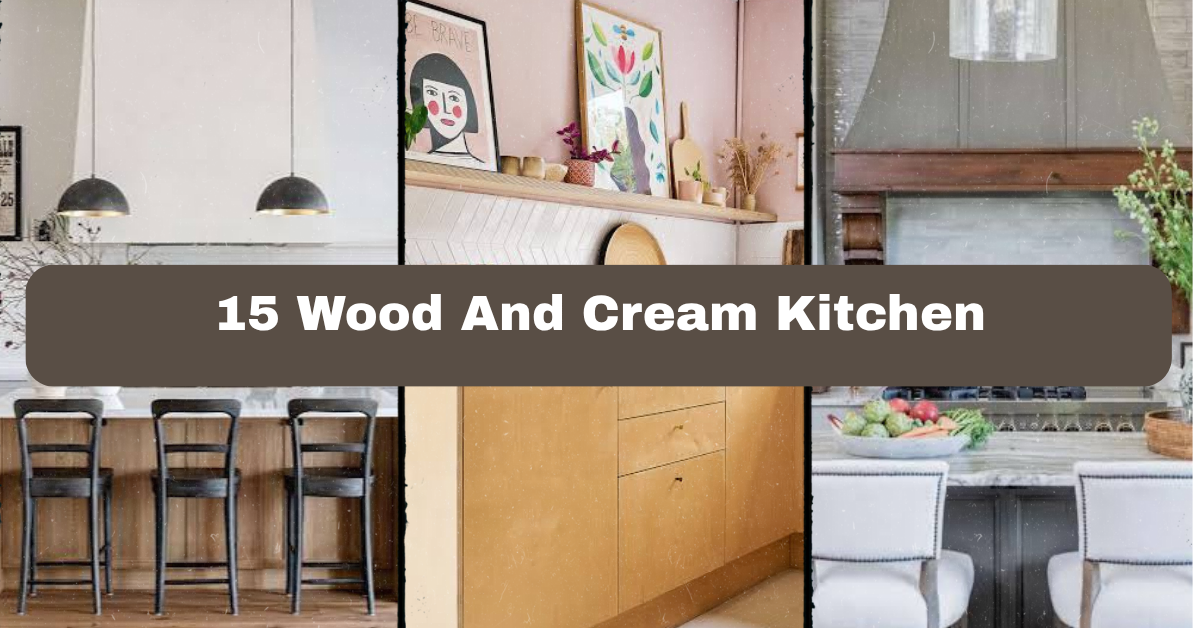
15 Wood And Cream Kitchen ideas can help you create a space that feels warm, bright, and easy to live with. I’ll show you how to mix wood tones, cream finishes, lighting, hardware, and decor without making the room look flat or dated.
A wood and cream kitchen combines natural wood surfaces with cream cabinets, walls, counters, or furnishings. The pairing creates a warm, balanced room that suits modern, traditional, farmhouse, coastal, and transitional homes.
Keep reading for practical layouts, color combinations, material tips, and small details that make this kitchen style work beautifully.
What Makes a Wood and Cream Kitchen Work?
I love this kitchen style because it feels calm without looking plain. Cream adds softness and light, while wood brings texture and a natural sense of warmth. The two materials also give you plenty of room to change your decor later.
The key is balance. Too much pale cream can make the kitchen feel washed out. Too much dark wood can make it feel heavy. I usually choose one main wood tone, one cream shade, and one small accent color. Black, brass, olive green, terracotta, and soft blue all work well.
Before choosing finishes, look at your natural light, flooring, cabinet layout, and nearby rooms. A kitchen should feel connected to the rest of the home.
1. Pair Cream Cabinets With a Warm Oak Island
Cream perimeter cabinets and a warm oak island create an inviting focal point. The cream cabinets keep the walls looking open, while the wood island adds contrast and gives the room a sturdy, furniture-like center.
Choose oak with a clear or lightly tinted finish so the grain remains visible. For the cabinets, try a creamy white with a yellow, beige, or soft gray undertone. Avoid pairing a very cool white with orange-toned wood, since the contrast can feel accidental.
Add simple stools with woven seats or leather cushions. A ceramic bowl, cutting board, and small vase can soften the island without cluttering it. If you have a small kitchen, use wood on the island front and countertop instead of the full island structure.
This idea fits farmhouse and traditional homes, but slab cabinet doors can make it feel modern. Next, let’s look at a more dramatic way to use wood.
2. Use Full-Height Wood Cabinets on One Wall
A full wall of wood cabinetry can make a kitchen feel rich and custom. It works especially well when the opposite cabinets, walls, or backsplash are cream. The wood wall can hold a refrigerator, pantry, oven, and small appliances, giving the room a clean visual line.
Walnut creates a deeper, moodier look. White oak feels lighter and more casual. Rift-cut oak has a straighter grain that suits modern kitchens, while knotty oak works well in rustic spaces.
To keep the wall from looking too solid, add open shelving, glass doors, or a cream range hood. Use one type of hardware throughout, such as aged brass or matte black pulls. Before ordering cabinetry, ask for a full door sample and view it in morning and evening light.
This approach suits contemporary, mid-century, and rustic homes. If a full wood wall feels like too much, the next idea offers a smaller dose.
3. Add a Wood Hood Over a Cream Range
A wood range hood adds character without requiring many wood cabinets. Place it above a cream, white, or stainless steel range, then repeat the wood tone in shelves, stools, or a nearby island.
The hood should feel connected to the room. If your floor is medium oak, match or closely relate the hood finish to it. If you use a contrasting wood, keep the rest of the room simple. A smooth plaster-style hood with a wood trim band can look elegant, while a paneled hood feels more traditional.
Check the hood’s ventilation requirements before choosing its shape. Decorative details should never block proper airflow. I also recommend using a washable finish, especially if the hood sits over a frequently used cooktop.
This idea adapts easily to farmhouse, English country, modern, and transitional kitchens. Once the main wood feature is in place, the right color palette will bring everything together.
Wood and Cream Color Palette Guide
| Wood finish | Cream shade | Accent color | Overall effect | Best home styles |
|---|---|---|---|---|
| Light white oak | Warm ivory | Sage green | Airy and relaxed | Scandinavian, coastal |
| Natural oak | Soft almond cream | Aged brass | Comfortable and classic | Transitional, farmhouse |
| Medium walnut | Pale linen cream | Charcoal black | Rich and tailored | Modern, mid-century |
| Honey oak | Buttercream | Terracotta | Sunny and welcoming | Rustic, Mediterranean |
| Dark-stained oak | Mushroom cream | Antique bronze | Moody and elegant | Traditional, English country |
4. Choose Cream Quartz With Subtle Veining
Cream quartz countertops give you a practical surface while keeping the kitchen soft and warm. Look for backgrounds in ivory, biscuit, or light taupe rather than bright white. Gentle beige or gray veining can connect the counters to wood cabinets and flooring.
Avoid choosing a pattern with too many large, sharp veins if your wood already has strong grain. The room may start to look busy. A quieter countertop lets the natural material stand out.
For a small kitchen, use the same quartz on the counter and backsplash. This creates a continuous look and can make the room appear larger. Ask to see a large sample beside your cabinet door, since small samples often hide the full pattern.
This countertop idea works in modern, farmhouse, and traditional rooms. With the surfaces selected, you can add texture through the backsplash.
5. Install a Handmade-Look Cream Tile Backsplash
A handmade-look cream tile adds gentle texture behind the range and counters. Slight variations in shape, color, and glaze keep the wall from feeling flat. Choose rectangular tile for a calm look, square tile for a classic feel, or narrow zellige-style tile for more movement.
Use cream grout when you want a blended appearance. A light beige grout gives the tile more definition and is often easier to maintain than bright white grout. For a budget-friendly update, tile only the main work wall and paint the remaining walls a washable warm cream.
Before installation, lay several tiles together to check the color variation. Some tiles look subtle in a box but much stronger across a full wall.
This backsplash suits coastal, cottage, farmhouse, and modern kitchens. Next, we’ll use lighting to show off the wood and cream contrast.
6. Hang Woven Pendants Over the Island
Woven pendant lights bring a relaxed, natural layer to a wood and cream kitchen. Rattan, cane, seagrass, and paper cord all work well with pale cabinets and warm wood. Their open texture also casts gentle shadows across the ceiling and island.
For an island, two or three smaller pendants usually look more balanced than one oversized fixture. Leave enough space between the lights and keep the bottom of the pendants high enough for clear sight lines. A dimmer switch helps you move from bright task lighting to a softer evening mood.
Choose woven shades with a shape that suits your room. Round shades feel casual, while cone shapes look more tailored. Use warm bulbs around 2700K to keep cream finishes from appearing gray.
This lighting choice fits coastal, boho, Scandinavian, and farmhouse interiors. Lighting helps, but the floor can make the strongest overall statement.
Kitchen Lighting and Pendant Size Guide
| Island length | Recommended pendant count | Typical pendant width | Suggested spacing |
|---|---|---|---|
| 48 to 60 inches | 2 | 10 to 14 inches | 18 to 24 inches apart |
| 72 inches | 2 or 3 | 12 to 16 inches | 20 to 26 inches apart |
| 84 to 96 inches | 3 | 12 to 18 inches | 22 to 28 inches apart |
| 108 inches or longer | 3 to 4 | 14 to 20 inches | Keep equal spacing |
These are starting points, not strict rules. Always check the fixture’s installation instructions and the ceiling height.
7. Continue Wood Flooring Into the Kitchen
Wood flooring creates a smooth connection between the kitchen and nearby living spaces. It also makes cream cabinetry feel grounded. If you are installing new flooring, choose planks that work with the cabinet color but do not match it too perfectly.
For example, pale oak cabinets can pair with medium natural oak floors. Cream cabinets can pair with warm walnut flooring. Matching every wood surface can make the room look like a showroom, so some contrast is helpful.
Use a durable finish designed for busy areas. Place a washable runner near the sink and cooking zone to catch splashes. If real wood is not practical, quality wood-look porcelain tile can offer a similar appearance with different care needs.
This flooring approach works across modern, traditional, and open-plan homes. Once the floor is set, a few painted details can add useful contrast.
8. Paint the Lower Cabinets a Soft Mushroom Cream
Mushroom cream sits between beige, gray, and ivory. It gives lower cabinets a grounded look while keeping the kitchen bright. Pair it with natural wood shelves, a wood island, or a butcher block work surface.
This color is especially helpful in kitchens with strong sunlight. Very pale cream can look harsh in bright rooms, while mushroom cream stays softer. In darker rooms, choose a lighter shade with warm undertones.
Test paint samples on several cabinet doors. Look at them in natural light and under your kitchen lighting. Use a durable cabinet enamel with a satin or semi-gloss finish for easier cleaning.
Brushed brass hardware adds warmth, while black pulls create a sharper contrast. This look can feel modern with flat doors or traditional with shaker fronts. From here, let’s bring in seating that supports the same natural mood.
Common Wood Options for Kitchen Details
| Wood type | Visual character | Good uses | Maintenance notes |
|---|---|---|---|
| White oak | Light grain, pale tan color | Cabinets, shelves, islands | Seal against water near sinks |
| Walnut | Deep brown, smooth grain | Islands, accents, furniture | Can darken slightly over time |
| Maple | Fine grain, light color | Cabinets, cutting boards | Takes stains evenly |
| Ash | Open grain, pale neutral tone | Shelves, cabinet fronts | Needs a durable clear finish |
| Reclaimed wood | Uneven color and marks | Shelves, beams, decor | Seal carefully and check for pests |
| Teak | Golden brown and oily | Stools, accents, small surfaces | Wipe spills quickly |
9. Add Cane or Woven-Seat Counter Stools
Cane and woven-seat stools add texture without introducing another strong color. Choose frames in oak, walnut, black, or painted cream. A wood frame will blend into the kitchen, while a black frame creates a clear outline against a pale island.
Comfort matters more than appearance. Select counter-height stools for a standard counter and bar-height stools for a raised bar. Look for a footrest, a stable base, and enough space for knees. Backless stools save visual space, but stools with backs are usually better for long breakfasts and homework sessions.
Keep the seat material practical. Tight cane, seagrass, and washable woven fabric are easier to live with than delicate open weave near food preparation.
This idea works in coastal, boho, modern farmhouse, and classic kitchens. Seating adds comfort, and the next detail adds display space.
10. Style Open Shelves With Cream Ceramics
Open wood shelves are a simple way to repeat the kitchen’s natural material. Fill them with cream plates, stoneware mugs, cutting boards, glass jars, and one or two plants. The mix feels collected instead of overly decorated.
Use items in different heights, but do not fill every inch. Leave some open space so the shelves can breathe. I like grouping three objects together, then leaving a small gap before the next group. Put daily-use items within easy reach and keep fragile pieces higher up.
Install shelves into wall studs or use proper anchors. Near the stove, remember that grease and dust will collect faster. A shelf farther from the cooktop may be easier to maintain.
This concept suits Scandinavian, cottage, farmhouse, and modern interiors. For another way to add personality, use the wall behind the shelves as a color feature.
11. Add a Muted Green or Blue Accent Wall
Wood and cream do not need to stay neutral. A muted sage, dusty blue, olive, or gray-green wall can give the kitchen a gentle point of interest. These colors work because they echo nature and sit comfortably beside warm wood.
Use the accent color on one wall, the pantry door, the island base, or the inside of glass-front cabinets. Keep the shade slightly gray or dusty if you want a calm appearance. Bright primary colors may overpower the soft materials.
Test the paint next to your cream cabinet sample and countertop. Some greens turn yellow beside warm cream, while some blues can make cream look tan.
This idea adapts to coastal, cottage, modern, and Mediterranean homes. A small color accent can set the mood, while the right hardware sharpens the design.
Hardware Finish Comparison
| Hardware finish | Works best with | Mood created | Care level |
|---|---|---|---|
| Aged brass | Warm cream, oak, walnut | Soft and classic | Shows some patina |
| Polished brass | Ivory, marble-look quartz | Bright and decorative | Needs regular polishing |
| Matte black | Pale cream, light oak | Crisp and modern | Easy daily care |
| Brushed nickel | Gray cream, maple | Quiet and practical | Resists visible fingerprints |
| Oil-rubbed bronze | Mushroom cream, dark wood | Traditional and rich | Can show dust |
| Antique pewter | Beige cream, rustic wood | Casual and timeworn | Low-key appearance |
12. Use a Wood Pantry Door as a Focal Point
A wood pantry door can add warmth without changing the entire kitchen. Choose a slab door for a modern room, a five-panel door for a traditional kitchen, or a simple glass-and-wood design for a farmhouse look.
If the kitchen already has several wood tones, stain the door to match the most visible one. If not, let the door introduce a slightly darker tone and repeat it with a cutting board, frame, or stool legs.
Use a strong hinge and a handle that feels comfortable in your hand. A pocket door can save space in a narrow kitchen, while a sliding barn-style door adds rustic character but needs wall clearance.
This feature works in compact apartments as well as large open kitchens. Now let’s look at a practical surface that also acts as decor.
13. Display a Thick Wood Cutting Board Collection
Large wood cutting boards can make a cream kitchen feel useful and lived in. Lean two or three boards against the backsplash or place them upright in a counter basket. Choose boards with different shapes, such as round, rectangular, and paddle styles.
Keep the display away from direct heat and areas where raw meat is prepared. Use separate boards for cooking and decoration if you want to avoid frequent washing. Food-safe mineral oil helps protect active boards, but decorative boards may need a different care routine based on their finish.
Do not crowd the counter. One small ceramic crock, a cutting board stack, and a plant may be enough.
This detail fits rustic, farmhouse, modern, and traditional kitchens. Small accessories matter, and a simple runner can add another layer without taking up counter space.
Useful Kitchen Runner Sizes
| Kitchen location | Common runner size | Best purpose |
|---|---|---|
| In front of a single sink | 2 by 3 feet | Small splash and standing zone |
| Along a standard counter | 2.5 by 6 feet | Daily cooking comfort |
| Galley kitchen walkway | 2.5 by 8 feet | Long visual connection |
| In front of a large island | 3 by 8 feet | Defines the work area |
| Beside an island with stools | 2.5 by 6 feet | Adds softness without blocking stools |
Use a low-profile, washable rug with a nonslip pad. Make sure doors and drawers open freely above it.
14. Layer a Neutral Runner With a Subtle Pattern
A runner can make a wood and cream kitchen feel warmer and more finished. Choose a pattern in cream, tan, faded blue, olive, or charcoal. Small geometric designs work in modern spaces, while faded floral or Persian-inspired patterns suit traditional rooms.
Avoid a rug that matches the cabinets exactly. A little contrast helps define the floor and keeps the room from blending into one pale block. Flatweave cotton, wool, and washable synthetic rugs are useful choices for busy kitchens.
Place the runner where you stand most, such as along the sink or island. Add a nonslip pad and check that the edges stay flat. Clean spills quickly, especially on natural fibers.
This idea works in nearly any home style. For the final design idea, we’ll use greenery to soften the hard surfaces.
15. Bring in Greenery and Natural Decor
Plants make a cream and wood kitchen feel fresh. Try a small herb pot near a bright window, a trailing plant on an open shelf, or a taller plant in a woven basket at the edge of the room. Green leaves look natural beside oak, walnut, and creamy paint.
Choose plants based on your light and routine. Rosemary, basil, and thyme need strong light and regular care. A pothos or snake plant may be easier for a busy household. Keep plants away from hot burners and avoid placing soil where it can spill into food preparation areas.
Add other natural pieces, such as stone bowls, linen towels, ceramic vases, and rattan baskets. Use a few items with purpose rather than filling every surface.
This finishing layer suits coastal, boho, farmhouse, Scandinavian, and modern kitchens. With the main elements chosen, these final tips will help you keep the design balanced.
Tips for Success
- Order large samples of cabinet, countertop, flooring, and backsplash materials before making final choices.
- Compare wood tones in both daylight and artificial light.
- Keep the undertones consistent. Warm cream usually works best with warm wood.
- Repeat each major material at least twice so it feels intentional.
- Use dimmable lighting with warm bulbs for a softer evening atmosphere.
- Choose washable rugs and easy-care finishes for busy cooking zones.
- Leave clear work paths around the island, sink, refrigerator, and range.
Common Mistakes and How to Avoid Them
Using too many wood tones
Choose one main wood and one supporting wood. If you use a third, keep it limited to a small accessory.
Picking a bright white beside warm cream
Compare both colors in the same light. Choose creams with related undertones so the difference looks planned.
Making every surface beige
Add contrast through black hardware, green paint, darker wood, patterned rugs, or aged metal.
Ignoring countertop patterns
Strong veining can compete with noticeable wood grain. Pair bold grain with quieter counters.
Installing open shelves without considering grease
Place shelves away from the range when possible. Store washable or frequently used items on them.
Choosing style over comfort
Test stools, check lighting glare, and protect standing areas with a supportive runner. A kitchen should be easy to use every day.
Similar Variations
- Modern Organic Kitchen: Combines light wood, creamy slab cabinets, simple lighting, and soft natural textures.
- Warm Scandinavian Kitchen: Uses pale oak, off-white surfaces, clean lines, and minimal decoration.
- Modern Farmhouse Kitchen: Blends cream shaker cabinets, a wood island, black hardware, and practical vintage accents.
- Coastal Wood and Cream Kitchen: Adds pale blue, woven lighting, light oak, and relaxed linen details.
- English Country Kitchen: Uses mushroom cream, painted wood, aged brass, open shelves, and traditional patterns.
- Desert-Inspired Kitchen: Pairs warm cream and wood with terracotta, clay pottery, woven baskets, and muted olive.
The best wood and cream kitchen is not the one with the most expensive finishes. It is the one with a clear balance of light, texture, warmth, and practical choices. Start with your cabinet and wood tones, then add lighting, hardware, textiles, and personal pieces slowly.
When the materials support one another, the room feels welcoming from the first step inside, and these 15 Wood And Cream Kitchen ideas give you a strong place to begin.
Leave a Reply