Category: Living Room

  • 14 Warm Rustic Living Room Ideas That Feel Like a Hug

    14 Warm Rustic Living Room Ideas That Feel Like a Hug

    If you’ve been hunting for 14 Warm Rustic Living Room ideas that actually work in a real home (not just a magazine spread), you’re in the right place. I’ve pulled together everything I know from years of obsessing over cozy spaces, and I’m going to walk you through it like I would with a friend over coffee. By the end of this, you’ll know exactly how to pull off this look without guessing.

    A warm rustic living room combines natural materials like wood, stone, and leather with soft textiles and a earthy color palette to create a cozy, inviting space. The style blends farmhouse charm with cabin comfort, focusing on texture, warmth, and function over sleek modern lines.

    Stick around, because I’m about to show you 14 ways to turn any boring living room into a space that feels like a warm cabin retreat, plus some mistakes to dodge along the way.

    What Even Is a Warm Rustic Living Room?

    Okay, let’s back up for a second. Rustic doesn’t mean “stuck in a log cabin from 1985.” It means raw materials, honest textures, and colors pulled from nature. Think worn wood, chunky knits, and stone that still looks like stone.

    The “warm” part is key too. Some rustic rooms feel cold and empty, like an abandoned barn. We’re not doing that. We’re adding layers, soft lighting, and rich colors so the room feels lived-in and hugged, not staged. It’s the difference between a museum and a home your dog actually wants to nap in.

    Ready? Let’s get into the ideas.

    1. Anchor the Room With a Reclaimed Wood Coffee Table

    Story Pin image
    Credit: Suite 101

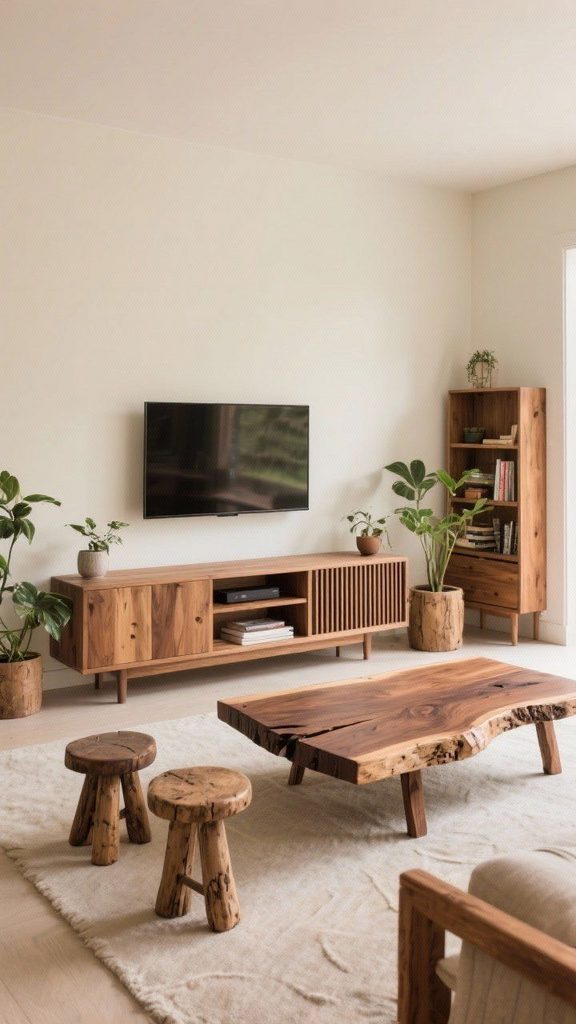
    Nothing says rustic quite like a coffee table that looks like it survived a few decades in a barn. Reclaimed wood has knots, cracks, and color variation that new furniture just can’t fake. It becomes the heart of the room, the spot where everyone puts their feet up.

    Pick a table with visible grain and a slightly rough finish. Pair it with a neutral rug so the wood grain pops instead of competing with patterns.

    Practical tip: Rub a little butcher block oil on the surface every few months to keep the wood looking rich instead of dry and dull.

    This idea works in modern farmhouse spaces too, just pair the table with cleaner-lined furniture around it. Once your table anchors the room, it’s time to think about what surrounds it.

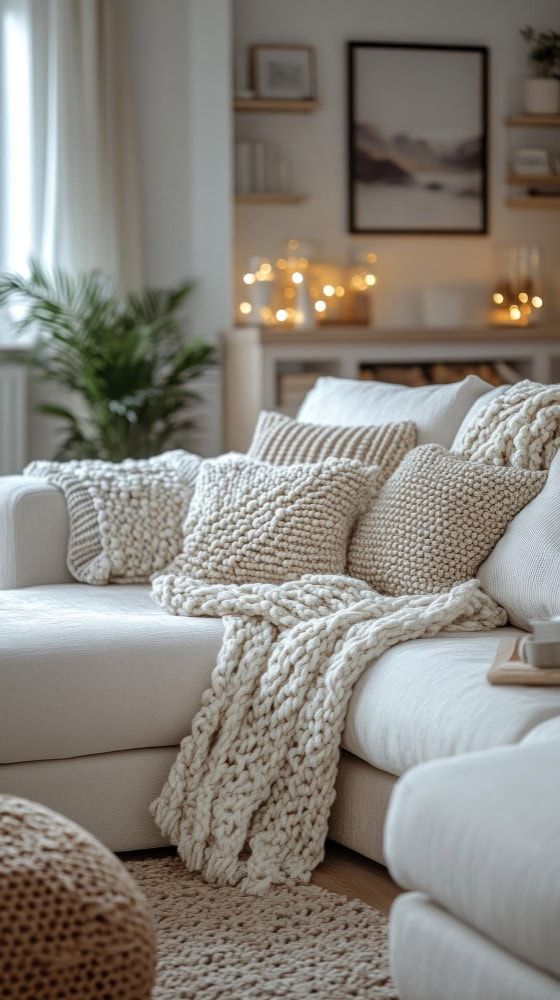
    2. Layer a Chunky Knit Throw Over Your Sofa
    Credit: Nature Creatures

    A throw blanket sounds small, but it does a lot of heavy lifting. Chunky knits in cream, oatmeal, or rust orange instantly make a sofa look softer and more inviting.

    Drape it over one arm instead of folding it flat. That casual, lived-in look sells the rustic vibe way better than a perfectly folded blanket.

    Practical tip: Buy two throws in slightly different textures (one knit, one faux fur) and layer them together for depth.

    Coastal homes can swap the rust tones for sandy neutrals and still keep this trick. Once your sofa feels cozy, your seating area needs a rug that matches the mood.

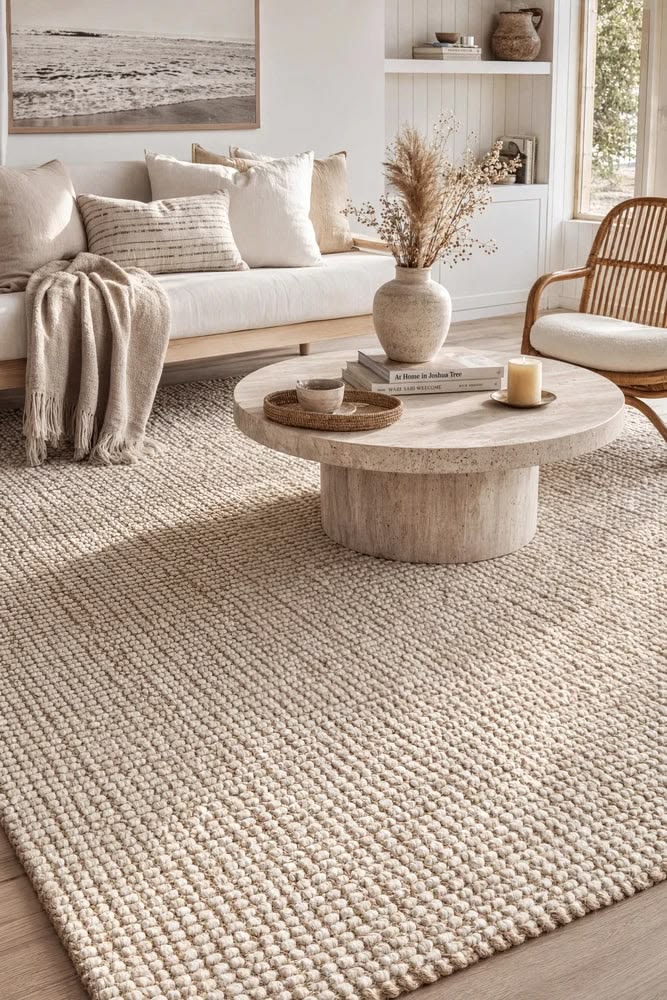
    3. Choose a Wool or Jute Area Rug for Texture
    Credit: Cheap Rugs Australia

    Rugs ground the whole room, literally and visually. Wool rugs feel soft underfoot and hold up well in high-traffic areas. Jute rugs bring a more raw, natural texture that fits perfectly with rustic style.

    Go for earthy tones like terracotta, moss green, or deep brown instead of bright colors. Pattern-wise, simple stripes or subtle geometric shapes work better than busy florals.

    Practical tip: Size your rug so all the front legs of your furniture sit on it. A too-small rug makes the whole room feel disconnected.

    Traditional homes can use the same rug logic with more ornate border patterns. With the floor sorted, let’s talk about walls.

    4. Add a Stone or Brick Accent Wall

    Story Pin image
    Credit: Saca Home

    An accent wall made of stacked stone or exposed brick brings serious texture without adding clutter. It’s a focal point that does the work for you, so you don’t need to overdecorate the rest of the room.

    Behind a fireplace is the classic spot, but it also works well behind a media console or sofa. Keep the rest of the walls a simple, warm white or beige so the texture wall doesn’t fight for attention.

    Practical tip: If real stone isn’t in the budget, stone veneer panels give the same look for a fraction of the cost and weight.

    Industrial-style homes can use exposed brick the same way for a grittier feel. Once your walls have texture, lighting becomes even more important.

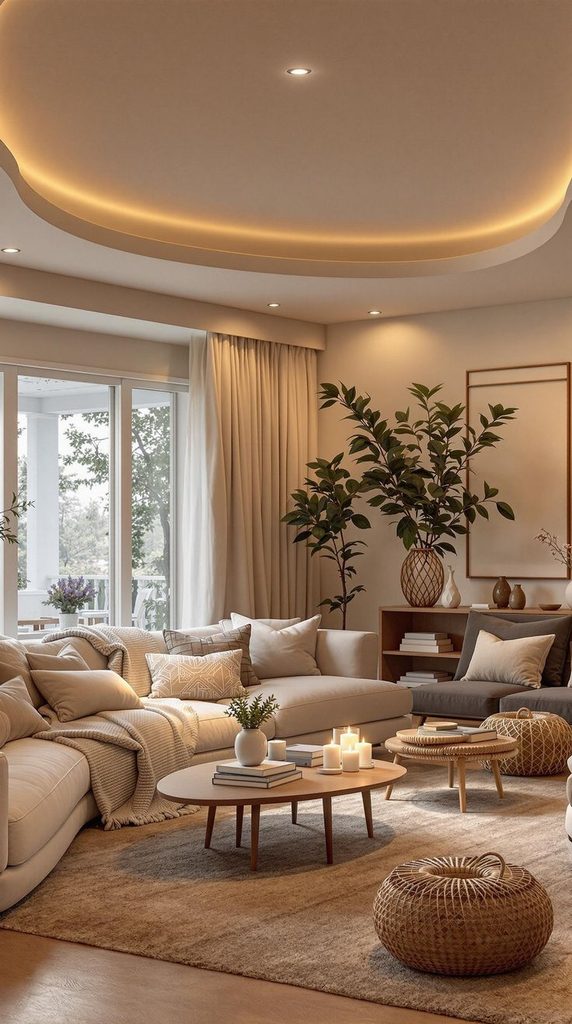
    5. Warm Up the Room With Layered Lighting
    Credit: Learn California

    Harsh overhead lighting kills a cozy vibe fast. Warm rustic rooms rely on layered lighting instead, meaning a mix of table lamps, floor lamps, and maybe a dimmable overhead fixture.

    Choose bulbs labeled “warm white” or “soft white,” somewhere around 2700K to 3000K. That amber glow does wonders for making a space feel relaxed instead of clinical.

    Practical tip: Put your lamps on a smart plug or dimmer so you can adjust the mood without buying new fixtures.

    Modern rustic spaces can use sleeker lamp bases while keeping the same warm bulb temperature. Now that the lighting sets the mood, let’s talk color.

    Warm Rustic Color Palette Guide

    Palette NameWall ColorAccent ColorsBest For
    Cabin ClassicWarm WhiteRust, Forest Green, Chestnut BrownTraditional rustic
    Desert WarmSandy BeigeTerracotta, Clay, CreamSouthwestern rustic
    Mountain LodgeCharcoal GrayDeep Brown, Burnt Orange, OliveCabin-style rooms
    Soft FarmhouseCreamSage Green, Tan, Dusty BlueModern farmhouse

    6. Bring In a Stone Fireplace as a Focal Point

    Story Pin image
    Credit: Space and Style

    If your room already has a fireplace, don’t hide it. A stone or brick fireplace surround is basically the poster child for rustic style. It gives the eye somewhere to land and instantly makes the room feel warmer, even when the fire isn’t lit.

    Add a wood mantel on top for extra texture, and style it with a few candles, a small plant, or an old clock.

    Practical tip: Keep mantel decor to three or fewer items so it doesn’t look cluttered.

    Traditional and lodge-style homes can go bigger with the stone, while modern rustic spaces can keep the stone minimal and paired with clean lines. With your focal point set, let’s fill the room with furniture that fits.

    7. Pick Leather Furniture With Some Age to It

    Credit: Maya Schopmeyer

    Leather sofas and chairs, especially ones in cognac or worn brown, bring instant rustic charm. The slightly distressed look works in this style’s favor. You want it to look like it’s been sat on and loved, not fresh off a showroom floor.

    Pair leather seating with wood and metal accents so the room doesn’t feel too formal.

    Practical tip: Look for “top grain” leather instead of “genuine leather” labels. Top grain ages better and develops a nicer patina over time.

    Industrial rustic spaces can pair leather with black metal frames for extra edge. Once your seating is set, think about how you’ll dress the windows.

    8. Use Linen or Burlap Curtains for Softness

    Credit: Jean Combs

    Heavy, structured curtains feel too formal for this look. Linen and burlap have a relaxed, slightly wrinkled texture that fits right into a warm rustic room. They let in soft, filtered light too, which adds to the cozy feeling.

    Stick with neutral tones like oatmeal, taupe, or soft gray so the curtains don’t distract from the room’s other textures.

    Practical tip: Hang curtain rods closer to the ceiling than the window frame. It makes ceilings look taller and windows feel bigger.

    Coastal rustic spaces can use lighter, breezier linen in white or pale blue. Now that your windows are dressed, let’s talk about the ceiling itself.

    9. Expose or Fake Wood Beams Overhead

    Story Pin image
    Credit: Home Decor

    Exposed wood beams add serious rustic charm and draw the eye upward. If your home doesn’t have real structural beams, faux beams made from polyurethane look surprisingly convincing and are way lighter to install.

    Stain the beams a shade darker or lighter than your floor to create contrast instead of blending in completely.

    Practical tip: Add small can lights along the beams to highlight their texture at night.

    Mountain lodge and farmhouse styles both lean heavily on this trick. With the ceiling handled, let’s add some greenery to soften things up.

    10. Add Greenery in Wood or Woven Planters

    Story Pin image
    Credit: CozyCasa Living

    Plants bring life into a rustic room, but the pot matters just as much as the plant. Skip the shiny ceramic pots and go for wood planters, woven baskets, or terracotta instead.

    Larger plants like fiddle leaf figs or snake plants work well in corners, while smaller succulents can sit on shelves or the coffee table.

    Practical tip: Group plants in odd numbers (three or five) at different heights for a more natural, less staged look.

    Boho and coastal spaces can lean into more woven texture with the planters. Once your greenery is in place, let’s think about wall art.

    11. Hang Nature-Inspired or Vintage Art

    Story Pin image
    Credit: AuralinePaintings

    Skip the generic canvas prints and go for art that feels earthy and personal. Vintage landscape paintings, botanical prints, or black and white nature photography all fit the warm rustic mood.

    Frame pieces in raw or dark wood instead of shiny metal or plastic frames.

    Practical tip: Create a small gallery wall using odd-shaped frames mixed with one or two mirrors to bounce light around.

    Traditional homes can go bigger and more ornate with frames, while modern rustic spaces can keep frames thin and simple. With the walls dressed, let’s talk storage.

    12. Use Wood and Wicker Storage Pieces
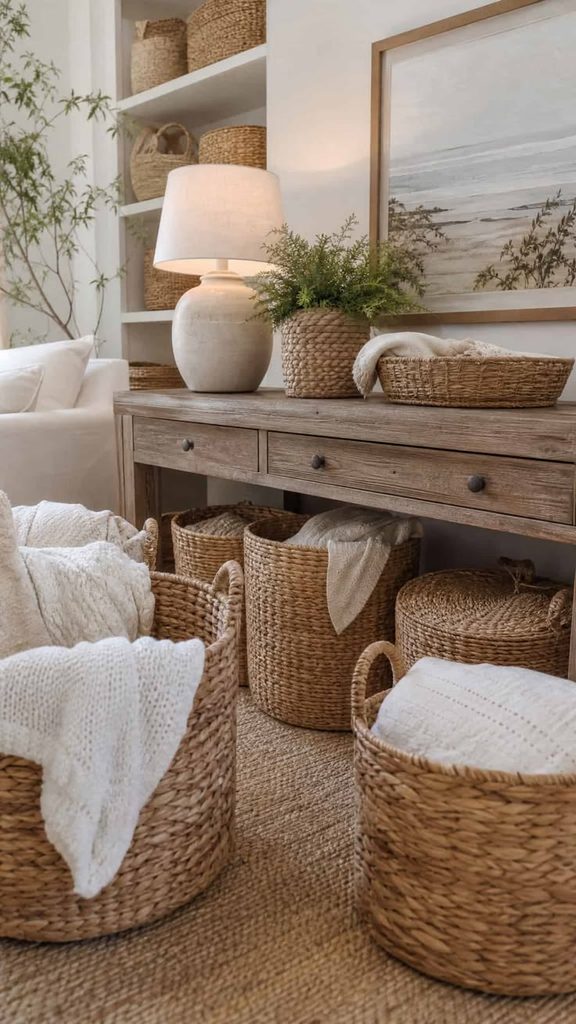
    Credit: My Beach Lifestyle

    Baskets and wood crates aren’t just decor, they’re storage heroes. Use them to hold blankets, magazines, or the kids’ toys without breaking the room’s aesthetic. A metal or plastic storage bin sticks out like a sore thumb in a rustic room, but a woven basket blends right in.

    Practical tip: Label baskets on the inside (not the outside) so they stay functional without looking cluttered.

    Farmhouse and coastal styles both use woven storage heavily, just in different color tones. Now let’s bring in some metal accents for balance.

    13. Mix In Black or Bronze Metal Accents
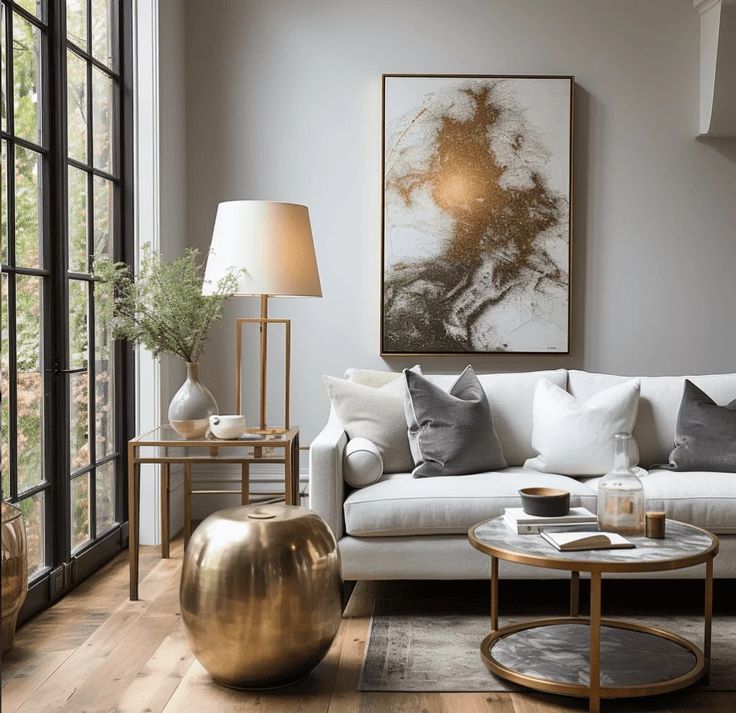
    Credit: Mindful Hues

    Wood and leather need a little contrast, and metal accents do that job well. Black iron light fixtures, bronze drawer pulls, or a wrought iron plant stand all add a bit of edge without pulling away from the warmth.

    Keep metal finishes consistent throughout the room. Mixing gold, silver, and black all in one space can look messy fast.

    Practical tip: Start with one metal finish and repeat it in at least three spots (lighting, hardware, decor) for a cohesive look.

    Industrial rustic spaces can lean harder into black metal, while soft farmhouse spaces can use it sparingly. Last but not least, let’s talk about scent and sound.

    14. Add Wood-Scented Candles and Soft Ambient Sound

    Story Pin image
    Credit: Easy Living

    This one’s easy to overlook, but it matters. Candles that smell like cedar, sandalwood, or fireside smoke add another sensory layer to the room. Pair that with a small fountain, soft instrumental music, or even a crackling fire sound playlist, and the room feels even cozier.

    Practical tip: Rotate candle scents seasonally, warmer scents like cinnamon in fall and winter, lighter scents like sage in spring and summer.

    This idea works in literally every home style since it’s about atmosphere, not furniture.

    Budget Tiers for a Warm Rustic Living Room Makeover

    Budget LevelWhat You Can DoEstimated Cost
    Small ($200-$500)New throws, rug, candles, plant swaps$200-$500
    Mid ($500-$2,000)Add coffee table, curtains, lighting, wall art$500-$2,000
    Full Room ($2,000-$6,000)New sofa, fireplace surround, beams, storage$2,000-$6,000
    High-End ($6,000+)Custom stonework, built-ins, real reclaimed wood everything$6,000+

    Tips for Success

    • Start with one big anchor piece, like a coffee table or fireplace, before adding smaller decor.
    • Stick to three or four main colors max so the room doesn’t feel chaotic.
    • Mix textures on purpose: wood, wool, leather, and metal should all show up somewhere.
    • Don’t buy everything new. Thrifted and vintage pieces add authentic rustic character.
    • Test paint colors on the wall at different times of day before committing.
    • Keep a few surfaces empty. A rustic room should feel relaxed, not crammed.
    • Let natural light in when you can. It makes warm tones look even richer.

    Common Mistakes and How to Avoid Them

    Too much matching wood tones
    : Mix at least two different wood shades in the room so it doesn’t look like a furniture showroom set.

    Cold, sterile lighting
    : Swap bright white bulbs for warm white ones (2700K-3000K) in every fixture.

    Overdoing the “cabin” theme with antlers and plaid everywhere
    : Pick one or two rustic symbols max and let textures do the rest of the talking.

    Skipping soft textures
    : Add at least one knit throw, one wool rug, and one set of linen curtains so the room doesn’t feel harsh.

    Ignoring scale
    : Measure your space before buying a coffee table or rug. Oversized furniture in a small room kills the cozy feeling fast.

    Forgetting a focal point
    : Choose one main feature, like a fireplace or accent wall, so the room doesn’t feel scattered.

    Similar Variations

    • Modern Farmhouse: Cleaner lines, more white and black contrast, still keeps wood texture.
    • Mountain Lodge: Heavier on stone, timber, and deep greens for a true cabin feel.
    • Desert Rustic: Warmer terracotta and clay tones with Southwestern-inspired textiles.
    • Coastal Rustic: Lighter wood tones mixed with rope, linen, and sandy neutrals.
    • Industrial Rustic: Adds black metal, exposed brick, and rougher, edgier finishes.
    • Boho Rustic: Mixes woven textures, layered rugs, and more eclectic patterns.

    Pulling off a warm rustic living room really comes down to layering natural materials with soft textures and keeping your color palette grounded in earthy tones. Start small if you need to, maybe just a throw blanket and a new rug, and build from there as your budget allows. Whatever pace you go at, these 14 Warm Rustic Living Room ideas give you a real roadmap to a space that finally feels as cozy as it looks.
  • 16 Minimalist Living Room Ideas That Actually Feel Cozy (Not Cold)

    16 Minimalist Living Room Ideas That Actually Feel Cozy (Not Cold)

    I’ve spent way too many hours scrolling through 16 minimalist living room photos, trying to figure out how people make empty-looking rooms feel so calm instead of just… bare. If you’ve ever wondered the same thing, you’re in the right place.

    A minimalist living room is a space designed with fewer, more intentional items, a limited color palette, and clean lines to reduce visual clutter and create a calm, functional environment. The goal isn’t emptiness. It’s purpose.

    Stick with me and I’ll walk you through 16 real, doable ideas, plus the mistakes that trip most people up when they try this style at home.

    What Minimalist Living Room Design Really Means

    Okay, so let’s get one thing straight. Minimalism isn’t about owning three things and sitting on the floor. That’s a myth. I used to think that too, until I actually tried it and realized my living room felt more like a waiting room than a home.

    Real minimalist design is about choosing quality over quantity. You keep what you use and love. You ditch what you don’t. The color palette stays simple, usually neutrals or soft tones. Furniture has clean shapes, nothing too fussy. And every item earns its spot in the room instead of just filling space.

    Once you get that mindset, the ideas below will make a lot more sense.

    1. Start With a Neutral Color Foundation

    Story pin image
    Credit: Suite 101

    Your walls and big furniture pieces should stick to a quiet color story. Think white, beige, greige, soft gray, or warm taupe. This isn’t boring, it’s smart. Neutral backgrounds let texture and light do the talking instead of loud colors competing for attention.

    Paint your walls a soft off-white or warm gray, then bring in one accent color through a pillow or a piece of art. Keep everything else calm around it.

    Practical tip: Test paint samples on your wall for three days before committing. Light changes color perception throughout the day.

    This works in modern, Scandinavian, and even traditional homes. Traditional spaces just add warmer wood tones on top of the neutral base.

    Once your color foundation is set, it’s time to think about what furniture actually goes in the room.

    2. Choose Furniture With Clean, Simple Lines

    Story pin image
    Credit: Click & Inspire Hub 

    Skip the carved wood details and tufted everything. Minimalist furniture has straight edges, simple legs, and no unnecessary curves. A sofa should look like a sofa, not a sculpture.

    Look for pieces with exposed wood legs instead of skirted bottoms. It makes furniture feel lighter, almost like it’s floating a little above the floor. This small trick makes small rooms look bigger too.

    Practical tip: Measure your room before buying. A sofa that’s too big kills the open, breathable feeling minimalism relies on.

    Modern homes lean into sharp angles. Coastal minimalist spaces prefer rounded, soft edges in lighter woods like oak or ash.

    Now that your furniture shapes are sorted, let’s talk about how much of it you actually need.

    3. Limit Yourself to Essential Furniture Pieces Only

    Story pin image
    Credit: Miguel Sierra

    Here’s the hard part. You don’t need five side tables and three accent chairs. Pick the essentials: a sofa, one or two chairs, a coffee table, and maybe a media console. That’s it.

    I know it feels scary leaving space empty. But empty space, called negative space, is what makes a minimalist room feel peaceful instead of packed.

    Practical tip: Before buying new furniture, live with the empty space for two weeks. You might realize you don’t need as much as you thought.

    This rule flexes depending on family size. Traditional family homes might need an extra ottoman for kids. Keep it simple anyway.

    Speaking of furniture, let’s talk about one piece that quietly transforms the whole room.

    4. Add One Statement Piece Instead of Many Small Accents

    Story pin image
    Credit: Vasilije Radonjić

    Minimalist rooms often have one hero item. Maybe it’s a bold floor lamp, a sculptural chair, or a large piece of art. One statement piece gives your eyes somewhere to land without overwhelming the space.

    Skip the shelf full of tiny knickknacks. Instead, choose a single oversized vase or one great piece of wall art.

    Practical tip: If you’re unsure what your statement piece should be, pick the item you’d grab first in a fire. That’s usually the thing worth showing off.

    This idea works everywhere. In boho spaces, the statement piece might be a woven wall hanging. In modern homes, it could be a geometric light fixture.

    Speaking of lighting, that deserves its own spotlight next.

    5. Layer Lighting Instead of Relying on One Overhead Fixture

    Story pin image
    Credit: Calm Indoors

    A single ceiling light makes a room feel flat and clinical. Minimalist doesn’t mean under-lit. Mix a floor lamp, a table lamp, and natural light from windows to create depth.

    Practical tip: Use warm white bulbs (around 2700K to 3000K) instead of cool white. Warm light makes minimalist spaces feel cozy instead of sterile.

    Coastal homes love lots of natural daylight with sheer curtains. Modern spaces often add a sculptural floor lamp as a design feature itself.

    Good lighting sets the mood, but texture is what keeps a neutral room from feeling flat.

    6. Bring In Texture Through Natural Materials

    Story pin image
    Credit: Aestiq

    This is the secret most people miss. A room full of beige can look boring if everything is smooth and flat. Mix materials like linen, wool, wood, and woven jute to add depth without adding clutter or color.

    A chunky knit throw, a jute rug, and a wood coffee table together create visual interest even in an all-neutral room.

    Practical tip: Aim for at least three different textures in every room. It keeps things from looking flat under photos or in person.

    Scandinavian minimalist rooms lean heavily on wool and light wood. Japandi style mixes in more raw, matte textures like unfinished wood and stone.

    Texture and Material Pairing Guide

    MaterialBest Paired WithFeeling It Creates
    LinenWood, rattanAiry, relaxed
    WoolLeather, stoneWarm, grounded
    JuteCotton, linenEarthy, casual
    VelvetMetal, glassSoft, elevated
    RattanCeramic, woodLight, natural

    Once your textures are layered, the next step is choosing a rug that actually ties it all together.

    7. Layer a Woven Rug for Warmth Underfoot

    Story pin image
    Credit: padillarandall

    A bare floor can feel cold, literally and visually. A simple woven or flatweave rug adds warmth without introducing pattern chaos. Stick to neutral tones or subtle texture-based patterns instead of bold prints.

    Practical tip: Your rug should be big enough that at least the front legs of your sofa sit on it. Too small, and the room looks unfinished.

    Traditional homes might choose a subtle jute rug with a border. Modern spaces often go for a solid gray or ivory flatweave.

    Now let’s zoom out and talk about the walls themselves.

    8. Keep Wall Decor Sparse but Meaningful

    Story pin image
    Credit: TonedWallArt 

    You don’t need a gallery wall in a minimalist living room. One or two large pieces of art work better than ten small frames. Odd numbers and asymmetry can still feel intentional if the spacing is right.

    Practical tip: Hang art so the center sits at eye level, about 57 to 60 inches from the floor. This is the standard gallery height and it just looks right.

    Boho minimalist spaces might swap framed art for a woven tapestry. Modern homes often prefer abstract prints in black and white.

    Walls handled, let’s talk storage, because clutter kills minimalism faster than anything else.

    9. Use Hidden Storage to Keep Surfaces Clear

    Credit: Getrelax 

    Minimalism isn’t about owning less stuff necessarily, it’s about not seeing all your stuff at once. Ottomans with storage, closed cabinets, and baskets under console tables hide the mess while keeping surfaces clean.

    Practical tip: Do a nightly five-minute reset. Put everything back in its home before bed so mornings start clutter-free.

    Traditional homes often use closed wood cabinets. Modern spaces prefer sleek built-ins with hidden compartments.

    Now, let’s talk about something people forget: negative space around furniture.

    10. Leave Breathing Room Around Every Piece of Furniture

    Story pin image
    Credit: Mexican Decor

    Don’t push everything against the walls. Give furniture some space to breathe. A few inches between a sofa and a side table lets the eye rest and makes the whole room feel more open.

    Practical tip: Leave at least 30 inches of walking space in main pathways through the room.

    This principle stays true no matter the style, from mid-century modern to Japandi.

    Breathing room matters, but so does what’s sitting on your coffee table.

    11. Style Your Coffee Table With Just Two or Three Items

    Story pin image
    Credit: Home Organization 

    A coffee table loaded with magazines, remotes, coasters, and candles looks chaotic. Stick to a small tray, one candle, and maybe a single book or small plant. That’s plenty.

    Practical tip: Group items on a tray. It visually contains them and makes cleanup faster too.

    Coastal homes might add a small piece of driftwood. Modern spaces prefer a single sculptural object instead.

    Now let’s move to something bigger: your window treatments.

    12. Choose Simple, Light-Filtering Window Treatments

    Story pin image
    Credit: Luxury Beauty 

    Heavy drapes with tassels and patterns don’t belong here. Simple linen curtains or clean roller shades let light in while keeping the look calm and uncluttered.

    Practical tip: Hang curtain rods closer to the ceiling, not right above the window frame. It makes ceilings look taller instantly.

    Scandinavian homes often skip curtains entirely for sheer white panels. Traditional spaces may keep light wood blinds instead.

    Budget Guide for a Minimalist Living Room Refresh

    Budget TierWhat You Can UpdateEstimated Cost
    Low ($200-$500)Paint, new rug, decor edit$200-$500
    Mid ($1,000-$2,500)New sofa or lighting fixtures$1,000-$2,500
    High ($3,000+)Full furniture set, custom storage$3,000-$6,000

    With your budget mapped out, let’s talk plants, because green life changes everything.

    13. Add One or Two Plants for Life and Texture

    A minimalist room can feel sterile without a little life in it. One large plant, like a fiddle leaf fig or snake plant, adds organic texture and a pop of color without cluttering the space.

    Practical tip: Choose low-maintenance plants if you’re not naturally a plant person. Snake plants and ZZ plants survive almost anything.

    Boho spaces might add three or four smaller plants grouped together. Modern rooms usually stick to one large statement plant.

    Plants bring life, but your furniture layout brings function, so let’s talk flow next.

    14. Arrange Furniture to Support Real Conversation and Flow

    Story pin image
    Credit: Miguel Sierra

    Minimalist doesn’t mean stiff. Arrange your sofa and chairs facing each other, not just pointed at the TV. This creates a natural conversation area and makes the room feel more welcoming.

    Practical tip: Keep your TV as a secondary focus point, not the center of the layout.

    Traditional homes often center furniture around a fireplace instead. Modern layouts sometimes float furniture in the middle of open rooms.

    Once flow is sorted, it’s worth thinking about how you handle cords and tech clutter.

    15. Hide Cords and Tech Clutter Completely

    Story pin image
    Credit: NOXORA LIVING

    Nothing ruins a clean look faster than a tangle of cords behind the TV. Use cord clips, cable boxes, or even a simple cord cover painted to match your wall.

    Practical tip: A $15 cord management box can hide your router, cable box, and power strip in one clean spot.

    This matters in every style since tech clutter is universally distracting, no matter your decor theme.

    Now let’s talk about something smaller but powerful: your throw pillows.

    16. Keep Throw Pillows Limited to Two or Three Per Sofa

    Credit: The Tiny Apartment Edit

    More than three pillows starts to look excessive and makes seating less comfortable too. Stick to two or three in complementary neutral tones or one subtle textured pattern.

    Practical tip: Choose pillows in different textures but the same color family for a cohesive, calm look.

    Coastal spaces might add a light blue linen pillow. Modern rooms often stick to solid white or gray only.

    Let’s shift now to something a lot of people overlook: the ceiling.

    Tips for Success

    • Buy fewer, better pieces instead of filling every gap right away
    • Let a room sit empty for a few weeks before deciding what it needs
    • Stick to a three-color max rule for your whole room
    • Clean surfaces daily, even just for two minutes, to maintain the calm look
    • Invest in good lighting before worrying about decor
    • Use texture to add warmth instead of adding more color
    • Trust empty space, it’s doing more work than you think

    Common Mistakes and How to Avoid Them

    Too Cold and Sterile
    : Add texture through wool, linen, or wood, and switch to warm bulb lighting instead of cool white.

    Overbuying Decor at Once
    : Live in the space for a few weeks first, then add pieces slowly as you notice real gaps.

    Mixing Too Many Metal Finishes
    : Pick one or two finishes and repeat them across all fixtures and hardware.

    Ignoring Storage Needs
    : Add closed storage like baskets or cabinets before things pile up on open surfaces.

    Choosing Furniture That’s Too Big
    : Measure your room and leave at least 30 inches of walking space around major furniture pieces.

    Forgetting Personality Completely
    : Keep one or two meaningful items, like a family photo or travel souvenir, even in a minimalist setup.

    Similar Variations

    • Japandi Living Room – blends Japanese minimalism with Scandinavian warmth using natural wood and muted tones
    • Coastal Minimalist Living Room – light, airy, and beachy with whites, blues, and natural fibers
    • Modern Farmhouse Minimalist – mixes clean lines with rustic wood accents and cozy textiles
    • Boho Minimalist Living Room – fewer items but more texture, pattern, and warm earthy colors
    • Industrial Minimalist Living Room – raw materials like concrete and metal paired with simple furniture shapes
    • Warm Minimalist Living Room – focuses heavily on tan, cream, and rust tones instead of stark white and gray

    Building a calm, clutter-free living room isn’t about owning nothing. It’s about choosing what actually deserves space in your home and letting the rest go. Start small, pick a few ideas from this list, and give your space room to breathe before adding more. That’s really the whole secret behind every great 16 Minimalist Living Room design out there.

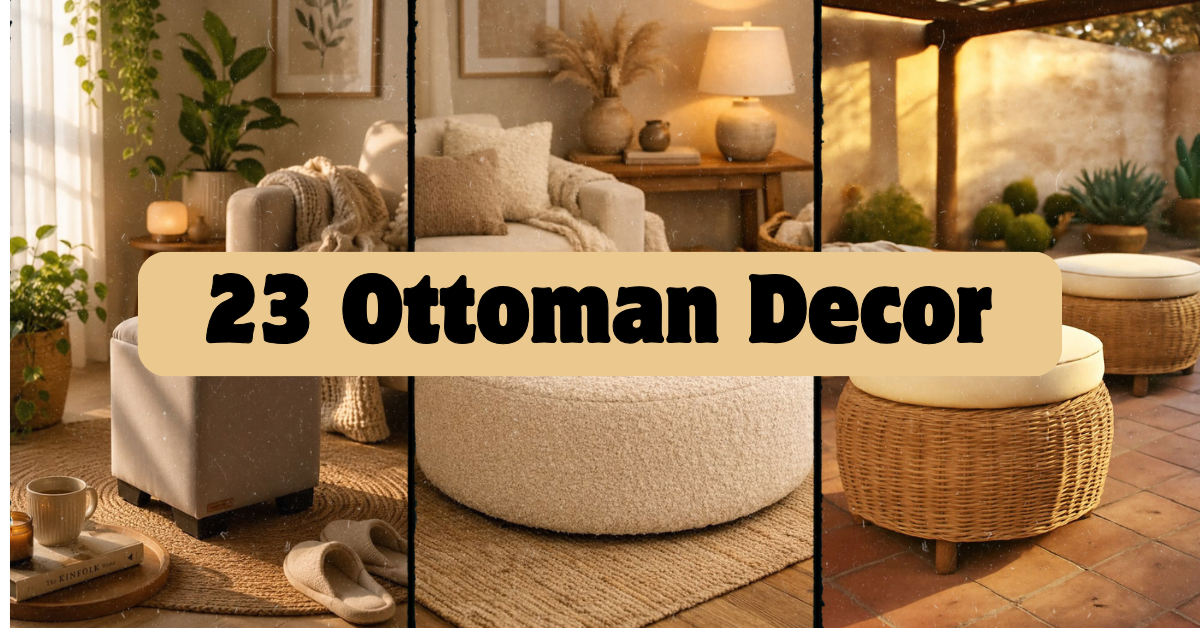
  • 23 Ottoman Decor Ideas That Will Transform Your Living Space

    23 Ottoman Decor Ideas That Will Transform Your Living Space

    If you’ve been searching for 23 Ottoman Decor ideas that actually work in real homes, you’re in the right spot. I’ve spent way too many hours studying what makes an ottoman go from “meh, it’s just a footrest” to the piece that ties a whole room together. This guide covers every angle so you don’t have to keep scrolling through a dozen other sites.

    An ottoman is a low, cushioned piece of furniture without a back or arms, used as a footrest, extra seating, or small table. Decorating around it means choosing the right size, shape, color, and accessories so it fits your room’s style and function. The best ottoman decor balances comfort with visual appeal.

    Stick around, because I’m about to walk you through more than 20 ways to style an ottoman that most articles never even mention.

    What Makes Ottoman Decor Its Own Thing

    Ottomans are kind of the underdog of furniture. They don’t get the glory that sofas or coffee tables get, but they honestly do more work. One day it’s a footrest. The next day it’s extra seating when your in-laws show up unannounced. The day after that, it’s holding a tray of snacks during movie night.

    Because ottomans are so flexible, decorating them takes a little thought. You’re not just picking a pretty object. You’re picking something that needs to function AND look good. That’s the fun challenge here, and it’s why I love this topic so much.

    1. Pick a Round Ottoman for Small Living Rooms

    Story pin image
    Credit: Jenny’s Trendy Picks 

    Round ottomans are lifesavers in tight spaces. They don’t have sharp corners, so you can walk around them without stubbing your toe every five minutes. They also soften a room full of straight-edged furniture like sofas and bookshelves.

    Go for a round ottoman in a neutral fabric if your room already has a lot going on. If your room feels boring, pick one in a bold color like mustard or deep green.

    Quick tip: measure your walking path first. You want at least 30 inches of clearance around it.

    This idea works in modern lofts just as well as it does in cozy farmhouse living rooms.

    Speaking of shapes, let’s talk about what happens when you go big.

    2. Use an Oversized Ottoman as a Coffee Table Replacement

    Story pin image
    Credit: NestAndGlowBySabika

    Swapping your coffee table for a large ottoman changes the whole vibe of a room. It feels softer, more relaxed, less “don’t put your feet up here.”

    Choose a sturdy ottoman with a flat top so you can still rest drinks or books on it. Add a large wooden tray on top to bring back some hard surface for practical use.

    Actionable tip: pick an ottoman that’s at least 36 inches wide if it’s replacing a coffee table for two people to use comfortably.

    This works especially well in coastal and boho homes where comfort matters more than formality.

    Now let’s get into color, because this is where a lot of people get stuck.

    3. Match Your Ottoman to Your Accent Pillows, Not Your Sofa

    Story pin image
    Credit: Dinah Mattox

    Here’s a mistake I see all the time. People try to match their ottoman fabric exactly to their couch. It ends up looking flat, like everything came from the same three-piece set at a big box store.

    Instead, match your ottoman to your throw pillows or curtains. This creates a thread of color that moves around the room instead of sitting in one blob.

    Try picking two colors from your pillows and using one of them for your ottoman.

    This trick works in almost every style, from traditional to mid-century modern.

    Next, let’s talk textures, because fabric choice changes everything.

    Ottoman Fabric Comparison Table

    Fabric TypeDurabilityBest ForMaintenance
    VelvetMediumFormal living roomsNeeds regular brushing
    LeatherHighHigh-traffic homes with kids/petsWipe clean, condition yearly
    LinenLow-MediumCoastal or casual spacesSpot clean, avoid direct sun
    Performance FabricHighFamilies, pet ownersMachine washable covers
    BoucleMediumModern or Scandinavian roomsVacuum, spot clean only

    4. Add a Tufted Ottoman for a Touch of Elegance

    Credit: Cornerstone Home Decors

    Tufting adds texture without adding clutter. Those little buttons and folds catch light in a way that flat fabric just can’t.

    A tufted ottoman looks amazing in a living room with traditional or transitional furniture. Stick to a single solid color so the tufting pattern gets to be the star.

    Practical tip: pair a tufted ottoman with simple, unpatterned throw pillows nearby so the textures don’t compete.

    If your home leans modern farmhouse, a tufted ottoman in linen or cotton keeps things from feeling too formal.

    Now let’s move from texture to function with storage.

    5. Choose a Storage Ottoman for Small Apartments

    Credit: Small Space Living Ideas 

    If you live somewhere small, a storage ottoman is basically a cheat code. You get seating, a footrest, and a hidden spot for blankets, remotes, or your kid’s toys.

    Look for one with a hinged lid instead of a lift-off top. It’s way easier to use one-handed when your other hand is holding a snack.

    Tip: measure your storage needs first. If you’re hiding blankets, make sure the ottoman is at least 18 inches deep.

    This idea is a favorite in small-space apartments and studio setups where every piece needs to multitask.

    Let’s talk about pairing ottomans together next.

    6. Cluster Two Small Ottomans Instead of One Big One

    Credit: Wall & Space Design Ideas

    Instead of one large ottoman, try two smaller matching ones. You can push them together for a coffee table look, or separate them for extra seating when friends come over.

    This works great with round or square ottomans in the same fabric but different heights. It adds a little visual interest without looking mismatched.

    Actionable tip: keep at least 6 inches between them when separated so the room doesn’t feel cramped.

    This idea shines in mid-century modern spaces where clean lines and repetition are already part of the design language.

    Now let’s bring in some pattern.

    7. Go Bold With a Patterned Ottoman as a Focal Point

    Credit: BatikIndonesia.c

    If your room is full of solid colors, a patterned ottoman can be the thing that wakes everything up. Think stripes, florals, or geometric prints.

    Keep the rest of your furniture simple so the pattern doesn’t fight for attention. A patterned ottoman works best as the one loud voice in the room.

    Tip: snap a photo of your room and hold up fabric swatches next to it before buying. Patterns look different in photos versus real light.

    This works beautifully in eclectic or bohemian homes, but tone it down to a subtle pattern for traditional spaces.

    Let’s shift gears and talk about height next.

    8. Layer Trays on Top for a Styled Coffee Table Look

    Credit: Mónica González Rodríguez

    Turning your ottoman into a mini coffee table setup is one of my favorite tricks. Grab a large tray, then layer smaller items on top: a candle, a small stack of books, a little plant.

    Choose a tray in a material that contrasts with your ottoman fabric. Wood on velvet, metal on linen, that kind of thing.

    Tip: keep it to three or four items max. More than that starts to look cluttered fast.

    This works in literally every home style because trays are basically decor chameleons.

    Now let’s talk about where you actually put these things.

    Ottoman Size Guide by Room Type

    Room TypeRecommended WidthRecommended HeightNotes
    Small Apartment Living Room24-30 inches16-18 inchesRound shapes save space
    Large Living Room36-48 inches17-19 inchesCan double as coffee table
    Bedroom (foot of bed)40-50 inches15-17 inchesMatch bed height minus 2 inches
    Entryway20-28 inches16-18 inchesSturdy enough to sit on for shoes
    Home Office18-24 inches15-17 inchesUnder-desk footrest size

    9. Place an Ottoman at the Foot of Your Bed

    Story pin image
    Credit: Scrap Safari 

    This one’s a classic for a reason. An ottoman at the foot of your bed gives you a spot to sit while putting on shoes, plus a place to toss clothes you’re not ready to hang up yet.

    Pick one that’s close to the width of your bed, but a few inches narrower so it doesn’t look oversized. Neutral colors work best here since bedrooms usually already have a lot of texture from bedding.

    Tip: choose a bench-style ottoman if you want more of a sitting surface than a footrest.

    This works in traditional and hotel-style bedrooms especially well.

    Let’s head to the entryway next.

    10. Use a Small Ottoman in Your Entryway for Shoes

    Story pin image
    Credit: Nestory Design 

    Entryways need function more than flash. A small, sturdy ottoman gives guests (and you) a place to sit while putting shoes on or off.

    Pick a performance fabric or leather here since entryways deal with dirt, rain, and general chaos. Skip anything too plush or light-colored.

    Tip: add a boot tray underneath to catch mud and keep the floor clean.

    This works in every home style, but it’s an especially smart move in farmhouse and coastal entryways where mud and sand are a daily reality.

    Now let’s talk about outdoor spaces.

    11. Bring an Ottoman Outside for Patio Lounging

    Credit: Oliver’s Finest Home Furniture Finds

    A lot of people forget ottomans can live outside too. A weather-resistant ottoman on a patio or covered porch adds comfort you don’t usually get outdoors.

    Look for materials like resin wicker or outdoor-rated fabric that can handle humidity and sun without fading fast.

    Tip: bring cushions inside during storms even if the frame is weatherproof, since fabric degrades faster than the base.

    This idea works great in coastal and modern outdoor spaces where lounge-style seating is already the vibe.

    Let’s talk about color psychology next, because it matters more than people think.

    12. Choose Warm Tones for Cozy, Traditional Spaces

    Story pin image
    Credit: ProjectDeco Spaces

    Warm ottoman colors like rust, mustard, and deep red make a room feel inviting. They pair naturally with wood furniture and warm lighting.

    Stick to warm tones if your room already has a lot of natural light or wood tones. It keeps everything feeling connected instead of clashing.

    Tip: test a fabric swatch in your room at both day and night to see how the color shifts under different lighting.

    This works especially well in traditional, rustic, and farmhouse homes.

    13. Choose Cool Tones for Modern, Minimalist Spaces

    Story pin image
    Credit: DecorBySumi

    On the flip side, cool tones like navy, gray, and sage green feel calm and structured. They work great in rooms with a lot of clean lines and less clutter.

    Pair a cool-toned ottoman with metal or glass accents to really lean into that modern feel.

    Tip: avoid mixing too many cool tones at once. Pick one dominant cool color and let the rest of the room stay neutral.

    This is a natural fit for Scandinavian and contemporary interiors.

    Now let’s get into shapes beyond round and square.

    14. Try an Ottoman With Tapered Wood Legs for a Mid-Century Look

    Tapered wood legs instantly signal mid-century modern style. They lift the ottoman visually, making it feel less bulky even if the cushion top is large.

    Credit: Oliver’s Finest Home Furniture Finds

    Pair with warm wood tones that match other furniture legs in the room for a cohesive look.

    Tip: look for walnut or oak-toned legs since they’re the most common mid-century finishes and easiest to match.

    This look also translates surprisingly well into modern farmhouse spaces if you keep the fabric simple.

    15. Add a Skirted Ottoman for a Softer, Traditional Feel

    Skirted ottomans hide their legs completely under fabric, giving a softer, more formal look. This works great in traditional or French country rooms.

    Choose a solid fabric for the skirt if your room already has patterns elsewhere. Too much pattern on a skirted piece can overwhelm a space fast.

    Tip: box-pleated skirts look neater over time than gathered ones, which can sag.

    This style feels a little out of place in ultra-modern rooms, so save it for classic or vintage-inspired spaces.

    16. Use a Leather Ottoman for Durability in High-Traffic Homes

    Credit: Curated Ideas For Beautiful Home Decor

    If you’ve got kids, pets, or just a busy household, leather ottomans are worth the investment. They wipe clean and age with a nice patina instead of looking worn out.

    Go for a distressed leather if you want it to hide scratches naturally. Smooth leather shows every scuff more obviously.

    Tip: keep leather out of direct sunlight to avoid fading and cracking over time.

    This works in industrial, modern, and traditional homes alike since leather is basically a style chameleon.

    17. Style an Ottoman With a Chunky Knit Throw

    Story pin image
    Credit: TheCozyHomeEdit

    Draping a chunky knit throw over one corner of your ottoman adds instant texture. It also gives you a blanket within reach for chilly movie nights.

    Stick to a throw that contrasts in texture, not just color. Smooth fabric ottoman, chunky throw. Textured ottoman, smoother throw.

    Tip: fold the throw in thirds and drape it asymmetrically instead of centering it. It looks more natural that way.

    This works beautifully in Scandinavian, farmhouse, and boho spaces where coziness is the whole point.

    18. Add a Slipcover for Seasonal Ottoman Updates

    Credit: Serene & Space

    If you like changing your decor with the seasons, a slipcover is the easiest way to update your ottoman without buying a new one.

    Keep a neutral cover as your base, then swap out a bold or seasonal cover for holidays or fall/winter months.

    Tip: measure your ottoman’s exact dimensions before buying a slipcover. Generic sizes rarely fit perfectly.

    This trick works especially well in transitional homes where flexibility matters more than a fixed style.

    19. Use an Ottoman as a Plant Display Stand

    Credit: Yummy Bolt | Home Decor

    An ottoman doesn’t always need to hold trays or people. Try placing a few potted plants on top for a mini indoor garden moment.

    Choose a sturdy, flat-top ottoman so the pots sit level. Group plants of different heights for visual interest.

    Tip: use a waterproof tray underneath to protect the fabric from water rings.

    This idea is a natural fit for boho and coastal homes that already lean into greenery.

    20. Pick a Geometric Ottoman for Contemporary Spaces

    Story pin image
    Credit: Ideas for Inspiration

    Hexagon and octagon-shaped ottomans add an unexpected geometric edge to a room. They photograph beautifully and break up a room full of standard rectangles and circles.

    Pair with simple, solid-colored furniture so the shape gets to be the standout feature.

    Tip: use these as accent pieces rather than primary seating, since odd shapes can be trickier to use as a footrest.

    This shape fits naturally into contemporary and eclectic interiors.

    21. Match Ottoman Fabric to Window Treatments

    Credit: Karen Burr

    Tying your ottoman fabric to your curtains creates a subtle but powerful connection across the room. It doesn’t need to be an exact match, just a similar tone or pattern family.

    Pick a shared color, even if the actual fabrics are different, to keep things feeling intentional rather than random.

    Tip: bring a curtain swatch with you when shopping for ottoman fabric so you can compare in real light.

    This works in traditional and transitional homes especially well.

    22. Add a Nailhead Trim Ottoman for Subtle Detail

    Credit: Start Fresh Clothing

    Nailhead trim adds a small but noticeable detail along the edge of an ottoman. It’s a classic touch that works in both traditional and transitional spaces.

    Choose a trim finish that matches other metal accents in the room, like brass or nickel hardware.

    Tip: brass trim tends to age well and doesn’t show fingerprints as easily as silver-toned trim.

    This detail feels right at home in classic, transitional, and even some industrial-style rooms.

    23. Use a Two-Toned Ottoman for a Custom Look

    Story pin image
    Credit: Dinah Mattox

    Two-toned ottomans, where the top and base are different fabrics or colors, add a custom, high-end feel without a custom price tag.

    Pick colors that are close in tone rather than high contrast if you want a subtle effect. Go bold with contrast if you want a statement piece.

    Tip: many furniture makers offer this as a build option, so ask before assuming you need a fully custom order.

    This idea works in nearly any style since you control exactly how loud or quiet the contrast feels.

    Tips for Success

    • Always measure your space before buying an ottoman. A piece that looks small online can feel huge in a tight room.
    • Choose fabric based on how the ottoman will actually be used, not just how it looks in a photo.
    • Keep one ottoman as your “statement” piece per room. Too many bold choices compete with each other.
    • Test furniture placement with painter’s tape on the floor before committing to a layout.
    • Don’t ignore the underside. Check leg style and height since it affects how the whole piece reads visually.
    • Buy trays and accessories after the ottoman, not before, so everything actually coordinates.
    • Rotate seasonal accessories like throws and trays instead of buying new decor every few months.

    Common Mistakes and How to Avoid Them

    Matching ottoman fabric exactly to the sofa
    : Skip the matchy-matchy look. Pull colors from pillows or curtains instead for a layered feel.

    Buying an ottoman too small for the room
    : Measure your seating area first. A tiny ottoman in a big room looks lost and out of place.

    Overloading the top with too many decor items
    : Stick to three or four objects max on any tray or surface to avoid visual clutter.

    Ignoring fabric durability for high-use rooms
    : Choose performance fabric or leather in homes with kids or pets instead of delicate materials like silk.

    Forgetting about walking clearance
    : Leave at least 30 inches of space around the ottoman so the room still feels easy to move through.

    Choosing a shape that clashes with your room’s other furniture
    : If your room is full of straight lines, a round ottoman softens things. If it’s full of curves, a square one balances it out.

    Similar Variations

    • Pouf Decor: A smaller, often backless and legless cousin of the ottoman, great for boho and eclectic spaces.
    • Bench Seating Decor: Uses long, low benches instead of ottomans for a more structured, traditional look.
    • Coffee Table Styling: Focuses on hard-surface tables instead of soft ottoman tops, common in formal living rooms.
    • Floor Cushion Decor: A super casual, low-to-the-ground alternative popular in bohemian and Japandi homes.
    • Accent Chair Pairing: Uses an extra chair instead of an ottoman for flexible seating in small living rooms.

    If there’s one thing I want you to remember from all this, it’s that ottomans are way more flexible than people give them credit for. They can be a footrest, a coffee table, extra seating, or even a little garden display, all depending on how you style them. The trick is picking the right shape, fabric, and color for your specific room, then letting small details like trays and trim do the rest of the work.

    I hope this deep dive into 23 Ottoman Decor gave you enough ideas to finally make that piece of furniture work as hard as it possibly can in your home.

  • 24 Beachy Living Room Ideas That Bring the Shore Right to Your Sofa

    24 Beachy Living Room Ideas That Bring the Shore Right to Your Sofa

    I’ve spent way too many hours scrolling through beach house photos, and I finally put together this list of 24 beachy living room ideas so you don’t have to do that same deep dive. This isn’t a quick Pinterest skim either. I actually dug through what works, what’s overrated, and what real coastal homes do differently than the magazine spreads.

    A beachy living room uses light neutral colors, natural textures like rattan and linen, and ocean-inspired accents to create a relaxed coastal feel. Common elements include weathered wood, blue and sandy tones, and airy window treatments that let in natural light.

    Stick around, because I’m going to walk you through everything from paint colors to the one furniture mistake that makes a coastal room look cheap instead of chic.

    What Makes a Living Room Feel “Beachy” Anyway?

    Okay so before we get into the list, let’s talk about what actually makes a room feel like the beach instead of just… a room with a seashell on the shelf. Beachy style isn’t about stuffing your space with starfish and anchors. It’s about the feeling. Think airy, relaxed, a little worn-in, like a house that’s seen a lot of salty air and doesn’t mind.

    The best beachy rooms lean on natural materials, soft light, and colors pulled straight from sand and water. That’s it. No costume required. Once you get that mindset, the rest of this list will make a lot more sense.

    1. Start With a Sandy Neutral Base

    35 Neutral Living Room Ideas That Are Anything But Plain
    Credit: Elle Decor

    Your walls and biggest furniture pieces should feel like sand underfoot. I’m talking warm whites, soft beiges, and light greige tones. This base keeps the room from feeling like a theme park version of the coast.

    Paint your walls in something like warm linen or oatmeal, then let your sofa match or stay a shade lighter. Skip stark white if your room doesn’t get tons of natural light, it can look cold and sterile fast.

    Practical tip: test paint samples at different times of day before committing. Coastal light shifts a lot.

    This works whether your home is modern farmhouse or traditional cottage style. The neutral base is the quiet foundation everything else builds on. Next up, let’s talk about bringing in that classic ocean blue.

    2. Layer In Ocean Blue Accents

    Blue Living Room Design Ideas | HGTV
    Credit: Hgtv

    Once your base is set, blue does the heavy lifting for that coastal mood. But go easy. One blue accent wall, a couple throw pillows, or a piece of art is plenty.

    I like muted blues over bright ones. Think faded denim or dusty teal instead of neon turquoise. Bright colors read more “tropical resort” than “quiet beach house.”

    Practical tip: use blue in odd numbers around the room, like three pillows or three small accents, so your eye moves naturally instead of stopping at one spot.

    In a modern space, keep the blue minimal and geometric. In a traditional space, blue works great on patterned fabric like a striped ottoman. Now that color’s handled, let’s get into texture, because that’s where beachy rooms really come alive.

    3. Bring In Woven Textures Everywhere

    The Texture Room: 19 Ways to Make Your Walls Do the Heavy Lifting
    Credit: Home Designing

    A beachy room without texture feels flat. Woven baskets, jute rugs, rattan chairs, seagrass poufs, these all add that lived-in coastal texture without adding more color.

    I always tell people to touch things when decorating a beach-style room. If everything feels smooth and glossy, something’s off. You want some roughness, some nubby fabric, something that feels handmade.

    Practical tip: add at least three different woven textures in one room, like a rug, a basket, and a lampshade, for a layered look that doesn’t feel matchy.

    Farmhouse homes already lean into this trend heavily. Coastal and bohemian styles use it as their backbone. Once your textures are layered, it’s time to think about what’s holding your room together on the floor.

    4. Choose a Jute or Sisal Rug

    31 Ideas How to Style Your Living Room with Jute Rug
    Credit: Dressmycrib

    Rugs make or break a beachy room. Skip anything shiny or heavily patterned. A natural fiber rug like jute or sisal grounds the space and adds that sandy, textured look underfoot.

    These rugs are also forgiving with sand, kids, and pets, which is honestly a bonus if you actually live near a beach or just want low-stress flooring.

    Practical tip: size your rug so all your front furniture legs sit on it. A too-small rug is one of the biggest reasons rooms feel disconnected.

    Rug Material Comparison for Beachy Living Rooms

    MaterialTexture FeelDurabilityBest ForPrice Range
    JuteSoft, nubbyModerateLow-traffic living rooms$$
    SisalRough, coarseHighHigh-traffic areas$$$
    SeagrassSmooth, coolModerateHumid climates$$
    CottonSoft, flatLow-ModerateLayering over jute$
    Wool blendSoft, denseHighColder regions$$$

    Once your rug is in place, your furniture choices will either support that relaxed vibe or fight against it. Let’s talk furniture next.

    5. Pick Furniture With Relaxed, Slouchy Shapes

    15 Cosy Living Room Ideas | Furniture & Choice
    credit: Furniture and Choice

    Stiff, boxy furniture doesn’t feel like a beach house. You want deep sofas, slipcovered chairs, and pieces that look like you could sink into them after a long day outside.

    Linen slipcovers are a beach house classic for a reason. They’re casual, they wash easily, and they get that slightly rumpled look that reads relaxed instead of messy.

    Practical tip: choose performance fabric if you have kids or pets. It gives you that linen look without the stress of every spill becoming a crisis.

    Modern coastal homes might choose cleaner lines with the same soft fabrics. Traditional homes lean into skirted sofas and rolled arms. Either way, comfort has to come first. Speaking of comfort, let’s talk about wood tones next.

    6. Use Weathered, Whitewashed Wood

    10 White Living Room Ideas for a Bright, Inviting Space
    Credit: Decorilla

    Dark, glossy wood furniture fights against a beachy feel. Swap it for whitewashed, driftwood-style, or light oak pieces instead. This one swap alone can transform a room.

    Coffee tables, console tables, and shelving units are the easiest places to start. You don’t need to replace everything, just the biggest visible wood pieces.

    Practical tip: if you can’t afford new furniture, a whitewash stain kit can update an existing dark wood piece in an afternoon.

    This idea works beautifully in farmhouse coastal homes and also fits minimalist Scandinavian coastal spaces since both love pale, natural wood tones. Now let’s bring some life into the room with plants.

    7. Add Coastal-Friendly Greenery

    40 Coastal Living Rooms That Feel Like a Day at the Beach
    Credit: The Spruce

    Beach houses aren’t just blue and white, they’ve got green too. Palms, ferns, and even simple potted grasses bring life into the room without breaking the theme.

    I like using tall floor plants in corners and smaller potted plants on side tables. It breaks up all that neutral color with something organic and alive.

    Practical tip: choose low-maintenance plants like snake plants or pothos if your living room doesn’t get a ton of sunlight.

    In a more traditional coastal home, go with a classic palm in a woven basket planter. In modern spaces, a single sculptural plant in a simple ceramic pot works better. With your greenery sorted, let’s talk about what goes on your walls.

    8. Hang Ocean-Inspired Art (Without Being Cliché)

    Abstract Ocean Art Wall Decor Canvas Prints, Vibrant Blue Sea & Wave Canvas Prints For Bedroom, Bathroom & Living Room, Expressive Coastal Ocean Art Wall Decor For Beach Inspired & Soulful Interiors –
    Credit: Kate

    Skip the giant anchor sign. Instead, go for abstract wave art, black and white beach photography, or even just framed textured paper in ocean tones. Subtlety wins here every time.

    A gallery wall of mismatched frames with beach photography feels way more authentic than one big literal beach painting.

    Practical tip: hang art at eye level, about 57 inches from the floor to the center of the piece, for the most natural look.

    Modern homes do well with abstract minimalist wave prints. Traditional coastal homes can use vintage nautical maps or botanical prints instead. Once your walls are dressed, it’s time to think about lighting.

    9. Choose Warm, Natural Lighting Fixtures

    How to Pick the Best Lighting for Warm and Cozy Living Room Designs – The Light Factory
    Credit: The Light Factory

    Nothing kills a beachy vibe faster than harsh white overhead lighting. You want warm bulbs, rattan pendant shades, and lamps that look like they’re made from driftwood or woven fibers.

    Floor lamps with linen shades and table lamps with ceramic or wood bases both fit this style well. Layer your lighting instead of relying on one overhead fixture.

    Practical tip: use bulbs around 2700K for that warm, sunset-like glow instead of cool white light.

    Modern coastal spaces might choose sleek woven pendants, while traditional spaces lean into brass and rattan combos. With lighting handled, let’s talk window treatments next.

    10. Use Light, Airy Window Treatments

    15 Modern Window Treatment Ideas for Every Room
    Credit: Decorilla

    Heavy drapes have no place in a beachy living room. Go for sheer linen curtains, bamboo shades, or simple woven wood blinds instead. You want light to move through the room easily.

    If privacy is a concern, layer sheer curtains with a simple roller shade underneath instead of switching to heavy fabric.

    Practical tip: hang curtain rods a few inches above your window frame to make ceilings feel taller and let in more visible light.

    Coastal and Scandinavian styles both favor this airy look. Traditional coastal homes sometimes add a subtle stripe pattern to the linen for extra texture. Now let’s move into smaller details that tie everything together.

    11. Style Your Coffee Table With Natural Objects

    41 Best Coffee Table Decor Ideas - How To Decorate a Coffee Table
    credit: Elle Decor

    A coffee table is prime real estate for that beachy feel. Skip generic decor and use things like a wooden bowl of pinecones, a small piece of driftwood, or a stack of linen-covered books.

    I always suggest grouping items in odd numbers, usually three, at different heights. It creates visual interest without looking cluttered.

    Practical tip: keep one tray under smaller objects to make cleanup easy and the table look intentional instead of random.

    Modern homes might use a single sculptural object instead of a grouped vignette. Traditional coastal homes can add a small ceramic bowl of shells collected from real trips. Speaking of shells, let’s talk about how to use them the right way.

    12. Use Shells and Coastal Objects Sparingly

    25 Coastal Living Room Ideas for a Laidback Vibe
    Credit: Bhg

    Shells are fine. A whole shelf of them is not. The trick with any literal beach object, shells, coral, sea glass, is to use just a little. Think of it as a seasoning, not the main dish.

    A small bowl of shells or one framed piece of sea glass art goes further than a room packed with beach souvenirs.

    Practical tip: limit yourself to two or three literal beach objects per room to avoid tipping into theme-park territory.

    This restraint matters most in modern coastal homes, where minimalism is key. Traditional coastal spaces can get away with slightly more. Now let’s zoom out and talk about how color palettes come together as a whole.

    Beachy Color Palette Combinations

    Palette NamePrimary ColorAccent ColorNeutralBest Mood
    Classic CoastalSoft whiteOcean blueDriftwood tanAiry, calm
    Sandy ShoreWarm beigeSeafoam greenIvoryCozy, warm
    Weathered DockLight grayNavyBleached woodMoody, grounded
    Sun-BleachedCreamCoralPale oakBright, cheerful
    Misty MorningPale blue-grayWhiteLight taupeSoft, quiet

    13. Mix Metal Finishes That Feel Coastal

    Our 5 Best Tips For Mixing Metals | Layla Grayce
    Credit: Layla

    Skip shiny gold or heavy bronze. Beachy rooms lean toward brushed nickel, matte black, or aged brass. These finishes feel more like hardware you’d find on an old boat than something from a formal dining room.

    Use these finishes on lamp bases, curtain rods, and picture frames for small, consistent touches throughout the room.

    Practical tip: stick to one or two metal finishes max in a single room to avoid a mismatched, cluttered feel.

    Modern coastal homes often go all matte black for a clean look. Traditional spaces mix aged brass with driftwood tones for warmth. Let’s talk next about how to use mirrors to bring in more light.

    14. Add a Statement Mirror to Bounce Light

    21 Stunning Living Room Mirror Decorating Ideas – Mirror Space Australia
    Credit: Mirror Space Australia

    Mirrors do double duty in a beachy living room. They bounce natural light around, and a driftwood or rattan-framed mirror adds texture at the same time.

    Hang one above your sofa or console table as a focal point. It also makes smaller living rooms feel bigger, which is a nice bonus if you’re working with limited square footage.

    Practical tip: position mirrors across from windows, not next to them, to reflect the most natural light into the room.

    Traditional coastal homes often use an oval rattan mirror. Modern spaces might choose a simple round mirror with a slim wood frame instead. Now let’s cover the ceiling, because beachy rooms shouldn’t stop at eye level.

    15. Add Texture to the Ceiling With Wood Beams or Shiplap

    20 Shiplap Ceiling Ideas You Need for Your Next Renovation
    Credit: The Spruce

    Shiplap gets a bad reputation for being overdone, but used right, it still works beautifully in a beachy living room. Add it to one wall or even the ceiling for texture without overwhelming the space.

    Exposed wood beams do something similar. They add that lived-in, cottage-by-the-sea feel without adding any extra color.

    Practical tip: keep shiplap paint light, like warm white or pale gray, so it enhances rather than competes with your other design elements.

    This works especially well in farmhouse coastal and traditional cottage spaces. Modern homes might skip shiplap for cleaner wood beam accents instead. Now, let’s talk about how books and shelving styling round out the room.

    16. Style Open Shelving With Purpose

    28 Genius Living Room Shelves Ideas That Instantly Deliver Calm, Style, and Wow Factor
    Credit: The Coolist

    Open shelves are a great spot to show off your beachy details without cluttering your whole room. Mix books, small plants, and one or two coastal objects for a curated, not cramped, look.

    I like grouping items by color and height rather than by “theme.” That keeps the shelf looking styled instead of like a garage sale display.

    Practical tip: leave at least 20 percent of your shelf space empty. Breathing room makes everything else look more intentional.

    Modern homes can keep shelves sparse with just a few sculptural pieces. Traditional coastal spaces can fill shelves a bit more with books and collected treasures. Let’s finish up with a few final smaller touches that tie the whole room together.

    17. Add a Slipcovered Ottoman for Flexible Seating

    32 Best Small Living Room Ideas - How to Decorate a Small Living Room
    Credit: Elle Decor

    An ottoman does more work than people give it credit for. It’s extra seating, a footrest, and sometimes even a coffee table substitute. In linen or a woven texture, it fits right into the beachy theme.

    Practical tip: choose a round ottoman if your room already has a lot of straight lines from your sofa and coffee table. It softens the whole layout.

    This piece works in almost every style, from modern coastal to traditional cottage, since ottomans are so flexible in shape and fabric choice. Let’s move on to something people often forget, ceiling fans.

    18. Choose a Ceiling Fan With Natural Blades

    How to match your Ceiling Fans and Interior Design styles - Fanco
    Credit: Fanco Australia

    If your living room has a ceiling fan, swap out plain white or dark wood blades for woven rattan or bamboo ones. It’s a small detail, but it ties the whole ceiling into your coastal theme instead of looking out of place.

    Practical tip: look for fans specifically marketed as “coastal” or “tropical” style, since they usually already have the right blade material and finish.

    This upgrade works in almost any coastal-adjacent style, from beach cottage to tropical modern. Now let’s talk about how curtains and hardware finish out your window area.

    19. Layer Throw Blankets in Textured Neutrals

    Decorating With Throw Blankets to Make Your Space Extra Cozy | HGTV
    Credit: Hgtv

    A chunky knit throw or a waffle-weave blanket in cream or soft gray adds coziness without adding more color. Drape it over the arm of your sofa or fold it at the end for a lived-in touch.

    Practical tip: choose blankets in a slightly different neutral shade than your sofa so it stands out just enough to notice.

    This idea fits basically every version of beachy style, from minimalist modern to cozy traditional cottage. Next, let’s talk about scent, because a beachy room should smell like one too.

    20. Use Coastal-Scented Candles or Diffusers

    5 Fall Living Room Decor Ideas to Cozy Up Your Coastal Home - Living Buy Coastal
    Credit: Living Buy Coastal

    This one’s small but it matters. A candle with notes like sea salt, driftwood, or coconut can make the whole room feel more immersive. It’s a sensory detail most people skip.

    Practical tip: stick to one signature scent for the room instead of mixing multiple candles, which can clash and feel overwhelming.

    Works in any home style since it’s purely sensory, not visual. Let’s wrap up the smaller details with something people always forget: sound and ambiance.

    21. Add a Ceiling or Table Fan for That Breezy Feel

    Do Fans Actually Cool a Room? Here's the Verdict
    Credit: Bhg

    Beyond looks, actual airflow adds to that beachy feeling. A gentle breeze from a fan mimics that open window, ocean air feeling even if you’re nowhere near the coast.

    Practical tip: place a small oscillating fan near a window to create natural-feeling airflow through the room.

    This is more about function than style, so it fits any home type without clashing.

    22. Incorporate a Woven Pouf as a Side Table

    Ottoman Coffee Table Designs | DesignCafe
    Credit: Design Cafe

    A woven pouf can double as extra seating or a casual side table next to your sofa. It’s low-cost, lightweight, and easy to move around depending on how you’re using the room that day.

    Practical tip: top it with a small wood tray so you can set drinks or books on it without worry.

    This flexible piece fits boho coastal, farmhouse, and traditional cottage styles equally well.

    23. Choose Curtain Rods and Hardware in Matte Finishes

    How to Choose Living Room Curtains: Style and Size – Joydeco
    Credit: Joydeco

    Small hardware details add up. Matte black or brushed wood curtain rods look more relaxed than shiny brass ones. This keeps your whole window area feeling casual instead of formal.

    Practical tip: match your curtain rod finish to your lighting fixture finishes for a pulled-together look without much effort.

    Works across modern, traditional, and coastal farmhouse styles since matte finishes are so versatile.

    24. Bring in a Vintage or Reclaimed Wood Piece

    27 Farmhouse Living Rooms That Are Cozy, Rustic, and Modern
    Credit: Country Living Magazine

    One reclaimed wood item, like an old trunk used as a coffee table or a weathered bench along a wall, adds instant character. These pieces already have that worn, salty air look built in.

    Practical tip: check local salvage shops or flea markets for authentic reclaimed pieces instead of buying “distressed” new furniture at full price.

    This idea shines especially in farmhouse coastal and traditional cottage homes, though even modern spaces can use one weathered piece as a grounding contrast.

    Tips for Success

    • Start with your base neutral and rug before buying any decor, since those two things anchor the whole room
    • Limit yourself to one or two “loud” pattern pieces, like a striped pillow or patterned ottoman, so the room doesn’t feel busy
    • Bring in real plants instead of fake ones whenever possible, since they add life and better texture
    • Shop secondhand for wood furniture pieces, since natural wear actually helps the beachy look
    • Test paint colors at different times of day before committing to a full wall
    • Group decor items in odd numbers for a more natural, less staged appearance
    • Don’t forget scent and airflow, since beachy isn’t just a visual style

    Common Mistakes and How to Avoid Them

    Too many literal beach objects
    : Limit yourself to two or three actual shells, anchors, or nautical items per room. Let texture and color do the rest of the work.

    Choosing bright, saturated blues
    : Stick to muted, faded blue tones instead of bold turquoise, which reads more tropical resort than relaxed coastline.

    Skipping texture altogether
    : A room with only paint color and no woven materials feels flat. Add at least three different textures through rugs, baskets, or lampshades.

    Using a rug that’s too small
    : Make sure your front furniture legs all sit on the rug so the room feels connected instead of floating in pieces.

    Overdoing shiplap or wood paneling
    : Use it on one wall or the ceiling only. Covering every wall can feel heavy instead of airy.

    Ignoring lighting temperature
    : Cool white bulbs kill the warm, sunset glow beachy rooms need. Stick to warm bulbs around 2700K.

    Similar Variations

    • Coastal Grandmother: A softer, more vintage take on beachy style with lots of linen, wicker, and faded florals
    • Nautical Traditional: Leans harder into navy, white stripes, and classic sailing motifs
    • Boho Coastal: Mixes beachy neutrals with global textiles, macrame, and layered rugs
    • Modern Minimalist Coastal: Strips the style down to clean lines, pale wood, and almost no literal beach objects
    • Tropical Coastal: Adds bolder greens, rattan furniture, and a slightly more vibrant color palette
    • Cottage Coastal: Combines cozy farmhouse elements with lighter coastal colors and textures

    Putting together a beachy living room really comes down to layering the right textures, keeping your color palette calm, and resisting the urge to overdo the literal ocean references. Small changes, like swapping a rug or adding warm lighting, make a bigger difference than people expect. If you take just a few ideas from this list and apply them thoughtfully, you’ll end up with a space that feels like a genuine coastal retreat. That’s really the whole goal behind these 24 Beachy Living Room ideas, giving you a real, livable way to bring that relaxed shoreline feeling home.

  • 23 Coffee Table Decor Ideas That’ll Make Your Living Room Look Pulled Together

    23 Coffee Table Decor Ideas That’ll Make Your Living Room Look Pulled Together

    If you’ve been searching for 23 coffee table decor ideas that actually work in real homes (not just magazine shoots), you’re in the right spot. I’ve spent way too many hours rearranging trays, books, and candles on my own coffee table, so I know what actually sticks and what just looks cluttered after a week.

    A coffee table is the small horizontal surface, usually placed in front of a sofa, used to display decorative objects and hold everyday items like drinks or remotes. Good coffee table decor balances function with visual interest through layering, varied heights, and a cohesive color story.

    Stick around, because I’m about to walk you through way more ideas than you’ll find in most articles, plus real tips on sizing, color, and mistakes to skip.

    What Makes Coffee Table Styling So Tricky (And Fun)

    Here’s the thing about coffee tables. They sit right in the middle of your living room, so everyone sees them. That means whatever you put there becomes a mini centerpiece for the whole room. But it’s also a working surface. People rest their feet on it, set down coffee mugs, and pile up remote controls.

    So the trick is finding that sweet spot between “looks nice” and “still usable.” I think of it like building a tiny stage. You want a few strong pieces, some breathing room, and nothing that’ll topple over when someone bumps the table. Once you get the rhythm down, it’s honestly kind of addictive to restyle.

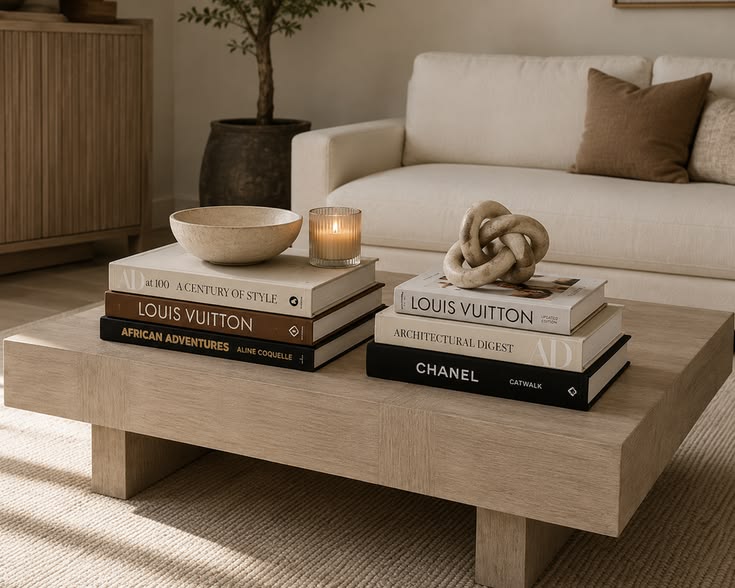
    1. Stack Books by Color, Not Size

    Credit: Jane Jackson

    Grabbing three or four hardcover books and stacking them is the easiest coffee table trick out there. But most people stack by height. Try stacking by color instead. Group warm tones together, or go monochrome with all white or black spines.

    This creates a little pop of color that ties into your room’s palette. Top the stack with a small object like a stone coaster or a mini plant.

    Tip: Remove the paper dust jackets for a cleaner, more solid-color look.

    This works in almost any style. Modern homes look great with bold, graphic covers. Traditional spaces feel right with leather-bound classics.

    Once your books are stacked, you’ll want something to balance them out on the other side of the table.

    2. Add a Textured Tray to Corral Small Items

    Story Pin image
    Credit: Suite 101

    A tray does double duty. It keeps loose items like coasters or matchboxes from sliding around, and it visually “contains” a cluster of decor so the table doesn’t look messy.

    Go for a material that adds texture, like woven rattan, hammered brass, or marble. Fill it with two or three small objects, not ten.

    Practical tip: Measure your table first. A tray should take up no more than a third of the surface.

    Coastal homes love rattan trays. Industrial lofts do better with blackened metal. Either way, this step makes your next layer of decor look intentional instead of scattered.

    3. Bring In a Live Plant for Instant Freshness

    Story Pin image
    Credit: makecashly

    Nothing wakes up a coffee table like something green and alive. A small potted plant, like a succulent or pothos cutting in a simple pot, adds color and life without much upkeep.

    Choose a pot that matches your metal finishes elsewhere in the room. Brass pots pair with brass lamp bases. Ceramic works with almost anything.

    Tip: If you travel a lot or forget to water things, go with a faux plant that has realistic texture. Nobody will know unless they touch it.

    Boho and Scandinavian rooms practically require a plant on the table. Traditional rooms can use a small orchid instead for a more polished look.

    Next, let’s talk about height, because plants are usually your tallest element and everything else should build around them.

    4. Vary Your Heights Like You’re Building a Skyline

    Story Pin image
    credit: NESTORA

    This is the single biggest styling secret for any flat surface. If everything on your table sits at the same height, it looks flat and boring. Mix tall, medium, and short objects.

    A tall vase, a medium stack of books, and a low dish creates visual rhythm. Your eye moves around instead of getting stuck in one spot.

    Actionable tip: Use the “rule of three” heights. Pick one item at least 10 inches tall, one around 5-6 inches, and one under 3 inches.

    This principle works no matter your style, from farmhouse to mid-century modern. It’s really just about physics and how our eyes scan a room.

    Once your heights are sorted, you can start thinking about what story your objects are telling together.

    Height and Object Pairing Guide

    Height TierExample ObjectsTypical Size Range
    TallVase, small sculpture, tall candle10-16 inches
    MediumBook stack, small plant, decorative box5-9 inches
    ShortCoasters, trinket dish, matchbox1-4 inches

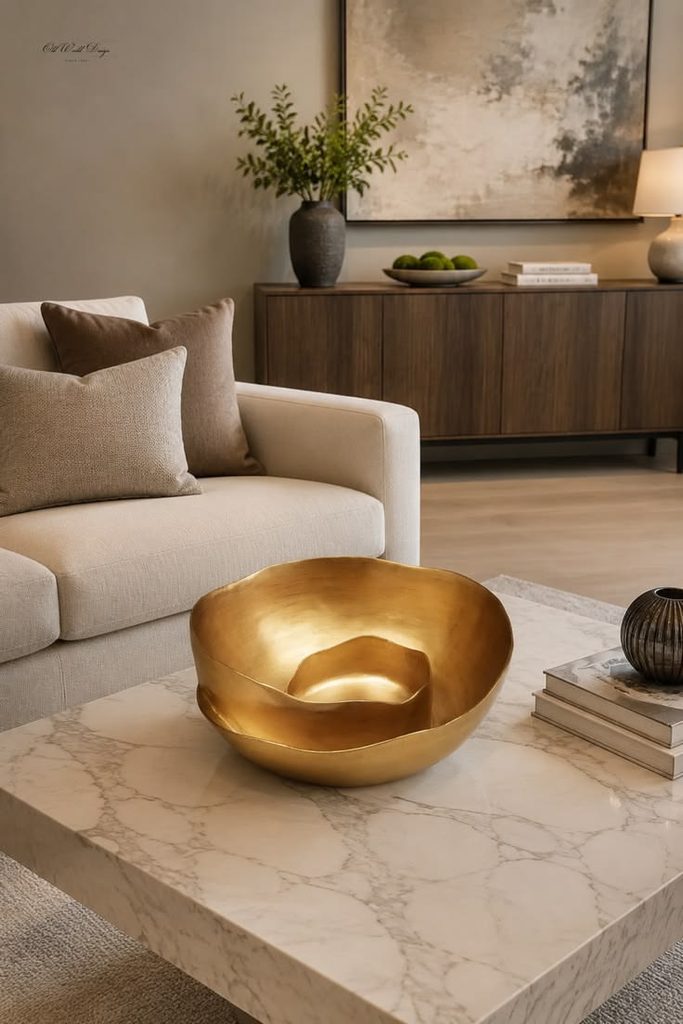
    5. Use a Sculptural Bowl for Catch-All Storage

    Credit: Old World Design

    A ceramic or wood bowl gives you a spot to toss keys, remotes, or that random hair tie without it looking like clutter. The trick is choosing a bowl with an interesting shape or texture, not just a plain dish.

    Look for organic curves, unusual glazes, or carved wood grain. This object should feel like art even when it’s empty.

    Tip: Keep the bowl mostly empty. One or two items inside looks curated. A pile looks messy.

    Mid-century modern homes love a walnut bowl with clean lines. Traditional spaces do well with a footed ceramic bowl in a muted glaze.

    Now that you’ve got storage covered, let’s add something that smells as good as it looks.

    6. Light Up the Table With a Simple Candle Duo

    Story Pin image
    Credit: Velora Living

    Two candles, different heights, same scent family. That’s it. Candles add warmth and a soft glow for evening hangouts, and they smell nice too.

    Choose a neutral scent like sandalwood or vanilla so it doesn’t clash with other scents in your home. Stick to matching holders or a shared tray so the pair feels connected.

    Practical tip: Trim wicks after every burn so the flame stays small and controlled looking.

    Coastal homes might go with driftwood-colored candles. Industrial spaces look sharp with black metal holders. Either way, candles bring softness that hard objects can’t.

    Speaking of texture, let’s talk about what’s underneath all these objects.

    7. Layer a Coffee Table Book as a Base Platform

    Credit: Kewnique

    Instead of just stacking books randomly, use one oversized coffee table book as a flat platform for other objects. Think of it like a mini pedestal.

    Set a small plant or candle right on top of the book’s cover. This creates that varied height we talked about earlier, and it uses the book as functional decor instead of just a stack.

    Tip: Choose a book with a spine color that complements your rug or throw pillows.

    This trick works beautifully in almost every style because it’s really just about proportion, not aesthetic.

    Now let’s zoom out and think about your table’s overall shape, because that changes everything.

    8. Match Your Decor Density to Your Table Shape

    Story Pin image
    Credit: Solia Avenue

    Round tables want decor grouped toward the center. Rectangular tables can handle a linear arrangement, like a runner-style layout down the middle. Square tables often look best with a symmetrical, four-corner approach or one bold centerpiece.

    Getting this wrong is why some styled tables feel off, even when the objects themselves are nice.

    Tip: Take a photo of your empty table from above. It’s way easier to plan layout on a photo than in person.

    Modern rooms tend to favor round or oval tables with minimal, centered decor. Traditional rooms often have rectangular tables that can support more layered groupings.

    Once you’ve nailed the shape logic, color becomes your next big decision.

    Coffee Table Shape and Styling Approach

    Table ShapeBest Layout StyleIdeal Number of Objects
    RoundCentered cluster3-4
    RectangularLinear runner4-6
    SquareSymmetrical corners4
    OvalLoose asymmetrical grouping3-5

    9. Pick a Two-Color Palette and Stick to It

    Credit: Bloom and Boughs

    Random colors scattered across a table feel chaotic. Instead, choose two main colors, maybe sage green and cream, or terracotta and charcoal, and let every object pull from that palette.

    This doesn’t mean everything matches exactly. It means everything feels related, like they belong to the same family.

    Tip: Pull your two colors from something already in the room, like a pillow or piece of art.

    Coastal homes often use blue and white. Boho spaces lean into terracotta and rust. Whatever you choose, consistency is what makes a table look designed instead of thrown together.

    Once your palette is locked in, texture is what keeps things from feeling flat.

    Popular Coffee Table Color Palettes

    Palette NamePrimary ColorsBest Style Match
    Coastal CalmNavy, white, sandy beigeCoastal, beach
    Earthy WarmthTerracotta, rust, creamBoho, Southwestern
    Modern NeutralBlack, white, grayMinimalist, modern
    Botanical FreshSage, forest green, natural woodScandinavian, Japandi

    10. Mix at Least Three Textures on Every Table

    Credit: Regina

    A table with only smooth, shiny objects feels cold. A table with only rough, matte objects feels heavy. Mix it up. Try glass, wood, and woven fiber together.

    For example, pair a glass vase with a wooden bowl and a small woven basket for coasters. The contrast is what makes each material stand out.

    Tip: If you’re not sure where to start, add one metal object, one natural fiber object, and one ceramic object. That combo almost always works.

    Farmhouse style leans on wood and cotton. Glam style leans on glass and metal. Either way, texture variety is non-negotiable for a table that doesn’t feel flat.

    Now let’s talk about something people forget entirely: scale relative to your sofa.

    11. Size Your Decor to Match Your Sofa’s Scale

    Story Pin image
    Credit: Jullys Place

    A tiny table with tiny decor in front of a giant sectional looks lost. A huge, chunky arrangement on a small table looks cramped. Your decor scale should relate to your seating.

    Big sectional, go slightly bigger with your centerpiece vase or bowl. Petite loveseat, keep objects smaller and more delicate.

    Tip: As a rule, your tallest decor item shouldn’t be taller than the arm height of your sofa.

    This rule holds true whether you’re doing modern minimalist or maximalist traditional. It’s proportion, not style, that matters here.

    Once scale feels right, let’s bring in something with a little personal history.

    12. Display One Meaningful Object as a Conversation Piece

    Story Pin image
    Credit: Aba Inspired

    Every table benefits from one item that has a story, maybe a small sculpture from a trip, a vintage box from your grandmother, or a piece of pottery you made yourself.

    This object doesn’t need to be expensive. It just needs to mean something. It’s usually what guests ask about first.

    Tip: Give this piece its own small space on the table. Don’t crowd it with other objects.

    Eclectic and boho homes thrive on this kind of personal touch. Even strict modern homes can include one meaningful item without breaking the clean aesthetic.

    Speaking of personal touches, let’s add something soft to the mix.

    13. Fold a Small Throw or Textile Runner Under Your Objects

    Story Pin image
    Credit: Restore Decor & More

    Laying a small textile, like a woven table runner or a folded scarf, under your decor grouping adds a layer of softness and color. It also helps visually anchor the objects so they don’t look randomly placed.

    Choose a fabric with texture, like linen or a light wool blend. Keep the pattern subtle so it doesn’t compete with your other decor.

    Tip: Fold the runner so it only covers about half the table length, leaving room for practical use.

    Boho and Scandinavian homes use this trick constantly. Traditional homes can use a lace or embroidered runner for a more formal feel.

    Let’s move from soft textures to something with a bit more shine.

    14. Add a Small Mirrored or Metallic Object for Light Bounce

    Story Pin image
    credit: Artify

    A small mirrored tray, brass dish, or glass sculpture reflects light around the room. This is especially useful in darker living rooms or ones without much natural light.

    Position this piece where it’ll catch light from a window or lamp. Even one reflective object makes the whole table feel brighter.

    Tip: Avoid placing mirrored objects directly under a bright overhead light, since the glare can be distracting.

    Glam and art deco spaces use this constantly. Modern farmhouse can use a single brass candle holder for the same effect without feeling too flashy.

    Now, let’s think seasonally, because coffee tables shouldn’t stay static all year.

    15. Rotate a Seasonal Element Every Few Months

    Story Pin image
    Credit: Maya Serr

    Swapping in small seasonal touches keeps your table feeling fresh without a full redesign. Think a small bowl of pinecones in winter, a bud vase with a single tulip in spring, or dried citrus slices in fall.

    This is the cheapest, easiest refresh you can do. It costs almost nothing and takes five minutes.

    Tip: Keep a small basket of seasonal items in a closet so you can swap them quickly.

    Every style benefits from this, since it’s more about timing than aesthetic. Even a strict minimalist table can handle one small seasonal accent.

    Let’s wrap up the main ideas with a few more that focus on function alongside form.

    16. Use a Stack of Coasters as a Design Element, Not an Afterthought

    Credit: Lizzy Designs Blog

    Instead of hiding your coasters in a drawer, stack four or five attractive ones right on the table. Choose a material like cork, marble, or leather that matches your other decor.

    This keeps them handy for guests and adds another small textural layer.

    Tip: Look for coasters with a lip or holder so they don’t slide apart when the table gets bumped.

    Modern homes like clean marble coasters. Rustic homes look better with wood-slice coasters.

    17. Keep One Zone Completely Empty for Actual Use

    26 Long Living Room Ideas With Zero Tolerance for Dead Zones and Empty Walkways
    Credit: Trendir

    This might be the most overlooked tip. Leave one corner or side of your table totally clear. This is where people set down drinks or rest their feet.

    Styled tables that use every inch look nice for photos but get frustrating fast in real life.

    Tip: Aim to keep at least a quarter of your table surface decor-free.

    This matters most in homes with kids or frequent guests, regardless of style.

    18. Add a Small Stack of Coffee Table Games

    41 Best Coffee Table Decor Ideas - How To Decorate a Coffee Table
    Credit: Elle Decor

    A small stack of card games or a compact puzzle box adds a playful, lived-in feel and doubles as entertainment for guests.

    Choose games with nice box design since they’ll be visible.

    Tip: Rotate games seasonally along with your other decor for variety.

    19. Use Dried or Preserved Botanicals Instead of Fresh Flowers

    Preserved botanical décor is taking off across Southeast Asia, and the latest trend shift is all about longevity with a premium, low-maintenance finish. At GiftsN, we're seeing more florists, hotels, and interior
    Credit: @giftsnsg

    Dried pampas grass, preserved eucalyptus, or dried lavender in a small vase gives you color and texture without the upkeep of fresh flowers.

    Tip: Fluff dried stems gently every few weeks to keep them looking full instead of flat.

    Boho and farmhouse styles use this constantly, but even modern spaces can use one clean stem in a simple vase.

    20. Incorporate a Small Framed Print Leaning Against Something

    How to Secure a Leaning Picture Frame | Hope Miriam Designs
    Credit: Hope Mirium

    A tiny framed print, leaned rather than hung, adds an art gallery feel right on your table. Lean it against a taller object like a stack of books.

    Tip: Choose a print with colors that echo your two-color palette from earlier.

    21. Add a Decorative Box for Hidden Storage

    19 Hidden Living Room Storage Ideas | Extra Space Storage
    Credit: Extra Space Storage

    A small lidded box, wood, lacquer, or woven, gives you a spot to hide remote controls or chargers while still looking decorative.

    Tip: Pick a box slightly larger than what you need to store, so the lid closes easily.

    22. Group Odd Numbers of Objects Together

    The Power of Odd Numbers: Why Styling in Threes and Fives Works - Design Hunter
    Credit: Design Hunter

    Groups of three or five just look more natural to the eye than groups of two or four. This is a basic design principle that applies to coffee tables perfectly.

    Tip: When in doubt, count your objects. Adjust to land on an odd number.

    23. Swap Your Centerpiece Seasonally With a Statement Vase

    How To Decorate With What You Have: 20 Smart Ideas That Work - StoneGable
    credit: StoneGable

    Keep one striking vase as your anchor piece, and change what’s inside it throughout the year, branches in fall, faux blooms in spring, dried grasses in winter.

    Tip: Choose a vase shape that works empty too, since there will be moments between swaps.

    This wraps up our full list, but let’s cover a few more things that’ll help everything come together.

    Tips for Success

    • Start with your largest object first, then build smaller pieces around it instead of adding big things last.
    • Step back and view your table from where you actually sit, not just from standing above it.
    • Keep a “decor drawer” nearby with backup items so refreshing your table takes minutes, not hours.
    • Don’t buy everything at once. Collect pieces over time so your table feels curated instead of matched from one store trip.
    • Dust and wipe down your table weekly, since busy surfaces show dust fast.
    • Test arrangements with your phone camera. Photos reveal imbalance that’s hard to see in person.

    Common Mistakes and How to Avoid Them

    Overcrowding the surface
    : Fix this by removing items until only three or four groupings remain, leaving clear space for actual use.

    Matching everything too perfectly
    : Fix this by choosing a shared color palette instead of identical pieces, so the table feels curated rather than store-bought as a set.

    Ignoring table shape when arranging decor
    : Fix this by grouping items toward the center for round tables and using a linear layout for rectangular ones.

    Skipping height variation
    : Fix this by always including one tall, one medium, and one short object in every grouping.

    Choosing decor that’s too fragile for daily life
    : Fix this by keeping delicate items toward the back or corners, away from where hands and feet naturally land.

    Forgetting to refresh seasonally
    : Fix this by setting a calendar reminder every few months to swap one or two small elements.

    Similar Variations

    • Coastal Coffee Table Styling: Leans on blues, whites, and natural fibers like rattan and jute.
    • Minimalist Coffee Table Styling: Uses only two or three objects total, focused on clean lines and negative space.
    • Boho Coffee Table Styling: Mixes warm earth tones, dried botanicals, and layered textures like macrame or woven trays.
    • Industrial Coffee Table Styling: Relies on blackened metal, concrete textures, and fewer soft or fabric elements.
    • Japandi Coffee Table Styling: Combines Japanese simplicity with Scandinavian warmth, using natural wood and muted tones.
    • Glam Coffee Table Styling: Focuses on mirrored surfaces, metallics, and a single luxurious statement piece like a marble tray.

    Styling a coffee table really comes down to balance. Mix heights, keep a tidy color story, leave room for real life, and swap things out when the seasons change. That’s the whole formula, and once you get the hang of it, it becomes second nature every time you walk past your living room. I hope this list of 23 Coffee Table Decor Ideas gave you enough inspiration and practical direction to finally make that table feel like it belongs in your home.

  • 17 TV Stand Decor Ideas That’ll Make Your Living Room Look Way More Put Together

    17 TV Stand Decor Ideas That’ll Make Your Living Room Look Way More Put Together

    I’ve spent way too many weekends staring at my own TV stand wondering why it looks so blah, so I put together this list of 17 TV stand decor ideas that actually work in real homes, not just magazine shoots.

    A TV stand is the furniture piece that holds and displays a television, often paired with shelves, drawers, or open cubbies for storage. Decorating it well means balancing function (cords, remotes, media boxes) with style (color, texture, height, and personal objects) so the area looks intentional instead of cluttered.

    Stick around, because by the end of this you’ll have more ideas than you’ll actually need, and that’s a good problem to have.

    Why Your TV Stand Deserves More Attention Than You’re Giving It

    Here’s the thing. Your TV stand is usually the biggest piece of furniture in your living room after the couch. It’s basically a stage. But most of us just plop the TV on top, toss the remote somewhere, and call it done.

    I get it. It’s easy to treat this spot as purely functional. But when you dress it up even a little, the whole room feels finished. It’s like putting on shoes with an outfit. You could skip it, but everything looks better when you don’t.

    The good news? You don’t need a designer’s budget or eye. You just need a few smart moves.

    1. Anchor the Space With a Statement Rug

    Credit: Restore Decor & More

    Putting a rug under your TV stand and seating area pulls the whole zone together. It gives your eyes a visual boundary, so the space feels like a “room” instead of furniture scattered on bare floor.

    Pick a rug with texture, like jute or a low pile wool, so it doesn’t compete with what’s happening on your shelves. Neutral tones work almost everywhere, but a patterned rug can add personality if your walls are plain.

    Tip: Make sure the rug extends at least a foot past the edges of your TV stand and sofa for a balanced look.

    This works in modern spaces with geometric patterns, or in coastal rooms with a sisal weave. Once your foundation is set, it’s time to think about what goes on top of the stand itself.

    2. Group Objects in Odd Numbers

    Story Pin image
    Credit: Restore Decor & More

    Designers swear by grouping decor in threes. It’s not a myth. Odd numbers just look more natural to the human eye than even, matchy pairs.

    Try a small plant, a stack of books, and one ceramic vase. Vary the heights so your eye moves around instead of stopping flat. This tiny trick instantly makes shelves look curated instead of thrown together.

    Actionable tip: If you only have two items, add a small candle or a little dish to make it three.

    Traditional homes might use brass candlesticks and leather books. Modern homes might swap in a matte black vase and a single sculptural object. Once you’ve got your groupings figured out, the next move is adding some life to the mix.

    3. Add a Real or Faux Plant for Life

    Credit: Oh Curiosity

    A little greenery next to your TV changes everything. It softens the hard lines of the screen and the furniture, and it adds a pop of color that photos and books can’t give you.

    Snake plants and pothos are nearly impossible to kill, so they’re great if you’re not naturally green-thumbed. If you’d rather skip the maintenance, a good faux fiddle leaf fig looks surprisingly real these days.

    Tip: Place the plant slightly to the side of the TV, never directly behind it, so the leaves don’t block the screen or cast weird shadows.

    Boho rooms love an oversized plant in a woven basket. Minimalist spaces do better with one small succulent in a plain white pot. Speaking of pots and vases, let’s talk about how to actually pick the right ones.

    4. Mix Vase Heights and Textures

    Story Pin image
    Credit: Restore Decor & More

    A single vase is fine. Three different vases at different heights is way more interesting. Think tall and skinny next to short and round. Add in different materials too, glass, ceramic, and maybe a woven basket-style vase.

    This creates visual rhythm without you having to think too hard about “design rules.” Your eye just naturally enjoys the variation.

    Tip: Stick to a two or three color max across all your vases so it still feels cohesive and not random.

    StyleVase Color PaletteMaterial Suggestion
    ModernWhite, black, tanMatte ceramic
    CoastalSea glass blue, sandy whiteFrosted or clear glass
    TraditionalCream, gold, burgundyPorcelain
    BohoTerracotta, rust, ivoryWoven or unglazed clay
    ScandinavianWhite, light gray, pale woodSmooth ceramic

    Once your vases are sorted, it helps to bring in something with a little shine.

    5. Bring in Metallic Accents for Contrast

    Story Pin image
    Credit: Patricia Williams

    A flat-screen TV is basically a big black rectangle. That’s a lot of one tone in one spot. Metallics break that up nicely. Think a brass tray, a silver photo frame, or a small gold sculpture.

    Metallics catch the light and add a bit of sparkle without being loud. They also tie in nicely if you’ve got metal lamp bases or picture frames elsewhere in the room.

    Tip: Pick one metal finish (brass, gold, silver, or black) and repeat it in at least two spots on your stand for consistency.

    Industrial and modern spaces lean toward black or brushed nickel. Traditional and glam spaces do better with warm gold or brass tones. Now let’s talk about something a lot of people forget: what’s happening on the wall above the stand.

    6. Layer in Wall Art Above the TV

    Story Pin image
    Credit: CharmyDecor

    I know what you’re thinking, won’t art compete with the TV? Not if you do it right. A piece of art hung slightly above and to the side, or a gallery wall that frames the TV like it’s just another “picture,” makes the whole wall feel designed instead of accidental.

    Choose art with colors that echo something else in the room, like your throw pillows or rug. That repetition ties everything together.

    Tip: Hang art so the TV feels like it’s part of a grouping, not the lone focal point fighting for attention.

    Modern homes go for abstract prints or black and white photography. Farmhouse styles love vintage-style signs or botanical prints. Once your walls are handled, let’s get into hiding those annoying cords.

    7. Hide Cords With Cable Boxes or Raceways

    Story Pin image
    Credit: Active Aesthetic

    Nothing kills a good TV stand vibe faster than a tangle of black cords hanging like spaghetti. A simple cord cover or a small decorative box can hide the mess completely.

    You can buy paintable cord raceways that match your wall color, or a woven basket that tucks cords out of sight while still letting you access them.

    Tip: Bundle cords with velcro straps before hiding them so they don’t tangle up again in a few weeks.

    This trick matters in every style of home, because messy cords ruin the look no matter how nice your decor is otherwise. Speaking of hiding things, let’s talk storage baskets next.

    8. Use Woven Baskets for Sneaky Storage

    Story Pin image
    Credit: Farmsteadra

    Baskets are the unsung hero of TV stand decor. They hide remotes, gaming controllers, and random cables while still looking intentional and pretty.

    Choose two or three baskets in slightly different sizes and tuck them into open shelving. They add texture too, which is great if your stand is a smooth material like glass or laminate.

    Tip: Label baskets on the inside lid or lip with a small tag so kids (or you) know what’s supposed to go where.

    Boho and coastal homes practically require baskets, they’re a signature texture. Modern homes can use sleek fabric bins instead for the same effect with cleaner lines.

    9. Stack Books Sideways and Upright

    Credit: Hearth & Petals

    Books aren’t just for the shelf. Stack a few sideways and let one lean upright against them. This creates a mini landscape of height changes that looks effortless, even though you totally planned it.

    Pick books with covers or spines in colors that match your room. If your books are all mismatched and loud, turn some of them backward so the pages face out for a calmer look.

    Tip: Top a stack of books with a small object like a stone or mini sculpture to finish the look.

    Book Stack StyleBest ForExtra Touch
    Color-coordinated stackModern, minimalistSmall geometric object on top
    Vintage leather-boundTraditionalBrass bookend
    Mixed heights, spines outEclectic, bohoSmall plant tucked beside
    All white or cream coversScandinavianSingle black accent piece

    Now that your books are working for you, let’s think about lighting.

    10. Add a Small Lamp for Warm Ambient Light

    Story Pin image
    Credit: Luma Studio

    A tiny table lamp on one side of your TV stand adds warmth that overhead lighting just can’t match. It’s especially nice for movie nights when you want soft light instead of a bright overhead glare.

    Go for a lamp with a warm bulb, not a cold white one. Warm light makes everything, including your decor, feel cozier.

    Tip: Put the lamp on a smart plug so you can turn it on with your phone without getting up from the couch.

    Traditional rooms love a ceramic lamp base with a fabric shade. Modern spaces do better with a slim metal or matte black lamp. Lighting sets the mood, but let’s not forget about balance and symmetry next.

    11. Balance the Stand With Symmetry (Or Break It on Purpose)

    Story Pin image
    Credit: Sofi Perillo

    You’ve got two choices here. Symmetrical decor, like matching lamps or matching plants on either side of the TV, feels calm and formal. Asymmetrical decor, like a tall plant on one side and a stack of low books on the other, feels more relaxed and lived-in.

    Neither is wrong. It depends on the vibe you want.

    Tip: If your room already has a lot of straight lines and structure, go asymmetrical on the stand to soften things up.

    Formal or traditional homes usually go symmetrical. Boho and eclectic homes almost always lean asymmetrical. Once you’ve picked your balance style, think about adding something with a story.

    12. Display a Meaningful Collection

    Story Pin image
    Credit: Restore Decor & More

    Whether it’s vintage cameras, small pottery pieces, or travel souvenirs, a small curated collection on your TV stand adds personality that store-bought decor just can’t fake.

    The trick is editing. Don’t put out fifteen shot glasses from every trip you’ve taken. Pick your five favorites and rotate the rest into storage.

    Tip: Group your collection on a tray so it reads as one intentional display instead of clutter.

    This idea genuinely works in any style home because it’s about you, not a design trend. Now, let’s talk about a design element people always forget: negative space.

    13. Leave Some Empty Space on Purpose

    Credit: CharmyDecor

    This might be the hardest tip to follow because it feels backwards. But empty space, what designers call negative space, makes everything else on your stand look more special.

    If every inch is packed with stuff, nothing stands out. Leave at least 20 to 30 percent of your surface totally clear.

    Tip: After you style your stand, step back ten feet and see if your eye has anywhere to “rest.” If not, remove one item.

    Minimalist and Scandinavian homes rely heavily on this. Even maximalist homes need pockets of breathing room so the eye doesn’t get overwhelmed. Next, let’s talk texture layering.

    14. Layer Textures Like Wood, Glass, and Fabric

    Story Pin image
    credit: P.S.decorates

    A TV stand made of one material with decor of one material looks flat. Mixing wood, glass, metal, and fabric adds depth that photographs (and real life) respond to.

    Try a wood stand, a glass vase, a woven basket, and a small fabric-covered box. Each texture catches light differently, which keeps the eye interested.

    Tip: If your TV stand is already busy in texture (like a heavily grained wood), keep your decor simpler in material to balance it out.

    Texture ComboVibe CreatedBest Home Style
    Wood + glass + metalClean, modernModern, industrial
    Wood + woven + ceramicWarm, earthyBoho, farmhouse
    Glass + marble + goldElegant, glamTraditional, glam
    Painted wood + linenSoft, casualCoastal, cottage

    Texture is a big deal, but color coordination matters just as much. Let’s get into that.

    15. Pick a Cohesive Color Story

    Credit: Oliver’s Finest Home Furniture

    Random colors scattered across your TV stand read as messy, even if each individual item is pretty. Pick two or three colors max and repeat them across your vases, books, art, and accessories.

    A simple trick is choosing colors already in your rug or throw pillows, so the stand feels connected to the rest of the room instead of its own separate zone.

    Tip: Use the 60-30-10 rule. Sixty percent one dominant color, thirty percent a secondary color, ten percent an accent pop.

    This rule works no matter your style, whether you’re doing moody dark tones or bright coastal whites. Once color is locked in, let’s talk about scale.

    16. Vary the Scale of Your Objects

    Credit: Aestora

    If everything on your TV stand is roughly the same size, it looks boring, even if the colors and textures are great. Mix big, medium, and small objects so your eye has levels to travel through.

    A tall plant, a medium stack of books, and a tiny dish of trinkets creates a visual staircase that feels balanced without being matchy.

    Tip: The tallest item should be no more than two-thirds the height of your TV screen, so it doesn’t compete for attention.

    Every style benefits from scale variation, it’s one of those universal design rules that just works. Last but not least, let’s talk seasonal swaps.

    17. Rotate Decor With the Seasons

    Story Pin image
    Credit: RABBIA BILAL

    Your TV stand doesn’t have to look the same all year. Swap in a few pinecones and warm candles for fall, then switch to fresh greenery and pastels for spring. It’s a small change that keeps your space feeling fresh without a full redecorating project.

    Keep a small bin of seasonal items so swapping takes five minutes, not an hour of searching.

    Tip: Change just two or three items each season rather than the whole display. It keeps things simple and still feels intentional.

    Coastal homes might rotate in shells for summer. Traditional homes might bring out richer colors for winter. However you approach it, seasonal swaps keep your TV stand from ever feeling stale.

    Tips for Success

    • Measure your TV stand’s surface before shopping so you don’t end up with decor that’s too big or too small for the space.
    • Use risers or small stands to add height variation without buying new furniture.
    • Keep a “decor box” in a closet with extra pieces you can rotate in when you want a refresh.
    • Dust and wipe down decor weekly, glass and ceramic show dust fast and it kills the clean look.
    • Take a photo of your finished stand and look at it later, it’s easier to spot what’s off in a picture than in person.
    • Don’t decorate directly in front of remote sensors or speaker vents on your TV or soundbar.

    Common Mistakes and How to Avoid Them

    Overcrowding the surface
    : Pack too many objects on the stand and it reads as clutter instead of style. Stick to small groupings with breathing room between them.

    Ignoring cord management
    : Visible tangled cords ruin an otherwise nice setup. Use cord covers, boxes, or baskets to hide them completely.

    Matching everything too perfectly
    : A stand where every item is the same color and shape feels stiff and fake. Mix textures and slightly different tones for a natural look.

    Placing decor that blocks the remote sensor
    : Tall decor items directly in front of the TV can block infrared signals. Keep a clear path between your remote and the sensor.

    Forgetting scale variation
    : Same-sized objects across the whole stand look flat and boring. Add at least one tall piece and one short piece to every grouping.

    Skipping the rug or floor treatment
    : A bare floor under the stand makes the whole setup feel unfinished. A rug or runner grounds the space visually.

    Similar Variations

    • Floating Media Wall Decor: Skip the stand entirely and mount the TV with floating shelves on either side for a sleek, minimal look.
    • Console Table Styling: Apply these same tricks to a console table in an entryway or behind a sofa.
    • Bookshelf Media Center Decor: For stands built into bookshelves, focus on filling vertical space with books and objects instead of just the horizontal surface.
    • Fireplace and TV Combo Decor: When your TV sits above or beside a fireplace, balance mantel decor with stand decor so neither area feels neglected.
    • Small Apartment TV Corner Styling: Scaled-down version of these ideas for tight spaces where every inch of the stand needs to multitask as storage.

    Decorating a TV stand isn’t about buying a bunch of new stuff. It’s about arranging what you already like in a smarter, more intentional way. Try even three or four of these ideas and I promise your living room will feel more finished by the weekend. That’s really the whole point behind these 17 TV stand decor ideas: small changes, big difference.

  • 20 Organic Modern Living Room Ideas That Actually Feel Like Home

    20 Organic Modern Living Room Ideas That Actually Feel Like Home

    If you’ve been scrolling for hours trying to figure out how to pull off 20 Organic Modern Living Room ideas without your space looking like a furniture showroom, you’re in the right spot. I’ve spent way too many weekends testing this stuff in my own house, so I know what actually works and what just looks good in a photo.

    Organic modern living room design combines clean, minimal furniture lines with natural materials like wood, stone, and linen. The result is a space that feels calm, warm, and current without feeling cold or overly styled.

    Stick around, because I’m about to walk you through 20 real ideas, plus some mistakes I made so you don’t have to repeat them.

    What Is Organic Modern Style, Anyway?

    Okay, so here’s the deal. Organic modern is basically what happens when minimalism and nature have a baby. You get the simple shapes and clutter-free feel of modern design, mixed with earthy textures and colors that make a room feel lived in instead of sterile. Think raw wood coffee tables, linen sofas, and lots of curves instead of harsh angles.

    I love this style because it doesn’t feel trendy in a way that’ll look dated in five years. It feels timeless. Natural. Like your house is breathing instead of just sitting there looking pretty.

    Now let’s get into the good stuff.

    1. Choose a Neutral Base Palette First

    Credit: My Style Trends

    Before you buy a single throw pillow, pick your wall color and main furniture tones. Organic modern rooms lean heavily on warm neutrals like greige, oatmeal, sand, and soft white. These colors act like a blank canvas that lets your natural materials do the talking.

    Practical tip: paint a large sample swatch on your wall and check it at different times of day before committing.

    This works in almost any home style, from farmhouse to coastal, because neutral walls never fight with your furniture choices.

    Once your palette is locked in, it’s time to think about the furniture that’ll sit on top of it.

    2. Pick a Low-Profile Sofa With Curved Arms

    Story Pin image
    Credit: HadrianaNg

    Organic modern furniture usually sits lower to the ground and avoids sharp corners. A sofa with soft, rolled arms and a boucle or linen cover instantly signals this style. Skip the tufted leather stuff. It’s too formal for this vibe.

    Cover: heavy linen or boucle in oatmeal, sand, or sage
    Shape: rounded arms, low back, block or tapered wood legs

    Tip: measure your room width and leave at least 30 inches of walking space around the sofa so it doesn’t feel cramped.

    Traditional homes can soften this look with a slightly higher back, while coastal spaces might add a slipcover in white or light blue.

    Next up, let’s talk about what goes under that sofa.

    3. Layer a Chunky Jute or Wool Rug

    Credit: Rugs

    A good rug grounds the whole room. Organic modern spaces love natural fiber rugs like jute, sisal, or wool because they add texture without adding pattern overload. The weave itself becomes the design.

    Actionable tip: size your rug so all four legs of your sofa sit on it, not just the front two.

    Bohemian rooms can layer a smaller printed rug on top for extra personality, while modern farmhouse spaces might stick with a plain jute for simplicity.

    Now that your floor is sorted, let’s move up to the walls.

    4. Add Texture With Limewash or Venetian Plaster Walls

    Credit: Ivy Rose Decor

    Flat paint is fine, but if you really want that organic feel, try limewash paint or plaster finish on one accent wall. It creates a soft, cloudy texture that catches light differently throughout the day. It’s subtle but it makes a huge difference in person.

    Tip: hire a pro for plaster if you’ve never done it before. It’s not as forgiving as regular paint.

    This technique works beautifully in Mediterranean and Spanish-style homes too, not just modern ones.

    Speaking of walls, let’s talk about what you hang on them.

    Material Comparison for Organic Modern Accents

    MaterialBest UsePrice RangeMaintenance
    RattanChairs, lighting$$Low, dust occasionally
    LinenSofas, curtains$$Medium, needs steaming
    Solid OakTables, shelving$$$Low, oil yearly
    BoucleAccent chairs$$$Medium, spot clean only
    JuteRugs$Low, vacuum regularly
    Limewash PaintAccent walls$$Low, wipe gently

    5. Hang Woven Wall Art Instead of Framed Prints

    Story Pin image
    Credit: Neutral Home Studio

    Skip the typical framed canvas art for a bit. Woven wall hangings, macrame pieces, or textured fiber art fit the organic modern look way better. They add dimension without adding visual noise.

    Tip: choose one large piece instead of several small ones. It creates more impact and less clutter.

    Bohemian and coastal homes already love this trend, so it’s an easy crossover if you’re blending styles.

    Once your walls have texture, your lighting needs to match that same soft, natural energy.

    6. Use Warm, Layered Lighting Instead of One Overhead Fixture

    Credit: Learn California

    Nothing kills an organic modern vibe faster than one harsh overhead light. Instead, layer your lighting with floor lamps, table lamps, and maybe a statement pendant with a natural shade like rattan or linen.

    Tip: use bulbs rated around 2700K. Anything higher gets too clinical and blue-toned.

    Traditional and rustic homes can swap in wrought iron fixtures for the same layered effect with a different texture.

    Good lighting sets the mood, but furniture placement matters just as much.

    7. Float Your Furniture Away From the Walls

    Credit: Inspiration For Home

    A common mistake is pushing every piece of furniture against the wall. In organic modern design, floating your furniture, especially your sofa, creates a cozier, more intentional layout. It also helps define separate zones in an open floor plan.

    Tip: leave at least 14 to 18 inches between your coffee table and sofa for comfortable legroom.

    This trick works in small apartments too, not just big open living rooms.

    Now let’s fill that new open space with something natural and alive.

    8. Bring In Real Plants, Not Fake Ones

    Credit: lawson

    I know silk plants are tempting because they’re low maintenance, but real greenery is a huge part of what makes organic modern rooms feel, well, organic. Fiddle leaf figs, snake plants, and olive trees are popular choices because they’re sculptural and hardy.

    Tip: start with one or two low-maintenance plants like a pothos or snake plant if you’re not confident with plant care yet.

    Scandinavian and Japandi homes also lean on greenery to soften their minimal furniture choices.

    Once you’ve got some life in the room, think about how your coffee table ties everything together.

    9. Choose a Live Edge or Organic Shaped Coffee Table

    Story Pin image
    Credit: DecorFunky

    A coffee table with a live edge, curved silhouette, or raw wood grain becomes a natural focal point. It’s functional but also acts like a piece of art in the middle of your room.

    Tip: pair a wood table with metal legs if you want a slightly more industrial edge without losing the organic feel.

    Rustic and cabin-style homes already embrace this look, so it transitions easily if you’re renovating an older space.

    Speaking of focal points, let’s talk about your walls again, this time with shelving.

    10. Install Open Wood Shelving Instead of Closed Cabinets

    Story Pin image
    Credit: Dionisis Evangelatos

    Open shelves made from raw or lightly stained wood let you display books, ceramics, and woven baskets without hiding everything behind cabinet doors. It keeps the room feeling open and breathable.

    Tip: stick to the rule of three when styling shelves, group items in odd numbers for better visual balance.

    Mid-century modern homes use this same idea but usually with sleeker, more angular shelf brackets.

    Now that your storage looks good, let’s talk about softening things up with textiles.

    11. Mix Linen and Wool Throw Pillows in Varying Textures

    Story Pin image
    Credit: Restore Decor & More

    Instead of matching pillow sets, mix different natural textures like linen, wool, and boucle in similar tones. This creates depth without looking busy. Stick to two or three colors max so it doesn’t feel chaotic.

    Tip: choose pillow covers with removable zippers so you can wash them easily.

    Coastal homes might swap in a linen with subtle stripe patterns for a beachy twist.

    Once your pillows are sorted, don’t forget about the humble throw blanket.

    12. Drape a Chunky Knit Throw Over Your Sofa Arm

    Story Pin image
    Credit: Restore Decor & More

    A thick, cable-knit or waffle-weave throw adds instant warmth and texture. It’s a small detail, but it makes the whole room feel more inviting and less staged.

    Tip: fold it in thirds and drape it over one arm instead of balling it up, it looks more intentional.

    Farmhouse and cottage-style rooms use the exact same trick for that cozy, welcoming feel.

    Now let’s zoom out and talk about your window treatments.

    13. Hang Linen Curtains That Puddle Slightly at the Floor

    Credit: Home Decor Bliss Blog

    Skip heavy blackout curtains for your main living space if you can. Light, airy linen curtains let natural light filter through while still adding softness to your windows. Letting them puddle just an inch or two on the floor adds a relaxed, expensive-looking touch.

    Tip: hang your curtain rod about 4 to 6 inches above the window frame to make ceilings feel taller.

    Traditional homes can use the same puddle trick with heavier fabrics like velvet for a more formal look.

    Now let’s talk about pulling in some contrast with darker, richer materials.

    14. Add Black Metal Accents for Subtle Contrast

    Story Pin image
    Credit: 100XHub

    Organic modern doesn’t mean everything has to be beige and wood. Adding black metal accents, think window frames, lamp bases, or picture frames, creates contrast that keeps the room from feeling flat.

    Tip: repeat the black accent at least three times around the room so it feels intentional, not random.

    Industrial and modern farmhouse styles already use this trick heavily, so it’s an easy crossover.

    Let’s shift gears now and talk about stone and ceramic decor pieces.

    15. Style Your Shelves With Handmade Ceramics and Stone Bowls

    Story Pin image
    Credit: Home Finds Studio

    Skip the mass-produced decor pieces and look for handmade ceramic vases, stone bowls, or unglazed pottery. These pieces have slight imperfections that actually add to the organic feel. They look collected over time, not bought all at once.

    Tip: thrift stores and local pottery markets are goldmines for this kind of decor at a fraction of retail price.

    Japandi and minimalist homes use this same styling trick but usually stick to monochrome color palettes.

    Now let’s talk about a bigger structural element, your ceiling.

    16. Expose or Fake Wood Beams on the Ceiling

    Story Pin image
    Credit: Home Decor

    If your home already has exposed beams, lucky you. If not, faux wood beams are a popular way to bring that same organic warmth to a flat ceiling. They add architectural interest without needing a full renovation.

    Tip: choose beams in a lighter wood tone if your ceilings are under 9 feet, dark beams can make low ceilings feel heavier.

    Rustic and Mediterranean homes have used exposed beams for decades, so this idea has serious staying power.

    Budget Tiers for an Organic Modern Living Room Makeover

    Budget LevelWhat You Can DoEstimated Cost
    StarterNew throw pillows, a jute rug, plants$150 to $400
    Mid-RangeSofa reupholster, wood coffee table, lighting swap$800 to $2,500
    Full RoomNew sofa, plaster wall, custom shelving, rug$3,000 to $8,000+

    17. Choose Furniture With Visible Wood Grain

    Credit: Cozy Home Oasis

    Instead of painted or lacquered furniture, look for pieces that show off natural wood grain. Oak, walnut, and ash are popular because their grain patterns add texture even in a simple, unfussy design.

    Tip: ask for a wood sample before buying online so you can check the grain and tone in your actual lighting.

    Scandinavian design has built its whole identity around this idea, using pale woods like birch and ash almost exclusively.

    Let’s move on to something a lot of people forget about, your ceiling fan or vents.

    18. Swap Standard Ceiling Fixtures for Natural Fiber Shades

    Story Pin image
    credit: SerovaHome-USA

    A boring white ceiling fan or basic light fixture can throw off your whole design. Swapping in a fixture with a rattan, wood, or linen shade ties the ceiling into the rest of your room’s material palette.

    Tip: measure your ceiling height first, low ceilings need flush mount fixtures, not hanging pendants.

    Bohemian and coastal homes rely heavily on rattan pendant lighting for this exact reason.

    Now, let’s talk about one final furniture piece that often gets overlooked.

    19. Add an Accent Chair With a Sculptural Silhouette

    Story Pin image
    Credit: CHIC CART

    A single accent chair with an interesting shape, think curved backs or asymmetrical arms, can act as the artistic anchor of your room. It doesn’t need to match your sofa exactly. In fact, a little contrast makes the room feel more curated.

    Tip: choose a chair in a slightly bolder texture, like boucle or chunky wool, to make it stand out without adding color.

    Mid-century and eclectic homes both use statement chairs the same way, as a functional piece of art.

    Finally, let’s wrap things up with one last easy addition.

    20. Use Dried or Preserved Botanicals as Low-Maintenance Decor

    Credit: Bambrise

    If live plants aren’t your thing, dried pampas grass, preserved eucalyptus, or dried florals in a ceramic vase give you that same organic texture without any watering schedule. They last for months and add movement to an otherwise still room.

    Tip: fluff dried stems gently before placing them, they compress during shipping and need a little life shaken back into them.

    Boho and rustic homes have used dried botanicals for years, proving this trick never really goes out of style.

    Tips for Success

    • Start with your rug and sofa first, everything else builds around those two anchor pieces
    • Stick to a color palette of no more than four tones to avoid visual chaos
    • Buy one statement piece at a time instead of a whole room set at once, it looks more collected
    • Keep at least one plant in every seating area, even a small one makes a difference
    • Don’t ignore ceiling height when choosing furniture scale, tall rooms need bigger pieces
    • Shop secondhand for wood furniture, vintage pieces often have better grain and craftsmanship
    • Test paint and fabric samples in your actual room lighting before buying full amounts

    Common Mistakes and How to Avoid Them

    Overloading with too many textures at once
    : Pick three main textures max (wood, linen, jute, for example) and repeat them throughout the room instead of adding a new one everywhere you look.

    Choosing furniture that’s too glossy or reflective
    : Stick to matte finishes on wood and metal pieces, high shine breaks the calm, natural feel of the style.

    Forgetting a focal point
    : Every room needs one main thing to look at, whether it’s a fireplace, a large piece of art, or a statement chair. Without it, the room feels flat.

    Using cool-toned white paint
    : Cool whites clash with warm woods and neutrals. Stick to warm whites or soft off-whites instead.

    Skipping window treatments entirely
    : Bare windows feel unfinished. Even simple linen curtains add softness and complete the look.

    Buying matching furniture sets
    : Matching sets look showroom-staged. Mix pieces from different sources for a more collected, lived-in feel.

    Similar Variations

    • Japandi – blends Japanese minimalism with Scandinavian warmth, using darker woods and more negative space
    • Coastal Organic – adds light blues and whites to the natural material base for a beachier feel
    • Desert Modern – leans into terracotta tones, cacti, and sun-bleached wood finishes
    • Modern Farmhouse – combines organic modern textures with shiplap, black accents, and cozier, country touches
    • Wabi Sabi – celebrates imperfection even more heavily, using cracked pottery and raw, unfinished materials
    • Boho Organic – adds more pattern, color, and global-inspired textiles to the same natural material foundation

    Pulling off an organic modern look really just comes down to picking natural materials, keeping your color palette calm, and not being afraid to mix textures like wood, linen, and jute throughout the room. It’s less about following strict rules and more about layering things that feel warm and real. Once you start noticing how these small changes add up, you’ll see why so many people are obsessed with this style right now, and hopefully these 20 Organic Modern Living Room ideas gave you a clear starting point for your own space.

  • 16 Floating Shelves Living Room Ideas That Actually Work

    16 Floating Shelves Living Room Ideas That Actually Work

    If you’ve been scrolling around looking for 16 floating shelves living room ideas that don’t feel repetitive or fake, I’ve got you covered here. I’ve pulled together real, practical setups that you can actually copy in your own space, not just pretty pictures that look impossible to recreate. By the end of this, you’ll know exactly how to plan, style, and hang shelves that make your living room look pulled together.

    Floating shelves in a living room are wall-mounted shelves with no visible brackets, used to display books, decor, plants, and storage items while keeping floor space open. They work in almost any room size and style, from tiny apartments to large open-concept homes.

    Stick with me and I’ll walk you through 16 distinct ways to use floating shelves, plus some real numbers on sizing, spacing, and materials so you don’t end up guessing.

    What Floating Shelves Are and Why People Love Them

    So here’s the deal with floating shelves. They’re basically shelves that seem to hang on the wall with no support underneath, even though there’s actually a hidden bracket doing all the work. That clean look is exactly why they’re everywhere right now.

    I like them because they don’t eat up floor space like a bulky bookcase does. You can hang them anywhere, above a couch, next to a TV, in an awkward corner nobody knows what to do with. They also let you show off stuff you actually love, books, photos, plants, without cluttering your tables. Honestly, once you start using them, it’s hard to go back to regular furniture-heavy storage.

    1. Stagger Three Shelves Above the Sofa

    Story Pin image
    Credit: Stories Trending

    This one’s a classic for a reason. Instead of one long shelf, use three shelves of different lengths and stagger them at slightly different heights above your couch. It breaks up a big blank wall and gives you separate zones for books, plants, and framed photos.

    Keep about 8 to 10 inches of gap between each shelf so things don’t feel cramped. A good rule: the top shelf should sit about 8 inches above the sofa back.

    Practical tip: use a level and painter’s tape to map out spacing before you drill a single hole.

    This works in modern, farmhouse, or even traditional living rooms, just swap the shelf material to match your vibe.

    Next up, let’s talk about what happens when you go the opposite direction and use just one long shelf instead.

    2. Run One Long Shelf Across an Entire Wall

    Credit: Beta Ventura Sá Betakellysa

    Sometimes less fuss is better. A single long floating shelf that spans most of a wall gives you a clean, gallery-style display without the visual noise of multiple pieces.

    This works really well behind a sectional or along a narrow hallway wall connected to your living room. You get a ton of display space but the room still feels open because there’s just one line to look at.

    Paint the shelf the same color as your wall for a nearly invisible look, or go contrasting if you want it to pop.

    Practical tip: for anything longer than 48 inches, make sure it’s rated for wall studs, not just drywall anchors.

    Coastal and Scandinavian homes love this look because it keeps things airy. Traditional homes can pull it off too with a wood-stained shelf instead of white.

    Now let’s get into corner spaces, because those are often wasted real estate.

    3. Fill Awkward Corners with Floating Corner Shelves

    Story Pin image
    Credit: Active Aesthetic

    Every living room has that one weird corner that never knows what to do with itself. Corner floating shelves solve that instantly. They tuck into the angle of the wall and give you display space without adding bulky furniture.

    Stack two or three small corner shelves vertically for a mini display tower. Use them for small plants, candles, or a little stack of favorite books.

    Practical tip: measure the corner angle before ordering, most corner shelves assume a standard 90-degree wall.

    This idea fits small apartments especially well, but it also works in bigger rooms as a way to fill dead space near a window or fireplace.

    Speaking of fireplaces, that’s actually one of the best spots for floating shelves. Let’s go there next.

    4. Flank the Fireplace with Matching Shelves

    Story Pin image
    Credit: Too Much Time

    A fireplace is basically begging for floating shelves on either side. It creates symmetry and gives you a spot for books, art, or a stereo speaker without needing a full entertainment center.

    Keep both shelves at the same height and depth so the whole wall feels balanced. I’d suggest depth around 10 to 12 inches, enough for real objects but not so deep it feels bulky.

    Practical tip: leave at least 6 inches of clearance from the fireplace mantel to avoid heat damage to wood shelves.

    This setup is a favorite in traditional and farmhouse homes, but modern spaces can do it too with thin black metal shelves instead of wood.

    Now, let’s shrink things down and talk about what to actually put on these shelves once they’re hung.

    Shelf Depth Guide by Use Case

    Use CaseRecommended DepthBest Material
    Books and small decor6-8 inchesSolid wood or MDF
    Plants and vases8-10 inchesWood or laminate
    TV components/speakers10-14 inchesReinforced wood or metal bracket
    Large decor/baskets12-16 inchesSolid wood, thick plywood

    5. Mix Open Shelves with a Closed Cabinet Below

    Story Pin image
    Credit: Dreamy Home

    Not everything needs to be on display. Pairing floating shelves above with a low closed cabinet underneath gives you the best of both worlds, open display up top and hidden storage down low for remotes, cables, or board games.

    This is a smart move for TV walls especially. The cabinet holds the mess, and the shelves above show off the pretty stuff.

    Practical tip: match the cabinet finish to the shelf material so it reads as one cohesive unit, not two random pieces.

    Modern and mid-century homes both do this really well with wood tones and simple lines.

    Let’s move from function to something a little more playful: using shelves to build a mini gallery wall.

    6. Build a Gallery Wall Using Shelf Ledges

    Credit: Brandi Stoltenberg

    Picture ledges are a specific type of floating shelf made just for leaning framed art and photos instead of stacking objects. You can layer multiple frames on one shelf, overlapping them slightly for a curated look.

    Use three or four ledges stacked vertically with small gaps between them. This creates a gallery wall that’s actually easy to update since you just lean new frames instead of rehanging nails.

    Practical tip: use removable putty behind each frame so they don’t slide when someone bumps the wall.

    This idea is huge in modern farmhouse and eclectic homes, but even minimalist spaces can use it with black and white photos only.

    Now let’s talk plants, because floating shelves and greenery are basically best friends.

    7. Create a Plant Shelf Ladder Near a Window

    Credit: Lori Arnold

    If you love plants, dedicate one wall near natural light to a plant shelf ladder. Stagger three or four shelves going up the wall, each holding a different plant size, trailing pothos on top, a small succulent below, maybe a fern in the middle.

    This turns a boring wall into a living, breathing feature. It also solves the problem of not having enough windowsill space for all your plant babies.

    Practical tip: use shelves with a slight lip or raised edge so pots don’t slide when you water them.

    Coastal, boho, and Scandinavian living rooms all lean into this style naturally because it brings texture and life into a room.

    Next, let’s look at a smaller scale version of this idea for people short on wall space.

    8. Add a Single Statement Shelf Above a Console Table

    Story Pin image
    Credit: Evokz Decor

    Sometimes one shelf is all you need. Place a single floating shelf above a console table or media stand to add just a little extra display space without overwhelming the wall.

    This works great in smaller living rooms where a full gallery setup would feel like too much. Use it for a couple of framed photos, a small plant, and maybe a candle.

    Practical tip: keep the shelf about two-thirds the width of the console table below it for good visual balance.

    Every style can pull this off. It’s really just about scaling the shelf and decor to match your room’s overall vibe, minimal for modern, layered for traditional.

    Let’s zoom into color now, because shelf color changes the whole feel of a room.

    Floating Shelf Color Pairings by Room Style

    Room StyleShelf ColorWall ColorAccent Decor Color
    ModernMatte blackWhite or light grayMetallic gold, glass
    FarmhouseNatural woodCream or soft whiteGreenery, ceramic
    CoastalWhitewashed woodLight blue or whiteRope, rattan, blue glass
    TraditionalDark walnutDeep green or navyBrass, leather-bound books
    ScandinavianLight birchWhite or pale grayBlack accents, candles

    9. Use Floating Shelves as a TV Wall Frame

    Credit: Soft & Soulful

    Instead of hanging your TV with nothing else around it, frame it with floating shelves on either side or just above it. This makes the TV feel intentional rather than like an afterthought stuck on a blank wall.

    Keep decor on these shelves simple since the TV itself is already visually busy. A couple of small plants or books work better than a crowded display.

    Practical tip: hide cable cords by running them through the wall or using a cord channel that matches the wall color.

    Modern and industrial living rooms use this setup a lot, but you can soften it in traditional homes using wood shelves instead of metal ones.

    Now let’s talk about a totally different placement: behind seating instead of above it.

    10. Hang Shelves Behind a Reading Chair

    Credit: Soulspire Home

    A reading nook needs a small shelf nearby, and floating shelves solve that without needing a side table that takes up floor space. Mount a narrow shelf at arm height next to your favorite chair for a lamp, a stack of books, and maybe a cup of coffee.

    This is such a simple upgrade but it makes a corner feel intentional instead of leftover.

    Practical tip: mount the shelf at 26 to 28 inches from the seat of the chair, roughly the same height as a side table.

    This idea fits cozy traditional and cottage-style rooms especially well, but a floating shelf in matte black also works for a more modern reading corner.

    Let’s shift gears and talk about symmetry versus asymmetry in shelf layouts.

    11. Try an Asymmetrical Shelf Cluster for a Modern Look

    Story Pin image
    Credit: IDYLL

    Not every shelf setup needs to be perfectly matched. An asymmetrical cluster, different lengths, different heights, slightly offset, creates a more artistic, modern feel compared to matching symmetrical shelves.

    This works best on a wall that doesn’t have a strict focal point like a fireplace or TV. Think of it as functional wall art.

    Practical tip: use odd numbers, three or five shelves, since odd groupings tend to look more natural to the eye than even ones.

    Modern, industrial, and eclectic homes love this approach. Traditional homes usually stick with symmetry, but you could try a subtle asymmetrical version with matching wood tones to keep it from feeling too chaotic.

    Now, let’s talk about a material choice that changes everything: floating shelves made from non-wood materials.

    12. Swap Wood for Glass Shelves in a Small Space

    Story Pin image
    Credit: Vikore Vana

    If your living room is small or dark, glass floating shelves can help it feel bigger and lighter. They reflect light instead of blocking it, which matters a lot in rooms with limited windows.

    Glass works especially well for displaying items you want to see fully, like colored glass vases or sculptural decor pieces.

    Practical tip: choose tempered glass shelves at least 3/8 inch thick for safety and durability.

    Modern and glam living rooms use glass shelves most often, but even a coastal room can use one glass shelf to display beach glass or shells for a light, airy touch.

    Let’s move into something practical now: shelves built specifically for storage instead of just display.

    13. Dedicate a Shelf Section to Hidden Storage Baskets

    Credit: PrincessHadrea

    Floating shelves don’t have to be all about pretty display. Use small woven baskets or fabric bins on one or two shelves to hide remote controls, chargers, or kids’ toys while still keeping an open-shelf look.

    This is a great middle ground between fully open shelving and a closed cabinet. You get storage without losing the airy feel floating shelves are known for.

    Practical tip: measure basket height before buying, leave at least an inch of clearance so baskets slide in and out easily.

    Farmhouse and boho rooms use woven baskets naturally, while modern rooms can use sleek fabric bins in solid neutral colors instead.

    Now for something a little different: using shelves to separate rooms instead of just decorating a wall.

    14. Use Floating Shelves as a Room Divider Feature

    Story Pin image
    Credit: Small Space Organize

    In open-concept homes, floating shelves can act as a soft divider between the living room and a dining or entry area. Mount them on a half-wall or even freestanding partition to create visual separation without a solid wall.

    This gives you storage and display space while still letting light and sightlines flow through the room.

    Practical tip: keep items below eye level on lower shelves so the divider doesn’t feel like a solid blocked wall.

    This works especially well in modern and industrial open floor plans where full walls would feel too heavy.

    Next, let’s talk about a fun seasonal use for floating shelves that a lot of people overlook.

    15. Rotate Seasonal Decor on a Dedicated Display Shelf

    Story Pin image
    credit: Delviora

    Pick one shelf, just one, and use it as your rotating seasonal spot. Swap out decor for fall, winter holidays, spring, and summer without redoing your whole living room every few months.

    This keeps your main decor stable while still letting you have fun with seasonal touches like pumpkins, string lights, or fresh flowers.

    Practical tip: keep a small bin in a closet with your seasonal shelf items pre-organized by season so swaps take five minutes, not an hour.

    Every home style can use this trick. It’s more about function than aesthetic, though the items you choose will naturally reflect your style.

    Finally, let’s end with a setup for people who want shelves that do double duty as a home bar.

    16. Turn a Shelf Set Into a Mini Home Bar Display

    credit: Apartment Therapy

    If you like entertaining, dedicate a small cluster of shelves to a mini bar setup, glasses, a few bottles, a small tray. This works especially well near a living room’s seating area so it’s easy to grab a drink during game night or a get-together.

    Add a small mirror behind the shelves to make bottles and glassware catch the light.

    Practical tip: use a shelf with a raised lip or non-slip liner so glasses don’t slide when the shelf gets bumped.

    Modern and glam living rooms lean into this with metallic accents, while traditional homes can do it with brass fixtures and cut glass.

    Tips for Success

    • Always find your studs before drilling, even for “lightweight” shelves, since decor adds up fast.
    • Stick to a weight limit chart for your specific shelf brand instead of guessing.
    • Leave breathing room between objects on a shelf. Cramming everything together makes it look cluttered, not curated.
    • Vary the height of objects on each shelf, tall candle next to a short stack of books, to keep the eye moving.
    • Use a stud finder AND a level every single time, don’t eyeball it.
    • Step back and view your shelf setup from across the room before committing to final placement.
    • Repaint or refinish old shelves instead of buying new ones if you’re on a budget, it saves money and still looks fresh.

    Common Mistakes and How to Avoid Them

    Hanging shelves too high above furniture
    : Keep shelves within 6 to 10 inches of the furniture below them so the eye reads them as connected, not floating randomly in space.

    Overloading shelves with too many small items
    : Group items in threes and leave at least a few inches of empty space on each shelf for breathing room.

    Ignoring weight limits
    : Check the manufacturer’s weight rating and always round down your estimate to stay safe, especially with books.

    Using the wrong anchor for your wall type
    : Drywall anchors work for light loads, but anything heavy needs to hit a wall stud or use heavy-duty toggle bolts.

    Making every shelf the exact same style of decor
    : Mix textures and shapes, wood, ceramic, glass, fabric, so the display doesn’t feel flat or one-note.

    Forgetting to plan cord management for TV shelves
    : Use cord covers or in-wall channels before hanging the TV, not after, since it’s much harder to fix later.

    Similar Variations

    • Floating Bookshelves: A version focused entirely on book storage, often deeper and reinforced for heavy loads.
    • Ledge Shelves: Shallow shelves designed for leaning frames and art instead of stacking objects.
    • Cube Floating Shelves: Boxed-in shelves that add depth and a more sculptural, geometric look.
    • Corner Floating Shelves: Angled shelves built specifically to fit unused corner spaces.
    • Industrial Pipe Shelves: Floating-style shelves supported by exposed metal pipe brackets for a raw, warehouse look.
    • Backlit Floating Shelves: Shelves with built-in LED strips for a glowing display effect at night.

    Floating shelves are honestly one of the easiest ways to change how a living room feels without a full renovation. Whether you go simple with one long shelf or get creative with a plant ladder or mini bar setup, the key is planning spacing, weight, and style before you start drilling. Once you find the combo that fits your space, you’ll wonder why you didn’t try 16 floating shelves living room ideas sooner.

  • 23 Green Couch Living Room Ideas That Actually Work

    23 Green Couch Living Room Ideas That Actually Work

    If you’re hunting for real, workable 23 green couch living room ideas, you’ve landed in the right spot. I’ve pulled together the most useful, practical options out there so you don’t have to scroll through a hundred blurry Pinterest boards to find something you can actually copy.

    A green couch living room is a space built around a green sofa as the main color anchor, paired with complementary wall colors, textures, and accents. Green couches work because the shade is neutral enough to pair with almost any palette, from warm earth tones to cool blues.

    Stick around and I’ll walk you through more than 20 ways to make a green couch look like it belongs in a magazine, not a thrift store guess.

    What Makes a Green Couch Living Room Work So Well

    I’ll be honest, I used to think green couches were risky. Too bold. Too “guess I’m stuck with this now.” But once I started looking closer, I realized green is actually one of the easiest colors to build a room around. It’s basically nature’s neutral. Think grass, trees, moss, sage fields. Your eyes already know how to handle it.

    The trick isn’t avoiding green. It’s picking the right shade and giving it the right partners. Dark forest green feels moody and rich. Sage feels calm and airy. Emerald feels bold and a little glam. Once you pick your lane, everything else falls into place a lot faster than you’d think.

    1. Pair a Sage Green Couch With Warm Wood Tones

    Credit: PlusMood

    Sage green and warm wood are basically best friends. The soft, muted green calms down the room while the wood adds warmth so it doesn’t feel cold or clinical. Go for a light oak coffee table or a walnut media console to balance the sage’s cooler undertone.

    Actionable tip: Stick to one dominant wood tone in the room. Mixing oak, walnut, and mahogany in the same space makes it look unplanned.

    This combo shines in Scandinavian and modern farmhouse homes especially. Add cream throw pillows and a jute rug to finish the look. Once you’ve got the wood and green talking to each other, you can start layering in metal accents to add a little shine without overwhelming the softness.

    2. Add Brass or Gold Accents for a Touch of Glam

    Story Pin image
    Credit: Homyzee

    Green and gold together just feel expensive. It’s not new information, but it works every single time. A brass floor lamp, gold picture frames, or a gilded mirror next to a deep emerald couch instantly makes the room feel more polished.

    Practical tip: Start with just two gold pieces. A lamp and a mirror is plenty. Too much gold competes with the couch instead of supporting it.

    This idea fits traditional and glam-style living rooms best, though a few brass accents can sneak into modern spaces too without looking out of place. Once your metallics are set, think about how your wall color will either boost or clash with that shine.

    3. Choose a Neutral Wall Color to Let the Couch Shine

    15 Green Living Room Ideas To Reinvigorate Your Space | Furniture & Choice
    Credit: Furniture and Choice

    If your couch is the star, your walls shouldn’t compete for attention. Soft whites, warm greige, or light beige walls give a green couch room to breathe. This is the safest, most flexible route if you’re nervous about color mixing.

    Tip: Test paint swatches at different times of day. Lighting changes how a neutral wall looks against green fabric more than people expect.

    This works in basically every style, from coastal to modern minimalist. Once your walls are settled, you’ll want to think about what goes on the floor, since that’s the next biggest color block in the room.

    Wall Color Pairings for Green Couches

    Couch ShadeBest Wall ColorMood Created
    Sage GreenWarm WhiteSoft, calm, airy
    Emerald GreenCharcoal GrayBold, dramatic
    Forest GreenCreamCozy, traditional
    Olive GreenTerracottaEarthy, warm
    Mint GreenLight GrayFresh, modern

    4. Layer a Neutral Rug to Ground the Space

    Dark Green Sofa Living Room Ideas: Planned Look, Not Heavy
    Credit: Fancy House Design

    A big green couch needs a rug underneath it that doesn’t fight for attention. Jute, tan wool, or a soft ivory rug all work great. The rug’s job here is simple: tie the furniture together and add texture without adding more color chaos.

    Tip: Your rug should extend at least a few inches past the edges of your couch so the room doesn’t look choppy.

    Coastal and boho living rooms love a jute or seagrass rug with a green couch. Traditional rooms lean toward a patterned wool rug in muted tones. Once your rug is settled, throw pillows are the next easy win.

    5. Mix Textured Throw Pillows in Complementary Colors

    Which Color Goes with Green Sofa? - Mojo Boutique
    Credit: Mojo Boutique

    Pillows are the cheapest way to change the personality of a green couch without repainting anything. Mustard, blush pink, navy, and cream all pair beautifully with green. Mixing textures like linen, velvet, and knit adds depth too.

    Tip: Use an odd number of pillows, usually three or five, for a more natural, less staged look.

    Bohemian rooms can go wild with pattern mixing here. Modern rooms should stick to two colors max and simple textures. After pillows, a good throw blanket adds one more layer of coziness.

    6. Add a Chunky Knit Throw Blanket for Coziness

    Check Out Cuddle Blanket and Sofa Ideas for Winter Nights
    Credit: Povision

    A cream or oatmeal-colored chunky knit blanket draped over the arm of a green couch makes the whole room feel more lived-in and warm. It’s a small detail, but it softens the look of the couch instantly.

    Tip: Fold the blanket loosely instead of perfectly. A slightly messy drape looks more natural than a stiff, folded square.

    This works especially well in farmhouse and Scandinavian spaces, where texture matters more than pattern. Coastal rooms can swap the knit for a lighter cotton throw. Speaking of texture, let’s talk about what you put on the walls next.

    7. Hang Botanical or Nature-Inspired Art

    Botanical Wall Art Decor: A Complete Guide to Nature-Inspired Interior
    Credit: Rossetti Art

    Since green already pulls from nature, leaning into botanical prints or landscape art on the walls just makes sense. Think framed leaf prints, watercolor florals, or simple line-art trees. It reinforces the calm, natural vibe without overdoing the theme.

    Tip: Keep frame colors consistent, black, gold, or natural wood, so the wall doesn’t look like a random collection.

    Modern homes look great with abstract botanical prints, while traditional homes prefer classic framed florals. Once your art is up, lighting becomes the next thing to think about.

    8. Use Warm Lighting to Soften Cool Green Tones

    45 Olive Green Sofa Living Room Ideas 2026 for a Modern Organic Luxury Look | Wisal
    Credit: Wisal

    Cooler green shades, like mint or sage, can feel a little sterile under harsh white lighting. Warm bulbs (around 2700K) fix that fast. A floor lamp with a linen shade or a couple of table lamps can completely change how the couch reads in the room.

    Tip: Avoid daylight bulbs (5000K+) near a green couch. They wash out the warmth and make the green look flat.

    This tip matters across every style, but it’s especially important in small apartments where natural light is limited. After lighting, let’s talk about what other furniture pieces work best around your couch.

    9. Choose a Light-Colored Coffee Table to Balance the Room

    24 Green Living Room Ideas with Refreshing Style
    Credit: Bhg

    If your green couch is dark or bold, a light coffee table keeps the room from feeling heavy. Whitewashed wood, glass-top tables, or light rattan all work well. It’s a simple contrast trick that makes a big visual difference.

    Tip: Round coffee tables soften a room with a lot of straight lines, like a boxy couch and rectangular rug.

    Coastal and boho spaces love rattan or wicker coffee tables paired with green sofas. Modern rooms often go with glass or marble instead. Next, let’s think bigger picture with accent chairs.

    10. Add an Accent Chair in a Contrasting Color

    Modern Living Room Design With Green Sofa And Yellow Accent Chair
    Credit: Interior Company

    One accent chair in mustard, terracotta, or even a soft pink can make a green couch pop instead of dominating the whole room. It also gives you a second seating option that doesn’t feel matchy-matchy.

    Tip: Pick a chair fabric that echoes one of your throw pillow colors so the room feels connected, not random.

    Mid-century modern rooms do this beautifully with a bold, sculptural chair. Traditional rooms might choose a wingback chair in a muted tone instead. Once seating is sorted, curtains are the next detail worth nailing down.

    11. Choose Curtains That Complement, Not Match

    Green Couch Living Room Ideas — 5 Ways to Style Around a Sofa | Livingetc
    Credit: Livingetc

    Curtains don’t need to match your couch exactly. In fact, they usually shouldn’t. Soft linen in cream, taupe, or even a dusty blue works great with most green shades. The goal is complementing the couch, not blending into it.

    Tip: Hang curtains close to the ceiling, not right above the window frame. It makes the whole room feel taller.

    Farmhouse rooms love simple white linen panels. Traditional rooms might add a subtle pattern or trim detail instead. With curtains settled, let’s look at how plants tie everything together.

    12. Bring in Real or Faux Plants for a Natural Echo

    How to Decorate a Living Room with Plants: 25 Amazing Ideas
    Credit: TLC

    Plants next to a green couch aren’t overkill, they’re reinforcement. A big fiddle leaf fig, a trailing pothos, or a simple snake plant adds life and connects the couch color back to something organic and real.

    Tip: Vary plant heights. One tall plant in a corner and one smaller one on a shelf looks way more intentional than two plants of the same size.

    This works in literally every design style, though boho and Scandinavian rooms tend to go heaviest on greenery. Once your plants are placed, it’s worth thinking about how patterns show up elsewhere in the room.

    Budget Tiers for Styling a Green Couch Living Room

    Budget LevelWhat You GetEstimated Cost
    Low ($50-150)New pillows, a throw blanket, small plant$50-150
    Mid ($300-700)Rug, coffee table, wall art, lighting$300-700
    High ($1000+)Accent chair, new curtains, statement lighting$1000-2500

    13. Introduce Pattern Through an Area Rug or Curtains

    How to Style Green Carpet Rugs in Your Living Room
    Credit: FCI London

    If your pillows and walls are mostly solid colors, a patterned rug or curtain panel adds visual interest without clutter. Geometric patterns feel modern, while floral or paisley patterns lean traditional.

    Tip: Only introduce one strong pattern per room feature. A patterned rug and patterned curtains together usually feels too busy.

    Bohemian rooms can layer multiple patterned rugs for a more eclectic feel. Minimalist rooms should stick to one subtle pattern, if any. Now let’s talk about a design choice a lot of people skip: the ceiling.

    14. Don’t Ignore the Ceiling: Try a Painted Accent

    45 Olive Green Sofa Living Room Ideas 2026 for a Modern Organic Luxury Look | Wisal
    Credit: Wisal

    A painted ceiling in a soft cream or even a deep, moody color can make a green couch room feel intentional and finished. It’s an unexpected detail that a lot of people forget about entirely.

    Tip: If you’re nervous about a bold ceiling color, start with just an accent nook or a small alcove instead of the whole room.

    Traditional and eclectic homes tend to embrace bold ceiling colors more than modern spaces do. Once the ceiling’s handled, let’s circle back to fabric choices for the couch itself.

    15. Pick the Right Couch Fabric for Your Lifestyle

    Green sofa living room ideas: a shade-by-shade colour guide – Swyft
    Credit: Swyft

    Velvet green couches look luxurious but show fingerprints and pet hair more easily. Performance fabric or linen blends are more forgiving for families and pet owners. The fabric choice changes both the look and the day-to-day upkeep.

    Tip: If you have kids or pets, ask for a stain-resistant or performance fabric option specifically, not just “durable.”

    Glam and traditional rooms often go for velvet. Family-friendly and coastal homes tend to pick performance fabric instead. Speaking of families, let’s talk layout next.

    16. Arrange Furniture to Keep the Couch as the Focal Point

    15 Green Living Room Ideas To Reinvigorate Your Space | Furniture & Choice
    Credit: Furniture and choice

    Everything else in the room, chairs, rugs, tables, should support the couch, not compete with it. Angle chairs slightly toward the sofa and keep the coffee table centered in front of it.

    Tip: Leave at least 14 to 18 inches between the coffee table and the couch for comfortable legroom.

    Open-concept modern homes benefit from this the most, since sightlines matter more in bigger spaces. Smaller traditional rooms may need to prioritize walking paths over perfect symmetry. Next, let’s talk about mixing metals and materials.

    17. Mix Matte and Shiny Finishes for Depth

    Dark Green Sofa Living Room Ideas: Planned Look, Not Heavy
    Credit: Fancy House Design

    A room full of matte finishes can look a little flat. Mixing in something shiny, a glass vase, a mirrored tray, a polished lamp base, adds depth next to a green couch without adding more color.

    Tip: Aim for a 70/30 split, mostly matte finishes with a few shiny accents scattered around.

    Modern and glam rooms lean into shine more heavily. Farmhouse and cottage-style rooms keep it mostly matte with just one or two shiny pieces. Now let’s look at a smaller detail that makes a bigger difference than people expect: hardware.

    18. Coordinate Hardware and Fixtures With Your Metal Accents

    Stylish Green and Gold Living Room Ideas | 42 Design Images
    Credit: Fancy house Design

    If you’ve got gold lamps, don’t mix in silver door handles or chrome light fixtures nearby. Keeping metal finishes consistent throughout the room ties everything together in a way that feels planned instead of accidental.

    Tip: Walk through the room and list every metal finish you see. If you’ve got more than two, it’s time to simplify.

    This matters most in open-concept spaces where the living room flows into the kitchen or hallway. Closed-off traditional rooms have a bit more flexibility here. Let’s move on to something a lot of people overlook: scale.

    19. Match Couch Size to Room Size Correctly

    15 Green Living Room Ideas To Reinvigorate Your Space | Furniture & Choice
    Credit: Furniture and Choice

    A giant green sectional in a small room swallows the space whole. A tiny loveseat in a huge room looks lost. Getting the scale right matters just as much as getting the color right.

    Actionable tip: Measure your room and leave at least 30 inches of walking space around the couch before buying anything.

    Couch Size Guide by Room Size

    Room SizeRecommended Couch TypeApprox. Width
    Small (under 150 sq ft)Loveseat or apartment sofa60-72 inches
    Medium (150-250 sq ft)Standard 3-seat sofa78-84 inches
    Large (250+ sq ft)Sectional or two sofas90-120+ inches

    Coastal and modern homes often favor sleek, lower-profile couches. Traditional homes lean toward deeper, more overstuffed shapes. Now let’s talk about one final layer: seasonal styling.

    20. Swap Accents Seasonally to Keep the Room Feeling Fresh

    24 Green Living Room Ideas with Refreshing Style
    Credit: Bhg

    You don’t need to repaint or buy new furniture every season. Swapping pillow covers, a throw blanket, or a few candles can shift the whole feel of a green couch room from cozy winter to bright summer in an afternoon.

    Tip: Store off-season decor in a labeled bin so swapping takes minutes, not hours.

    This trick works in every design style since it’s about accessories, not structure. It’s a low-cost way to keep the room feeling new without a full redesign.

    21. Use a Gallery Wall to Add Personality Above the Couch

    How to decorate the wall above your sofa ( 19+ Chic & Creative Ideas You Must See ) — ASHLINA KAPOSTA
    Credit: Ashlina

    A gallery wall behind a green couch gives the eye somewhere to travel and adds personal touches that a single piece of art can’t. Mix frame sizes, but keep a common thread, like color palette or frame finish, so it doesn’t feel random.

    Tip: Lay out your frames on the floor first before hanging anything. It saves you from a wall full of nail holes.

    Eclectic and traditional homes go big with gallery walls. Modern homes tend to keep it simpler, maybe three larger pieces instead of ten small ones.

    22. Add a Statement Light Fixture Overhead

    Dark Green Sofa Living Room Ideas: Planned Look, Not Heavy
    Credit: Fancy House Design

    A bold pendant light or a sculptural chandelier above the seating area draws the eye upward and gives the room another focal point besides the couch. It’s a detail that makes a room feel designed, not just furnished.

    Tip: Hang pendant lights so the bottom sits about 30 inches above the coffee table for the right proportion.

    Modern and glam rooms benefit most from a statement fixture. Farmhouse rooms might opt for something simpler, like a woven pendant instead.

    23. Balance Cool Green With Warm Skin-Tone Neutrals

    25 Green Sofa Living Room Ideas for a Pop of Color
    Credit: The Spruce

    This one’s subtle but real: pairing green with warm neutrals like terracotta, camel, or rust makes the room feel more balanced and human, less like a showroom. It softens green’s coolness in a way that feels intentional.

    Tip: Add at least one warm-toned accent within arm’s reach of the couch, like a throw or a small side table.

    This works across nearly every style and is an easy final touch once everything else in the room is already in place.

    Tips for Success

    • Test fabric swatches next to your actual wall paint before buying anything big
    • Keep a consistent metal finish throughout the room for a cohesive look
    • Don’t be afraid of a bold green couch, it’s more flexible than people think
    • Layer textures instead of relying only on color for visual interest
    • Leave breathing room between furniture pieces so the space doesn’t feel cramped
    • Update small accents seasonally instead of committing to permanent changes
    • Photograph the room in daytime and nighttime lighting to check how colors shift

    Common Mistakes and How to Avoid Them

    Matching everything too closely
    : Green couch, green pillows, green rug creates a flat, one-note room. Break it up with contrasting neutrals or warm accent colors instead.

    Ignoring natural light direction
    : A north-facing room makes cool greens look colder. Add warm lighting and warm-toned accents to balance it out.

    Overcrowding with too many patterns
    : Multiple bold patterns competing at once feels chaotic. Stick to one dominant pattern and keep the rest simple.

    Choosing the wrong couch size for the room
    : An oversized sectional in a small space kills the flow. Measure your room before shopping, not after.

    Forgetting about fabric durability
    : A velvet couch in a high-traffic household with kids or pets wears out fast. Choose performance fabric if that’s your situation.

    Skipping the ceiling and lighting details
    : Focusing only on furniture and ignoring lighting or ceiling color leaves the room feeling unfinished.

    Similar Variations

    • Sage Green Boho Living Room – A softer, more muted green paired with rattan, macrame, and warm earth tones.
    • Emerald Glam Living Room – Bold emerald couch paired with gold accents, velvet textures, and mirrored surfaces.
    • Coastal Green Living Room – Light seafoam or mint green couch paired with white walls, jute rugs, and natural light.
    • Forest Green Traditional Living Room – Deep, moody green paired with rich wood furniture and classic patterned textiles.
    • Olive Green Farmhouse Living Room – Earthy olive tones mixed with distressed wood, cream walls, and cozy knit textures.
    • Mint Green Scandinavian Living Room – Light, airy mint green paired with light wood, minimal decor, and lots of white space.

    Putting together a green couch living room really comes down to balance. Pick your green shade, choose warm or cool partners depending on the mood you want, and layer in texture so nothing feels flat. Once you’ve got those basics locked in, the rest is just details, pillows, plants, lighting, art, that make the space feel like yours. Whatever style you lean toward, these 23 green couch living room ideas give you a solid starting point to build a space you’ll actually love spending time in.

  • 20 Lighting Tips Living Room Ideas That Actually Work

    20 Lighting Tips Living Room Ideas That Actually Work

    I’ve spent way too many nights staring at my living room wondering why it felt like a dentist’s waiting room, so I put together these 20 lighting tips living room ideas after testing what actually works and what just looks good in a magazine. This isn’t theory. This is stuff I’ve tried, tweaked, and sometimes ripped out of the wall in frustration.

    What are the best lighting tips for a living room? The best living room lighting combines three light types: ambient (overhead), task (reading lamps), and accent (highlighting art or shelves). Layer these with dimmers, warm bulbs (2700K-3000K), and varied fixture heights for a room that feels balanced, not flat or harsh.

    Stick around, because I’m about to show you the exact mistakes I made (and fixed) so you don’t have to learn the hard way.

    Why Lighting Makes or Breaks Your Living Room

    Here’s the thing nobody tells you: furniture and paint colors get all the credit, but lighting does the heavy lifting. A gorgeous couch under one harsh overhead bulb still looks sad. I learned this when I moved into my first apartment and had exactly one ceiling fixture. The whole room felt like an interrogation room. Once I started layering different light sources, everything changed. Same furniture, same walls, totally different vibe. Lighting isn’t just about seeing where your feet are. It’s mood, it’s function, it’s the difference between a room you want to sit in and one you rush through.

    1. Layer Three Types of Light in Every Room

    Light Layering: Mastering the Art of Illuminating Your Space with Style
    Credit: Decorilla

    You need ambient, task, and accent lighting working together, not just one ceiling fixture doing all the work. Ambient light fills the room generally, think overhead fixtures or recessed lights. Task lighting helps you read, work, or do close-up stuff, like a floor lamp next to your reading chair. Accent lighting highlights something specific, like a piece of art or a bookshelf.

    My tip: start with ambient, then add one task light and one accent light minimum. Modern homes often skip fussy chandeliers for clean flush-mounts, while traditional spaces love layered sconces and table lamps. Coastal rooms lean into natural light plus soft linen shades. Once you’ve got your three layers sorted, it’s time to think about temperature.

    2. Choose Warm Bulbs Over Cool White Ones

    Warm White vs Cool White Lights: What's the Difference? | Crompton
    Credit: Crompton

    Bulb color temperature changes everything about how a room feels. Cool white bulbs (4000K and up) make living rooms feel clinical, like a hospital hallway. Warm bulbs (2700K to 3000K) create that cozy, golden glow most people actually want in a living space.

    Check the packaging next time you buy bulbs. It’ll list the Kelvin temperature right there. My actionable tip: buy a few different temperatures and test them in your actual room before committing to a whole set. Farmhouse and traditional styles practically demand warm light, while modern minimalist spaces sometimes use slightly cooler tones for a crisp look. Once your bulbs match your vibe, dimmers become your next best friend.

    3. Install Dimmer Switches on Every Fixture You Can

    Are Dimmer Switches Actually Worth It? Experts Decide | Livingetc
    Credit: Livingetc

    Dimmers changed my whole relationship with my living room. Full brightness for cleaning and game night. Low and moody for movies or hanging out. One switch, endless options.

    Installing a dimmer is a weekend project, not a renovation. Most hardware stores sell simple swap-in dimmer switches for under twenty bucks. Just make sure your bulbs are dimmable (LED packaging will say so). This tip works in literally any style home, from ultra-modern lofts to cozy cottage living rooms. Now that you can control brightness, let’s talk about where the light actually comes from.

    4. Add Floor Lamps in Empty Corners

    22 Empty Corner in Living Room Ideas You'll Want to Try Before Moving Furniture Again
    Credit: The Coolist

    Empty corners are lighting opportunities, not just dead space. A floor lamp tucked into a bare corner does double duty: it fills the room with light and makes an awkward empty spot feel intentional.

    I like arc floor lamps near seating areas and tall skinny ones in tighter corners. Pick a shade color that complements your walls, not just your furniture. Practical tip: place one within arm’s reach of your favorite chair so you’re not stretching across the room to flip a switch. Boho and mid-century modern rooms both love a statement floor lamp with visual texture. Speaking of statement pieces, let’s move up to the ceiling.

    5. Hang a Pendant Light Instead of a Basic Flush Mount

    18 Living Room Ceiling Lighting Ideas For The Perfect Ambiance
    Credit: Hunker

    Swapping a boring flush-mount ceiling fixture for a pendant light instantly upgrades the whole room’s personality. Pendants hang lower, draw the eye, and act like a piece of jewelry for your ceiling.

    Make sure you’ve got enough ceiling height, generally at least eight feet, so nobody’s bonking their head. Go for a pendant with some visual weight if your living room is large, and something more delicate for smaller spaces. Actionable tip: measure your room’s width and height before shopping so you don’t end up with something too small (a common rookie mistake). Industrial and modern farmhouse styles practically live for a good pendant light. Next, let’s tackle the reading nook nobody’s lighting properly.

    6. Set Up a Proper Reading Light Near Your Favorite Seat

    10 Living Room Lighting Ideas That Are Pretty and Functional
    Credit: BHg

    If you’ve got a spot where you actually read or scroll your phone, it needs its own dedicated light. Overhead lighting alone creates shadows and eye strain when you’re trying to focus on a page or screen.

    A simple table lamp or adjustable floor lamp positioned slightly behind and above your shoulder works best. This avoids glare while still giving you enough light to see clearly. My tip: look for lamps with adjustable arms or heads so you can redirect the light as needed. Traditional rooms often use brass or bronze reading lamps, while Scandinavian spaces keep it simple with wood and white shades. Now let’s talk about the fixtures on your walls.

    7. Add Wall Sconces for Soft, Even Light

    The 20 Best Living Room Wall Lighting Ideas | Lightopia
    Credit: Lightopia

    Wall sconces do something ceiling lights can’t: they wash light evenly across a wall without creating that single bright hot spot in the middle of the room. They’re especially great flanking a fireplace or on either side of a media console.

    Sconces free up floor and table space too, since they don’t need furniture to sit on. Practical tip: install them at eye level when seated, roughly 60 to 66 inches from the floor, so the glow feels natural instead of glaring. Traditional and transitional homes use sconces constantly, but even modern spaces are catching on with sleek, minimal sconce designs. Once your walls are covered, don’t forget the shelves.

    Lighting Fixture Comparison by Room Size

    Fixture TypeBest Room SizeAverage Cost RangeLight Coverage
    Flush MountSmall (under 150 sq ft)$30-$100Even, general glow
    Pendant LightMedium to Large (150-300 sq ft)$80-$400Focused, dramatic
    Floor LampAny size, corner filler$40-$250Localized, warm pool
    Wall Sconce (pair)Medium to Large$60-$300 totalEven wall wash
    Table LampAny size, side table use$25-$150Soft, localized
    Recessed Lighting (per can)Large (300+ sq ft)$75-$150 installedBroad, even ambient

    8. Use LED Strip Lights Behind Your TV or Shelving

    33 LED Strip Ideas To Transform Your Space Fast
    Credit: Woody wall

    This one feels like a cheat code. LED strip lights stuck behind your TV or along the back of open shelving creates a soft glow that reduces eye strain during movie nights and makes your shelves look like a display case instead of a cluttered mess.

    They’re cheap, usually under thirty dollars, and stick on with adhesive backing. Most come with remotes so you can change colors or just stick with warm white. Actionable tip: measure the back of your TV or shelf before ordering so you get the right length strip. Modern and eclectic living rooms both love this trick, since it feels a little unexpected without being over the top. Speaking of unexpected, let’s talk about candles for a second.

    9. Bring In Candles for Flexible, No-Wiring Ambiance

    How to choose lighting for a small living room | Ideal Home
    Credit: Ideal Home

    Not everything needs an electrician. Candles add warm, flickering light with zero installation required. Cluster a few different heights on your coffee table or mantel for an instant mood boost during dinner parties or quiet nights in.

    I keep a mix of pillar candles and tea lights around so I can adjust the amount of light depending on the occasion. Safety tip: always place candles away from curtains or anything flammable, and never leave them burning unattended. This trick fits every single design style, from farmhouse to glam to coastal, because candlelight is universally cozy. Now let’s get into something a little more technical: smart bulbs.

    10. Switch to Smart Bulbs for Total Control

    Smart Switches in Modern Home Lighting
    Credit: Wipro

    Smart bulbs let you control brightness, color, and even scheduling from your phone. I can dim my living room lights from the couch without getting up, which sounds lazy but honestly it’s just smart living.

    Brands like these connect to apps where you can set warm light for evenings and brighter light for daytime automatically. Practical tip: start with just two or three smart bulbs in your most-used fixtures before converting your whole house, since they cost more than regular bulbs. This upgrade works in any style home because it’s invisible tech hiding inside a regular-looking bulb. Next, let’s think about where natural light fits into all this.

    11. Maximize Natural Light Before Adding Artificial Light

    8 Ways to Increase Natural Light in Your Home
    Credit: Bhg

    Before you buy a single lamp, figure out how your natural light behaves throughout the day. A living room that gets strong afternoon sun needs different artificial lighting than one that’s dim by 3pm.

    Sheer curtains let light filter in softly without blasting your room, while heavier drapes block it out for movie watching. Practical tip: track your room’s light at 9am, noon, and 6pm for one day so you know exactly when you’ll need extra lamps turned on. Coastal and Scandinavian homes maximize natural light with minimal window treatments, while traditional homes often layer sheers under heavier curtains. Once you know your natural light pattern, mirrors become a genius trick.

    12. Place a Mirror to Bounce Light Around the Room

    Living room mirror ideas – 10 ways to add light and style | Livingetc
    Credit: Livingetc

    Mirrors reflect both natural and artificial light, making a room feel brighter and bigger without adding a single new fixture. Hang one across from a window or near a lamp to double the light’s reach.

    I put a large mirror on the wall opposite my main window and the room instantly felt twice as bright in the mornings. Practical tip: avoid hanging mirrors directly across from a TV screen, since they’ll create annoying glare. This works in literally every design style since mirrors are basically decor chameleons. Now, let’s talk about dimmable ceiling fans with lights, because they’re everywhere and often done wrong.

    13. Upgrade Your Ceiling Fan Light Kit

    Ceiling Fan Ideas – Hunter Fan
    Credit: Hunter Fan

    If your living room has a ceiling fan with a built-in light, don’t ignore it. Those stock light kits are often weak, single-bulb setups that barely light a small room, let alone a large one.

    Swap the light kit for one with multiple bulbs or a brighter LED panel. Practical tip: check your fan’s wattage limit before buying replacement bulbs so you don’t overload the fixture. This upgrade matters most in ranch-style and mid-century homes where ceiling fans are common living room fixtures. Now let’s zoom into accent lighting for art and shelves specifically.

    14. Use Picture Lights to Highlight Art

    Decorative Lighting Ideas to Display Your Artwork – Juniper Print Shop
    Credit: Juniper

    A dedicated picture light mounted above a piece of art turns it into a focal point instead of just something hanging on the wall. These slim fixtures direct light downward onto the piece without flooding the whole room.

    They’re a small detail, but they make a huge difference in how “finished” a room looks. Practical tip: choose a picture light with a warm bulb so you don’t wash out the colors in your art. Traditional and gallery-style living rooms use these constantly, but even modern spaces benefit from one well-placed picture light over a statement piece. Let’s talk about something people forget entirely: outdoor-adjacent light through doors.

    15. Add Under-Cabinet or Under-Shelf Lighting

    How to Install LED Shelf Lighting in a Living Room? - Flexfire LEDs
    Credit: Flexfire

    If you’ve got built-in cabinets or open shelving in your living room, tuck small LED puck lights or strips underneath. This creates a soft glow that highlights books, decor, or glassware while adding another light layer to the room.

    It’s a subtle touch, but it adds depth. Practical tip: battery-operated puck lights are great if you don’t want to deal with wiring, and most last months on a single charge. Built-in shelving in craftsman and traditional homes especially benefits from this warm, tucked-away glow. Now, let’s talk about something a lot of people overlook: light bulb wattage per room size.

    Recommended Lumens by Living Room Size

    Room Size (sq ft)Total Lumens NeededExample Bulb Combo
    100-1501,500-2,2503 lamps at 500-750 lumens each
    150-2502,250-3,7501 pendant + 2 floor lamps
    250-3503,750-5,250Recessed lights + 2 table lamps
    350+5,250+Recessed lights + pendant + multiple lamps

    16. Match Lamp Shade Color to Your Wall Tone

    Mixing and matching lampshades for visual impact: 7 interior design ti
    Credit: Pooky

    The color of your lampshade actually changes the color of light hitting your walls. A white shade throws neutral light, while a cream or amber shade warms everything up even more.

    If your walls are already warm-toned, a warm shade doubles down on cozy. If they’re cool gray or blue, a warm shade can balance things out nicely. Practical tip: hold the shade up against your wall paint swatch before buying to see how they interact. Coastal homes often go with white or natural linen shades, while traditional spaces lean into deeper amber and gold tones. Next, let’s talk about track lighting for open-concept spaces.

    17. Install Track Lighting for Flexible Direction

    Transform Your East London Home with Stylish and Efficient LED Track L – Future Light - LED Lights South Africa
    Credit: Future Light

    Track lighting lets you point individual lights exactly where you need them, which is huge in open-concept living rooms that flow into dining or kitchen areas. You can highlight an art wall, brighten a reading corner, and light a walkway all from one track.

    It’s more flexible than fixed recessed lighting since you can adjust the heads anytime. Practical tip: go with adjustable LED heads so you can change brightness and angle without swapping bulbs. Modern and industrial living rooms use track lighting the most, since it fits that exposed, adjustable aesthetic. Now let’s cover a detail that’s easy to skip: light switch placement.

    18. Group Light Switches for Easy Control

    Dimmer Switches for Living Rooms: Complete Guide | Simple Lighting
    Credit: Simple Lighting

    If you’ve got five different light sources but the switches are scattered across three walls, that’s a problem. Group your switches or use smart plugs so you can control multiple lights from one spot without walking around the room flipping things on one by one.

    Smart plugs are a cheap fix if rewiring isn’t an option. Practical tip: a $15 smart plug on your floor lamp means you can turn it on from your phone before you even walk in the door. This tip matters in every style home since convenience isn’t tied to aesthetics. Let’s wrap up the technical stuff with color-changing bulbs.

    19. Try Color-Changing Bulbs for Movie Nights or Parties

    8 Living Room Light Ideas For Your Home – BlissLights
    Credit: Bliss Light

    Color-changing smart bulbs let you shift your living room from bright white daytime light to deep blue or purple party vibes in seconds. It sounds gimmicky until you actually use it during a movie night or a get-together.

    Most apps let you save preset scenes so you’re not fiddling with settings every time. Practical tip: keep these in secondary fixtures like floor lamps rather than your main light source, so you always have a neutral option too. This works especially well in eclectic and modern homes that already embrace bold personality. Finally, let’s talk about the simplest tip of all.

    20. Turn Off One Light Source at a Time to Test the Mood

    Living room lighting ideas to add style and a cosy ambiance | Ideal Home
    Credit: Ideal Home

    This sounds too simple to matter, but it works. Once you’ve layered in several light sources, turn them off one at a time and watch how the room’s mood shifts. You’ll quickly figure out which combo feels best for movie night versus a dinner party versus just relaxing solo.
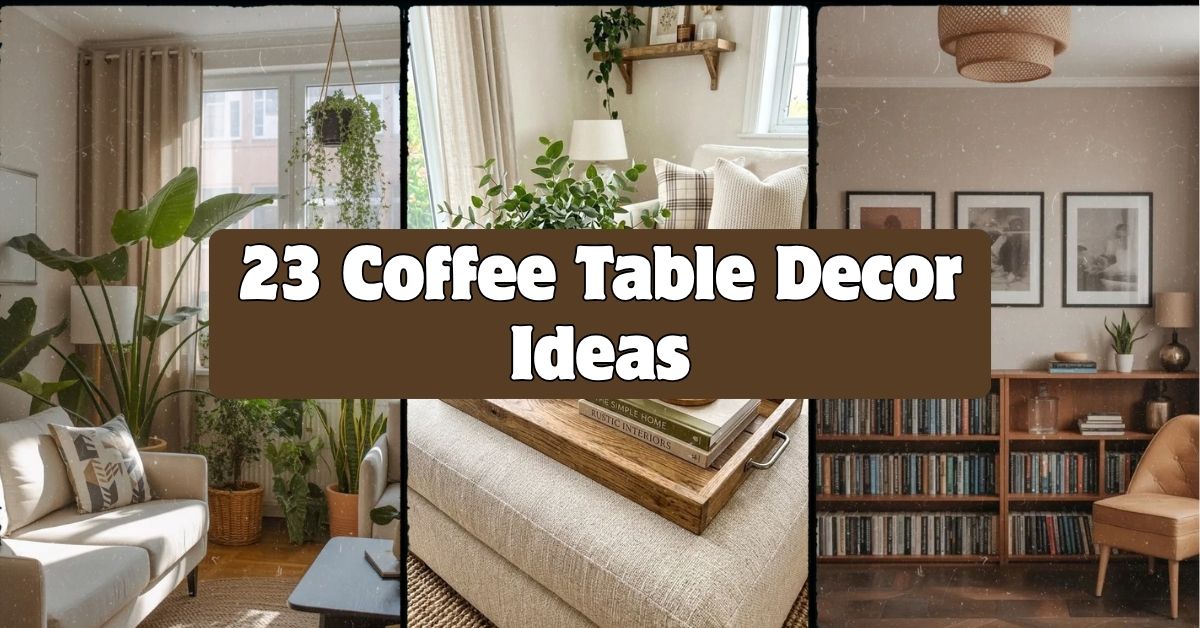
    This costs nothing and takes five minutes. Practical tip: do this test at night when it’s dark outside so you’re seeing the true effect of your artificial lighting without natural light interfering. Every single home style benefits from this test, because it’s less about decor and more about understanding your own space.

    Tips for Success

    • Buy a few bulbs of different color temperatures before committing to a whole set for the room
    • Install at least one dimmer switch on your main ambient light source
    • Keep a lamp within reach of every seating area so nobody’s stretching across the room
    • Test your lighting setup after dark, not just during the day when natural light hides flaws
    • Mix fixture heights (floor, table, ceiling) instead of putting everything at eye level
    • Don’t skip picture lights or accent lighting just because they feel like an extra step
    • Keep spare warm-white bulbs on hand so a burnout doesn’t leave you stuck with a mismatched fixture

    Common Mistakes and How to Avoid Them

    Relying on one overhead light for the whole room
    : Add at least two more light sources, like a floor lamp and a table lamp, to break up harsh shadows and create depth.

    Using cool white bulbs in a cozy living room
    : Swap to 2700K-3000K warm bulbs, which feel more inviting and match most living room color schemes.

    Skipping dimmers because they seem like a hassle
    : Install basic swap-in dimmer switches, most take under thirty minutes and cost less than dinner out.

    Placing lamps too far from seating areas
    : Position every lamp within arm’s reach of where people actually sit or read.

    Ignoring natural light patterns
    : Track how sunlight moves through your room for one full day before buying new fixtures, so you’re not overspending on lights you don’t need.

    Choosing a pendant light that’s too small for the room
    : Measure your ceiling height and room width first, then size your fixture up rather than down.

    Similar Variations

    • Task-Focused Lighting – Prioritizes reading lamps and desk-style lighting over ambient mood lighting, great for home offices doubling as living rooms
    • Smart Home Lighting Setup – Built entirely around app-controlled bulbs and voice assistants for total remote control
    • Minimalist Lighting Scheme – Uses fewer fixtures with higher quality, focusing on one or two statement pieces instead of layering many sources
    • Candlelit Cozy Corner – Skips electric accent lighting almost entirely in favor of candle clusters and warm natural light
    • Gallery Wall Lighting – Centers the whole plan around picture lights and track lighting to showcase art collections
    • Outdoor-Indoor Flow Lighting – Matches indoor living room lighting temperature and style to adjoining patio or sunroom fixtures for a seamless transition

    Getting your living room lighting right isn’t about buying the fanciest fixtures or spending a fortune. It’s about layering different light sources, picking the right bulb temperature, and paying attention to how your specific room actually behaves throughout the day. Small changes, like adding a dimmer or swapping a cool bulb for a warm one, make a bigger difference than most people expect.

    I hope these 20 lighting tips living room ideas give you a clear starting point, whether you’re working with a tiny apartment or a big open-concept space. Start with one or two changes, see how they feel, and build from there.