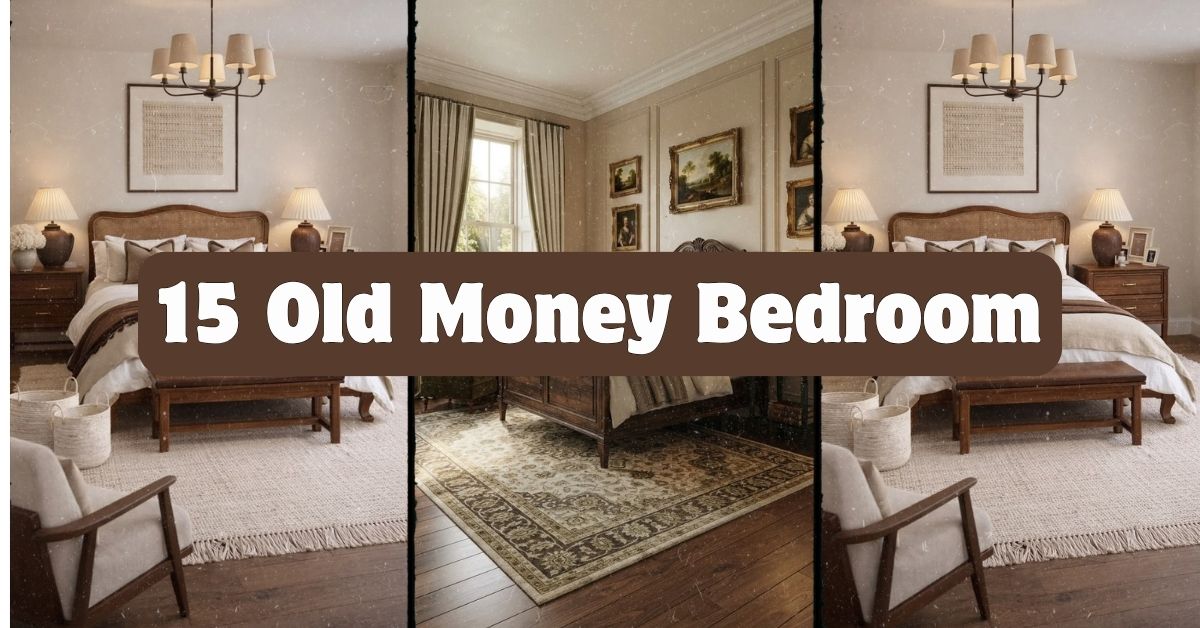
A 15 Old Money Bedroom guide should make this classic style feel clear, practical, and possible in a real home. I’ll walk you through the colors, furniture, fabrics, lighting, and small details that create the look without making your room feel stiff or staged.
A 15 Old Money Bedroom uses traditional furniture, quiet colors, quality fabrics, layered lighting, and collected decor to create a polished, comfortable space with a timeless European or country-house feel.
Keep reading for room-by-room ideas, useful size guides, budget choices, and easy ways to make the style work in a modern home.
What Does Old Money Bedroom Style Mean?
To me, old money bedroom style is less about showing off and more about looking settled. The room feels as if it has been furnished slowly, with pieces chosen for comfort and lasting beauty. Think warm white walls, wood furniture, upholstered headboards, linen bedding, antique-style lamps, framed art, and a few personal objects.
The colors stay calm. Cream, olive, navy, taupe, dusty blue, and brown all work well. Nothing needs to match perfectly. In fact, a room looks more believable when the pieces have slightly different finishes and ages.
You do not need a huge budget or a historic house. The right proportions, fabrics, and details can give even a simple bedroom that quiet, inherited feeling.
1. Start With a Soft, Traditional Color Palette

Color sets the mood before you add a single piece of furniture. For an old money bedroom, I would begin with warm white, ivory, mushroom, muted green, soft blue, or gentle gray. These shades create a calm base and let wood, brass, and fabric stand out.
Avoid using too many sharp contrasts. A black-and-white scheme can feel modern and graphic, while old money interiors usually feel softer. Instead, pair cream walls with walnut furniture, or use pale blue bedding with a warm beige rug.
Try painting the ceiling the same color as the walls, but one shade lighter if the room feels small. This creates a smooth, quiet envelope. Add deeper color through curtains, a bench, or framed artwork.
This palette works in modern homes when you use simple furniture and fewer patterns, and in traditional homes when you add molding or antique details. Next, choose furniture with the right sense of age and weight.
2. Choose a Solid Wood Bed With Classic Lines

The bed is the main visual anchor, so it should feel substantial. Look for a wood sleigh bed, four-poster frame, spindle bed, or upholstered bed with a simple shape. Walnut, oak, cherry, and painted wood are all good choices.
The key is not to buy the most decorated bed you can find. A large carved headboard may look formal, but a clean frame can feel more relaxed and expensive. If you choose an upholstered headboard, select linen, cotton, velvet, or a textured neutral fabric.
Make sure the bed fits the room. A king bed in a small bedroom can block walkways and make every other piece feel squeezed. Leave at least 24 inches of walking space around the open sides when possible.
For a modern version, use a low-profile oak bed with classic bedding. For a traditional room, try a taller headboard or canopy frame. With the bed set, the next step is making it comfortable without losing its polished look.
3. Layer Natural Bedding in Quiet Textures

Old money bedding should look inviting, not perfectly stiff. I like starting with crisp cotton sheets, then adding a linen duvet cover, a quilt, and one folded blanket at the foot of the bed. This mix creates depth without relying on loud patterns.
Use two or three related colors. For example, combine ivory sheets, a pale blue duvet, and a muted brown throw. If you want pattern, try a small stripe, floral print, ticking stripe, or subtle check. Keep the pattern scale varied so the bed does not look busy.
Pillow quantity matters too. Two sleeping pillows, two shams, and one or two smaller accent pillows are usually enough. Oversized piles can make the bed feel like a hotel display.
Wash new linen before using it if the care label allows. It softens and looks more natural over time. This bedding approach suits coastal rooms with blue and white, modern rooms with solids, and cottage rooms with small florals. Now let’s ground the space underfoot.
4. Layer a Woven Rug for Warmth

A rug gives the bedroom softness and helps the furniture feel connected. Wool, jute, cotton, and wool-cotton blends all fit the old money look. Choose a design with a faded medallion, subtle stripe, Persian influence, or simple texture.
The rug should be large enough to extend beyond the sides and foot of the bed. If a full-size rug is too expensive, place two runners along the bed or use a smaller rug at the foot. A rug pad is worth adding because it improves comfort, prevents sliding, and protects the floor.
For a calm room, choose oatmeal, faded blue, taupe, or muted rust. Avoid overly bright geometric designs unless the rest of the room is very simple.
In a contemporary home, a flat-weave rug keeps the look clean. In a traditional home, a worn-looking wool rug adds more history. Once the floor feels finished, use the guide below to balance color and texture.
Old Money Bedroom Color and Material Guide
| Room Element | Reliable Choices | Best Pairing | What to Avoid |
|---|---|---|---|
| Walls | Warm white, taupe, sage, dusty blue | Walnut or oak furniture | Bright white with cool blue-gray trim |
| Bedding | Linen, cotton percale, quilted cotton | Ivory, cream, pale blue | Shiny polyester sets |
| Rug | Wool, jute, faded Persian pattern | Natural wood floors | Thin rugs that slide |
| Curtains | Linen, cotton, lined woven fabric | Brass or wood rods | Plastic-looking panels |
| Accent color | Olive, navy, tobacco, muted rose | Cream and brown | Too many jewel tones |
| Metal finish | Aged brass, bronze, soft nickel | Wood and fabric | Mixing many shiny finishes |
With the main colors and textures in place, the room can handle more personal furniture and decoration.
5. Add a Matching Pair of Bedside Tables
A pair of nightstands brings balance to the bed. They do not need to be identical, but they should have a similar height and visual weight. Wood nightstands with drawers are especially useful because they hide chargers, books, and personal items.
Choose tables that are close to the height of your mattress top. A nightstand that is too low looks awkward and makes lamps hard to reach. A table that is too tall can crowd the headboard.
Look for turned legs, brass pulls, inset panels, or simple vintage shapes. You can also repaint secondhand tables in a creamy white, deep green, or soft gray. Replace plain hardware with aged brass knobs for an easy upgrade.
This idea works with modern decor when the tables have straight lines and little ornament. In a cottage or traditional room, painted bedside chests add charm. With the pair in place, lighting becomes the next layer of comfort.
6. Use Table Lamps With Fabric Shades

Lighting makes a huge difference in a bedroom. Harsh ceiling lights can flatten the room, while warm bedside lamps create a softer and more restful feeling.
Look for ceramic, wood, glass, or aged metal lamp bases. Fabric shades in linen, cotton, or parchment-style material give off a gentle glow. Cream shades are the safest choice, but muted green, pleated, or patterned shades can add character.
Place the lamps so the bottom of each shade sits near eye level when you are sitting in bed. Use warm bulbs around 2700K for a cozy color. If possible, choose bulbs with dimming ability.
A modern room can use simple ceramic lamps with clean shapes. A traditional room may suit brass candlestick lamps or pleated shades. After the bedside light is working, build atmosphere across the rest of the ceiling and walls.
7. Install a Small Chandelier or Classic Ceiling Fixture

A ceiling fixture can make the bedroom feel finished. It does not need to be dramatic. A small brass chandelier, linen drum shade, lantern fixture, or milk-glass pendant can provide the right amount of character.
Choose a fixture that fits the scale of the room. A large chandelier may overwhelm a low ceiling. In that case, use a flush mount with a soft shade. If the bedroom has a higher ceiling, a modest five-light fixture can create a graceful focal point.
Keep the finish controlled. Aged brass works well with warm colors, while bronze suits deeper wood tones. If you use a bold fixture, keep the bedding and wall decor quieter.
For coastal homes, try a woven pendant. For modern rooms, choose a simple globe or opal glass light. In a traditional bedroom, a small chandelier feels right. With overhead lighting chosen, let’s turn to the walls.
8. Hang Art That Feels Collected Over Time

Wall art should make the bedroom feel personal. Old money style often uses landscapes, botanical prints, portraits, still lifes, maps, sketches, or framed textiles. The art does not have to be expensive. It just needs to feel thoughtful.
Try grouping three to five small frames instead of hanging one oversized print over every wall. Use wood, brass, black, or painted frames, but repeat at least one finish so the arrangement feels connected.
For a strong focal point, center a landscape above the headboard. Keep the bottom of the frame about six to ten inches above the headboard if the headboard is tall. For a gallery wall, lay the frames on the floor first and keep the gaps fairly even.
Modern homes can use one large abstract landscape in muted colors. Traditional homes can handle more framed prints. The art adds story, and the next idea adds the soft architectural detail that makes the room feel tailored.
H3: Artwork Placement and Frame Size Guide
| Placement | Suggested Frame Size | Spacing | Best Use |
|---|---|---|---|
| Above a queen bed | 24 x 36 to 30 x 40 inches | 6 to 10 inches above headboard | One main landscape or portrait |
| Above a king bed | 30 x 40 to 36 x 48 inches | 6 to 10 inches above headboard | Large horizontal artwork |
| Three-frame row | 12 x 16 to 18 x 24 inches each | 2 to 4 inches apart | Botanical prints or family photos |
| Bedside wall | 8 x 10 to 12 x 16 inches | Center near lamp height | Small personal artwork |
| Gallery wall | Mixed sizes | 2 to 3 inches apart | Collected, informal display |
The right wall treatment can make simple art look far more special, so consider adding texture before filling every empty spot.
9. Add Wall Molding or a Simple Picture Rail

Wall molding gives a bedroom architectural character. You can use traditional box molding, beadboard, a chair rail, or a picture rail. Even one accent wall can make the room feel more established.
If you rent, try removable molding strips or create the effect with painted tape and carefully spaced lines. Another easy option is beadboard wallpaper on the lower half of the wall. Paint it in the same color as the upper wall for a quiet result.
Keep the spacing consistent. Uneven boxes can look accidental. Before installing anything, mark the wall with painter’s tape and step back to check the proportions.
In a modern home, use narrow molding with a monochromatic paint color. In a cottage bedroom, try beadboard or tongue-and-groove boards. In a traditional space, deeper trim and a picture rail feel natural. With the walls shaped, the next focus is the window.
10. Use Full-Length Linen or Cotton Curtains

Curtains soften hard window lines and make the bedroom feel more finished. Linen, cotton, cotton voile, and lined woven fabric all work well. Choose warm white, flax, taupe, faded blue, or a muted stripe.
Hang the rod several inches above the window frame and extend it past both sides. This lets the curtains frame the window without blocking much glass. For a fuller look, use enough fabric so the panels have relaxed folds when closed.
Curtains should usually touch the floor or break very slightly. Avoid short panels that stop above the floor unless they are café curtains in a cottage-style room.
Modern bedrooms can use plain linen panels. Traditional rooms may suit a small check, floral, or pinch-pleat style. Coastal spaces look good with airy white cotton. Once the windows are softened, add a seat that makes the room useful.
11. Place a Bench or Small Upholstered Chair

A bedroom feels more complete when it has a place to sit. A bench at the foot of the bed is the classic choice, but a small armchair near the window can work just as well.
For a bench, choose a length slightly shorter than the width of the bed. A 48- to 60-inch bench often fits a queen bed, while a 60- to 72-inch bench may suit a king. Upholstered linen, cane, velvet, or turned wood legs can all work.
Do not use the bench as a storage dump. Keep one folded throw or a slim cushion on it. If the room is tight, use an ottoman that can slide under a console or desk.
Modern interiors suit a simple curved chair. Traditional rooms can use a skirted bench or carved legs. Coastal bedrooms may benefit from woven cane. The seating adds comfort, and the next piece adds practical storage.
Bedroom Furniture Size Guide
| Furniture | Useful Size Range | Placement Tip |
|---|---|---|
| Queen bed | 60 x 80 inches | Leave 24 inches around open sides when possible |
| King bed | 76 x 80 inches | Use a rug extending at least 18 to 24 inches beyond sides |
| Bedside table | 20 to 30 inches wide | Keep near mattress height |
| Bed bench | 48 to 72 inches wide | Choose shorter than the mattress width |
| Accent chair | 28 to 34 inches wide | Leave about 30 inches of movement space |
| Six-drawer dresser | 60 to 72 inches wide | Keep 36 inches clear for drawers and walking |
Knowing the measurements before shopping prevents a beautiful piece from making the room hard to use.
12. Add an Antique-Style Dresser With Brass Hardware

A dresser gives the room both storage and visual weight. Look for wood grain, dovetail drawers, turned feet, paneled fronts, or aged brass pulls. A genuine vintage dresser is ideal, but a well-made new piece can create the same feeling.
Avoid buying a set where every item has the same finish. Old money rooms usually feel collected rather than matched. A walnut dresser can sit beside an oak bed if the undertones work together.
Style the top with restraint. Add a ceramic lamp, a small tray, one framed photo, and a bowl or box. Leave open space so the dresser remains useful.
Check drawer movement and smell when buying secondhand. Clean the piece, repair loose hardware, and use furniture wax only when the finish needs it.
This idea suits modern rooms when the dresser has a simple profile, while traditional rooms can use more carved detail. Storage is handled, so now bring in one thoughtful decorative layer.
13. Display Books, Ceramics, and Personal Objects

Small objects make a bedroom feel lived in. Stack a few books on a nightstand, place a ceramic bowl on the dresser, or display a small brass clock. These details suggest a life in the room rather than a showroom setup.
Choose items with different heights and textures. A hardback book, a stone vase, and a framed photograph create more interest than three identical ornaments. Use objects you actually enjoy. Old family photos, travel finds, and inherited pieces are especially fitting.
Keep groups small. Three items on a nightstand may be enough. A crowded surface creates visual noise and collects dust.
In a modern home, display fewer objects with stronger shapes. In a traditional home, use more layered pieces and small framed art. In a rustic room, add baskets or handmade pottery. These objects create personality, and plants can bring the final natural note.
14. Bring in One or Two Healthy Green Plants

Plants add life to a room filled with wood and fabric. Choose varieties that suit the light instead of buying only for appearance. A rubber plant, pothos, snake plant, olive tree, or small fern can work, depending on your conditions.
Use simple containers. Terracotta, aged ceramic, woven baskets, and stone-colored planters fit the old money mood. Place a medium plant beside a dresser or in an empty corner. Keep smaller plants on a window ledge or stool.
Do not overcrowd the room with greenery. One large plant and one small plant often look more intentional than a jungle of mismatched pots.
For coastal style, try an airy palm or woven planter. For a darker traditional room, use a glossy rubber plant. Modern bedrooms can use one sculptural olive tree. The last idea helps tie every layer together.
15. Finish With Aged Metal and Natural Wood Details

The smallest finishes often make the biggest difference. Aged brass curtain rods, bronze drawer pulls, wood frames, cane baskets, and leather accents add warmth without shouting for attention.
Pick one main metal finish and repeat it three or four times. For example, use aged brass on the lamps, drawer pulls, curtain rod, and picture frames. The repetition creates order. You can still mix in black or nickel, but keep the mix intentional.
Natural wood also helps. A wooden tray, stool, mirror frame, or woven basket can stop the room from feeling too polished. Look for variation in grain and tone rather than a perfect matching set.
In modern spaces, use fewer accents and cleaner shapes. In traditional rooms, let the details be more decorative. Coastal rooms can lean on rattan and pale wood. Once these finishes are added, the room should feel layered but not crowded.
Tips for Success
- Measure the room, doorways, and stairways before buying large furniture.
- Choose a base palette of three main colors and repeat them through fabric and art.
- Mix old-looking and new pieces so the bedroom feels collected, not themed.
- Use dimmable warm bulbs instead of relying on one bright ceiling light.
- Leave some empty space on dressers, nightstands, and walls.
- Spend more on the mattress, bedding fabric, and the furniture used every day.
- Check secondhand furniture for strong joints, working drawers, and signs of pests before bringing it home.
Common Mistakes and How to Avoid Them
Making everything beige
Use two or three deeper accents, such as olive, navy, walnut, tobacco, or muted rose, to give the room shape.
Buying a complete matching bedroom set
Mix similar wood undertones and related shapes instead of choosing identical furniture for every piece.
Using too many antiques
Balance vintage-looking items with simple new pieces so the room stays fresh and comfortable.
Choosing curtains that are too short
Measure from the curtain rod to the floor before shopping. Full-length panels usually look more finished.
Overloading the bed with pillows
Keep enough room to sleep comfortably. A few well-chosen pillows look more relaxed than a tall pile.
Using cold, bright lighting
Select warm bulbs around 2700K and add lamps at different heights for a softer evening mood.
Similar Variations
- English Country Bedroom: Adds floral fabrics, painted furniture, floral art, and a relaxed mix of patterns.
- French Provincial Bedroom: Uses curved furniture, carved details, pale finishes, and soft blue or cream colors.
- Coastal Old Money Bedroom: Combines linen, warm white, faded navy, rattan, and light wood for an airy finish.
- Dark Academia Bedroom: Uses deeper walls, leather, books, mahogany, brass, and moody landscape art.
- Modern Heritage Bedroom: Keeps the traditional palette but uses clean-lined furniture and fewer decorative objects.
- American Traditional Bedroom: Blends classic wood furniture, striped fabrics, framed art, and practical symmetry.
A convincing old money bedroom comes from restraint, comfort, and good layering. Start with calm colors, choose furniture with useful proportions, add natural fabrics, and let personal pieces bring the room to life. You do not need a mansion or a huge budget. You need patience, a clear palette, and a few items that will still look good years from now.
When each choice feels comfortable, useful, and quietly beautiful, you have the foundation for a timeless 15 Old Money Bedroom.